Empire of the Forests: How the Iroquois Built the Most Powerful Confederacy in North America

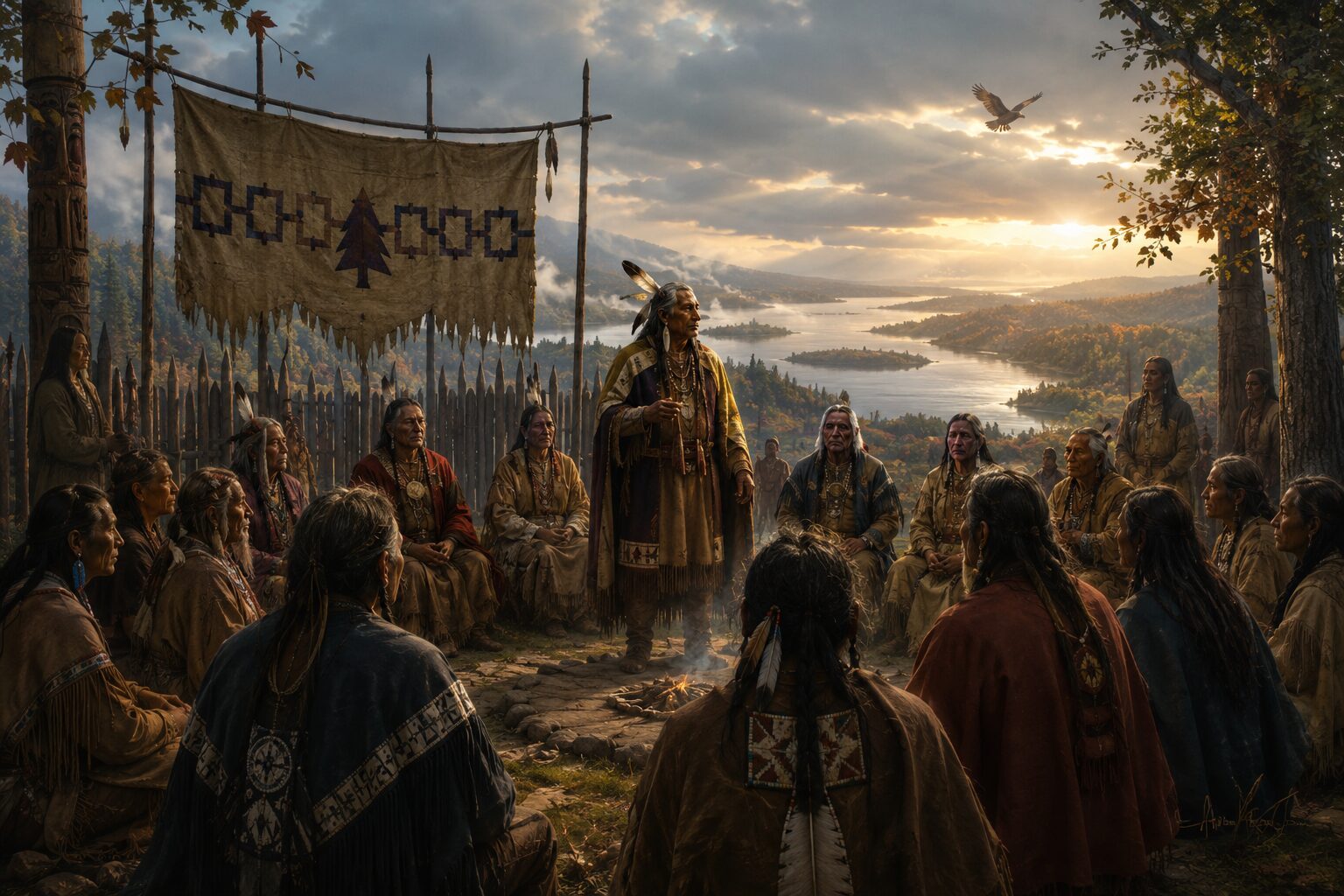
When we hear the word “Indians,” we often imagine small tribes of hunters scattered across the vast forests and plains of North America. In popular culture, they are usually portrayed as victims of colonization or as opponents of the U.S. cavalry in the nineteenth century. Yet long before the United States existed—and even before the first English colonies were founded—there was a power capable of conducting diplomacy, forging alliances, dictating terms to its neighbors, and shaping the fate of enormous territories.
That power was the Iroquois Confederacy, a union of nations that Europeans often regarded as a state in its own right. And not just any state—a formidable one. In the seventeenth century, French settlers along the St. Lawrence River feared more than harsh winters and crop failures. What truly worried them was the possibility of Iroquois warriors emerging from the forests. Their raids could wipe out entire settlements, disrupt the fur trade, and alter the balance of power across thousands of miles.
So how did a handful of nations living in the woodlands of what is now the northeastern United States and southern Canada create one of the most influential political systems in pre-colonial North America?
A World Where War Was a Way of Life
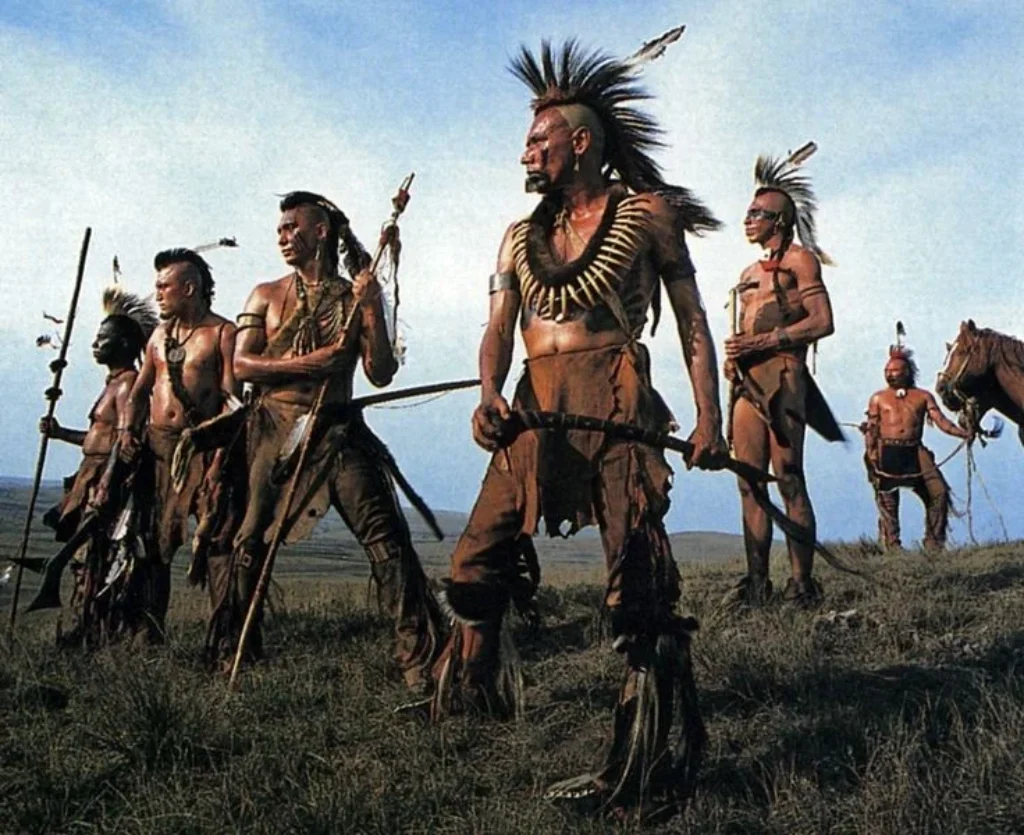
The story of the Iroquois Confederacy begins long before the arrival of Europeans in the New World. At the time, the lands around the Great Lakes and the St. Lawrence Valley formed a complex mosaic of peoples and alliances. No single authority existed, and conflict between neighboring communities was common.
According to Iroquois tradition, the future members of the Confederacy—the Mohawk, Oneida, Onondaga, Cayuga, and Seneca—were once locked in constant warfare. Blood feuds created new conflicts, and each conflict gave rise to fresh reasons for revenge. Generations lived in a cycle of violence.
It was during this turbulent era, according to the oral traditions of the Haudenosaunee—the name the Iroquois use for themselves—that a man known as the Great Peacemaker appeared. His name was Deganawida. Together with his companion Hiawatha, he traveled among the warring nations, urging them to abandon endless bloodshed and unite under a common system of laws and mutual cooperation.
Historians still debate exactly when the Confederacy was founded. Some place its origins in the twelfth century, while others argue for the fourteenth or fifteenth. What scholars generally agree upon is that the League of the Iroquois emerged before European contact and became one of the most enduring political systems in North America.
For the peoples of the continent, its creation was an event comparable to the formation of major alliances in ancient Greece or medieval Europe.
The Great Tree of Peace
What makes the Iroquois Confederacy particularly remarkable is that it was far more than a military alliance.
At its core stood a political framework known as the Great Law of Peace. In essence, it was a constitutional system governing relations among the member nations. Each nation retained a high degree of autonomy, while matters affecting the Confederacy as a whole were addressed collectively.
The highest governing body was the Grand Council. It consisted of fifty sachems representing various clans and lineages. Unlike many European monarchies, political authority was not simply passed from father to son. Women played a crucial role in governance, especially the clan mothers, who held the power to nominate leaders and remove those who failed their people.
To Europeans of the seventeenth century, this system seemed highly unusual. While absolute monarchs across the Atlantic were concentrating power in their own hands, the forests of North America were home to a federation where major decisions were reached through debate, negotiation, and consensus.
The symbol of this order was the Great Tree of Peace. According to tradition, the weapons of war were buried beneath its roots, while its branches spread protection and unity across the world.
Of course, the Iroquois did not abandon warfare altogether.
They simply stopped fighting one another.
And that decision would change the history of the region.
When Fur Became More Valuable Than Gold
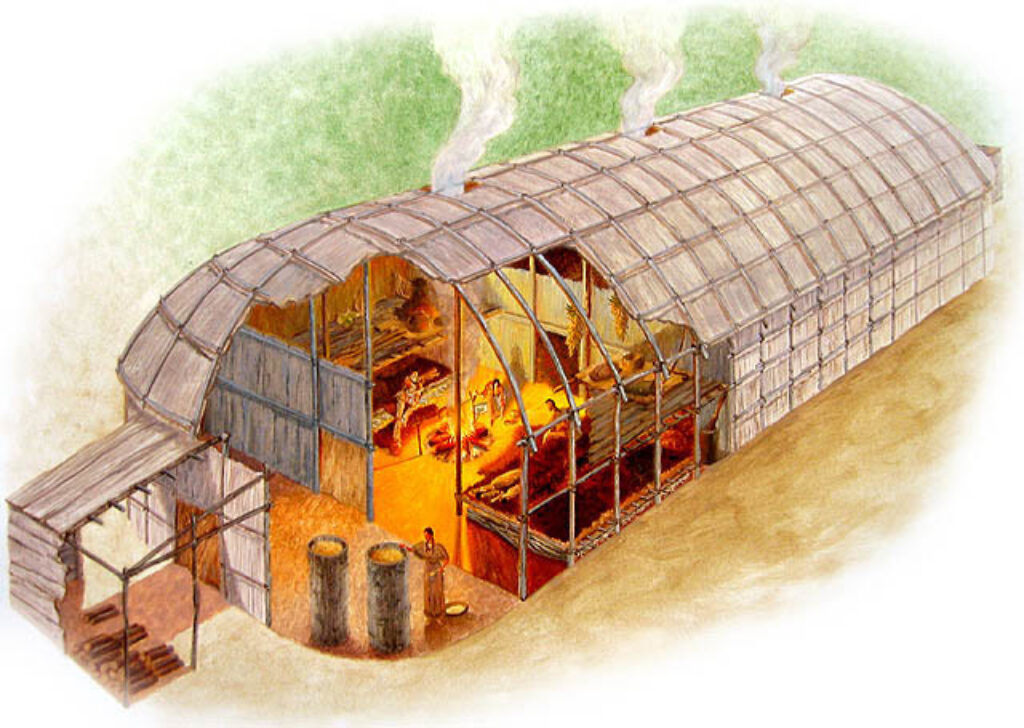
The arrival of Europeans in the early seventeenth century transformed North America. New goods, new diseases, new technologies, and new economic opportunities reshaped the continent.
Among the most valuable commodities was beaver fur. European fashion created an enormous demand for felt hats, and traders were willing to pay handsomely for pelts.
At first glance, the situation seemed beneficial for everyone involved. Yet hunting grounds were not unlimited, and competition for resources soon intensified.
The Iroquois were among the first Indigenous peoples to establish strong trading relationships with Europeans. Particularly important were their connections with the Dutch, whose colony of New Amsterdam occupied the site of present-day New York City. Through these contacts, the Iroquois gained access to metal tools, iron weapons, and most importantly, firearms.
The consequences were dramatic.
A confederation that had once been focused on ending internal warfare evolved into one of the most formidable military powers on the continent.
The Beaver Wars had begun.
An Indigenous Empire
The middle decades of the seventeenth century marked a period of rapid Iroquois expansion.
The Confederacy launched campaigns against the Huron, Erie, Neutral, Susquehannock, and numerous Algonquian-speaking peoples. Some were defeated outright. Others were driven from their lands or absorbed into the Iroquois sphere of influence.
European observers often described these events in apocalyptic terms. Entire communities vanished, trade routes shifted, and the political map of North America was redrawn before their eyes.
One of the most devastating blows fell upon the Huron, longtime allies of the French. Between 1648 and 1649, Huron power was effectively shattered.
By the end of the seventeenth century, Iroquois influence stretched from the Great Lakes to the Ohio Valley. They controlled critical trade corridors and could shape relations between European colonies and dozens of Indigenous nations.
This was not an empire in the Roman or British sense. Yet by the standards of North America at the time, the Iroquois Confederacy had become a true superpower.
Between France and England
Military strength alone does not explain the success of the Confederacy.
Its leaders also proved to be exceptional diplomats.
As France and England competed for dominance in North America, the Iroquois skillfully exploited the rivalry. They traded with one side, negotiated with the other, and frequently encouraged competition for their support.
At times, they acted as an independent third force rather than a subordinate ally of either European power.
For colonial governors, the opinions of Iroquois leaders could carry as much weight as directives arriving from London or Paris.
In effect, the Haudenosaunee became a major actor in international politics—a power that had to be taken seriously by every colonial government in the region.
It was during this era that the Confederacy reached the height of its influence.
The Fall of an Indigenous Superpower
As is often the case in history, the greatest threat to the Confederacy came not from a single enemy but from a changing world.
The eighteenth century saw explosive growth in the European colonies. Colonial populations expanded, pressure on Indigenous lands intensified, and the balance of power gradually shifted.
The decisive blow came during the American Revolution.
The nations of the Confederacy could not maintain their unity. Some supported the British Crown, while others sought neutrality or cooperation with the Americans. The resulting division shattered the political cohesion that had long been the foundation of Iroquois strength.
Following the victory of the United States, Indigenous lands were rapidly absorbed by the new republic. Vast territories passed into American control, and many Iroquois communities were forced to relocate, particularly into Canada.
By the nineteenth century, little remained of the power that had once dominated northeastern North America.
Yet the story did not end there.
A Legacy That Endured
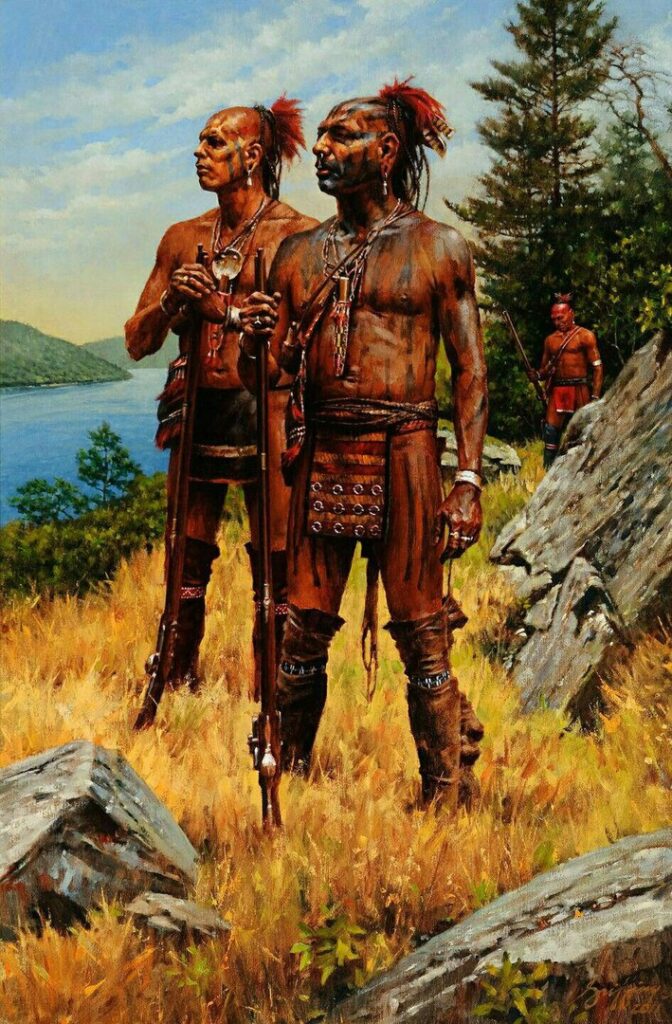
Today, descendants of the nations that formed the Confederacy continue to live in both the United States and Canada. The Haudenosaunee Confederacy still exists as a cultural and political community, preserving traditions that stretch back centuries.
Historians continue to debate the extent to which the principles of the Great Law of Peace may have influenced political thought in colonial North America and the early United States. The very existence of that debate speaks volumes.
The Iroquois Confederacy was not an exotic curiosity or an accidental alliance of woodland tribes. It was proof that long before the rise of modern nation-states, North America was home to sophisticated political systems capable of diplomacy, lawmaking, military success, and profound influence over the course of history.
If one were to search for the first true superpower of the North American forests, it would be difficult to find a stronger candidate than the Iroquois Confederacy.