
How Many J-20 Stealth Fighters Does China Really Have? Why the Mighty Dragon Is Becoming the Backbone of Chinese Air Power

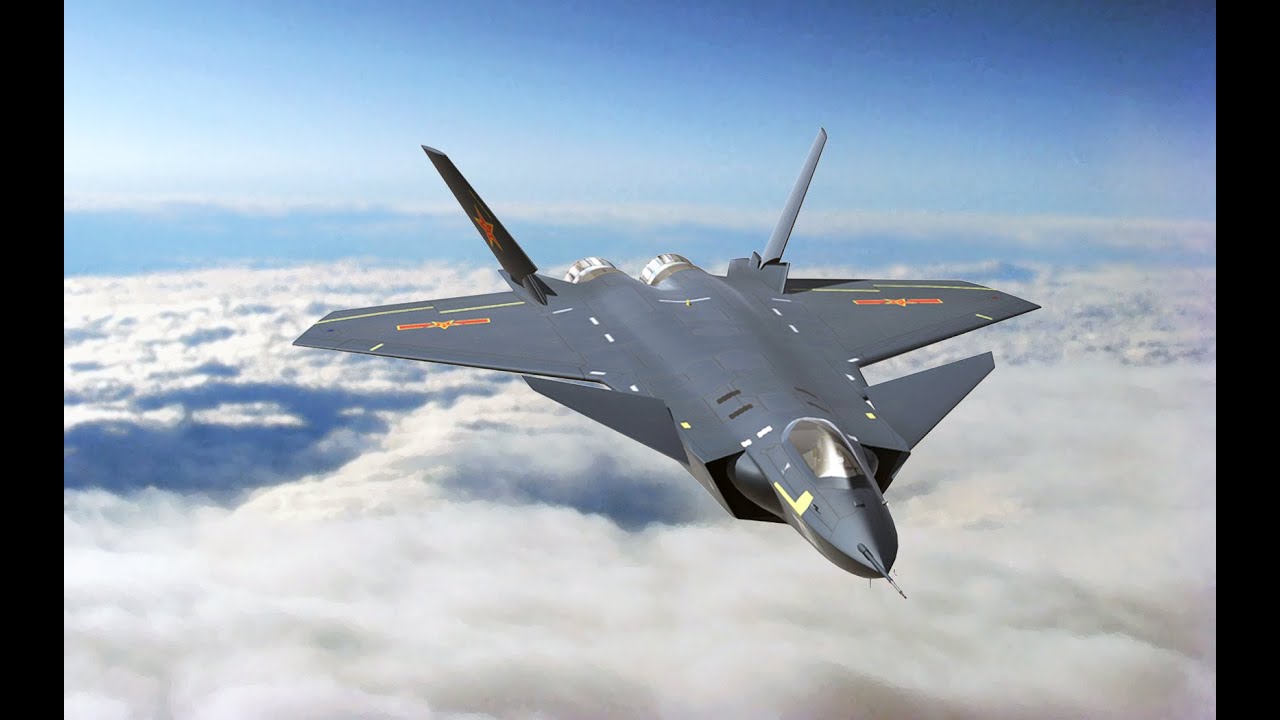
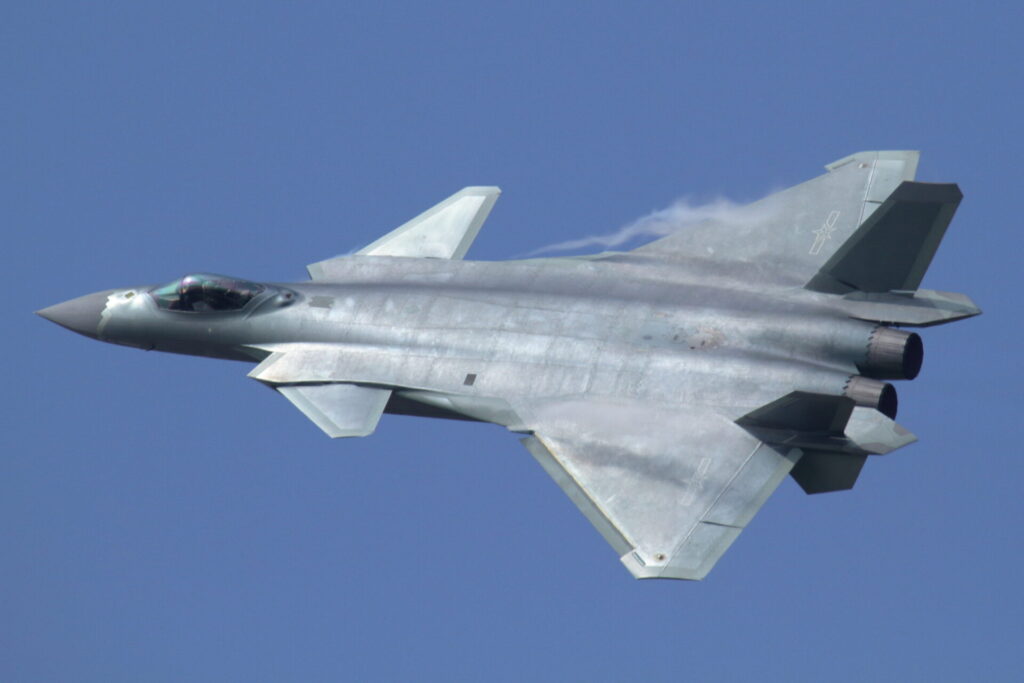
While much of the world’s attention is focused on China’s next-generation fighter programs, a far more significant transformation is already underway. Beijing continues to rapidly expand production of the Chengdu J-20 Mighty Dragon, its first operational fifth-generation stealth fighter, which is steadily becoming the backbone of the People’s Liberation Army Air Force (PLAAF).
The exact size of China’s J-20 fleet remains one of the country’s best-kept military secrets. However, satellite imagery, production serial numbers, the formation of new fighter brigades, and the expansion of manufacturing facilities provide analysts with enough clues to make increasingly reliable estimates. Most current assessments suggest that China now operates more than 500 J-20s, with annual production continuing to accelerate.
More important than the number itself, however, is what it reveals about China’s long-term military strategy.
From Technology Demonstrator to Frontline Fighter
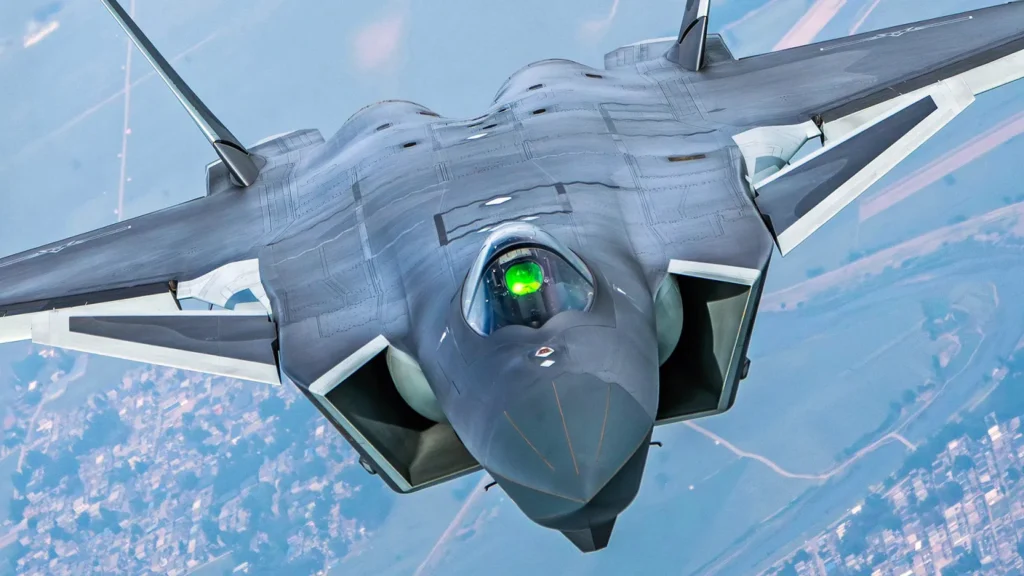
When the J-20 made its maiden flight in 2011, many Western analysts viewed the aircraft with skepticism.
Some dismissed it as little more than a technology demonstrator, questioned China’s aerospace capabilities, and predicted that large-scale production would remain years away.
Reality unfolded quite differently.
By the middle of the decade, the aircraft had entered operational service, and production soon accelerated dramatically. What began as a small initial batch has evolved into one of the fastest fifth-generation fighter production programs ever seen outside the United States.
Today, the J-20 is no longer an experimental aircraft—it is the centerpiece of China’s modern air force.
How Many J-20s Has China Built?
The Chinese government has never officially disclosed production numbers.
Instead, analysts combine several different methods to estimate the fleet’s size.
Satellite images of Chengdu Aircraft Corporation’s production facilities reveal continuous expansion. Aviation researchers also track production serial numbers, monitor the activation of new fighter brigades, and analyze construction of additional assembly halls.
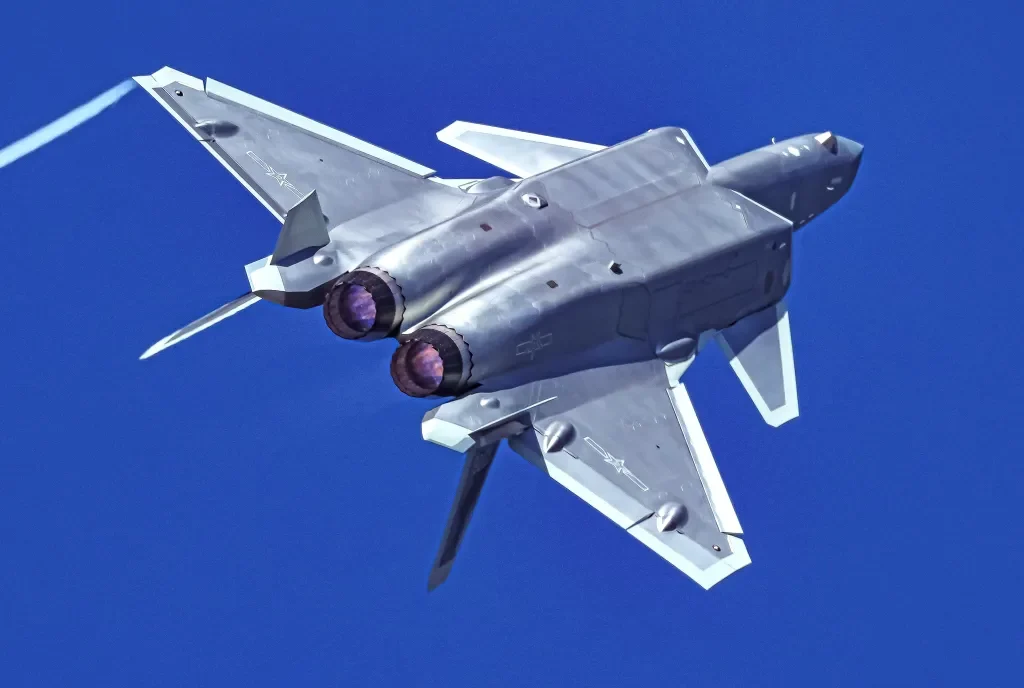
Taken together, these indicators suggest that China’s operational fleet has already surpassed 500 aircraft, while annual production is widely estimated at approximately 100 to 120 fighters per year. If additional assembly capacity comes online as expected, production could increase even further before the end of the decade.
Should those rates continue, China could field the world’s second-largest fleet of fifth-generation fighters—behind only the United States—and potentially the largest single fleet of one fifth-generation fighter type.
Why China Prioritizes Numbers
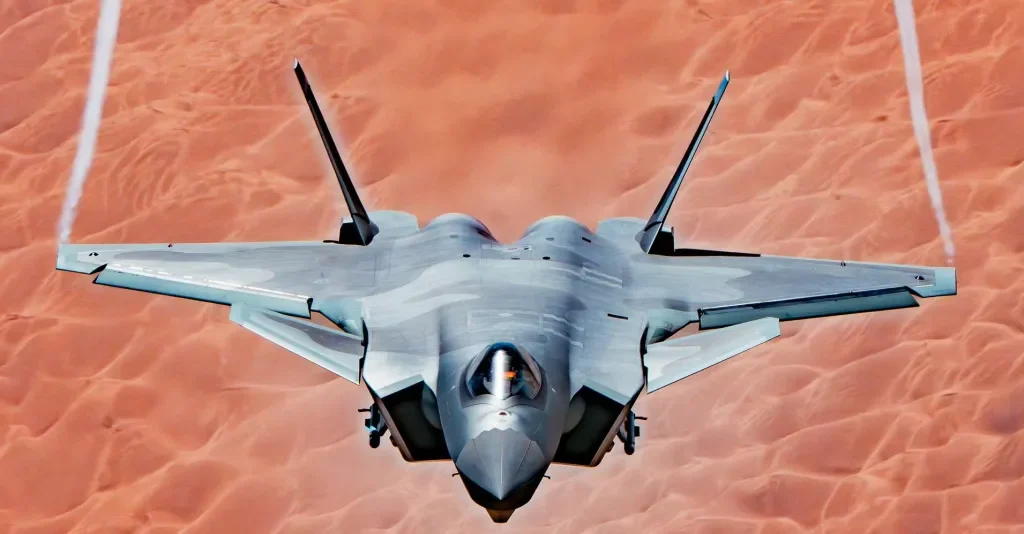
Unlike the United States, which produced the F-22 Raptor in relatively limited quantities, China appears to view the J-20 as a mass-produced frontline fighter.
That strategy reflects the geography of East Asia.
Potential military operations around Taiwan, the East China Sea, and the South China Sea would require large numbers of advanced aircraft capable of maintaining air superiority, escorting strike packages, and coordinating with fourth-generation fighters.
Rather than creating a small elite force, Beijing appears to be building a large fleet capable of sustaining prolonged, high-intensity operations.
In this strategy, industrial capacity becomes almost as important as technological sophistication.
What Makes the J-20 Different?
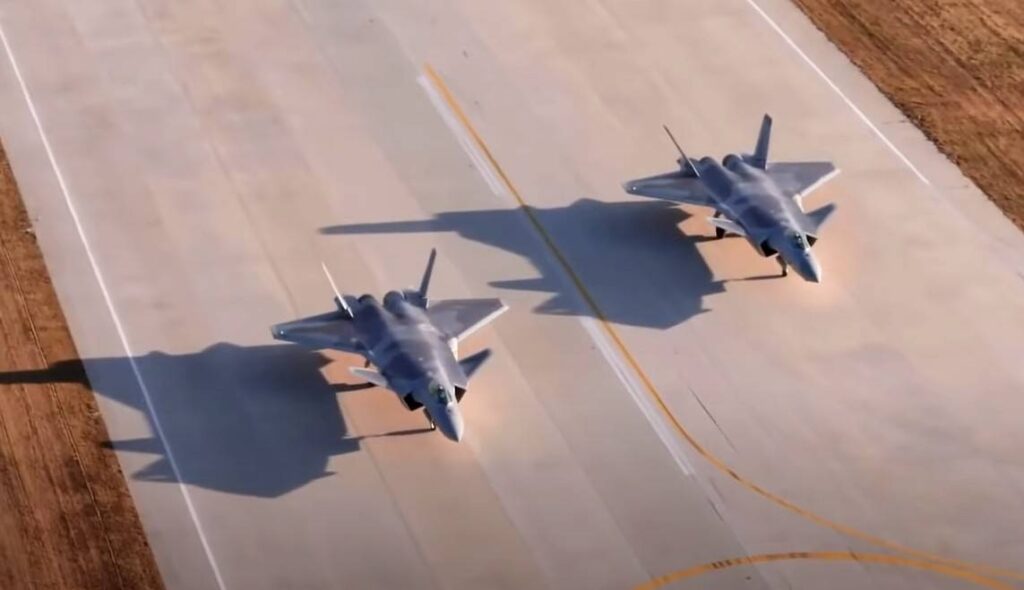
Although its appearance is often compared with the American F-22 Raptor and F-35 Lightning II, the J-20 follows a different design philosophy.
It is significantly larger than most fifth-generation fighters.
The aircraft’s large internal fuel capacity provides extended range, while its spacious internal weapon bays allow it to carry long-range air-to-air missiles alongside future advanced weapons.
Most analysts believe the J-20 was optimized primarily for long-range interception missions.
Rather than focusing exclusively on close-range dogfighting, the aircraft is designed to engage high-value targets such as airborne early warning aircraft, aerial refueling tankers, electronic warfare platforms, and command aircraft before they can influence the battlefield.
Chengdu J-20 Technical Specifications
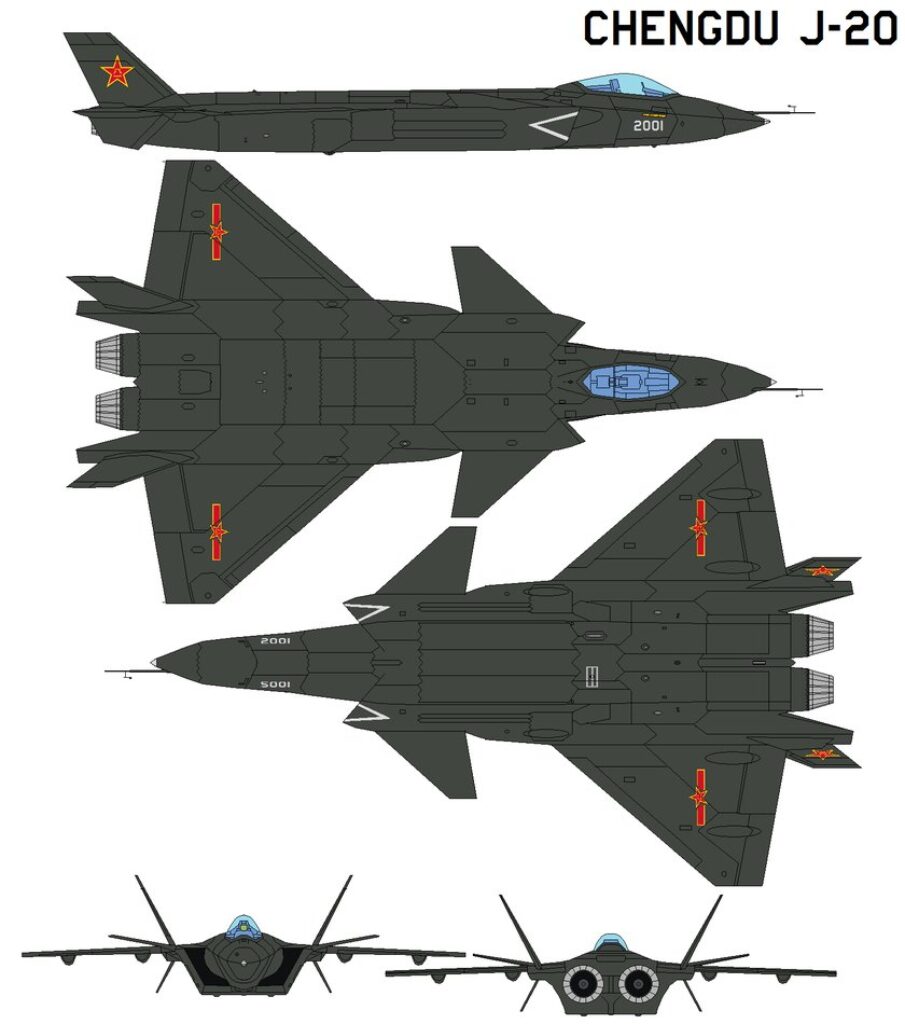
Type: Fifth-generation multirole stealth fighter
Manufacturer: Chengdu Aircraft Corporation
First Flight: 2011
Entered Service: 2017
Crew: One pilot (a two-seat J-20S variant has also been developed)
Length: Approximately 20.4 meters
Wingspan: Approximately 13.5 meters
Maximum Takeoff Weight: Around 37 tons
Maximum Speed: Approximately Mach 2.0
Service Ceiling: Around 20,000 meters
Combat Radius: Estimated to exceed 1,500 kilometers
Engines: WS-10C, with the more powerful WS-15 expected for future production
Primary Weapons:
- PL-15 long-range air-to-air missiles
- PL-10 short-range infrared-guided missiles
- Potential future integration of the ultra-long-range PL-17 missile
These characteristics make the J-20 one of the largest and longest-range stealth fighters currently in operational service.
Manufacturing May Be China’s Greatest Advantage
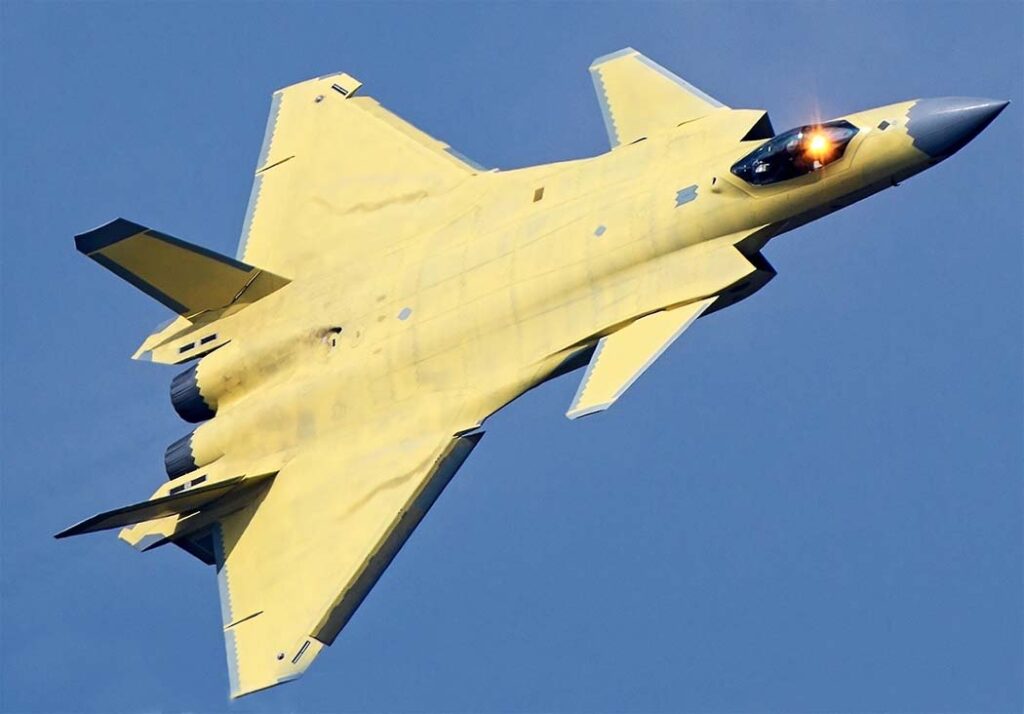
Satellite imagery collected over recent years shows continuous expansion of Chengdu Aircraft Corporation’s manufacturing complex.
New production halls have been constructed, final assembly facilities enlarged, and testing infrastructure expanded.
At the same time, increasing levels of industrial automation appear to be supporting higher production rates.
These developments suggest that China is investing not only in improving the aircraft itself but also in ensuring that it can manufacture the J-20 in genuinely large numbers.
In modern military competition, industrial capacity can be just as decisive as advanced technology.
The J-20 Continues to Evolve
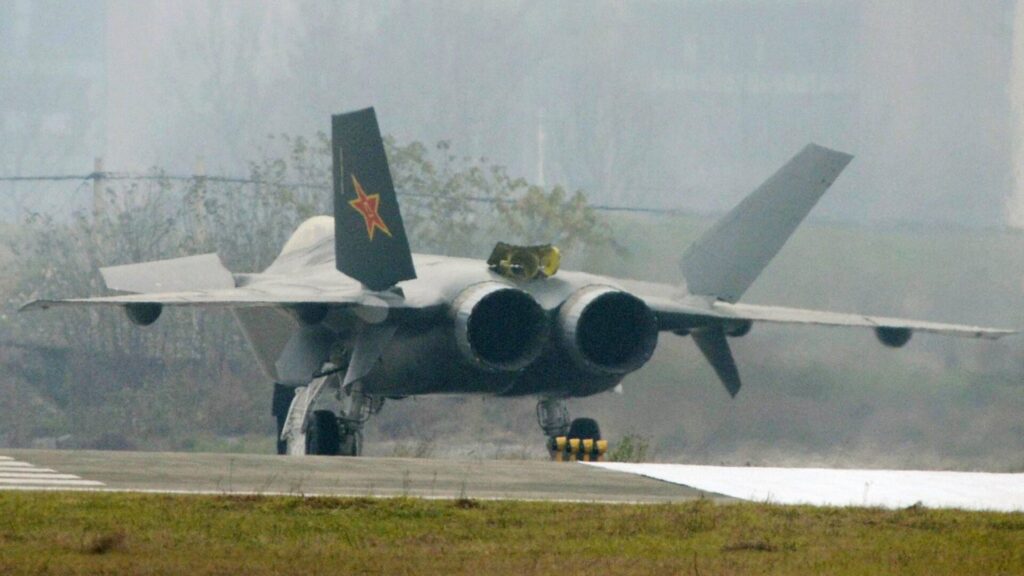
The aircraft has not remained static since entering service.
Several new variants have already appeared.
The most notable is the J-20S, a two-seat version widely believed to be intended for command-and-control missions involving unmanned “loyal wingman” aircraft, complex strike operations, and network-centric combat management.
Meanwhile, China continues introducing the domestically developed WS-15 engine, which is expected to provide greater thrust, improved overall performance, and complete independence from earlier propulsion solutions.
These upgrades indicate that the J-20 program is still evolving rather than approaching maturity.
What China’s Growing J-20 Fleet Means
For many years, the United States maintained a clear numerical advantage in fifth-generation combat aircraft.
That gap is steadily narrowing.
Thanks to sustained production rates, China is rapidly building the largest fleet of stealth fighters outside the United States while simultaneously expanding the industrial infrastructure required to support future generations of combat aircraft.
Ultimately, the most important aspect of the J-20 program may not be the aircraft itself.
China’s greatest strategic advantage lies in its ability to manufacture advanced fighters at an increasingly impressive scale.
That production capacity is transforming the Mighty Dragon from a sophisticated stealth fighter into one of the central pillars of China’s rapidly expanding air power.






