
Europe Begins Building the Legendary Firehawk. Why the Sikorsky S-70 Firehawk Is One of the World’s Most Capable Firefighting Helicopters

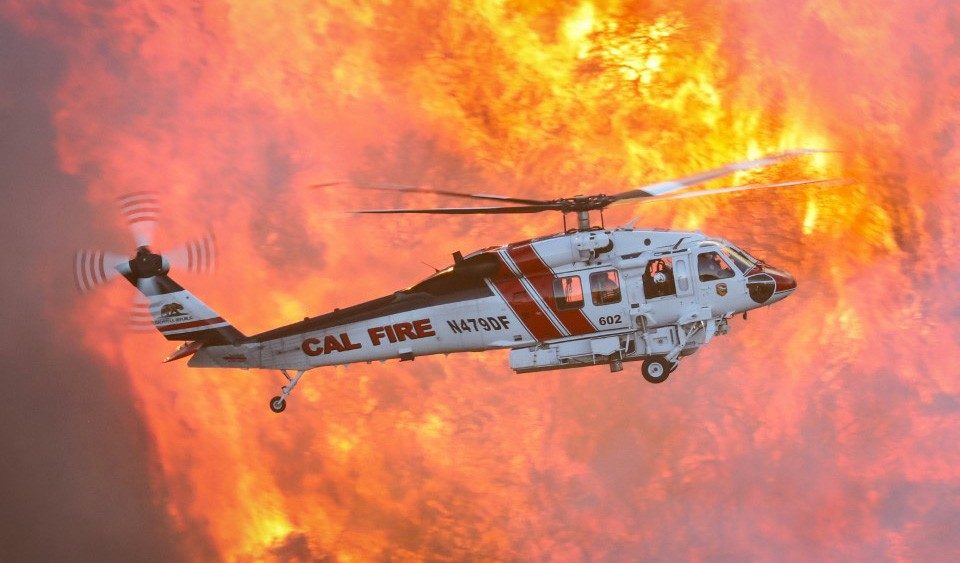
Wildfires are becoming one of the defining natural disasters of the twenty-first century. Every summer, millions of hectares of forests burn across North America and Southern Europe, while rising temperatures and prolonged droughts continue to increase both the frequency and intensity of these fires. Fighting them requires increasingly sophisticated aerial firefighting capabilities.
Against this backdrop, the decision to begin production of the Sikorsky S-70 Firehawk at Lockheed Martin’s PZL Mielec facility in Poland is far more significant than it may initially appear.
For the first time, the legendary firefighting helicopter will be manufactured in Europe. The first customer is the Czech Republic, which has ordered two helicopters with an option for a third. These aircraft will eventually become part of the European Union’s rescEU emergency response fleet, designed to support member states during large-scale natural disasters and major wildfire emergencies.
The announcement is important in itself—but the helicopter behind the news is even more fascinating.
Although the Firehawk shares its unmistakable silhouette with the famous Black Hawk military helicopter, it has evolved into a highly specialized aircraft designed specifically for aerial firefighting, search-and-rescue missions, and disaster response.
From Battlefield to Fireline
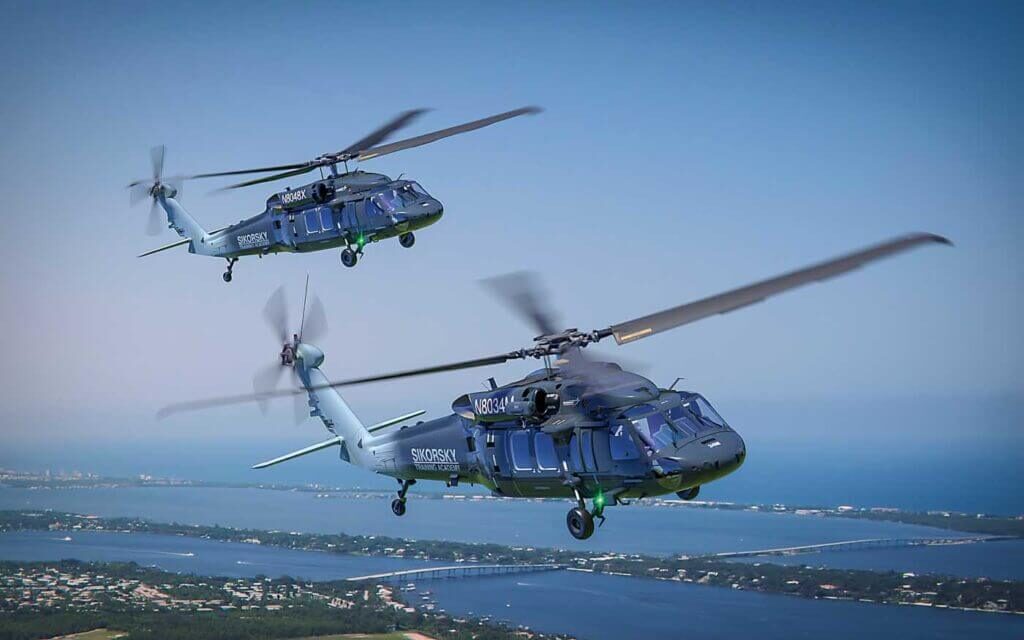
The Firehawk’s story begins with one of the most successful military helicopters ever built—the UH-60 Black Hawk.
Introduced during the late 1970s as the U.S. Army’s new utility helicopter, the Black Hawk quickly established a reputation for exceptional reliability, survivability, and operational flexibility.
Its rugged airframe proved so capable that engineers realized it could serve far more purposes than military transport alone.
Rather than designing an entirely new firefighting helicopter from scratch, Sikorsky and United Rotorcraft adapted the proven S-70 platform into a dedicated aerial firefighting aircraft.
The result combines military-grade durability with equipment specifically designed to combat large-scale wildfires.
Compared with many civilian helicopters, the Firehawk can operate under harsher conditions, carry heavier payloads, and perform multiple emergency missions without requiring separate aircraft.
What Makes the Firehawk Different?
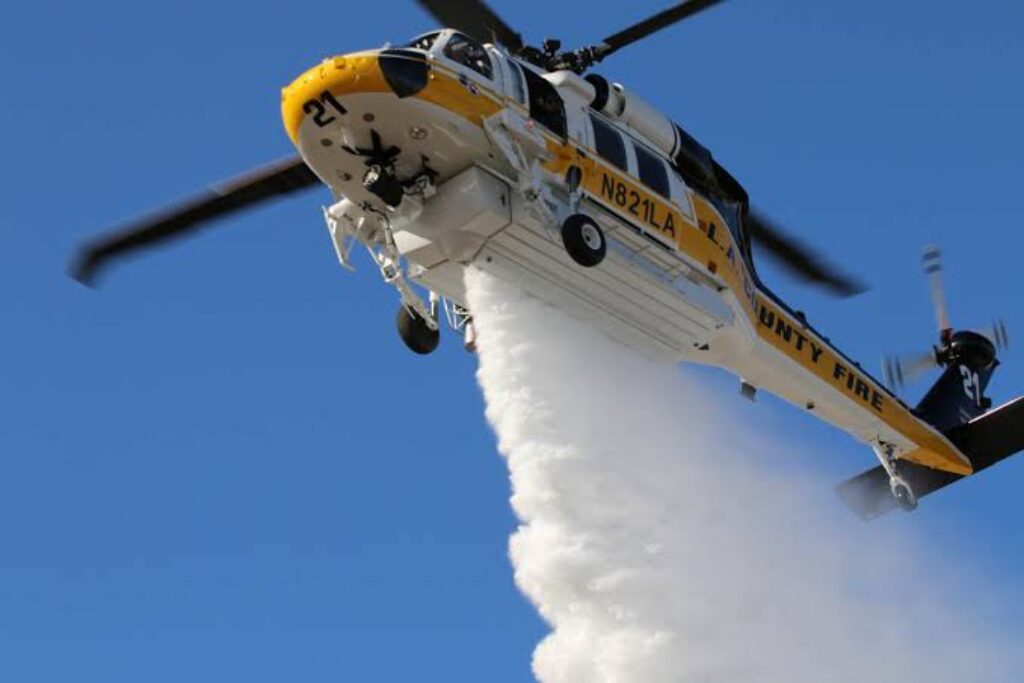
The Firehawk’s defining feature is its integrated firefighting system.
Most firefighting helicopters rely on externally suspended Bambi Buckets, which are carried beneath the aircraft on a cable.
The Firehawk takes a completely different approach.
Instead of carrying a suspended bucket, it features a permanently installed belly-mounted water tank with a capacity of 1,000 gallons (approximately 3,785 liters).
Water is collected using a retractable snorkel system, allowing the tank to be completely refilled in less than 45 seconds, provided a suitable water source is available nearby.
This configuration offers several major advantages.
The helicopter experiences less aerodynamic drag than bucket-equipped aircraft.
The fixed tank improves stability during flight.
The crew can precisely control both the amount and distribution of each water drop.
These advantages become especially valuable when attacking fast-moving wildfire fronts where every second matters.
Much More Than a Firefighting Aircraft
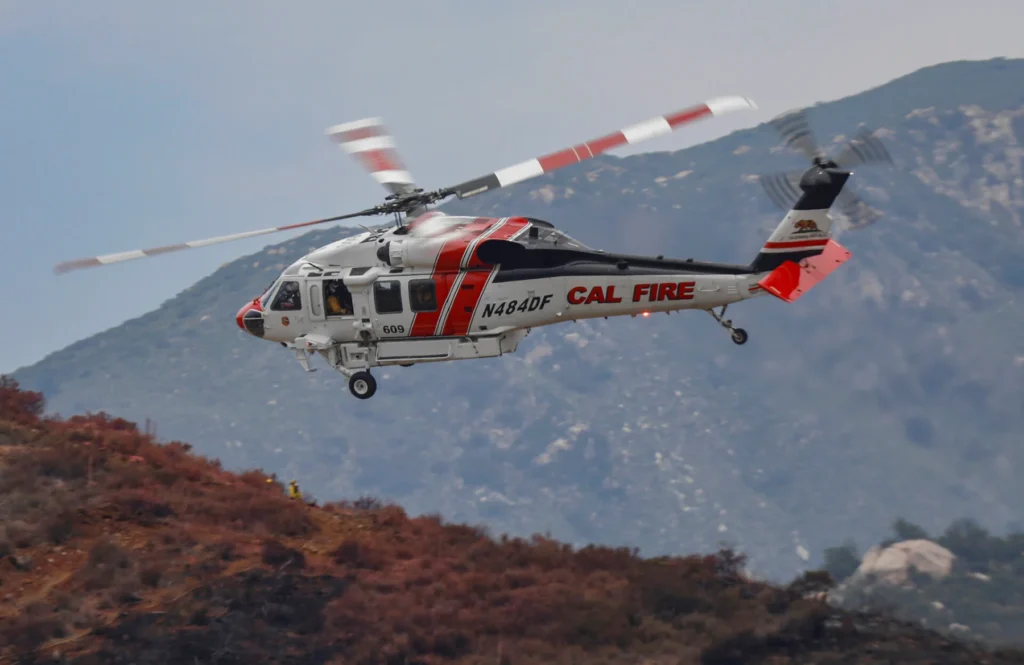
The Firehawk was designed as a true multi-role emergency response platform.
Once a firefighting mission is completed, the helicopter can quickly be reconfigured for entirely different operations.
Its mission profile includes:
- Wildfire suppression
- Search and rescue (SAR)
- Medical evacuation (MEDEVAC)
- Transport of firefighters
- Cargo transport
- Disaster relief operations
- Civil emergency response
The cabin accommodates up to 12 firefighters equipped with full gear or can be configured to transport medical personnel and casualties.
In practical terms, one Firehawk can replace several specialized helicopters.
Technical Specifications of the Sikorsky S-70 Firehawk
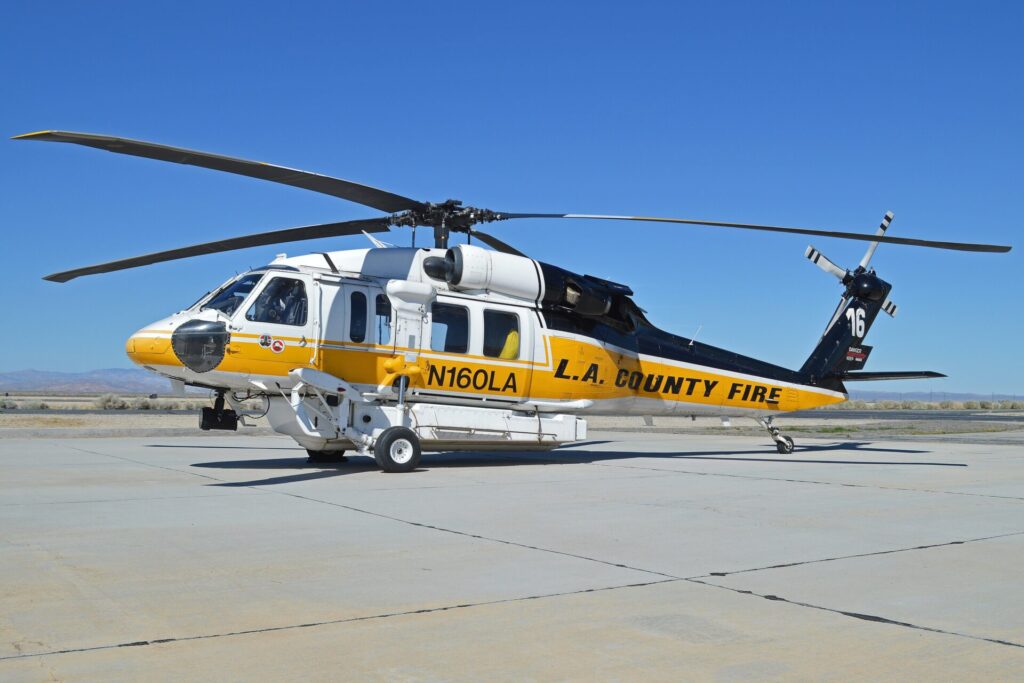
The Firehawk combines the proven Black Hawk platform with modern firefighting technology.
Type: Multi-role firefighting and rescue helicopter
Base Platform: Sikorsky S-70i Black Hawk
Manufacturer: Sikorsky / Lockheed Martin
European Production: PZL Mielec (Poland)
Crew: Two pilots
Firefighter Capacity: Up to 12 personnel
Engines: Two General Electric T700 turboshaft engines
Maximum Speed: Approximately 295 km/h (183 mph)
Cruising Speed: Around 280 km/h (174 mph)
Service Ceiling: More than 5,800 meters (19,000 feet)
Range: Approximately 590 kilometers (367 miles)
Integrated Water Tank Capacity: 3,785 liters (1,000 gallons)
Water Refill Time: Less than 45 seconds
Additional Equipment:
- Forward-looking infrared (FLIR) systems
- High-intensity searchlights
- Rescue hoist
- Medical evacuation equipment
- External cargo hook
- Modern digital avionics and navigation systems
These capabilities allow the aircraft to transition rapidly between firefighting, rescue, and disaster-response missions without extensive modification.
Proven in the World’s Toughest Fire Seasons
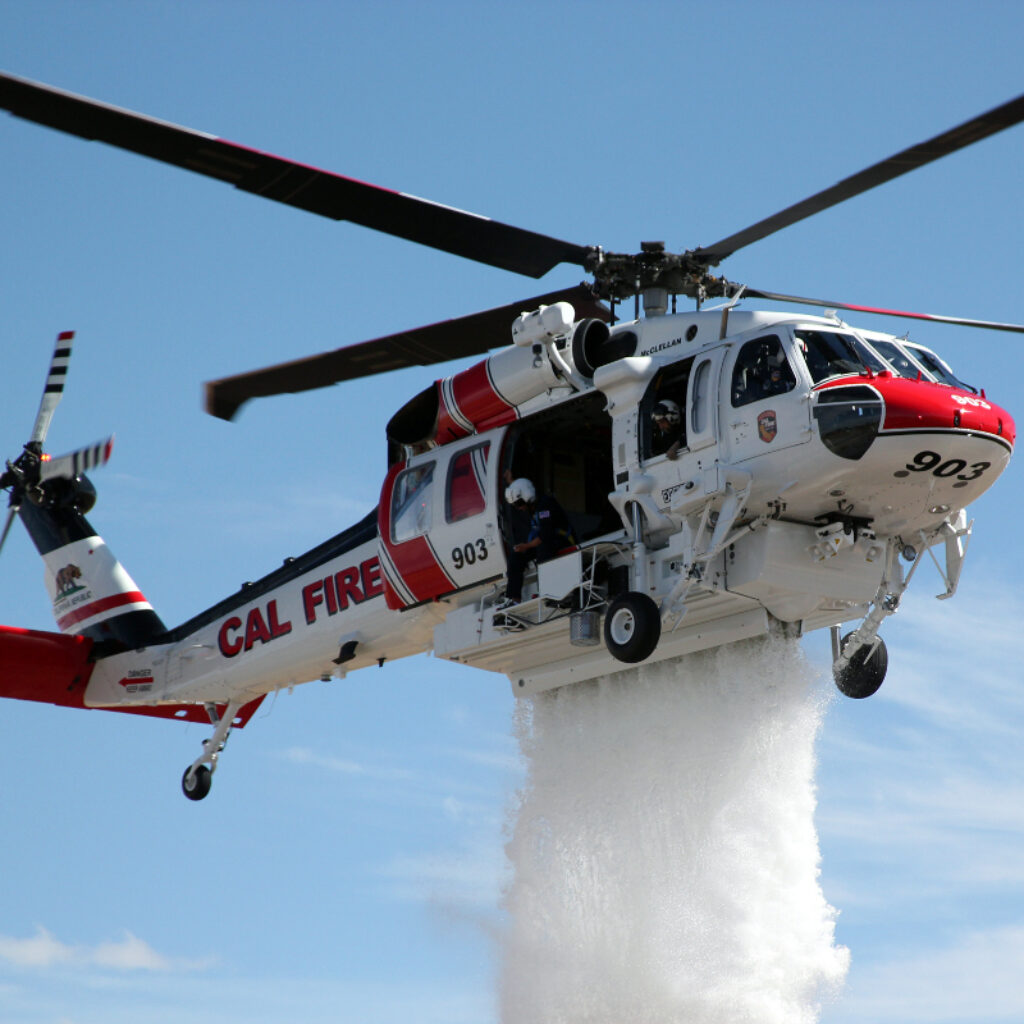
The Firehawk earned its reputation primarily in California, where annual wildfire seasons have become increasingly destructive.
The helicopter is operated by CAL FIRE, the Los Angeles County Fire Department, and several other emergency agencies across the United States.
Its combination of speed, payload, and rapid water refill capability allows crews to deliver more water in less time than many conventional firefighting helicopters.
Thermal imaging systems also enable crews to identify hidden hotspots, coordinate ground firefighters, and continue operations under conditions where conventional visual observation becomes difficult.
This versatility has made the Firehawk one of the most respected aerial firefighting helicopters currently in service.
Why Europe Is Building It Now
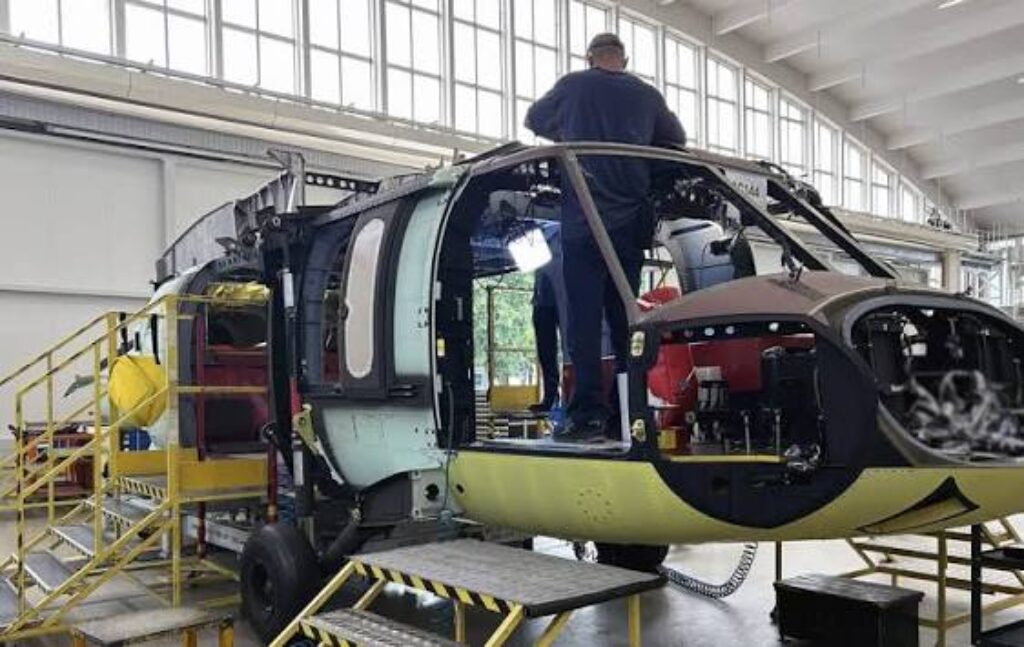
The decision to manufacture Firehawks in Poland reflects changing realities across Europe.
Southern European countries—including Spain, Greece, Italy, Portugal, France, and Croatia—have experienced increasingly severe wildfire seasons over the past decade.
As climate conditions continue to change, demand for specialized aerial firefighting aircraft has risen dramatically.
The European Union has responded by expanding the rescEU emergency aviation fleet, designed to rapidly deploy aircraft wherever major disasters occur.
Producing the Firehawk in Poland shortens delivery times, strengthens Europe’s emergency-response capabilities, and reduces dependence on overseas manufacturing.
A New Era for European Aerial Firefighting
At first glance, the opening of another helicopter production line may seem like a routine industrial development.
In reality, it represents a significant milestone.
For the first time, Europe will manufacture one of the world’s most advanced firefighting helicopters on its own territory.
The project will not only strengthen the continent’s ability to respond to increasingly destructive wildfires but also expand Europe’s aerospace industrial base.
The Firehawk itself tells an equally remarkable story.
Originally designed as a military transport helicopter, the Black Hawk has evolved into one of the world’s most effective firefighting and rescue aircraft.
Half a century after its first flight, the same rugged airframe that once carried soldiers into combat is now saving forests, protecting communities, and helping firefighters battle some of the largest wildfires on Earth.
That transformation may be one of the greatest demonstrations of the Black Hawk platform’s versatility—and now, thanks to production in Poland, Europe is becoming part of that story as well.






