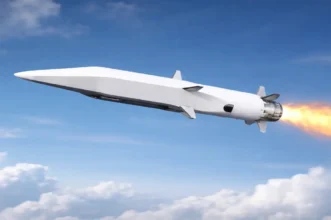
Japan Built a Missile to Kill Ships — Now It May Be Able to Hunt Aircraft: Why the ASM-3 Kai Needs a Second Job

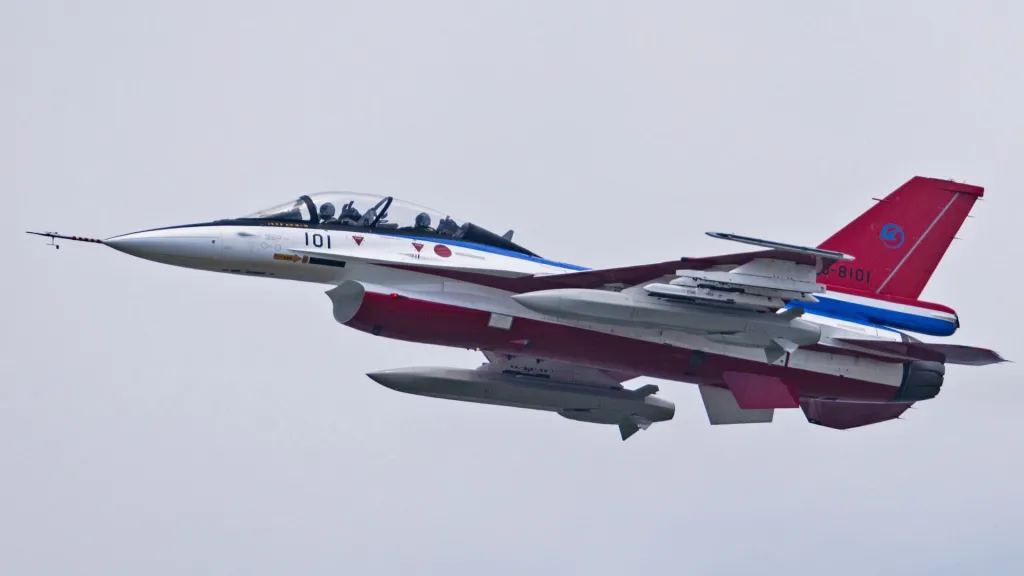
A short line in Japan’s fiscal 2027 defense budget request may significantly change how we understand one of the country’s most important new air-launched weapons. Japan’s Ministry of Defense described the ASM-3 Kai not simply as an anti-ship missile, but as an “air-to-ship/air-to-air missile.” Until now, the ASM-3 family had been publicly associated primarily with the anti-surface mission for Mitsubishi F-2 fighters. The new wording points to an additional role against airborne targets — and subsequent Japanese reporting indicates this is indeed an intended capability rather than a simple translation oddity.
That makes the story much more interesting than the ASM-3 Kai itself. Over the past several decades, air-to-air missiles have generally been designed to remain compact enough for fighters to carry several of them and, in the case of stealth aircraft, to fit them inside internal weapon bays. The ASM-3 comes from an entirely different design philosophy. It is a large supersonic anti-ship missile powered by a ramjet, capable of sustained flight at around Mach 3. For conventional air combat, such a weapon might seem excessive. But only as long as the intended target is another fighter. Replace that fighter with an airborne early warning aircraft, command-and-control platform, reconnaissance aircraft, or tanker, and many of the disadvantages of a very large missile suddenly become advantages.
Japan may have concluded that the best way to defeat large numbers of enemy fighters is not necessarily to start with the fighters. It may be better to attack the aircraft that allow those fighters to operate effectively in the first place.
The ASM-3 Was Built for a Completely Different War
The story of the ASM-3 began much more conventionally. Mitsubishi Heavy Industries developed it as Japan’s new supersonic anti-ship missile for the Mitsubishi F-2, an aircraft that itself occupies a distinctive place in Japanese aviation. Although derived from the American F-16, the F-2 received a larger wing, extensive Japanese electronics, and a strong emphasis on maritime strike missions. Developing a modern indigenous anti-ship weapon was therefore a logical extension of the aircraft’s mission.
The defining feature of the ASM-3 was speed. Instead of following the traditional subsonic approach used by many Western anti-ship missiles, Japan adopted an integral rocket-ramjet propulsion system capable of sustaining speeds around Mach 3. Such a design is considerably more demanding than a conventional subsonic cruise missile, but it dramatically reduces the defender’s reaction time: a ship’s air-defense system has much less time to detect, classify, engage, and destroy the incoming weapon. Japan’s own Acquisition, Technology & Logistics Agency describes the original ASM-3 as a weapon intended to more effectively defeat combat vessels equipped with advanced air defenses.
The growth of Chinese naval air defenses, however, gradually changed the requirement. The original ASM-3 did not provide enough standoff range for the emerging operational environment, leading Japan toward progressively longer-ranged derivatives. The current development path has produced the ASM-3A and the extended-range ASM-3 Kai/ASM-3ER, with the latter intended to provide a range exceeding 400 kilometers while retaining high supersonic performance. The exact performance of the operational missile remains classified.
Until recently, the logic appeared straightforward: as Chinese warships acquired longer-ranged air defenses, Japan extended the reach of its anti-ship missile so that the launching F-2 would not have to approach as closely.
Then the words “air-to-air” appeared alongside the ASM-3 Kai.
And the purpose of this enormous missile suddenly began to look very different.
Why Fire an Anti-Ship Missile at an Aircraft?
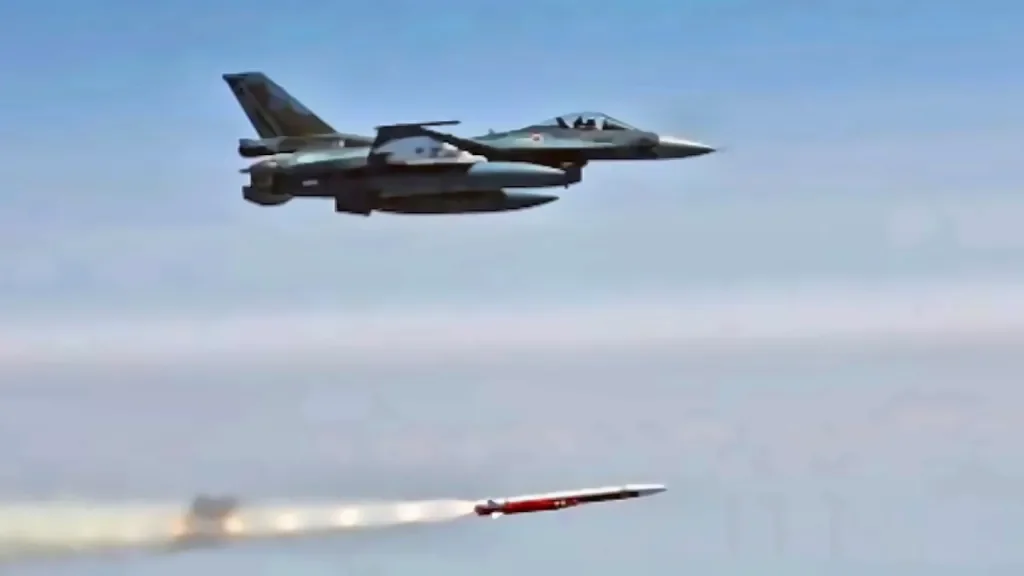
At first glance, the idea sounds strange. A typical modern air-to-air missile is considerably smaller than the ASM-3. Compact dimensions allow a fighter to carry multiple weapons, reduce aerodynamic drag, and make the missile better suited to engaging maneuvering targets. The ASM-3, by contrast, was designed to attack ships. It is larger than a conventional air-combat missile, uses a powerful propulsion system, and was originally optimized against an entirely different class of target.
But size also provides room for propulsion and fuel, while the ramjet offers another important advantage. A conventional rocket-powered air-to-air missile receives an enormous burst of energy after launch. Once its motor burns out, however, the missile spends the rest of the engagement consuming that stored kinetic and potential energy. The farther away the target is, and the more aggressively it maneuvers, the less energy the missile may have left during the terminal phase.
A ramjet offers a different solution. As long as the necessary operating conditions are maintained, the missile can continue producing thrust and sustaining high speed. The same basic principle explains much of the appeal of Europe’s Meteor air-to-air missile: the important characteristic is not simply maximum range, but the ability to retain considerable energy near the target.
The ASM-3 Kai applies that basic propulsion advantage to a much larger weapon that was originally designed for another purpose. If it can indeed engage aircraft, the combination of long range and sustained supersonic flight could make it particularly dangerous to targets that cannot defend themselves through maneuver in the same way as fighters.
An airborne early warning aircraft, for example.
The Real Target May Not Be the J-20, but China’s KJ Aircraft
Modern air warfare stopped being a contest between individual fighters long ago. Behind a formation of combat aircraft stands a much larger system. Airborne early warning and control aircraft monitor vast areas, distribute targeting information, warn fighters of incoming threats, and allow them to operate without constantly relying on their own radars. Electronic and signals-intelligence aircraft collect information about the enemy. Tankers extend patrol endurance and combat radius. Airborne command posts help coordinate the entire system.
Destroying one such aircraft may be operationally far more valuable than destroying a single fighter.
China is particularly relevant in this regard. The People’s Liberation Army has invested heavily in airborne early warning aircraft, including the KJ family, while newer platforms are expected to further expand its ability to detect threats and coordinate air operations. These aircraft are crucial nodes in the broader system that allows Chinese fighters to operate as part of a network rather than as isolated platforms.
The problem is that such aircraft are extremely difficult to attack conventionally. An AWACS does not normally fly directly along the front line. It remains far behind friendly fighters, benefits from their protection, and uses the long range of its radar precisely so that it does not have to approach the enemy.
To attack it with a conventional medium- or long-range air-to-air missile, a Japanese fighter might first have to penetrate the defensive screen.
The ASM-3 Kai potentially offers a completely different approach.
There is no need to fight your way toward the AWACS if the missile can travel hundreds of kilometers to reach it instead.
The ASM-3’s Seeker Makes the Idea Even More Interesting
Long range alone does not make a missile effective against airborne targets. An aircraft can move a considerable distance during the weapon’s flight, meaning the missile needs sophisticated guidance and the ability to independently acquire its target during the terminal phase.
This is where the ASM-3 has another potentially useful characteristic. The missile is understood to employ an active/passive radar seeker. In active mode, its own radar searches for and tracks the target. In passive mode, it can home on electromagnetic emissions produced by the target itself.
For an anti-ship missile, this makes obvious sense. Modern warships generate significant electromagnetic emissions from their radars and other systems.
But an airborne early warning aircraft has exactly the same defining characteristic.
Its primary weapon is an enormous radar.
And to perform its mission, that radar normally has to transmit.
This creates an uncomfortable possibility: the very system that allows an AEW&C aircraft to detect threats hundreds of kilometers away could potentially help a missile locate the aircraft itself. A passive channel is especially interesting because the weapon would not necessarily need to illuminate the target continuously with its own radar during the entire approach. An active seeker could then potentially provide terminal target acquisition.
There is now also an important update to the original reporting. Japanese defense reporting on September 2 states that the Ministry of Defense intends to provide the ASM-3ER with its air-to-air capability through software changes rather than hardware modifications, with production and procurement planned from FY2027 and operational service expected around FY2030. That makes the concept considerably more concrete than it appeared when the unusual budget wording was first noticed.
A Huge Missile Does Not Need to Chase Fighters
This is why it would be misleading to imagine the ASM-3 Kai as a Japanese equivalent of the AIM-120. Japan already possesses conventional air-to-air weapons, including the American AMRAAM and its indigenous AAM-4 family. The ASM-3 does not need to replace them.
Its potential niche exists much farther away.
A large missile creates substantial aerodynamic drag, reduces the number of weapons an aircraft can carry, and was never originally optimized for chasing highly maneuverable fighters. But an AEW&C aircraft, tanker, or reconnaissance platform does not possess the maneuverability of a J-20. Such aircraft are large, valuable, and relatively vulnerable. Their primary defense is distance.
And distance is precisely what an enormous long-range missile can take away.
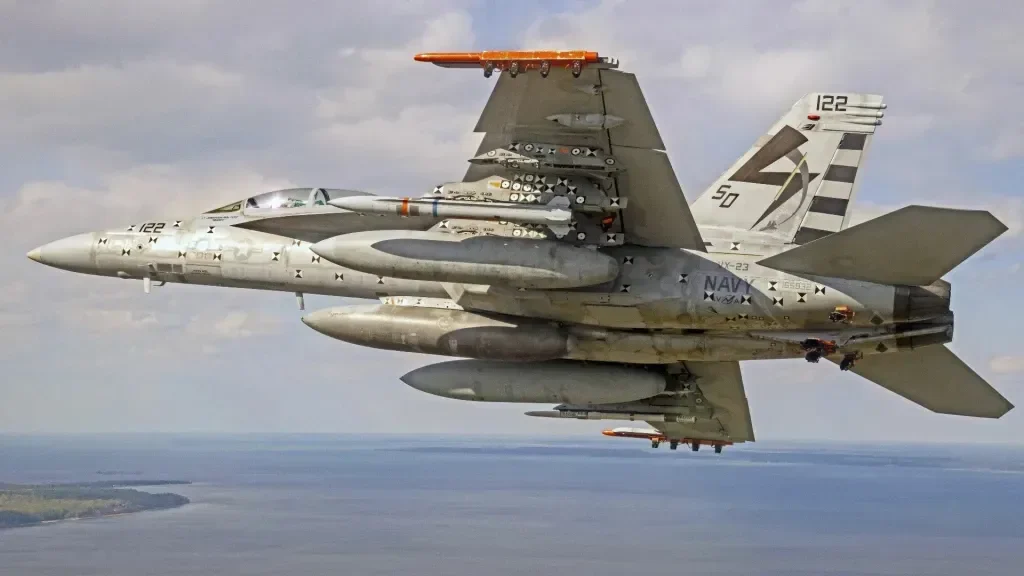
The concept is not uniquely Japanese. China has developed very long-range air-to-air weapons widely associated with attacks on high-value support aircraft. The United States has fielded the AIM-174B, an air-launched derivative of the SM-6 family — effectively turning a very large naval surface-to-air missile into an extremely long-range fighter weapon. At the same time, the AIM-260 and newer AIM-424 Malice represent further American efforts to push air-to-air engagement ranges outward. Europe is exploring a similar anti-high-value-airborne-asset role with the ramjet-powered STRATUS RS concept.
An interesting trend is emerging.
The air-to-air missile is becoming enormous again.
Not because conventional missiles have stopped working.
But because a new category of target has become increasingly important.
Modern Air Combat Is Becoming a Hunt for the Enemy’s “Eyes”
During World War II, destroying an enemy aircraft almost directly reduced the opponent’s combat power: one fighter lost meant one pilot, several guns, and one aircraft removed from the sky. In modern networked warfare, however, different aircraft have radically different operational value. A fighter is only the final component of a much larger information system.
An AEW&C aircraft can support dozens of fighters simultaneously.
A tanker can allow multiple formations to remain on station much longer.
An electronic-intelligence aircraft can detect radar emissions and help construct an electronic picture of the battlespace.
Destroying such platforms can therefore produce effects far beyond the value of the individual aircraft itself.
Destroying an AWACS does not merely mean eliminating one airplane.
It can reduce the surveillance reach of an entire force, compel fighters to rely more heavily on their own sensors, complicate target allocation, and potentially force the remaining AEW&C aircraft to operate even farther from the contested area.
The missile may not even have to score a kill to produce an operational effect.
If the existence of weapons like the ASM-3 Kai forces enemy AEW&C aircraft to establish their orbits another 100 or 200 kilometers farther from the threat, part of the mission has already been accomplished. Greater standoff distance can reduce how deeply airborne sensors can observe into contested airspace and make the overall air battle more difficult to manage.
A very long-range missile therefore begins influencing the enemy before the first shot is fired.
It changes the geography of air warfare.
Japan Is Joining a Much Larger Global Trend
Until recently, air-to-air missile range was usually discussed primarily in terms of fighter duels. The farther the missile could reach, the sooner a pilot could attack an opposing fighter.
That logic is beginning to change.
The United States is developing increasingly long-range weapons. China has fielded the PL-15 and developed even larger weapons such as the PL-17. Europe is looking beyond Meteor toward a new generation of long-range missiles. The reason is not simply that modern radars can see farther.
The architecture of air warfare itself is changing.
Fifth-generation fighters attempt to operate with reduced signatures.
Uncrewed aircraft are becoming additional sensors and weapon carriers.
Targeting information can come from satellites, ships, ground-based radars, and other aircraft.
As a result, the missile increasingly does not need to receive all of its targeting information directly from the fighter that launched it. The fighter can become a forward-positioned weapons carrier while another platform provides the target track.
This matters enormously for a missile capable of traveling several hundred kilometers.
An F-2 does not necessarily have to detect an AWACS at 400 kilometers with its own radar.
It only needs to know where the AWACS is.
It Is Almost Anti-Ship Warfare — Except the Target Is Now in the Air
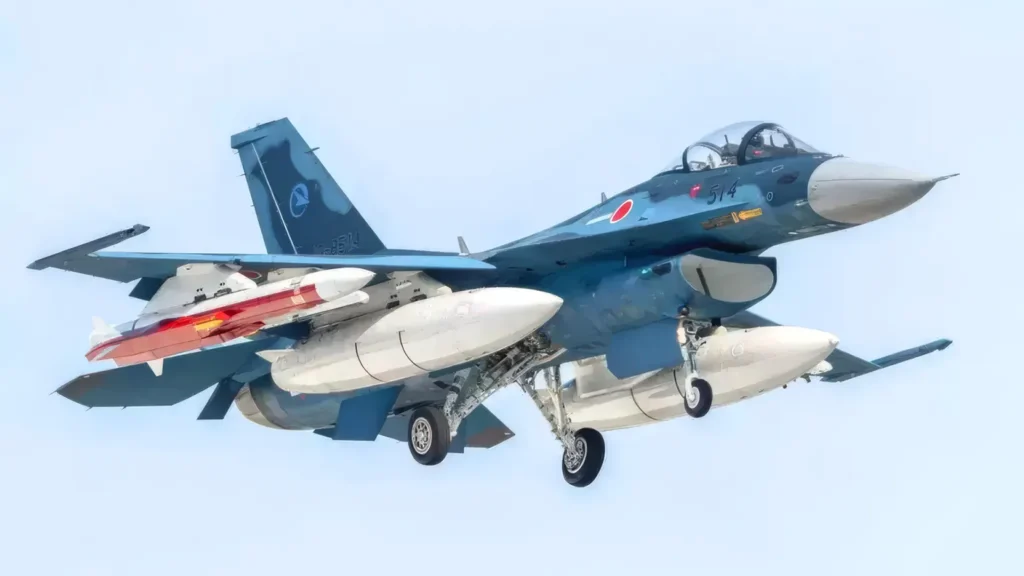
And here the story unexpectedly comes full circle.
The ASM-3 was designed to attack ships precisely because a modern warship is a large, valuable target surrounded by powerful defenses. The launching aircraft was not supposed to enter a direct duel with the ship. It would receive targeting information, launch its missile from a safer distance, and allow the weapon to complete the attack.
But an AEW&C aircraft in modern air warfare increasingly resembles a warship in several important ways.
It is large.
It is expensive.
It carries a powerful radar.
It is protected by fighters.
It serves as a crucial node in a much larger command-and-control network.
And, most importantly, the enemy tries to keep it as far away from danger as possible.
A weapon developed to attack ships may therefore turn out to be surprisingly well suited to attacking such an aircraft.
Not because ships and aircraft have suddenly become identical targets.
But because their operational roles have begun to resemble one another.
Both are large, high-value nodes in a network whose loss can affect many other combat platforms.
What Began as One Strange Line in a Budget Document Is Becoming Much More Concrete
When the story first emerged, there was an important distinction to make between an intriguing hypothesis and a confirmed capability. Japan’s Ministry of Defense had used the unusual “air-to-ship/air-to-air” description, but there had been no public explanation of exactly what that meant. The War Zone appropriately treated the wording cautiously.
Fresh reporting has now filled in part of that gap. Naval News reports that the Japanese Ministry of Defense intends the ASM-3ER to perform the air-to-air mission without hardware changes, relying instead on software modifications. The same reporting says mass production and procurement are planned to begin in FY2027, with operational introduction expected in FY2030. The likely targets would not be every enemy aircraft in the sky, but high-value airborne assets such as AEW&C aircraft and aerial refueling tankers.
That distinction is important.
Using a large, expensive ASM-3 against ordinary fighters would make little economic or operational sense when Japan already has dedicated air-to-air missiles.
Using it to threaten a tanker or AWACS hundreds of kilometers away is a very different proposition.
Perhaps Japan Does Not Need a New Missile — It Needs a New Target for an Existing One
Japan has been rapidly expanding the reach of its air-launched weapons. The F-2 is being adapted for new long-range strike systems, while Tokyo’s broader defense plans increasingly emphasize standoff weapons, distributed sensing, air and missile defense, and the ability to engage threats farther from the Japanese home islands. The ASM-3 Kai’s new role therefore does not look like an isolated technical curiosity. It fits into a much broader transformation of Japanese airpower.
A Japanese fighter no longer has to defeat an opponent only in a conventional air battle.
It can attack ships hundreds of kilometers away.
It can participate in long-range strike missions.
It can operate as part of a network in which another platform provides the target.
And now it may be able to send a large supersonic missile toward an aircraft whose crew believed they were operating safely far behind the fighter battle.
That is why a seemingly minor line in a Japanese budget document matters.
The ASM-3 Kai is not interesting simply because Japan has found a way to make an anti-ship missile attack aircraft. Weapons have crossed traditional mission boundaries before.
The more important development is the logic behind it.
In the air war of the future, the enemy’s most valuable aircraft may not be its most advanced fighter. Instead of trying to shoot down ten fighters, it may be far more attractive to launch one very long-range missile at the aircraft that allows those ten fighters to fight effectively in the first place.
If that is the mission Japan intends for the ASM-3 Kai, then the anti-ship missile has not acquired a second profession by accident.
It has simply discovered that the most important targets in modern warfare are no longer found only at sea.