
Poland Is Returning to the Big-League Naval Game: Why the New Wicher Frigate Is About Much More Than One Ship

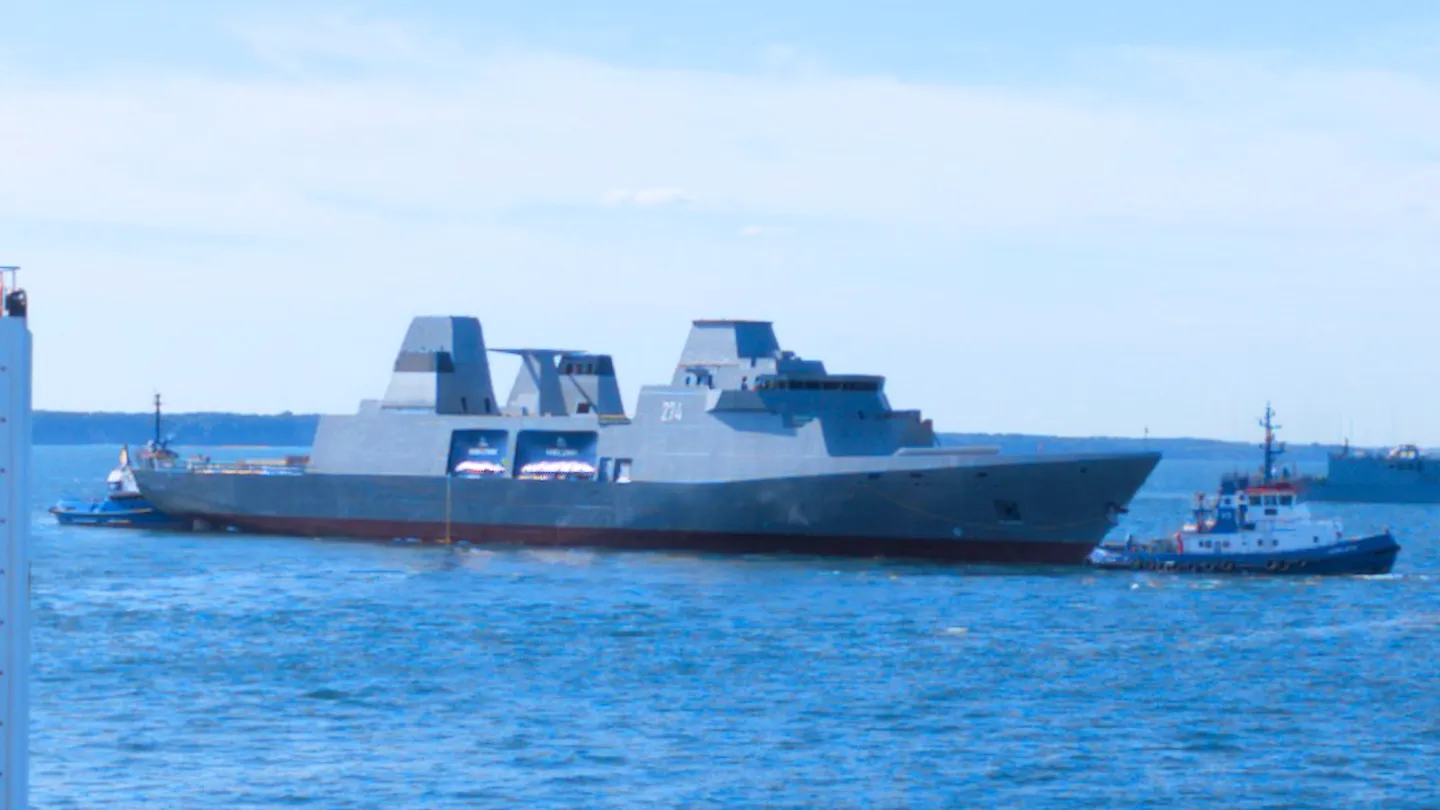
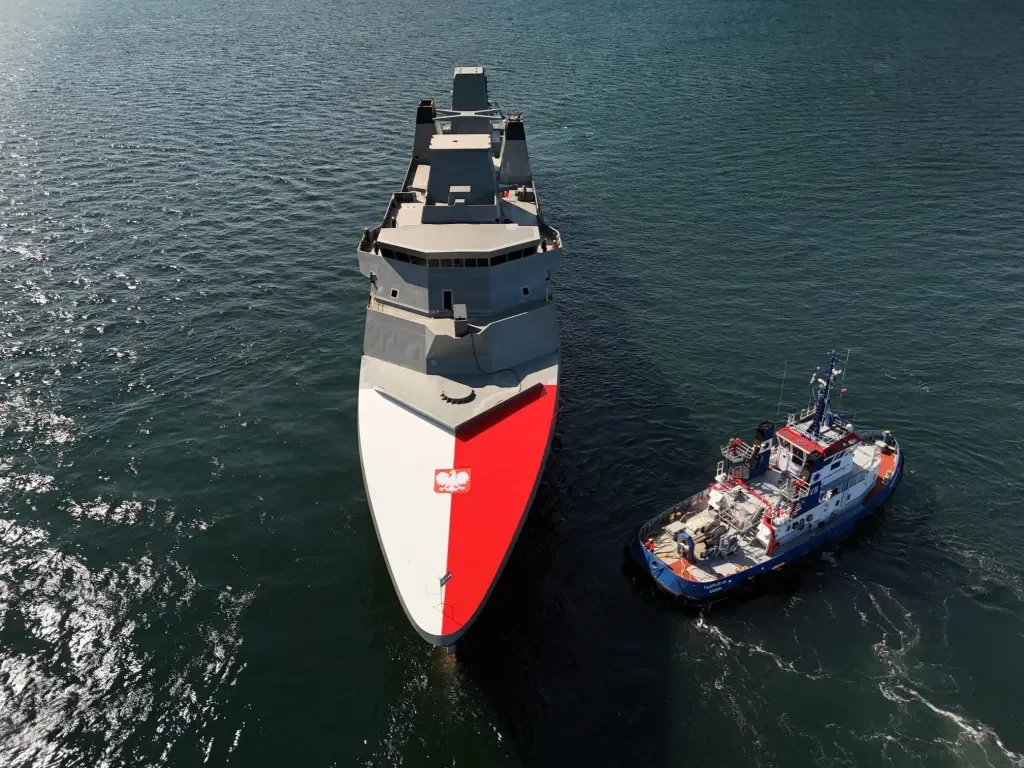
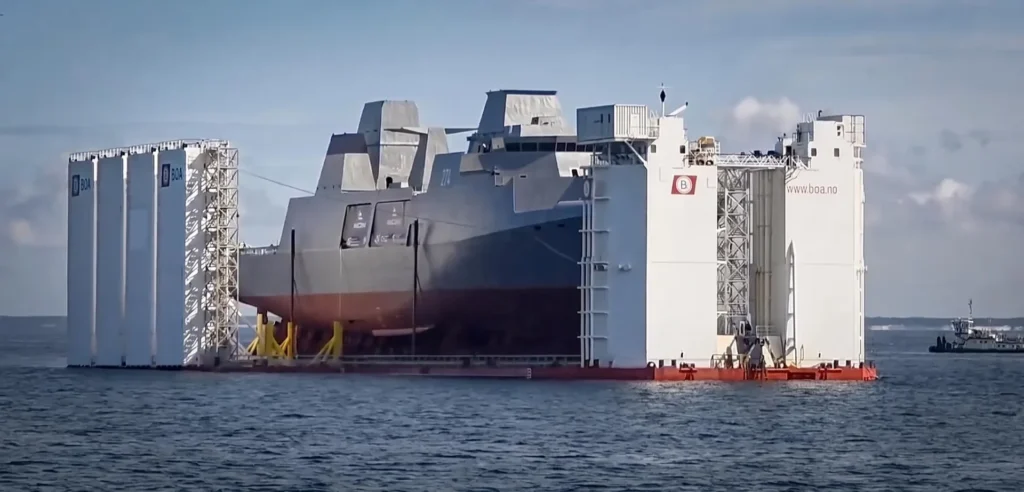
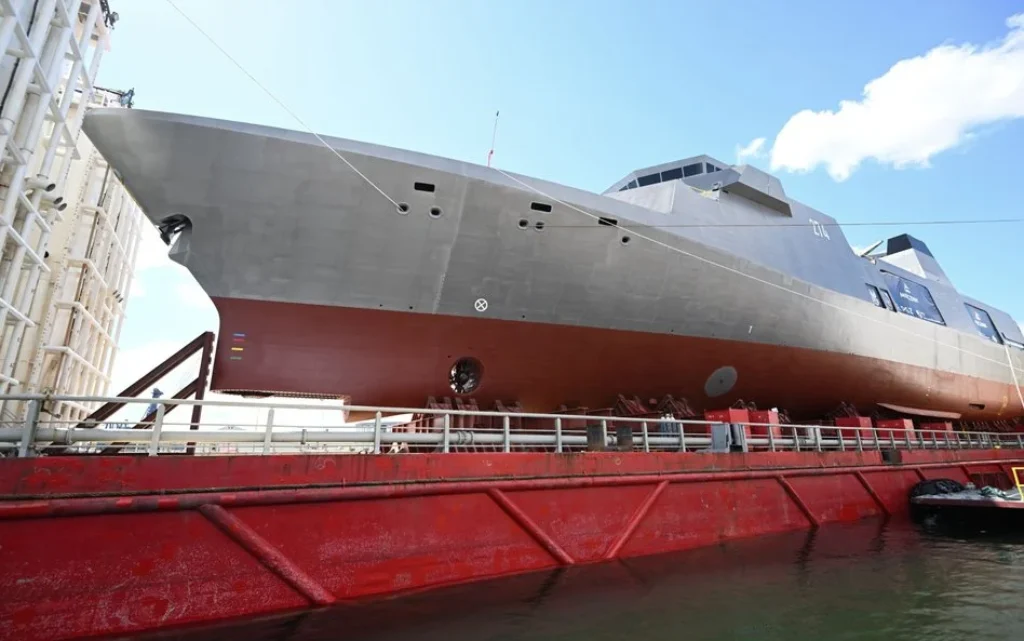
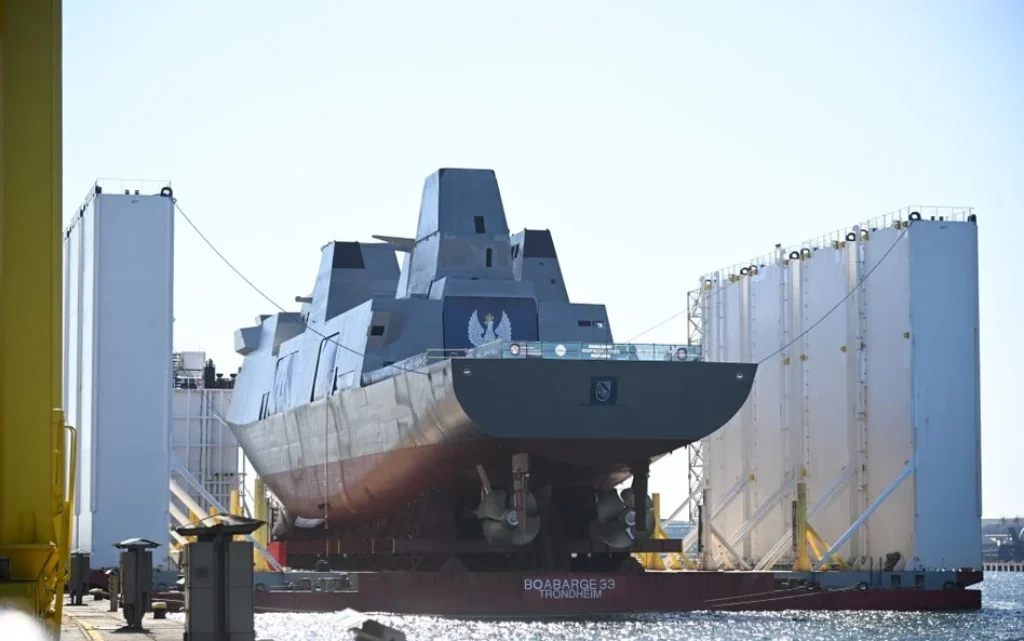
On August 13, 2026, an event took place in the Gulf of Gdańsk that might at first glance seem fairly routine: a new warship was launched. But the future ORP Wicher is anything but an ordinary addition to the Polish Navy. It is the largest surface combatant built for Poland since the interwar period and the first representative of an entirely new generation of Polish frigates. At around 138 meters long and with a maximum displacement of roughly 7,000–7,700 tons, it actually sits close to the boundary between a modern frigate and a destroyer.
More importantly, for the first time in decades Poland is receiving not a second-hand foreign warship, but a domestically built platform equipped with 32 Mk 41 vertical launch cells, CAMM-family surface-to-air missiles, NSM anti-ship missiles, a comprehensive anti-submarine warfare suite, and powerful radar systems.
Wicher is therefore not simply a new ship. It is part of an attempt to rebuild Poland’s blue-water surface fleet almost from scratch.
From American Second-Hand Frigates to a Nearly 8,000-Ton Warship
To understand the scale of the change, it is worth looking at the ships Wicher is intended to replace.
Among the Polish Navy’s largest surface combatants today are ORP Generał Kazimierz Pułaski and ORP Generał Tadeusz Kościuszko, former U.S. Navy Oliver Hazard Perry-class frigates. Both were built in the first half of the 1980s and later transferred to Poland. Symbolically, their ships’ horns accompanied the launching ceremony of Wicher.
The difference between the two generations is enormous.
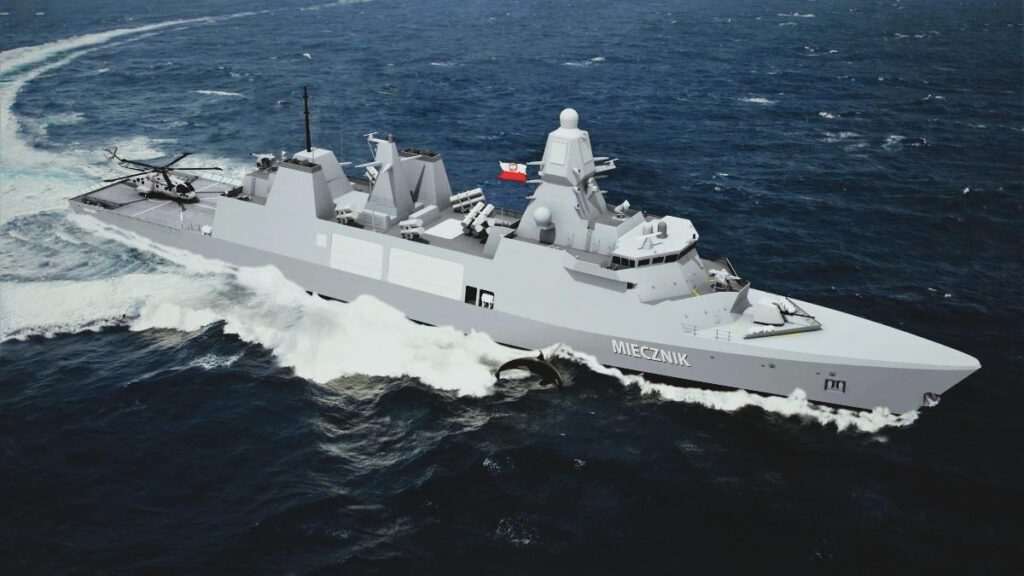
The Oliver Hazard Perry class was conceived during the Cold War as a relatively inexpensive escort. Poland received ships that were already far from new and then kept them in service for decades. Miecznik, by contrast, has been designed from the outset as a modern multirole combatant capable of performing anti-air, anti-surface, and anti-submarine warfare.
And calling Wicher simply a “frigate” is largely a matter of classification.
With a maximum displacement estimated at around 7,000–7,700 tons, the ship is heavier than many destroyers of previous generations. For comparison, an early Flight I Arleigh Burke-class destroyer displaces roughly 8,300 tons at full load.
In other words, Poland is building a ship that in terms of size is already approaching traditional destroyer territory.
British Design, Danish Roots, Polish Configuration
Warsaw did not attempt to design the new frigate entirely from scratch.
In 2022, the British Arrowhead 140 platform developed by Babcock was selected for the Miecznik — “Swordfish” — program. Its competitors included Germany’s MEKO A-300PL and Spain’s F-100.
Arrowhead 140 was particularly attractive because it belongs to a mature design family built around an already proven architecture.
Its lineage is rather interesting:
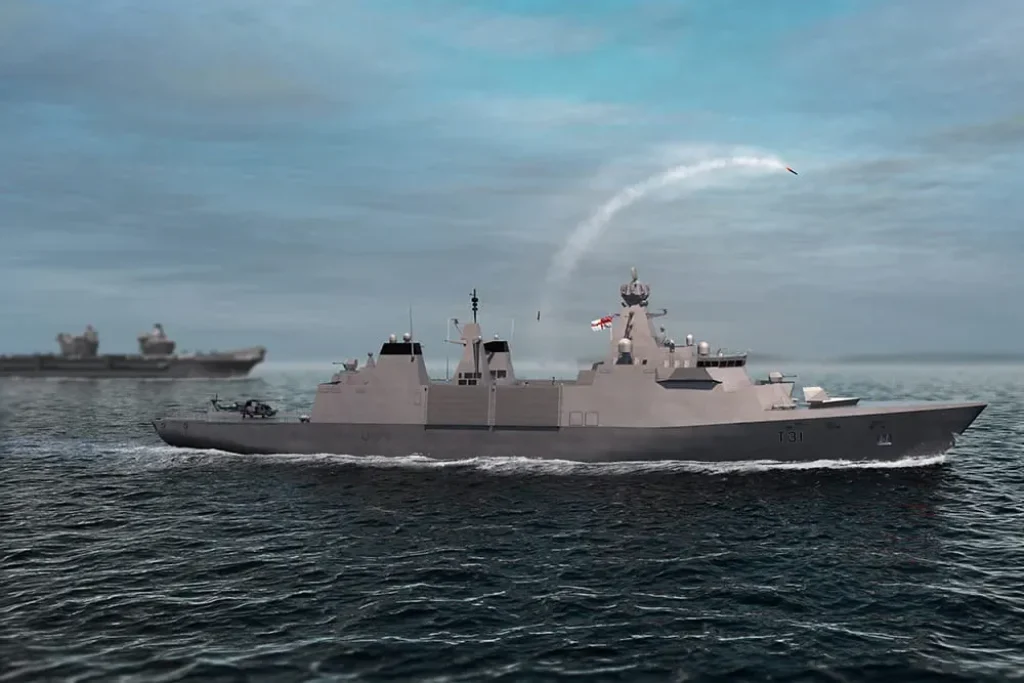
Danish Iver Huitfeldt → British Arrowhead 140 → Type 31 → Polish Miecznik.
However, the Polish ship should not be regarded as merely a copy of Britain’s Type 31.
The underlying platform is indeed common, but Poland ordered a considerably more heavily equipped configuration. Whereas the British Type 31 was conceived primarily as a relatively affordable general-purpose frigate, Miecznik places much greater emphasis on air defense and anti-submarine warfare.
This is where one of Arrowhead 140’s greatest advantages becomes apparent.
The ship was deliberately designed to be large.
The additional internal volume provides room for new equipment, different weapons, unmanned systems, and future modernization without having to redesign the entire hull every time a major upgrade is required.
For Poland, that matters greatly. These frigates are expected to remain in service for decades.
Miecznik-Class Specifications
The main characteristics currently associated with the Polish configuration are as follows:
| Design | Project 106 / Arrowhead 140PL |
| Length | approx. 138–138.7 m |
| Beam | approx. 19.7–20 m |
| Draft | approx. 5.5 m |
| Maximum displacement | approx. 7,000–7,700 tons |
| Core crew | approx. 120 |
| Additional personnel | up to 60 |
| Maximum speed | approx. 28 knots |
| Range | approx. 8,000 nautical miles |
| Economical cruising speed | approx. 18 knots |
| Endurance | approx. 30 days |
| Propulsion | CODAD |
| Main engines | 4 × MTU 20V8000 M71 |
| Power per engine | 8,200 kW |
| Propellers | 2 controllable-pitch propellers |
The propulsion system deserves particular attention. Each frigate receives four MTU 20V8000 M71 diesel engines rated at 8,200 kW each. Combined installed output therefore reaches approximately 32.8 MW, or roughly 44,600 horsepower.
CODAD may appear somewhat conservative compared with warships using gas turbines, but for a frigate it represents a rational compromise. The Polish Navy does not need the ship to race across the ocean at 35 knots. What it does need is good fuel economy and substantial range.
And 8,000 nautical miles is almost 14,800 kilometers.
Miecznik is therefore clearly not merely a coastal patrol ship for the Baltic.
32 Mk 41 Cells — And This Is Where Things Get Interesting
The centerpiece of the ship’s missile armament is the Mk 41 Vertical Launching System.
Miecznik is planned to have 32 cells.
That alone represents a respectable missile capacity for a European frigate, but the selected surface-to-air missile family makes the arrangement particularly interesting. The principal air-defense weapon will be MBDA’s CAMM family.
CAMM’s compact dimensions allow multiple missiles to be carried in a single launch cell. Depending on the precise launcher and missile configuration, this creates the potential for a very deep defensive magazine.
Theoretically, if all 32 cells were configured to accommodate four compatible CAMM missiles each, the total could reach:
32 × 4 = 128 missiles.
A real operational loadout would almost certainly be more complicated and depend on the mission, but the figure demonstrates the potential magazine depth offered by the combination.
The CAMM family also gives Poland room for growth.
Standard CAMM provides local-area air defense, while the larger CAMM-ER substantially extends the engagement envelope. The future CAMM-MR, being developed through British-Polish cooperation under the Future Common Missile effort, is intended to push engagement ranges to around 100 kilometers or more.
This means Miecznik has the potential to evolve from a ship primarily capable of defending itself and nearby vessels into a genuine area-air-defense node.
The Mk 41 brings another important advantage.
It is compatible with a broad family of American and allied missiles. This does not mean Poland will automatically acquire weapons such as Tomahawk, SM-2, or ASROC — those would require separate procurement decisions and integration with the ship’s combat system.
But the physical infrastructure for expanding the ship’s weapons options is already there.
And that may make Mk 41 strategically more important than the frigate’s initial missile loadout.
NSM: Eight Missiles Initially, Potentially Sixteen
The anti-ship armament has undergone an interesting evolution.
Earlier plans contemplated Saab RBS15 Mk3E missiles, but the current configuration calls for eight Kongsberg Naval Strike Missiles, with provision for another eight.
That choice fits neatly into Poland’s existing military infrastructure because NSM is already operated by Polish coastal-defense units.
The missile is also more than a conventional anti-ship weapon.
NSM flies at very low altitude, uses a passive imaging infrared seeker, and can engage selected targets on land as well as ships. Miecznik therefore gains an independent precision-strike capability that is not limited exclusively to naval warfare.
In its maximum envisaged configuration, a frigate could potentially carry 16 NSMs.
In the confined waters of the Baltic, that would represent a very substantial anti-ship salvo.
If the Missiles Get Through, There Are More Defensive Layers
The Polish configuration becomes especially interesting when examining its close-range defenses.
A 76mm Leonardo Super Rapido Strales gun will be installed forward.
This is not simply a conventional naval gun.
The Strales system can employ guided DART ammunition intended, among other things, to engage incoming anti-ship missiles and other fast aerial targets. The main gun therefore also becomes part of the ship’s close-range air-defense architecture.
Poland has gone further still.
The design includes two 35mm weapon systems capable of using programmable ammunition, with the Polish OSU-35K being associated with this role. Remote-controlled 12.7mm weapon stations and heavy machine guns provide the final defensive layer.
The air-defense architecture can therefore be visualized approximately as:
CAMM-MR → CAMM/CAMM-ER → 76mm Strales/DART → 35mm programmable ammunition → electronic warfare and decoys.
For a modern warship, this is an increasingly logical arrangement.
Using an expensive surface-to-air missile against every small unmanned aircraft makes little economic sense. Ideally, the closer and less sophisticated the threat becomes, the cheaper the method used to destroy it should be.
Sea Master 410 Turns the Frigate Into a Floating Air-Defense Node
A missile, however, is only as effective as the sensors feeding it information.
Poland has not economized heavily in this area either.
The sensor suite is centered on Thales equipment integrated through the TACTICOS combat management system.
The configuration includes the Sea Master 410 multifunction radar, additional radar systems, STIR fire-control equipment, electro-optical surveillance systems, identification systems, and navigation radars.
TACTICOS combines the incoming data into a common tactical picture.
And this is where Miecznik’s real role becomes clearer.
The frigate is not merely intended to defend itself.
It can act as a sensor and command node for a wider force, detecting targets and distributing information to other ships, aircraft, or potentially shore-based systems.
In the relatively confined environment of the Baltic Sea, that capability can be particularly valuable.
Miecznik Is Far From Defenseless Underwater
The second major specialization of the design is anti-submarine warfare.
The frigates are planned to carry two complementary Thales sonar systems: a hull-mounted sonar and the CAPTAS-2 variable-depth/towed-array system. The latter is particularly important when searching for submarines beyond the effective coverage of a conventional hull-mounted sonar.
The ship’s own anti-submarine armament includes two twin 324mm torpedo launchers, with MU90 Impact lightweight torpedoes associated with the current configuration.
But the aviation component may be even more important.
The large flight deck and hangar can support a helicopter, while the Polish Navy already operates heavy AW101 anti-submarine helicopters.
A helicopter dramatically expands the ship’s submarine-search radius. The frigate can detect or classify a suspicious contact and then send aviation assets far beyond the ship’s immediate vicinity to investigate.
And this leads to another interesting feature of Miecznik.
The Ship Has Been Designed With Unmanned Systems in Mind
Arrowhead 140 incorporates four large boat bays.
These can potentially accommodate not only conventional boats but also unmanned surface vehicles. The large flight deck similarly creates opportunities for operating rotary-wing UAVs.
That opens up an interesting future architecture.
The frigate carries its powerful radar and sonar systems.
An unmanned surface vessel moves tens of kilometers ahead.
An aerial drone carries optical or other sensors beyond the ship’s radar horizon.
A helicopter hunts for submarines.
TACTICOS combines all of this information into a common picture.
At that point, the true “size” of the ship is no longer defined by the length of its hull.
Miecznik becomes the center of a small distributed reconnaissance and combat network.
Electronic Warfare: The Last Line of Survival
If an anti-ship missile penetrates the outer defensive layers, the fight shifts toward the ship’s own survival.
Miecznik will receive an electronic-warfare suite and the Terma C-Guard decoy system. The latter employs fixed 130mm launchers capable of deploying different countermeasures against radar-, infrared-, and acoustically guided threats.
The idea is simple: the ship does not have to physically destroy every incoming weapon if it can persuade some of them to attack something else.
Laser-warning equipment and dedicated systems for detecting underwater intruders further strengthen the defensive package.
The result is a layered protective bubble around the frigate rather than reliance on one supposedly unbeatable weapon system.
Three Ships — And Possibly Five More
For now, the Miecznik program covers three frigates:
ORP Wicher — planned entry into service in 2029;
ORP Burza — 2030;
ORP Huragan — 2031.
By the time Wicher was launched, construction of the second ship was already underway, while steel cutting for the third had begun in April 2026.
But three ships may be only the beginning.
The Arrowhead 140 licensing arrangement leaves open the possibility of Poland constructing up to five additional Miecznik-class frigates if Warsaw decides to expand the program.
That would fundamentally change its scale.
Three frigates represent a fleet modernization program.
Eight would amount to something much closer to rebuilding the Polish surface fleet.
Poland Is Buying More Than Ships
This may be the most important aspect of the entire program.
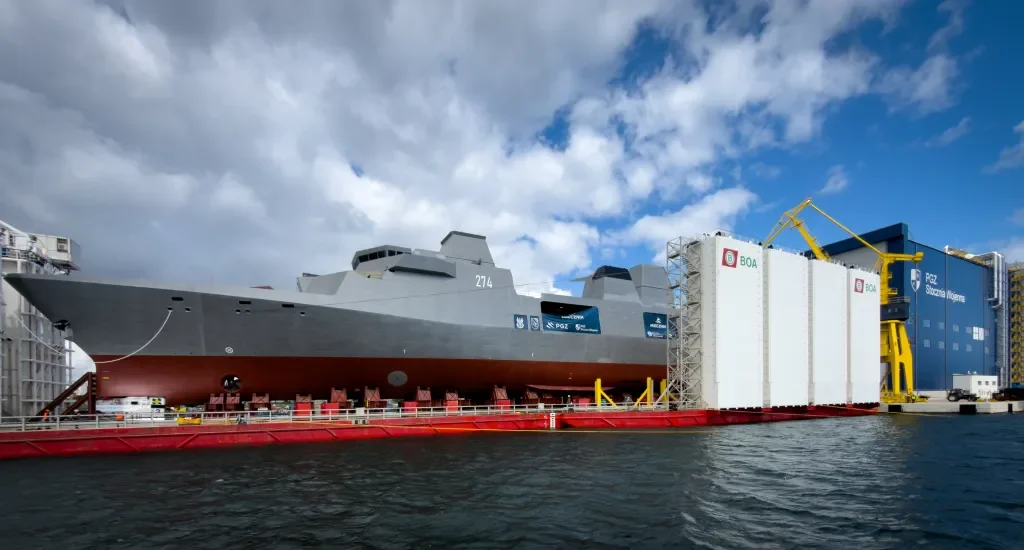
Wicher is being built in Gdynia by PGZ Stocznia Wojenna.
The Miecznik program required substantial modernization of the shipyard itself, including new production halls, upgraded quays, specialized equipment, and supporting infrastructure. Other Polish companies are participating in hull construction and systems integration.
Babcock provides the underlying design and technology transfer.
Thales supplies major elements of the combat system.
MBDA contributes to the air-defense architecture.
But construction and integration take place in Poland.
This is why Miecznik matters far beyond three hulls.
Once the program is completed, Poland will retain the shipyard infrastructure, equipment, engineers, welders, design teams, suppliers, and practical experience required to integrate a modern major surface combatant.
In other words, Poland is also purchasing the ability to build the next generation of ships.
There Is One Major Catch
Miecznik looks impressive on paper, but Wicher still has to be transformed from a launched hull into a fully operational combat system.
The ship now enters the long outfitting and integration phase, followed by harbor trials, sea trials, weapons testing, and crew training. Entry into operational service is not expected until 2029.
There is also a broader structural challenge.
The Polish Navy is relatively small, while Poland is simultaneously carrying out one of Europe’s most ambitious military modernization programs. New ships require more than procurement money. They need trained crews, shore infrastructure, ammunition stocks, maintenance facilities, specialists, and sustained funding for decades.
Three Miecznik-class ships will require roughly 360 sailors for their core crews alone.
Add reserve personnel, shore establishments, training organizations, technicians, and maintenance teams, and the actual manpower requirement becomes substantially larger.
If the fleet eventually expands to eight ships, the personnel challenge will become even more significant.
Why Wicher Really Changes the Polish Navy
One frigate by itself does not transform the balance of power at sea.
What makes Wicher important is everything behind it.
Poland is moving away from operating aging second-hand major surface combatants toward domestically constructing modern warships. And rather than selecting the cheapest possible Arrowhead 140 configuration, Warsaw has opted for a heavily equipped variant emphasizing air defense, anti-submarine warfare, anti-ship capability, modern sensors, and significant modernization potential.
The result is a rather unusual warship.
By designation, it is a frigate.
By displacement, it is approaching destroyer territory.
By armament, it is a multirole combatant with particularly strong air-defense and anti-submarine capabilities.
By design lineage, it is British with Danish roots.
By construction, it is Polish.
But perhaps the most important element is not actually aboard the ship.
Together with Wicher, Poland is rebuilding the industrial infrastructure and expertise needed to construct major modern warships after the Miecznik program itself is complete.
That is why the August 13, 2026 launch in the Gulf of Gdańsk should not be viewed merely as another frigate entering the water.
What Poland launched was the first ship of what could become an entirely new Polish Navy.






