Some historical figures gradually disappear beneath layers of legend. Jesse James is almost a perfect example.
In American popular culture, he has long since become the archetype of the noble outlaw: a former Confederate fighter who refused to lay down his arms after the Civil War, robbed banks and railroad companies, mocked the authorities, and supposedly helped ordinary people. That version of Jesse James outlived the man himself by more than a century. It appeared in dime novels, songs, stage shows, and later in films.
The problem is that the historical Jesse James was a very different person.
There is no convincing evidence that he distributed stolen money to the poor. What is certain is that he left behind a trail of robberies and killings. As a teenager, he entered the world of exceptionally brutal guerrilla warfare, and when the Civil War ended, he effectively continued that war by other means.
But even that is not the most interesting part of the story.
Jesse James became one of the first major American criminals to understand that public opinion could sometimes protect a man better than a revolver.
And that is ultimately why a man wanted by the state of Missouri as a robber and killer became one of the most famous folk heroes in American history.
The War That Created Jesse James
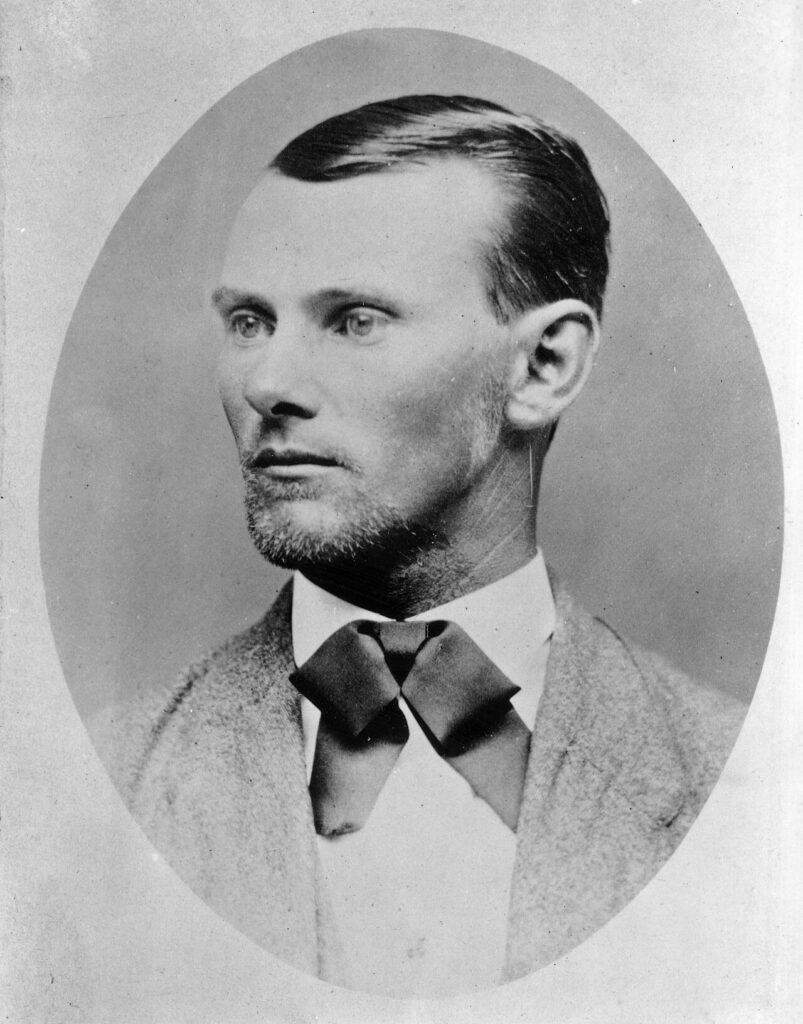
Jesse Woodson James was born on September 5, 1847, near Kearney, Missouri.
And the place of his birth matters enormously to this story.
Missouri in the mid-nineteenth century stood almost directly on the fault line between two Americas. It was a slave state, but during the Civil War it remained in the Union. Political loyalties among the population were sharply divided, while neighboring Kansas had already become the scene of bloody conflict between pro-slavery and anti-slavery factions before the larger war even began.
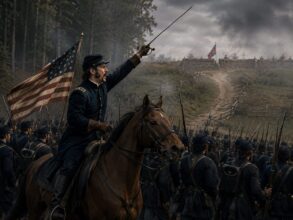
The James family owned slaves and sympathized with the South. When the Civil War started, Jesse’s older brother Frank joined Confederate forces. He later became involved with guerrilla units operating in Missouri. The future story of the James brothers grew directly out of this violent border war, where men on both sides carried out raids, reprisals, lynchings, and killings.
Jesse soon followed.
He was only sixteen.
That matters, because James did not learn warfare in a conventional army.
Guerrilla fighting in Missouri had almost no clear boundary between front line and home front. Confederate bushwhackers, Unionist militia, punitive expeditions, and ordinary criminal gangs all operated in the same territory, sometimes using politics as little more than a justification for robbery and revenge.
Jesse eventually joined the band of one of the most notorious Confederate guerrilla leaders, William “Bloody Bill” Anderson.
In September 1864, Anderson’s men carried out the Centralia massacre. After attacking a train, they killed unarmed Union soldiers and later destroyed a force sent to pursue them.
For sixteen-year-old Jesse James, this was his introduction to adult life.
By the time the war ended, he already knew how to ride, shoot, set ambushes, escape pursuit, and, most importantly, treat violence as a practical tool for solving problems.
In 1865, the Civil War ended.
For Jesse James, not entirely.
From Guerrillas to Bank Robbers
Returning to civilian life was especially difficult in places like Missouri.
Yesterday’s enemies still lived beside one another. Former Confederates saw themselves as defeated and humiliated, Union supporters now held greater political influence, and old grudges remained very much alive.
It was in this environment that the future James–Younger Gang emerged.
The exact story of its earliest crimes is far less clear than countless books and films would suggest.
For example, the James brothers have traditionally been linked to the robbery of a bank in Liberty, Missouri, on February 13, 1866, often described as one of the earliest major daylight bank robberies in American history. Yet there is no firm evidence that Jesse himself took part.
This problem appears repeatedly in his story.
The more famous the brothers became, the more unsolved crimes were automatically attributed to them.
By the end of the 1860s, however, the trail becomes much clearer.
On December 7, 1869, a bank in Gallatin, Missouri, was robbed. During the raid, cashier John Sheets was killed. Jesse is believed to have mistaken Sheets for another man whom he regarded as an enemy from the war years.
It was after Gallatin that Jesse James became truly famous.
But then something unusual happened.
Instead of simply hiding, he began speaking to the public.
The Outlaw Who Understood the Power of the Press
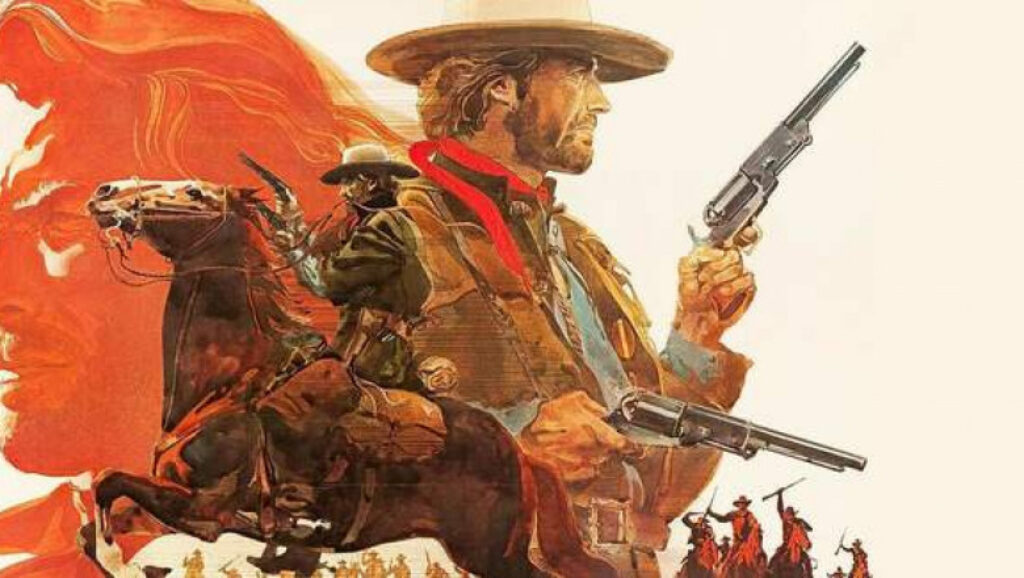
This is where Jesse James’s story becomes much more interesting than an ordinary Western.
His weapons were no longer limited to revolvers.
James wrote letters to newspapers.
He denied involvement in crimes, accused the authorities of political persecution, and gradually created an image of himself as a man hunted not because he was a robber, but because of his beliefs and his Confederate past.
One person played an especially important role in this transformation: journalist and Kansas City Times editor John Newman Edwards.
Edwards had himself served the Confederacy and was openly sympathetic toward former Southern guerrillas. In his articles, the James brothers became more than criminals.
They became men continuing a lost war.
For many former Confederates, this was a powerful narrative.
The federal government, banks, railroads, and Republican politicians could all be portrayed as parts of the same new postwar order.
And Jesse James appeared to be resisting that order.
A public image was taking shape that would eventually become almost immortal:
Jesse against the system.
Politics, crime, and personal mythology began to merge.
Banks Were No Longer Enough. Then Came the Trains
By the early 1870s, the James–Younger Gang had become one of the best-known criminal groups in the Midwest.
Its core included Frank and Jesse James, as well as Cole, Jim, and Bob Younger. At different times, other former guerrillas and criminals joined them.
They robbed banks and stagecoaches.
But America was changing.
Railroads were spreading rapidly across the country, carrying not only passengers but also large amounts of cash.
The outlaws quickly recognized a new opportunity.
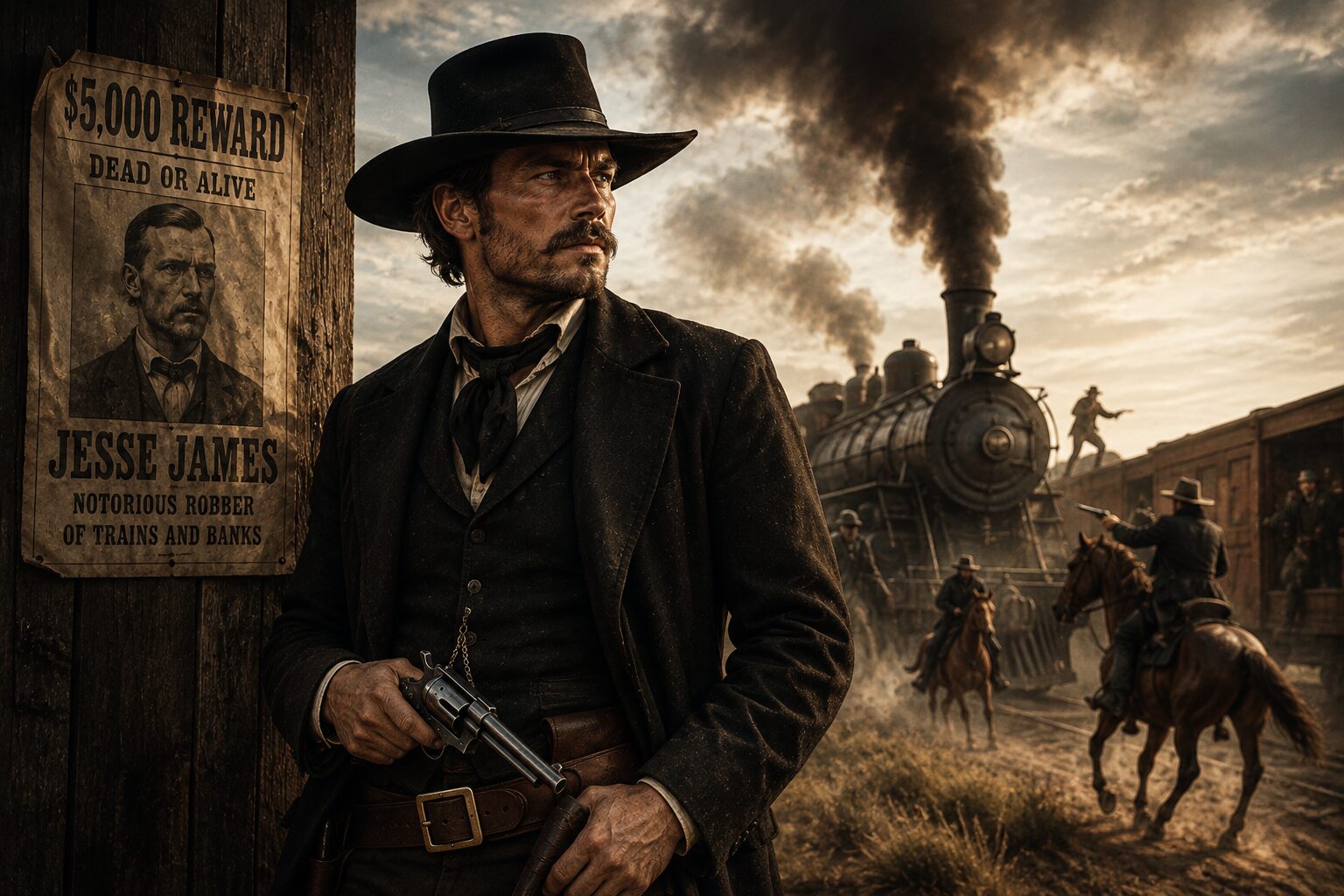
In 1873, the gang began robbing trains.
For newspapers, this was nearly the perfect crime story.
The railroad represented the new industrial America — giant corporations, financial power, and the advance of modern civilization.
And riding out to meet it came armed horsemen.
The real criminal was increasingly being transformed into the hero of a new American myth about the Wild West.
But railroad companies had resources that small-town banks did not.
Soon, men were sent after the James brothers who were themselves becoming legendary.
Pinkerton Joins the Hunt
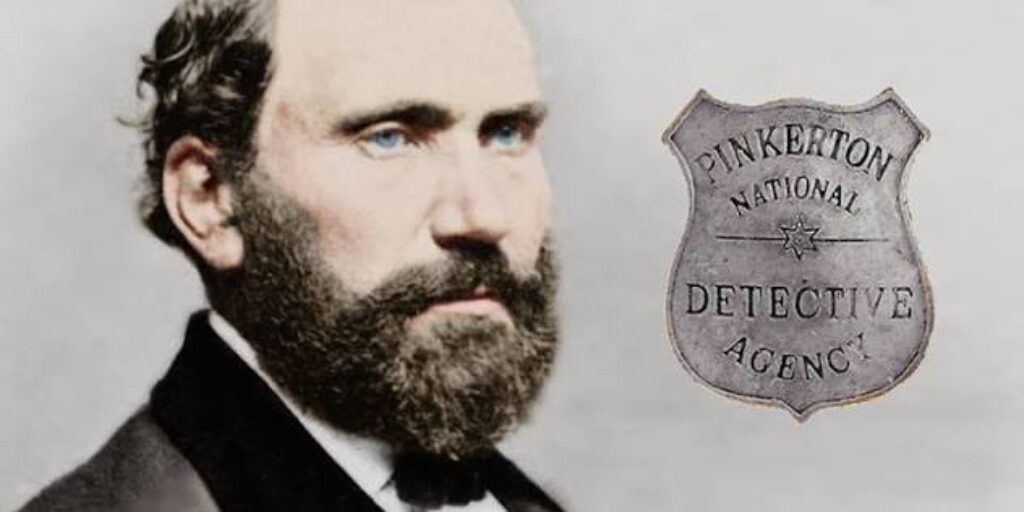
For private detectives, it was supposed to be just another job.
Instead, it became personal.
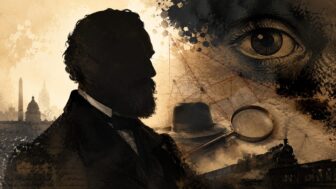
Railroad and express companies hired the Pinkerton National Detective Agency to pursue the gang. Several operatives sent after the outlaws were killed.
The conflict escalated.
Then came the mistake that probably did more for Jesse James’s public image than all of his letters to the newspapers combined.
On the night of January 25, 1875, a group of detectives and their allies surrounded the home of the James brothers’ mother near Kearney.
An incendiary device was thrown into the house.
It exploded.
Jesse’s eight-year-old half-brother, Archie Samuel, was killed. Their mother Zerelda was badly wounded and lost part of an arm.
For the men pursuing Jesse James, it was a public-relations disaster.
Until then, the authorities could speak about armed robbers and murderers.
Now the public saw a mutilated mother and a dead child.
And Jesse had been handed exactly the kind of story that fit perfectly with the image he was already creating — that of a victim hunted by powerful corporations and their private army.
The attempt to destroy his reputation had instead strengthened it.
Northfield: The Seven Minutes That Destroyed the Gang
By 1876, James and his companions were confident enough to travel far north.
Their target was the First National Bank in the small town of Northfield, Minnesota.
On September 7, eight armed men rode into town.
The plan seemed familiar: some members of the gang would control the street, while the others entered the bank, seized the money, and disappeared within minutes.
But this time, something happened that the robbers did not expect.
The townspeople fought back.
One local resident realized what was happening, broke away from the outlaws, and raised the alarm. Citizens began pulling guns from homes and shops.
The street turned into a battlefield.
The attempted robbery lasted only a few minutes. Two gang members were killed in town, while the rest were forced to flee.
Two civilians also died: bank cashier Joseph Heywood and bystander Nicholas Gustafson.
A massive manhunt followed.
The Younger brothers were wounded and captured. Another member of the gang was killed.
Only Frank and Jesse escaped.
Northfield was the turning point.
The old James–Younger Gang was effectively finished.
Jesse Returns
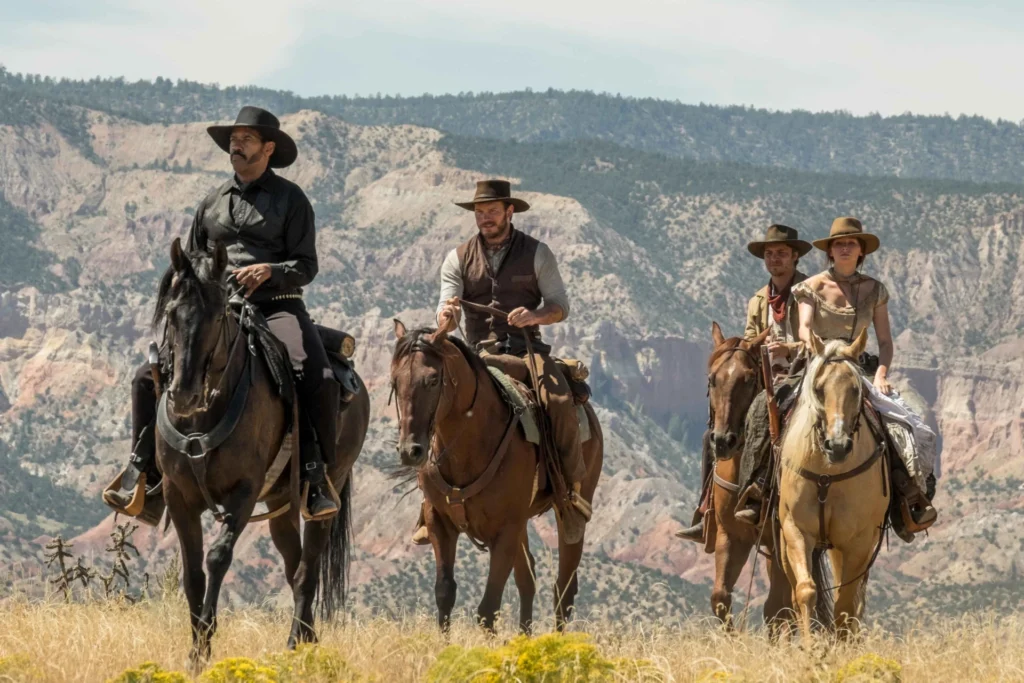
For the next few years, the brothers lived much more quietly under assumed names.
They could have stopped.
Jesse did not.
In 1879, he assembled a new gang and returned to robbery.
But there was a fundamental problem.
The old companions had come from the same world. They had shared war, guerrilla fighting, and the violent politics of the postwar years. Their loyalty was rooted in personal history.
The new recruits were simply criminals.
Jesse understood that.
As the years passed, he became increasingly suspicious. Some associates were arrested. Others could cooperate with the authorities.
Meanwhile, Missouri officials changed their strategy.
Governor Thomas Crittenden secured financial support from railroad companies and offered large rewards for the capture of the James brothers.
By 1881, the reward for Frank and Jesse had become substantial enough to make betrayal a highly profitable option.
And one man close to Jesse was willing to take that option.
Robert Ford
By early 1882, Jesse was hiding in St. Joseph, Missouri.
He lived there with his wife Zerelda and their two children under the name Thomas Howard.
Nearby were brothers Charles and Robert Ford.
Jesse regarded them as his men.
But Robert Ford had already made contact with the authorities.
On April 3, 1882, the men were inside James’s home.
What happened next would be retold countless times.
Jesse removed his weapons.
He noticed that a picture on the wall was dusty.
He climbed onto a chair to clean it.
Robert Ford was standing behind him.
He drew a revolver.
A shot rang out.
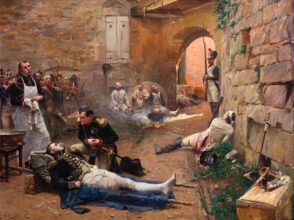
The bullet struck Jesse James in the back of the head.
He was 34 years old.
The story then took an almost absurd turn.
The Ford brothers surrendered to the authorities. They were charged with first-degree murder, convicted, and sentenced to hang.
Then Governor Crittenden pardoned them.
Legally, Robert Ford was a murderer.
Politically, he was the man who solved a problem the authorities had failed to solve for years.
But the public saw something else entirely.
Robert Ford Killed the Man — and Created the Legend
Jesse’s death was almost perfect for the myth that followed.
He did not die during a robbery.
He was not shot down by a sheriff.
He was not executed.
He was shot in the back of the head, in his own home, by a man he trusted.
In the public imagination, the outlaw instantly became the victim of betrayal.
And it was only after his death that Jesse James truly began to triumph.
Newspapers wrote about him.
Songs appeared.
Dime novels turned his crimes into tales of noble adventure.
Later came Hollywood.
The further the real Jesse James receded into the past, the less of the man from Missouri in the 1860s and 1870s remained in popular culture.
The teenage guerrilla vanished.
The people killed during robberies vanished.
The politics of former Confederates vanished.
Even the crimes themselves gradually became almost romantic adventures.
What remained was a rider with a revolver.
A man who defied banks, railroads, and the state.
An American Robin Hood.
There is only one uncomfortable detail.
Historians have no reliable evidence that Jesse James actually distributed his stolen money to the poor.
The image of the noble outlaw was largely created by sympathetic journalism and later reinforced by popular culture.
The Man Was Mortal. The Legend Was Not.
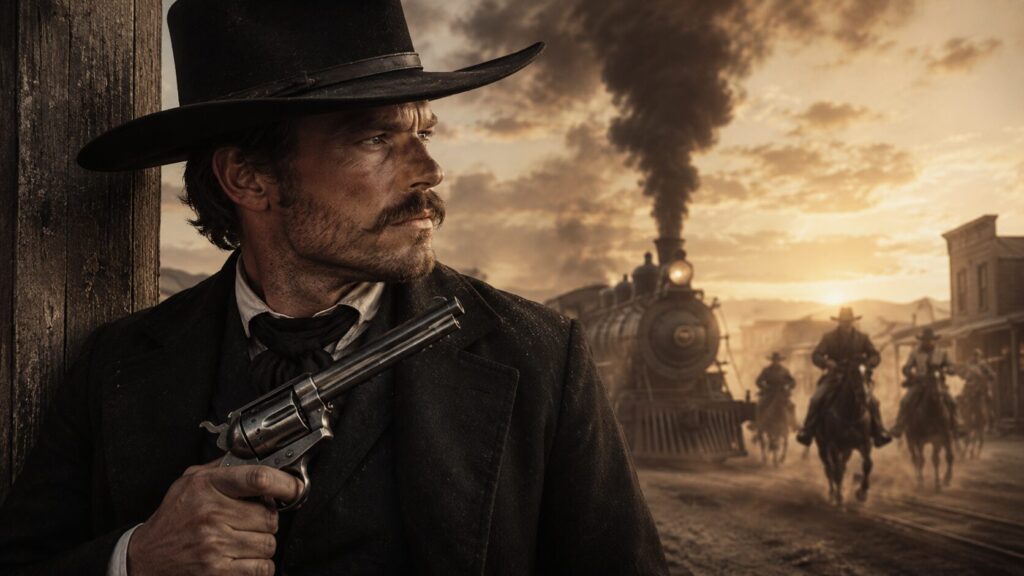
Perhaps that is why the story of Jesse James has proved so durable.
It contains almost every ingredient of the later Wild West myth: a lost war, horsemen, revolvers, train robberies, private detectives, huge rewards, betrayal, and death at the hands of a trusted companion.
But behind the legend lies a far more interesting story.
Jesse James was a product of a specific time — a bloody civil war and the painful political divisions that followed it. He carried the methods of guerrilla warfare into civilian life and then learned to present his crimes as a continuation of political resistance.
In that respect, he was remarkably successful.
Missouri authorities never managed to arrest him. Pinkerton detectives never captured him. After the disaster at Northfield, he managed to build another gang. And when Robert Ford finally shot him in the back of the head, it became clear that killing Jesse James was much easier than destroying the image built around him.
The man lived only 34 years.
The legend has lasted for more than a century.
And perhaps Jesse James carried out his most extraordinary robbery only after his death: his legend stole the real Jesse James from history and replaced him with a hero who probably never existed.