KTO Rosomak: Why Poland Has Refused to Give Up Its Finnish Armored Vehicle for More Than 20 Years

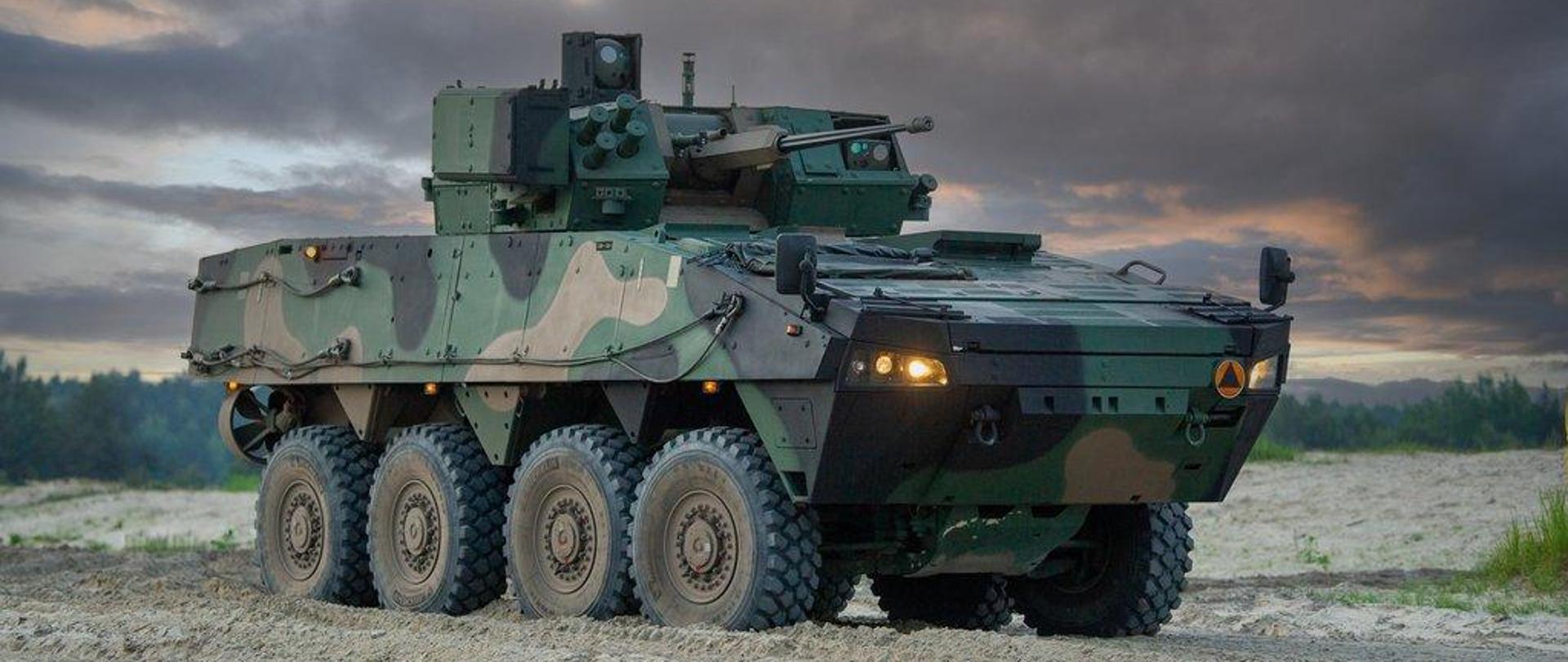
In the early 2000s, Poland was looking for a replacement for its aging Warsaw Pact-era armored vehicles and chose the Finnish Patria AMV. At first glance, it looked like a conventional licensed-production deal. But over the next two decades, the Rosomak went to war in Afghanistan, spawned numerous variants, received increasingly Polish-made weapons and equipment, and reached a very high level of local production. Today, it is no longer simply a Finnish vehicle with a Polish name, but one of the key armored platforms of the Polish Land Forces.
A successful armored vehicle usually has one defining advantage. It may offer exceptional protection, powerful armament, or outstanding mobility. The KTO Rosomak is interesting for a different reason: it turned out to be good enough at almost everything at once.
It is not the heaviest wheeled armored personnel carrier in the world. It does not have the protection level of a Boxer. It does not carry tank-class armament. And technically, it is not even an originally Polish design — the Rosomak is based on the Finnish Patria AMV 8×8.
Nevertheless, this vehicle became one of the symbols of the Polish military’s modernization after the country joined NATO. The initial contract covered 690 vehicles worth almost 5 billion Polish zloty, while Polish industry gradually mastered most of their production. By 2012, Polish-made components accounted for roughly 94% of the vehicle’s value, while more than 120 domestic companies were involved in the program.
The Rosomak story is therefore interesting not merely as another armored vehicle review. It is also a good example of how a successful foreign design can evolve over two decades into something approaching a national military platform.
Poland Needed More Than Just a New APC
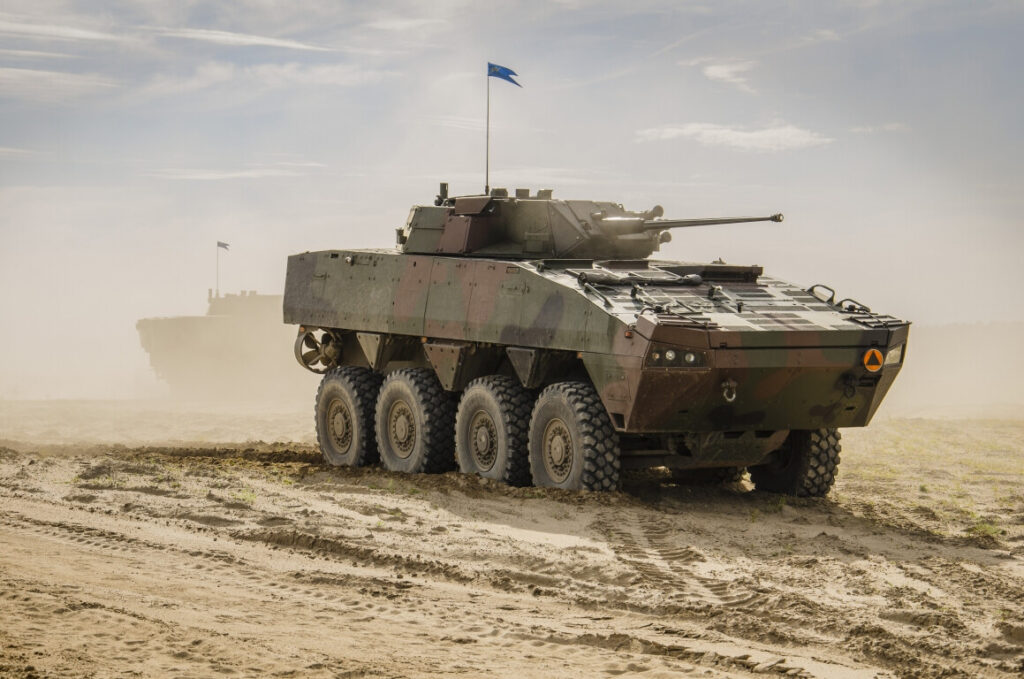
By the late 1990s, the Polish Land Forces were in a situation familiar to many former Warsaw Pact countries. Much of their armored vehicle fleet consisted of Soviet-designed equipment or domestically produced vehicles derived from Soviet designs. After Poland joined NATO in 1999, the problem of interoperability with Western forces became increasingly important.
The new armored vehicle had to solve several problems simultaneously. The Polish military wanted an 8×8 platform offering good road speed, strong cross-country mobility, adequate protection, compatibility with allied transport infrastructure, and enough growth potential to support a large family of specialized variants. At the same time, Warsaw did not simply want to import finished vehicles — it wanted the ability to manufacture them domestically.
In December 2002, the competition was won by Finland’s Patria with its then-new Armoured Modular Vehicle, or AMV. The contract covered 690 vehicles, with 600 of them intended to be manufactured in Poland at Wojskowe Zakłady Mechaniczne in Siemianowice Śląskie.
At first, the decision carried considerable risk. The Patria AMV itself was only beginning its career, while the Polish plant had to master production of a modern Western armored vehicle almost from scratch.
That risk ultimately became one of the program’s greatest strengths.
A Finnish Vehicle That Gradually Became Polish
Technology transfer began in 2003. Patria provided the Polish side with production documentation, equipment, and technical know-how, while the plant in Siemianowice underwent extensive modernization. Within several years, Polish-built Rosomaks were already being delivered to the military.
Gradually, the program stopped looking like conventional licensed assembly. Polish companies began manufacturing structural components, armor elements, communications equipment, wheels, hydraulic systems, and numerous other parts. Scania Poland supplied engines, Radmor provided communications equipment, while Polish defense companies became increasingly involved in the vehicle’s weapons and electronic systems. By 2012, localization had reached approximately 94% of the vehicle’s value, with more than 120 Polish companies participating in the supply chain. Patria estimated that around 3,500 jobs were associated with the program.
This distinction is important. Poland was not merely purchasing armored vehicles. It was acquiring the ability to manufacture, repair, support, and gradually modernize them domestically.
That is one of the main reasons why, more than twenty years later, the Rosomak continues to exist as a distinctly Polish branch of the Patria AMV family.
What Is the Basic Rosomak?
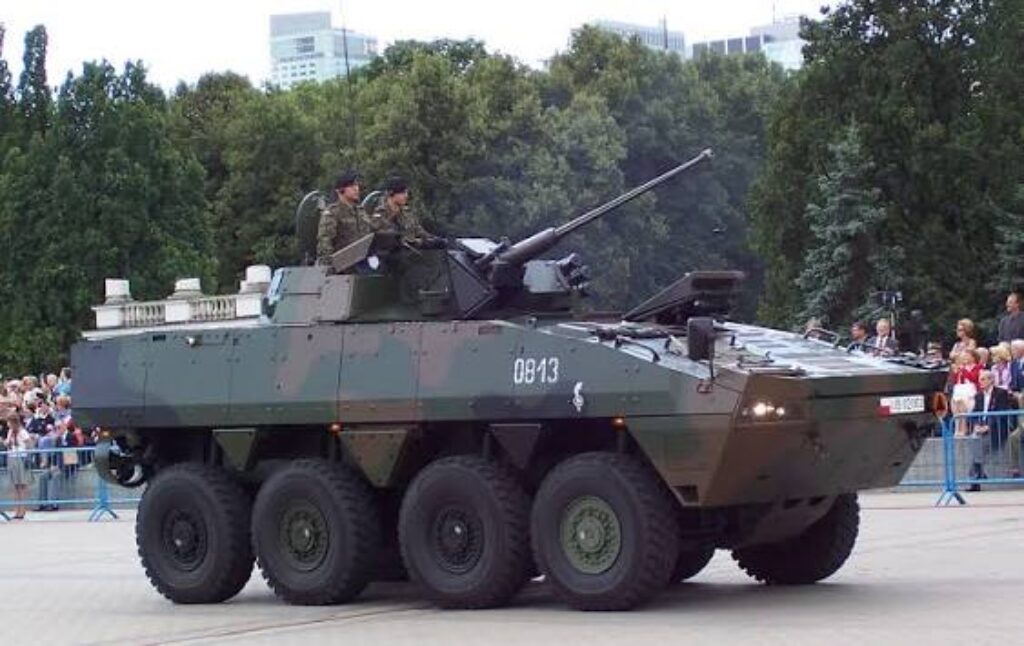
In its best-known configuration with the Hitfist-30P turret, the Rosomak is an 8×8 wheeled infantry fighting vehicle. According to the manufacturer’s figures, it is approximately 7.9 meters long, 2.8 meters wide, and around 3.3 meters high, with a combat weight of roughly 22.5 tonnes. Maximum road speed reaches about 100 km/h, operational range is approximately 500–700 kilometers, and the amphibious version can travel through water at around 10 km/h.
For a vehicle of this class, that combination of characteristics proved highly successful. The Rosomak is considerably faster on roads than tracked infantry fighting vehicles, can conduct long road marches under its own power, and requires less complicated transport infrastructure.
At the same time, it retained one capability that has gradually disappeared from many heavier Western 8×8 vehicles: amphibious mobility. The basic Rosomak can cross water obstacles without extensive engineering preparation. Later experience, however, demonstrated the inevitable trade-off between protection and weight: heavily armored versions developed for Afghanistan became substantially heavier.
That balance between protection and mobility would remain one of the central themes throughout the Rosomak’s career.
A 30mm Cannon Turns an APC Into a Real IFV
The most recognizable Rosomak variant received the Italian Hitfist-30P turret produced by OTO Melara.
Its primary weapon is the 30mm Mk44 Bushmaster II automatic cannon, chambered for 30×173mm ammunition. The same general weapon family is used on numerous modern Western armored vehicles.
A 30mm cannon provides an entirely different level of firepower compared with a conventional heavy machine gun. The Rosomak can engage light armored vehicles, firing positions, infantry in cover, and some low-flying aerial targets. A coaxial machine gun supplements the main weapon.
This creates an interesting contradiction in terminology. The Polish designation KTO — Kołowy Transporter Opancerzony — literally means “Wheeled Armored Transporter.” Yet the Hitfist-equipped version effectively performs the role of a wheeled infantry fighting vehicle.
And it was this configuration that would become the most famous.
Afghanistan Became the Real Test
The Rosomak earned much of its combat reputation far from Poland.
Beginning in the 2000s, Polish forces extensively employed the vehicle in Afghanistan as part of ISAF. More than 130 Rosomaks were used during the deployment, and the demanding operational environment forced engineers to reconsider important aspects of the original design.
The primary threats were not enemy tanks of the type European IFVs had traditionally been expected to fight during the Cold War. Instead, crews faced mines, improvised explosive devices, and rocket-propelled grenades. A special configuration with significantly improved protection was therefore developed for Afghanistan.
The weight of the Afghan version increased to approximately 26 tonnes, while its width grew to around 3.7 meters due to the additional protection. Slat armor appeared along the sides to reduce the effectiveness of RPG attacks, armor protection was strengthened, and numerous less visible modifications were introduced based directly on operational feedback from crews.
Afghanistan did to the Rosomak what real wars tend to do to military equipment: it forced designers to look beyond impressive brochure specifications and start solving the actual problems encountered by soldiers.
Patria itself notes that the Rosomak Afghan modifications were developed on the basis of operational experience, including additional protection against shaped-charge weapons and improvements to the driver’s visibility.
Why Did the Rosomak Prove Successful?
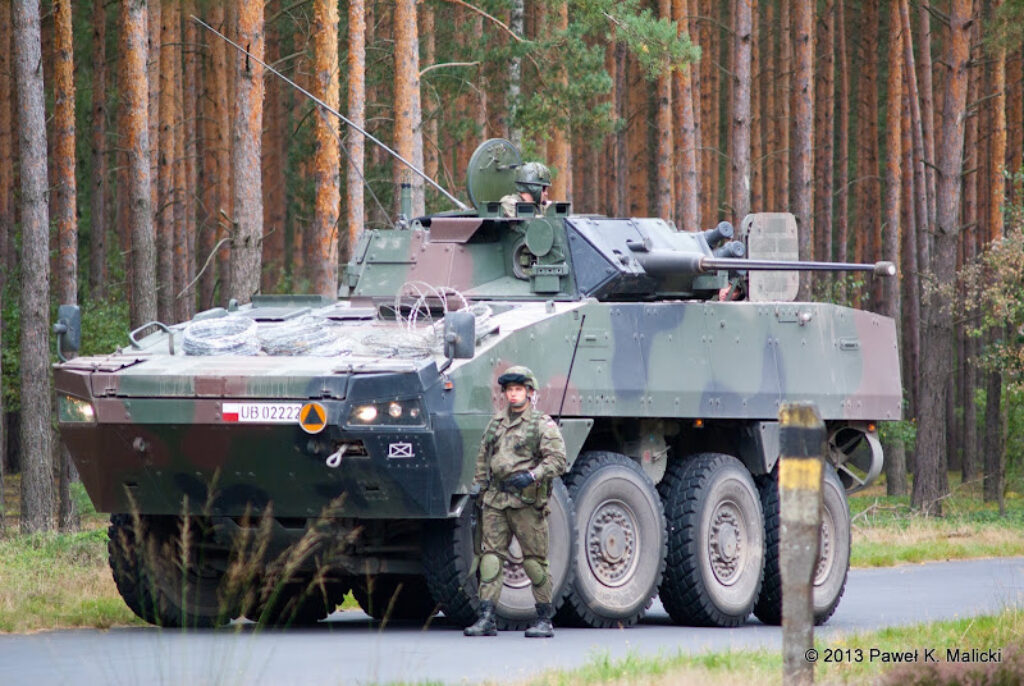
It is important not to turn the vehicle into another “best APC in the world” story. The Rosomak has obvious compromises.
Protection on the basic amphibious version is constrained by weight. Adding armor reduces amphibious capability and increases stress on the running gear. A wheeled vehicle will struggle to match a fully tracked IFV in extreme terrain. The hull is relatively large, and modern anti-tank guided missiles can destroy virtually any vehicle in this weight class.
The Rosomak’s strength lies precisely in its balance.
It is fast on roads, has substantial operational range, offers a spacious hull, and can carry relatively heavy weapon systems. The platform also proved modular enough to support very different combat and support vehicles.
Most importantly, Poland gained the ability to modify the design according to its own requirements.
In that sense, the Rosomak became less a finished product than a successful chassis for more than two decades of development.
One Hull, Many Different Vehicles
Over time, the original idea of a universal platform was fully realized.
The Rosomak family expanded to include command vehicles, armored ambulances, reconnaissance and engineering variants, technical-support vehicles, and other specialized configurations. The manufacturer’s current portfolio represents an entire family of modular armored vehicles rather than a single APC.
One of the most interesting developments is the M120 Rak.
Poland installed an automated 120mm mortar turret on the Rosomak wheeled chassis. The resulting system can conduct both indirect and direct fire, operate as part of an automated command-and-control network, and cooperate with modern reconnaissance assets including unmanned aerial vehicles.
This is where the real value of the Rosomak family becomes clear. Instead of creating an entirely different chassis for every weapon or mission, the army can operate a fleet of vehicles sharing similar automotive components, maintenance requirements, and logistics.
For a military, that can be considerably more important than a few additional millimeters of armor.
Poland Is Replacing the Italian Turret With Its Own
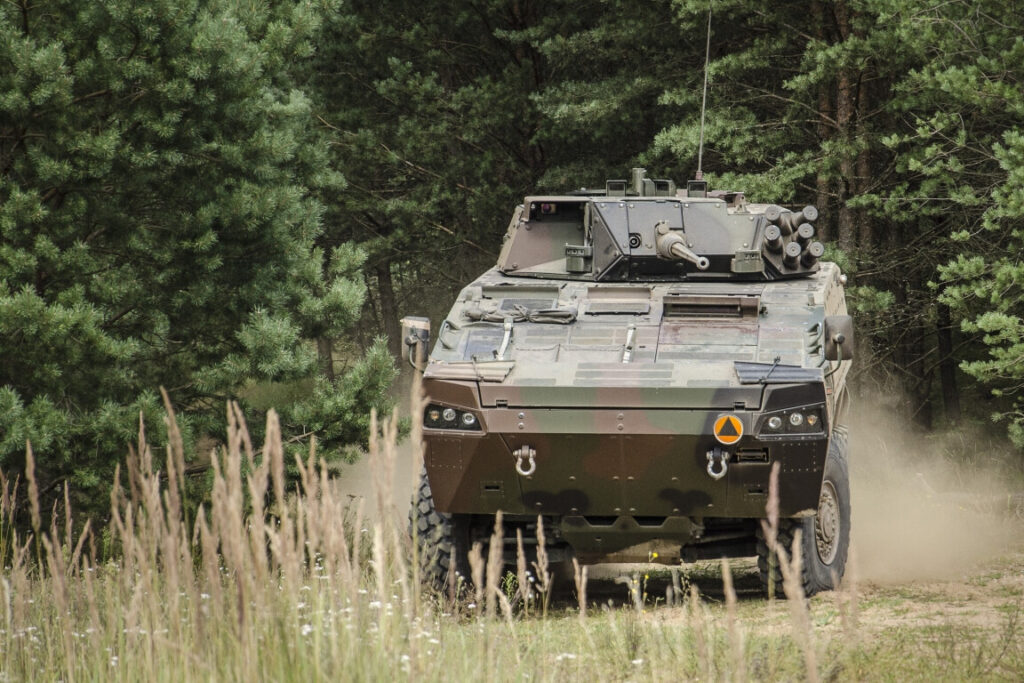
An even more significant transformation is now underway.
The original Rosomak’s principal combat module was the Italian Hitfist-30P. Polish industry, however, has developed its own ZSSW-30 remotely controlled turret, created by Huta Stalowa Wola together with WB Electronics.
This is a considerably more modern system built around the 30mm Bushmaster II and integrated Spike anti-tank guided missiles.
In many respects, this represents the culmination of what Poland sought from the program from the beginning: the foreign chassis is progressively receiving more nationally developed weapons, electronics, and subsystems.
By 2024, Rosomak S.A. was already actively integrating ZSSW-30 turrets onto production vehicles, while the next generation of the platform was becoming the basis for further development of the family.
The Rosomak is therefore becoming Polish not merely through the origin of its components, but through the architecture of its combat systems.
Rosomak-L: The Vehicle Grew Along With the Army’s Requirements
Every successful armored platform eventually encounters the same problem: weight continuously increases.
More armor, a heavier turret, additional electronic systems, more ammunition, communications equipment, anti-tank missiles — every modernization adds kilograms, and eventually the original chassis begins to run out of growth potential.
The response was the Rosomak-L, an extended and modernized version of the platform. In December 2024, Poland signed a contract for Rosomak-L vehicles fitted with ZSSW-30 turrets. The manufacturer states that the new version received a more powerful Scania DC13 engine and larger fuel tanks, helping compensate for increased weight while extending operational range.
This is more important than it may initially appear.
Poland is not simply continuing to manufacture the original Rosomak indefinitely. The vehicle itself is being redesigned to meet a new generation of requirements.
In other words, a platform selected back in 2002 is not being replaced more than twenty years later by an entirely unrelated vehicle. Instead, it is gradually evolving into a new platform itself.
Rosomak vs. Boxer, Stryker, and VBCI
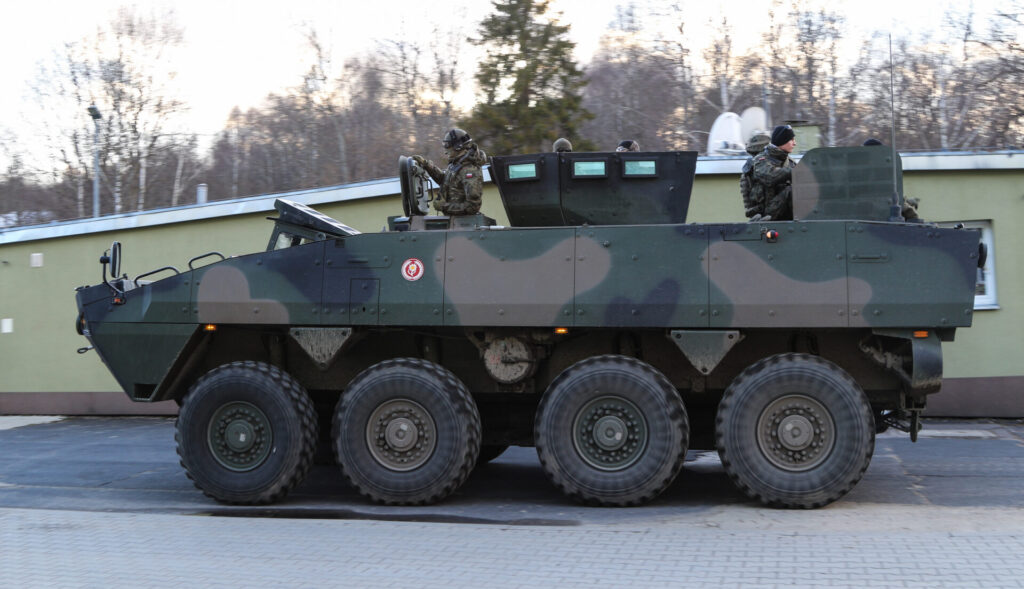
Comparing wheeled armored vehicles solely by armor thickness makes little sense because they were designed for different armies and operational concepts.
The American Stryker originally emphasized strategic mobility and the rapid deployment of medium-weight formations. It is lighter than many modern 8×8 vehicles, although its original configurations also carried comparatively modest armament.
The German Boxer represents almost the opposite philosophy. It is significantly heavier, offers much greater protection, and possesses enormous modernization potential, but the weight of modern Boxer variants has already moved into territory traditionally occupied by tracked infantry fighting vehicles.
The French VBCI is also heavier than the original Rosomak and was designed primarily as a wheeled infantry fighting vehicle for mechanized formations.
The Rosomak occupied a middle ground. The basic vehicle, at around 22.5 tonnes, retained amphibious capability and excellent road mobility while carrying a 30mm cannon. Reinforced and modernized versions gradually became heavier, bringing the platform closer to the contemporary concept of a full-fledged wheeled IFV.
The fact that the original architecture could evolve this far without requiring complete replacement says a great deal about the quality of the underlying design.
The Rosomak Program’s Greatest Achievement May Not Be the Vehicle Itself
The program also had a less glamorous side.
Polish state auditors criticized aspects of the original offset arrangements in the early 2010s. Problems emerged concerning the transfer of certain technologies, modernization rights, and the future of domestic production after the original agreements expired.
But the subsequent history shows how dramatically the situation changed.
In December 2025, Patria and Rosomak S.A. extended their manufacturing agreement again, this time through 2034. The updated license also provides the Polish side with greater independence in modernizing the platform and expands opportunities to offer the vehicle on export markets.
The result is striking.
In 2003, Poland was effectively learning how to manufacture a modern foreign armored vehicle.
More than twenty years later, the same industrial base has gained considerably greater freedom to develop that platform independently.
That may ultimately prove to be the Rosomak program’s greatest achievement.
Conclusion
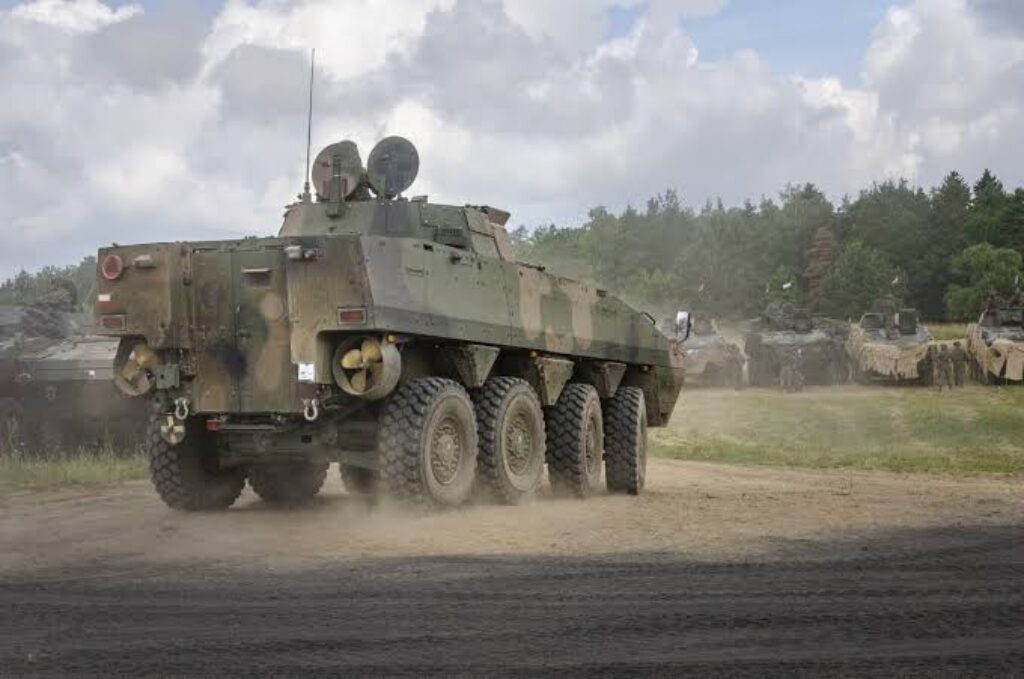
It would be easy to describe the KTO Rosomak as a conventional licensed-production program: Poland bought the Finnish Patria AMV, gave it a local name, and began assembling the vehicle domestically.
But much more happened over the following two decades.
The original order for 690 vehicles grew into an industrial ecosystem involving more than a hundred suppliers. The Rosomak went to war in Afghanistan and was substantially modified as a result of combat experience. Combat, command, medical, reconnaissance, and mortar variants emerged from the same basic platform. The Italian turret is gradually giving way to the Polish ZSSW-30, while the vehicle itself has evolved into the larger Rosomak-L and now has a production future extending at least into 2034.
That is why Poland has refused to give up the Rosomak for more than twenty years.
Not because it is a perfect armored vehicle.
A successful military platform is not defined only by how impressive its specifications looked on the day it entered service. What matters far more is how many times it can be adapted to a new war without having to start again from scratch.
So far, the Rosomak continues to pass that test.