Coupe or Fastback? Where the Sportiest Car Silhouette Came From — and Why People Keep Confusing the Two

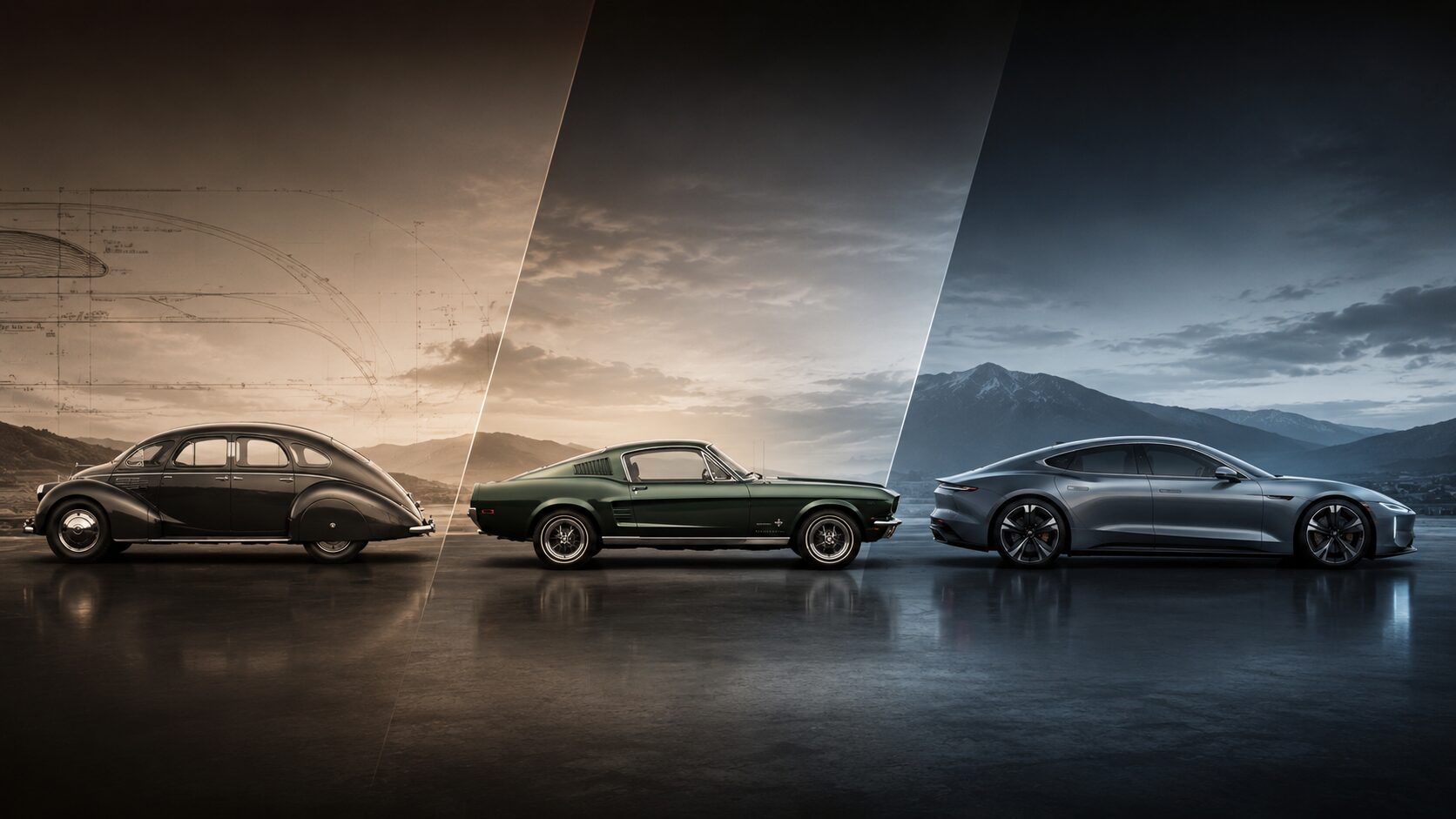
Put two 1965 Ford Mustangs side by side.
One is the classic Hardtop Coupe, with a relatively upright rear window and a clearly defined trunk. The other is the famous Mustang 2+2 Fastback, whose roof flows downward in one long, sweeping line toward the rear of the car.
Now ask which one is a coupe.
The correct answer is: both.
Which one is a fastback?
Only the second.
And that is the source of a confusion that has existed for decades. Coupes and fastbacks are often treated as two different body styles, much like sedans and station wagons.
In reality, the terms describe different characteristics of a car.
A coupe traditionally describes a body type and configuration.
A fastback primarily describes a silhouette.
That means the same car can be both a coupe and a fastback. More importantly, a fastback does not even have to be a two-door car.
To understand why the automotive industry ended up with such confusing terminology, we have to go back almost a century — to an era when engineers first began to understand just how much air was preventing cars from going faster.
It All Started With Air, Not Sports Cars

The earliest automobiles had little need for sophisticated aerodynamics.
At speeds of 30–50 km/h, engine reliability, chassis strength and road conditions mattered far more.
As a result, early automobile bodies often resembled horse-drawn carriages.
They had upright windshields, tall roofs and almost vertical rear ends.
But engines became more powerful.
Speeds increased.
And engineers encountered an opponent that could not be seen.
Air.
The faster a vehicle travels, the more energy it has to spend overcoming aerodynamic drag. At higher speeds, this becomes increasingly important.
During the 1920s and 1930s, automotive engineers began borrowing ideas from aviation.
If an aircraft needed a smooth, streamlined fuselage, why should a car remain a rectangular box?
An entire design movement emerged around the concept of streamlining.
Cars began receiving rounded noses, more integrated fenders and — most importantly for our story — long, smoothly tapering rear sections.
One of the most radical examples was the Czechoslovak Tatra 77, introduced in 1934.
It was a large four-door automobile powered by a rear-mounted, air-cooled V8. Hans Ledwinka and Erich Übelacker played central roles in its development, while the aerodynamic work of Paul Jaray strongly influenced the underlying philosophy.
But simply look at the Tatra from the side and the crucial idea becomes obvious.
The roof does not end in a conventional upright rear window.
Instead, it begins descending gradually and continues almost uninterrupted toward the tail.
This was not yet the American fastback that would become synonymous with muscle cars three decades later.
But the fundamental idea was already there.
And it was not originally created simply to make cars look beautiful.
It was created because of aerodynamics.
The Fastback Existed Before People Called It a Fastback
That is one of the more interesting details in automotive history.
First came the shape.
The terminology followed later.
During the 1930s and 1940s, streamlined rear sections became increasingly common among European and American manufacturers. Different names were used, and “streamliner” became particularly popular in the United States.
Eventually, the word “fastback” became established in automotive terminology.
Its defining characteristic was the roofline: instead of ending above a clearly separated trunk, the roof flowed downward toward the rear of the body with little or no pronounced step.
This distinguished it from another important silhouette — the notchback.
And this is the key to understanding the entire classification.
Imagine a conventional three-box sedan.
The hood forms one volume.
The passenger compartment forms another.
The trunk forms the third.
After the roof comes the rear window, followed by a clearly visible horizontal trunk lid.
That is the classic notchback silhouette.
With a fastback, the pronounced “step” between the passenger compartment and trunk largely disappears.
The roofline simply continues downward toward the tail.
Visually, the car becomes something closer to a single flowing wedge.
Designers soon discovered another advantage.
A fastback looked fast even when it was standing still.
America Turned Aerodynamics Into Style
In Europe, streamlined bodies were frequently associated with engineering experiments and aerodynamic efficiency.
The Americans turned the idea into fashion.
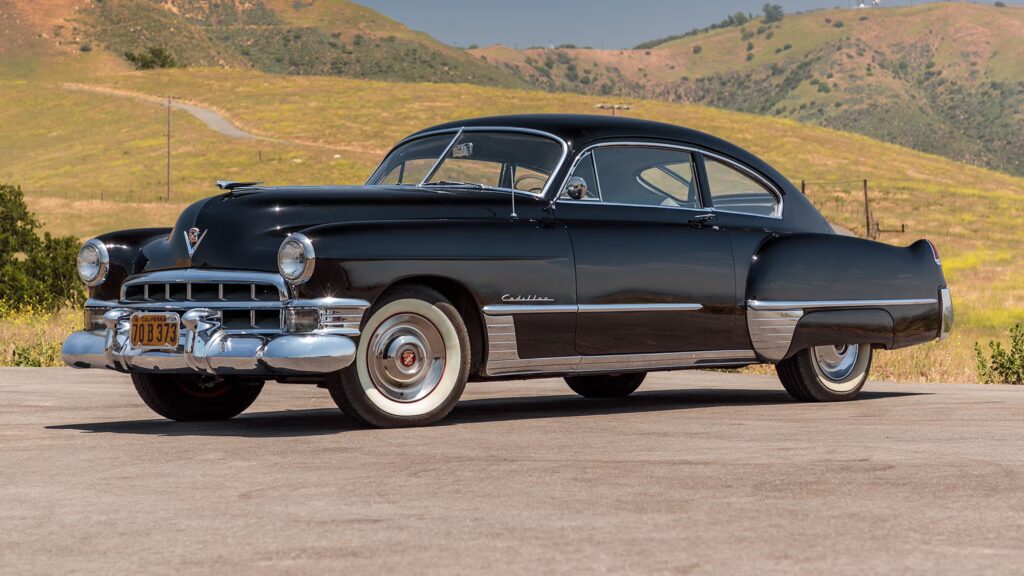
One characteristic example was the Cadillac Sedanette body style of the late 1940s.
Instead of a conventional upright rear section, these cars featured a long sloping roof flowing smoothly toward the tail.
For the period, the silhouette looked remarkably dynamic.
But the fastback’s true golden age was still ahead.
After World War II, American cars became increasingly powerful. Younger buyers wanted automobiles that looked more exciting than conventional family sedans.
By the beginning of the 1960s, conditions were perfect for the return of the long, descending roofline.
The fastback was no longer merely an aerodynamic solution.
It had become a visual promise of speed.
The Ford Mustang Perfectly Explains the Difference Between a Coupe and a Fastback
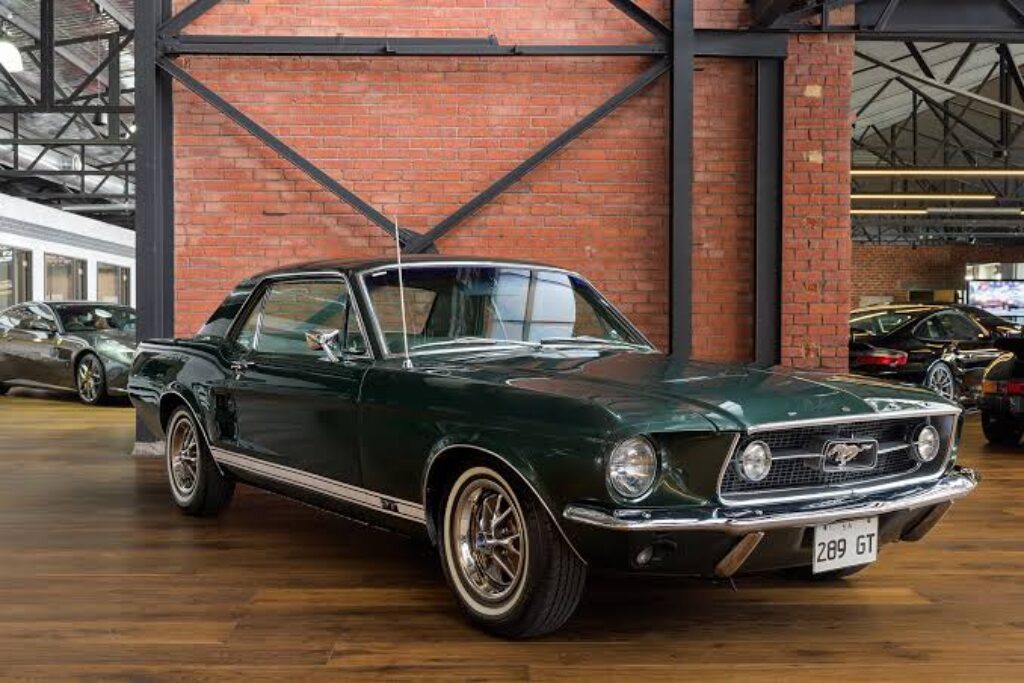
On April 17, 1964, Ford introduced the Mustang.
The car initially appeared as a hardtop and convertible, while the 2+2 Fastback joined the range for the 1965 model year.
And that makes the first-generation Mustang one of the best possible illustrations of automotive body terminology.
The conventional Mustang Hardtop had a classic three-box shape.
A long hood.
A passenger compartment.
A sloping rear window.
And a separate, clearly defined trunk.
It was a coupe with a notchback silhouette.
The Mustang Fastback belonged to the same basic family of two-door cars, but behind the passenger compartment its roof began a long descent that continued almost to the rear panel.
It was also a coupe.
But it was simultaneously a fastback.
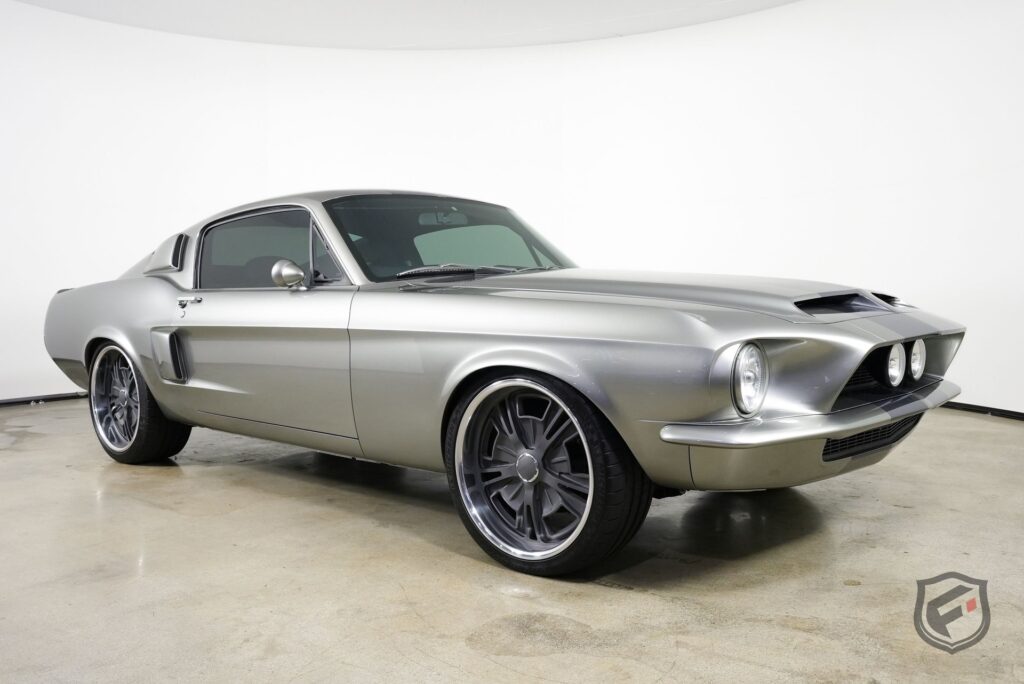
Ford itself historically distinguished between the hardtop, convertible and the 2+2 fastback when describing the early Mustang range.
That is why asking “coupe or fastback?” is not technically quite right.
It is a little like asking:
“Is this person a human or a brunette?”
One describes the category.
The other describes a characteristic.
And Then There Was the Plymouth Barracuda
Ford was not actually the first American manufacturer to introduce this kind of car during the new fastback wave of the 1960s.
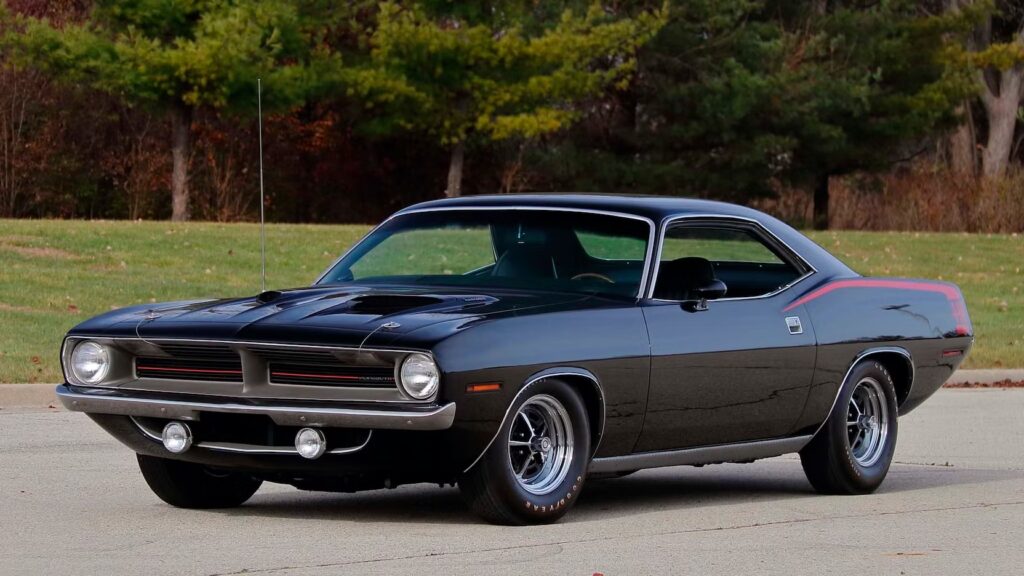
On April 1, 1964 — roughly two weeks before the Mustang’s debut — Plymouth Barracuda appeared.
The Barracuda was based on the compact Plymouth Valiant but received a dramatically different rear section.
Its defining feature was an enormous wraparound rear window combined with a smoothly descending roof.
The result was so distinctive that the Barracuda was almost impossible to confuse with an ordinary Valiant.
Commercially, however, the Mustang won the battle.
Ford’s new model became so successful that an entirely new category emerged around it: the pony car.
And the fastback became one of the defining visual elements of sporty American cars of the 1960s.
AMC Marlin Took the Idea Even Further
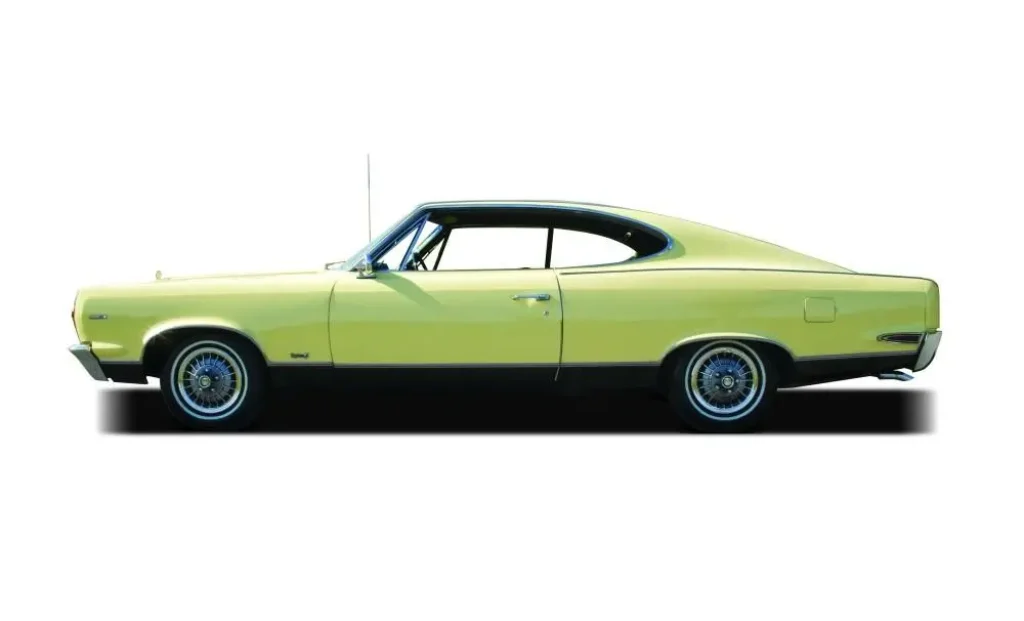
The 1965 AMC Marlin was even more unusual.
American Motors wanted to escape its reputation as a manufacturer of sensible compact cars and create something more emotional.
Designer Richard Teague developed a dramatic fastback.
The resulting Marlin was a large two-door automobile whose roof began descending well ahead of the rear axle and continued in an almost uninterrupted curve toward the rear bumper.
This was no longer simply an aerodynamic trick.
The fastback roofline had become the car’s defining design feature.
AMC even promoted the vehicle from angles specifically chosen to emphasize its unusual profile.
By the middle of the 1960s, the image most people still associate with the word “fastback” had become firmly established:
a long hood, a low passenger compartment and a roof sweeping dramatically toward the tail.
Then automotive terminology found another way to make things confusing.
Because a Fastback Is Not Necessarily a Hatchback
At first glance, the distinction seems straightforward.
If the roof slopes smoothly toward the rear, it is a fastback.
If there is a large rear door that lifts upward, it is a hatchback.
But once again, these terms describe different characteristics.
Fastback describes the shape of the body.
Hatchback describes how the rear cargo opening works.
On a hatchback, the rear window forms part of the rear door and rises with it.
That means a car can simultaneously be a fastback and a hatchback.
It can also be a fastback without being a hatchback.
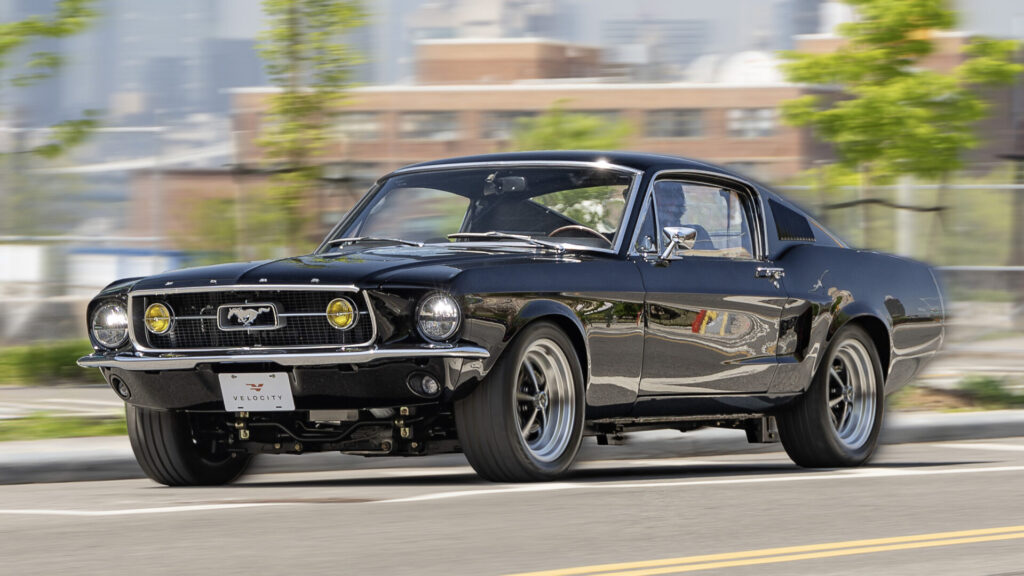
Classic American fastbacks of the 1960s provide good examples of the latter.
On many of them, the sloping rear section looked as though the entire panel should lift upward, but only a relatively small trunk lid actually opened.
Many modern cars do the opposite.
Almost the entire rear section, including the glass, lifts upward.
And this introduces yet another term.
Liftback.
The Liftback Is the Fastback’s Practical Relative
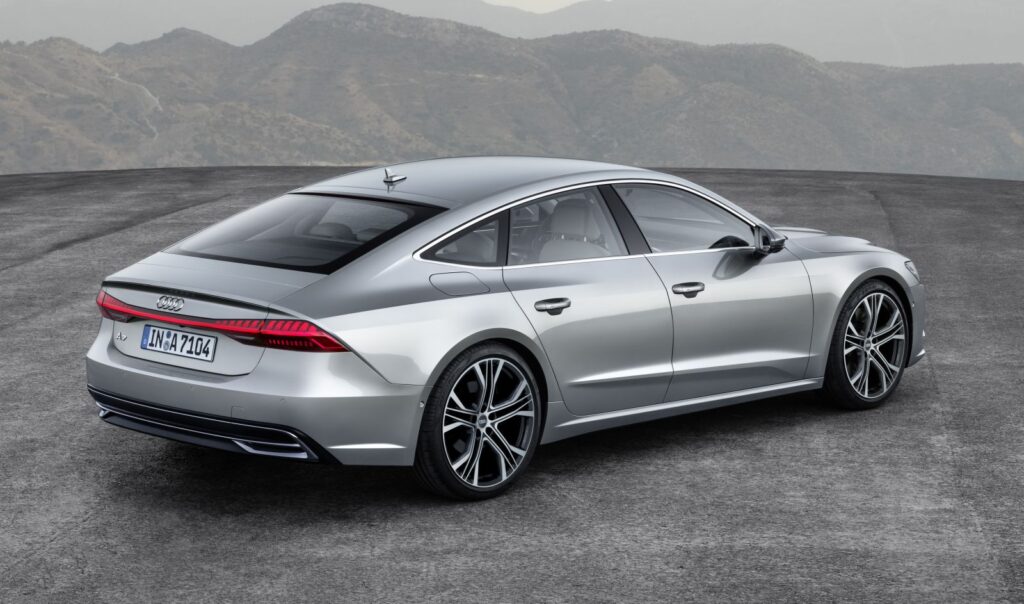
The term liftback is generally used for cars that visually resemble sedans or coupes with sloping roofs but have a large rear hatch instead of a conventional small trunk lid.
In practical terms, they function much like hatchbacks.
Visually, however, they can look like fastbacks.
One of the best modern examples is the Audi A7 Sportback.
Audi presented the A7 concept as combining the design of a coupe, the spaciousness of a sedan and the practicality of an Avant.
Look at the car from the side.
Its roof descends toward the rear in one long arc — a classic fastback profile.
But open the trunk and almost the entire rear section rises together with the window.
Functionally, it is a liftback or hatchback.
In terms of silhouette, it is a fastback.
Audi’s marketing calls it a Sportback.
All three descriptions can be correct at the same time.
So What Are Sportback and Gran Coupé?
This is where engineering terminology finally collides with marketing.
Automakers have to sell cars.
And “hatchback” does not always sound sufficiently prestigious when the vehicle in question costs tens of thousands of dollars.
Manufacturers therefore created their own terminology.
Audi uses Sportback.
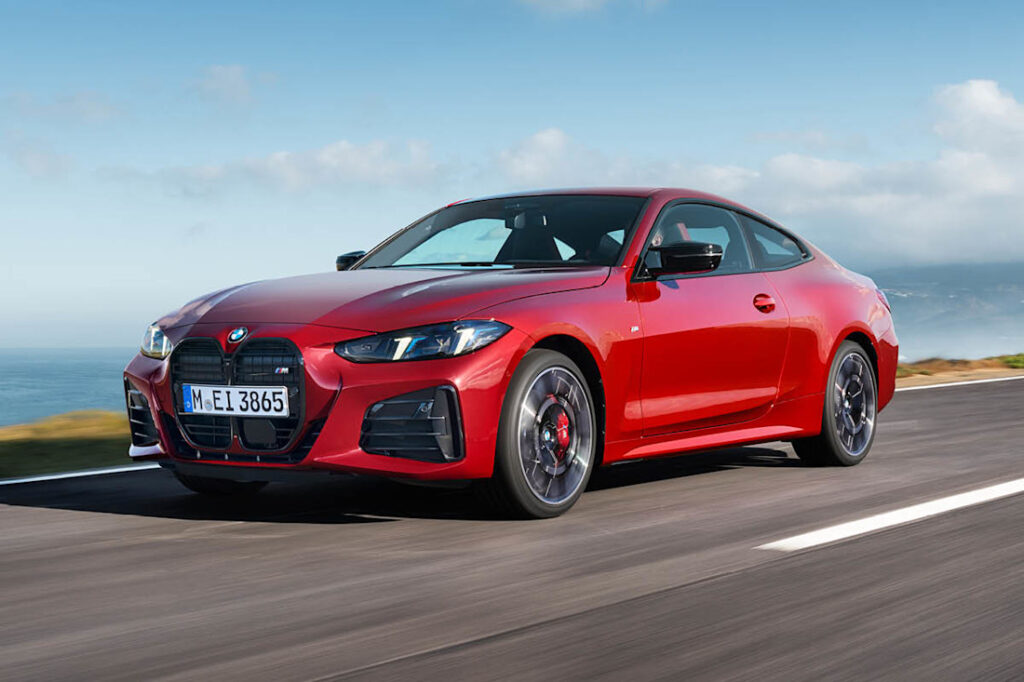
BMW uses Gran Coupé.
Mercedes-Benz helped popularize the concept of the four-door coupe.
Other manufacturers use terms such as liftback, grand tourer or simply coupe.
From an engineering perspective, the boundaries between some of these categories can be surprisingly vague.
From a marketing perspective, however, the idea is perfectly clear.
The manufacturer wants to tell the buyer:
“You get the practicality of a sedan, but the car looks like a coupe.”
And the primary tool used to create that impression is once again the same sloping roofline automotive engineers began experimenting with almost a century ago.
But Where Did the Fastback Go in the 1980s?
It never completely disappeared.
Automotive fashion simply changed.
During the late 1970s and especially the 1980s, car design became considerably more angular.
Cars such as the Volkswagen Golf helped establish the practical hatchback as one of the dominant forms of mass-market transportation, while boxy sedans and station wagons became widespread.
Manufacturers increasingly focused on maximizing interior volume.
A tall, relatively upright rear section provided more room for passengers and luggage.
The hatchback was also extraordinarily practical.
The fastback therefore became more strongly associated with sports cars.
A good example is the Porsche 911.
For decades, its characteristic profile has been built around a roofline that flows smoothly toward the rear.
But nobody needs to classify the 911 as an entirely separate “fastback body type.”
It is a coupe.
Simply a coupe with a strongly pronounced fastback profile.
Several decades later, however, the same basic shape suddenly became useful for mainstream automobiles again.
Electric Cars Unexpectedly Brought Back an Idea From the 1930s
Automotive history has almost come full circle.
In the 1930s, engineers began lowering and streamlining automobile roofs to reduce aerodynamic drag.
In the 21st century, the industry encountered essentially the same problem.
Only now the objective is called range.
Aerodynamics are extremely important for an electric vehicle.
At highway speeds, a significant amount of energy is spent simply pushing the car through the air.
One solution is to install a larger battery.
But a larger battery increases weight and cost.
Another solution is to make the body move through the air more efficiently.
And once again, the long, smoothly descending roofline appears.
Look at the Tesla Model S.
The Porsche Taycan.
The Hyundai Ioniq 6.
The Mercedes-Benz EQS.
Despite radically different styling approaches, they share a fundamental principle: airflow should move as smoothly as possible over the roof and leave the vehicle with minimal aerodynamic losses.
The Mercedes-Benz EQS is particularly illustrative. Its engineers created an almost bow-shaped overall profile in pursuit of aerodynamic efficiency.
The result is a remarkable historical cycle.
A concept that looked revolutionary on the Tatra 77 in 1934 became relevant again almost 90 years later.
Engines changed.
Materials changed.
Computers, active aerodynamics and extraordinarily sophisticated wind tunnels appeared.
But the fundamental problem remained exactly the same.
Air still resists a moving automobile.
So What Is the Difference Between a Fastback and a Coupe?
After almost a century of automotive history, the answer is surprisingly simple.
A coupe is a body type.
Traditionally, it describes a closed automobile with a sporty character, usually with two doors, although modern marketing has significantly blurred that definition.
A fastback describes the shape of the rear body.
Its defining characteristic is a long, smooth roofline descending toward the rear without the pronounced step of a separate trunk.
A notchback represents the opposite idea.
The passenger compartment and projecting trunk are visually distinct.
A hatchback is defined primarily by the rear opening rather than the silhouette.
The rear window rises together with the hatch, providing access to the luggage compartment and interior.
A liftback combines several of these ideas.
It may look almost like a sedan or fastback coupe from the outside while using a large upward-opening rear door.
That is why a 1965 Ford Mustang could simultaneously be a coupe and a fastback.
A Porsche 911 can be a coupe with a fastback silhouette.
An Audi A7 can combine a fastback profile with the practical rear opening of a liftback.
And adding two additional doors does not automatically prevent a car from having a fastback shape.
That is why directly comparing a fastback with a coupe does not really make sense.
The Fastback Was Never Just a Body Style — It Was an Idea
Perhaps that is exactly why the shape has survived so many different eras of automotive history.
In the 1930s, it represented the engineering avant-garde.
In the 1940s, it became an element of American styling.
In the 1960s, the Mustang, Barracuda and Marlin transformed it into a visual symbol of speed.
During the 1980s, it lost ground to more practical and angular designs.
And in the 21st century, it returned alongside electric vehicles and the renewed obsession with aerodynamic efficiency.
The modern buyer often does not even hear the word “fastback.”
Instead, manufacturers sell Sportbacks.
Gran Coupés.
Four-door coupes.
Liftbacks.
But look at these cars from the side and the same old idea immediately becomes visible.
The roof begins above the passengers, flows smoothly downward and meets the rear of the car in an almost uninterrupted line.
For nearly a century, designers have changed the terminology.
Marketing departments have invented new categories.
Engines, platforms and even the sources of energy powering cars have changed beyond recognition.
But the air has not.
And that is why one of the most distinctive automotive shapes of the 20th century has unexpectedly become one of the most relevant shapes of the 21st.