
A Legend Refuses to Retire: Why the U.S. Is Still Upgrading the Javelin Nearly 30 Years After Its Debut

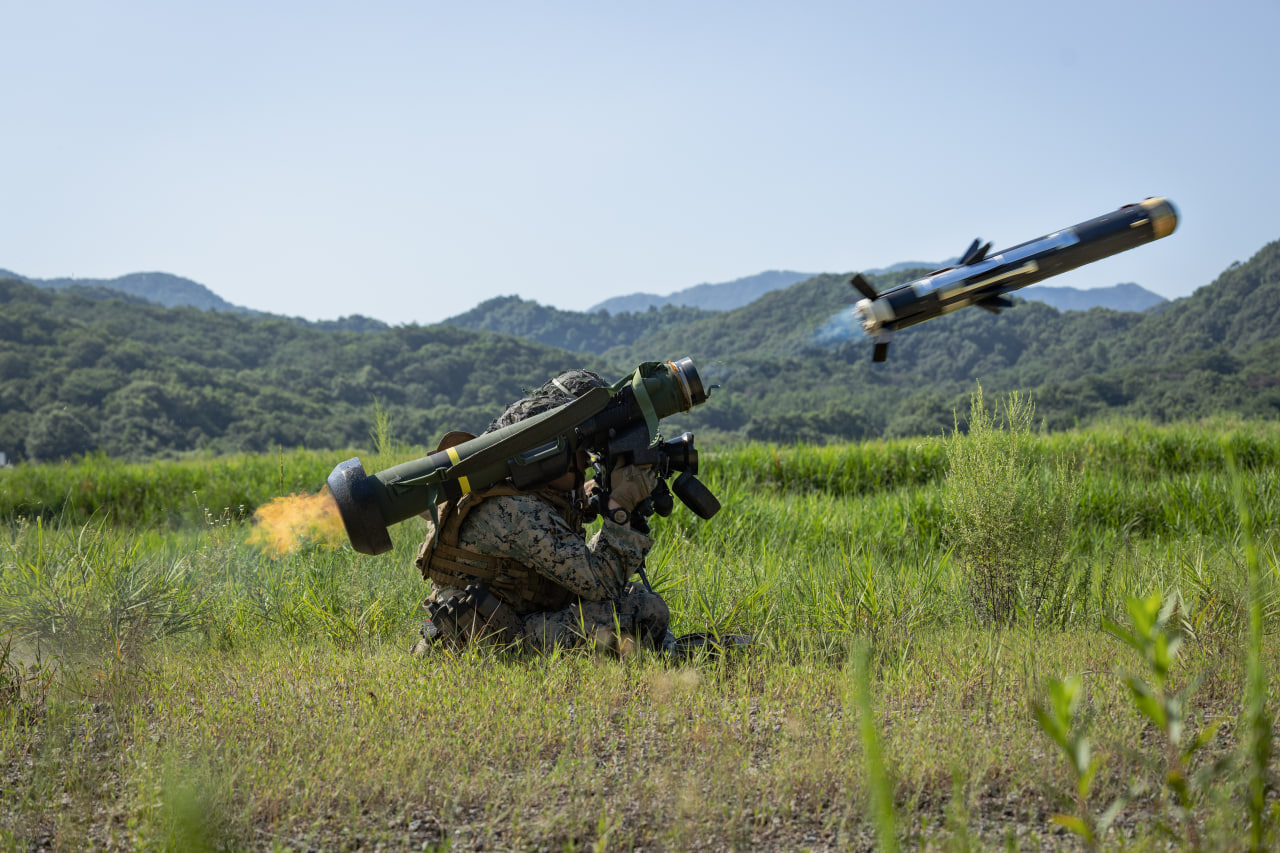
Hundreds of new anti-tank weapons have appeared over the past three decades. Many vanished without leaving much of a mark. The FGM-148 Javelin did the opposite: it became one of the defining anti-tank systems of its era. Now the Pentagon is preparing another major upgrade—a new generation of infrared seeker.
Some weapons become symbols of their time.
The AK-47.
The T-34.
The B-52.
The F-16.
In the world of anti-tank weapons, the FGM-148 Javelin has long belonged in that company.
During nearly three decades of service, the system has been used in numerous conflicts, repeatedly modernized, and adopted by more than twenty countries. More than 50,000 missiles and over 12,000 launch units have been produced, and manufacturing is still expanding.
Now the U.S. intends to give the weapon another life extension by developing a new infrared seeker.
The obvious question is simple: if Javelin is already considered one of the most successful anti-tank guided missile systems ever built, why keep upgrading it?
The Revolution Javelin Started
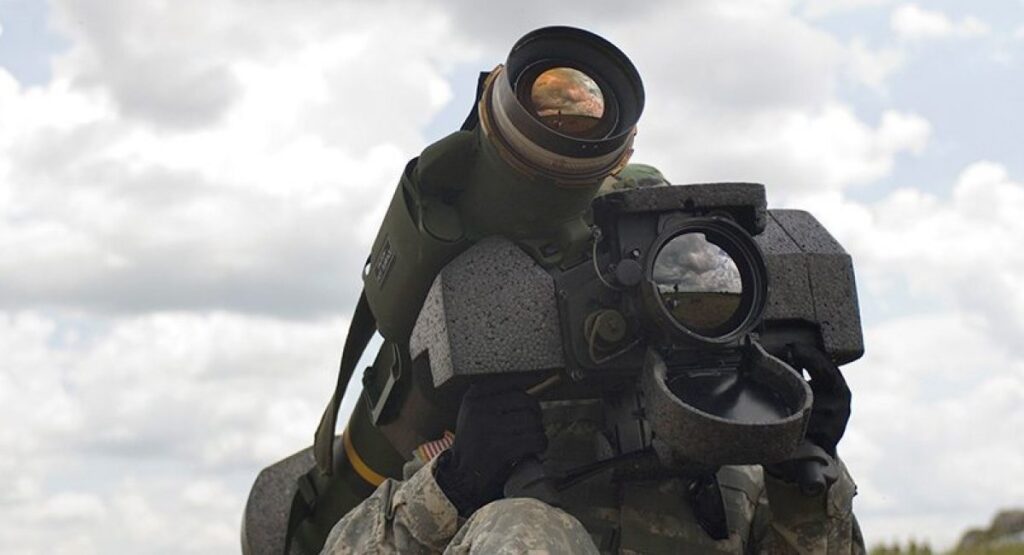
When Javelin entered service in the 1990s, it fundamentally changed the logic of man-portable anti-tank warfare.
Most earlier guided weapons required the operator to keep tracking the target almost until impact.
Systems such as the Soviet Fagot and Konkurs, the American TOW, and the French Milan all forced the gunner to remain exposed while the missile was in flight.
That meant one thing.
As long as the missile was flying, the operator was still vulnerable to return fire.
Javelin introduced a radically different concept.
The operator locks onto the target before launch.
The missile memorizes its infrared image.
After launch, the crew can immediately move to another position.
Today, that “fire-and-forget” principle feels familiar.
In the mid-1990s, it was a major technological breakthrough.
Why Top Attack Mattered So Much
Another defining feature was the top-attack mode.
The logic was straightforward.
A tank’s thickest armor is usually concentrated on the frontal arc.
Its roof is far more vulnerable.
Javelin therefore climbs after launch and then dives onto the target from above, attacking the upper surfaces of the turret and hull.
The missile also uses a tandem shaped-charge warhead.
The precursor charge is intended to defeat explosive reactive armor.
The main charge then attacks the underlying armor.
For the late 20th century, this combination gave infantry a level of anti-armor capability that had previously been difficult to achieve with a shoulder-fired system.
Why It Still Has Not Become Obsolete
The normal life cycle of military hardware is fairly predictable.
A successor appears after ten or fifteen years.
After twenty years, the older system begins to disappear from front-line service.
Javelin did not follow that pattern.
Instead, it has been repeatedly upgraded.
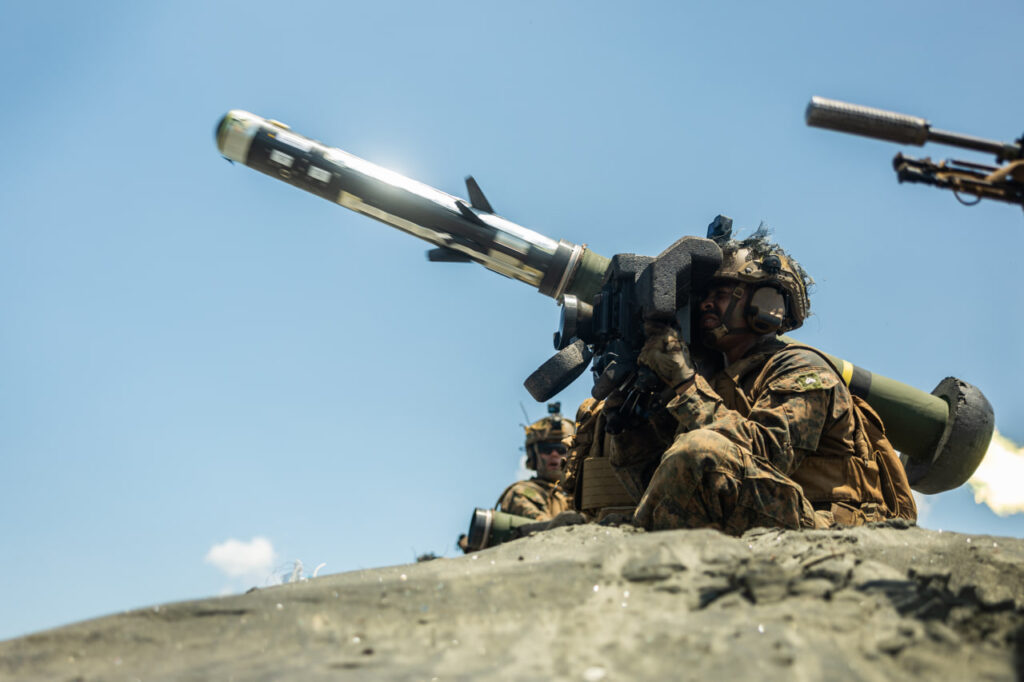
The FGM-148F introduced a multipurpose warhead, improving effectiveness not only against armored vehicles but also against fortifications, buildings, and personnel.
The U.S. Army then introduced the lighter LWCLU sighting and launch unit, which reduced weight while significantly improving target detection and identification range compared with the earlier system.
Now the missile itself is entering another modernization phase.
Why the Pentagon Is Replacing the Seeker
At first glance, that may seem strange.
The guidance system already works.
So why replace one of the weapon’s most important components?
Because the battlefield has changed faster than the missile.
Modern armored vehicles increasingly use thermal camouflage, multispectral smoke, active protection systems, and infrared countermeasures.
Operational conditions have also become more difficult.
Dust.
Smoke.
Extreme heat.
Dense urban terrain.
All of these can complicate target recognition.
That is why the U.S. Army has tasked Kratos with developing a new infrared seeker for the Javelin family.
The exact specifications have not been publicly disclosed. However, a new seeker could logically offer improved sensitivity, more computing power, and better target discrimination in cluttered or countermeasure-heavy environments.
The important point is not the exact sensor architecture.
It is that the U.S. does not view Javelin as a finished Cold War-era weapon. It sees it as a platform that can continue evolving.
How Javelin Compares with Its Rivals
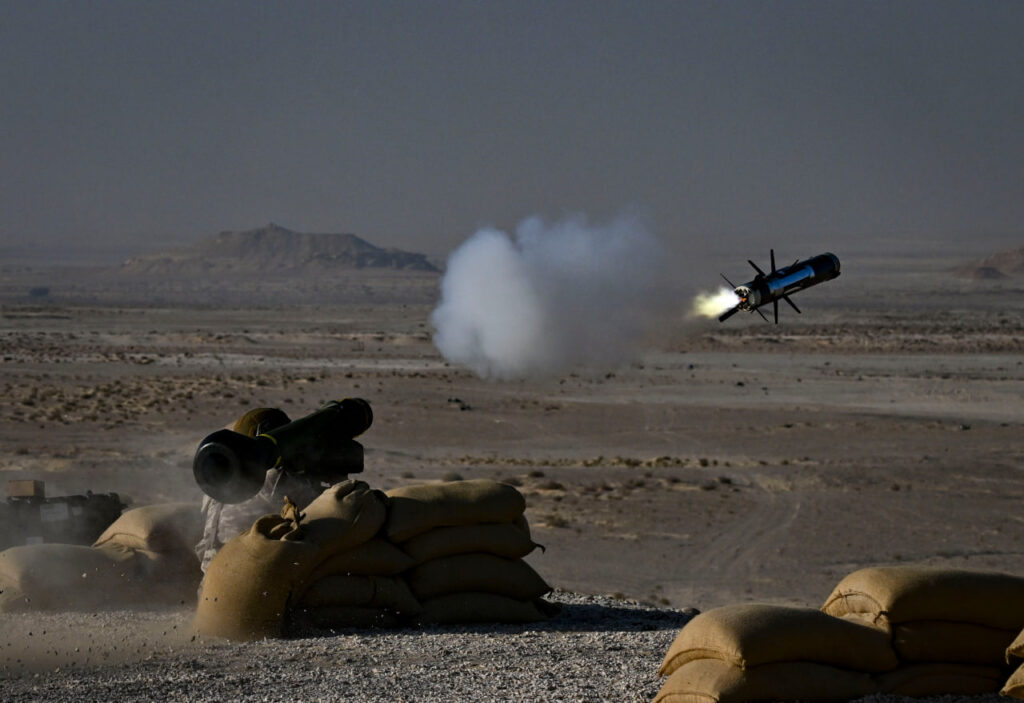
Over the years, Javelin has gained a number of serious competitors.
Israel’s Spike family offers much longer-range variants and, in some configurations, lets the operator update or redirect the missile after launch through a data link.
France’s Akeron MP emphasizes multimode guidance and integration into a networked battlefield.
Russia’s Kornet remains a powerful long-range anti-tank system with high penetration capability, but follows a different philosophy, requiring guidance during the missile’s flight.
Each design school chose a different path.
Yet Javelin was the system that helped turn fire-and-forget guidance into a benchmark for modern man-portable anti-tank weapons.
Why This Story Is Bigger Than One Upgrade
A new seeker does not sound like a dramatic piece of news on its own.
But the broader implication is much more interesting.
The Pentagon is not preparing to replace Javelin.
It is preparing to keep it relevant.
The U.S. Army intends to continue buying the system for years to come, while production capacity is being expanded to meet both American and export demand.
That means designers still see more value in evolving a proven architecture than in replacing it with an entirely new weapon.
Conclusion
The story of Javelin illustrates one of the central rules of modern weapons development.
Truly successful systems rarely disappear quickly.
They adapt.
Javelin first became famous because of fire-and-forget guidance and top-attack capability.
Today, that is no longer enough.
The missile must now cope with better sensors, new countermeasures, active protection systems, and far more complicated battlefield conditions.
That is why the new seeker matters.
It is not merely another incremental upgrade.
It is evidence that even legendary weapons must keep evolving if they want to remain legendary.






