
Rheinmetall Goes to Sea: Why Germany’s Defense Giant Is Entering the Frigate Market

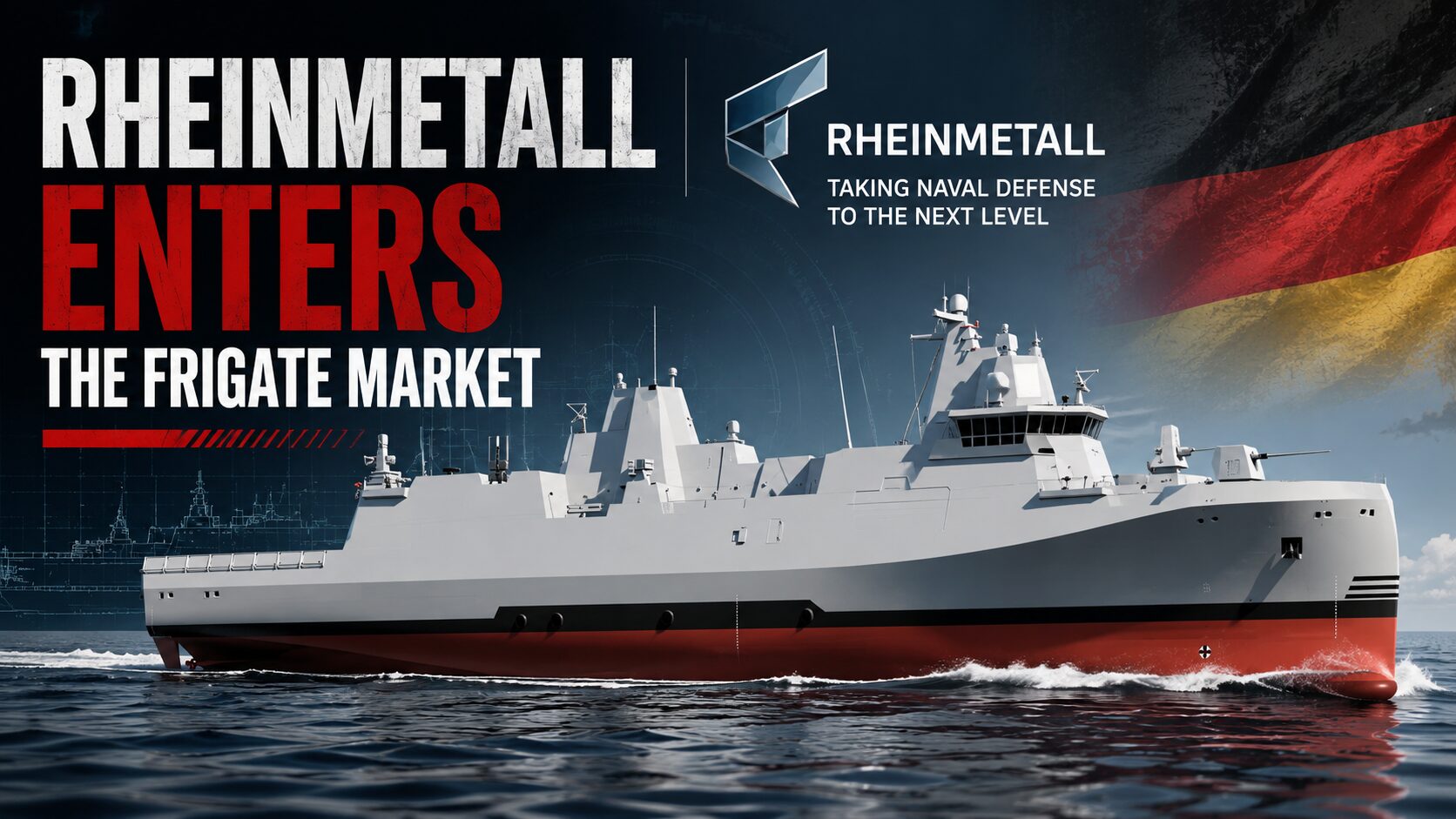
For decades, Rheinmetall has been synonymous with Leopard tanks, infantry fighting vehicles, artillery systems, ammunition, and air defense technologies. Today, however, the German defense giant is expanding far beyond its traditional portfolio, aiming to become a major player across nearly every sector of the global defense industry.
Its latest move is perhaps the most ambitious yet—entering the market for large naval combat ships. A company best known for building weapons now wants to compete directly with Europe’s established shipbuilders in one of the world’s most demanding defense sectors.
From Weapons Manufacturer to Naval Shipbuilder
Rheinmetall’s interest in naval systems is not new.
For years, the company has supplied navies around the world with naval guns, remote weapon stations, fire-control systems, ammunition, electronics, and air defense equipment.
Until recently, however, it had never attempted to act as the prime contractor responsible for designing and constructing major surface combatants.
That is now changing.
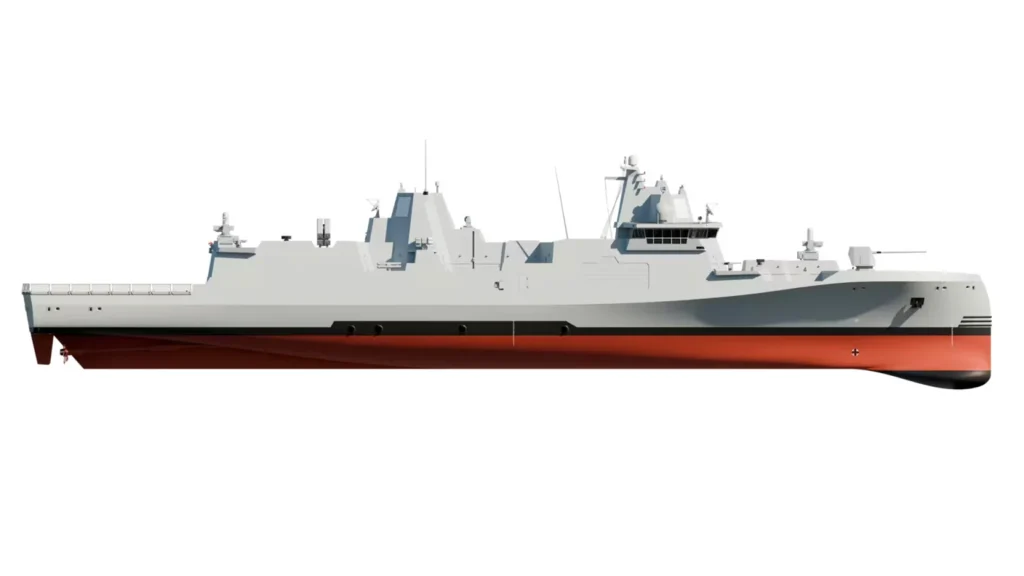
Following the acquisition of key assets from NVL Group, Rheinmetall has gained access to shipbuilding facilities, engineering expertise, and industrial capabilities that could allow it to compete for future frigate programs.
Why Now?
The timing is no coincidence.
Europe is undergoing its largest military modernization effort in decades.
As defense budgets continue to rise, many European governments have launched ambitious programs to replace aging fleets of frigates, corvettes, and support vessels.
For Rheinmetall, this represents a market worth tens of billions of euros.
Previously, the company earned revenue primarily by supplying individual systems and weapons. Now it wants to move further up the value chain by building complete warships.
That strategy offers substantially larger contracts while reducing dependence on any single product category.
What Does Rheinmetall Want to Build?
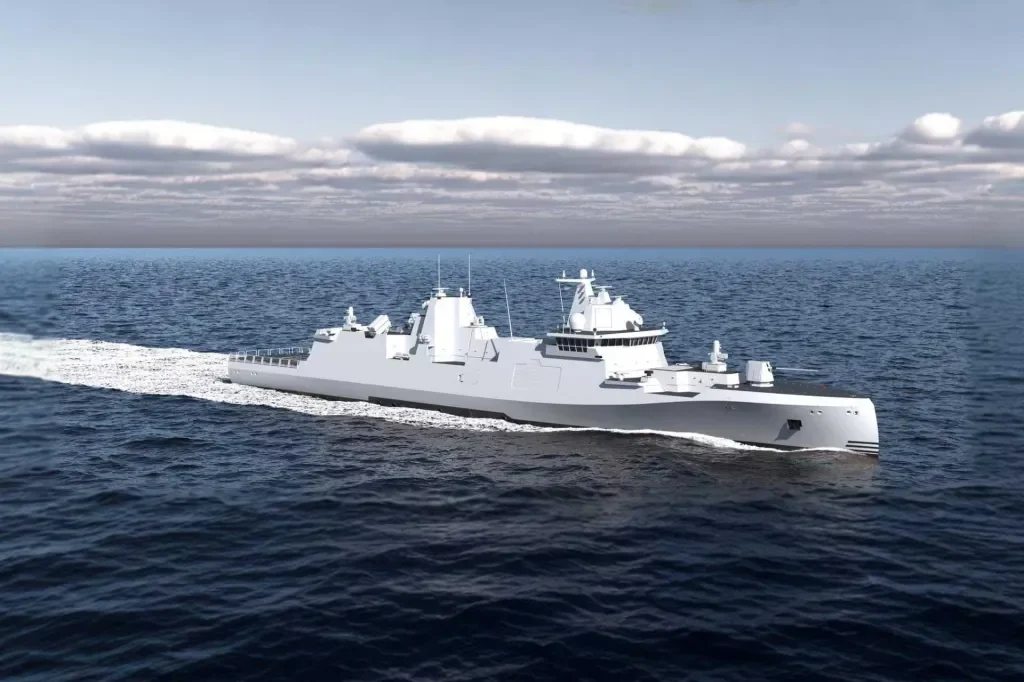
The company’s primary focus is on modern multi-role frigates.
Today, frigates form the backbone of many European navies because they combine versatility with relatively manageable operating costs.
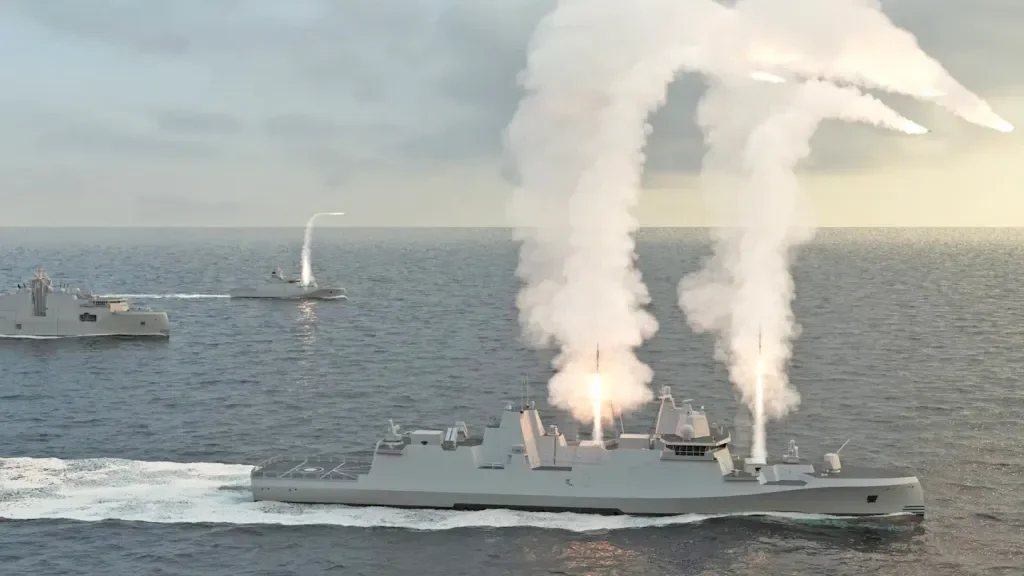
A modern frigate can perform a wide variety of missions, including:
- air defense;
- anti-submarine warfare;
- anti-surface warfare;
- long-range cruise missile strikes;
- escort operations for carrier and amphibious groups;
- protection of sea lines of communication.
In many cases, a single frigate can perform missions that once required several specialized ships.
That versatility explains why demand for this class of vessel remains exceptionally strong.
Competition Will Be Fierce
Breaking into the naval shipbuilding industry will not be easy.
Rheinmetall must compete against companies that have spent decades designing and building complex warships.
Its principal competitors include:
- thyssenkrupp Marine Systems (TKMS);
- Naval Group (France);
- Fincantieri (Italy);
- Navantia (Spain);
- Damen Naval (Netherlands);
- BAE Systems (United Kingdom).
Each already possesses extensive experience, mature production lines, and an impressive portfolio of international naval contracts.
Rheinmetall must therefore prove that it can do far more than manufacture weapons—it must demonstrate that it can successfully deliver complete warships.
More Than Just the Hull
One area where Rheinmetall enjoys a significant advantage is vertical integration.
Unlike many shipbuilders that rely heavily on external suppliers, Rheinmetall already manufactures a large portion of the systems installed aboard modern frigates.
Its portfolio includes:
- naval artillery;
- remote-controlled weapon stations;
- electronic warfare systems;
- fire-control systems;
- ammunition;
- air defense components;
- unmanned systems.
Producing many of these systems in-house could simplify integration, reduce dependence on subcontractors, and potentially lower production costs.
The First Major Challenge
Rheinmetall’s naval ambitions have already encountered a significant obstacle.
The company had hoped to become a key participant in Germany’s F126 frigate program, one of Europe’s largest naval procurement projects.
However, the program suffered delays, rising costs, and mounting political criticism before eventually being canceled by the German government.
Berlin instead chose to procure the more mature MEKO A-200 frigate design from thyssenkrupp Marine Systems (TKMS).
For Rheinmetall, the decision represented a major setback.
At the same time, it also demonstrated just how important the naval market has become. Germany did not abandon naval modernization—it simply changed its procurement strategy.
Why the Frigate Market Is Growing
The modern frigate has become the ideal compromise between expensive destroyers and smaller corvettes.
Today’s frigates typically feature:
- vertical launch systems;
- advanced AESA radar;
- integrated missile defense capabilities;
- anti-submarine helicopters;
- support for unmanned aerial and maritime systems.
At the same time, they are generally less expensive to build and operate than larger destroyers.
For that reason, many NATO members have made next-generation frigates the centerpiece of their future naval modernization plans.
A New Direction for Rheinmetall
Only a few years ago, it would have seemed unlikely that one of Europe’s largest manufacturers of tanks and artillery would seek to become a builder of major warships.
Today, the strategy makes considerable sense.
Modern defense customers increasingly prefer integrated solutions rather than individual weapons. Instead of purchasing a gun, a missile launcher, or a radar separately, many governments now seek complete combat platforms with fully integrated systems.
That trend is gradually transforming Rheinmetall from a manufacturer of military equipment into a full-spectrum defense contractor.
Although the loss of the F126 program represents an important setback, it is unlikely to change the company’s long-term strategy. Naval shipbuilding remains one of the fastest-growing segments of the global defense market, and demand for modern multi-role frigates is expected to continue increasing throughout the coming decade.






