Space Shuttles for the New Age: SpaceX Launches Two Falcon 9 Rockets Just Hours Apart

When the American space shuttle Columbia lifted off from Cape Canaveral on April 12, 1981, its creators promised to change the very nature of spaceflight. A spacecraft would no longer resemble a disposable projectile that had to be rebuilt from scratch after every launch. It would return to Earth, land on a runway, undergo servicing, and fly again.
NASA officially called the program the Space Transportation System. The name was chosen deliberately. In the future, the shuttles were expected to turn near-Earth space into an extension of ordinary transport infrastructure, with launches taking place frequently and reusable spacecraft traveling between Earth and orbit almost like aircraft.
Reality proved far more complicated. Over three decades, five American shuttles completed 135 missions. Every flight required lengthy preparation, enormous ground infrastructure, and thousands of specialists, while each returning orbiter had to be virtually dismantled and inspected before it could fly again. The space “shuttle” became so expensive and complex that the program was finally retired in 2011.
Yet the idea of regular space transportation never disappeared. It simply took shape in a very different form from what twentieth-century engineers had imagined. The true space bus turned out not to be a giant winged spacecraft, but a relatively simple two-stage rocket with a recoverable first stage.
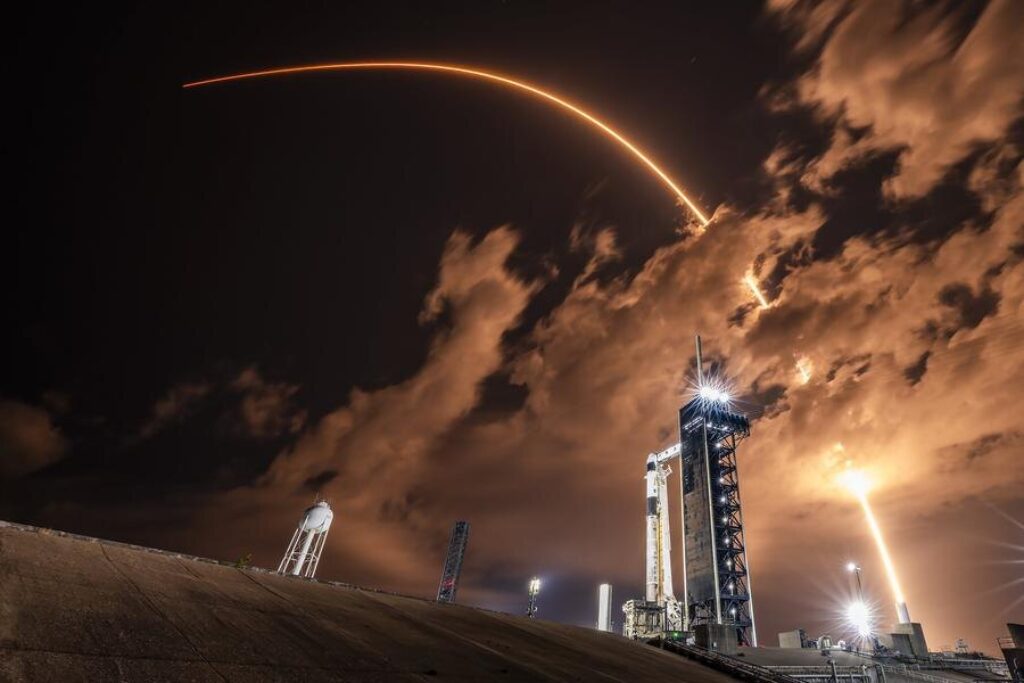
In mid-July 2026, SpaceX once again demonstrated just how far this transformation had gone. Two Falcon 9 rockets launched from opposite coasts of the United States less than eight hours apart. While one booster was returning from the Pacific Ocean, another rocket was already preparing to rise over the Atlantic.
Two Coasts, Two Rockets, One Night

Fairing release illustration
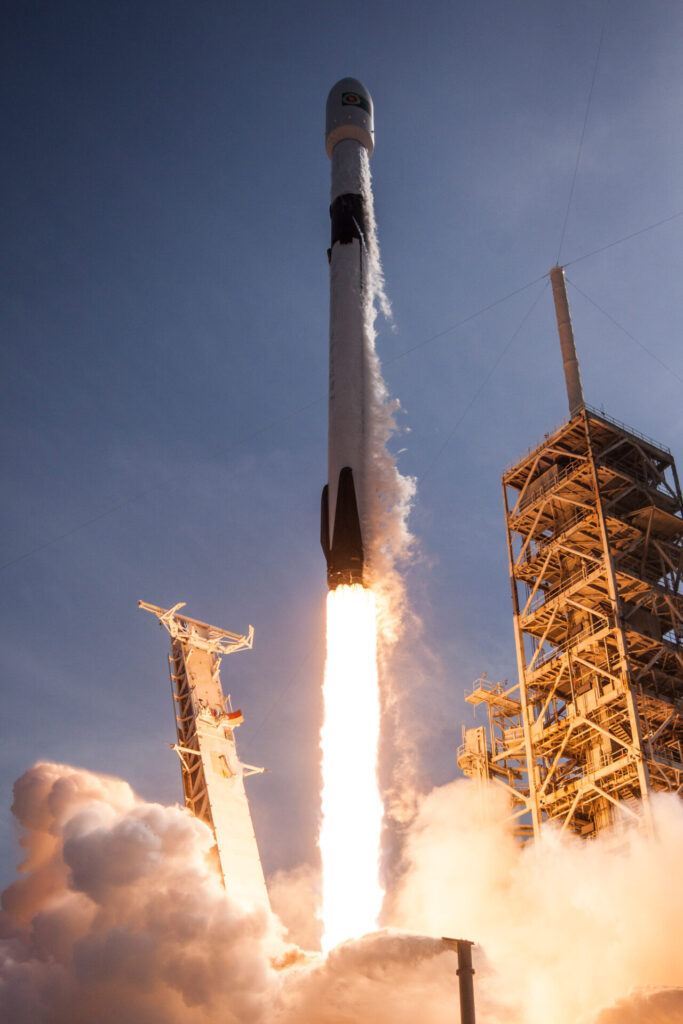
The first Falcon 9 lifted off on July 13 at 6:28 p.m. Pacific Time from Vandenberg Space Force Base in California. Beneath its payload fairing were 27 Starlink satellites assigned to the Starlink 15-14 mission, intended to expand SpaceX’s broadband communications constellation.
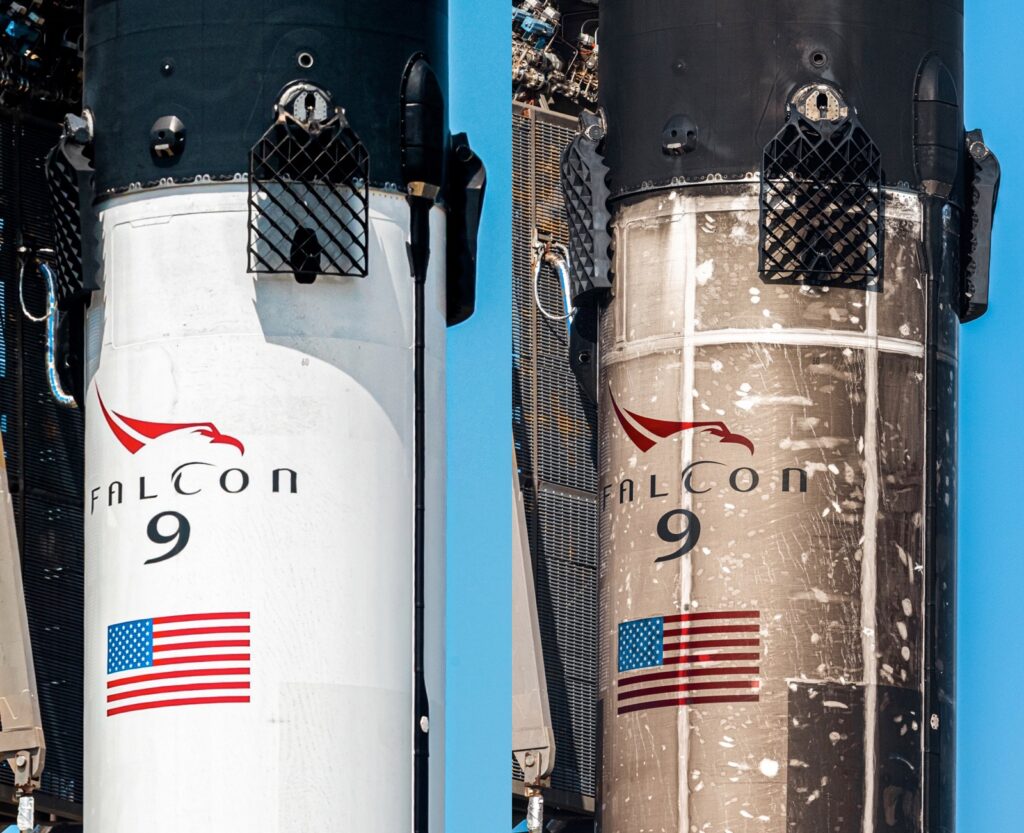
After completing its portion of the flight, the first stage reentered the atmosphere and landed on the autonomous droneship Of Course I Still Love You in the Pacific Ocean. For booster B1080, this was its 28th flight.
Seven hours and 42 minutes later, while the night was still underway in California, a second Falcon 9 launched from Space Launch Complex 40 at Cape Canaveral in Florida. It carried another 29 Starlink satellites as part of the Starlink 10-45 mission.
Its first stage also returned to Earth and landed on the droneship A Shortfall of Gravitas in the Atlantic Ocean. For that booster, the mission marked its 15th flight. In the course of a single night, SpaceX placed 56 spacecraft into low Earth orbit and recovered both of the rockets’ most expensive components for future reuse.
Formally, neither mission was extraordinary. There were no astronauts, interplanetary probes, or unique scientific observatories on board. Both rockets carried yet another batch of mass-produced Starlink satellites.
But that very ordinariness is what makes the event important.
This was no longer a one-off record prepared merely to demonstrate technical capability. Two launches within a few hours had become part of a stable industrial rhythm.
From Disposable Projectile to Flying Booster
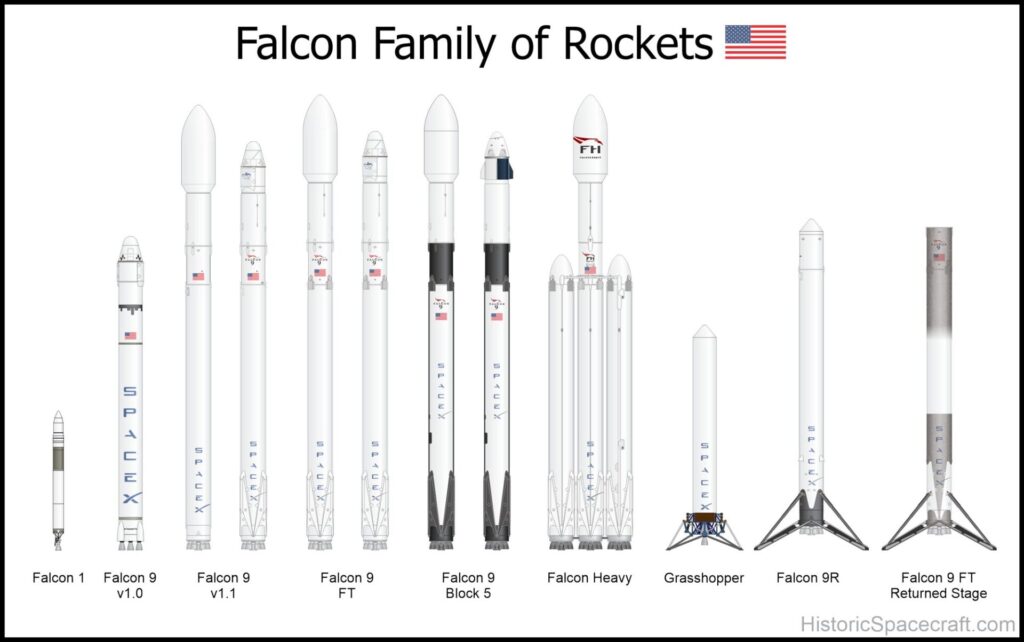
The first Falcon 9 launched on June 4, 2010. At the time, the rocket looked nothing like the transportation system it has since become. Its first stage fell into the ocean after completing its work, just as nearly every orbital launch vehicle had done for decades.
That began to change in December 2015, when a Falcon 9 first stage completed the first successful controlled vertical landing following an operational orbital mission. It was not the first soft landing of any rocket-powered vehicle in history, but it was the first time that a booster from an orbital-class rocket had returned after carrying out a full mission.
At first, the landings were treated almost as separate spectacles. Cameras tracked a small point of fire descending toward a ground pad or an autonomous platform at sea. Each successful attempt triggered celebrations inside mission control, while failed landings often ended in spectacular explosions.
Then came perhaps the most important moment in the life of any new technology: it stopped being surprising.
Landings became routine. Previously flown boosters began flying again. Soon, the number of missions completed by a single booster was no longer counted in ones or twos, but in dozens. By 2026, some Falcon 9 first stages had already completed more than 30 missions.
For comparison, Discovery, the most frequently flown American space shuttle, completed 39 missions over its entire career. Individual Falcon 9 boosters are now gradually approaching the flight totals of a reusable spacecraft that was vastly larger, more expensive, and more difficult to service.
Yet Falcon 9’s greatest achievement is not merely the number of flights completed by a single booster. SpaceX has learned how to operate an entire fleet of rockets, launch complexes, autonomous droneships, and ground crews at the same time.
That is what allows one rocket to launch from California and another to follow only hours later from Florida.
Why the Shuttle Never Became a Shuttle — and Falcon 9 Did
Fairing release illustration
At first glance, comparing Falcon 9 with the space shuttle may seem unfair. The shuttle carried people and large payloads into orbit, returned satellites to Earth, serviced spacecraft, and performed complex assembly missions. Falcon 9 is a launch vehicle that recovers only its first stage.
But that more modest architecture turned out to be its greatest advantage.
The designers of the shuttle attempted to combine too many functions within a single system. The winged orbiter had to serve as a rocket, cargo vehicle, crewed station, repair workshop, and recoverable spacecraft all at once. It relied on thousands of thermal-protection tiles, three main engines, complex hydraulics, a huge external tank, and two solid-fuel boosters.
After every mission, the entire system required extensive servicing.
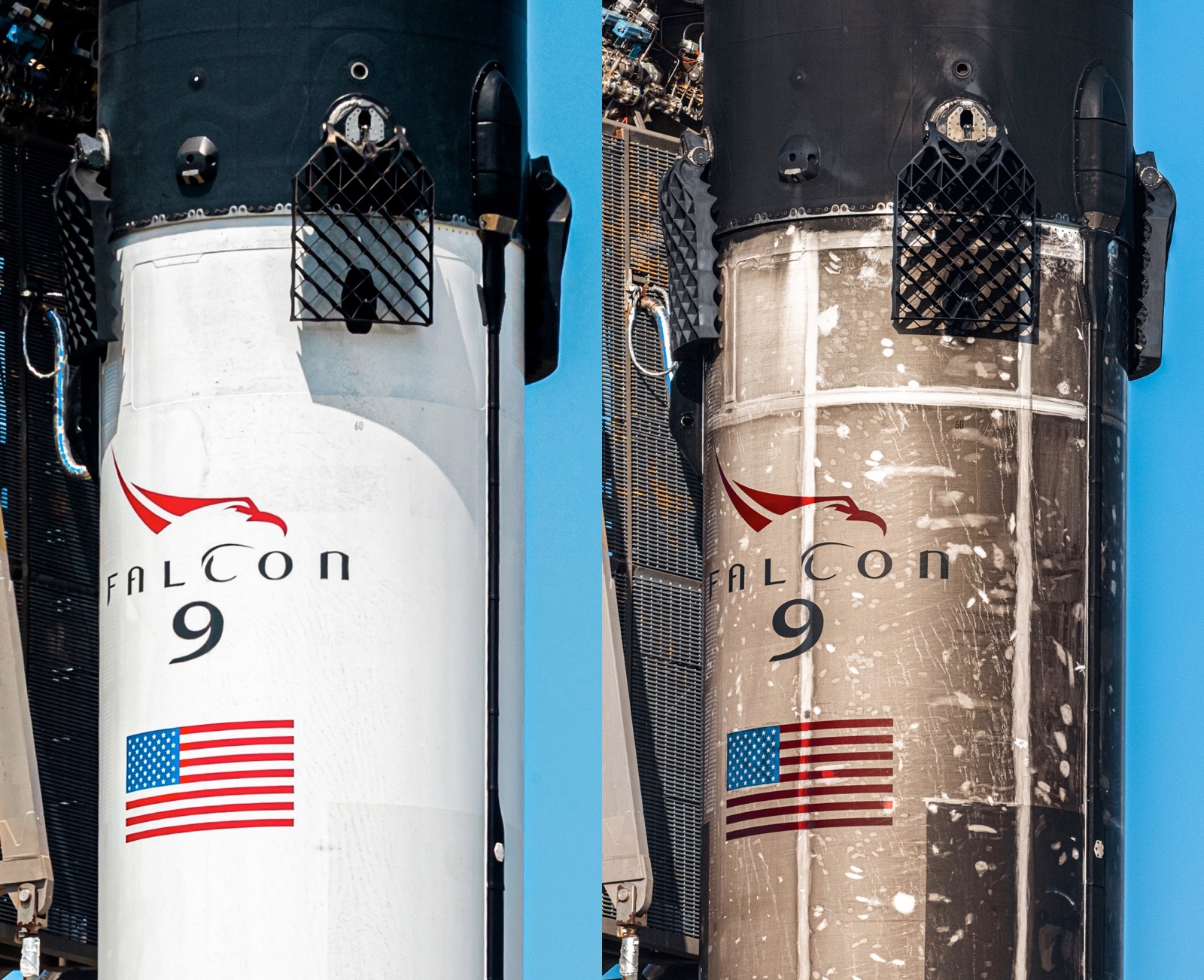
Falcon 9 is considerably simpler. Its first stage never reaches orbit and does not experience the same heat loads as a returning spacecraft. After stage separation, it performs a series of engine burns, reenters the atmosphere, and lands vertically. The second stage remains expendable, but it accounts for a smaller portion of the rocket’s total cost.
SpaceX also did more than create a reusable booster. It gave that booster a constant stream of work.
That work is Starlink.
The company’s own satellite constellation creates an almost continuous demand for launches. SpaceX does not have to wait for an outside customer to finish building another expensive spacecraft. It manufactures the satellites, launches them, and operates the resulting network itself.
This turns Falcon 9 from a rocket serving individual customers into one element of a vertically integrated transportation system. The satellite production line provides a steady flow of payloads, frequent launches accelerate the accumulation of experience, and that experience allows the company to reduce the interval between missions.
A Spaceport Becomes an Airport
Two launches in one night do not mean that rockets have become as easy to operate as passenger aircraft. Every launch still requires the closure of airspace and sea lanes, the loading of hundreds of tonnes of propellant, detailed checks of highly complex machinery, and the coordination of a large team.
The rapid tempo is also not achieved by relaunching the same rocket only hours later. SpaceX uses different boosters, different launch sites, and different droneships. The system resembles an airline operating a large fleet of aircraft more than it does a single vehicle being turned around immediately for another flight.
Even so, spaceflight has never before possessed such a highly developed system of serial orbital launches.
By mid-July 2026, the two missions had become the 82nd and 83rd Falcon 9 launches of the year. That meant the company had been sending a rocket into space more often than once every three days on average. Most of those missions were connected to the continued deployment of Starlink.
The change in the public perception of launches is equally revealing. Once, every rocket launch was an event of international importance. Today, another Falcon 9 can rise at night, deploy several dozen satellites, land its first stage on a ship, and barely make the main news bulletins.
For the romance of spaceflight, that may sound slightly disappointing.
For the space industry, it is exactly the opposite.
Real transportation begins at the moment when an individual journey stops being treated as a miracle.
The Real Revolution Became Almost Invisible
In the twentieth century, engineers imagined the future of spaceflight as a world of enormous winged spacecraft, orbital stations, and shuttles regularly traveling between Earth and space. Falcon 9 looks very different from that vision. It is still a tall white rocket rising on a column of flame and discarding an expendable upper stage.
Yet in operational terms, it has come much closer to that old dream than any of the space shuttles ever did.
SpaceX now operates a fleet of reusable boosters, several launch complexes on different coasts, its own autonomous droneships, and a constant stream of standardized payloads. One launch can begin before operations from the previous mission have even fully concluded.
That is why the two Falcon 9 rockets launched less than eight hours apart matter. Not because they established another isolated record, but because they show that orbital launches are gradually moving from the age of individual expeditions into the age of industrial logistics.
The space shuttles finally arrived.
They simply came without wings, landed on legs instead of runways, used autonomous platforms in the middle of the ocean, and, for now, carried dozens of small satellites instead of passengers.