Half a Billion Dollars, Not a Single Shell. Why the U.S. Army’s New Artillery Plant Has Yet to Produce 155mm Shell Bodies

Since the outbreak of the war in Ukraine, expanding the production of 155mm artillery ammunition has become one of the U.S. defense industry’s highest priorities. Washington has sought not only to replenish its own depleted stockpiles after supplying millions of shells to Ukraine, but also to build an industrial base capable of sustaining high-intensity warfare in the future.
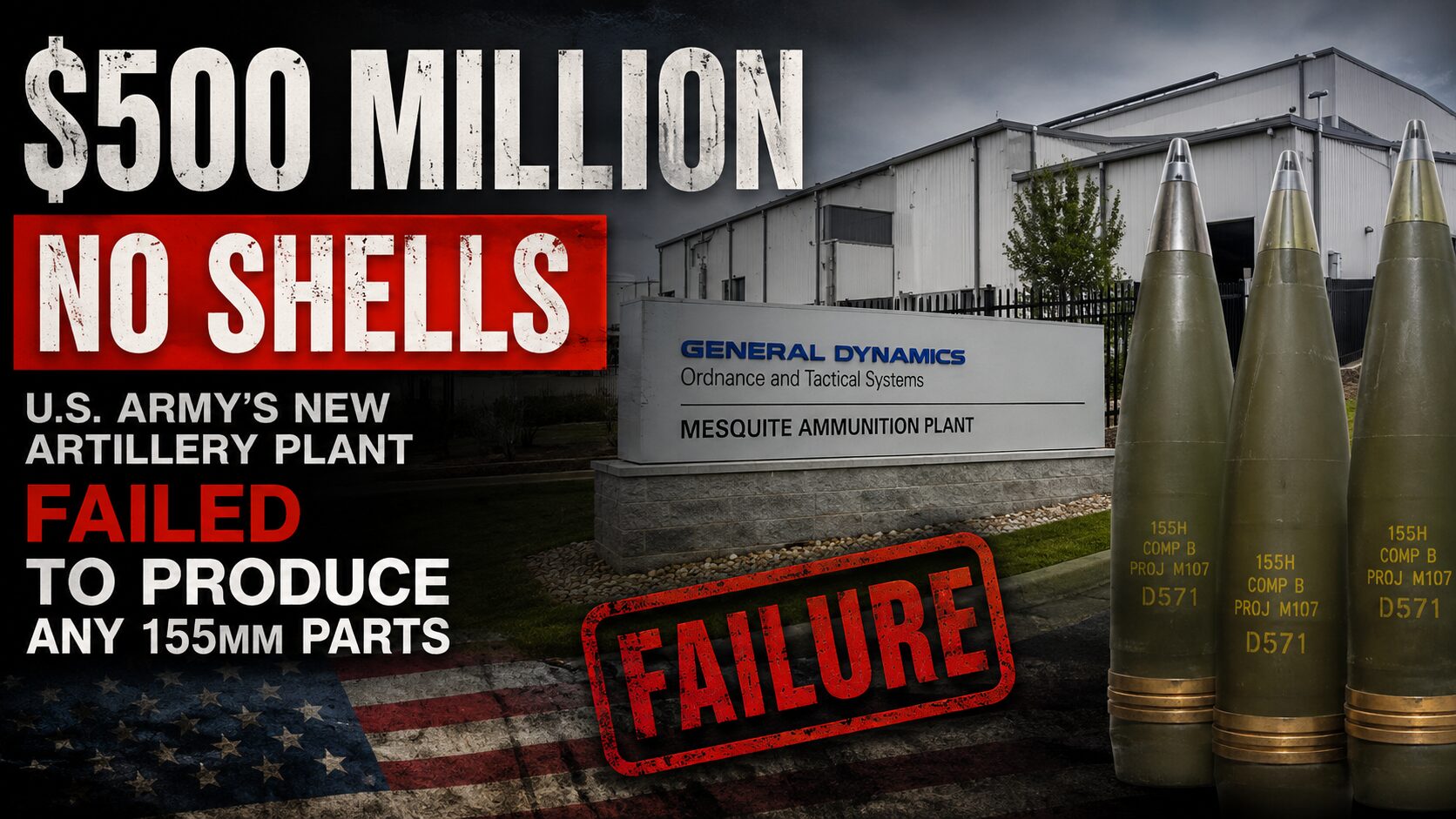
One of the cornerstone projects in that effort was a new manufacturing facility operated by General Dynamics Ordnance and Tactical Systems in Mesquite, Texas. The U.S. government invested nearly $470 million in the construction and launch of the plant.
Yet more than two years after opening, the facility has failed to manufacture a single 155mm artillery shell body.
That was the conclusion reached by a recent investigation conducted by the U.S. Department of Defense Office of Inspector General.
Why This Plant Was So Important
Following 2022, the United States dramatically increased the production and delivery of 155mm ammunition.
Millions of shells were transferred to Ukraine, while the U.S. Army simultaneously sought to rebuild its own inventories and strengthen NATO’s overall ammunition reserves.
To achieve those goals, the Pentagon launched an ambitious industrial expansion program.
The objective was clear: increase monthly production to 100,000 rounds.
Meeting that target required modernizing existing government-owned ammunition facilities, constructing new production lines, and involving major defense contractors.
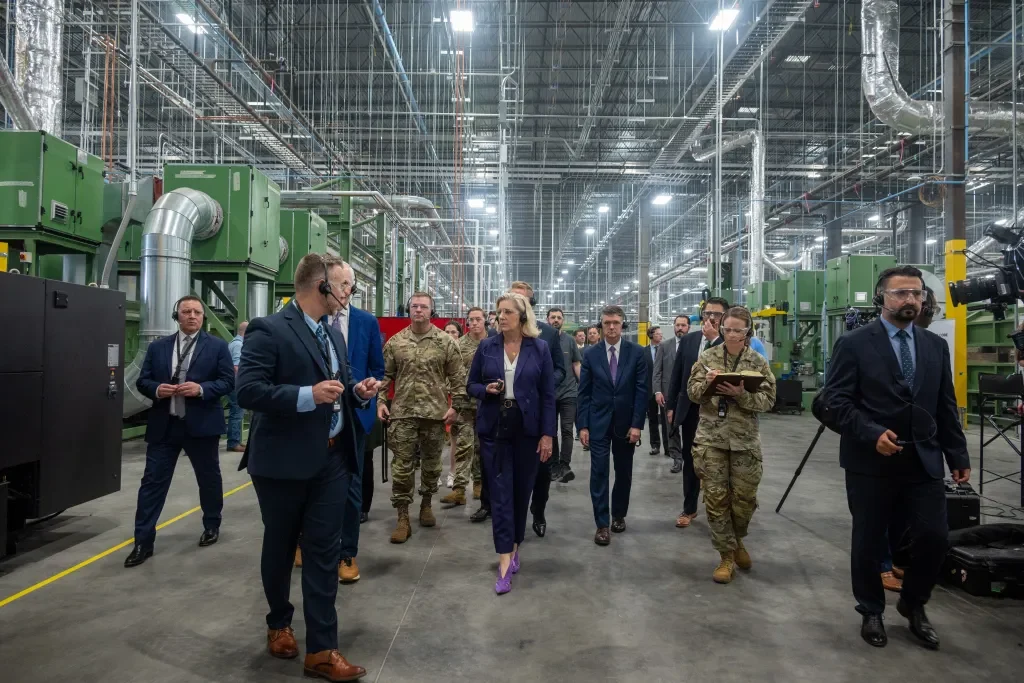
The Mesquite plant was expected to become one of the program’s key pillars.
According to Army planning documents, the factory was designed to manufacture approximately 30,000 steel shell bodies every month, accounting for nearly one-third of the required production capacity.
What Went Wrong?
The investigation revealed that funding was not the problem.
On the contrary, the project received substantial financial support.
The primary issue proved to be manufacturing itself.
General Dynamics attempted to adapt equipment originally designed to produce shell bodies for the older M107 artillery projectile to manufacture the more modern M795 shell.
At first glance, the decision appeared both practical and cost-effective.
In reality, the modifications required turned out to be significantly more extensive than initially anticipated.
According to the Inspector General’s report, Army officials were aware from the beginning that this approach carried considerable technical risk.
Nevertheless, they hoped that reusing existing manufacturing equipment would accelerate production.
Those expectations ultimately proved unrealistic.
A Factory Without Production
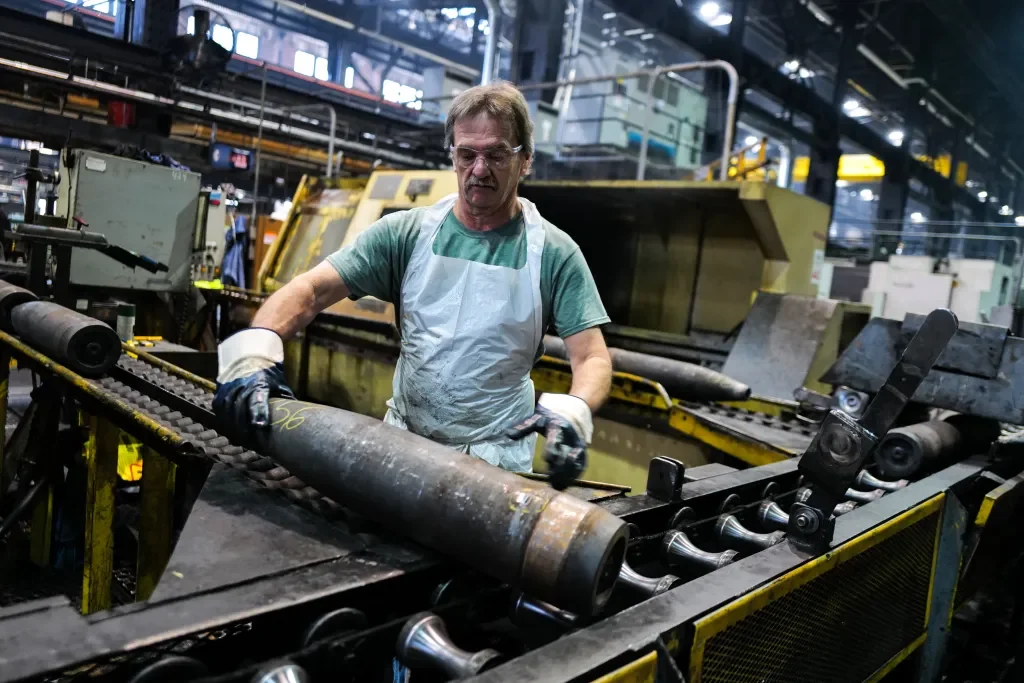
The audit found that from the plant’s opening in May 2024 through March 2026, the facility had not produced a single shell body covered under its contract.
As a result, the Army has been unable to reach its planned production targets.
Instead of manufacturing 100,000 shells per month, the U.S. industrial base currently produces approximately 71,000 rounds monthly, with virtually all of that output coming from other production facilities.
The Mesquite plant—the facility expected to provide nearly one-third of future capacity—has yet to make any meaningful contribution.
The Inspector General also noted that Army leadership has not presented a realistic plan explaining how the missing production capacity will be replaced.
Manufacturing Artillery Shells Is More Difficult Than It Appears
To an outside observer, producing a steel artillery shell might seem relatively straightforward.
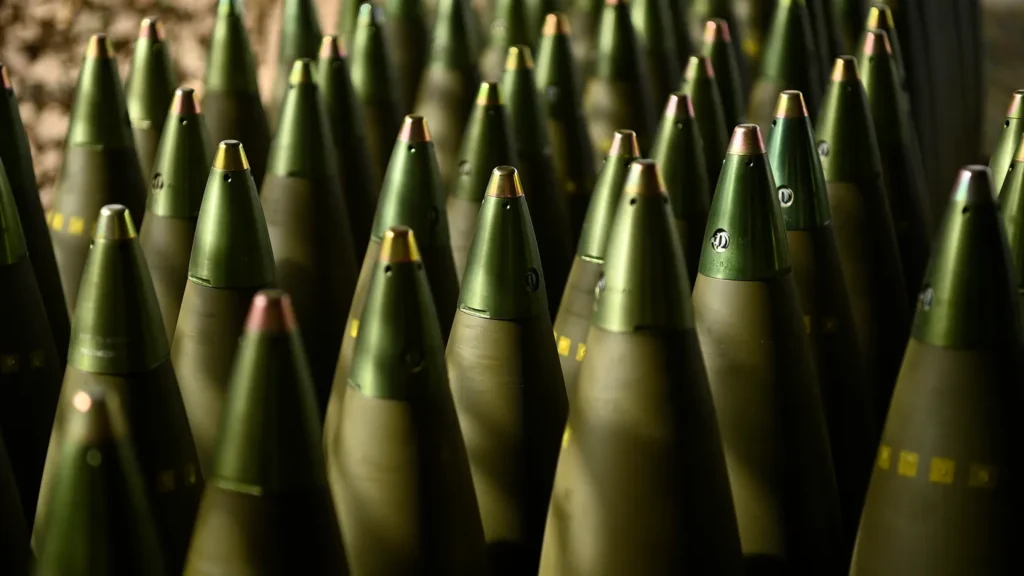
In reality, modern 155mm ammunition requires extremely demanding manufacturing standards.
Each shell body must withstand enormous firing pressures, survive transportation and storage, and fragment in a highly predictable manner after detonation.
Even small deviations in dimensions, metallurgy, or heat treatment can affect ballistic performance, reliability, or compatibility with artillery systems.
Producing shell bodies therefore requires massive forging presses, high-precision machining equipment, advanced heat-treatment facilities, and rigorous quality-control procedures.
These manufacturing processes have become one of the principal bottlenecks as Western countries attempt to rapidly expand ammunition production.
Not the First Warning Sign
The problems surrounding the Mesquite facility did not emerge overnight.
Months before the Inspector General released its report, the U.S. Army had already begun considering changes to General Dynamics’ role in overseeing parts of its expanding ammunition production network due to persistent delays and unsatisfactory progress.
That suggests the issues are not isolated.
Rather, they reflect broader structural challenges facing America’s defense industrial base as it attempts to rebuild manufacturing capacity after decades of downsizing that followed the end of the Cold War.
The Bigger Lesson
The story of a factory that cost nearly half a billion dollars yet has not produced a single contracted shell body illustrates just how difficult it has become to rapidly expand military production—even for weapons that appear relatively simple.
For decades after the Cold War, many Western nations steadily reduced ammunition production capacity, assuming that large-scale conventional wars had become increasingly unlikely.
The war in Ukraine has fundamentally challenged that assumption.
Governments and defense companies are now being forced to rebuild industrial supply chains, recruit skilled workers, modernize aging production facilities, and recover manufacturing expertise that, in some cases, has been neglected for decades.
The Mesquite plant demonstrates an important reality.
Constructing a factory is only the first step.
Turning that factory into a reliable, high-volume production facility capable of meeting wartime demand is a far more difficult challenge—one that may take considerably longer than the Pentagon originally anticipated.
source https://www.twz.com/land/new-500m-artillery-shell-plant-failed-to-produce-any-155mm-parts