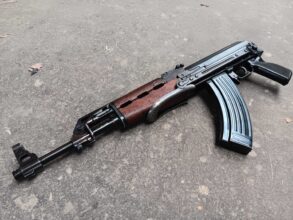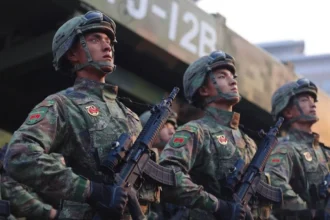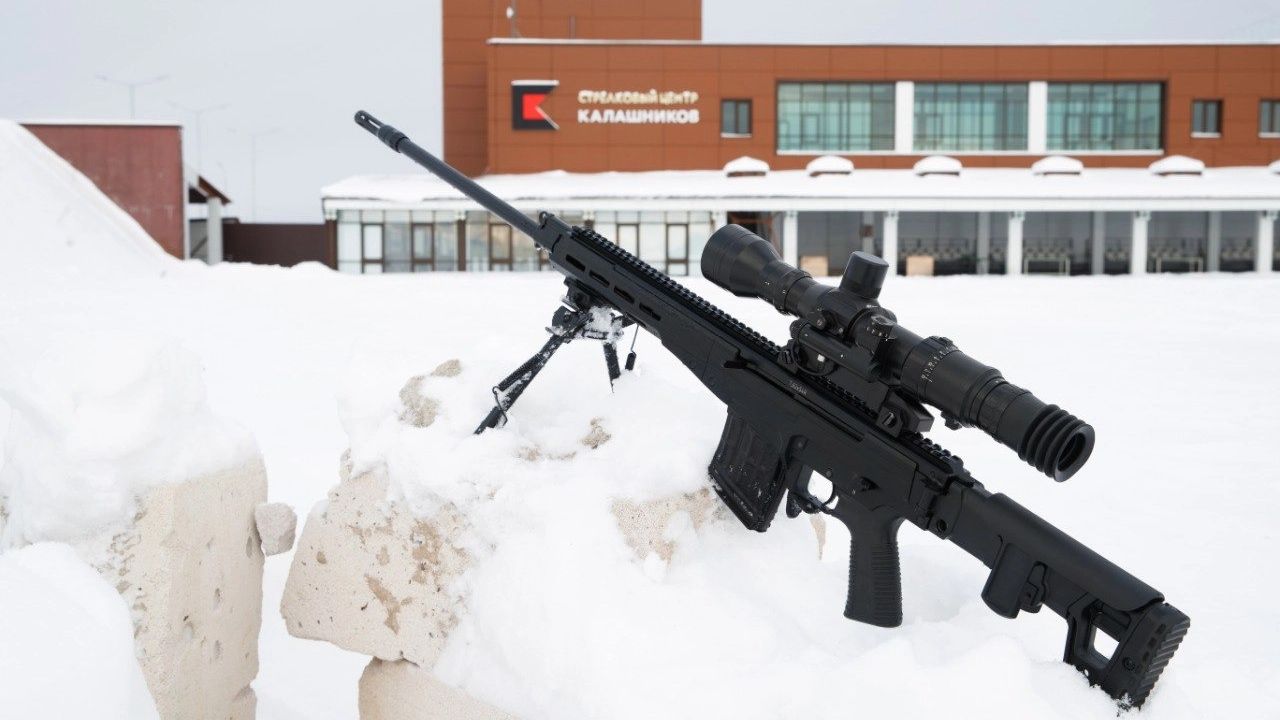
Few firearms have earned a reputation comparable to that of the Soviet Dragunov Sniper Rifle. Adopted in 1963, the SVD has remained one of the defining products of the Soviet and Russian small-arms industry for more than six decades. It has served in dozens of conflicts, been produced in massive numbers, and continues to equip the armed forces of many countries around the world.
However, even the most successful weapon designs eventually begin to fall behind the demands of modern warfare. The widespread adoption of advanced optics, thermal imagers, night vision devices, and suppressors has created the need for a new rifle designed from the outset to accommodate modern equipment.
That rifle is the SVCh (Chukavin Sniper Rifle), developed by Kalashnikov Concern. Today, it is gradually entering military service and is widely viewed as the eventual successor to the legendary SVD.
But is it truly capable of replacing one of the most iconic sniper rifles ever built?
Why the SVD Is No Longer Enough
Despite its outstanding reputation, the SVD was designed for a very different era.
When it entered service in the early 1960s, the primary requirement was to engage targets reliably at ranges of up to 800 meters using either iron sights or the standard PSO-1 optical sight. Concepts such as modularity, thermal imaging, and advanced night-vision equipment were barely considered.
Over the past six decades, battlefield requirements have changed dramatically.
Today’s designated marksman or sniper routinely employs thermal optics, laser rangefinders, ballistic calculators, suppressors, and various electronic accessories. These systems demand an entirely different weapon architecture.
Recognizing these changes, Kalashnikov Concern began developing a new rifle in 2016, designated SVCh.
A Completely New Design
Unlike many modernization programs, the SVCh is not simply an upgraded SVD.
It is an almost entirely new rifle.
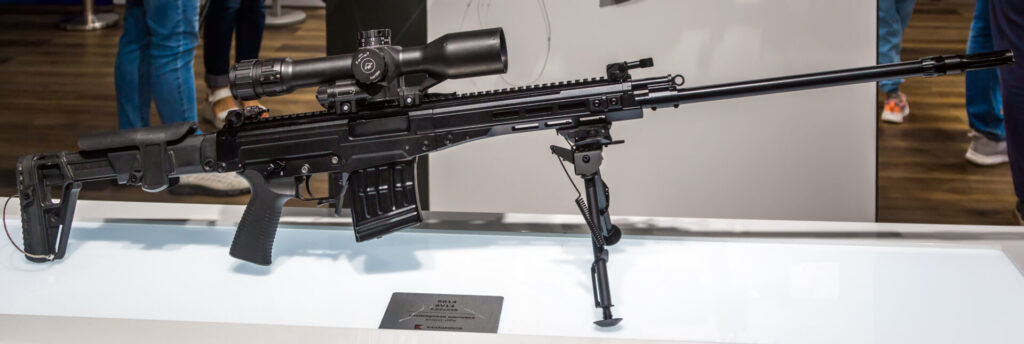
Its most distinctive feature is the inline layout. The barrel, receiver, and stock are positioned along nearly the same axis.
This configuration significantly reduces muzzle climb during firing and allows the shooter to reacquire the target more quickly for follow-up shots.
The rifle continues to use a gas-operated rotating bolt system, but the overall design has been thoroughly re-engineered using modern manufacturing techniques and materials.
Compared to the SVD, the SVCh is noticeably more compact while retaining a barrel length sufficient for effective long-range performance.
Built Around Modern Optics
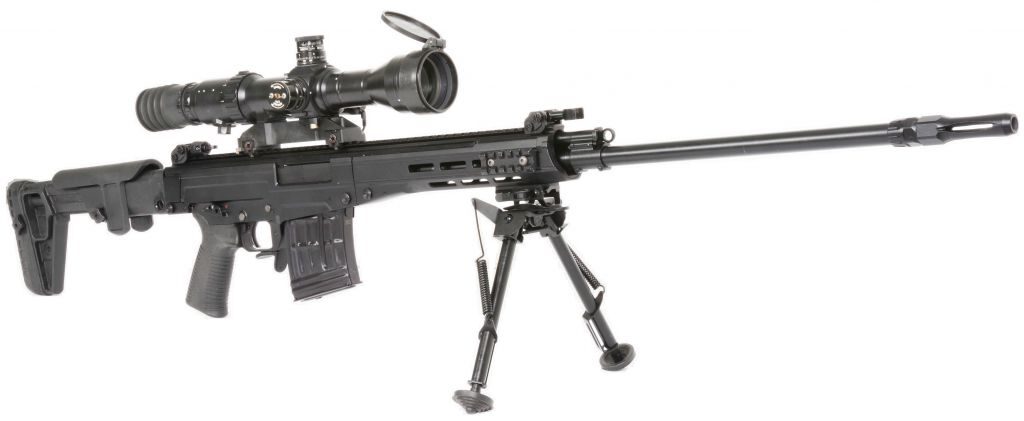
One of the rifle’s greatest advantages is its compatibility with modern sighting systems.
The receiver features a full-length Picatinny rail that allows virtually any daytime optic, thermal sight, or night-vision device to be installed.
Additional mounting rails on the handguard provide space for lasers, bipods, and other accessories.
In effect, the SVCh was designed from the beginning as a modular platform capable of adapting to a wide variety of missions without extensive modifications.
For modern armed forces, this flexibility has become increasingly important.
Suppressed Fire Capability
The designers also paid considerable attention to reducing the shooter’s signature.
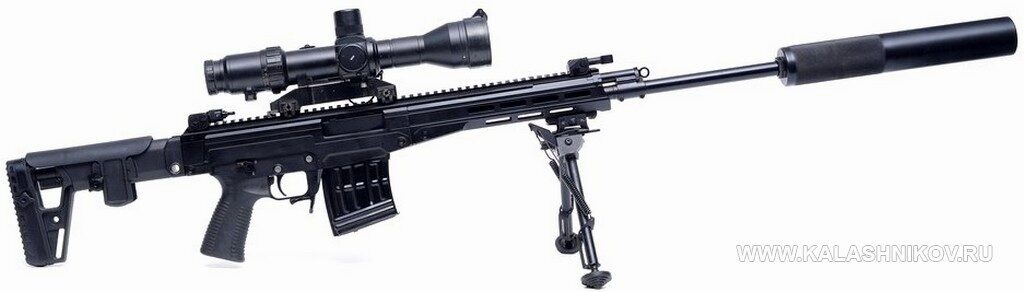
The SVCh can be equipped with a suppressor that significantly reduces muzzle blast while nearly eliminating visible muzzle flash.
It is important to note that such devices do not make the rifle completely silent. However, they greatly complicate efforts to locate the shooter’s position, particularly during urban combat or nighttime operations.
In modern warfare, this has become a significant tactical advantage.
Are There Any Drawbacks?
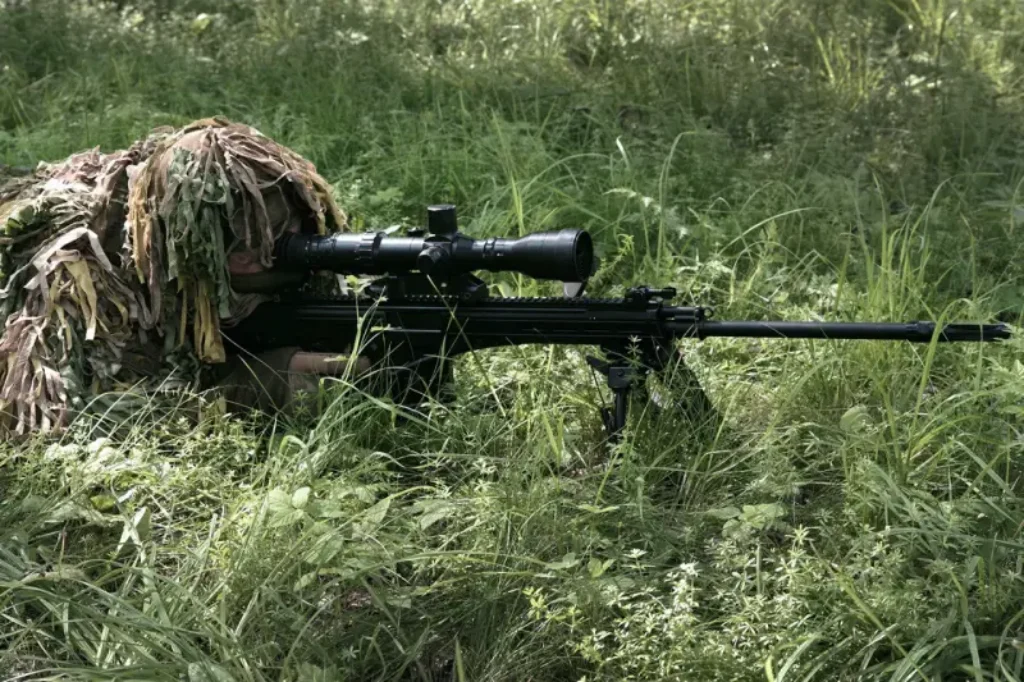
Like any newly developed weapon, the SVCh is not without criticism.
Some specialists have noted that the rifle appears to be more sensitive to contamination than the battle-proven SVD. Heavy fouling may require more careful maintenance and cleaning.
That said, this characteristic is common among many modern precision firearms.
Furthermore, the rifle has only recently entered widespread military service. Its long-term reliability under a variety of climatic and operational conditions will only become clear after years of field use.
Will It Become the New Dragunov?
This remains the most frequently discussed question.
A complete and immediate replacement of the SVD appears unlikely.
Over decades of production, enormous numbers of Dragunov rifles have entered service, and military personnel are thoroughly familiar with their operation. Replacing such a vast inventory will inevitably take many years.
A gradual transition is therefore the most realistic scenario.
Newly equipped units will receive the SVCh, while the SVD will likely remain in service alongside its successor for years to come.
This approach has been common in many armed forces during transitions between generations of small arms.
A Reflection of Modern Warfare
The story of the SVCh is about more than just a new rifle.
It reflects how the role of the designated marksman has evolved.
Where reliability and effective range were once the primary considerations, today’s military also demands modularity, compatibility with advanced optics and electronics, ergonomic design, and reduced battlefield signature.
These changing requirements shaped every aspect of the SVCh’s development.
Whether it ultimately achieves the legendary status of the SVD remains to be seen. What is already clear, however, is that it represents one of the most significant attempts in decades to redefine the concept of the self-loading military sniper rifle.
SVCh Technical Specifications
Official Designation: Chukavin Sniper Rifle (SVCh)
Developer: Kalashnikov Concern
Country of Origin: Russia
Development Began: 2016
Serial Production: 2023
Type: Semi-automatic sniper rifle
Operating System: Gas-operated, rotating bolt
Caliber: 7.62×54R (also available in 7.62×51 NATO and .338 Lapua Magnum variants)
Feed System: 10-round detachable box magazine
Weight (without optics): Approximately 4.8 kg
Overall Length: 1,170 mm (stock extended)
Effective Range: Up to 1,000 meters
Stock: Folding, adjustable
Optics Mount: Full-length Picatinny rail compatible with daytime, thermal, and night-vision optics
Additional Equipment: Suppressor compatibility, bipods, and a wide range of modern accessories
Key Takeaway
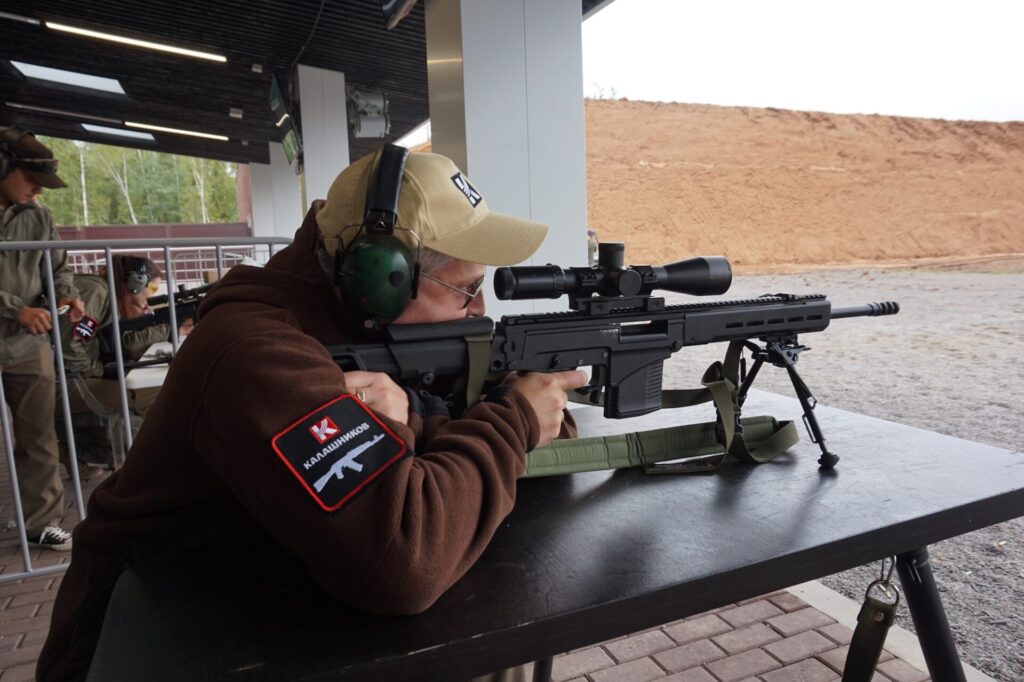
The SVCh was not designed as another upgrade of the Dragunov but as a next-generation sniper rifle built for the realities of modern warfare. Its inline architecture, modular design, compatibility with advanced optics, and suppressor capability make it far better suited to twenty-first-century combat environments.
Whether it will ultimately replace the legendary SVD is a question that only years of operational service can answer.