The First World War gave rise to many weapons that have since become symbols of the industrial nightmare of the early twentieth century. Machine guns cut down advancing infantry by the thousands. Artillery transformed entire regions into cratered wastelands. Flamethrowers turned trenches into infernos. Yet among all these weapons, one stood out so dramatically that it became the subject of an official diplomatic protest. That weapon was the Winchester Model 1897—the legendary “trench gun” that German soldiers considered one of the most terrifying weapons on the Western Front.
The story of this shotgun began long before the trenches of France. Its creator was the renowned American firearms designer John Moses Browning, whose name remains legendary among historians and firearms enthusiasts alike. In the late nineteenth century, Browning developed a revolutionary repeating shotgun that used a manually operated sliding fore-end, better known today as a pump-action mechanism.
For the American market, where hunting was an important part of everyday life, the design was a major breakthrough.
The Winchester Repeating Arms Company introduced the shotgun in 1897, and no one could have imagined that two decades later this sporting firearm would find itself on the battlefields of Europe.
When War Went Underground
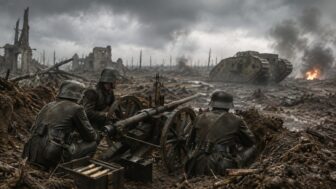
By 1915, the First World War had evolved into a vast network of trenches stretching from the North Sea to the Swiss border. These trenches were narrow, muddy, and claustrophobic. Combat rarely took place at long range. Instead, soldiers often found themselves fighting face-to-face in communication trenches, dugouts, and shell craters.
Under such conditions, the long service rifles of the era were often awkward to use. Many measured well over 1.5 meters with bayonets attached, making them cumbersome in confined spaces.
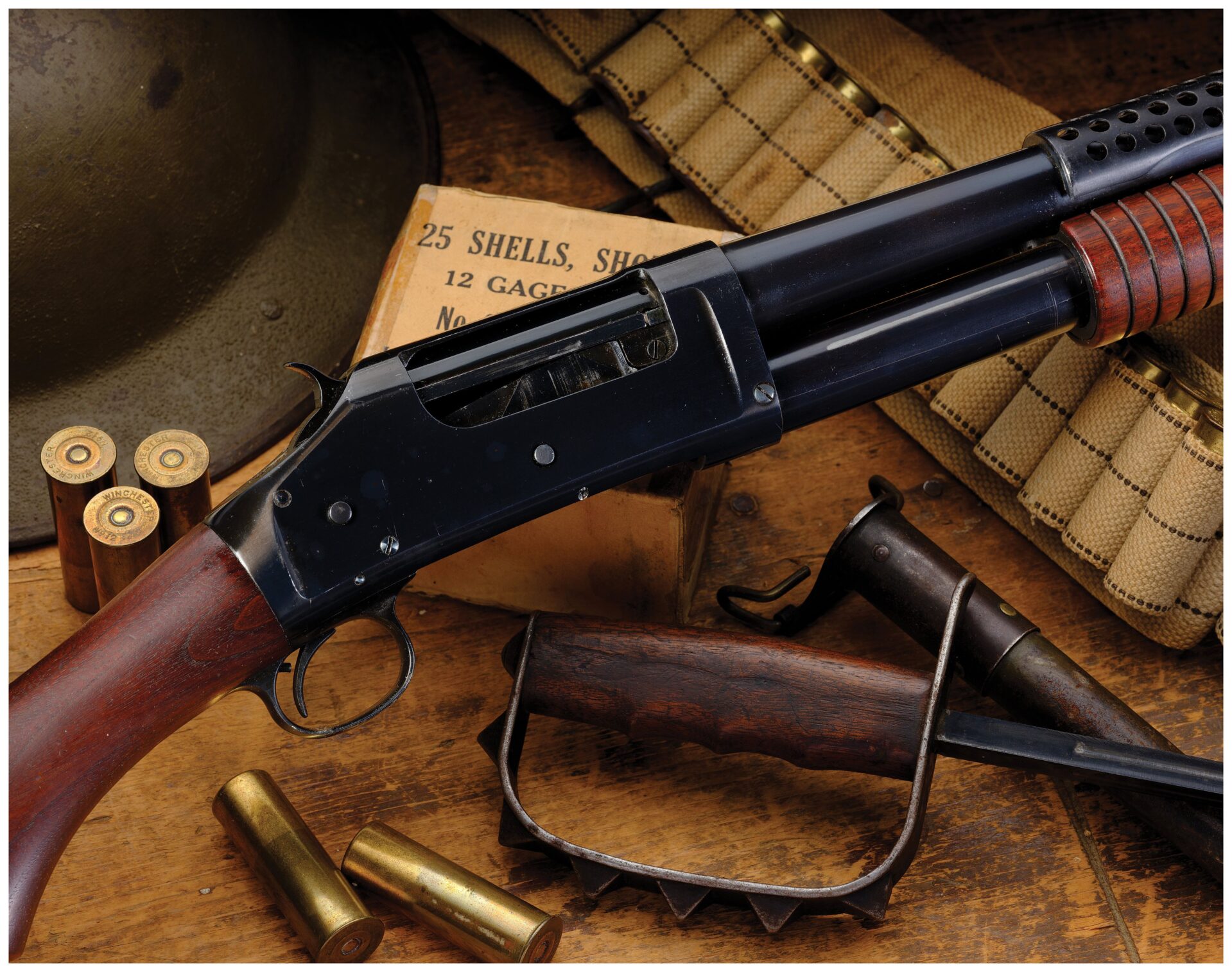
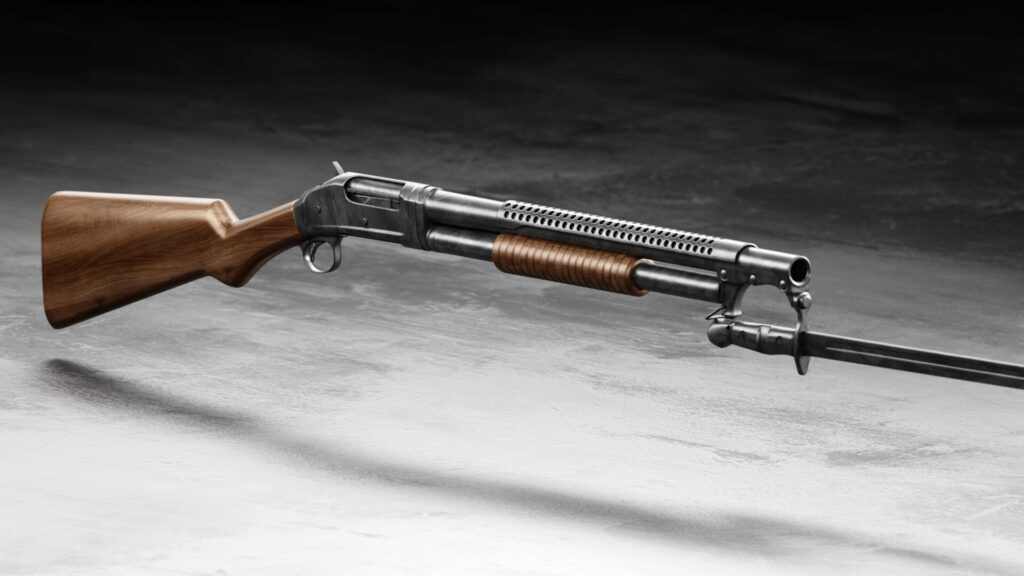
When the United States entered the war in 1917, American military planners quickly realized that trench raids required something different. The answer was a specialized version of the Winchester Model 1897 officially designated as the Trench Gun.
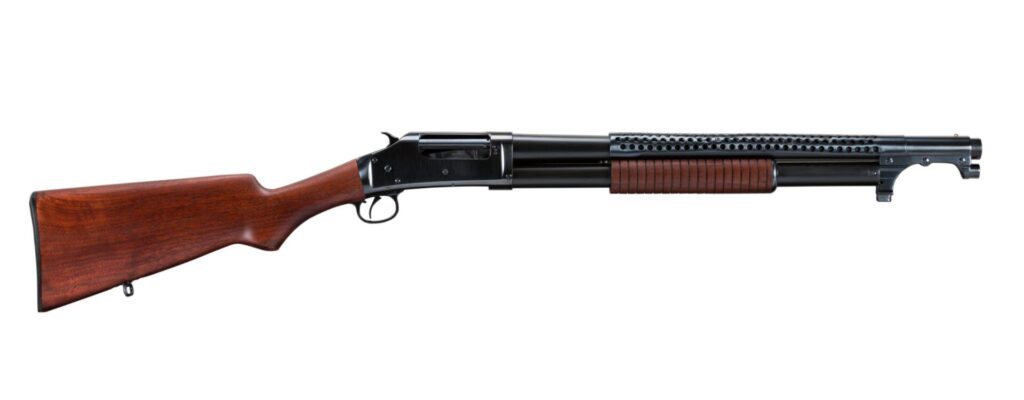
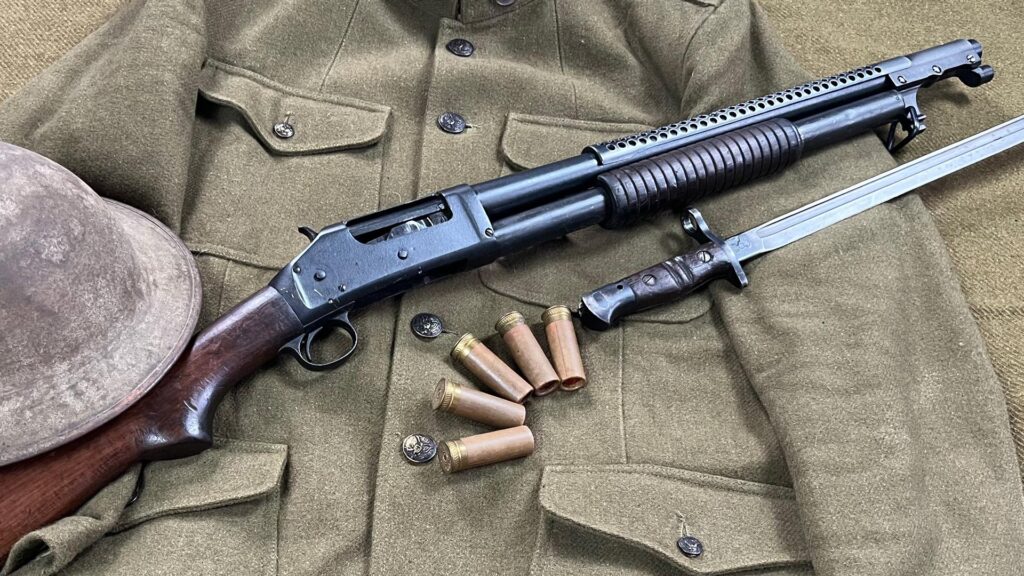
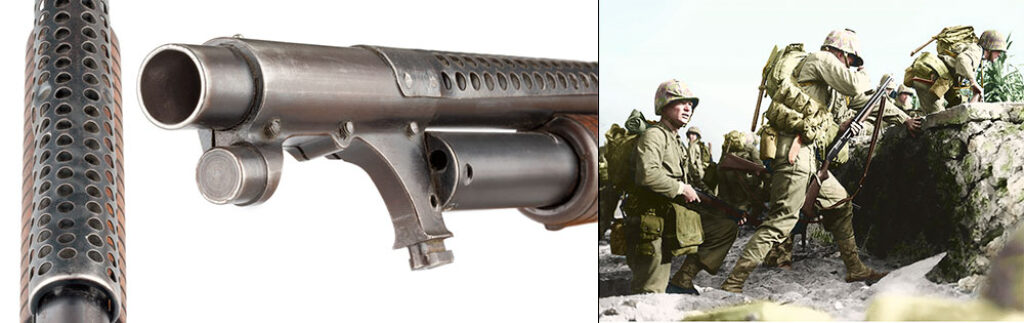
The weapon featured a shortened barrel approximately 20 inches long, a perforated steel heat shield to protect the shooter’s hands, and a bayonet mount designed for the M1917 bayonet. The result was an unusual hybrid—a shotgun capable of delivering devastating close-range firepower while still functioning as a bayonet weapon in hand-to-hand combat.
Five Shots in Seconds
To understand why German soldiers feared this weapon, one must consider its capabilities in the context of 1918 warfare.
Most infantrymen of the era carried bolt-action rifles. After every shot, the shooter had to manually cycle the bolt, eject the spent casing, and chamber a new round.
The Winchester worked differently.
With a pull of the trigger and a quick movement of the fore-end, the weapon was immediately ready to fire again. A trained soldier could empty the magazine in only a few seconds.
But the real terror lay not merely in its rate of fire.
Each 12-gauge shell contained multiple large buckshot pellets. At close range, a single blast could unleash a cloud of lead capable of striking several men at once. In the confined environment of a trench, where combat often occurred at distances measured in mere meters, the effect could be devastating.
American troops particularly valued the shotgun during nighttime trench raids. In darkness, where soldiers relied on sound, instinct, and fleeting flashes of light, the ability to instantly saturate a section of trench with buckshot provided a tremendous advantage.
German veterans later recalled that the distinctive sound of the pump-action mechanism was often as frightening as the shot itself.
The German Protest
In the autumn of 1918, an extraordinary event occurred—one that would secure the Winchester Model 1897 a permanent place in military history.
The German Empire submitted an official diplomatic protest against the United States. German authorities argued that the use of combat shotguns violated the laws and customs of war because buckshot caused unnecessarily severe wounds and excessive suffering.
In essence, Berlin sought to classify the American trench gun as an inhumane weapon.
The irony was striking. Germany raised these objections at a time when artillery was obliterating entire divisions, chemical weapons had become commonplace, and flamethrowers were being used in trench assaults. Millions of soldiers had already been killed or wounded, and vast sections of Europe had been transformed into landscapes resembling the surface of the Moon.
The American response was firm and uncompromising.
The U.S. War Department declared that the Winchester violated no international agreements. Furthermore, American officials warned that if Germany executed captured American soldiers armed with shotguns, identical measures would be taken against German prisoners of war.
The protest effectively ended there.
The Winchester remained in service.
The Legacy of the Weapon That Frightened an Army
The First World War ended only weeks after Germany submitted its protest, but the story of the trench gun was far from over.
The Winchester Model 1897 and its successors went on to serve in the Second World War, the Korean War, and the Vietnam War. In every conflict, combat shotguns demonstrated that at extremely close ranges they remained among the most effective infantry weapons available.
Yet the shotgun’s enduring fame comes from more than its combat performance.
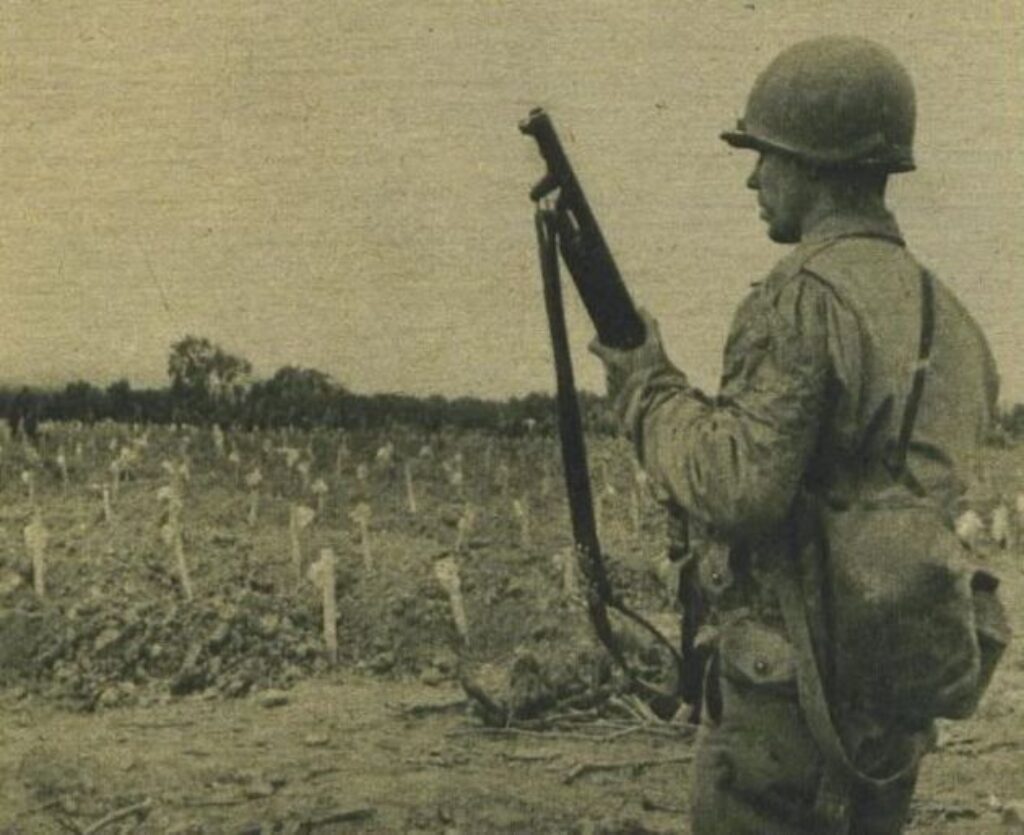
Its place in history was secured because it became one of the very few small arms of the First World War that inspired an official attempt at international prohibition. Throughout the conflict, governments rarely protested specific firearms. But the American trench gun proved so effective in trench combat that Germany sought to fight it not with bullets, but with diplomatic notes.
Perhaps that is why, more than a century later, the Winchester Model 1897 remains one of the defining symbols of trench warfare. It was not the most numerous weapon of the war, nor the deadliest. But it was the weapon that prompted an entire nation to declare, “This goes too far.”
Winchester Model 1897 Trench Gun Specifications
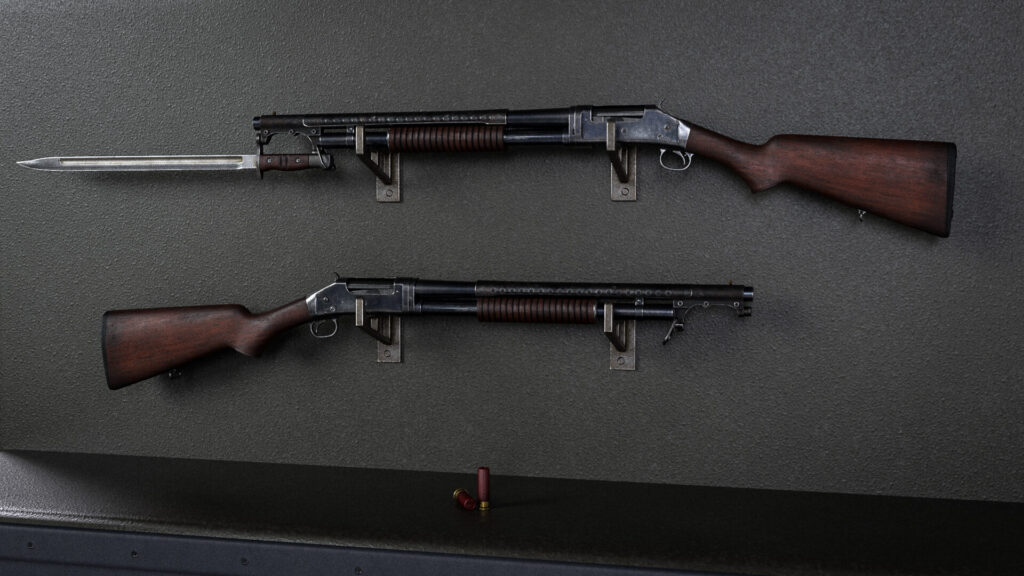
- Type: Pump-action shotgun
- Caliber: 12 Gauge
- Ammunition: 12 Gauge shotgun shells
- Magazine Capacity: 5 rounds + 1 in the chamber
- Overall Length: Approximately 1 meter (39.5 inches)
- Barrel Length: Approximately 510 mm (20 inches)
- Weight: Approximately 3.6 kg (8 lbs)
- Designer: John Moses Browning
- Military Adoption: 1917
- Features: Heat shield, M1917 bayonet mount, exceptional close-range firepower and rapid follow-up shots.