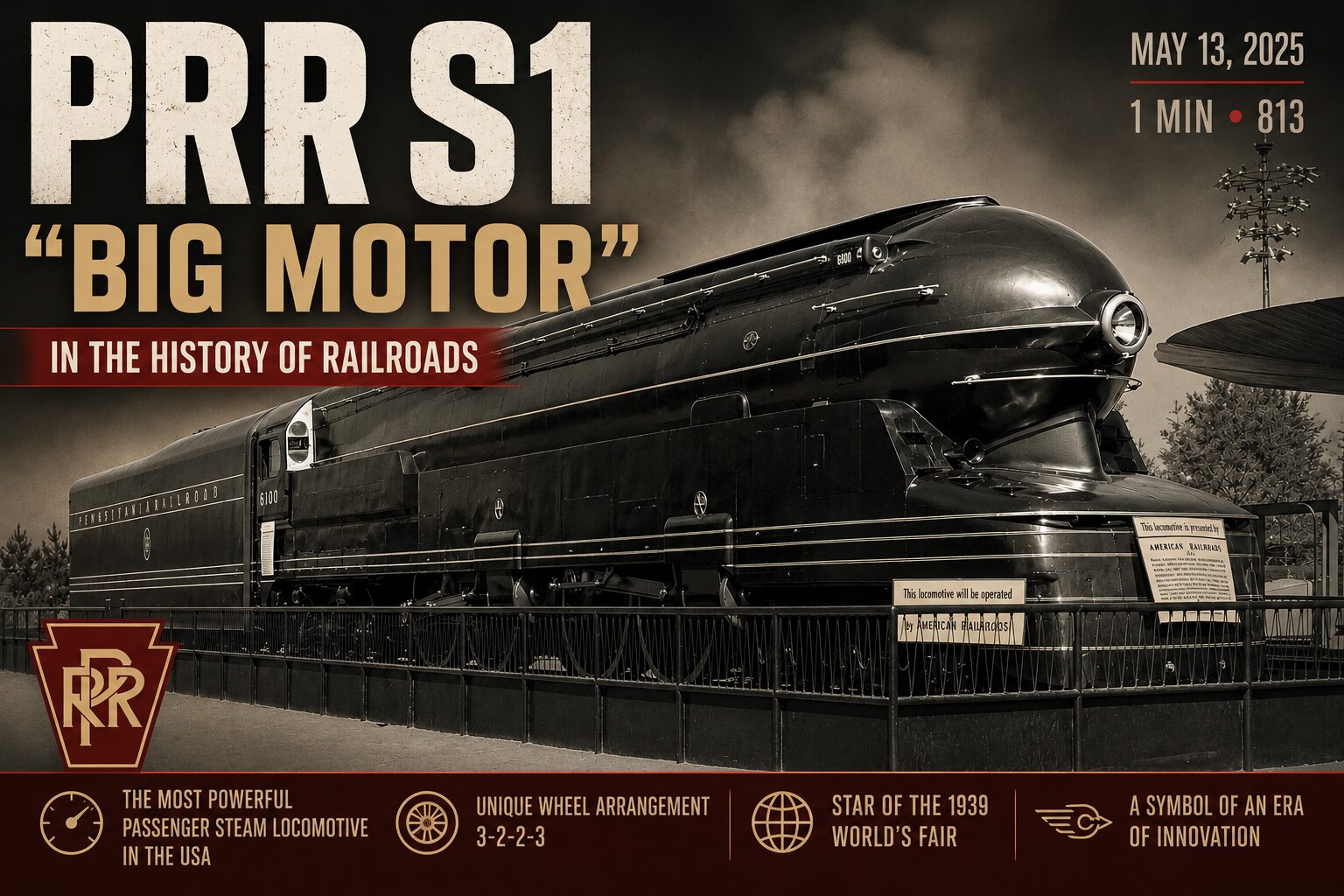
The history of railroads is filled with remarkable locomotives. Some became legends thanks to their speed records, while others earned fame through reliability or mass production. Yet only a handful of machines could stop people in their tracks and leave them staring in amazement. One of those locomotives was the PRR S1—a steam-powered giant of the Pennsylvania Railroad that remains one of the most ambitious and unusual projects in the history of rail transportation.
When the locomotive was unveiled in 1939, it looked as if it had arrived from the future. Massive, streamlined, elegant, and incredibly powerful, the S1 became a symbol of an era when engineers still believed that the potential of steam power had not yet been fully realized.
History, however, had other plans.
The Race for Speed in the Golden Age of Railroads
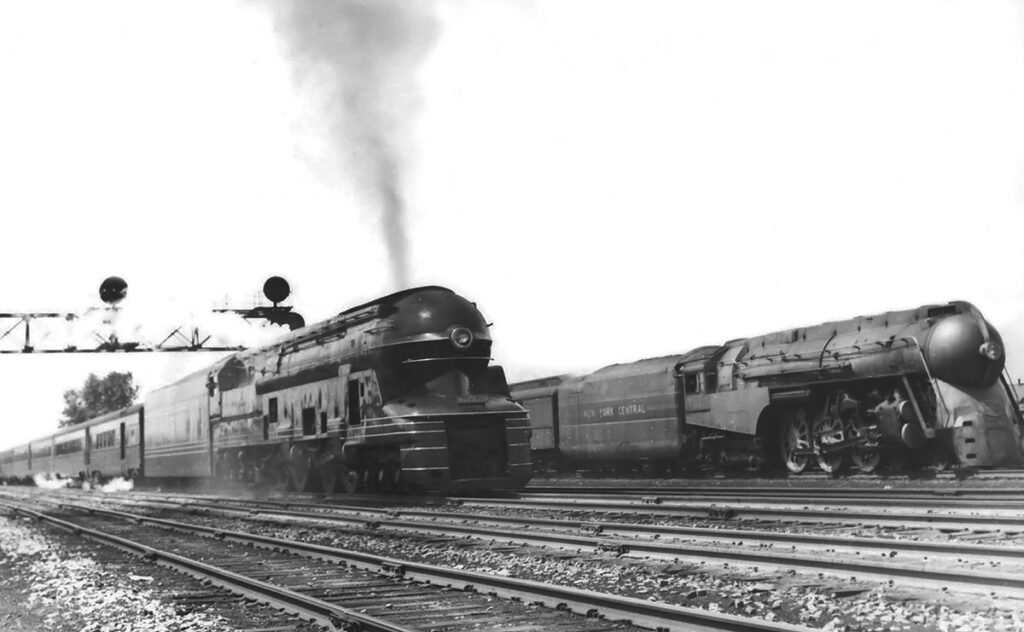
The late 1930s were a period of intense competition among American railroads.
Automobiles had not yet taken over long-distance travel, commercial aviation was still in its infancy, and railroads remained the fastest and most practical way to cross the vast distances of the United States.
For companies such as the Pennsylvania Railroad, speed was a matter of prestige.
The backbone of the railroad’s passenger fleet consisted of the famous K4s Pacific locomotives. They had served admirably for decades, but by the mid-1930s their development potential had largely been exhausted.
Railroad executives wanted something new—faster, more powerful, and more modern.
That desire gave birth to the S1 project.
America’s Finest Engineers Join Forces
To create the new locomotive, the Pennsylvania Railroad assembled a dream team of engineers from some of the nation’s leading locomotive manufacturers.
The project involved specialists from Baldwin Locomotive Works, Lima Locomotive Works, and the American Locomotive Company (ALCO). Even by American industrial standards, such cooperation was unusual.
Their mission was straightforward but ambitious: build the most powerful passenger steam locomotive the railroad had ever operated.
The result was a machine that dwarfed almost every locomotive that had previously run on American rails.
Including its tender, the S1 measured more than 42 meters (138 feet) in length.
Its total weight exceeded 600 tons.
Even today, those numbers remain impressive.
Art Deco on Rails
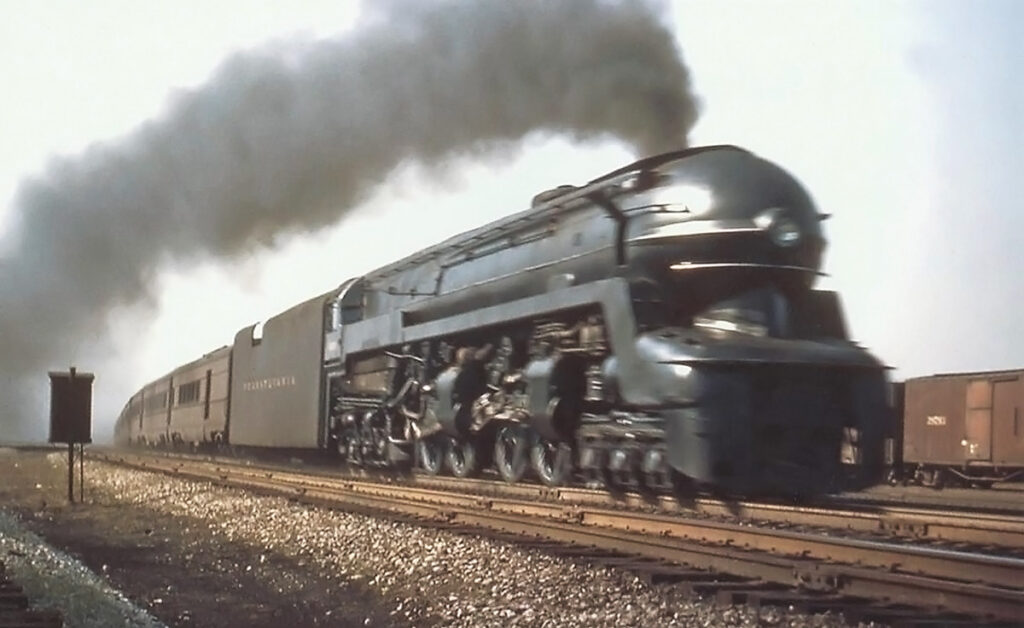
One of the locomotive’s most striking features was its appearance.
At a time when industrial design was becoming an art form in its own right, the Pennsylvania Railroad wanted its new locomotive to be more than just powerful—it wanted it to be beautiful.
To achieve this, the railroad hired the legendary industrial designer Raymond Loewy, whose work would help define the visual identity of twentieth-century America.
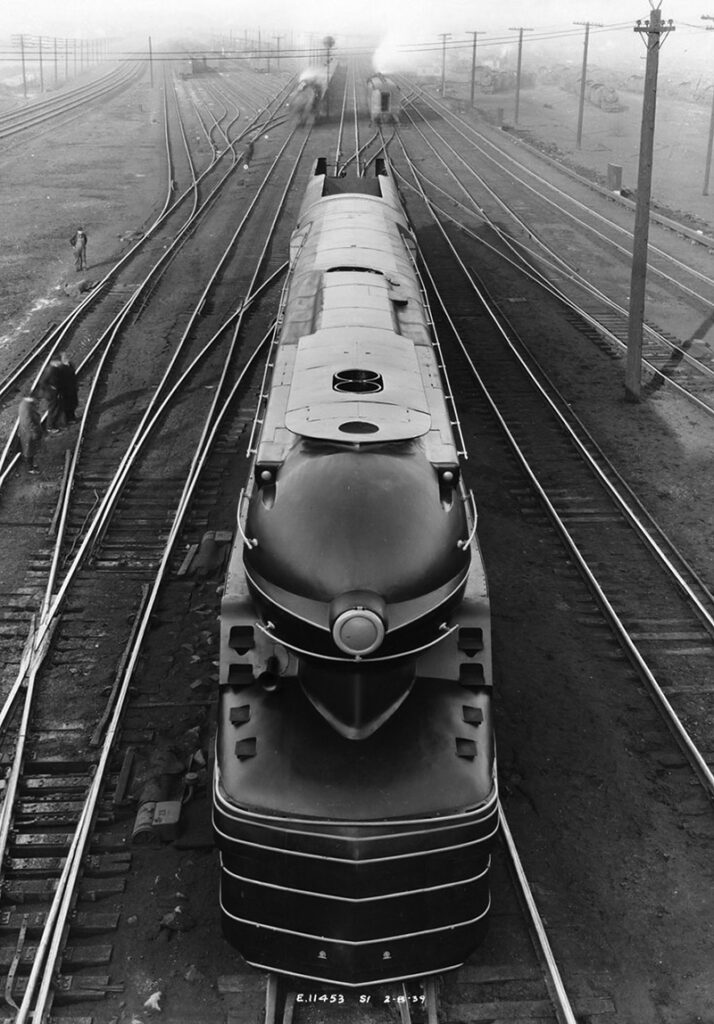
Loewy created the S1’s iconic streamlined Art Deco bodywork.
Instead of a conventional steam locomotive, the public was presented with what looked like a symbol of the future. Its long, flowing lines and enclosed machinery gave the impression of speed even when standing still.
Compared to the steam locomotives of its day, the S1 looked less like a train and more like a science-fiction machine.
One of a Kind
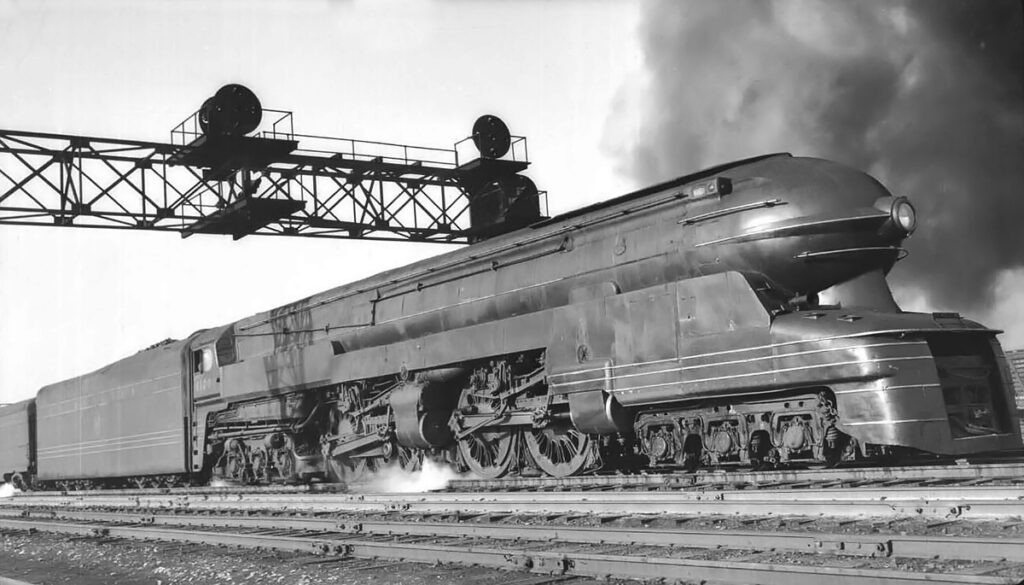
The S1 was every bit as extraordinary mechanically as it was visually.
It became the only locomotive in the world to use the 6-4-4-6 wheel arrangement under the Whyte classification system.
The design featured two sets of driving wheels powered by separate pairs of cylinders. This arrangement allowed the locomotive to transmit enormous power to the rails without resorting to the articulated construction used by many large American steam engines.
However, this engineering solution came with a significant drawback.
Its enormous rigid wheelbase made negotiating tight curves difficult. The locomotive required specially maintained sections of track and performed best on long, straight mainline routes.
In many ways, the railroad had to adapt itself to the locomotive rather than the other way around.
The Star of the 1939 World’s Fair
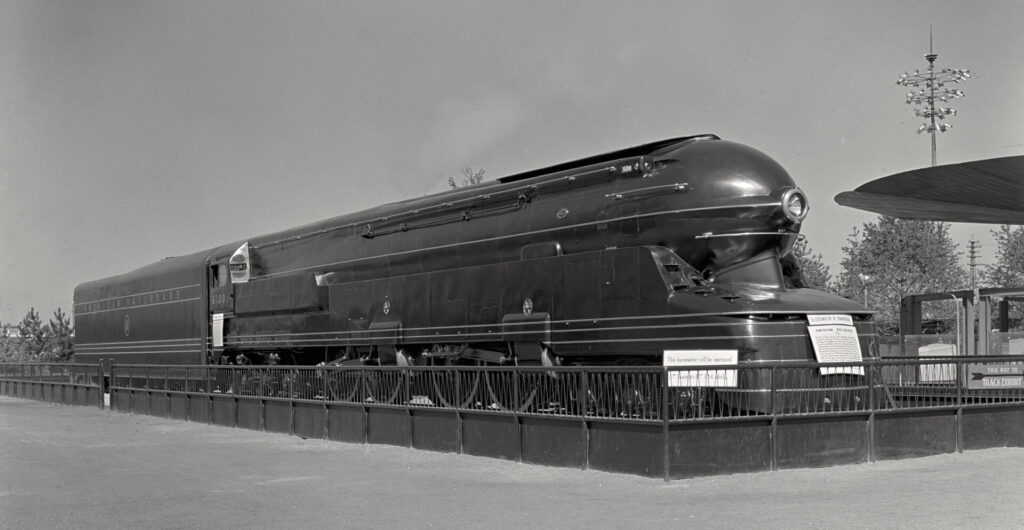
Construction was completed on January 31, 1939.
The locomotive received road number 6100.
Before entering regular service, however, it was given a far more important mission.
That spring, the S1 became one of the centerpieces of the 1939 New York World’s Fair.
For Americans, it was a time of optimism and faith in technology. The world had not yet realized that another global war was only months away.
Visitors to the fair were treated to futuristic automobiles, experimental aircraft, televisions, and countless technological innovations.
Yet the giant streamlined locomotive emerged as one of the event’s most talked-about attractions.
Thousands of people came specifically to see the machine that seemed to embody the future of American rail transportation.
Photographs of the S1 spread across the country.
Almost overnight, it became a national celebrity.
The Fastest Steam Locomotive in America?
The true top speed of the S1 remains the subject of debate.
Officially documented figures indicate speeds exceeding 100 miles per hour (160 km/h).
However, railroad employees and enthusiasts have long circulated stories claiming the locomotive exceeded 120 mph (193 km/h), with some accounts suggesting it may even have approached 140 mph (225 km/h).
Today, these claims cannot be conclusively verified.
What is generally accepted, however, is that the S1 was among the fastest steam locomotives ever built in North America.
Its massive driving wheels—more than two meters in diameter—were clearly designed with high-speed operation in mind.
Too Big for Its Own Time
Ironically, the S1’s greatest strengths also became its greatest weaknesses.
The locomotive was too long, too heavy, and too specialized.
It performed magnificently on the straight stretches of Pennsylvania Railroad’s main lines, but its size limited its usefulness elsewhere.
At the same time, the railroad industry was beginning to embrace diesel-electric and electric locomotives.
These new machines required less maintenance, consumed fewer resources, and offered greater operational flexibility.
Against this backdrop, building additional S1 locomotives no longer made economic sense.
The giant had become the ultimate expression of steam technology just as steam itself was approaching the end of its reign.
The Final Journey of the “Big Motor”
Despite its remarkable capabilities, the S1 remained a one-off.
The locomotive continued operating until December 1946.
It was then withdrawn from service.
After spending several years idle, it was finally scrapped in 1949.
Today, not a single part of the famous locomotive survives.
Only photographs, technical drawings, and the memories of those who witnessed it remain.
For many railroad historians and enthusiasts, the destruction of the S1 ranks among the greatest losses in American railway preservation.
A Symbol of an Era
The PRR S1 never revolutionized rail transportation.
It did not spawn a family of successor locomotives, nor did it become a mass-produced design.
Yet that is precisely why it continues to fascinate people more than eighty years after its debut.
The S1 represented engineering ambition taken to its absolute limit. It emerged during a period when designers still believed that steam power could conquer any challenge of speed and performance.
In the end, the locomotive became both a triumph and a farewell.
Huge, beautiful, and astonishingly ambitious, the PRR S1 remains a monument to an age when railroads symbolized technological progress and engineers dared to build machines that seemed impossible.
For that reason, the “Big Motor” continues to occupy a unique place in the history of rail transportation—not merely as a locomotive, but as one of the greatest expressions of the steam age itself.