The Pistol from the Future That Nobody Wanted to Buy: The Story of the Whitney Wolverine

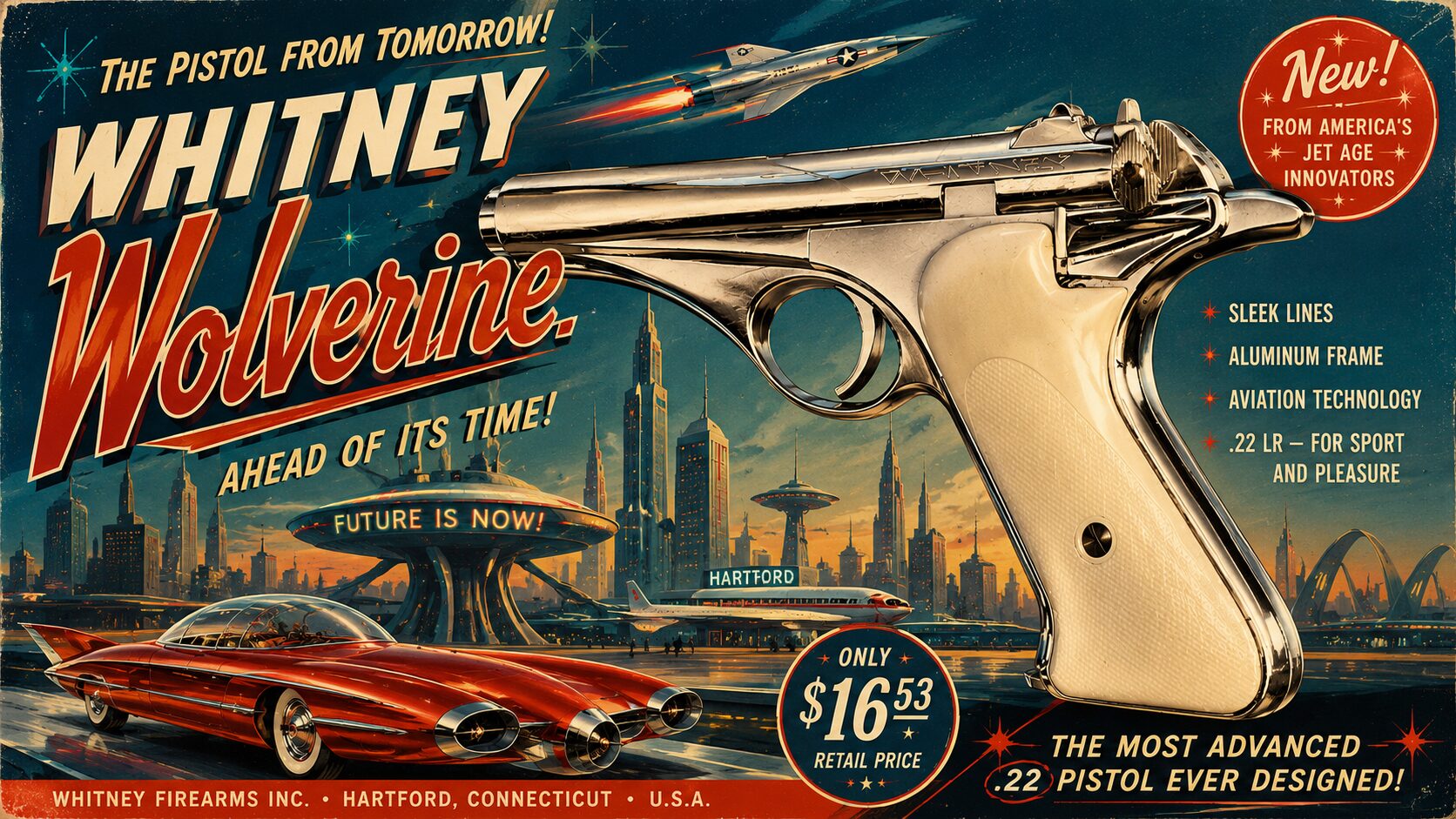
The history of firearms is full of designs that were ahead of their time. Some introduced revolutionary mechanical solutions, others pioneered new tactical concepts, and a few became the forerunners of entire generations of weapons. The Whitney Wolverine occupies a unique place among them. This small American .22 LR pistol was neither the most accurate, the most reliable, nor the most technologically advanced firearm of its era. Yet decades after its manufacturer disappeared, it became a coveted collector’s item and one of the most recognizable handguns ever produced in the United States.
The reason for its fame lies not in its mechanics or performance. The Whitney Wolverine became one of the clearest examples of how design can simultaneously be a product’s greatest strength and the cause of its commercial failure. When it appeared in the mid-1950s, the pistol looked as if it had arrived from a distant future. And that was precisely why contemporary buyers rejected it.
The Jet Age and Dreams of Tomorrow
To understand the Whitney Wolverine, one must first understand America in the 1950s. The Second World War had ended, the economy was booming, and the nation was obsessed with the future.
Newspapers celebrated jet aircraft and atomic energy. Engineers were building supersonic machines. Automobiles sprouted enormous tailfins inspired by rockets. Science-fiction artists painted visions of lunar colonies and gleaming cities beneath glass domes. Millions of Americans genuinely believed that space travel would soon become routine.
This was the Atomic Age, an era when anything futuristic captured the public imagination. Yet there was a curious contradiction at work. People loved dreaming about tomorrow—as long as tomorrow remained safely confined to magazines, television screens, and comic books.
When the future suddenly appeared on a store shelf, the reaction could be very different.
Robert Hillberg: A Man Between Aviation and Firearms

The creator of the Whitney Wolverine was Robert Lee Hillberg, one of the most fascinating figures in twentieth-century American firearms design.
Born in Iowa in 1917, Hillberg developed an interest in firearms and hunting at an early age. Even as a young man, he displayed remarkable engineering talent. At just twenty-one years old, he designed a submachine gun chambered in .38 Super and attempted to interest Colt in the project.
Although Colt declined to manufacture the weapon, the company offered him employment. Fate, however, had other plans. Instead of building a career in the firearms industry, Hillberg entered the aviation world, working for Pratt & Whitney, Bell Aircraft, and Republic Aviation.
During the Second World War he was involved in the development of aircraft armament systems, gaining invaluable engineering experience. Aviation profoundly shaped his approach to design. Unlike many traditional gunmakers, Hillberg thought in terms of aerodynamics, lightweight alloys, and futuristic forms rather than the conventions of nineteenth-century firearms.
After the war, he returned to his long-held dream of creating his own pistol.
The Birth of a Science-Fiction Handgun
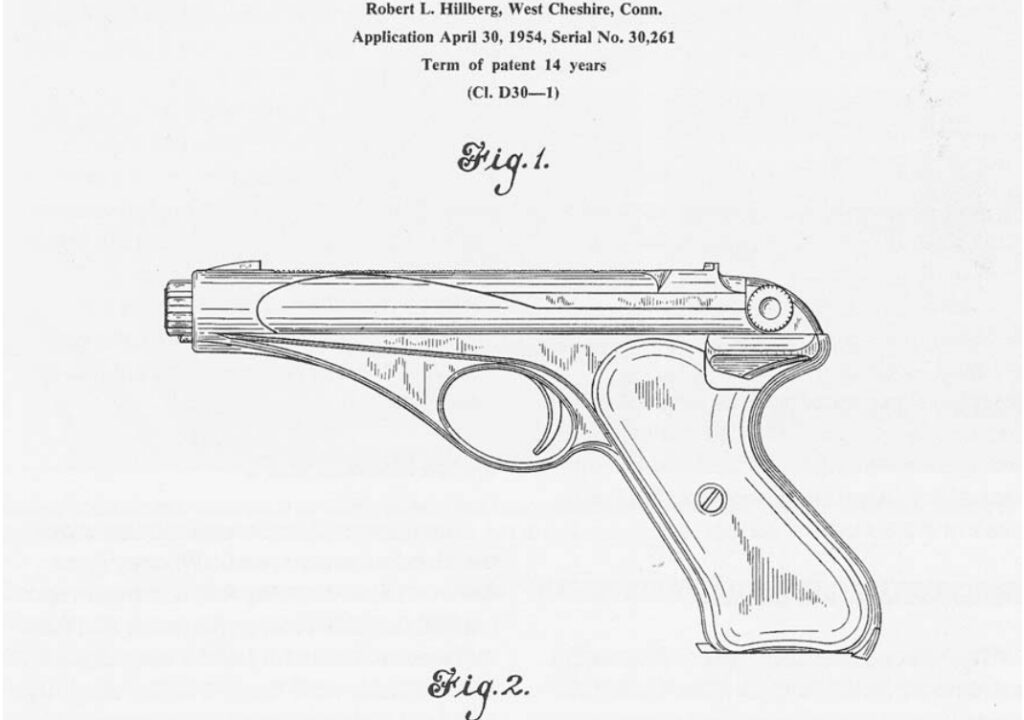
The first step was a design called the Tri-Matic. Even in this early concept, many of the features that would define the Wolverine were already present.
In the early 1950s, Hillberg worked for High Standard, one of America’s leading manufacturers of sporting rimfire pistols. There he gained firsthand knowledge of both firearms production and the civilian shooting market.
Unfortunately, High Standard’s management showed little interest in his ideas.
Hillberg eventually found a financial backer in Howard Johnson, co-owner of Bellmore-Johnson Tool Company. Together they set out to establish a new firearms manufacturer.
The company was named Whitney Firearms in honor of Eli Whitney, the American industrial pioneer whose ideas about interchangeable parts transformed manufacturing. The pistol itself was named Wolverine after Hillberg’s favorite college sports team, the Michigan Wolverines.
Thus began the story of one of the most distinctive American handguns ever created.
Not a Mechanical Revolution, but a Design Revolution
From a technical standpoint, the Whitney Wolverine was not revolutionary.
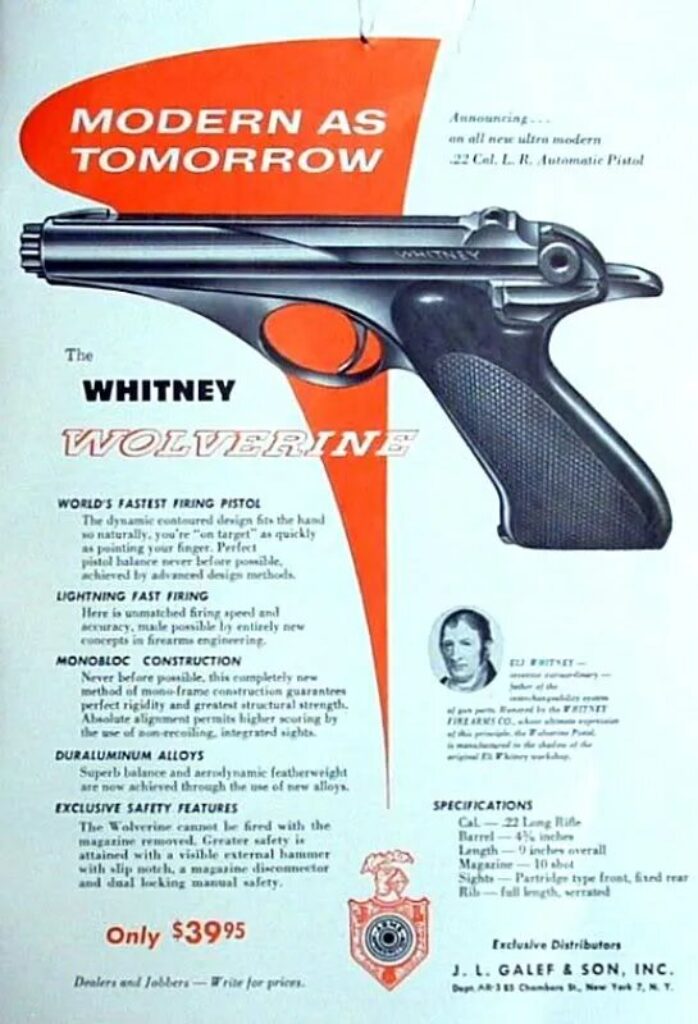
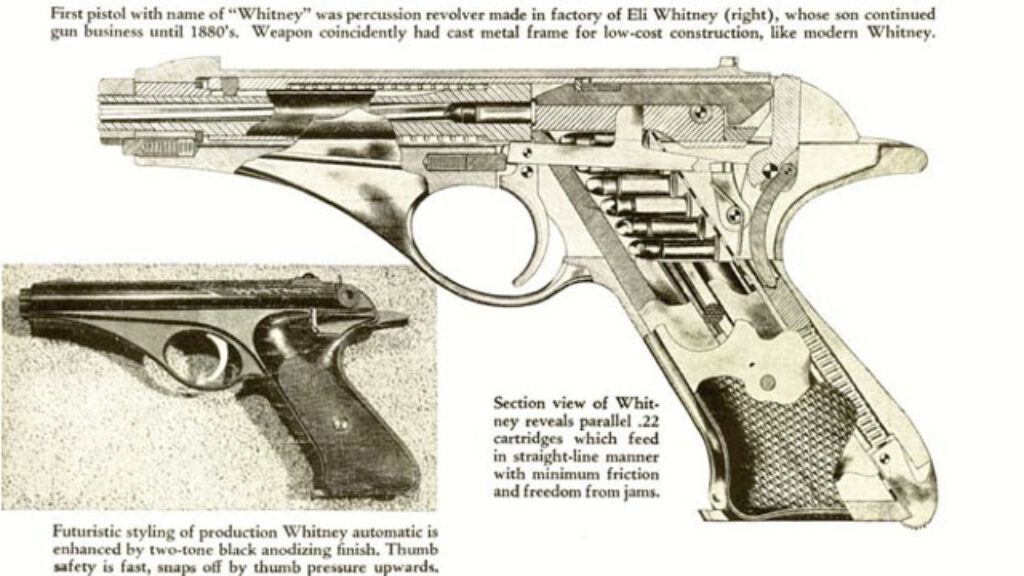
It used a conventional blowback operating system with a fixed barrel, chambered for the .22 Long Rifle cartridge. This was a proven arrangement already used by numerous sporting and recreational pistols of the era.
What set the Wolverine apart was its appearance.
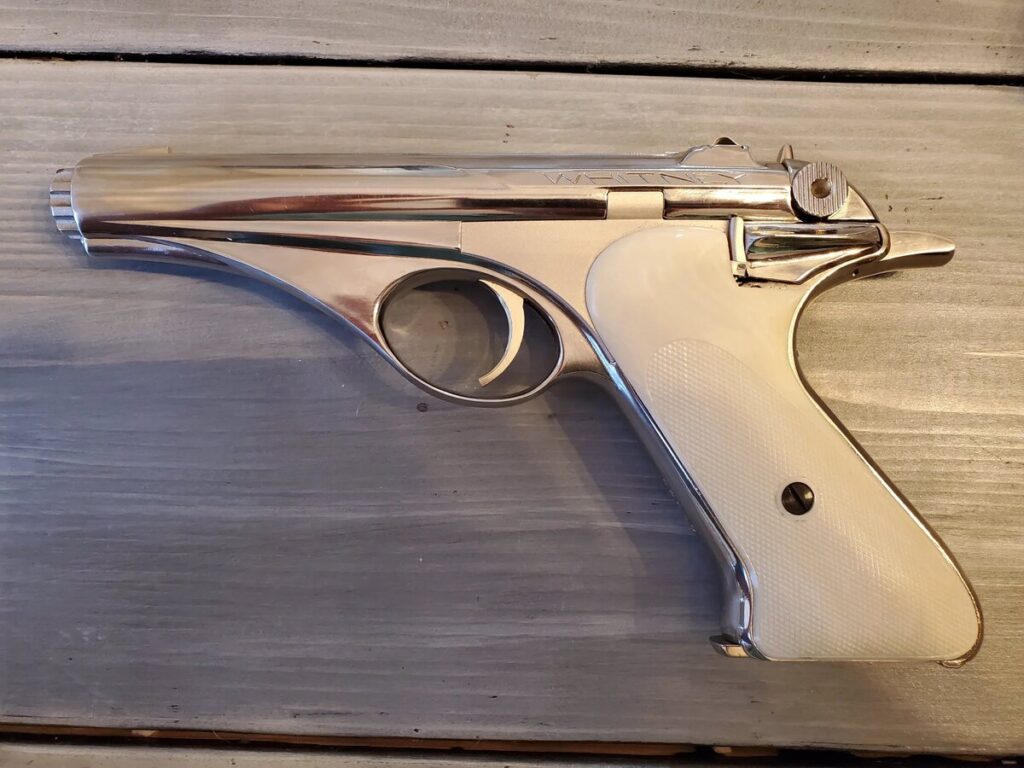
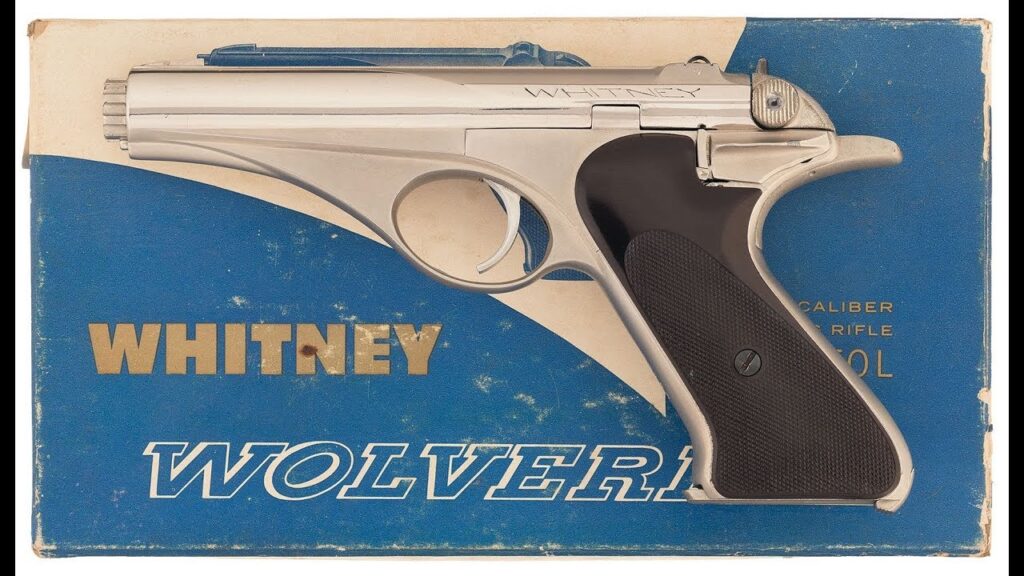
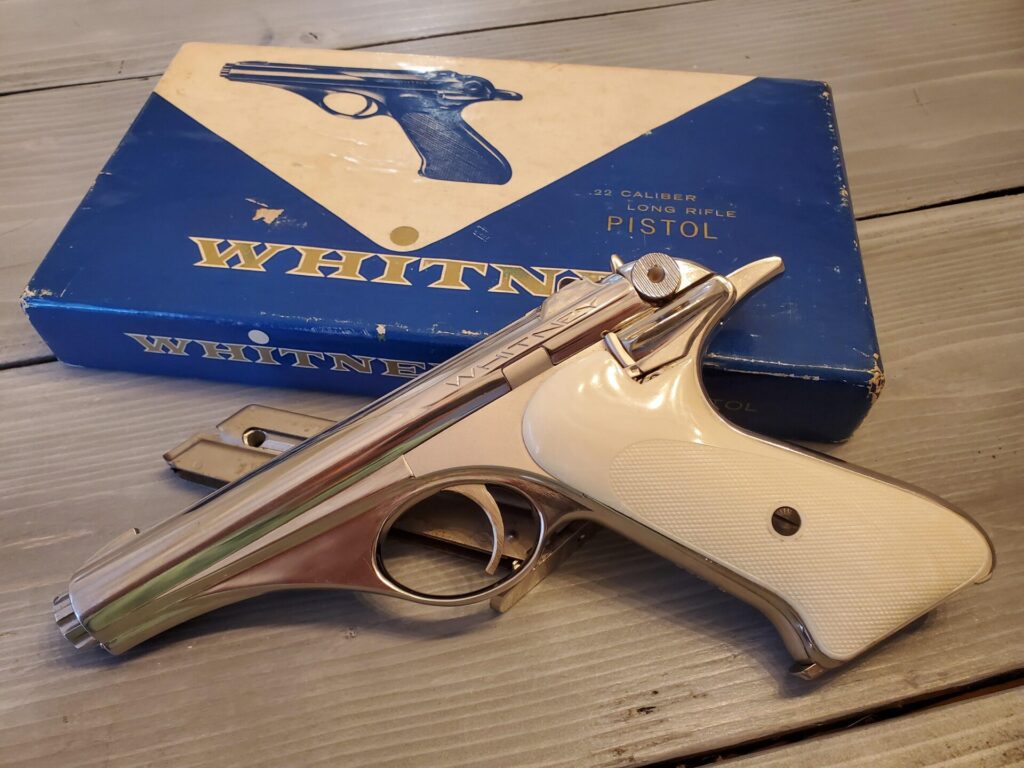
The pistol’s sleek, flowing lines were almost completely free of sharp edges. The grip blended seamlessly into the frame. The bolt was largely enclosed within the receiver, giving the handgun an unusually smooth profile. Cocking was accomplished via a separate external component whose shape vaguely echoed the distinctive features of the famous German Luger.
The most striking element was the frame itself. Cast from aluminum alloy, it featured complex curves and shapes rarely seen on firearms of the period. Manufacturing proved so challenging that production of the frame had to be outsourced to Alcoa, one of America’s largest aluminum producers.
Even today, the Wolverine looks unconventional.
To an American walking into a gun shop in 1956, it must have appeared as though it belonged in a science-fiction movie rather than a display case.
Many collectors now regard it as one of the most beautiful handguns ever made in the United States.
Why the Market Rejected It
At first glance, the project seemed promising.
The futuristic styling attracted attention. The pistol was lightweight, comfortable to hold, and pleasant to shoot. Yet it quickly became apparent that designing an interesting product and selling it profitably were two very different challenges.
The first problem was manufacturing cost. The sophisticated aluminum frame proved far more expensive to produce than originally anticipated. Prices rose accordingly.
The second problem was an exclusive distribution agreement that tied Whitney Firearms to a single dealer. The arrangement severely limited the company’s ability to market the pistol through other channels.
But the greatest obstacle was psychological.
The American firearms market of the 1950s was deeply conservative. Buyers wanted guns that looked like guns.
Store shelves already held proven designs such as the Colt Woodsman, Ruger Standard, and various High Standard target pistols. There were also rimfire versions of the legendary Colt 1911. These firearms projected seriousness, tradition, and familiarity.
The Wolverine did not.
To many potential customers, it resembled a toy ray gun from the pages of Buck Rogers or Flash Gordon rather than a legitimate sporting firearm.
Today, that appearance is one of the pistol’s greatest attractions.
In the 1950s, it was a liability.
Customers entered gun shops looking for practical firearms and instead encountered something that seemed to belong in a child’s vision of the future.
Lawsuits, Branding Problems, and Bankruptcy
As if poor sales were not enough, the company soon encountered additional troubles.
The name Wolverine became the subject of legal disputes because another company already owned a trademark using the same name. An attempt to rename the pistol Lightning only created a new problem, as that name was already associated with Colt.
Meanwhile, sales remained disappointing.
Warehouses filled with unsold pistols while expenses continued to rise. An effort to circumvent contractual restrictions by creating a new corporate entity eventually led to a lawsuit.
Whitney Firearms lost.
The company collapsed soon afterward.
In total, just over 13,000 pistols were produced before operations ceased.
By American firearms industry standards, it was an exceptionally small production run.
At the time, it seemed that the story of the Wolverine had come to an end.
A Second Life Half a Century Later
History, however, had other plans.
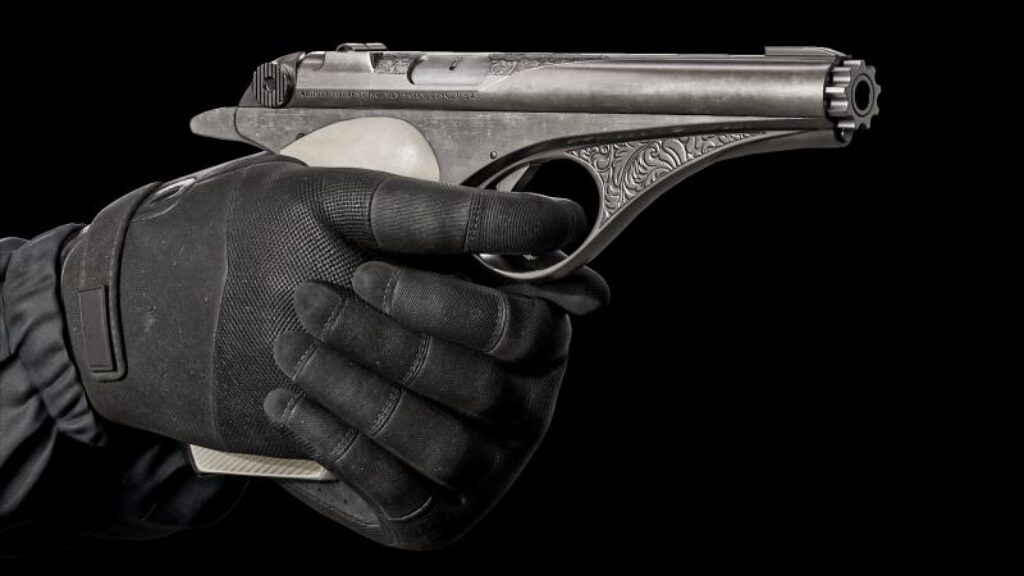
By the late twentieth century, attitudes toward the Whitney Wolverine had begun to change. Collectors started to appreciate its unusual styling and limited production numbers. Prices steadily climbed on the secondary market.
Remarkably, Robert Hillberg lived long enough to witness this transformation.
In the 1980s, he joined Olympic Arms, a company known for unconventional projects. There, the idea of reviving the Wolverine resurfaced.
The new version, however, was significantly different from the original. The aluminum frame was replaced by a polymer one, various design elements were altered, and production did not begin until 2004.
Although the pistol attracted interest from enthusiasts, it never achieved the iconic status of the original model.
When Olympic Arms closed its doors in 2017, production ended once again.
The tooling was later acquired by Samson Manufacturing, which repeatedly announced plans to revive the pistol. Yet years passed without a full-scale return to production.
A Handgun Born Too Early
The Whitney Wolverine stands as a reminder that timing can be every bit as important as engineering.
Mechanically, it offered nothing revolutionary. It did not redefine firearms design, establish new standards of accuracy, or dominate shooting competitions.
What it did possess was a vision of the future that proved too unconventional for its own era.
Decades passed before the world caught up with Robert Hillberg’s aesthetic sensibilities.
Today, the Whitney Wolverine is celebrated as one of the purest expressions of American retrofuturism—an age when people genuinely believed that the future would be elegant, streamlined, and beautiful.
That is why this small rimfire pistol remains fascinating nearly seventy years after its debut. It serves as a reminder of a time when engineers sought not only to create efficient machines, but also to give them the appearance of tomorrow.
In that sense, the Whitney Wolverine truly was a handgun from the future.
The future simply arrived too late for its creators.