

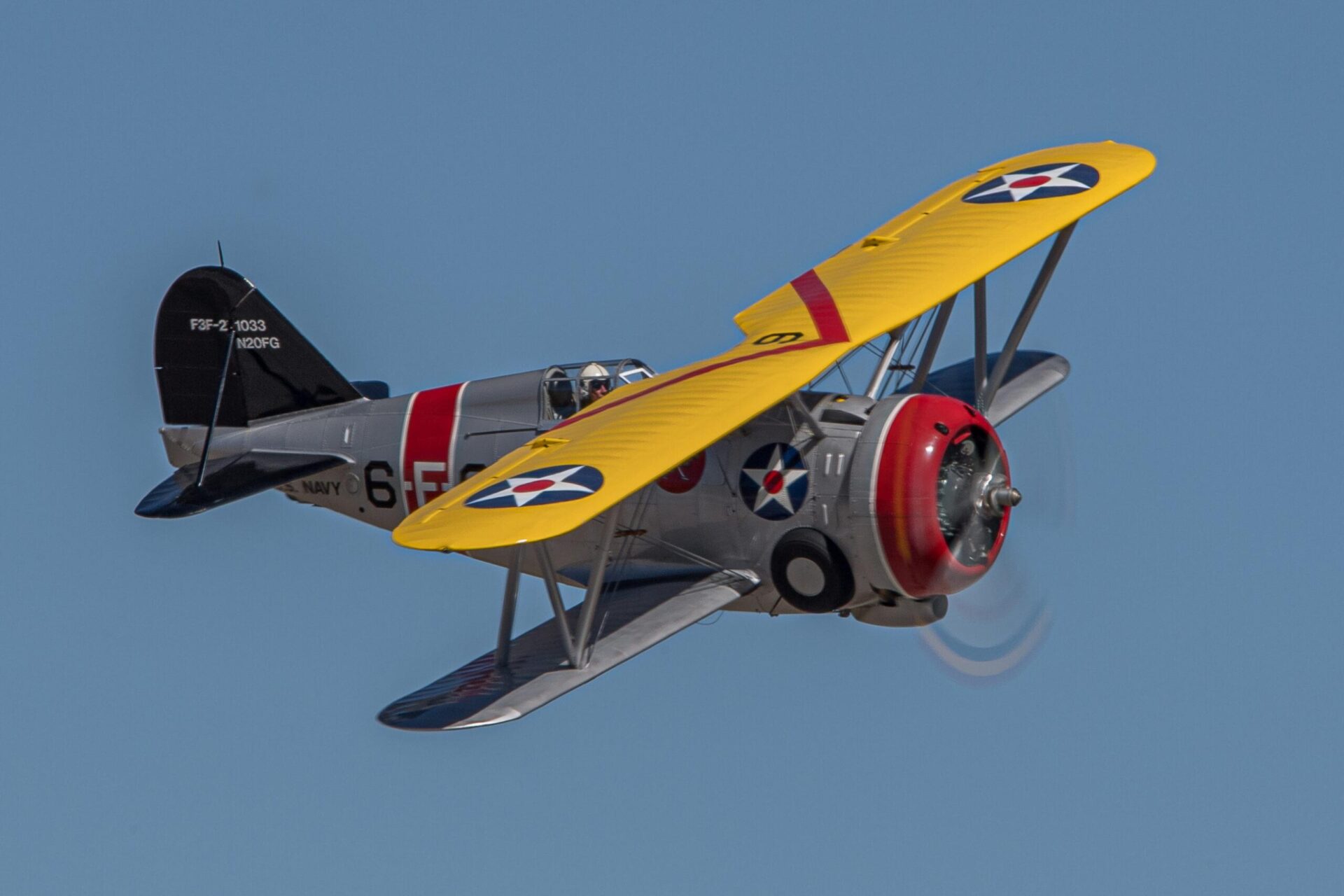
The Last American Navy Fighter of the Biplane Era
The history of military aviation is filled with transitional aircraft — machines that appeared at the exact moment when one technological era was ending and another was beginning.
The Grumman F3F-2 was one of those aircraft.
At first glance, it looked like a relic from an earlier age: a compact biplane with fixed-looking proportions, an exposed radial engine, and the unmistakable silhouette of interwar naval aviation. Yet when it entered service, it represented the absolute peak of American carrier-based biplane fighter development.
And it would also become the last fighter of its kind in U.S. Navy service.
Born From a Proven Formula
The F3F was developed by the American company Grumman as the successor to the successful F2F carrier fighter.
The U.S. Navy of the mid-1930s still viewed biplanes as reliable naval aircraft. They offered excellent maneuverability, low landing speeds, and forgiving handling characteristics — qualities particularly valuable for carrier operations.
Grumman engineers refined the formula rather than reinventing it.
The new fighter featured a strengthened structure, improved aerodynamics, greater fuel capacity, and a more powerful engine.
The result was the F3F.
The Most Advanced Biplane Fighter in America
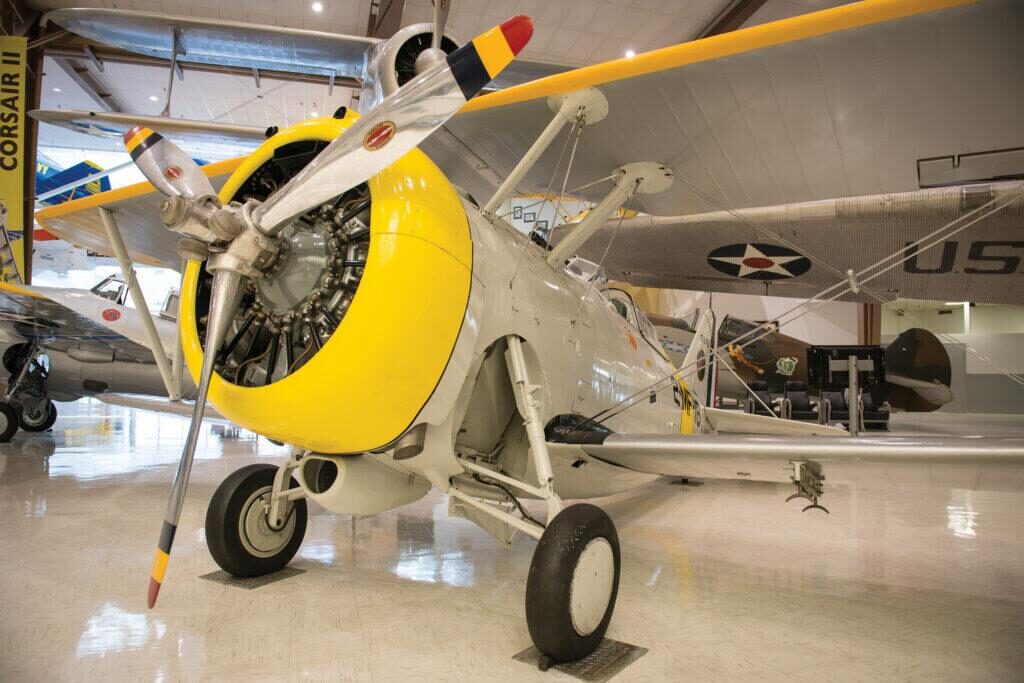
The definitive production version became the F3F-2.
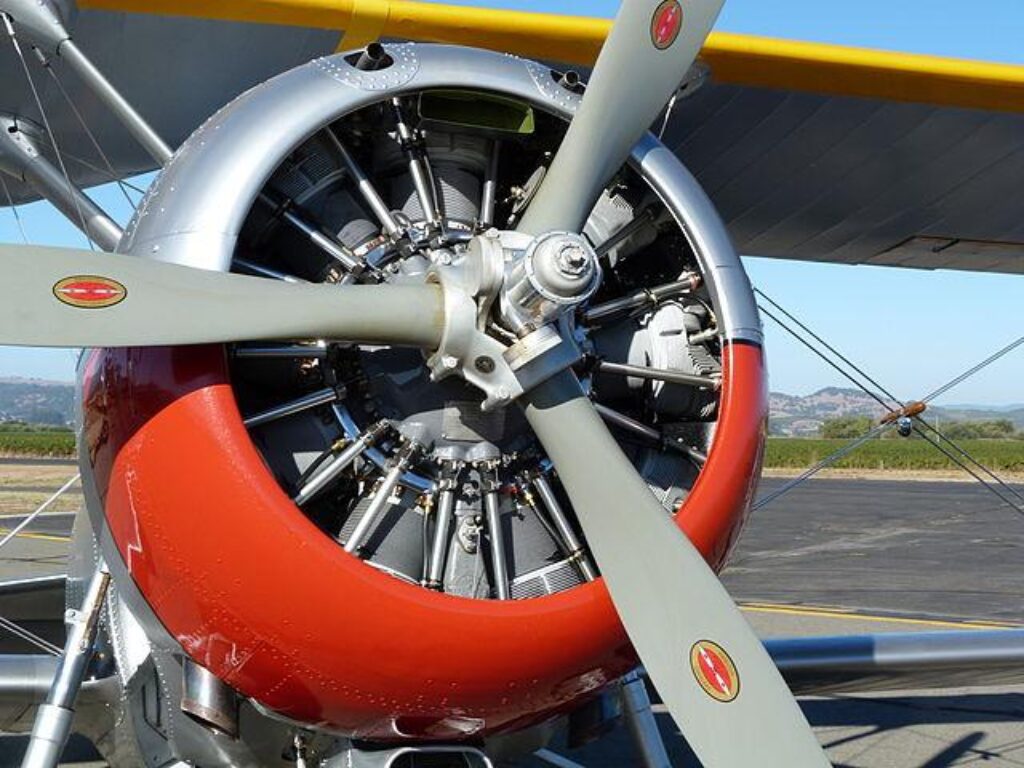
Powered by a Wright R-1820 Cyclone radial engine producing approximately 950 horsepower, the aircraft could reach speeds of around 255 mph (410 km/h), making it one of the fastest operational biplane fighters ever built. (nationalnavalaviationmuseum.org)
For a biplane, these figures were remarkable.
The aircraft retained the ruggedness that Grumman fighters had become famous for while delivering excellent maneuverability and strong climb performance. Like many naval aircraft of the period, it featured retractable landing gear — a relatively advanced feature for its day. (nationalnavalaviationmuseum.org)
In many respects, the F3F-2 represented the final and most refined stage of biplane fighter evolution.
A Fighter Overtaken by Technology
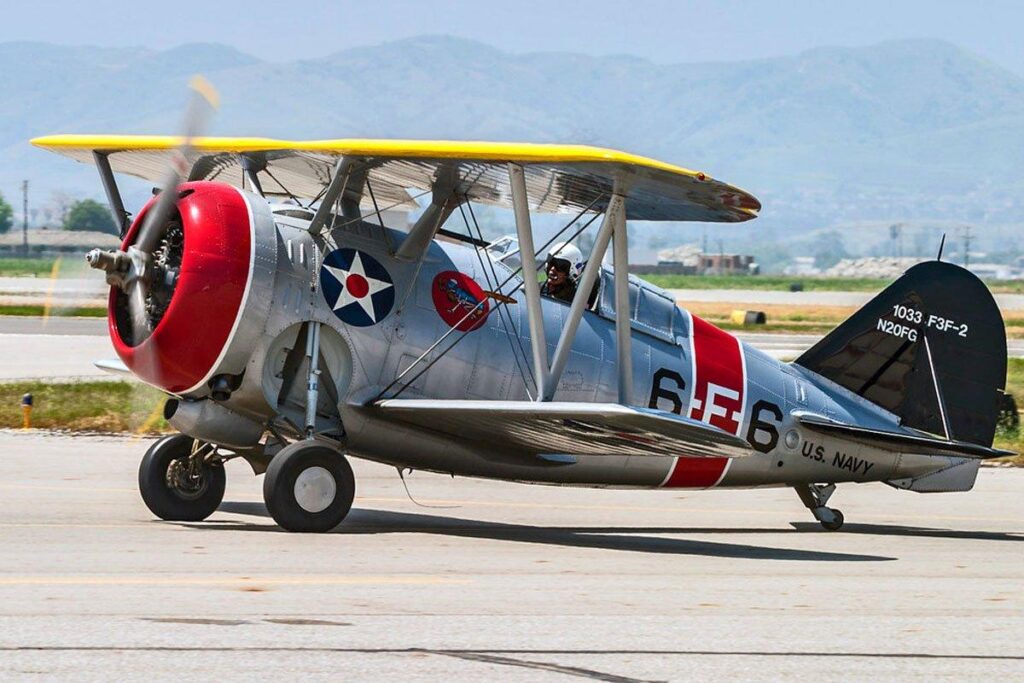
The problem was timing.
By the late 1930s, aviation technology was advancing at an extraordinary pace. Monoplane fighters were rapidly proving superior in speed, range, and overall performance.
Aircraft such as the Messerschmitt Bf 109, Supermarine Spitfire, and even Grumman’s own successor designs demonstrated that the future belonged to monoplanes.
The F3F entered service just as its entire concept was becoming obsolete.
Ironically, the aircraft that replaced it was another Grumman design — the famous Grumman F4F Wildcat.
The transition marked the end of an era in naval aviation.
Why Pilots Loved the F3F
Despite its obsolescence, pilots generally admired the aircraft.
The F3F possessed excellent handling qualities, a strong airframe, and forgiving flight characteristics. It could absorb punishment and remain controllable under conditions that might have defeated more delicate aircraft.
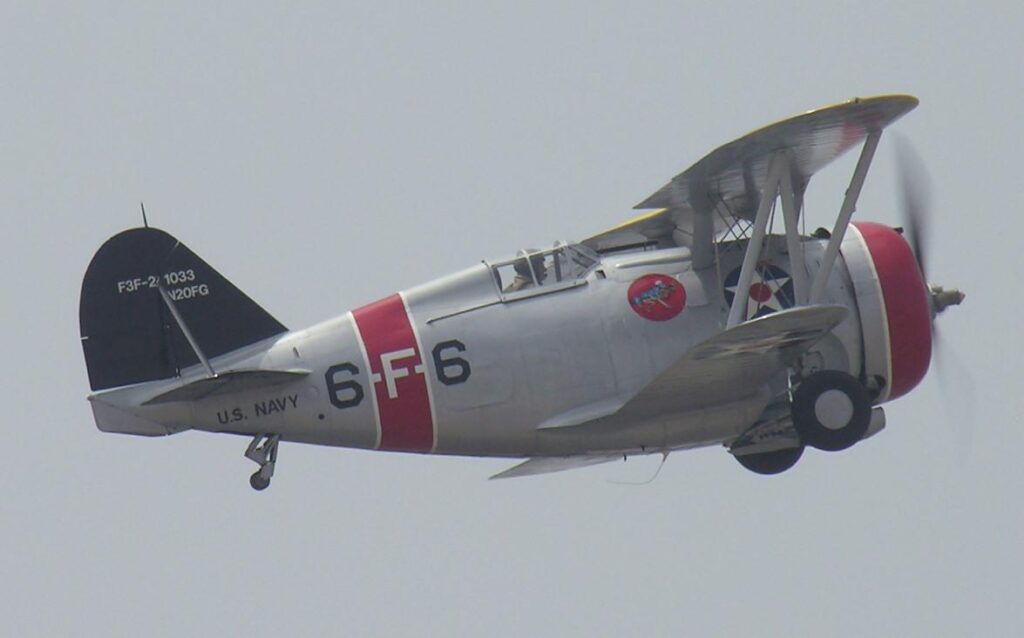
Its short fuselage and large radial engine gave it a distinctive appearance that earned it several affectionate nicknames. Among aviation enthusiasts today, one of the most common is “The Flying Barrel.”
The nickname is understandable.
The aircraft looked compact, muscular, and almost oversized around the engine — as though someone had attached wings to a radial powerplant.
The War It Never Fought
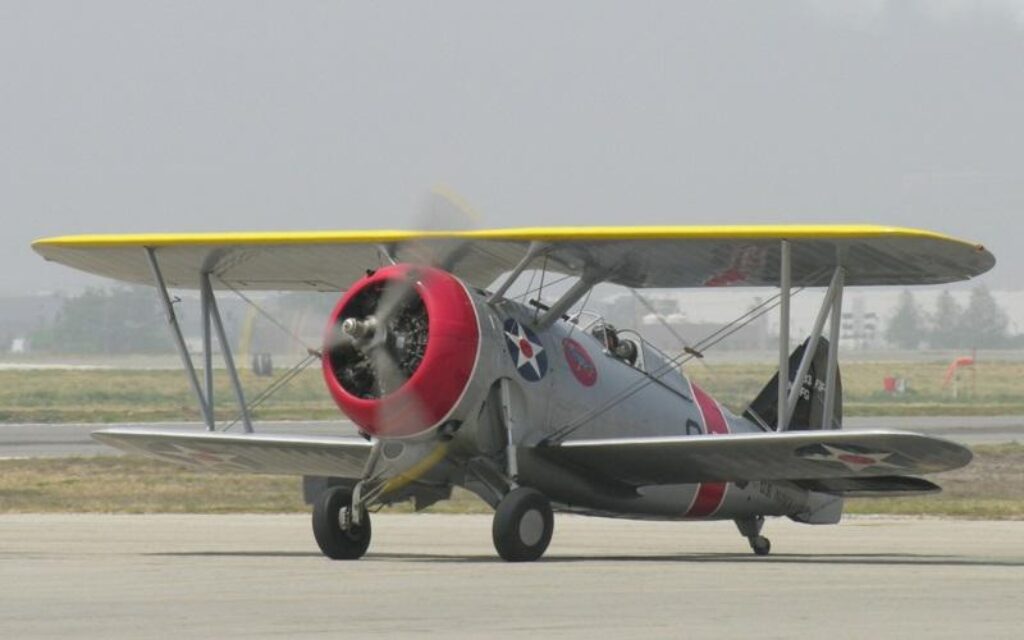
Unlike many famous fighters of the Second World War, the F3F never achieved combat fame.
By the time the United States entered the war in December 1941, the aircraft had already been withdrawn from frontline carrier units. More modern monoplanes had taken its place. (nationalnavalaviationmuseum.org)
As a result, the F3F never faced Japanese fighters over the Pacific.
Its contribution was different.
The aircraft helped train an entire generation of naval aviators who would later fight the air battles of World War II.
In this sense, the F3F served as a bridge between two eras.
The Aircraft That Refused to Disappear
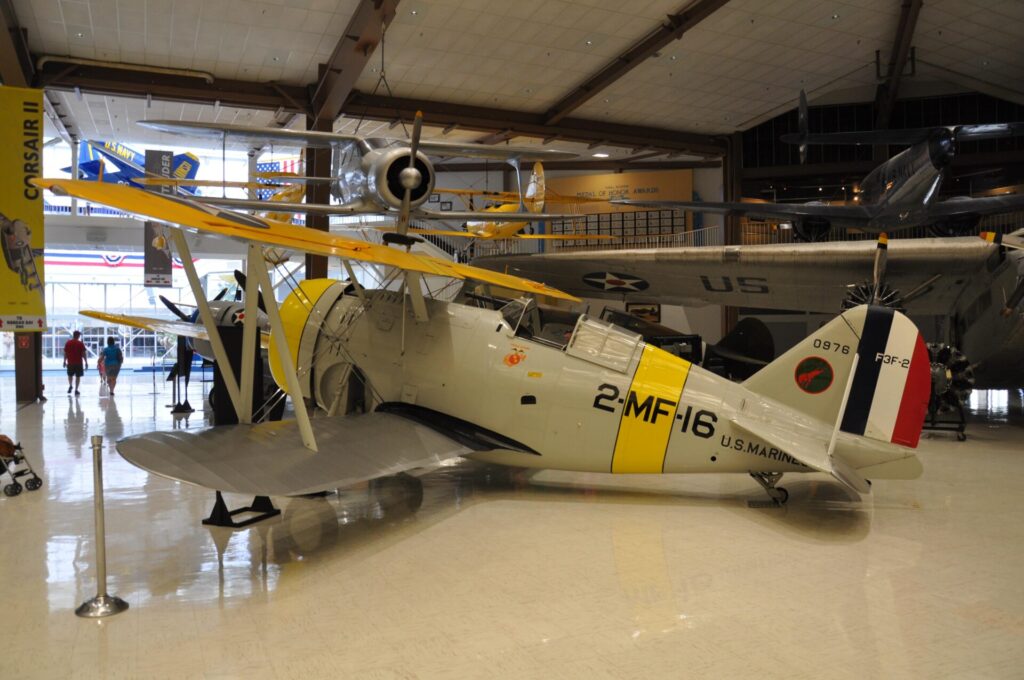
For decades, it seemed that the F3F would survive only in photographs and museum collections.
Most examples were scrapped long ago, and the aircraft’s brief service life meant relatively few survived. Yet interest in historic aviation eventually led to ambitious restoration efforts. Several aircraft have since been recovered, rebuilt, and returned to flying condition. (planesoffame.org)
Seeing an F3F fly today is like watching a living fossil of naval aviation.
The aircraft captures a moment when engineers had pushed the biplane concept as far as it could possibly go — just before history moved on.
The End of the Biplane Age
The Grumman F3F-2 occupies a unique place in aviation history.
It was not the most famous fighter. It never fought in the great air battles of World War II. It did not rewrite military doctrine or achieve spectacular victories.
But it represented something equally important.
The F3F-2 was the final expression of the carrier-based fighter biplane — the ultimate evolution of a design philosophy that had dominated military aviation for nearly two decades.
And when it disappeared from service, the age of the fighter biplane disappeared with it.






