The Last Celebration of an Empire: What Really Happened at the Famous Russian Ball of 1903?

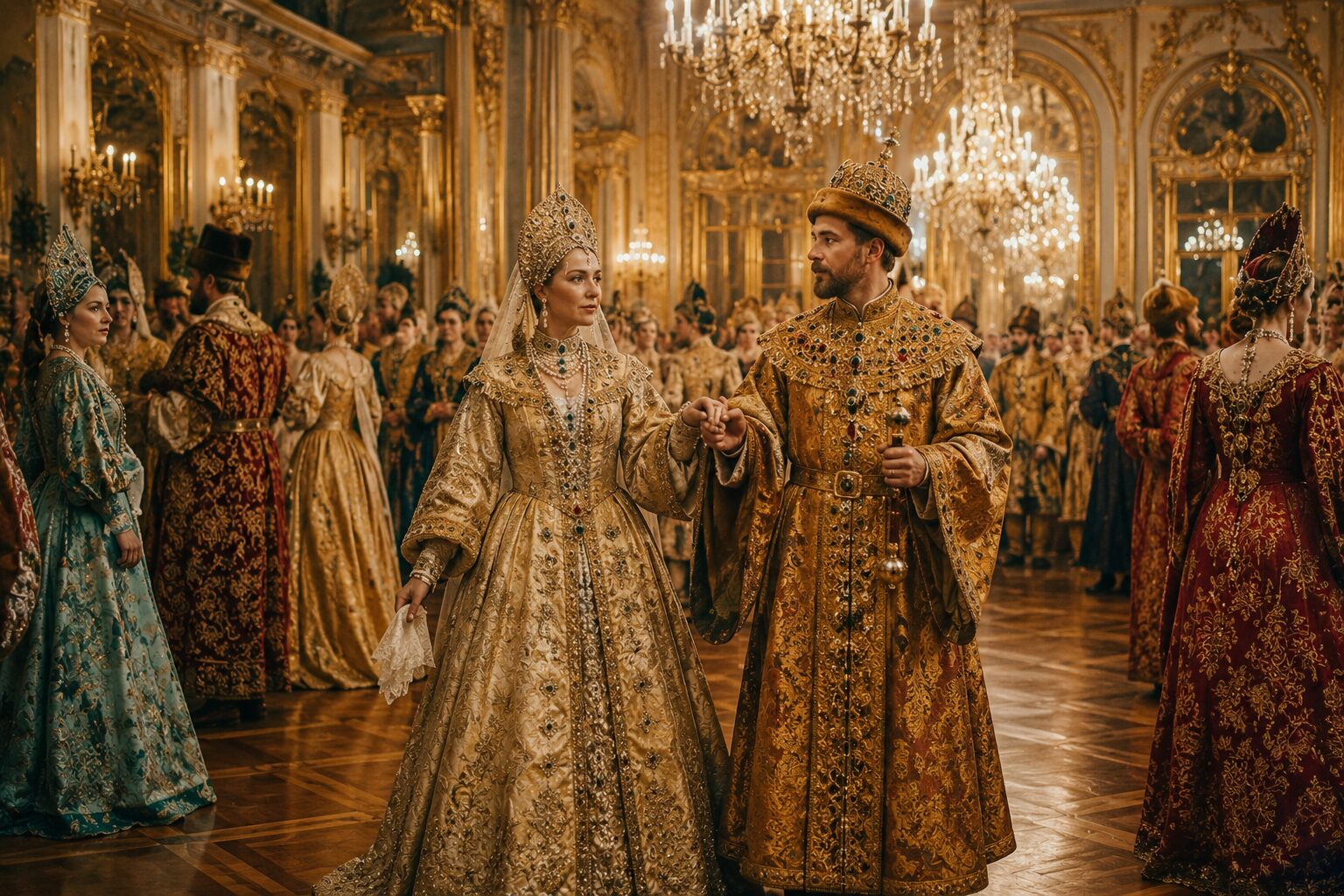
February 1903. Only two years remained before the Revolution of 1905. Fourteen years before the fall of the Romanov dynasty. Eleven years before the outbreak of the First World War. Yet none of the guests gathering in the Winter Palace could possibly know what the future held.
St. Petersburg was living the life of an imperial capital. Carriages rattled along Nevsky Prospect, theaters staged new premieres, aristocrats discussed the latest news from Europe, and within the gilded halls of the Winter Palace preparations were underway for an event that would later become known as the last great ball of Imperial Russia.
Today it is remembered simply as the Russian Ball of 1903.
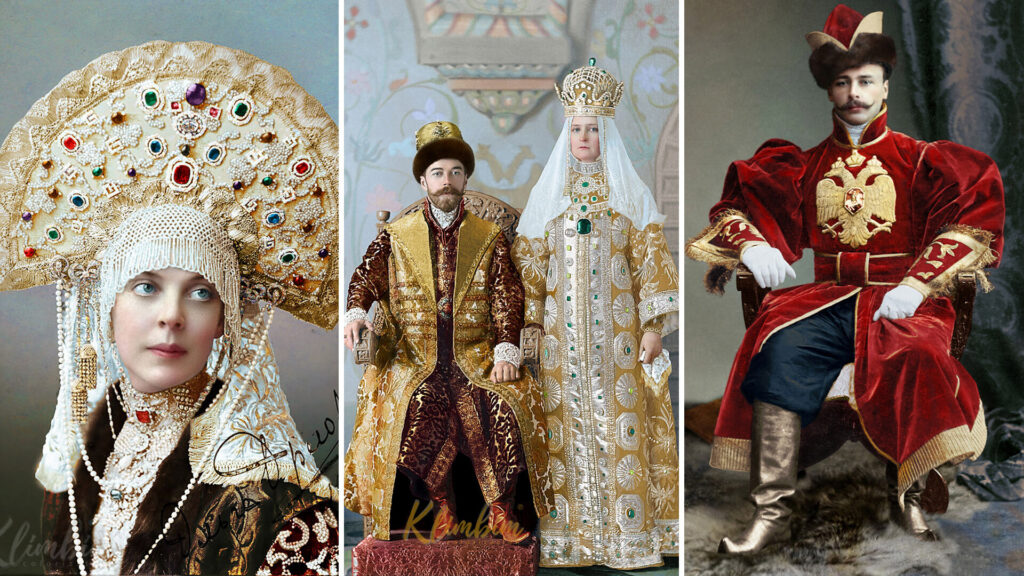
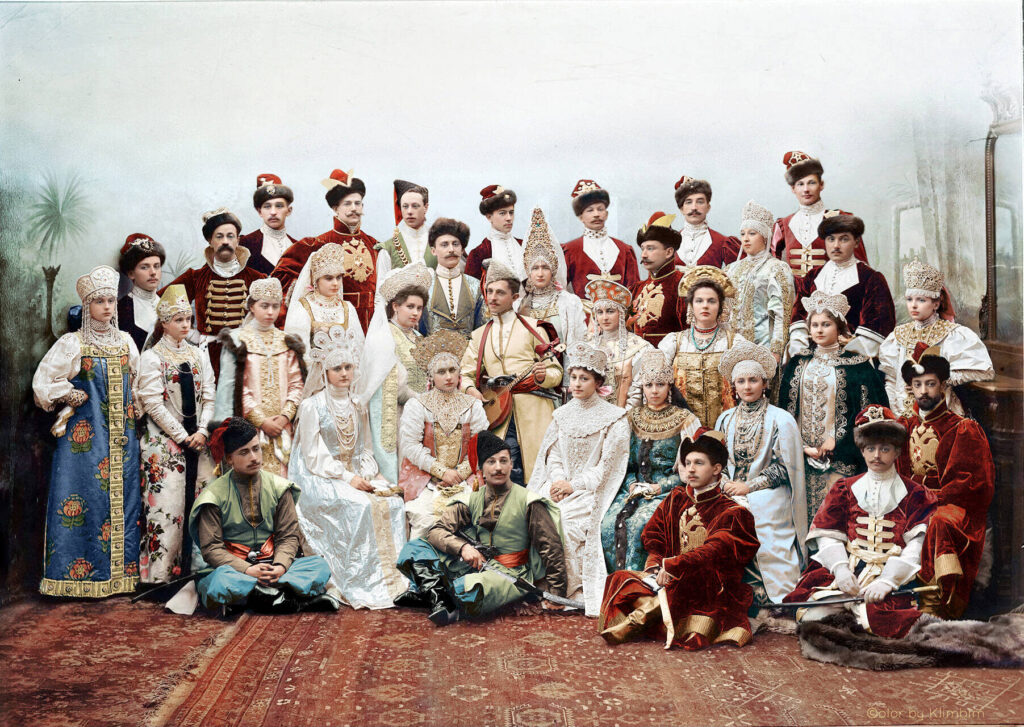
The surviving photographs create the impression of a fairy tale. Boyars in gold-embroidered caftans, princesses in pearl-studded kokoshniks, grand dukes dressed in the fashions of pre-Petrine Russia. It seems as if time itself had turned back and the empire had returned, if only for a few days, to the age of Tsar Alexis I.
Yet behind this dazzling spectacle lay something much deeper.
The ball became not only the pinnacle of Romanov court culture but also a symbol of an entire era that was already approaching its end.
An Empire Looking Backward
The late nineteenth and early twentieth centuries witnessed an extraordinary revival of interest in Russia’s past.
After decades of fascination with European fashions, the Russian elite increasingly turned its attention to national history. Architects designed buildings in the Russian Revival style, painters drew inspiration from medieval Russia, and collectors sought out ancient icons, weapons, and artifacts from the age of the Tsars.
This trend eventually reached the imperial court itself.
Nicholas II, who possessed a genuine interest in Russian history, decided to mark the approaching 290th anniversary of the House of Romanov in an unusual way. Rather than hosting another formal reception, he proposed a grand historical masquerade that would transport the entire court back to the seventeenth century.
The choice of period was deliberate.
Guests were instructed to appear in costumes inspired by the reign of Tsar Alexis Mikhailovich—the last great ruler of pre-Petrine Russia and the father of Peter the Great. It was a symbolic return to a Russia that existed before Westernization transformed the empire.
For Nicholas II, the era of Alexis represented a connection to the roots of both the Romanov dynasty and the traditional Russian state.
Costumes Worth a Fortune
Preparations began months in advance.
It soon became clear that this would be one of the most expensive court events ever organized in Russia.
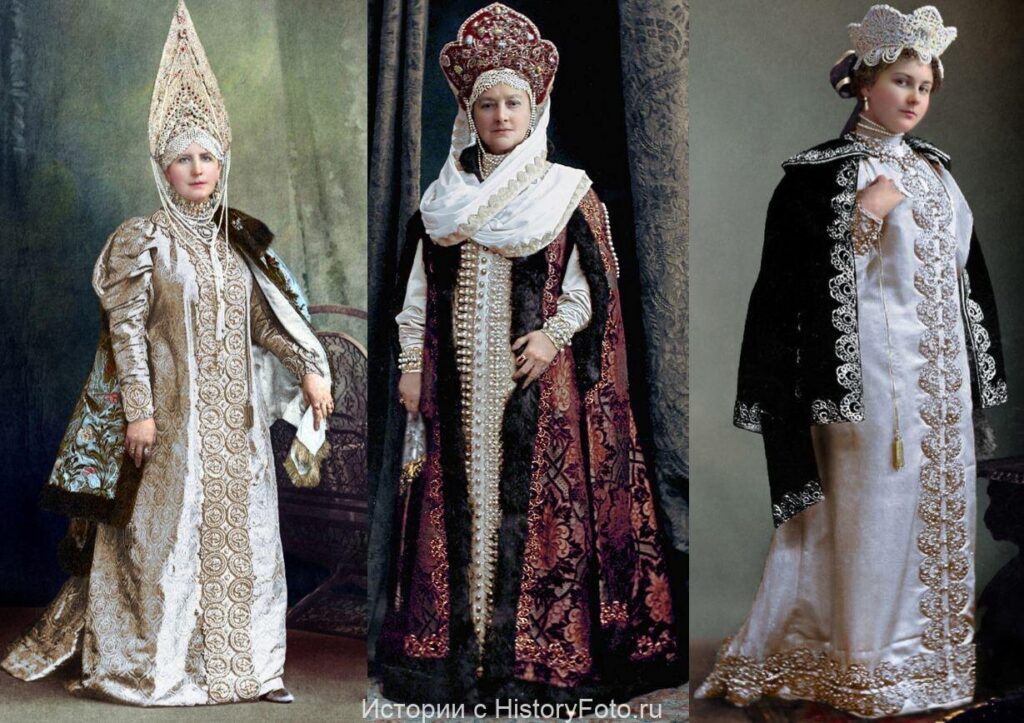
Guests were not merely asked to wear historical-inspired clothing. Every costume was carefully designed using archival documents, museum collections, and treasures from the Kremlin Armoury. Artists studied old paintings, manuscripts, and ceremonial garments to achieve the highest possible level of authenticity.
The results were astonishing.
Gold-embroidered caftans.
Luxurious furs.
Rare gemstones.
Pearls.
Intricate hand-made embroidery.
Some outfits cost tens of thousands of rubles—enough money to purchase a large country estate.
Many aristocrats openly complained about the expense. Contemporary accounts suggest that nearly a hundred invited guests initially attempted to decline participation because of the enormous cost.
Empress Alexandra Feodorovna, however, insisted that the event proceed exactly as planned.
For some families, costumes were funded by the state on the condition that they would later become the property of the Imperial Theaters.
Tsar Alexis and Tsarina Maria
The central figures of the evening were, naturally, the Romanovs themselves.
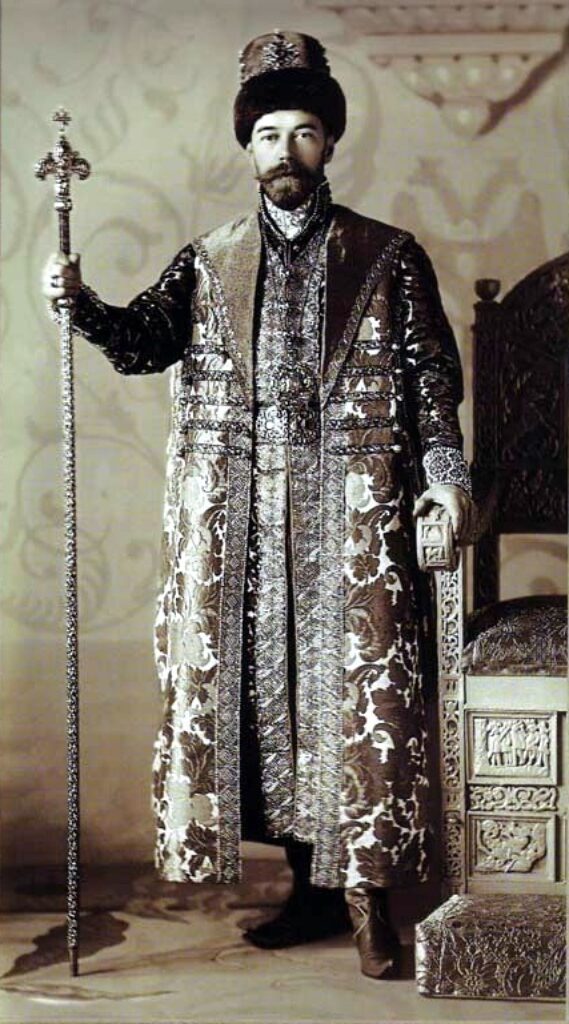
Nicholas II appeared dressed as Tsar Alexis Mikhailovich, wearing a magnificent golden caftan embroidered with double-headed eagles and adorned with precious stones and symbols of royal authority.
Yet it was Alexandra Feodorovna who truly captivated the guests.
The Empress appeared as Tsarina Maria Ilyinichna Miloslavskaya. Her gown was covered in pearls and jewels. Contemporary observers were especially impressed by her kokoshnik, decorated with diamonds and rare pearls.
According to witnesses, the value of her jewelry alone could have rivaled the price of a grand mansion in central St. Petersburg.
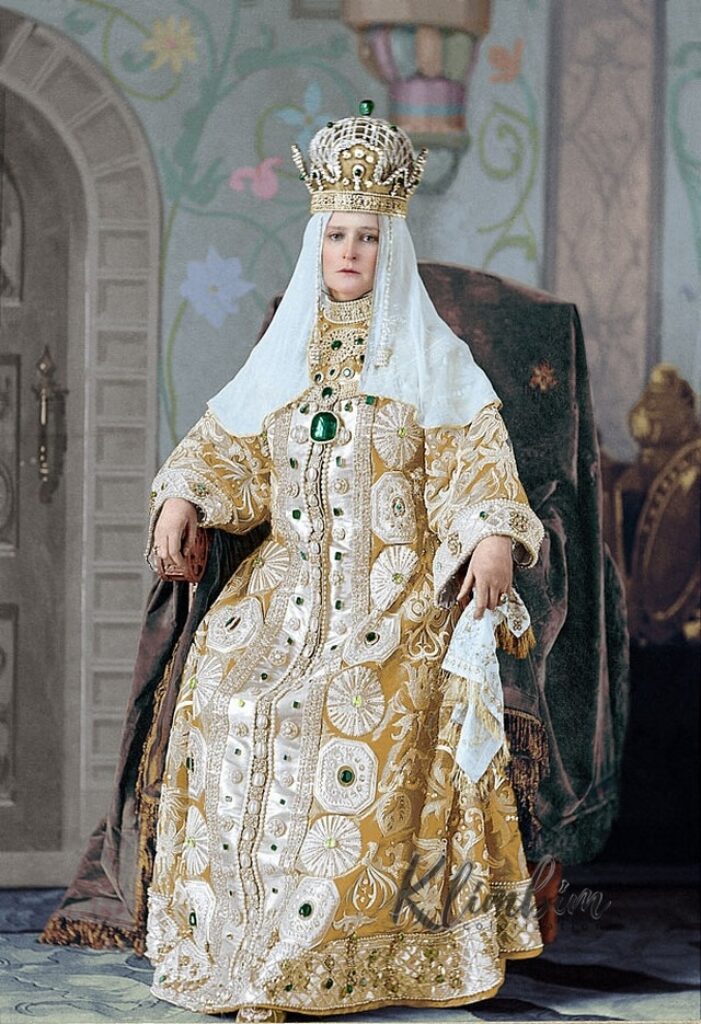
Nevertheless, she was hardly alone in displaying extraordinary wealth.
Grand dukes, princesses, the Yusupovs, Sheremetevs, Golitsyns, Trubetskoys, and other noble families competed to create the most spectacular and historically accurate costumes.
Two Evenings That Entered History
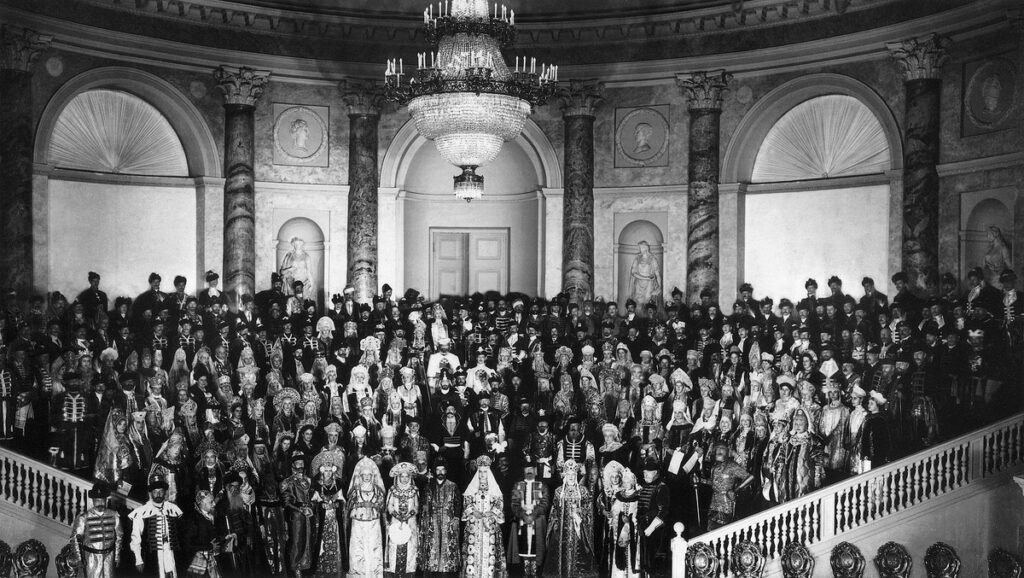
The celebrations unfolded over two separate evenings.
On February 11, guests gathered at the Hermitage Theatre.
A special program was prepared, including scenes from Mussorgsky’s Boris Godunov, excerpts from La Bayadère, and selections from Swan Lake. Among the performers was a young ballerina named Anna Pavlova, who would later become one of the greatest dancers of the twentieth century.
After the performances came a formal photographic session.
At the time, no one realized that these photographs would become the most enduring legacy of the event.
Two days later came the main celebration.
Following a lavish banquet in the halls of the Hermitage, the dancing began.
The imperial couple opened the ball with a traditional polonaise. Quadrilles, waltzes, and historical Russian dances followed throughout the evening.
One of the highlights was a specially choreographed Russian dance performed by twenty couples.
Contemporary accounts frequently singled out Grand Duchess Elizabeth Feodorovna and Princess Zinaida Yusupova, whose beauty and elegance made them the stars of the evening.
The festivities continued long past midnight.
The Winter Palace glittered with light while its guests seemed to be participating in a grand historical drama.
The Photographs That Outlived an Empire
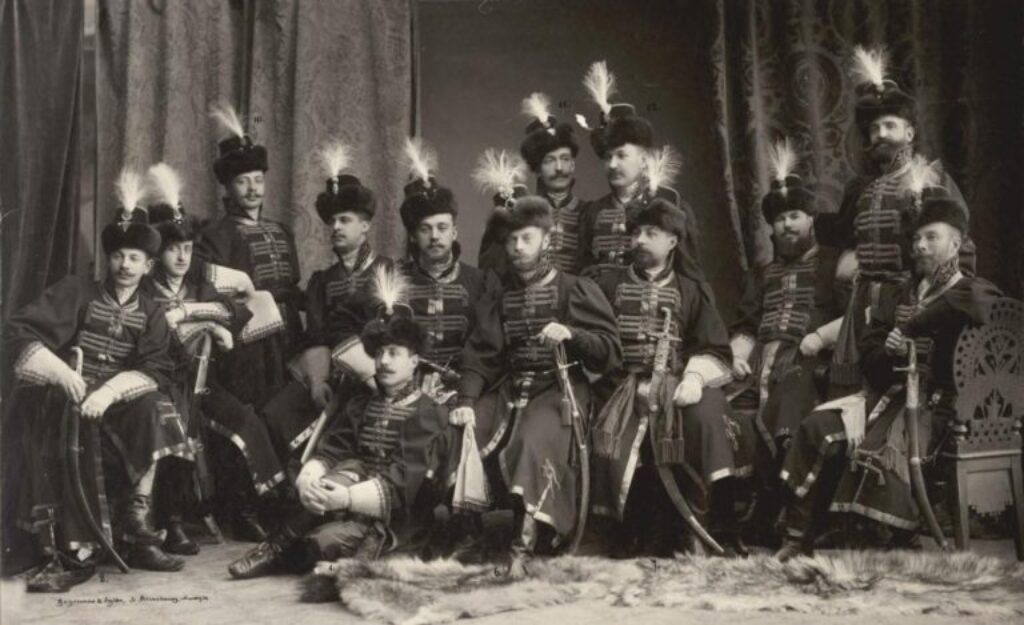
Had it not been for photography, the Russian Ball of 1903 might have remained merely one more aristocratic celebration.
Instead, it became immortal.
The finest photographers in St. Petersburg were invited to document the participants.
The resulting images were extraordinary.
Never before had a court event been recorded with such detail and professionalism.
Albums containing these photographs were later distributed to Russian embassies and diplomatic missions around the world.
Today, they allow us to see the elite of Imperial Russia exactly as they appeared just a few years before the collapse of their world.
The Last Ball of the Old Order
This is where the story takes on its tragic dimension.
As the guests departed the Winter Palace, none of them could imagine how rapidly their world would change.
Two years later, Russia would be shaken by the Revolution of 1905.
Eleven years later, the First World War would begin.
Fourteen years later, the monarchy would collapse.
Nicholas II and his family would be executed in Yekaterinburg.
Many of the ball’s participants would perish during the Revolution and Civil War.
Others would spend the rest of their lives in exile—in Paris, Berlin, Belgrade, or Constantinople.
Some would lose everything they owned.
Many would never see Russia again.
That is why the photographs of the ball are viewed so differently today.
They are not simply images of magnificent costumes and glittering halls.
They are the final portrait of an empire at the height of its splendor.
The last moment when the Russian aristocracy still believed its world would last forever.
The Russian Ball of 1903 was intended as a celebration of the Romanov dynasty and the glory of Imperial Russia. History transformed it into something else entirely—a symbol of a vanished age, brilliant and wealthy, yet astonishingly fragile.
Perhaps that is why the event continues to fascinate historians and enthusiasts more than a century later.
For what those photographs captured was not merely a ball.
They captured the final carefree evening of an entire world standing unknowingly on the edge of its own disappearance.