
The Aircraft Without an Airfield: How the Harrier Became the West’s Most Unusual Combat Jet

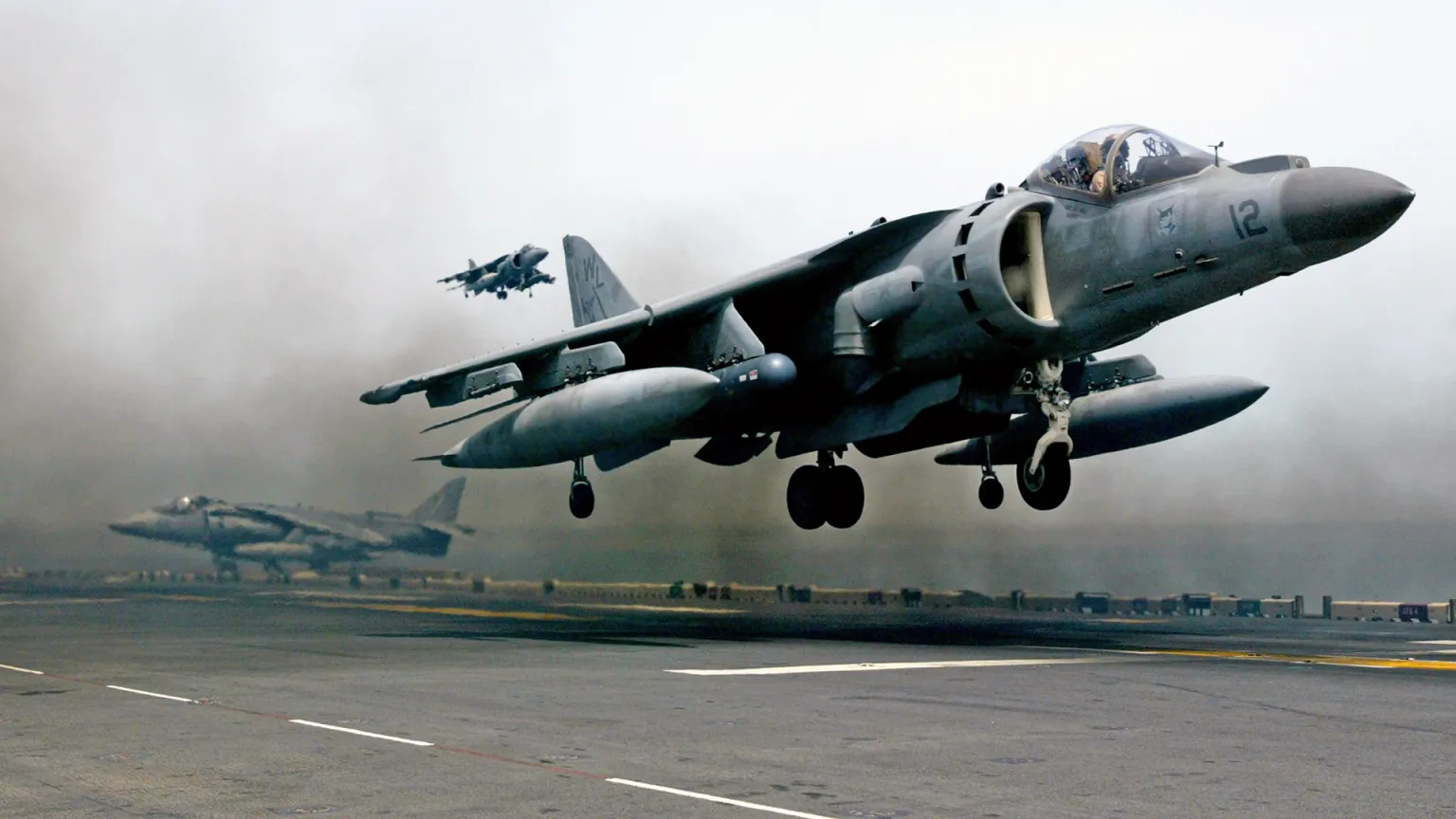
In June 2026, the U.S. Marine Corps officially bid farewell to its last AV-8B Harrier II. The aircraft that had served as a symbol of American expeditionary aviation for more than four decades is finally giving way to the F-35B Lightning II. To many, it looks like a routine generational transition. In reality, however, the retirement of the Harrier marks the end of an entire era—an era in which engineers attempted to solve one of aviation’s most difficult challenges: creating a combat jet that did not need a conventional runway.
The Harrier’s story is especially remarkable because it remains one of the very few vertical takeoff and landing aircraft that genuinely succeeded. The Soviet Union built the Yak-38 and later the Yak-141, France experimented with its own concepts, and American and German engineers tested dozens of unconventional designs. Yet it was the British Harrier that not only entered mass production but also became a fully capable combat aircraft with a service life spanning more than half a century.
The Birth of the Jump Jet
In the early 1950s, military planners on both sides of the Atlantic reached an uncomfortable conclusion. In the event of a major war, airfields would be among the first targets for enemy aircraft and missile strikes.
Even the most advanced fighter is useless if its runway has been turned into a cratered wasteland.
This realization led the British company Bristol to begin experimenting with what would become the Pegasus engine—an innovative powerplant capable of redirecting its thrust. The concept seemed almost futuristic. Rather than using separate lift engines, as many competitors proposed, British engineers sought to create a single engine with rotating exhaust nozzles.
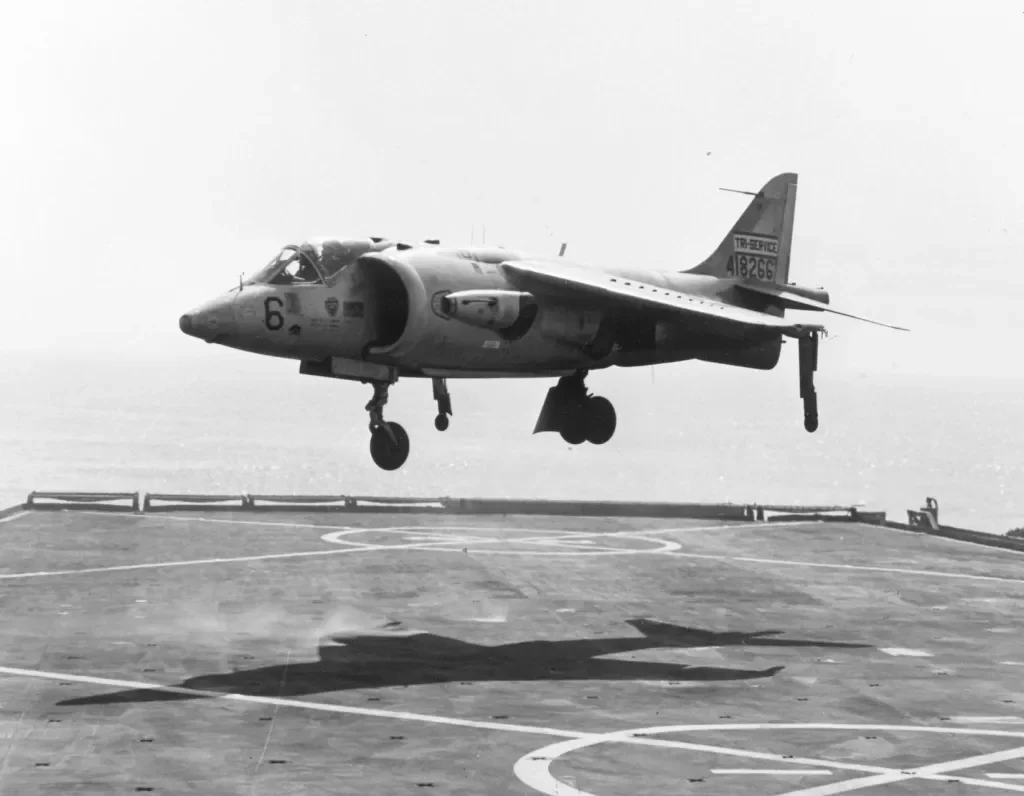
The solution proved brilliantly simple. Four swiveling nozzles mounted around the fuselage could direct thrust downward, allowing the aircraft to hover and take off vertically. Once airborne, the nozzles rotated rearward, transforming the aircraft into a conventional jet.
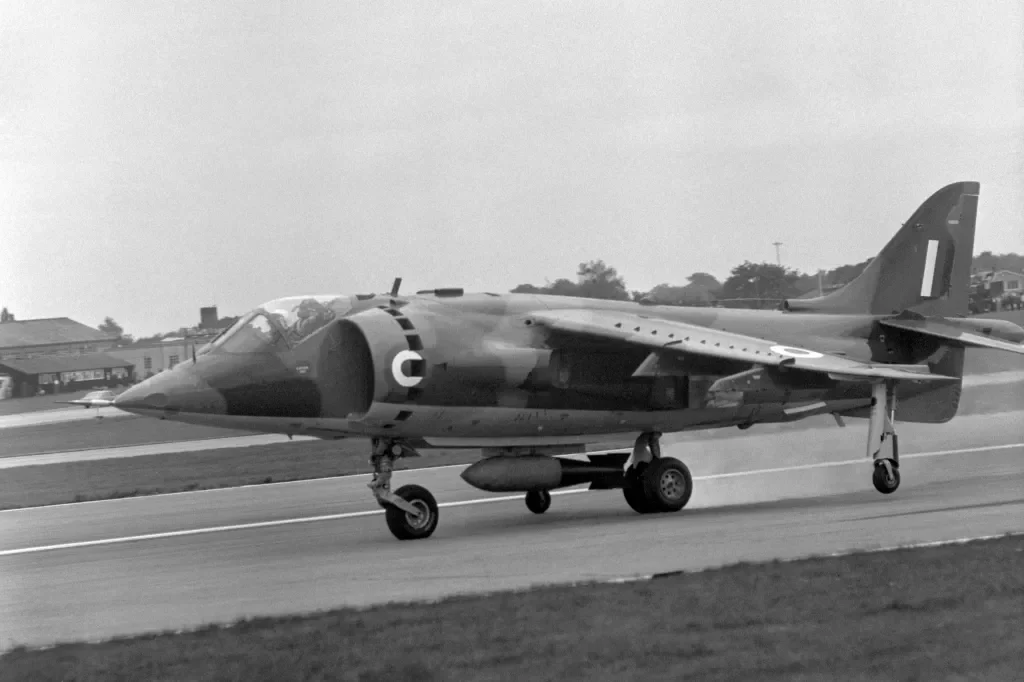
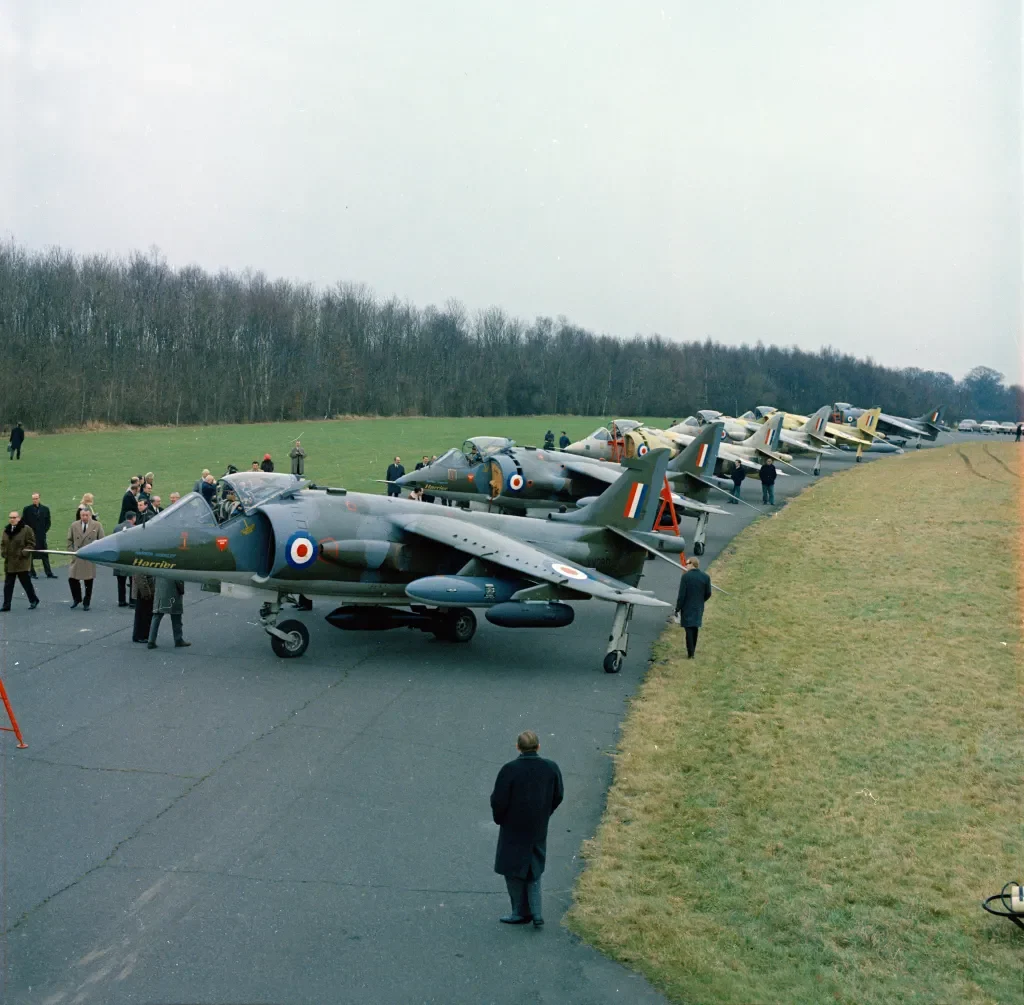
In 1967, the first production Harrier took to the skies. The legendary “Jump Jet” had arrived.
Why the U.S. Marines Fell in Love With a British Aircraft
One might assume that a British innovation would remain a niche project for the Royal Air Force. Instead, its most enthusiastic customer turned out to be the United States Marine Corps.
The reason was straightforward. The Marines have always sought to maintain their own aviation assets capable of operating directly alongside ground forces. Yet large aircraft carriers belonged to the Navy, and constructing full-scale airfields on every beachhead was impractical.
The Harrier offered a unique solution.
The aircraft could operate from amphibious assault ships, temporary forward bases, highways, and improvised landing strips established in just a matter of days. For the Marine Corps, it represented nothing short of a revolution.
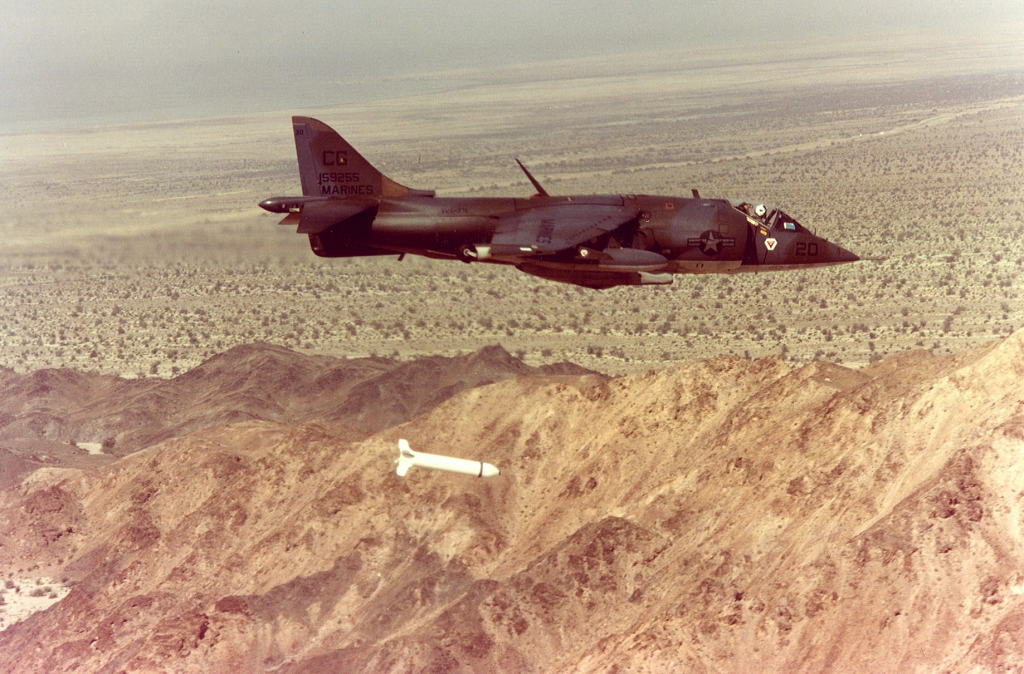
By the early 1970s, the United States had adopted the AV-8A Harrier.
From AV-8A to AV-8B: Building an American Harrier
The first-generation Harrier possessed extraordinary short and vertical takeoff capabilities, but those advantages came at a price.
Its combat radius was limited, and its payload was often inferior to that of traditional attack aircraft. In some configurations, it carried less ordnance than the aging A-4 Skyhawk it was intended to replace.
As a result, McDonnell Douglas partnered with British engineers during the 1970s to create a significantly improved version.
The resulting AV-8B Harrier II featured a larger composite wing, increased fuel capacity, improved aerodynamics, and modern avionics. The cockpit was raised to improve pilot visibility, and the aircraft became both more capable and easier to operate.
In many respects, the AV-8B was an entirely new aircraft that simply retained the original Harrier concept.
It would become the most famous member of the Harrier family.
An Aircraft That Fought Almost Everywhere
By the time the Harrier II entered service, the Cold War was drawing to a close. Yet the aircraft would see no shortage of combat.
During Operation Desert Storm in 1991, AV-8Bs played a major role in close air support missions, attacking artillery positions, armored vehicles, and fortified targets. They operated from both amphibious assault ships and forward-deployed airstrips.
Later, Harriers would participate in operations across the Balkans, Afghanistan, Iraq, and Libya.
Their ability to operate close to the front lines proved especially valuable. While larger aircraft remained tied to major airbases, Harriers could function from austere locations much closer to combat operations.
In Iraq, the AV-8B earned exceptionally high marks from Marine Corps commanders. Aircraft availability rates often exceeded 80 percent, while the addition of LITENING targeting pods transformed the Harrier into a highly precise strike platform.
One of the Most Demanding Aircraft Ever Flown
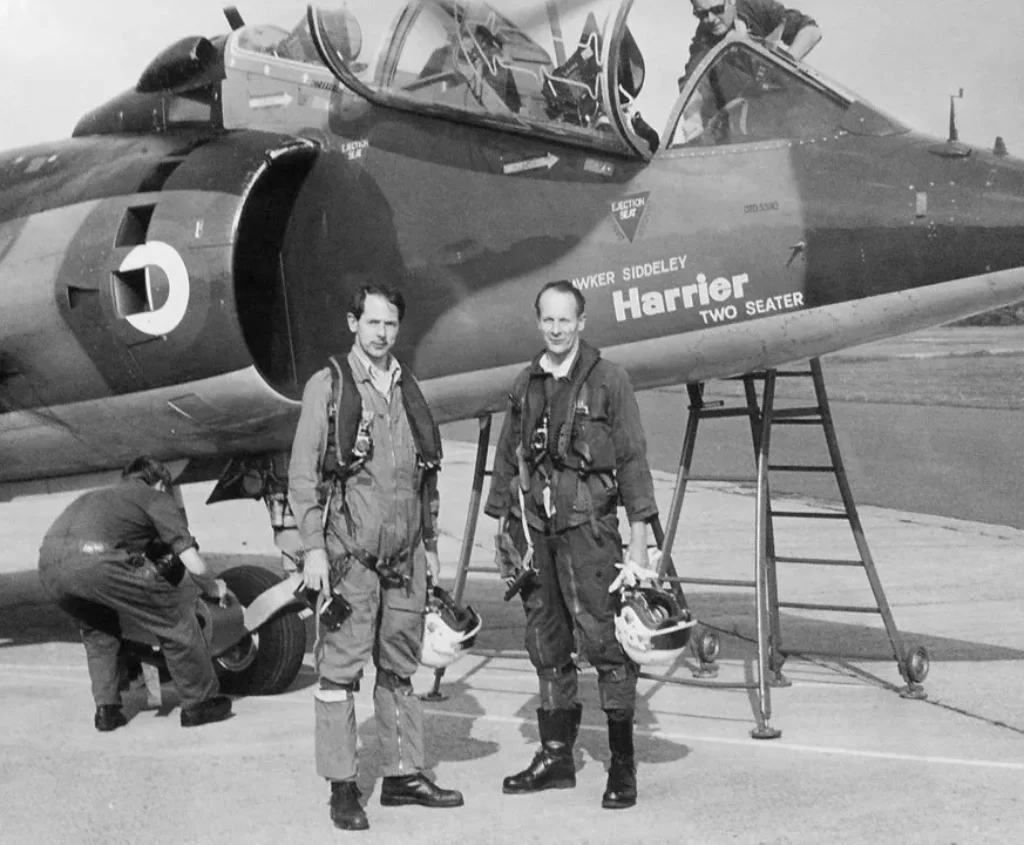
The Harrier’s unique capabilities came with a significant downside.
It demanded extraordinary skill from its pilots.
Landing in vertical mode required a combination of jet-fighter and helicopter flying techniques. Pilots had to manage engine thrust, nozzle position, descent rate, and aircraft stability simultaneously. A small mistake could quickly become catastrophic.
Throughout its service life, the Harrier maintained a reputation as one of the most challenging military aircraft to operate. Even experienced aviators required extensive training before mastering the aircraft.
In many ways, the Harrier demanded more from its pilots than almost any of its contemporaries.
The Harrier’s Legacy Lives On in the F-35B
Today, many people view the F-35B Lightning II as a completely new aircraft. In reality, it owes much of its existence to the Harrier.
Decades of British and American experience with vertical flight, thrust vectoring, expeditionary aviation, and pilot training provided invaluable lessons that directly influenced the F-35B program. Many of the concepts and operational doctrines developed for the Harrier became foundational elements of modern short takeoff and vertical landing aviation.
The retirement of the Harrier is therefore more than the withdrawal of an aging aircraft.
It marks the conclusion of one of the most successful experimental concepts in military aviation history.
AV-8B Harrier II Specifications
Type: V/STOL attack aircraft (Vertical/Short Takeoff and Landing)
Crew: 1
Engine: Rolls-Royce Pegasus 11-61 turbofan
Maximum Speed: 1,085 km/h (674 mph)
Combat Radius: Up to 550 km (342 miles)
Ferry Range: More than 3,300 km (2,050 miles) with external fuel tanks
Service Ceiling: 15,000 m (49,200 ft)
Maximum Takeoff Weight: Approximately 14 tons
Payload Capacity: Up to 4,200 kg (9,260 lbs)
Armament:
- 25 mm GAU-12 Equalizer cannon
- Guided and unguided bombs
- AGM-65 Maverick missiles
- AIM-9 Sidewinder air-to-air missiles
- Wide range of NATO-standard air-launched weapons
Today, the last Harriers continue to serve with the air arms of Italy and Spain, but their days are numbered. Yet the aircraft’s legacy extends far beyond its operational career. The Harrier proved that a jet fighter could take off from almost anywhere—and sometimes that capability is more valuable than greater speed, longer range, or additional missiles under the wings.
source https://www.twz.com/air/the-hidden-history-of-americas-harrier-jump-jets






