M249 SAW: How a Belgian Machine Gun Became One of the Symbols of the U.S. Army

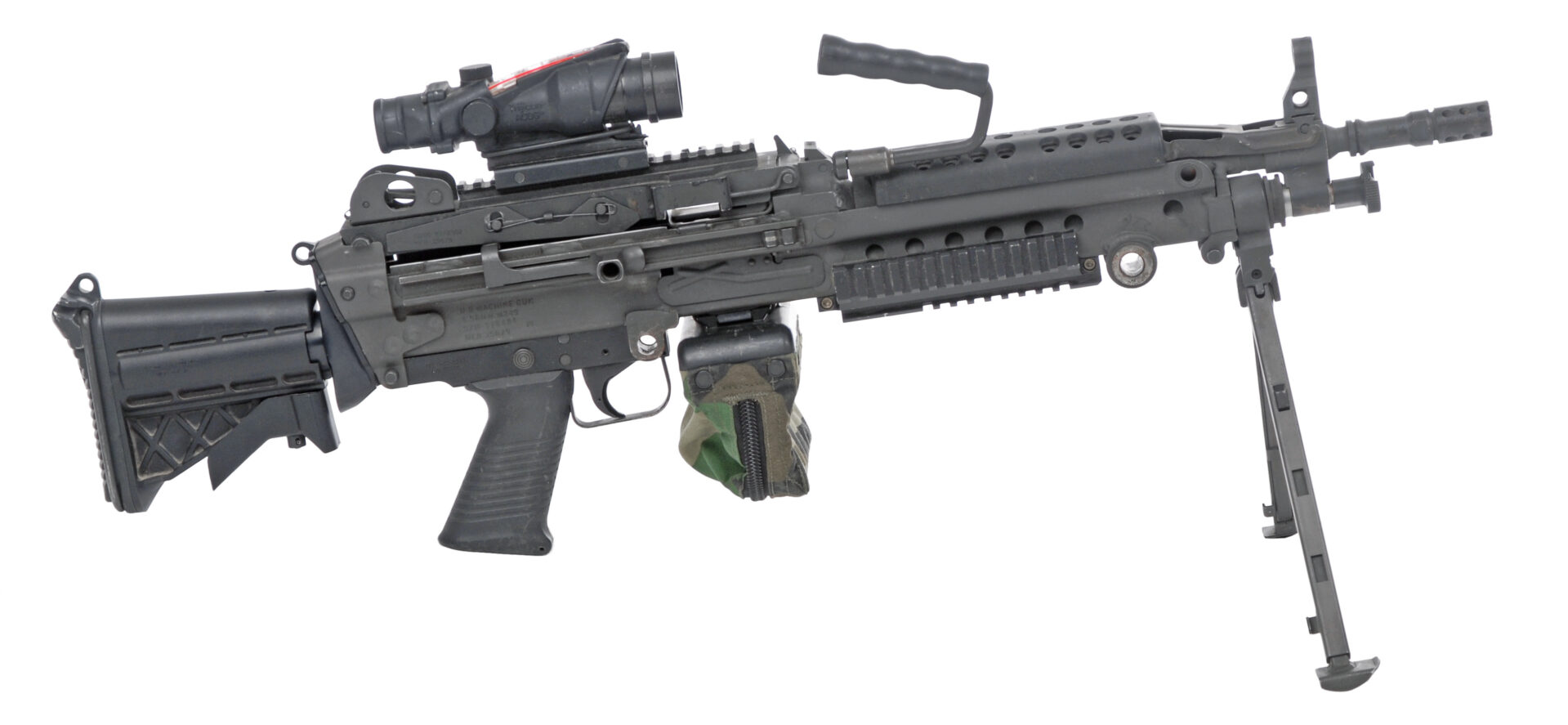
If you ask someone to name the most recognizable small arms used by the U.S. military over the past forty years, most people will mention the M16, the M4, or perhaps the M240. Yet among American soldiers there is another legend — the M249 SAW. This machine gun provided the backbone of squad-level firepower for decades, serving in Panama, Iraq, Afghanistan, and numerous lesser-known conflicts around the world.
Its story is not merely the tale of a successful weapon. It is also the story of how the U.S. Army eventually embraced an idea that Soviet and Warsaw Pact militaries had considered obvious for years: every infantry squad needs its own dedicated automatic weapon capable of delivering sustained suppressive fire.
When the Americans Realized Rifles Were Not Enough
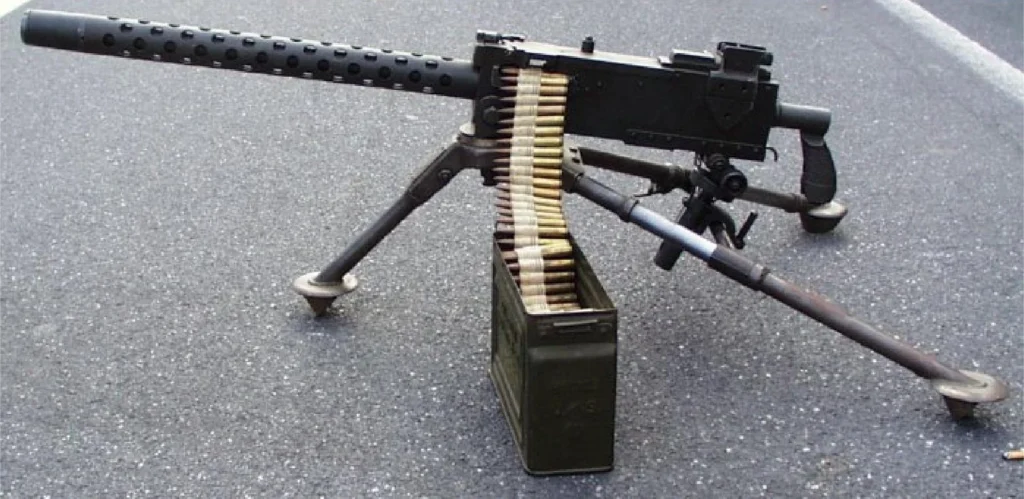
After World War II, the U.S. military relied heavily on general-purpose machine guns.
First came the Browning M1919, followed by the famous M60. Both weapons provided significant firepower, but they shared a common drawback — they were too heavy to function as truly organic squad weapons.
The problem became particularly evident during the Vietnam War.
American infantrymen carried M16 rifles, but a noticeable gap existed between the individual rifleman and the M60 gun team. Infantry squads needed a weapon capable of delivering continuous automatic fire while remaining light enough to move alongside the troops.
By the early 1970s, the Pentagon launched the Squad Automatic Weapon program — SAW.
The acronym would eventually become part of the weapon’s official designation.
The Soviet RPK Turned Out to Be Right
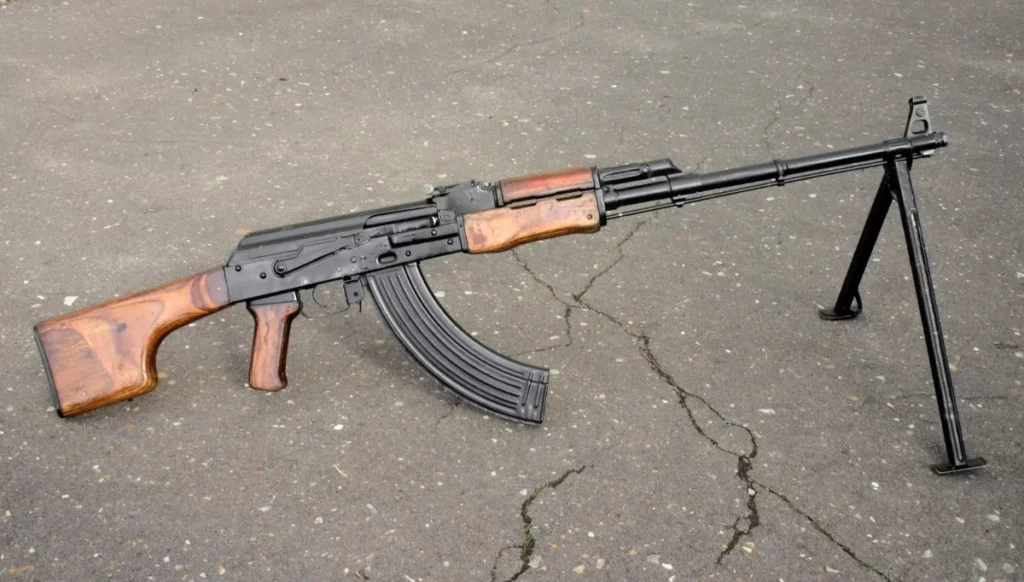
Interestingly, the Americans did not arrive at the SAW concept in a vacuum.
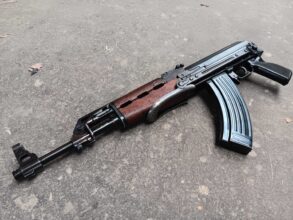
Back in the 1960s, the Soviet Union had already adopted the RPK light machine gun. Essentially an enhanced version of the AKM rifle, it featured a longer barrel, bipod, and increased ammunition capacity.
The Soviet concept was simple: every motor rifle squad should possess a lightweight automatic weapon capable of accompanying infantry everywhere.
For many years, Western militaries viewed this approach with skepticism.
However, the experience of numerous conflicts gradually demonstrated that the Soviet logic was sound.
The Americans, however, decided to implement the concept in their own way.
Rather than an enlarged assault rifle, they wanted a true belt-fed machine gun.
The Belgians Offer the Perfect Solution
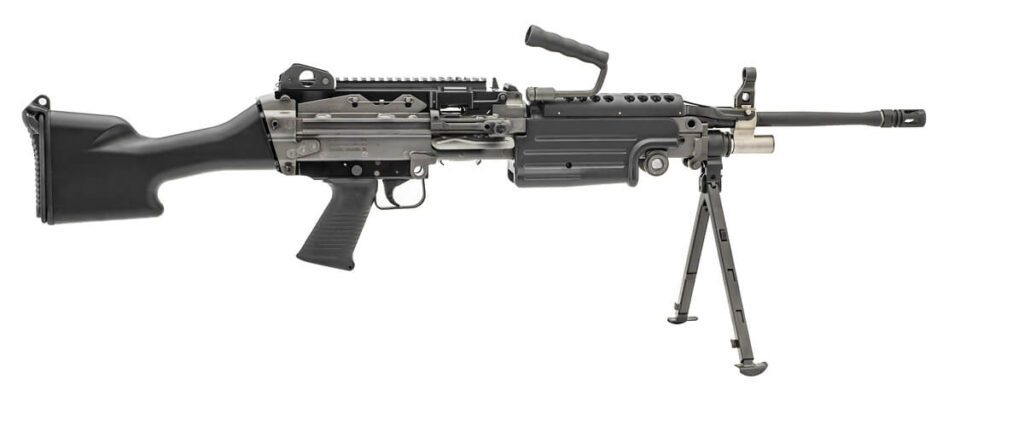
In the late 1970s, one of the competitors in the SAW program was Belgian manufacturer FN Herstal.
By that time, FN had already produced several highly successful weapons, including the famous FN MAG, which the U.S. military adopted as the M240.
For the SAW competition, FN engineers drew upon their work on the FN Minimi.
The name “Minimi” was derived from the French phrase Mini Mitrailleuse — “mini machine gun.”
It was this weapon that ultimately won the American competition.
In 1982, it officially entered U.S. Army service as the M249 Squad Automatic Weapon.
Thus began one of the longest careers in the history of modern light machine guns.
More Than a Machine Gun — A Fire Support System
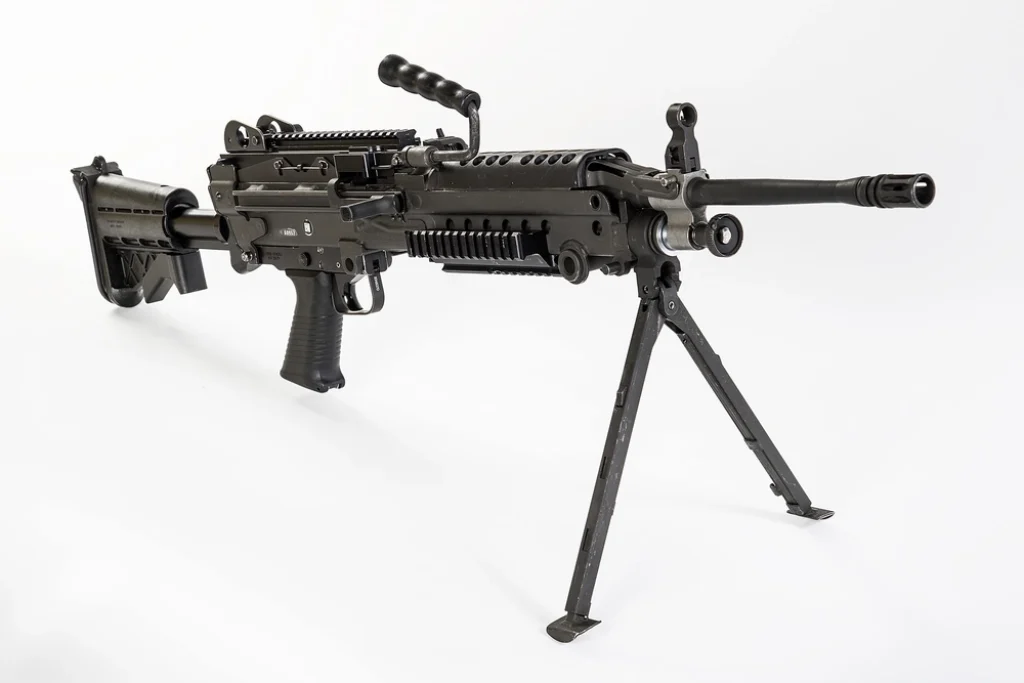
The greatest strength of the M249 was not merely its technical specifications.
The U.S. Army effectively acquired a weapon perfectly suited to the structure of the infantry squad.
The machine gun offered:
— high volume of fire,
— extended effective range,
— sustained firing capability,
— and relatively low weight.
One of its most important features was the use of the standard NATO 5.56×45mm cartridge.
Previously, many armies relied on machine guns chambered for full-power rifle cartridges. Such systems produced heavy ammunition loads and substantial recoil.
The adoption of an intermediate cartridge allowed soldiers to carry significantly more ammunition while improving controllability during automatic fire.
Technical Specifications of the M249 SAW
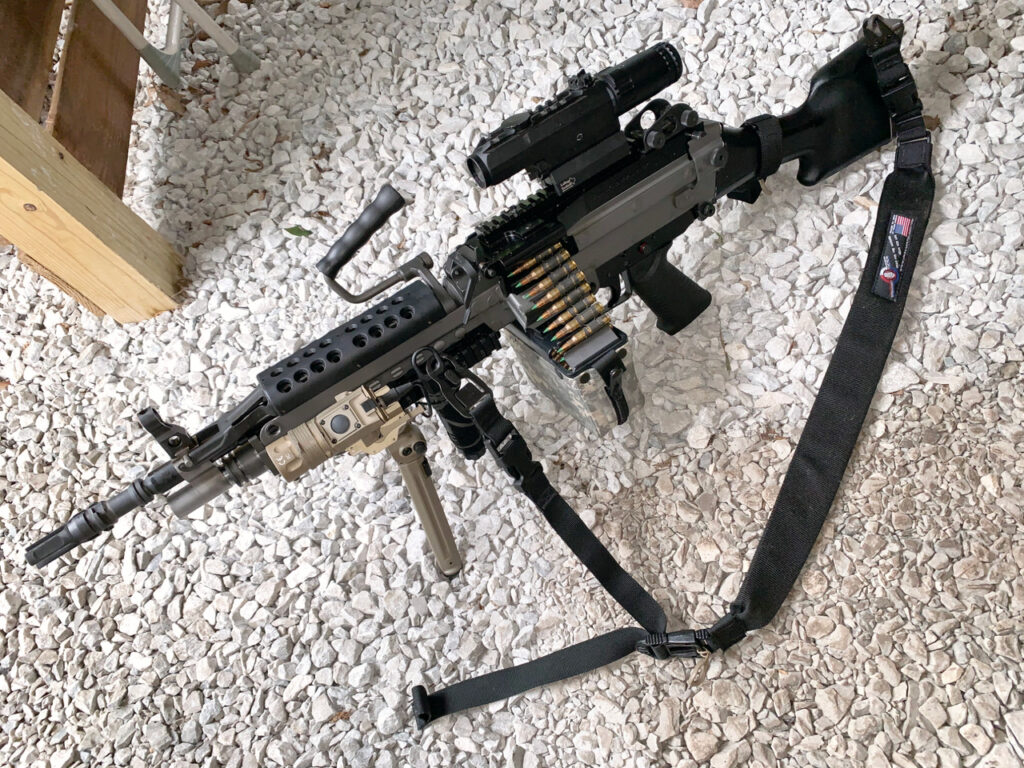
At the time of its introduction, the weapon’s specifications were highly impressive:
| Caliber | 5.56×45mm NATO |
| Weight | Approximately 7.5 kg |
| Overall Length | 1,040 mm |
| Barrel Length | 465 mm |
| Rate of Fire | 700–1,000 rounds/minute |
| Muzzle Velocity | Approximately 915 m/s |
| Feed System | M27 disintegrating belt |
| Effective Range | Up to 800 m |
| Maximum Range | Over 3,600 m |
One of the most unusual features of the M249 was its ability to accept both ammunition belts and standard M16 magazines.
In practice, magazine feeding was rarely used due to reliability concerns, but it provided an emergency backup capability when necessary.
Baptism by Fire
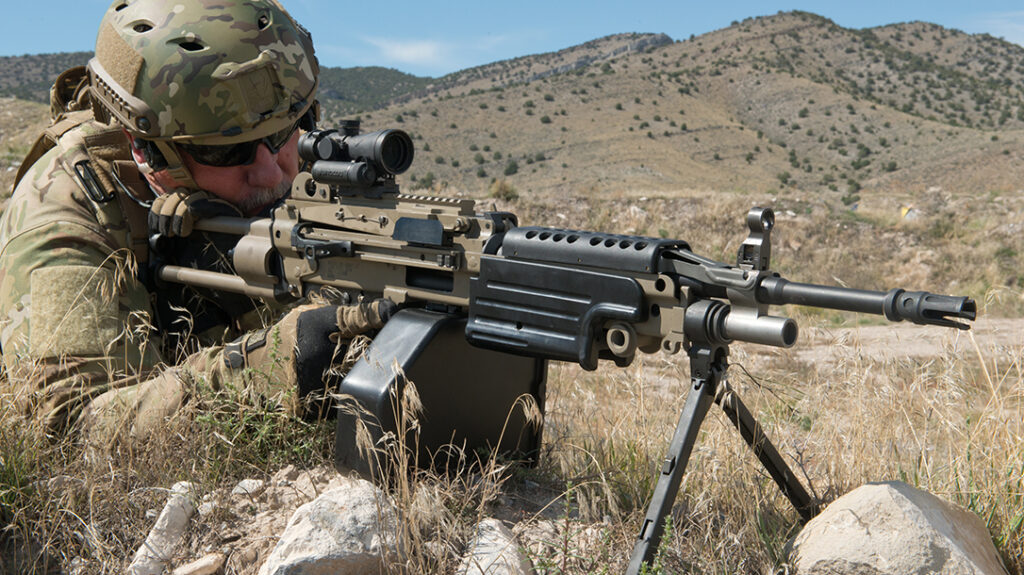
The weapon’s first significant combat deployment came during Operation Just Cause in Panama in 1989.
This was followed by the Gulf War.
It was there that the M249 truly proved its worth.
American units gained a lightweight and mobile source of sustained firepower that could support offensive operations without requiring heavier machine guns.
By the early 2000s, the M249 had become an integral component of U.S. infantry formations.
In Iraq and Afghanistan, the weapon was used virtually everywhere.
Yet those same conflicts also revealed its weaknesses.
Why Soldiers Both Loved and Complained About the M249
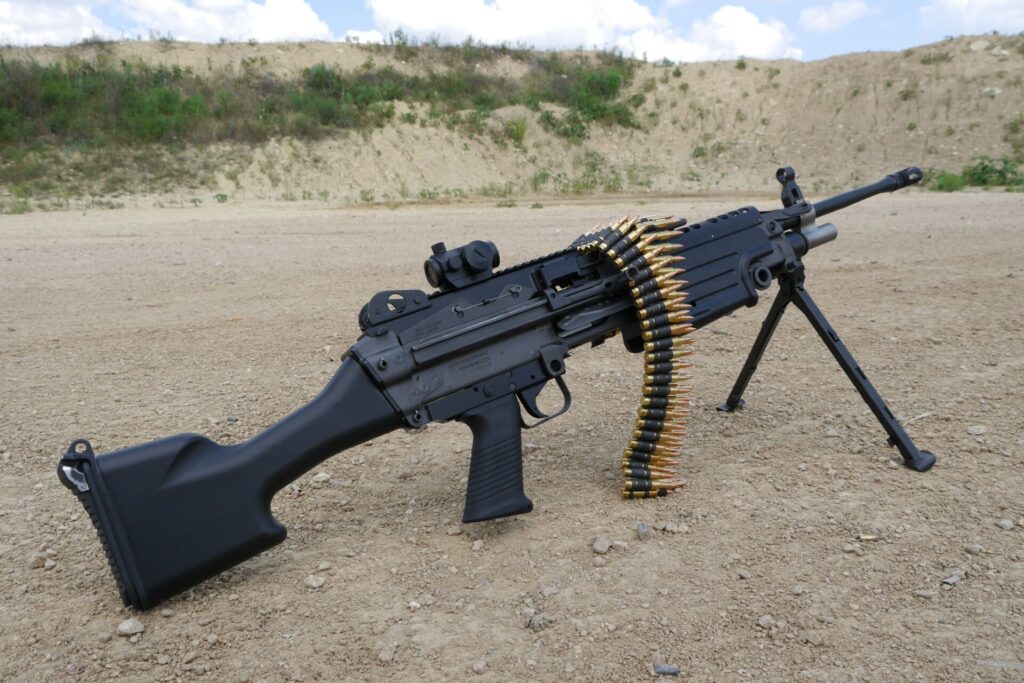
Like many mass-produced military weapons, the M249 was far from perfect.
Soldiers appreciated:
— its high volume of fire,
— reliability,
— large ammunition capacity,
— and portability.
At the same time, they criticized:
— accelerated wear under heavy use,
— barrel overheating,
— cleaning complexity,
— and sensitivity to dust in certain configurations.
These issues became especially apparent in the harsh environments of Iraq and Afghanistan.
Even so, most critics admitted that finding a truly superior replacement proved surprisingly difficult.
Why the U.S. Army Is Looking for a Successor
Today, the U.S. military is gradually transitioning to a new generation of small arms.
New systems include:
— the XM7,
— the XM250,
— and the new 6.8×51mm cartridge.
At first glance, it may appear that the era of the M249 is drawing to a close.
However, the situation is more complicated.
The squad automatic weapon remains an essential component of infantry combat power. Calibers, materials, and optics may change, but the underlying concept has remained relevant for more than half a century.
And that may be the greatest compliment to the FN Minimi’s design.
A Machine Gun That Survived Multiple Eras
Perhaps the most fascinating aspect of the M249 story is this:
When FN developed the Minimi during the 1970s, nobody could have predicted that the weapon would remain relevant well into the 21st century.
Since then, nearly everything has changed:
— armies have become digital,
— thermal imaging has become commonplace,
— drones have become standard infantry tools,
— and optics have become more powerful than many computers of the past.
Yet the basic mission of the infantry squad remains unchanged.
Someone must provide sustained suppressive fire that allows the rest of the unit to maneuver.
For more than forty years, that role in the U.S. Army has been filled by the M249 SAW.
And that is why it remains not merely a successful machine gun, but one of the most recognizable small arms of the late 20th and early 21st centuries.