
A 19th-Century Battlecruiser: The Alternative “Super Rurik” for the Imperial Russian Navy

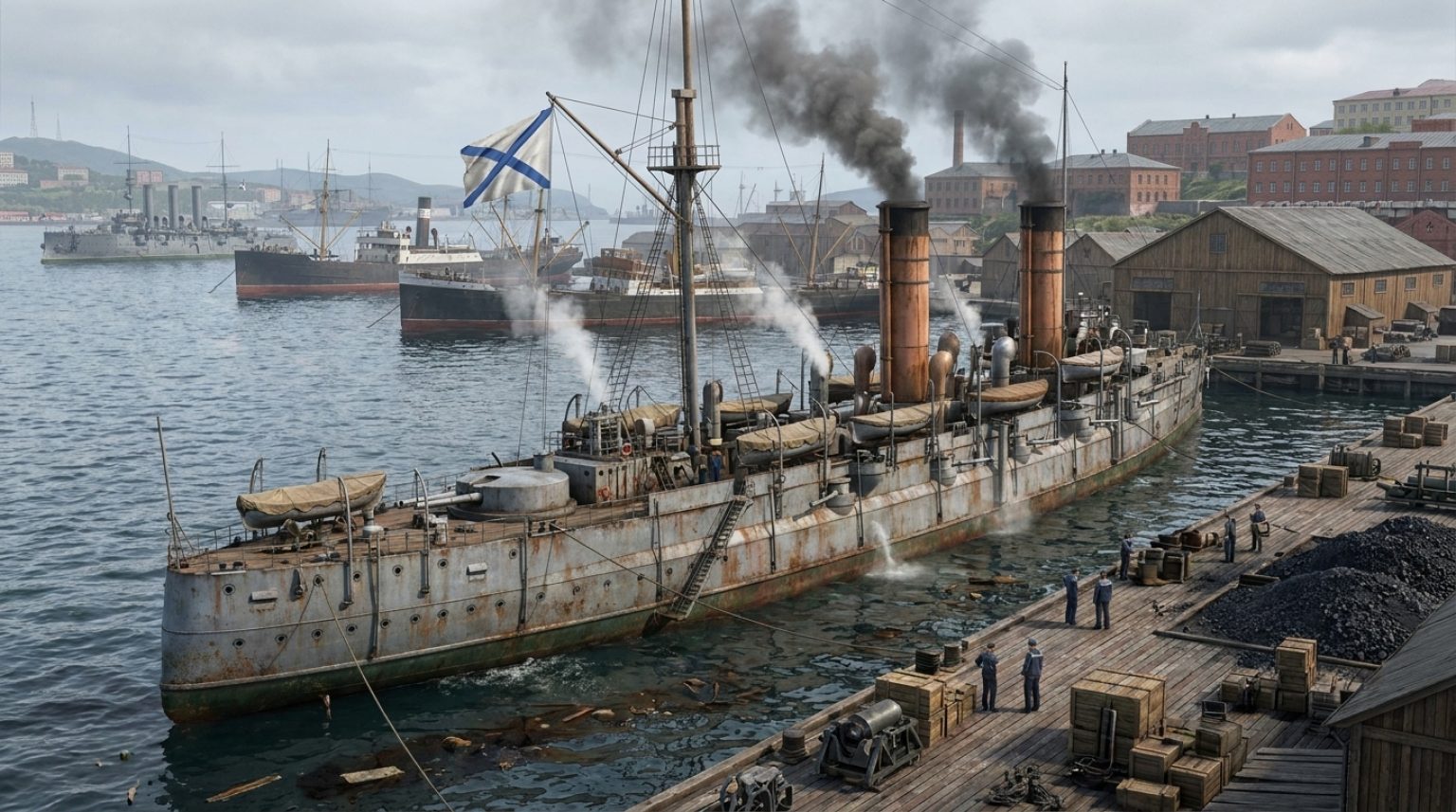
An Era When Speed Began to Matter More Than Armor
The second half of the 19th century became a time of restless searching for the ideal warship. Steam had already displaced sail, armor was rapidly growing thicker, and naval artillery was becoming more powerful with each passing decade. Yet the key dilemma remained unresolved: what was more important — protection or speed?
For a long time, fleets relied on heavily armored ships designed for line-of-battle engagements. But by the 1880s–1890s, a new idea began to take shape — a fast, long-range armored raider capable of operating far from its bases.
This is where the Russian armored cruiser Rurik enters the story.
“Rurik” as It Was — and as It Could Have Been
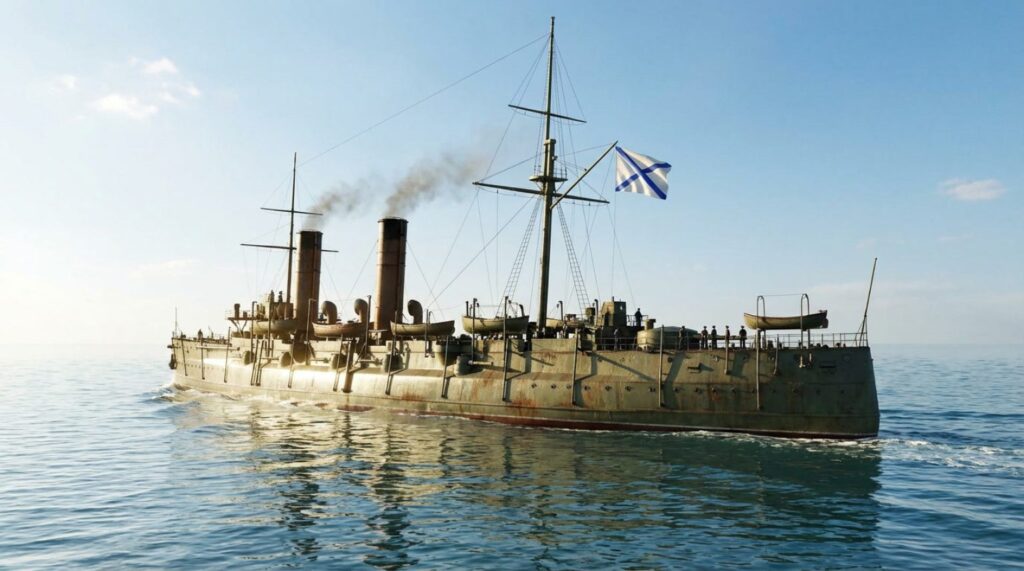
In real history, Rurik became one of the largest armored cruisers of its time. It was designed as a commerce raider — a ship intended to disrupt British maritime communications in the event of war.
But the concept itself contained a contradiction.
On the one hand, the ship needed heavy armor and powerful weapons. On the other, it required high speed and long range. The result was a compromise: Rurik turned out large, expensive, and not fast enough to confidently evade stronger opponents.
And here the alternative begins.
A Shift in Concept: Toward a Proto–Battlecruiser
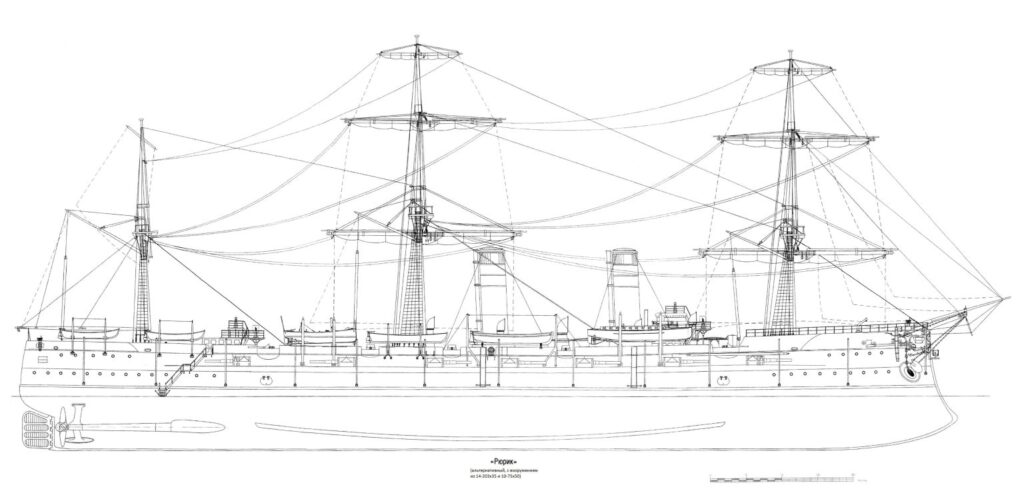
What if Russian naval thought had taken a different path?
Instead of attempting to combine everything in a single hull, designers could have shifted emphasis toward speed. Reduce armor, streamline the hull, increase engine power — and the same Rurik could have turned into something fundamentally different.
In essence, this would have been an early version of a battlecruiser — decades before the term itself appeared.
The ship would sacrifice part of its protection in exchange for a decisive advantage in mobility. It would not fight battleships head-on, but it could dictate the terms of engagement: attack weaker targets and disengage from stronger ones.
The Idea of a “Super Rurik”
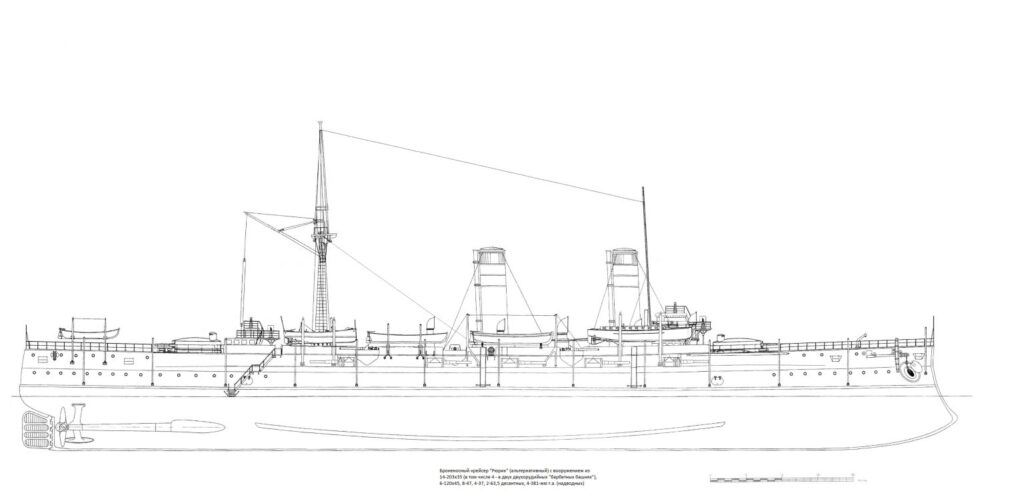
In this alternative project, the “Super Rurik” becomes not just a cruiser, but a strategic instrument.
Its design could include:
- increased speed, allowing it to outrun most contemporary armored cruisers;
- powerful artillery sufficient to destroy enemy commerce raiders and lighter warships;
- extended range, enabling operations across oceans;
- reduced armor, but still adequate against ships of its own class.
Such a ship would not rely on brute force — it would rely on initiative.
A Weapon Against the British Empire
For Russia, such a concept had clear logic.
The primary potential adversary at sea was the British Empire, whose strength rested on global trade and naval dominance. A fast raider like the “Super Rurik” could threaten these communications, forcing Britain to disperse its forces across vast distances.
Instead of a direct confrontation, this would be a war of disruption.
Even a small number of such ships could create disproportionate pressure, especially in distant theaters.
Ahead of Its Time
What makes this concept particularly interesting is how closely it anticipates later developments.
In the early 20th century, the British would create the first true battlecruisers — ships that followed exactly this logic: speed over armor, initiative over endurance in line-of-battle combat.
The alternative Rurik fits surprisingly well into this paradigm, despite being conceived decades earlier.
Why It Never Happened
In reality, technological and doctrinal limitations held such ideas back.
Steam engines had not yet reached the level of efficiency required to combine high speed and long range without severe compromises. Naval thinking was still dominated by the logic of line battles. And budgets were never unlimited.
As a result, Rurik remained what it was — a large armored cruiser, impressive but not revolutionary.
A Shadow of Future Fleets
And yet, this alternative “Super Rurik” reveals something important.
Even in the 19th century, the outlines of future naval warfare were already visible. The idea of speed as a weapon, of maneuver as strategy, of striking not the enemy fleet but its lifelines — all of this would later become central to naval doctrine.
The battlecruiser era did not emerge out of nowhere.
It could have begun earlier.






