Turkey, Pakistan and Saudi Arabia Have Formed a Defense Pact. Why It Matters More Than It First Appears

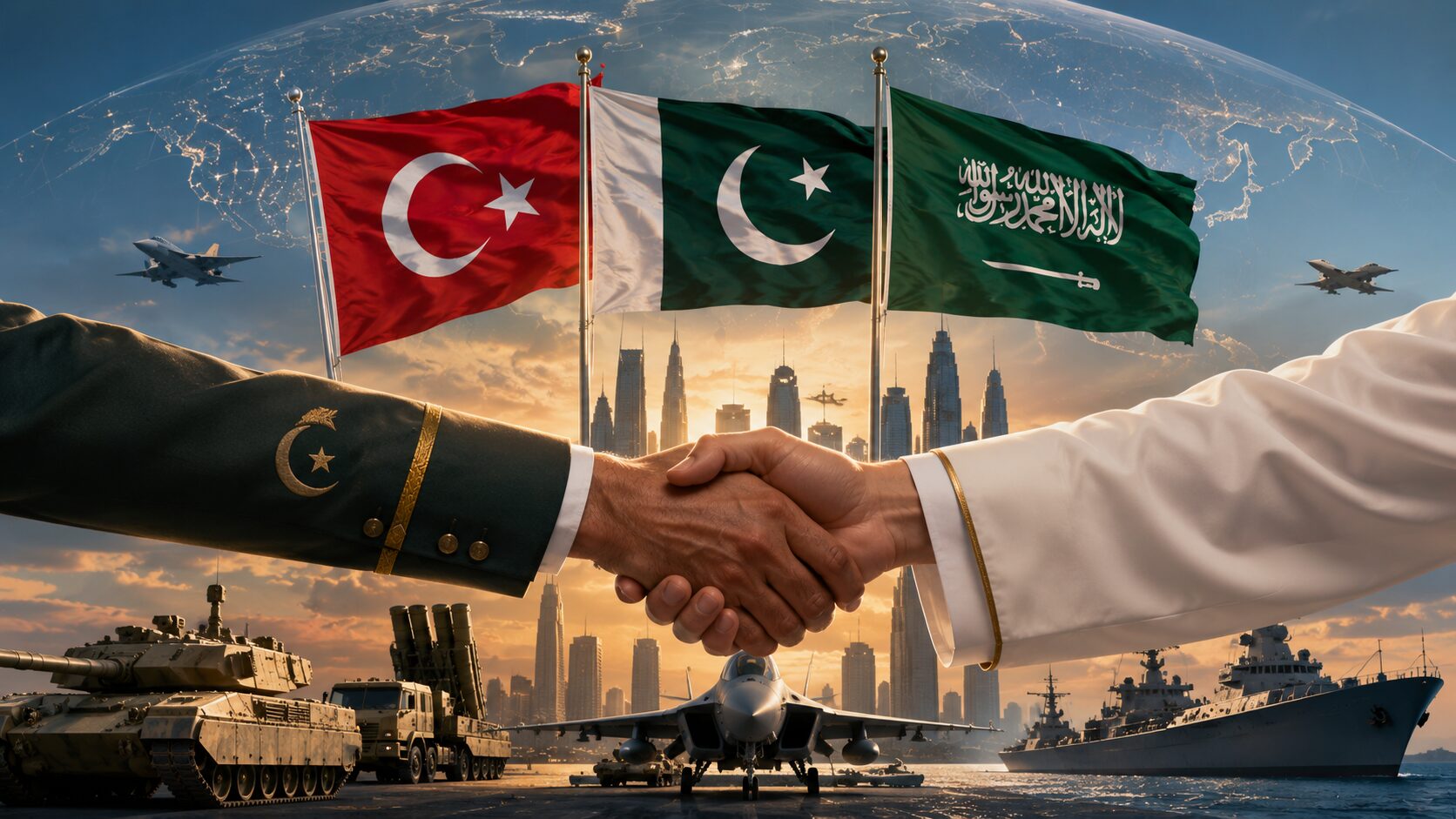
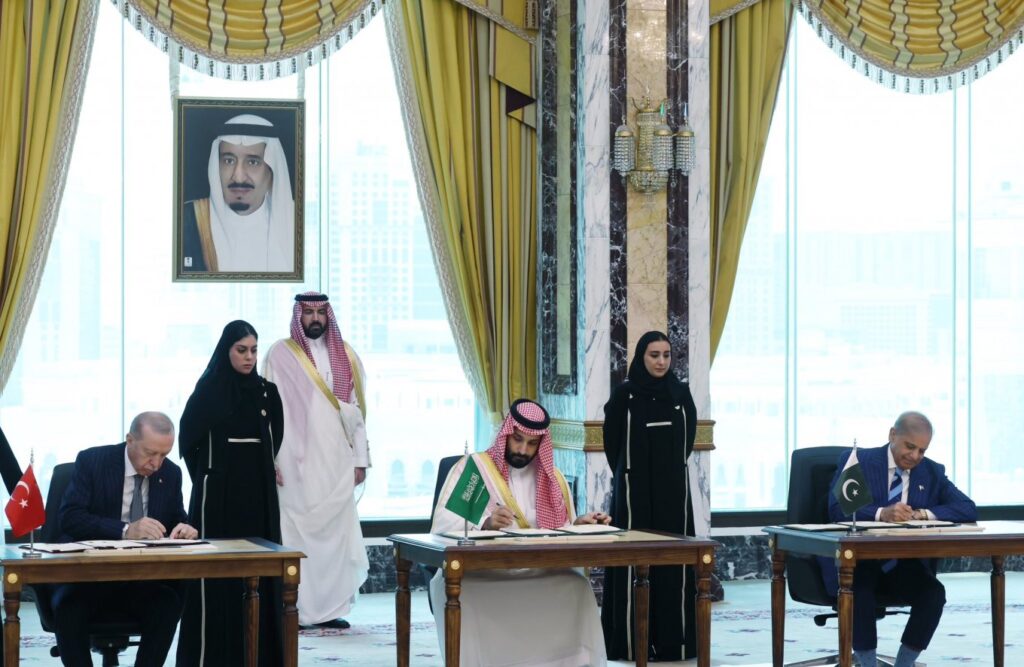
On August 7, 2026, an event took place in Mecca that would have seemed highly unlikely only a few years ago.
Turkey, Saudi Arabia and Pakistan signed a joint defense agreement.
Its central principle is remarkably simple: an armed attack on one of the three countries is to be treated as an attack on all of them.
That is why the new pact was immediately compared to NATO.
The comparison is obvious. NATO’s famous Article 5 is built around a similar concept of collective defense: an attack on one ally becomes a concern for the entire alliance.
But focusing only on that clause risks missing the much more important story.
Because these three countries bring together a highly unusual combination of capabilities.
Saudi Arabia brings money and energy influence.
Turkey brings one of NATO’s largest militaries and a rapidly expanding defense industry.
Pakistan brings a large conventional force, ballistic missiles and, most importantly, nuclear weapons.
Even that, however, does not fully explain why the agreement matters.
To understand its significance, a different question has to be asked.
Why does Saudi Arabia need a new defense framework at all, when for nearly eight decades the security architecture of the Persian Gulf has largely rested on the United States?
The American Security System Worked for Nearly Eight Decades
The modern security architecture of the Persian Gulf was built long before the current conflicts.
After World War II, the United States and Saudi Arabia gradually developed an informal strategic bargain.
The kingdom helped guarantee stability in global oil supplies and became one of Washington’s key Middle Eastern partners.
The United States, in return, became the principal external guarantor of Saudi security.
This arrangement became even more important after the Iranian Revolution of 1979 and during the Iran-Iraq War.
After Iraq invaded Kuwait in 1990, the American military presence in the region became enormous.
Operation Desert Storm demonstrated how this model was supposed to work.
When a major threat emerged against the Gulf monarchies, U.S. aircraft, warships, air-defense systems and ground forces arrived.
Saudi Arabia, meanwhile, spent decades buying American weapons.
F-15s.
Patriot.
Abrams tanks.
AWACS aircraft.
Later, THAAD.
Tens of billions of dollars were spent constructing one of the most powerful air- and missile-defense networks in the region.
For a long time, this model appeared almost permanent.
But gradually, Riyadh began asking an uncomfortable question.
What happens if one day the Americans do not come?
The First Major Warning Came in 2019
On September 14, 2019, Saudi Aramco facilities at Abqaiq and Khurais were attacked.
The consequences were enormous.
Roughly 5.7 million barrels per day of Saudi oil production were temporarily knocked offline — around half of the kingdom’s output at the time and close to 5% of global supply.
For a country that had spent vast sums on advanced Western weaponry, it was an uncomfortable lesson.
Relatively inexpensive drones and cruise missiles had managed to strike infrastructure that was critical not only to Saudi Arabia, but to the entire global economy.
Yet the political response may have mattered even more than the military damage.
The United States did not automatically go to war with Iran.
For Riyadh, the message was clear.
American weapons could be bought.
An automatic American war on Saudi Arabia’s behalf was much harder to guarantee.
Later regional crises only strengthened doubts about how far Washington would actually go to defend its partners.
And Saudi Arabia gradually began building alternatives.
Pakistan Became One of Those Alternatives
In reality, military relations between Riyadh and Islamabad are much older than the current agreement.
Pakistan has trained Saudi personnel for decades, and Pakistani troops were stationed in the kingdom as far back as the late 20th century.
The relationship was mutually beneficial.
Saudi Arabia had money.
Pakistan had a large army and substantial military infrastructure.
But in 1998, a completely new factor entered the relationship.
Pakistan conducted nuclear tests and formally became a nuclear-armed state.
Its arsenal is now estimated at roughly 170 nuclear warheads.
And this is where the story becomes particularly sensitive.
Saudi Arabia does not possess nuclear weapons.
Its closest military partner does.
In September 2025, Riyadh and Islamabad had already signed a bilateral Strategic Mutual Defense Agreement that established the principle that aggression against one side would be treated as aggression against both.
When asked whether that amounted to a de facto Pakistani nuclear umbrella over Saudi Arabia, Saudi officials responded carefully, saying the agreement covered all military means.
That is not the same as an explicit promise to use nuclear weapons in defense of the kingdom.
But ambiguity itself can become a form of deterrence.
A potential adversary must now consider more than Saudi Arabia alone.
It must also consider Pakistan.
Then Turkey Joined the Equation
This is where the 2026 agreement becomes much more interesting.
Turkey contributes a completely different set of capabilities.
The Turkish Armed Forces number in the hundreds of thousands and remain among the largest in NATO.
But what may matter even more is what has happened to Turkey’s defense industry.
Twenty years ago, Ankara remained heavily dependent on foreign weapons.
Today, Turkey produces its own armored vehicles, artillery, warships, missiles, electronic-warfare systems and drones.
The Bayraktar TB2 became merely the most recognizable symbol of a much larger industrial transformation.
Turkey is building MILGEM-family corvettes and frigates, developing the SIPER long-range air-defense system, producing Akinci strike drones, working on the Kizilelma unmanned combat aircraft and developing the KAAN fifth-generation fighter.
At the same time, Turkish defense companies have been expanding aggressively across Middle Eastern markets.
That creates an unusually complementary combination.
Saudi Arabia has money.
Turkey increasingly has the technology and manufacturing base.
Pakistan has a large military, its own defense industry, ballistic missiles and nuclear weapons.
Individually, all three are major regional powers.
Together, they could potentially create something close to a full-spectrum military ecosystem.
1.2 Million Troops Sound Impressive. But the Number Explains Almost Nothing

If the armed forces of the three countries are simply added together, the result looks formidable.
More than a million military personnel.
Thousands of tanks.
Thousands of artillery systems.
Hundreds of combat aircraft.
Dozens of major warships and submarines.
And Pakistan’s nuclear arsenal.
On paper, this is one of the largest military groupings outside the world’s established alliances.
But this is exactly where comparisons with NATO need to be treated with caution.
Alliance power is not equal to the sum of its members’ tanks.
NATO has existed for more than seventy years.
It has integrated command structures, standardized procedures, joint planning, communications systems, logistics networks, intelligence sharing and decades of combined exercises.
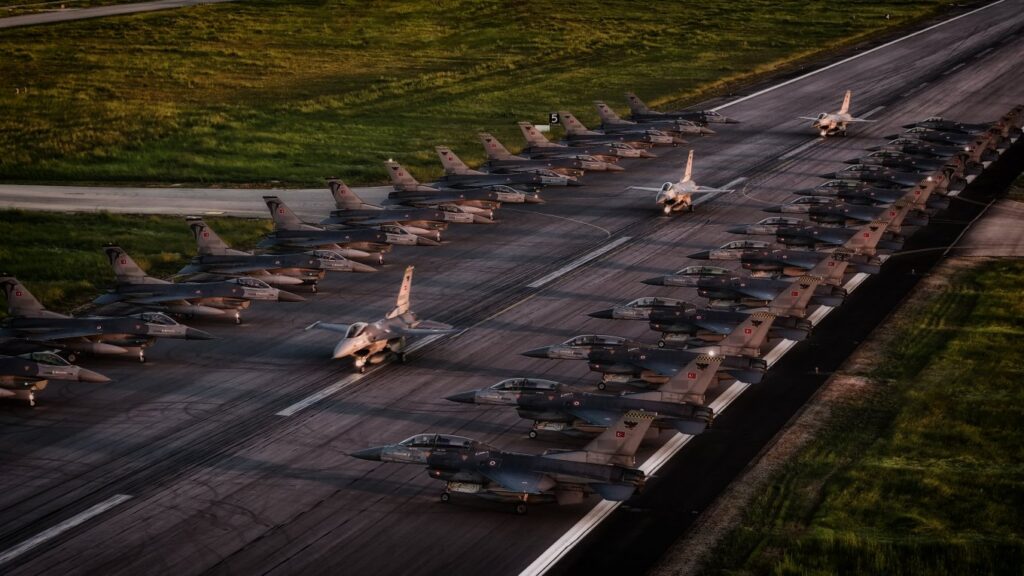
A Turkish F-16, a Pakistani JF-17 and a Saudi F-15 do not automatically become a single air force just because politicians sign a treaty.
That is why calling the new pact a “new NATO” is still premature.
What exists today is better described as a political framework from which a genuine military alliance may eventually emerge.
What happens next matters far more than the wording of the agreement itself.
The Biggest Question Is: Who Is the Enemy?
The official answer is predictable.
Nobody.
Pakistan has already stated that the agreement is purely defensive and is not directed against any specific country.
Turkey has also emphasized that the pact is not aimed at Iran.
Formally, that may be entirely true.
But geography inevitably creates several potential fault lines.
For Pakistan, the principal strategic rival remains India.
For Saudi Arabia, Iran and Iran-aligned armed groups have long been treated as major security concerns.
Turkey has its own complicated set of disputes and security challenges, from the Eastern Mediterranean to Greece and Syria.
The result is an unusual alliance whose members do not necessarily share the same adversary.
That could become either a strength or a major weakness.
Because the principle of “an attack on one is an attack on all” sounds simple only until the first real crisis arrives.
What Happens During the Next India-Pakistan Crisis?
This is one of the most uncomfortable questions.
India and Pakistan have fought several wars.
Both possess nuclear weapons.
In May 2025, they again went through a dangerous escalation involving aircraft and missiles.
Now imagine another major confrontation.
If Pakistan comes under a large-scale attack, does Saudi Arabia consider itself effectively at war with India?
Does Turkey?
And the reverse applies as well.
If Saudi Arabia comes under a large missile attack, is Pakistan required to enter the conflict?
Would it send aircraft?
Air-defense systems?
Ground forces?
And at what point does nuclear deterrence enter the equation?
A collective-defense treaty may only be several pages long.
Its true meaning is revealed only when one member actually asks the others to come to its aid.
That is why NATO’s Article 5 has been formally invoked only once in the alliance’s history — after the terrorist attacks of September 11, 2001.
Collective defense works primarily because an adversary believes the allies will honor their commitments.
But There Is Another Player: the United States
And this may be the most important part of the entire agreement.
Turkey remains a NATO member.
Saudi Arabia remains one of Washington’s most important partners in the Middle East.
Pakistan has cooperated with the United States for decades, despite frequent crises in the relationship.
None of the three has announced a break with Washington.
Nor are they likely to do so.
That means the new pact should not automatically be interpreted as an anti-American bloc.
It looks more like insurance.
For decades, the region’s security architecture largely followed a vertical model.
Washington stood at the top, while regional partners depended on American military capabilities.
Now a horizontal structure is beginning to emerge.
Regional powers are increasingly binding themselves directly to one another.
That is a fundamental change.
The Most Interesting Development Would Be Expansion
Pakistan has already stated that the pact remains open to other countries.
That immediately raised the question of who might join next.
One of the most obvious candidates frequently mentioned is Egypt.
If Cairo were ever to join, the geography of the alliance would change dramatically.
Turkey controls access between the Black Sea and the Mediterranean and occupies a critical position between Europe, the Caucasus and the Middle East.
Saudi Arabia sits at the center of the Arabian Peninsula and is one of the world’s largest oil producers.
Pakistan opens onto the Arabian Sea and lies between India, Iran, Afghanistan and China.
Egypt controls the Suez Canal, one of the most important transportation arteries on the planet.
That would no longer be merely a pact between three countries.
It would create a vast strategic arc stretching from the Mediterranean to the Indian Ocean.
For now, however, that remains only a possibility.
What matters more is whether real military mechanisms begin to appear after the signing ceremony.
The Real Test Begins After the Ceremony
If the agreement is meant to become a serious military alliance, far less glamorous things will have to follow.
A joint command structure.
Regular large-scale exercises.
Common defense plans.
Secure communications.
Intelligence sharing.
Integrated air-defense arrangements.
Logistics agreements.
Military bases or pre-prepared infrastructure for receiving allied forces.
Joint weapons programs.
These are the boring details that turn a political declaration into a functioning military alliance.
If none of these things appear, the agreement may remain primarily a powerful diplomatic signal.
If they do appear, the balance of power across the Middle East and South Asia could begin to change significantly.
“Muslim NATO” Is a Catchy Phrase — but It Is Still Too Early
The new arrangement does share some characteristics with NATO.
The most important is the principle of collective defense.
But there is an enormous distance between writing that principle into a treaty and building a functioning military alliance.
For now, it is more accurate to describe the pact as an emerging center of regional deterrence.
And its membership is what makes it so unusual.
Saudi Arabia has enormous financial resources and access to some of the most advanced Western military systems.
Turkey has a large military, real combat experience and a rapidly expanding defense-industrial base.
Pakistan contributes a large conventional force, missile technology and the only nuclear arsenal among the three members.
This is not NATO.
But for the first time, these capabilities are tied together by a single principle:
an attack on one is to be treated as an attack on all.
If that principle proves credible, the consequences will extend far beyond the three member states.
Because the most important change is not the number of tanks, aircraft or missiles.
It is the architecture of regional security itself.
For nearly eighty years, Middle Eastern governments have become accustomed to asking one central question during every major crisis:
“What will the United States do?”
After the Mecca agreement, another question is beginning to emerge:
“What can the region’s major powers do on their own?”
And that may ultimately prove to be the most important legacy of the new pact.