
The U.S. Army Is Looking for a Stinger Successor: Who Will Win the Contract for 11,000 Missiles and Become the New Standard for Short-Range Air Defense?

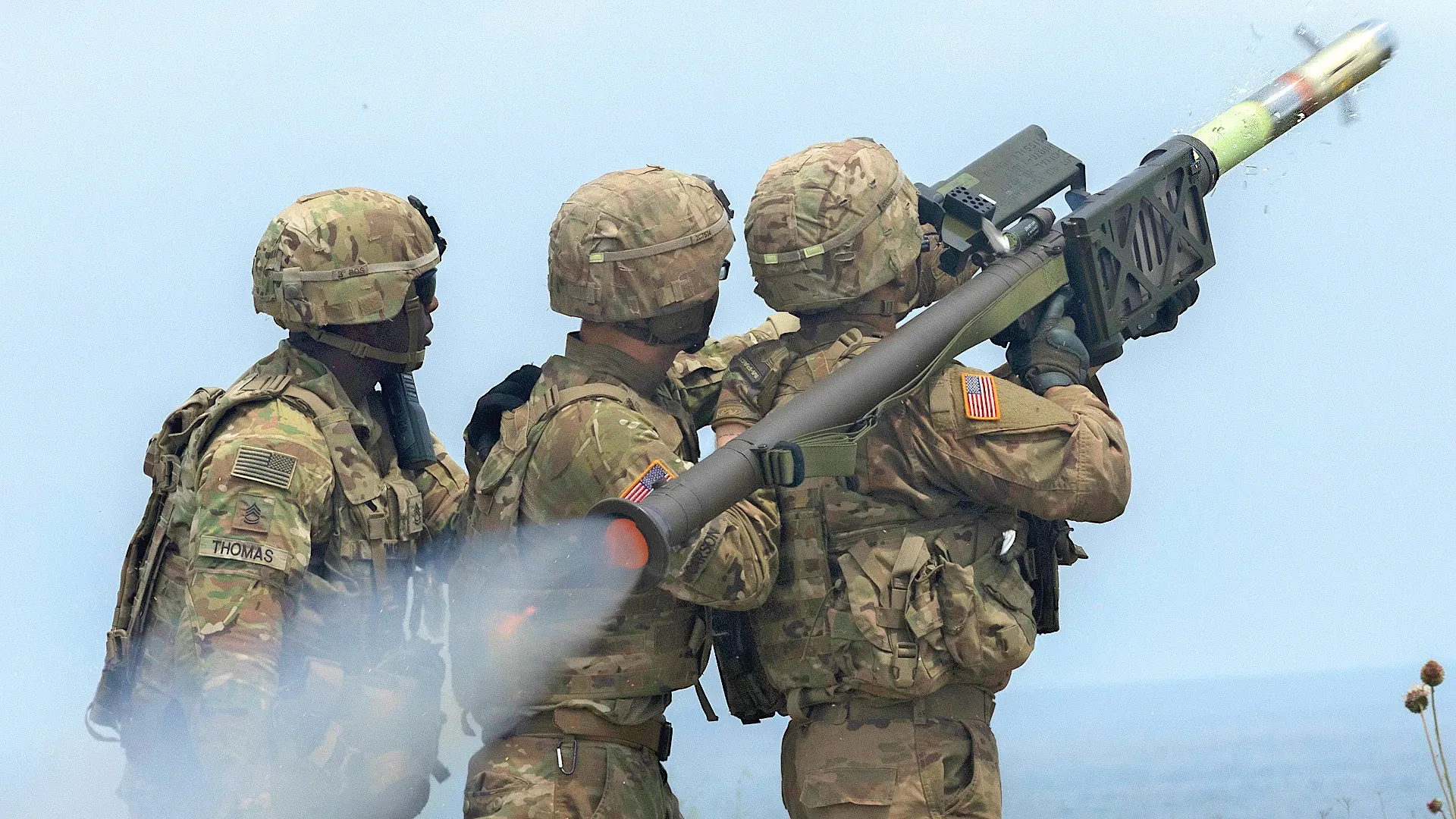
The FIM-92 Stinger has become one of those weapons that outlived the era for which it was originally designed. When the first production missiles entered U.S. service in the early 1980s, their primary targets were expected to be Soviet attack aircraft and combat helicopters breaking through NATO defenses at low altitude. Nearly half a century has passed, the Soviet Union is long gone, several generations of combat aircraft have come and gone, yet the American infantryman still receives essentially the same answer to the question of how to shoot down a low-flying threat: the Stinger.
Now the U.S. Army is finally preparing to replace it. The Next Generation Short Range Interceptor, or NGSRI, program has moved well beyond the conceptual stage. Raytheon and Lockheed Martin are already testing actual missiles, production of the winning system is expected to begin in fiscal year 2028, and the preliminary procurement plan is enormous: 11,000 missiles and 2,200 new man-portable launchers over roughly ten years. But on August 27, the Army made an unexpected move, launching an Alternate Interceptor Demonstration and inviting other manufacturers to present their own ready-to-test solutions in the spring of 2027. A successful demonstration could potentially lead to a separate procurement contract.
This creates an unusual situation. Two of America’s largest defense contractors have already spent years developing successors to the Stinger, and both missiles have progressed into flight testing — yet the Army is effectively telling the rest of the industry: if you have something better or cheaper, now is the time to prove it.
Why Does the Stinger Need to Be Replaced at All?

The Stinger itself is far from useless. The missile has been repeatedly upgraded, received improved counter-countermeasures, and later versions gained a proximity fuze that significantly improved effectiveness against small drones. But the basic architecture of the system comes from an entirely different era.
The Stinger was designed primarily as a man-portable weapon against aircraft and helicopters. Modern short-range air defense has to engage a much broader range of targets: helicopters, low-flying aircraft, reconnaissance UAVs, strike drones and increasingly large unmanned aircraft occupying the space between traditional drones and cruise missiles.
This is why the U.S. Army specifically requires NGSRI to engage Group 2 and Group 3 unmanned aircraft. Group 2 covers UAVs weighing roughly 21–55 pounds, or about 9.5–25 kilograms, while Group 3 spans a much broader range of approximately 55–1,320 pounds, or 25–600 kilograms. Group 3 aircraft can operate at altitudes of up to 18,000 feet, or around 5.5 kilometers. The category includes a wide variety of relatively large reconnaissance and strike UAVs.
Here the requirements for the new interceptor begin to diverge from the philosophy behind the old Stinger. Its successor needs to detect smaller targets, discriminate them more effectively against complex backgrounds, deal with weaker infrared signatures and incorporate modern electronics while simultaneously offering greater speed and range.
According to publicly available information, the Army is looking for speeds of around Mach 3, compared with roughly Mach 2 for the Stinger. The new missile is also expected to provide greater engagement range.
But at the same time, the Army has imposed an extremely difficult condition on its designers.
The new Stinger must not stop being a Stinger.
The New Missile Has to Fit Into the Existing Ecosystem
Compatibility may turn out to be one of the most important requirements of the entire program. NGSRI has to remain man-portable while also working with infrastructure already built around the Stinger.
The U.S. Army operates the Sgt. Stout — formerly known as M-SHORAD — based on the Stryker armored vehicle. Its weapon station can carry up to eight Stingers alongside a 30 mm XM914 automatic cannon and machine gun. The U.S. Marine Corps employs Stinger missiles on its JLTV-based MADIS air-defense vehicles. Older Avenger systems also remain relevant.
The Army does not want to replace all of this equipment simply because it is introducing a new missile.
NGSRI is therefore expected to remain compatible with existing Stinger launch systems. The U.S. military is also developing new Control Launch Assemblies, or CLAs, capable of firing both current Stinger missiles and their future successor.
That makes the engineering problem considerably harder. Designers cannot simply produce a larger missile with a more powerful motor, additional propellant and a bigger seeker. They have to dramatically improve performance while remaining within the severe size and weight limitations of a man-portable weapon.
And this is where the real competition begins.
The Favorites: Two Missiles Are Already Ahead of the Pack
Formally, the Alternate Interceptor Demonstration has now opened the door to additional manufacturers. The Army wants to see mature solutions ready for testing in the spring of 2027, and a successful entrant could indeed receive a procurement contract. In practice, however, any newcomer starts the race at a serious disadvantage: Raytheon and Lockheed Martin have been working on NGSRI since 2023 and have already reached flight testing.
For now, therefore, there are two clear favorites.
Favorite No. 1 — Raytheon NGSRI
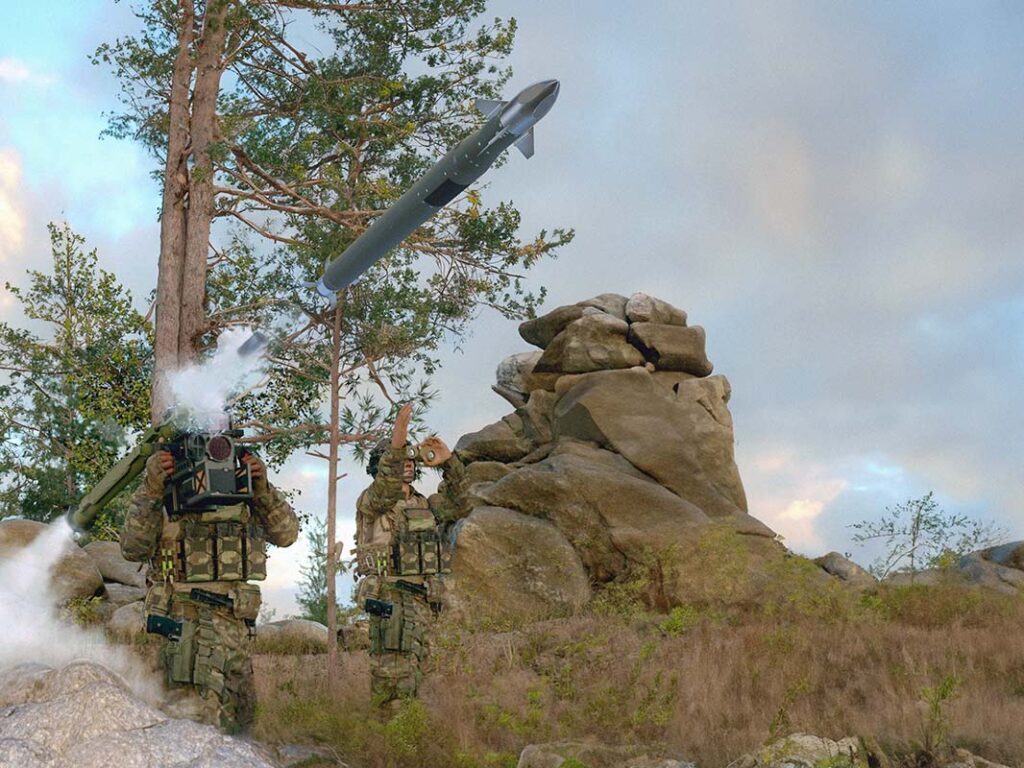
I would currently give a slight lead to Raytheon. The reason is not simply the claimed performance of its missile, but the combination of technological maturity and industrial experience.
Raytheon has been the principal Stinger contractor for decades. The company understands the production base, the architecture of the system, the customer’s requirements and the enormous international ecosystem built around the missile. None of that guarantees victory — indeed, the Army appears determined to avoid automatically handing the next generation of the weapon to its incumbent manufacturer — but it provides a substantial advantage.
More importantly, Raytheon’s missile has already reached a high level of maturity.
In February 2026, Raytheon announced a successful ballistic test of its NGSRI design in which the system tracked an unmanned target and was launched from a man-portable launcher. A much more significant demonstration followed in July, when multiple guided missiles were fired from a portable CLA and, according to RTX, achieved direct hits against aerial target surrogates.
Before that, the company had completed ten tests of key subsystems, including the seeker, rocket motor, warhead, guidance system and fuze.
Another particularly interesting element is the propulsion system. Raytheon and Northrop Grumman have tested a new solid-fuel rocket motor for NGSRI using Highly Loaded Grain technology, designed to pack more energetic material into a restricted motor volume. For a man-portable missile, that is critically important: the missile cannot simply grow much larger, so additional speed and range have to be extracted from essentially the same limited package.
That is why Raytheon currently looks like the slight favorite in the competition. Not because its missile has already been proven superior to Lockheed Martin’s — there is no public evidence to support such a conclusion — but because it combines an advanced development program with enormous experience in mass-producing the Stinger itself.
The advantage, however, is far from decisive.
Favorite No. 2 — Lockheed Martin QuadStar
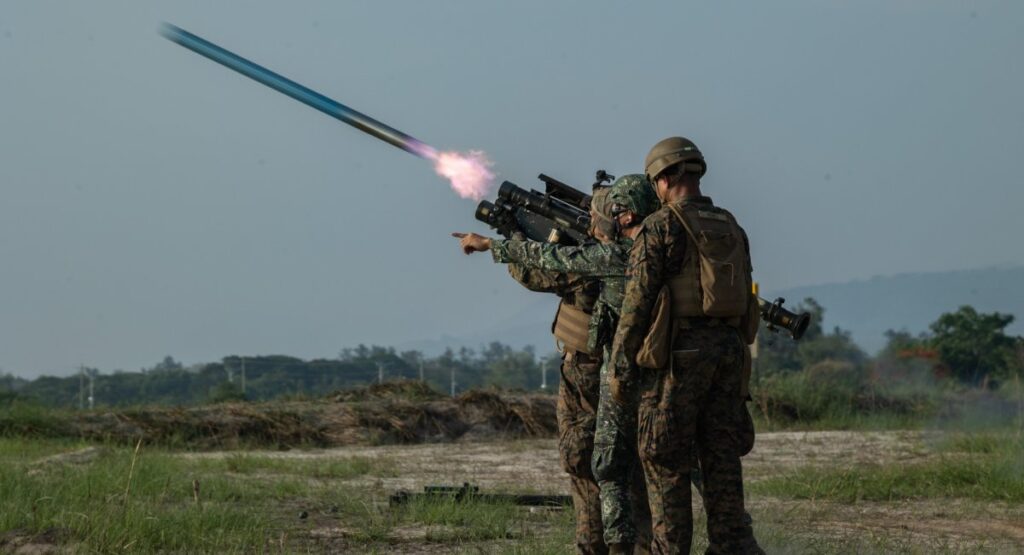
Lockheed Martin finds itself in almost the opposite position. It does not manufacture the Stinger, but that also gave the company an opportunity to design its successor with fewer legacy constraints.
Its proposal is called QuadStar.
In January 2026, Lockheed Martin conducted the missile’s first flight test at White Sands Missile Range. A seeker test followed in May: QuadStar flew a tactical trajectory while its guidance system detected and tracked a target at ranges exceeding the capabilities of the legacy system. Lockheed Martin said the test met all of its objectives.
The seeker may be particularly important. Lockheed has emphasized modern onboard image processing, open architecture and signal-processing algorithms that can be updated as new threats emerge.
That matters more than it might initially appear.
The Stinger was developed when the typical target was a relatively large aircraft or helicopter with a hot gas-turbine engine. NGSRI will have to distinguish much smaller unmanned aircraft, including platforms powered by piston engines and producing far weaker infrared signatures. A modern seeker and computing architecture may therefore be just as important as additional range.
Lockheed Martin has also developed its own CLA and has demonstrated the launcher’s ability to work not only with QuadStar but also with existing Stinger missiles, fitting neatly with the Army’s requirement for backward compatibility.
There is therefore no obvious technological knockout between the two favorites.
Raytheon appears stronger industrially.
Lockheed Martin may have more room to differentiate itself through a new architecture.
Then Why Invite More Competitors?
This is where the Army’s decision becomes particularly interesting.
If the U.S. military simply wanted to select the better of two missiles, it could continue the existing program and conduct comparative testing between Raytheon and Lockheed Martin.
Instead, it has launched the Alternate Interceptor Demonstration.
The Army is looking for companies with sufficiently mature systems to participate in demonstrations in spring 2027. A successful test could ultimately result in an actual procurement contract.
That does not necessarily mean the Army is dissatisfied with the two existing competitors. Both companies have announced successful testing during 2026, and there is currently no public evidence that widening the competition is the result of a serious failure in either program.
The explanation may be considerably more practical.
The Pentagon wants competition.
11,000 Missiles Make This an Industrial Program
The U.S. Army currently envisions purchasing 11,000 NGSRI missiles and 2,200 man-portable launch assemblies over approximately ten years. Production is expected to begin in fiscal year 2028. Initial plans reportedly envision around 200 missiles in the first year and 500 in the second, followed by significantly higher production rates.
At that scale, the cost of each individual interceptor becomes enormously important.
A difference of only tens of thousands of dollars per missile becomes hundreds of millions of dollars when multiplied across an 11,000-round production run. Manufacturing capacity is equally important. Recent conflicts have once again demonstrated that stockpiles of several hundred precision-guided weapons can be consumed far faster than industry can replace them.
The Stinger itself became one of the clearest examples of this problem. After decades of relatively small orders, its industrial supply chain was poorly positioned for a sudden surge in demand.
The U.S. military is therefore increasingly interested in avoiding vendor lock-in — a situation in which a critical munition effectively depends on a single manufacturer. The broader competition also fits the Pentagon’s push to diversify suppliers, secure greater control over intellectual property and bring nontraditional defense companies into major weapons programs.
In that case, the Alternate Interceptor Demonstration may not necessarily be looking for a replacement for Raytheon or Lockheed Martin.
It may be looking for a third production source.
The New Stinger Will Have to Fight a Completely Different War
This ultimately explains the scale and importance of the program.
When the FIM-92 appeared, man-portable air defense was essentially the last defensive layer protecting ground troops from aircraft and helicopters. Today, an entirely new layer of threats has appeared above the battlefield: reconnaissance UAVs, loitering munitions and strike drones.
One missile cannot solve the entire problem. That is why systems such as Sgt. Stout combine missiles with a 30 mm cannon and machine gun, while other programs explore lasers and electronic warfare. Firing an expensive NGSRI at every small quadcopter would make little economic sense.
But there is an enormous intermediate category of targets against which machine guns or electronic warfare may not be enough, while using a Patriot interceptor would be absurdly expensive.
That is precisely the space the Stinger successor is intended to occupy.
It must remain light enough for a soldier to carry. Compact enough to fit existing launch systems. Fast and long-ranged enough to substantially outperform the Stinger. And at the same time cheap enough for the United States to manufacture it not in hundreds, but in tens of thousands.
That is an extremely difficult combination of requirements.
The Winner Could Get Much More Than an American Contract
There is another reason why the competition between Raytheon and Lockheed Martin matters so much.
The Stinger became an international standard. The system is operated by numerous countries, and its support infrastructure has been built up over decades. If NGSRI retains compatibility with existing launch systems, the initial U.S. order for 11,000 missiles could be only the beginning.
Countries already operating Stinger would gain a natural modernization path. Instead of replacing their entire short-range air-defense infrastructure, they could gradually purchase new missiles and launch assemblies.
The potential market would then no longer be measured merely in thousands.
It could reach tens of thousands of interceptors over the next several decades.
So what we are watching is not merely a competition for a new man-portable surface-to-air missile. It is effectively a contest to determine which system will replace the Stinger at the heart of Western short-range air defense for the next 30–40 years.
For now, two competitors lead the race. Raytheon benefits from being the manufacturer of the Stinger itself, possesses an established industrial base and has already conducted a series of successful tests of its NGSRI design. Lockheed Martin counters with QuadStar, a new architecture, a modern seeker and its own universal launch assembly. Additional challengers could join them in spring 2027.
But the Army’s decision to widen the competition reveals the most important shift in the American approach.
The Pentagon no longer needs merely the best missile.
It needs an interceptor that can be rapidly upgraded, integrated with existing platforms, manufactured by the thousands and produced fast enough that an order for 11,000 missiles does not become the limit of the industrial base.
And in this competition, the ability to manufacture ten thousand good missiles may ultimately matter more than the ability to build one hundred perfect ones.






