The Final Launch Without Leaving Earth: Why Space Shuttle Endeavour Will Be Displayed as if It Were Ready for Liftoff

Nearly fifteen years have passed since the Space Shuttle program came to an end, yet fascination with NASA’s legendary orbiters has never faded. If anything, 2026 marks the beginning of a new chapter for one of the fleet’s most famous spacecraft—Space Shuttle Endeavour. This time, however, its mission will not begin at Launch Complex 39, but inside a museum.
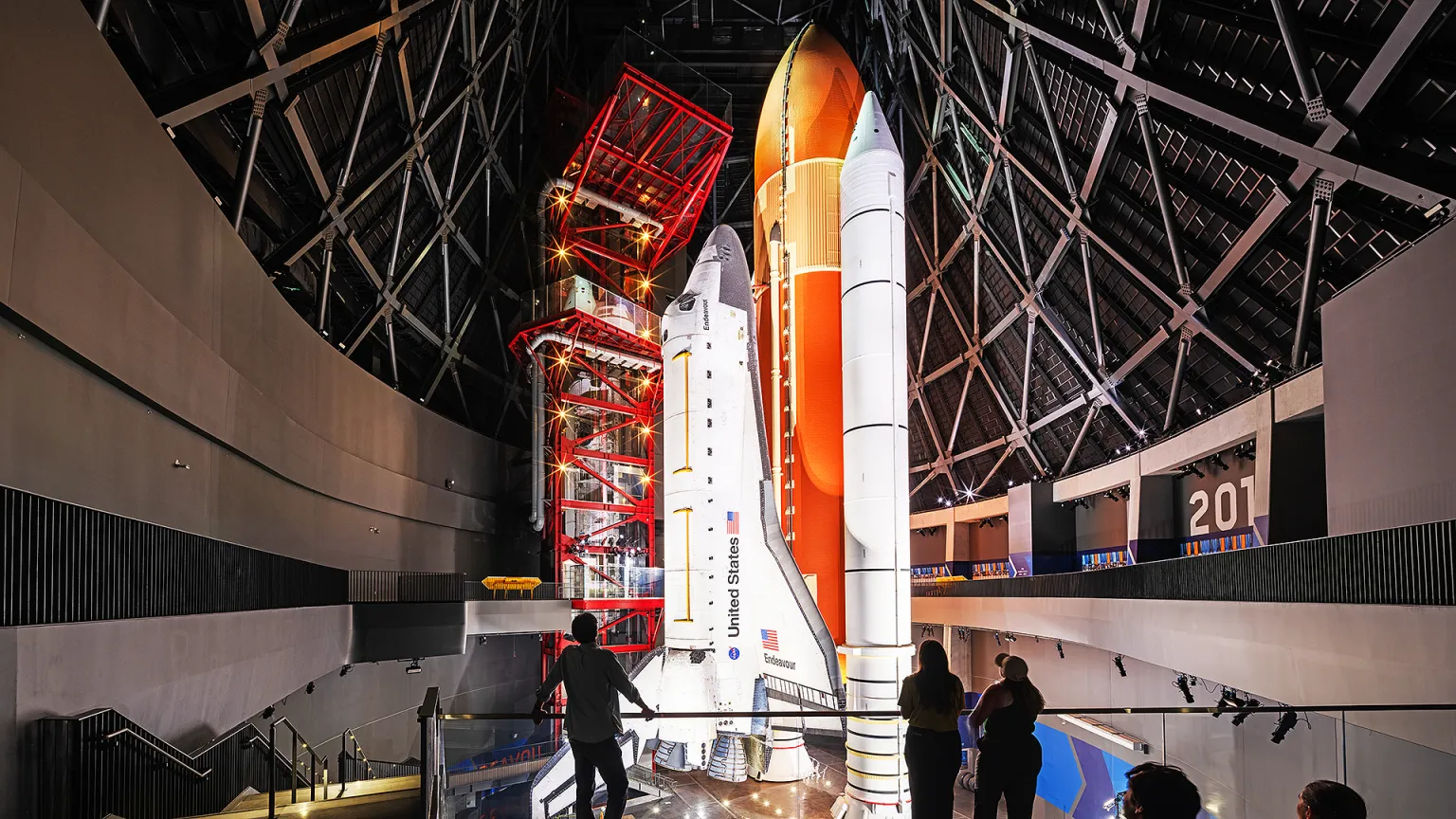
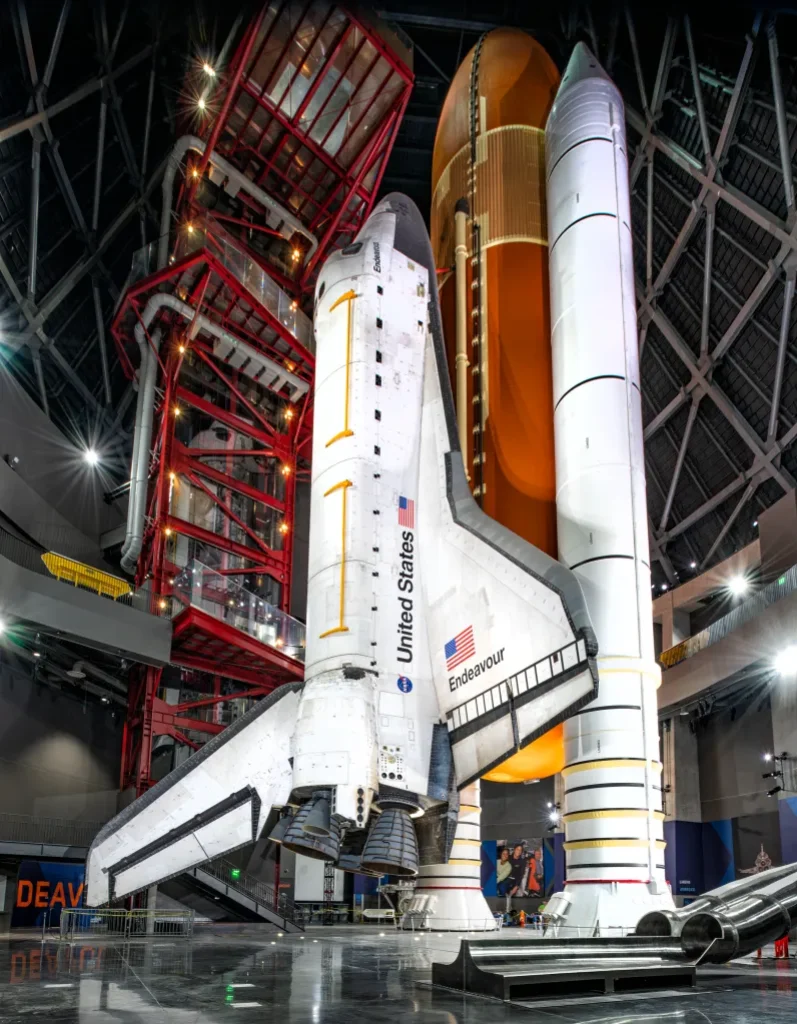
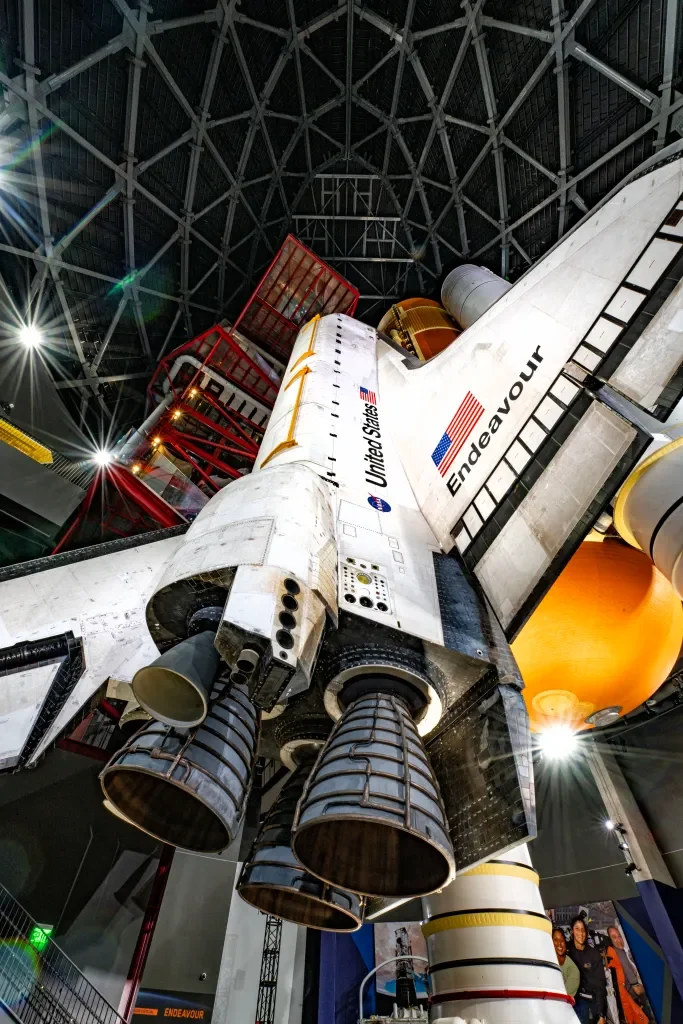
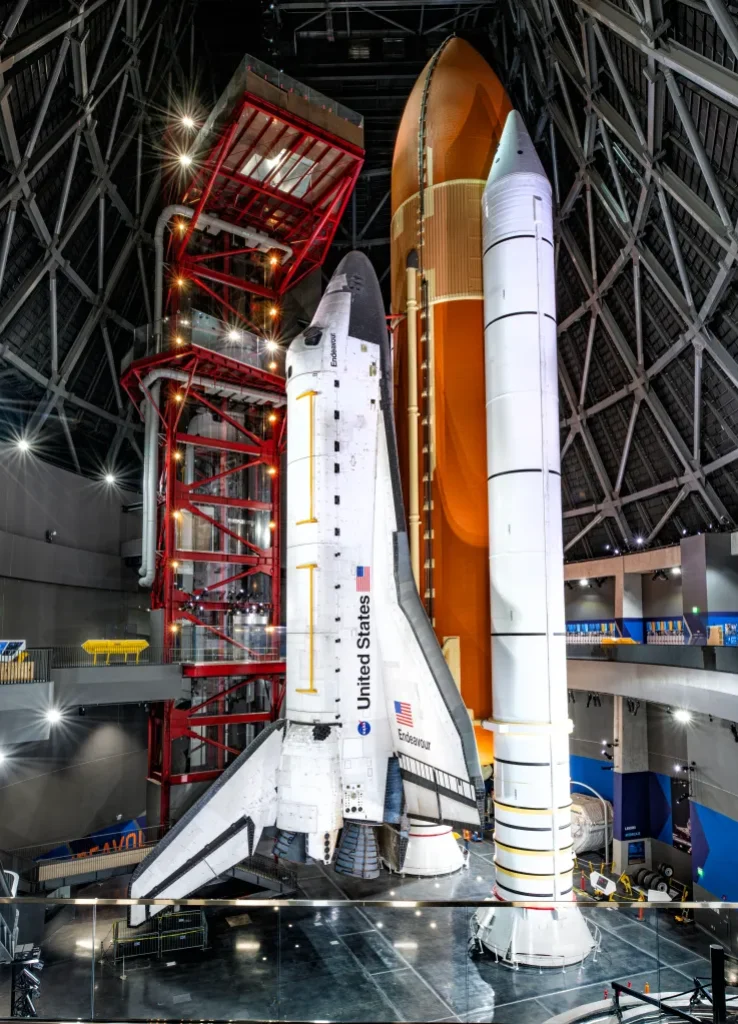
In Los Angeles, construction is nearing completion on the Samuel Oschin Air and Space Center, where Endeavour will become the centerpiece of an extraordinary new exhibition. For the first time, the orbiter will be displayed fully assembled with its external fuel tank and twin solid rocket boosters—the exact configuration in which it launched into space. It will be the world’s only authentic Space Shuttle display presented as a complete launch stack.
Why This Exhibit Is Unique
Today, the surviving Space Shuttles can be seen in several museums across the United States.
Discovery is housed at the Smithsonian’s National Air and Space Museum near Washington, D.C. Atlantis is displayed at the Kennedy Space Center Visitor Complex in Florida, while Enterprise, which never flew in space, is exhibited aboard the Intrepid Museum in New York City.
However, all of these orbiters are displayed as standalone spacecraft.
Visitors see only the orbiter itself, even though every shuttle launch actually involved a far more complex system consisting of the orbiter, a massive external fuel tank, and two giant solid rocket boosters.
That complete configuration is now being recreated for the first time at the California Science Center. Standing approximately 56 meters (184 feet) tall, the fully assembled stack is about the height of a twenty-story building.
More Difficult Than an Actual Launch
At first glance, assembling a museum exhibit might seem far easier than preparing a real Space Shuttle for launch.
In reality, the opposite proved true.
After NASA retired the Shuttle program in 2011, much of the specialized infrastructure used to assemble launch vehicles was dismantled or repurposed. Engineers at the California Science Center were forced to develop entirely new methods for constructing such an enormous structure without access to NASA’s legendary Vehicle Assembly Building at Kennedy Space Center.
The project required installing the two solid rocket boosters first, followed by the external fuel tank ET-94. Only then could Endeavour itself be lifted into place using an enormous crane and carefully mated to the stack.
According to project engineers, a full Shuttle stack has never before been assembled outside NASA or U.S. Air Force facilities.
The Story of Endeavour
Endeavour entered NASA’s fleet during the final phase of the Shuttle era.
The orbiter was built in the early 1990s as the replacement for the lost Challenger. Although many structural components originated from spare parts manufactured for earlier orbiters, Endeavour incorporated numerous engineering improvements, making it the most advanced Space Shuttle ever built.
During its operational career, Endeavour completed 25 space missions.
It deployed scientific satellites, serviced the Hubble Space Telescope, participated in the construction of the International Space Station, and spent more than 299 days in space. Over the course of its career, the orbiter completed nearly 4,700 orbits of Earth and traveled more than 198 million kilometers (123 million miles).
A Journey Across Los Angeles
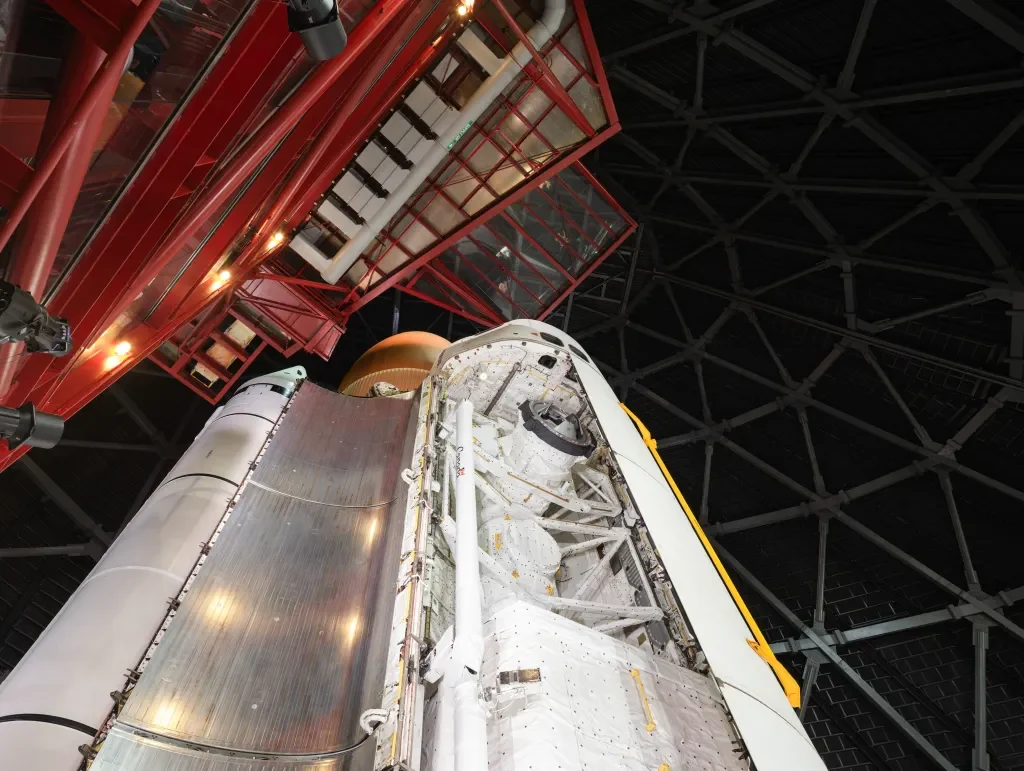
Following the retirement of the Shuttle fleet, Endeavour was transferred to the California Science Center.
In the fall of 2012, millions of Americans watched as the spacecraft made an unforgettable journey through the streets of Los Angeles.
The operation required the temporary removal of traffic lights, street signs, and sections of city infrastructure. Some roads had to be reinforced in advance to support the enormous weight of the vehicle. The slow-moving convoy lasted several days and became a nationwide spectacle.
Until construction of the new museum was completed, the orbiter remained on public display inside a temporary exhibition pavilion.
The Final Mission of a Legendary Program
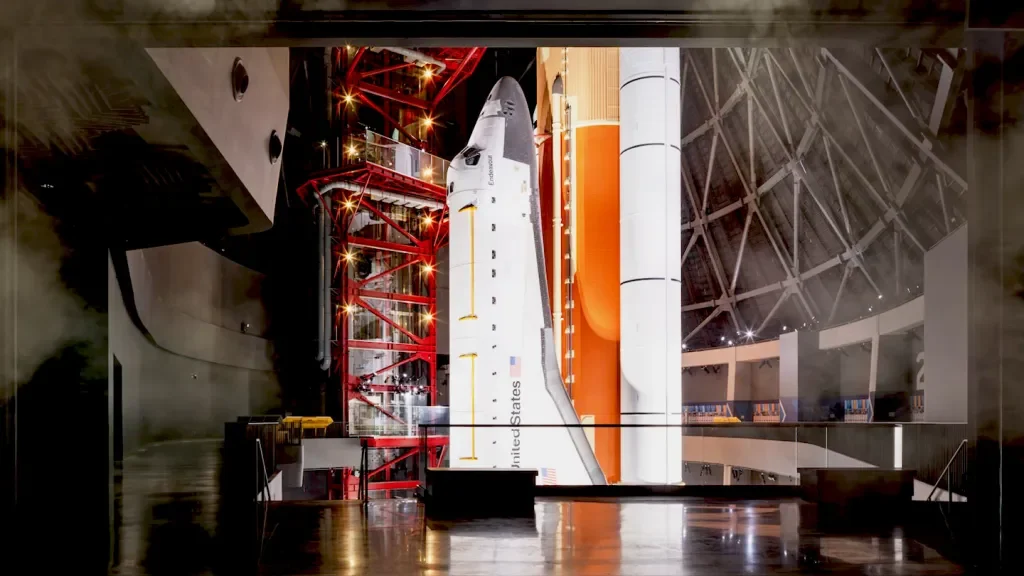
The Samuel Oschin Air and Space Center is scheduled to open in November 2026. For the first time, visitors will see Endeavour exactly as it appeared before launch—fully assembled on its towering launch stack, as though the countdown were only minutes away.
In many ways, this exhibit represents the final mission of the Space Shuttle program itself.
For nearly three decades, the Shuttle fleet symbolized American human spaceflight, carrying satellites, scientific laboratories, and modules for the International Space Station into orbit.
Today, Endeavour begins a different mission.
Instead of carrying astronauts into space, it will inspire future generations by preserving the memory of an era when reusable spacecraft represented humanity’s boldest path toward the stars.