When Europe Sent Children Toward Jerusalem
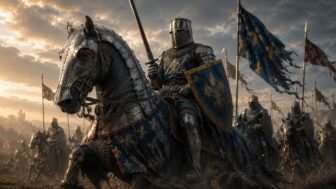
The Middle Ages produced many strange and terrifying stories. Religious wars, plague, famine, fanaticism — Europe of that era often balanced somewhere between faith and catastrophe.
But even against this background, the Children’s Crusade of 1212 remains something deeply unsettling.
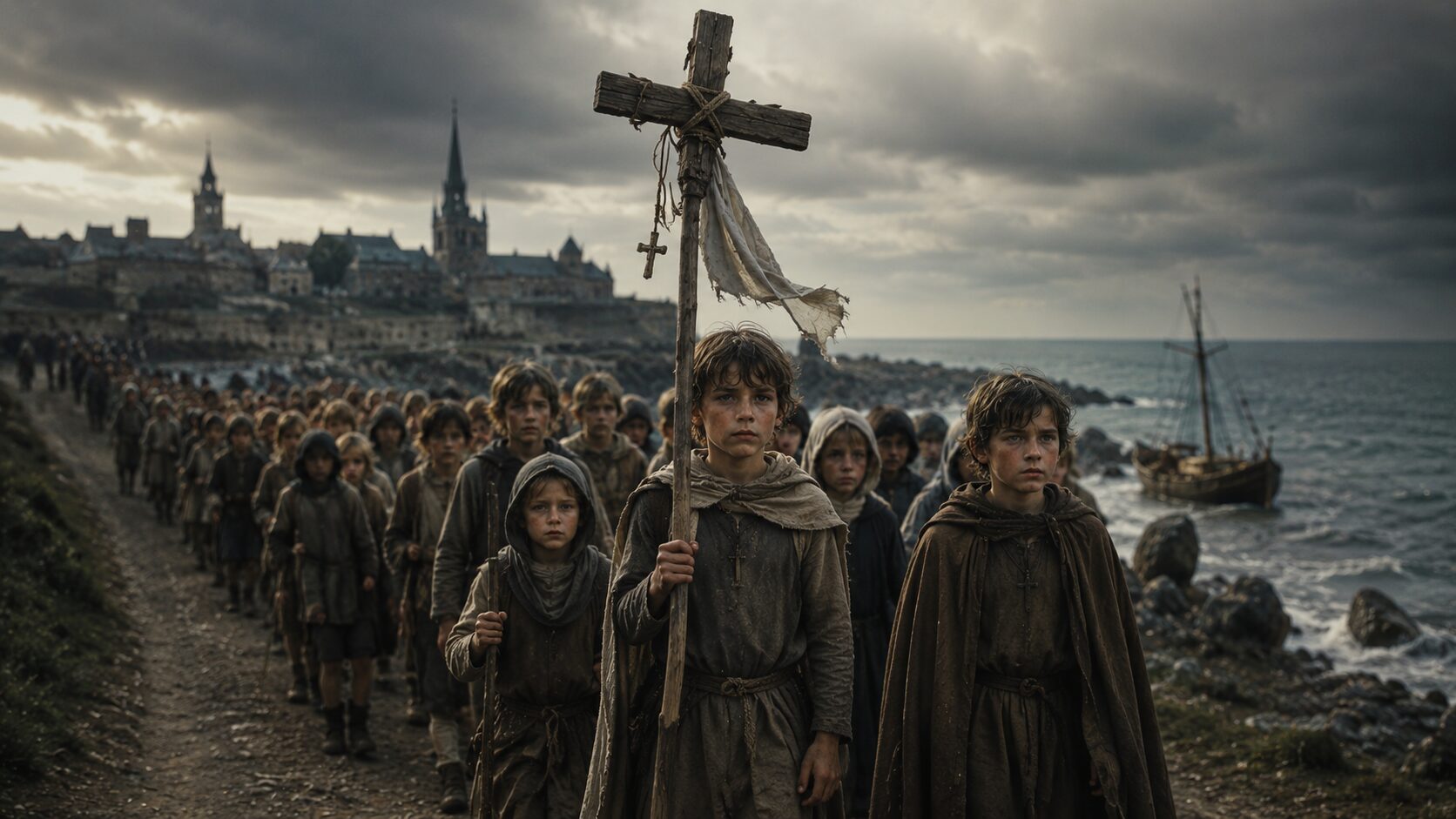
According to medieval chronicles, thousands of children, teenagers, and poor peasants suddenly set out toward Jerusalem, believing that God Himself would grant them victory where armored knights had failed. They carried almost no weapons. Many believed the sea would part before them. Others thought Muslims would peacefully convert upon witnessing their purity and faith.
For most of them, the journey ended not in glory, but in death, slavery, or disappearance.
A Europe Obsessed with Crusades
To understand how such a thing could happen, one has to understand Europe of the early 13th century.
The Crusades had already become part of the medieval worldview. For more than a century, preachers, priests, and rulers had spoken of Jerusalem as Christianity’s lost sacred center. Entire generations grew up hearing stories of holy war, martyrdom, and divine mission.
Even failed Crusades often generated new waves of religious enthusiasm.
Against this background, apocalyptic expectations spread through society. Many sincerely believed that adults had failed because they were corrupted by greed and sin — and that only the innocent could succeed where knights and kings had not.
This idea became the emotional core of the Children’s Crusade.
The Shepherd Boy Who Claimed to See Christ
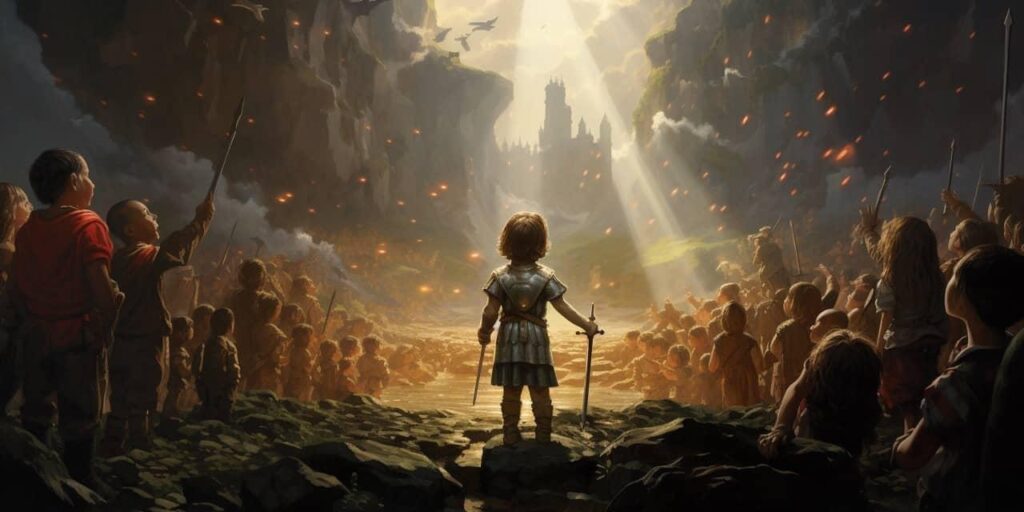
One of the central figures of the movement was a French shepherd boy named Stephen of Cloyes.
According to later accounts, Stephen claimed that Christ had appeared to him disguised as a pilgrim and entrusted him with a divine mission. He supposedly carried letters intended for King Philip II of France and began preaching that a new crusade must begin — not led by warriors, but by children and the poor.
Crowds gathered around him with astonishing speed.
In a deeply religious society, where miracles were perceived as part of everyday reality, such stories possessed enormous power. Thousands joined the movement — not only children, but also adolescents, servants, peasants, wanderers, and the desperately poor. Modern historians increasingly believe the term “children” was partly symbolic and may have referred broadly to poor and socially marginal people.
But the myth of an army of children marching toward Jerusalem proved too powerful to disappear.
The March Toward the Sea
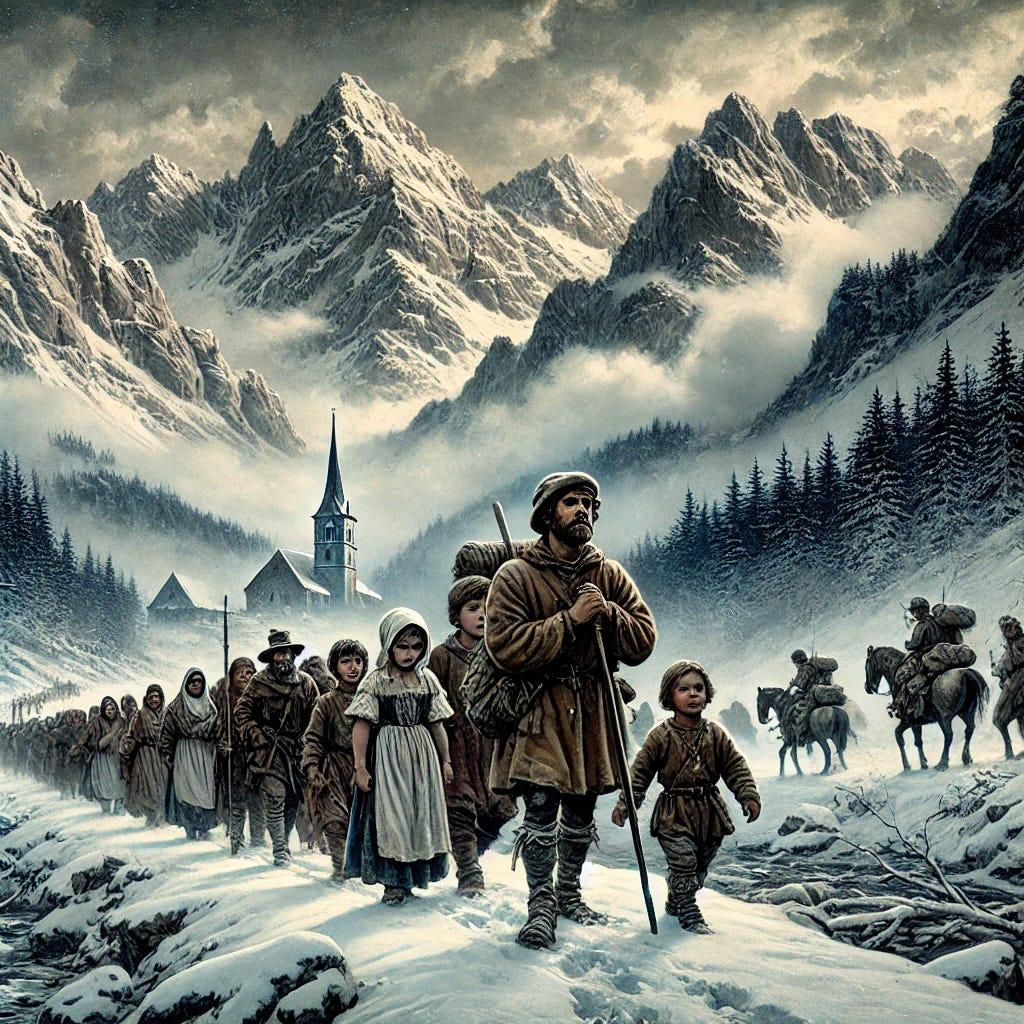
At roughly the same time, a similar movement emerged in the German lands under the leadership of Nicholas of Cologne.
Groups of followers crossed enormous distances on foot, moving south toward Italy and the Mediterranean.
This journey itself became catastrophic.
The Alps killed many through exhaustion, hunger, and disease. Medieval roads were dangerous even for trained armies — and these crowds possessed almost no supplies, organization, or protection.
Yet they continued forward.
Because they believed a miracle awaited them.
The Sea That Never Parted
One of the most famous legends associated with the Children’s Crusade claims that the participants expected the Mediterranean Sea to open before them, just as the Red Sea had opened for Moses.
Reality, unsurprisingly, proved different.
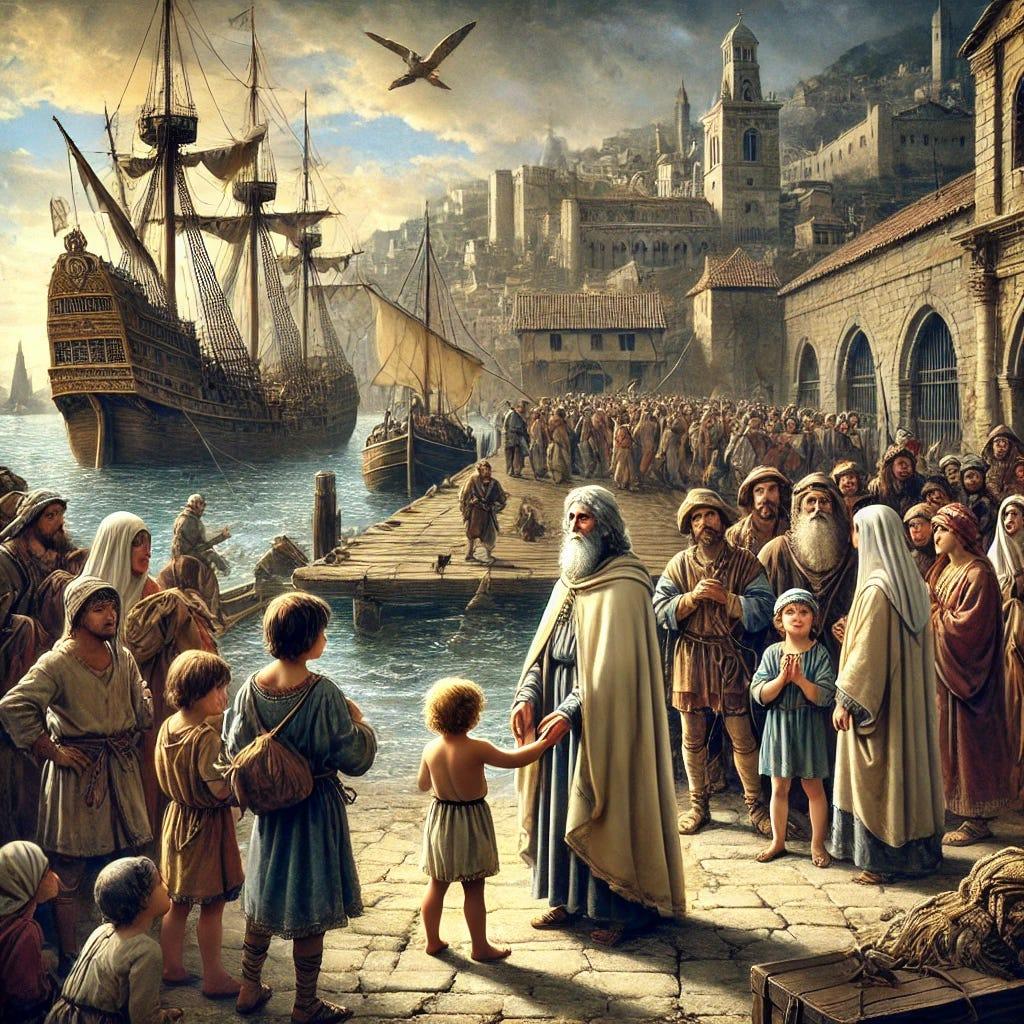
When the crowds finally reached Italian ports, no miracle occurred. Many simply remained there, starving and stranded. Others attempted to find passage by sea. According to some later accounts, merchants offered transportation — only to sell many participants into slavery in North Africa after boarding them onto ships.
How much of this story is literal truth remains debated.
But the overall result is clear enough: the crusade collapsed into chaos and tragedy.
History or Medieval Myth?
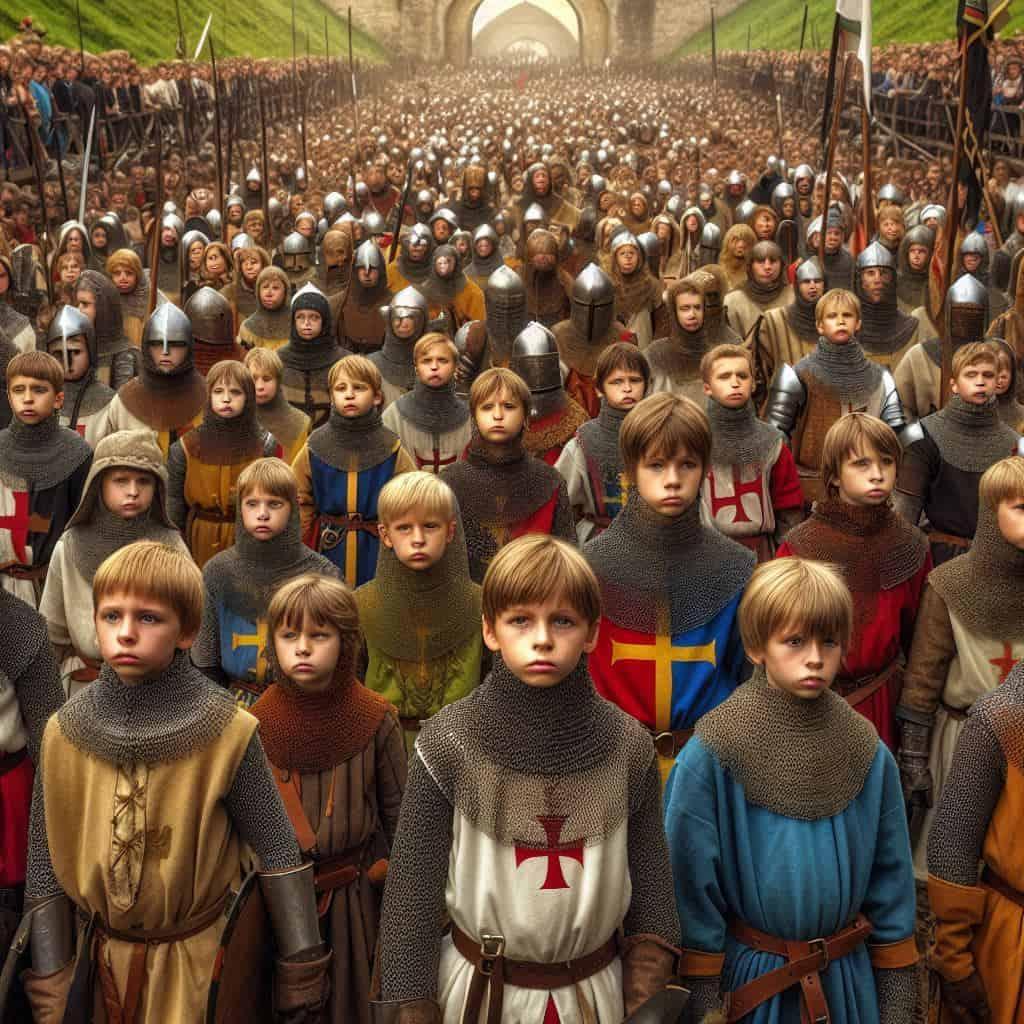
The Children’s Crusade is notoriously difficult to reconstruct.
Contemporary sources are fragmented, contradictory, and often heavily embellished. Some historians argue that later chroniclers romanticized or distorted the events, transforming a migration of poor religious pilgrims into the legend of a crusading army of children.
Others believe the movement genuinely involved large numbers of adolescents and young peasants driven by religious fervor.
In reality, the truth is probably somewhere between history and myth.
But perhaps that ambiguity itself explains why the story survived for so many centuries.
Why the Story Still Feels Disturbing
What makes the Children’s Crusade so unsettling is not simply the scale of suffering.
It is the feeling that an entire society temporarily lost the boundary between faith and delusion.
Adults allowed children to march toward almost certain death. Crowds believed miracles would replace logistics and food. Religious emotion overwhelmed common sense completely.
And in this sense, the Children’s Crusade feels strangely modern.
Because history repeatedly shows that when societies become consumed by collective belief — whether religious, political, or ideological — people can follow impossible dreams into catastrophe.
The Tragedy That Became a Symbol
Over time, the Children’s Crusade transformed into something larger than a medieval episode.
Writers, artists, and historians turned it into a symbol of innocence sacrificed to fanaticism, manipulation, and mass hysteria. The story became part of Europe’s cultural memory precisely because it stands at the intersection of hope and horror.
A march begun in the name of faith.
And remembered as one of the strangest tragedies of the Middle Ages.