
SOCOM Is Looking for a Replacement for the C-146 Wolfhound: America’s “Ghost Plane” of Special Operations Is Slowly Disappearing

This material is based on reporting by The War Zone, Aviation Week, U.S. Air Force, and other open sources.
U.S. Special Operations Command has officially begun searching for a replacement for one of the strangest and least-known aircraft in the American military inventory — the C-146A Wolfhound. At first glance, the news seems fairly routine: another aging aircraft fleet is being replaced. But the story behind the Wolfhound is far more interesting than it appears.
Because the C-146 is not simply a transport aircraft.
For nearly fifteen years, it quietly carried American special operations forces across some of the harshest corners of the world, landed on dirt strips in Africa, inserted SOF teams into places where officially “nobody was operating,” evacuated wounded personnel, served as a discreet VIP transport, and ultimately became one of the defining aircraft of America’s post-9/11 “gray wars.”
Now, that aircraft is gradually fading away.
The Aircraft That Looked Like a Civilian Airliner
The story of the Wolfhound begins in an unusual place.
Unlike most American special operations aircraft, the C-146 was never designed as a military platform. Its foundation is the German Dornier 328 — a small regional turboprop airliner originally developed in the late 1980s.
The aircraft itself emerged during a very specific moment in aviation history.
At the time, many manufacturers believed the future belonged to small regional airlines and compact turboprop aircraft. The Dornier 328 was designed as a fast, comfortable regional transport optimized for short routes. Its high-mounted wing, strong short-field performance, and relatively high speed made it a highly attractive aircraft for regional operations.
Commercial success, however, never truly arrived.
Only a little over 200 aircraft were built before the program effectively collapsed. It seemed destined to become just another obscure European regional aircraft slowly disappearing from the market.
Then American special operations forces discovered it.
SOCOM Found the Perfect Aircraft for “Dirty Geography”
After 9/11, America’s wars changed dramatically.
Instead of large conventional fronts, the United States found itself involved in dozens of small conflicts scattered across Africa, the Middle East, and Asia. Special operations forces increasingly worked in places with poor infrastructure, minimal logistics, and often no proper airfields at all.
That is when the military realized that large aircraft like the C-130 were not always ideal.
Small SOF teams needed something:
— inexpensive,
— discreet,
— capable of operating from short runways,
— low-profile,
— and civilian-looking enough not to attract attention.
The Dornier 328 fit those requirements almost perfectly.
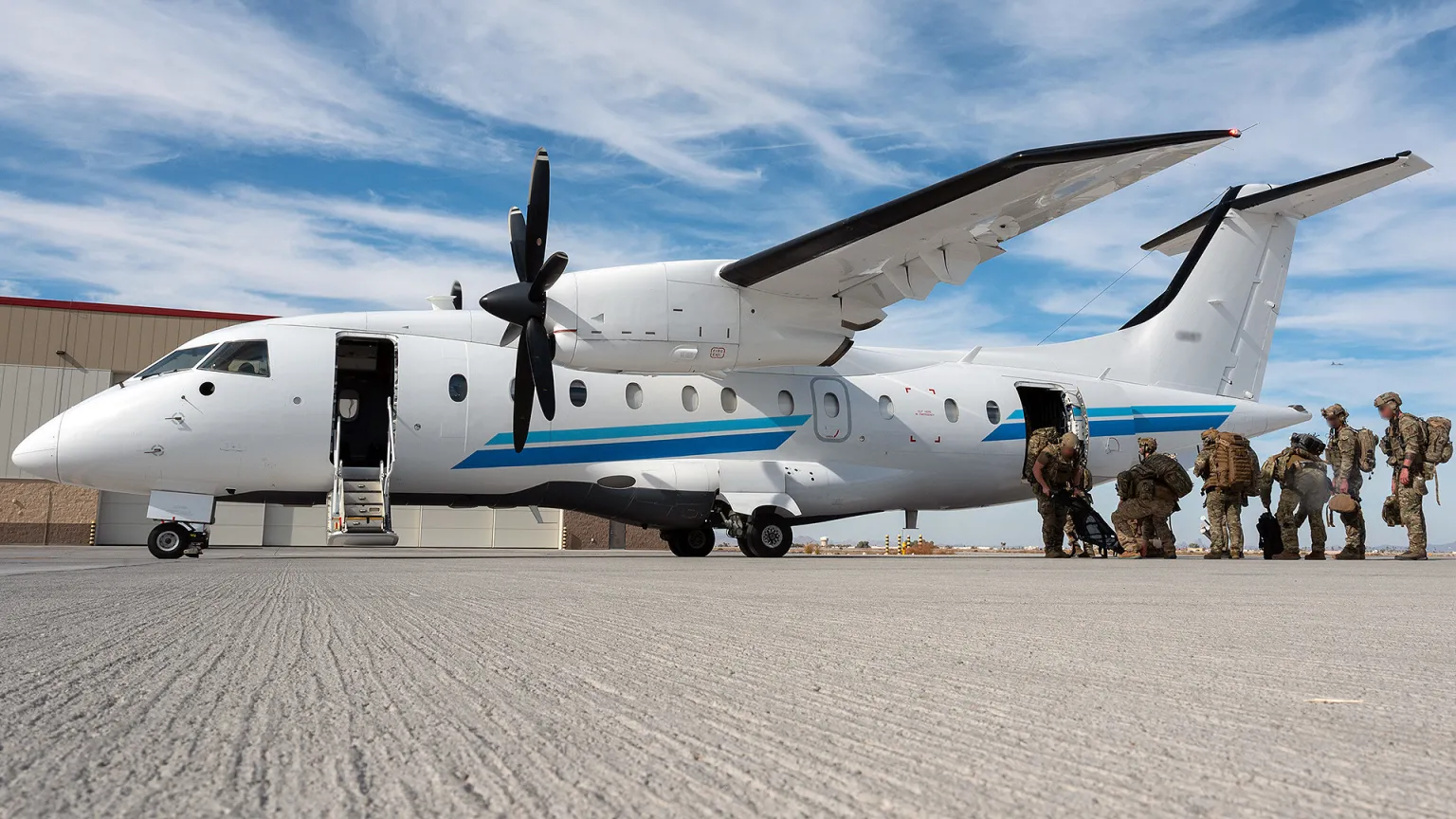
That is how the C-146A Wolfhound was born — a militarized adaptation of the civilian aircraft tailored specifically for special operations missions. The aircraft received rapidly reconfigurable interiors, medical evacuation capability, upgraded communications systems, and the ability to operate from austere airfields.
But perhaps the most important detail was its appearance.
Unlike most American military aircraft, the Wolfhound intentionally retained an almost civilian paint scheme. White fuselage. Minimal markings. No aggressive military profile. Everything about it was designed to make the aircraft blend into civilian air traffic.
That is why the C-146 could quietly appear almost anywhere in the world.
A Small Aircraft With Very Unusual Capabilities
On paper, the C-146 Wolfhound appears almost modest. No stealth shaping. No jet speed. No heavy weapons. But that simplicity is exactly the point.
The aircraft is powered by two Pratt & Whitney PW119C turboprop engines producing 2,282 horsepower each. For a relatively compact aircraft, that is enough to achieve speeds of up to 620 km/h — impressive performance for a special operations turboprop transport.
The Wolfhound can carry:
— up to 27 passengers,
— roughly 2.7 tons of cargo,
— or several litter patients in medical evacuation configuration.
Range varies between roughly 2,800 and 3,300 kilometers depending on payload, allowing the aircraft to operate across large parts of Africa or the Middle East without refueling.
But the real magic of the C-146 lies elsewhere.
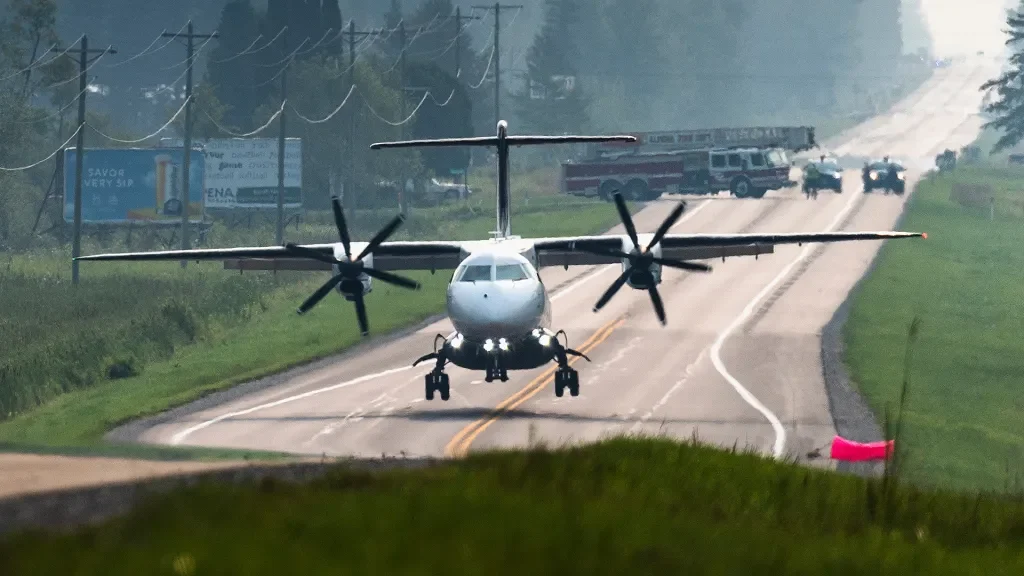
Its high-mounted wing, rugged landing gear, and powerful flap system allow it to operate from short and semi-prepared runways, dirt strips, and even roads. During Northern Strike exercises, Wolfhounds repeatedly landed directly on highways.
The crew itself is minimal — two pilots and a loadmaster. Yet SOCOM heavily modified the aircraft internally:
— secure communications systems,
— satellite connectivity,
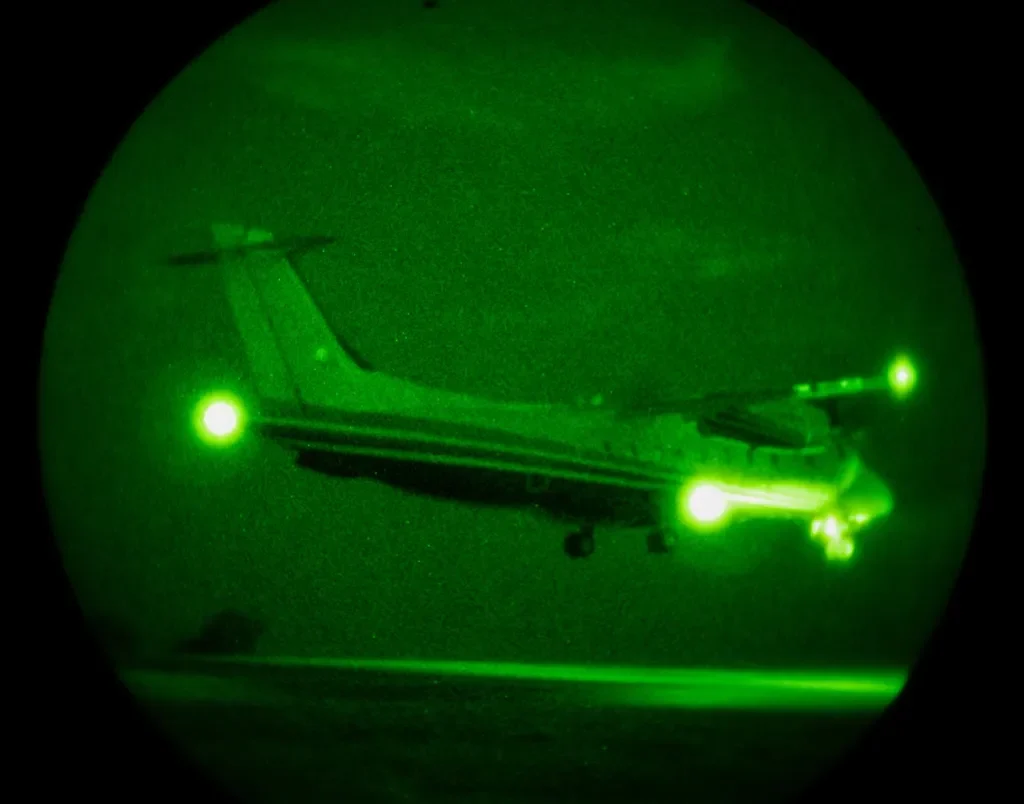
— night-vision compatibility,
— enhanced navigation systems,
— and rapidly reconfigurable mission layouts.
In effect, the Americans transformed a small regional airliner into a universal tool of “gray warfare” — an aircraft capable of inserting special operations teams overnight, evacuating casualties, delivering cargo to dirt airstrips in Africa, and disappearing just as quietly as it arrived.
The Aircraft for Wars That Officially Didn’t Exist
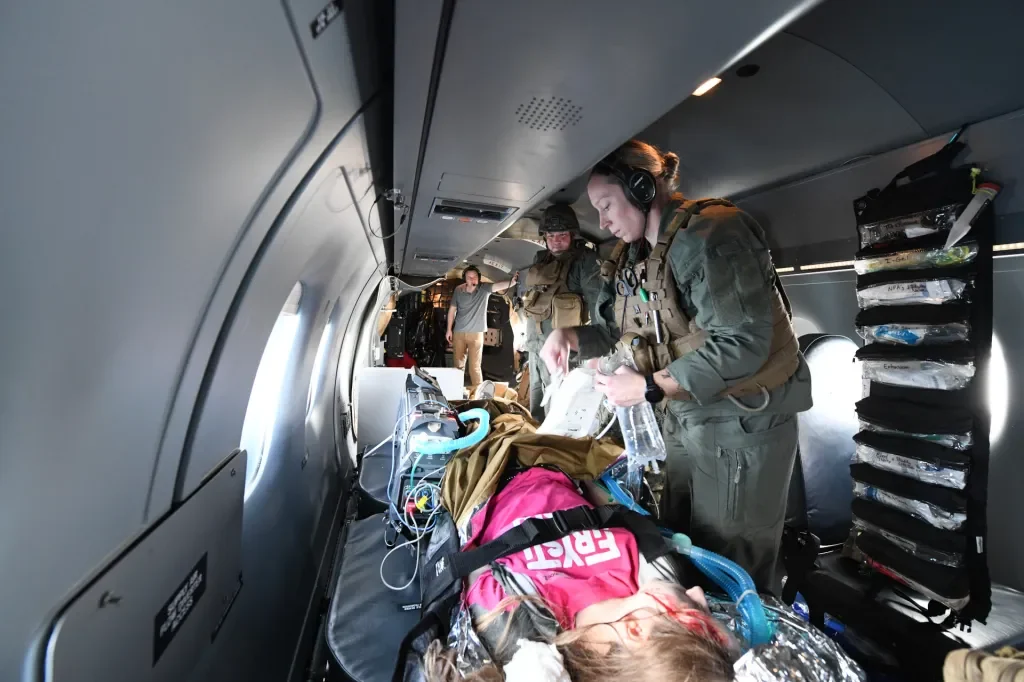
Over the years, the Wolfhound became something close to legendary within the American special operations community.
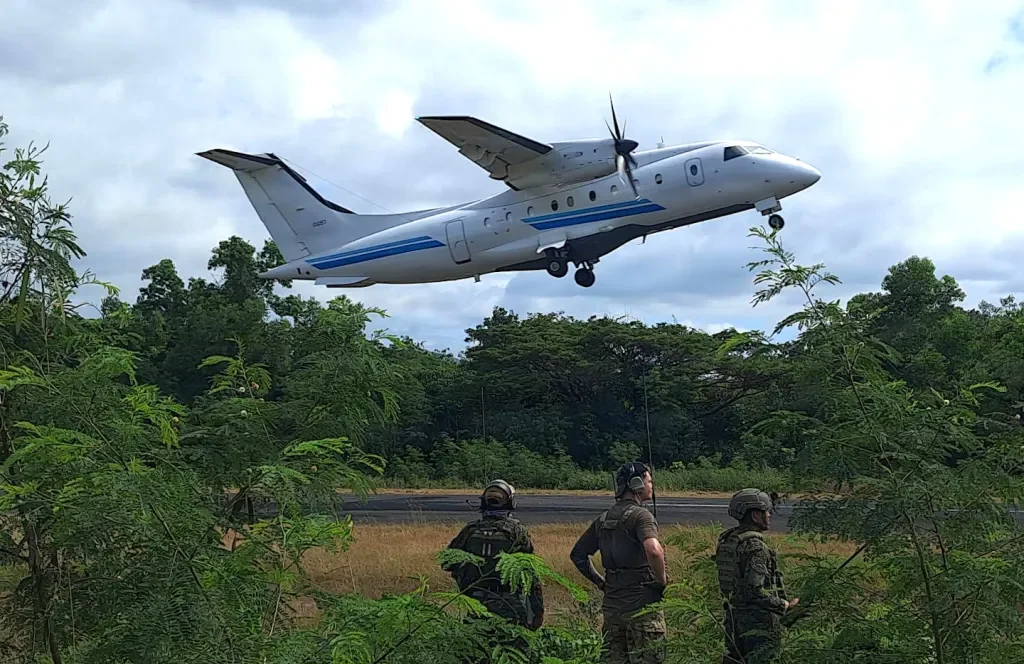
The aircraft operated in Africa, Latin America, the Middle East, and Southeast Asia. C-146s were heavily involved during the French intervention in Mali in 2013, transporting SOF teams, supplies, equipment, and wounded personnel in environments where larger military transports would have attracted too much attention.
At times, the Wolfhound looked almost like a CIA aircraft from the Cold War.
The planes regularly appeared at civilian airports, flew into politically unstable regions, and operated in places where the United States preferred not to maintain an obvious military presence.
Technically, the aircraft proved remarkably successful.
The Wolfhound could operate from short, rough airfields, roads, and isolated landing zones. SOCOM later upgraded the aircraft further, significantly expanding the number of available landing locations.
In many ways, the C-146 became the ideal transport aircraft for the era of “small dirty wars.”
But the Aircraft Is Becoming Increasingly Difficult to Sustain
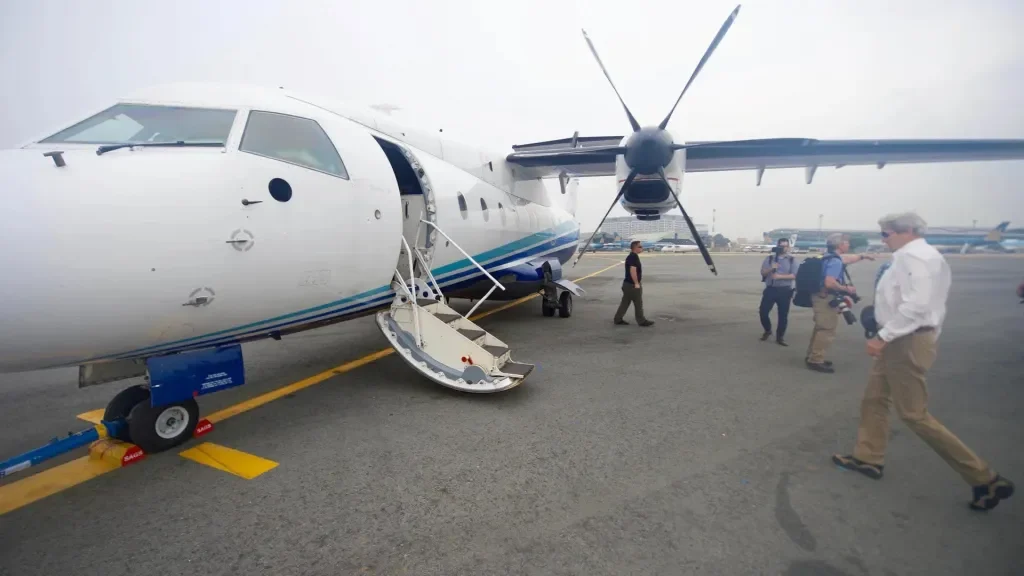
Ironically, the Wolfhound’s biggest problem today is not its age.
The real issue is that the Dornier 328 was never a mass-produced aircraft. Production ended long ago, global maintenance infrastructure is limited, and sustaining a unique fleet is becoming increasingly expensive.
That is why SOCOM is now searching for a replacement.
And the command has already made its priorities clear:
— greater range,
— better operating economics,
— stronger commercial support infrastructure,
— while still preserving the ability to operate from austere airfields.
That is an extremely difficult balance to achieve.
Because what made the Wolfhound so effective was precisely that balance. It remained small, discreet, and visually non-threatening while still offering impressive payload capability and excellent STOL performance.
Who Could Replace the Wolfhound?
And this is where things become especially interesting.
Many analysts consider modern versions of the Dash-8 or ATR-42/72 to be the most logical candidates. These aircraft are widely used regional turboprops with enormous global support networks. They are economical, reliable, and capable of operating from relatively short runways.
But there is a problem: they may simply be too “ordinary” and not rugged enough for truly extreme environments.
Another possibility is the Airbus C-295 or Leonardo C-27J Spartan. These aircraft are much more militarized, possess excellent austere-field capability, and are already widely used by special operations forces around the world.
But in that case, one of the Wolfhound’s greatest strengths disappears — its civilian invisibility.
There are also more exotic possibilities. One of them is the D328eco, a modernized revival of the original Dornier concept currently being developed by Deutsche Aircraft. The irony would be almost perfect: SOCOM replacing an old Dornier with a new Dornier.
The End of the “War on Terror” Era
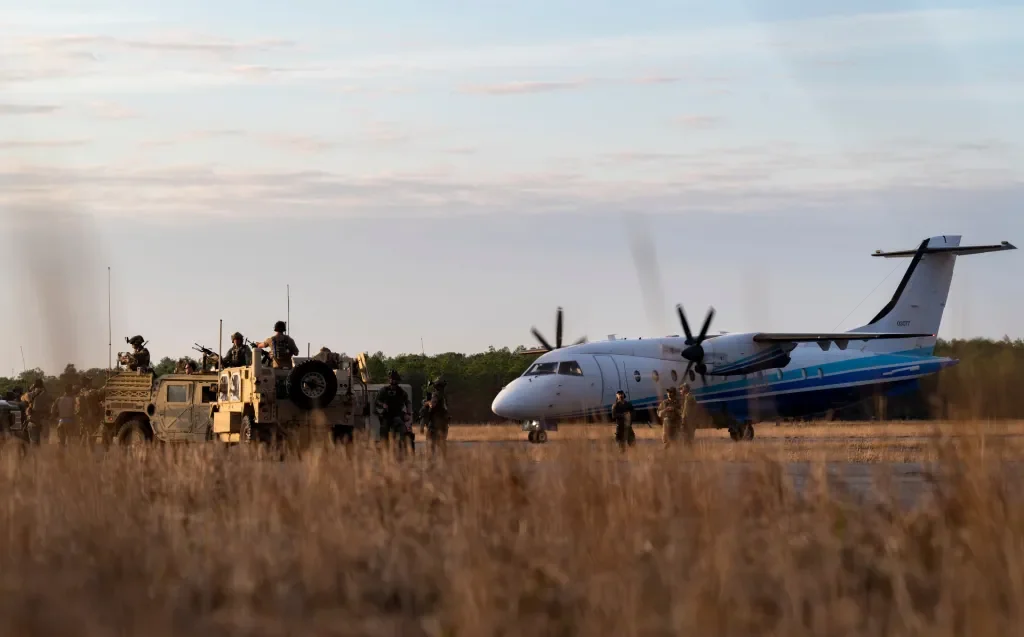
Perhaps the most symbolic part of the entire story is what the C-146 represents.
The Wolfhound is almost the perfect aircraft for America’s post-2001 gray wars — conflicts without front lines, operations without formal declarations, missions in countries where the United States officially “was not at war,” yet where American special operations forces operated constantly.
That era is slowly ending.
The U.S. military is increasingly preparing for conflicts against China and Russia — wars defined by vast distances, satellite surveillance, and sophisticated air defenses. In that environment, a small “ghost plane” no longer appears to be the universal solution it once was.
And yet that is exactly why the Wolfhound remains such a fascinating aircraft.
It was never a symbol of overwhelming American military power.
It was a symbol of a different kind of America — one that preferred to operate quietly, discreetly, and far away from headlines.






