
Kalashnikov Unveils the New KUB-10ME: Russia Is Betting on Heavy Long-Range Kamikaze Drones

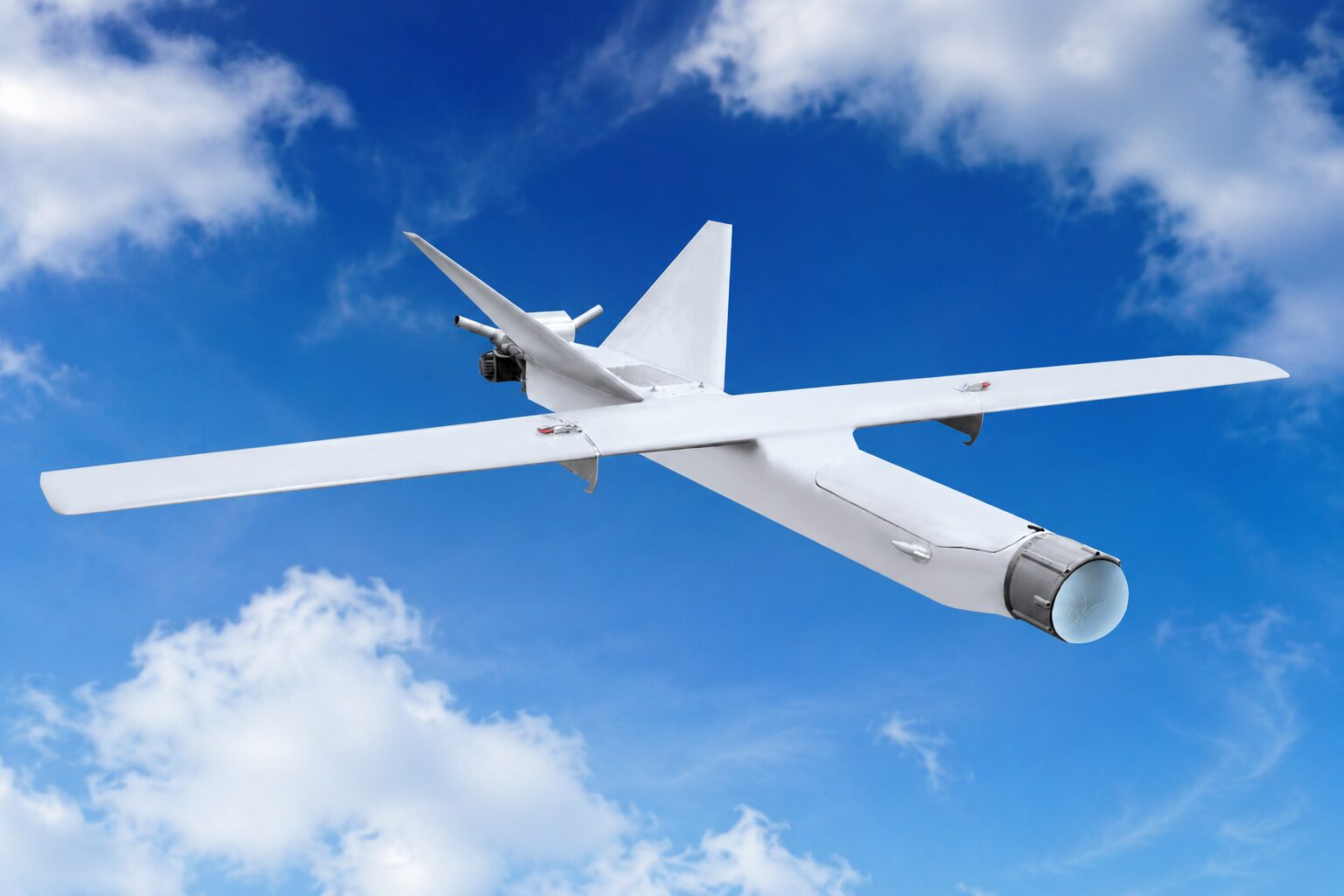
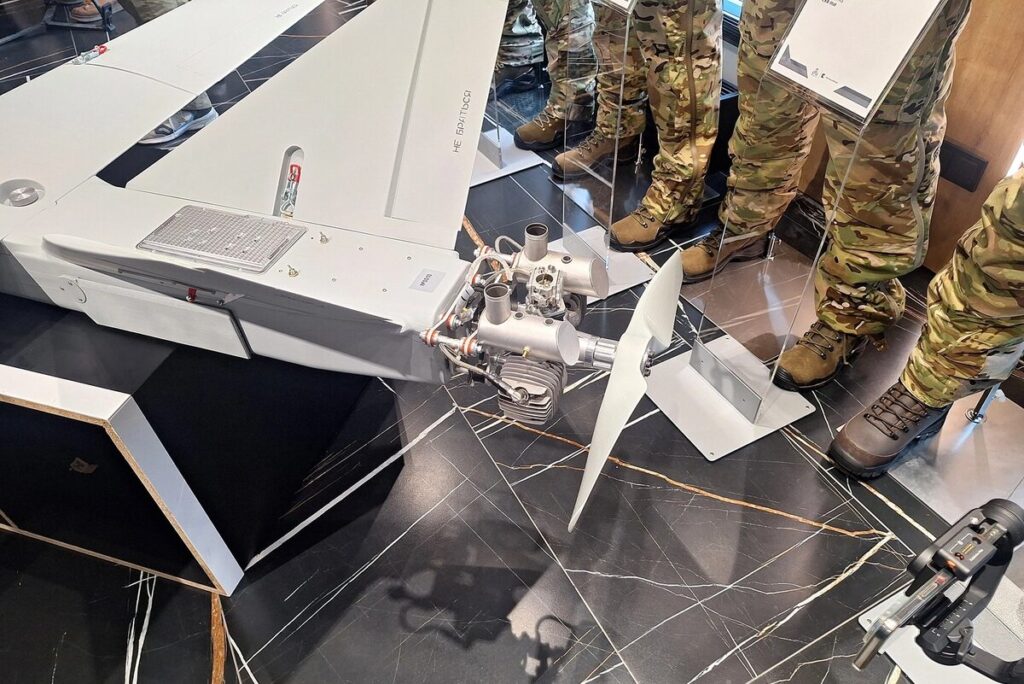
The Kalashnikov Concern has officially unveiled its new KUB-10ME guided munition, and at first glance it may seem like just another loitering munition joining the rapidly expanding world of combat drones. But a closer look reveals something more important: Russia is gradually moving beyond lightweight FPV drones and tactical UAVs toward an entirely new class of heavier long-range strike systems.
And that is where the KUB-10ME becomes especially interesting.
Because this is no longer a small drone intended to hit an isolated trench or a single armored vehicle near the front line. The new KUB is moving closer to the concept of a compact cruise missile — inexpensive, mass-producible, and capable of operating in heavily contested electronic warfare and air defense environments.
From “Flying Grenade” to Operational-Level Weapon
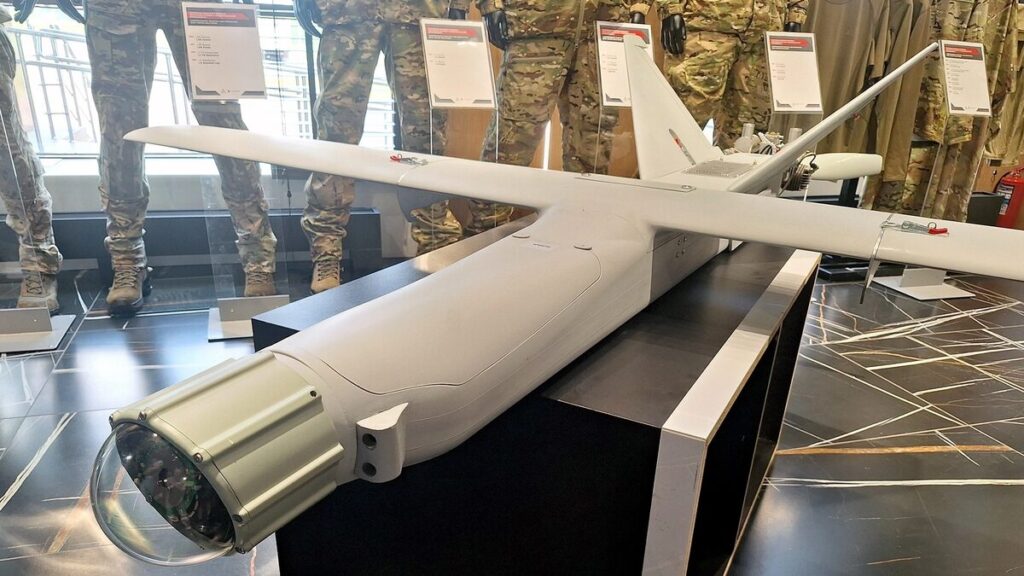
The evolution of the KUB family reflects the broader transformation of modern drone warfare itself.
The original KUB-BLA, introduced back in 2019, appeared relatively modest. A compact loitering munition carrying a warhead of roughly 3 kilograms, with a range of around 40–50 kilometers and an endurance of approximately thirty minutes. At the time, many observers still viewed kamikaze drones as something exotic rather than revolutionary.
Then came Ukraine.
Suddenly, inexpensive loitering munitions were no longer simply supporting artillery — they were beginning to reshape the battlefield itself. FPV drones, Lancets, Switchblades, Warmates, and dozens of similar systems started evolving into a new form of expendable precision artillery.
Against that backdrop, the KUB family rapidly evolved.
The KUB-2 introduced improved guidance systems, the ability to engage moving targets, and elements of autonomous control. But the KUB-10ME represents something much larger.
In many ways, it marks the transition from a tactical loitering munition to a true long-range strike platform.
A Small Cruise Missile Disguised as a Drone
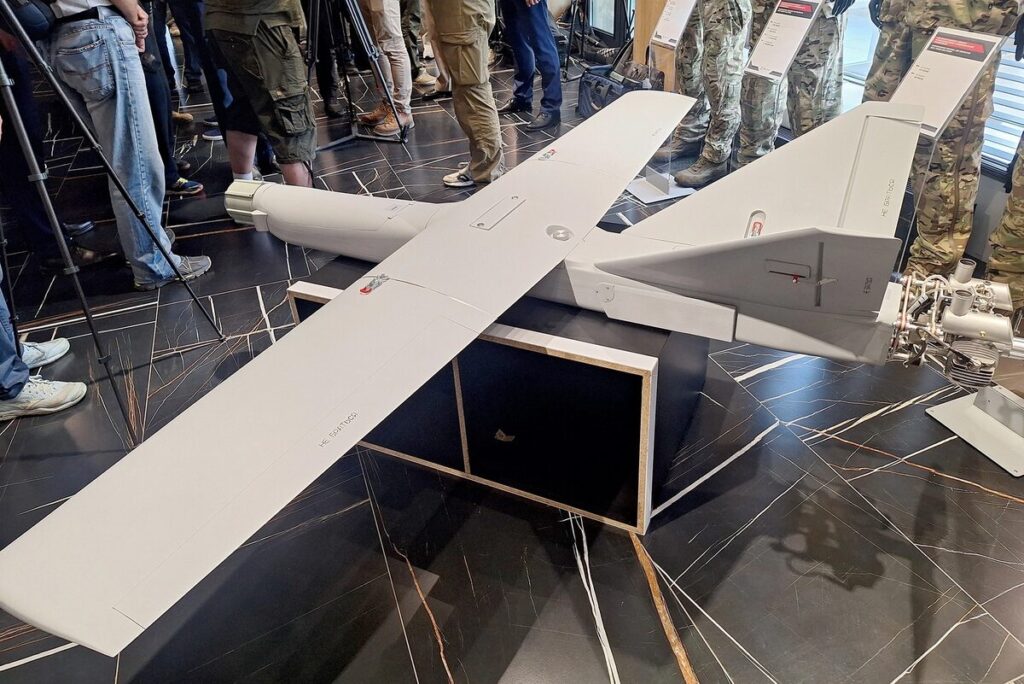
The first thing that immediately stands out is the aircraft’s specifications.
Its range exceeds 100 kilometers. For a tactical-class loitering munition, that is already extremely significant — especially considering the claimed 16-kilogram warhead.
For comparison, many early FPV drones carried less than a kilogram of explosive payload, while the first KUB systems were limited to roughly 3 kilograms.
The KUB-10ME operates at an entirely different level.
A 16-kilogram warhead potentially allows the drone to effectively engage:
— lightly armored vehicles,
— armored personnel carriers,
— command posts,
— radar stations,
— air-defense systems,
— electronic warfare systems,
— supply depots,
— and even aircraft parked in the open.
In effect, the KUB-10ME occupies the space somewhere between a traditional loitering munition and a lightweight cruise missile.
Its cruising speed of around 120 km/h may appear relatively low, but that is precisely part of the system’s logic. Unlike an expensive missile, the drone can remain airborne for extended periods, search for targets, and adjust its attack profile in real time.
And most importantly, it can potentially be produced cheaply enough for mass deployment.
The Real Focus Is Not Range — It’s Resistance to Electronic Warfare
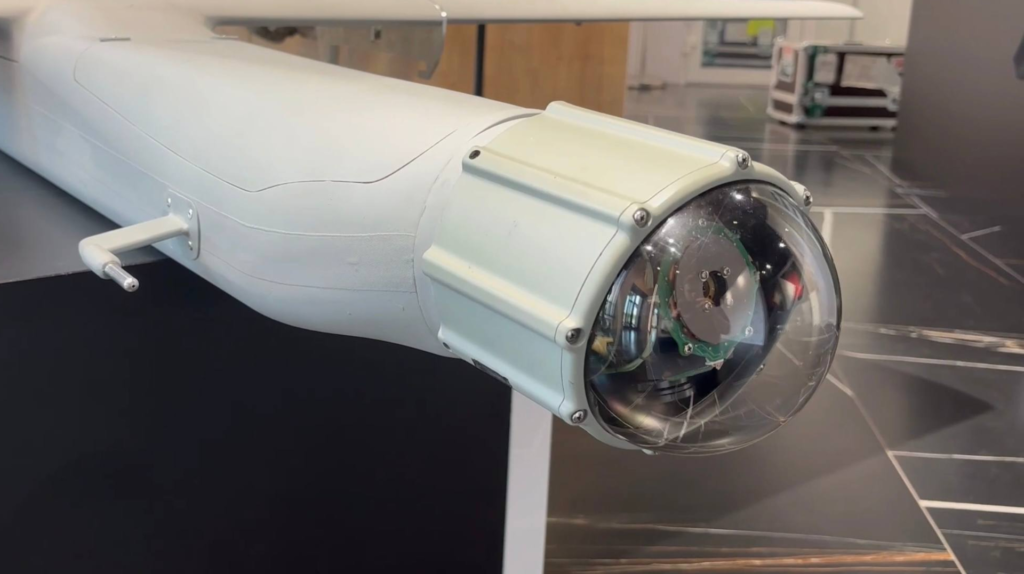
But perhaps the most important feature of the new KUB is not its range at all.
The primary emphasis from Russian developers is on its electro-optical guidance system and increased resistance to electronic warfare.
And that reveals something extremely important about modern warfare.
Over the past two years, the war in Ukraine has effectively become a massive electronic warfare conflict. GPS jamming, spoofing, radio suppression, and attempts to hunt down drone operators have become almost as important as artillery or armored vehicles themselves.
In that environment, a traditional FPV drone often survives only briefly.
That is why the KUB-10ME relies on electro-optical guidance with a video channel and target confirmation capability before impact. In essence, the designers are trying to reduce dependence on satellite navigation and constant radio communication.
That becomes critically important against an opponent with advanced EW capabilities.
If the system can genuinely operate autonomously during the terminal phase of the attack, it becomes far harder to suppress. And in modern warfare, that is rapidly becoming one of the most important requirements for any strike drone.
Russia Is Moving Toward the Concept of “Affordable Mass”
But perhaps the broader significance of the KUB-10ME lies elsewhere.
Not long ago, precision strike warfare was associated mainly with expensive cruise missiles such as Tomahawk, Storm Shadow, or Kalibr. Modern warfare, however, is steadily breaking that economic model.
Because using missiles costing hundreds of thousands or even millions of dollars against every radar, truck, or air-defense position quickly becomes unsustainable.
That is why nearly every major military power is now moving in a similar direction:
— Iran developed the Shahed-136,
— the United States is building LUCAS,
— Europe is experimenting with low-cost loitering systems,
— and Russia is expanding the production of Lancets and KUB drones.
The logic is nearly identical everywhere: it is better to field hundreds of relatively cheap precision systems than a small number of “perfect” weapons.
And the KUB-10ME demonstrates how Russia is attempting to fit into this new philosophy of warfare.
But the Real Question Is Production
The real challenge lies elsewhere.
Modern drone warfare is ultimately a war of industrial capacity.
Many countries today can build an effective loitering munition prototype. The true question is whether they can manufacture them by the thousands.
That is why the future of the KUB-10ME will depend less on its technical specifications and more on production volume, cost, and the ability to rapidly supply large numbers to frontline units.
Because the entire philosophy behind these systems depends on mass.
One drone is simply a munition.
Hundreds of drones become an entirely new architecture of warfare.
And it increasingly appears that the entire modern world is moving toward exactly that model.






