
India Begins Testing Its Own S-400 Alternative: The Kusha Air Defense System Reaches a Critical Milestone

For years, India has been one of the world’s largest buyers of Russian military equipment, with the acquisition of the S-400 Triumph becoming one of the country’s most significant defense contracts. Now, however, New Delhi is taking another major step toward strategic self-reliance.
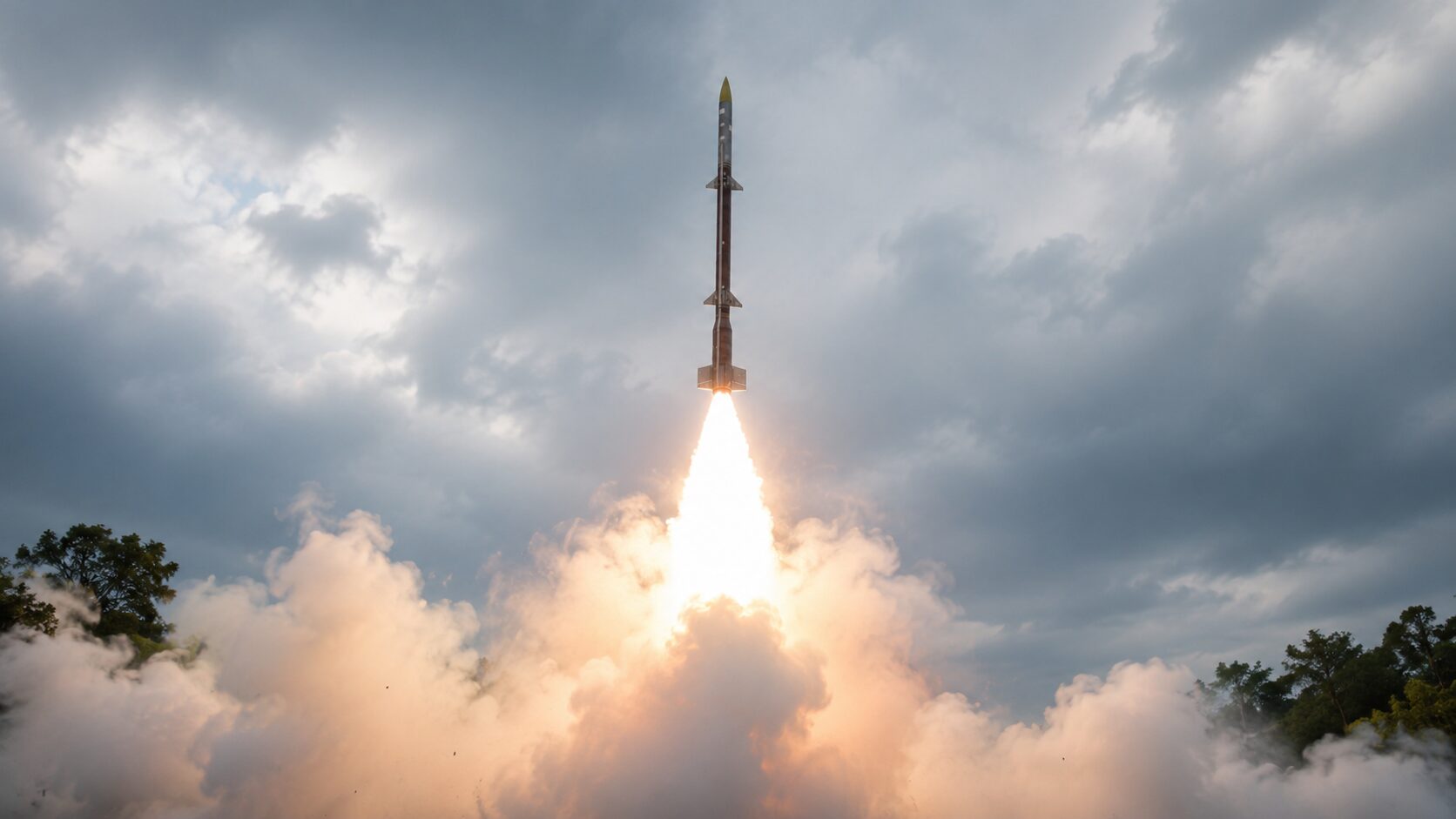
India’s Defence Research and Development Organisation (DRDO) has successfully conducted the maiden flight test of a long-range interceptor missile developed for Project Kusha—an indigenous long-range air defense system designed to complement, and eventually reduce dependence on, imported platforms such as the Russian S-400.
From Licensed Production to Indigenous Innovation
Over the past two decades, India has steadily pursued its Atmanirbhar Bharat (“Self-Reliant India”) initiative, aiming to reduce its reliance on foreign defense suppliers.
While earlier efforts focused primarily on licensed production of Russian aircraft, tanks, and naval vessels, the country is now developing increasingly sophisticated indigenous systems—from the Tejas fighter aircraft to ballistic missiles and advanced air defense networks.
Project Kusha represents one of DRDO’s most ambitious programs. Its objective is to create a fully indigenous long-range surface-to-air missile system capable of defending critical infrastructure against aircraft, cruise missiles, drones, and a wide range of other aerial threats.
What Is Project Kusha?
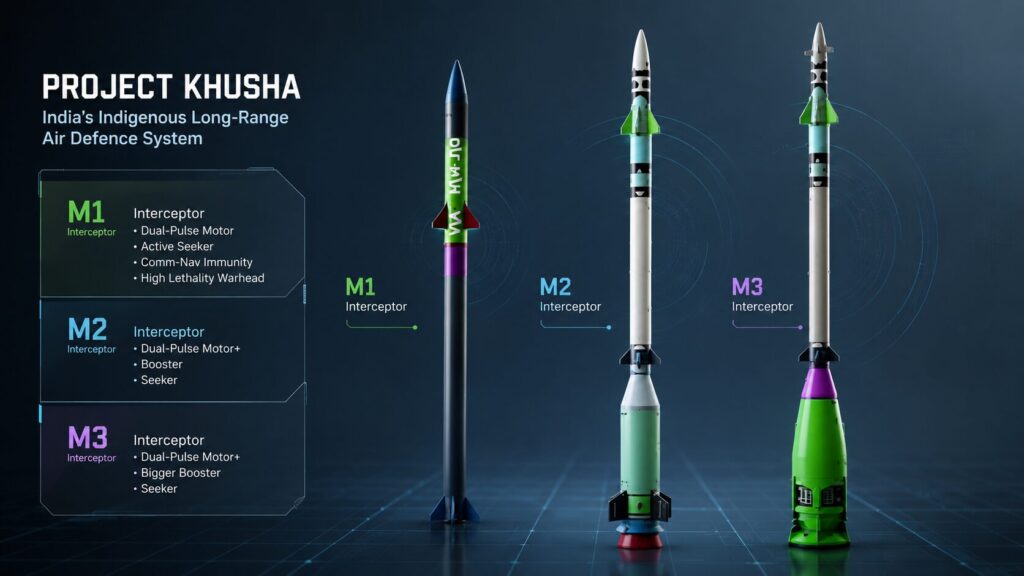
Although frequently described as India’s answer to the Russian S-400, Project Kusha is an entirely indigenous design rather than a copy of the Russian system.
The air defense network is being built around three different interceptor missiles, each optimized for a specific engagement range:
- M1 — up to 150 km
- M2 — approximately 250 km
- M3 — 350–400 km
This layered approach is intended to bridge the gap between India’s existing Barak-8 medium-range air defense systems and the imported S-400 batteries, creating a more comprehensive multi-layered air defense architecture.
The First Flight Test
This week, DRDO successfully carried out the first live-flight test of Project Kusha’s long-range interceptor from the Dr. A.P.J. Abdul Kalam Island test range off the coast of Odisha.
According to Indian officials, the trial evaluated the missile’s propulsion system, guidance package, flight stability, and interaction with ground-based radar and command systems.
The test reportedly met all primary objectives, confirming the performance of the missile’s key technologies and marking an important milestone in the program’s development.
Nevertheless, this is only the beginning of an extensive testing campaign. Additional launches will validate the different interceptor variants, target engagement capabilities, and integration into the Indian Air Force’s broader air defense network.
How Does Kusha Compare With the S-400?
At first glance, the similarities are obvious.
The longest-range M3 interceptor is expected to engage targets at distances approaching 400 kilometers, placing it in the same general category as the Russian S-400.
However, the two systems are designed with somewhat different priorities.
The S-400 was conceived as a highly versatile air and missile defense platform capable of engaging aircraft, cruise missiles, and a range of ballistic missile threats.
Project Kusha, at least in its current configuration, is primarily optimized for aerodynamic targets—including fighter aircraft, bombers, helicopters, unmanned aerial vehicles, and cruise missiles.
Its ballistic missile defense capability is expected to be more limited and is not considered the system’s primary mission.
Why India Is Still Buying the S-400
Ironically, the development of Kusha does not mean India intends to abandon Russian air defense systems.
Several S-400 regimental sets have already entered service, while deliveries of the remaining batteries continue.
These imported systems provide immediate long-range air defense capability while India’s domestic alternative is still under development.
In many ways, New Delhi is following a strategy previously employed by countries such as China and South Korea: acquire advanced foreign systems to meet immediate operational needs while simultaneously investing in domestic replacements.
The Cost of Building an Indigenous Air Defense System
Project Kusha is significant not only because of its technology but also because of the scale of investment behind it.
According to publicly available information, the research and development phase has been allocated approximately ₹21,700 crore (around $2.6 billion).
Considering the complexity of a modern long-range air defense system, the investment is relatively modest—particularly when compared with the cost of importing multiple long-range missile defense batteries from overseas suppliers.
If successful, the program will give India the ability to manufacture not only interceptor missiles but also radars, command-and-control systems, and supporting infrastructure entirely within its own defense industry.
Conclusion
The first successful flight test of Project Kusha represents another important milestone for India’s rapidly expanding defense sector.
The system remains years away from operational service and must still complete an extensive series of flight trials, interception tests, and system integration exercises. Even so, the project already demonstrates India’s determination to become one of the few nations capable of designing and manufacturing advanced long-range air defense systems independently.
Whether or not Kusha ultimately matches every capability of the Russian S-400, it has the potential to significantly reduce India’s dependence on imported strategic air defense technology—and further establish the country as a major player in the global defense industry.






