
From Drone Swarms to Stealth Fighters: Why the U.S. Air Force Wants a New Generation of Aerial Targets

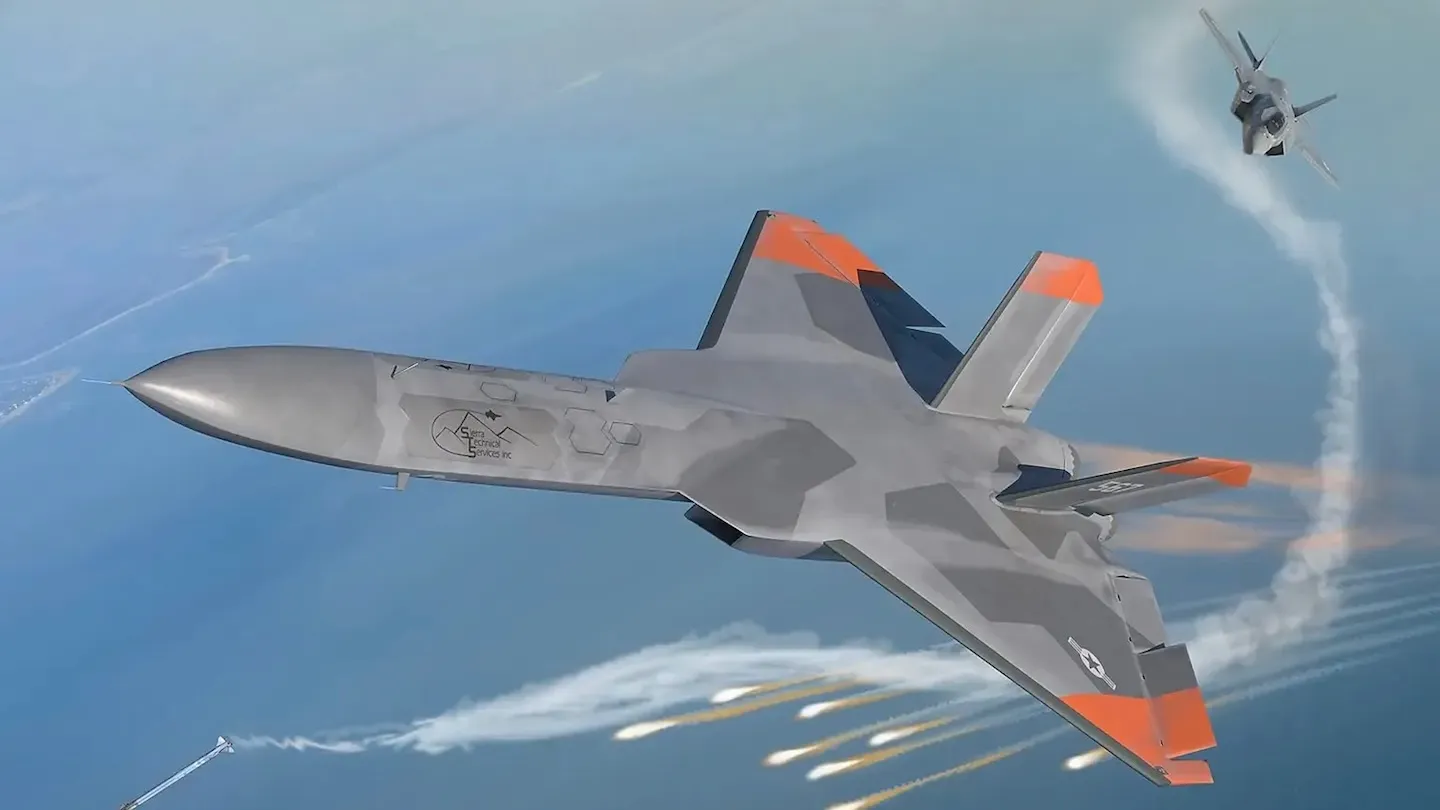
A modern surface-to-air missile has to do much more than simply hit a fast-moving object. Before entering service, it must be tested against targets that reproduce at least some of the characteristics of potential real-world threats: speed, maneuverability, radar signature, infrared signature, and electronic warfare activity. The same problem applies to air-to-air missiles, radars, infrared search and track systems, and future air-defense systems. As combat aircraft and unmanned systems become more sophisticated, the targets used to simulate them must evolve as well.
This is exactly the problem now facing the U.S. Air Force. Its existing inventory of aerial targets is gradually becoming insufficient to represent the enormous variety of threats that modern weapons may encounter. A single target design cannot realistically simulate everything from a swarm of inexpensive UAVs to a large reconnaissance drone, a stealthy supersonic fighter, or a strategic bomber.
The Air Force is therefore looking not for one new target drone, but for an entire family of relatively inexpensive unmanned aircraft capable of representing almost the full spectrum of modern aerial threats — from small commercial-style drones to fifth-generation combat aircraft. Some of these targets are explicitly expected to be expendable: live missiles will be fired at them, and losing the aircraft during testing will simply be part of their intended lifecycle.
Why Existing Aerial Targets Are No Longer Enough
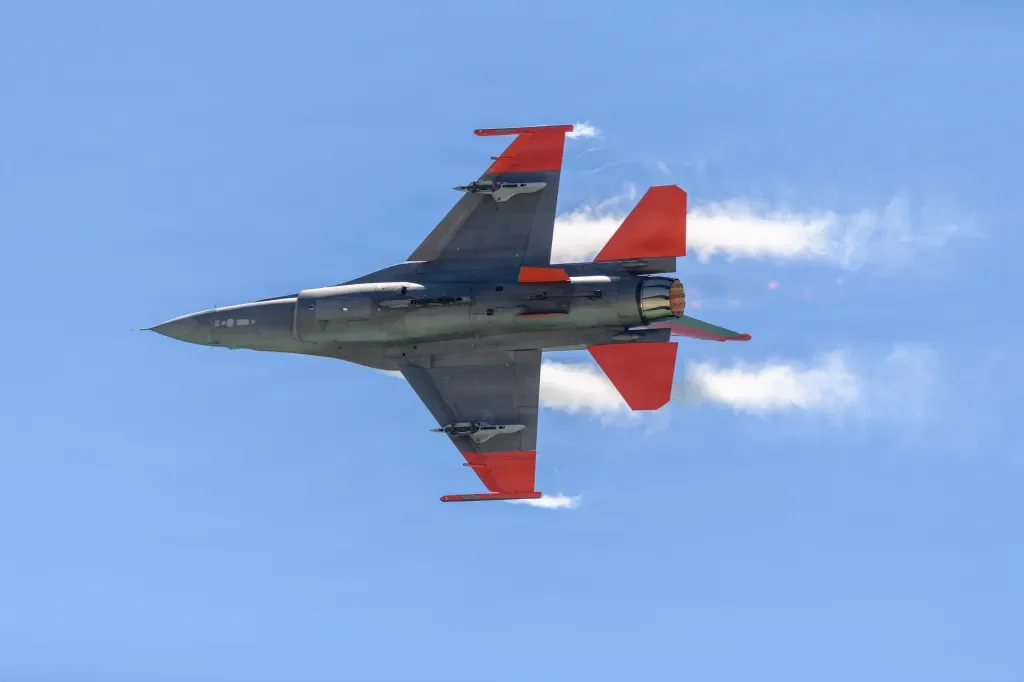
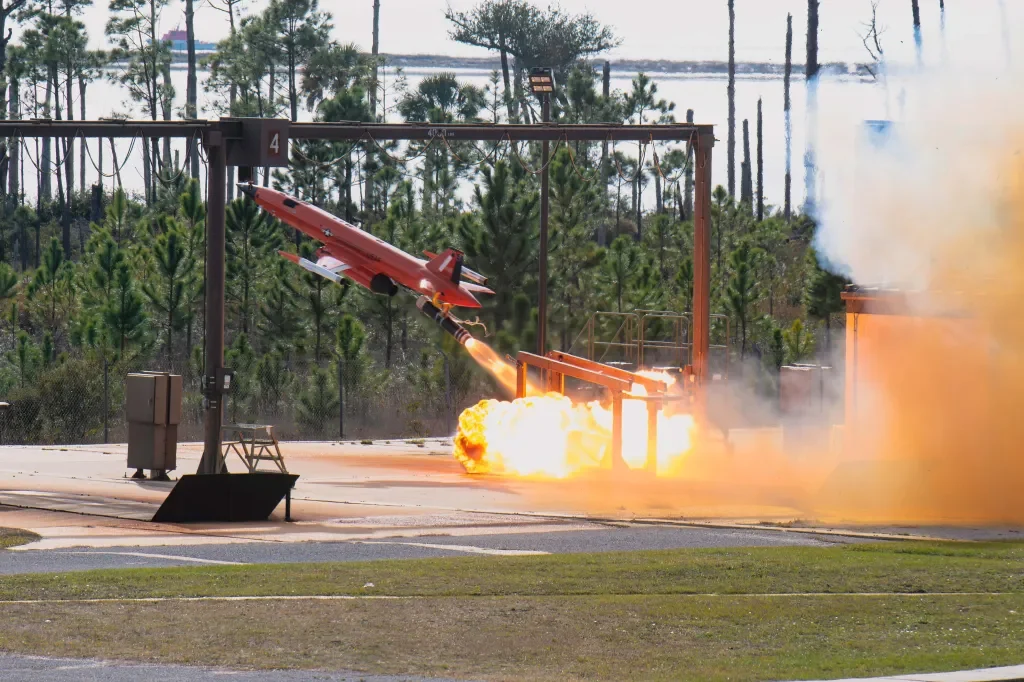
Today, two very different systems form an important part of the U.S. Air Force’s aerial target inventory. The first is the BQM-167A, a purpose-built relatively small jet-powered target drone. The second is the well-known QF-16, an actual F-16 fighter converted into a remotely controlled full-scale aerial target.
The BQM-167A entered service in 2007. It is approximately six meters long with a wingspan of around 3.4 meters. It is considerably cheaper than sacrificing a real fighter and can support a wide range of testing scenarios, but its relatively small dimensions are also an inherent limitation. The drone can simulate certain speeds, maneuvers, or radar signatures, but physically it remains a small unmanned aircraft.
The QF-16 solves almost the opposite problem. It is a full-size F-16 converted into an unmanned target. The aircraft retains the real dimensions, aerodynamic characteristics, speed, and many of the flight qualities of the original fighter. QF-16s can even be flown with a pilot when required.
For weapons testing, this makes the QF-16 an exceptionally realistic target.
There is only one obvious problem: every QF-16 destroyed during a test represents an actual F-16 airframe that has been destroyed.
The latest production batch included 75 aircraft converted by Boeing, with the last delivered in 2022. The Air Force expects QF-16 operations to continue into the 2030s, but the supply of suitable retired fighters is not unlimited. At the same time, the QF-16 is becoming less representative of the stealthy aircraft that future weapons will increasingly be expected to engage.
It would therefore be considerably more economical to design the next generation of targets as unmanned aircraft from the outset — and make them cheap enough that losing one during a successful test is considered normal.
One Target Can No Longer Simulate Everything
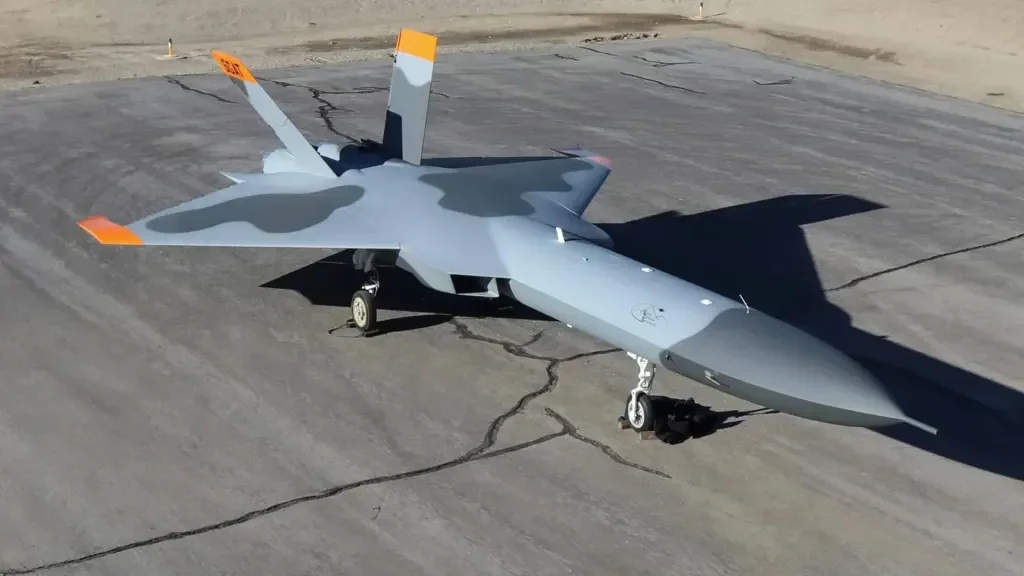
The scale of the new Air Force requirement is particularly interesting. What the service effectively wants is a collection of different target classes, each representing a particular category of aerial threat.
The list includes stealth fighters, conventional combat aircraft, large Group 5 UAVs, medium Group 3 and Group 4 drones, smaller Group 1 and Group 2 UAVs, C-130-sized transports, and even much larger aircraft such as strategic bombers and airborne early warning platforms.
The requirements for these targets differ dramatically.
A target intended to simulate a modern fighter may need to reach Mach 1.6 or more at 40,000 feet, or roughly 12 kilometers altitude, while also performing aggressive high-g maneuvers.
A small UAV target requires almost the opposite characteristics: relatively low speed, low cost, and the ability to launch large numbers of aircraft simultaneously.
For strategic bombers, meanwhile, physical size and the corresponding radar and infrared signatures become far more important.
This is precisely why building a single universal target is becoming increasingly impractical.
How Can a Drone Pretend to Be a Stealth Fighter?
The stealth requirement is arguably the most technically interesting part of the program.
Simply making the target fast is not enough. A modern missile does not interact with an abstract point moving through the sky. Its sensors detect a combination of physical signatures. A radar seeker sees a certain radar cross-section, an infrared seeker detects heat from the engines and airframe, while electronic-support systems can detect emissions from radars and other transmitters.
The new target therefore has to reproduce not only the flight characteristics of a fighter, but also its electromagnetic signature.
For targets representing modern stealth aircraft, the Air Force wants the ability to reproduce specified radar cross-section characteristics, multispectral infrared signatures, and radio-frequency emissions. The target may also need to carry electronic attack systems.
In effect, the aircraft becomes a flying simulator of an adversary.
It does not necessarily need to physically resemble a particular real-world fighter. What matters is that the radar, infrared sensor, or missile seeker being tested perceives it as a sufficiently realistic target.
This is one of the fundamental differences between a modern aerial target and a simple radio-controlled aircraft.
Why Does a Target Drone Need Electronic Warfare?
There is another reason the requirements have become more demanding. A modern combat aircraft is rarely a passive target. It may use radar-warning receivers, jammers, chaff, flares, and other defensive systems.
Testing a new missile exclusively against an aircraft flying straight and level without attempting to defend itself would reveal relatively little about the weapon’s effectiveness in a more demanding environment.
Future targets therefore need to do more than maneuver.
They need to fight back electronically.
The Air Force wants the ability to equip them with electronic warfare systems, radio-frequency emitters, and countermeasures. Earlier requirements for future target systems also included chaff and infrared flares, including countermeasure equipment associated with the AN/ALE-47 family.
This turns the test into something much closer to an actual air engagement. The missile must acquire the target, maintain track in the presence of electronic countermeasures, reject decoys, and ultimately intercept a maneuvering aircraft.
Large Aircraft Create a Completely Different Problem
Fighters are far from the largest targets that need to be simulated. The Air Force also wants systems capable of representing aircraft in the C-130 size category.
Here, the requirements change substantially. The target must reproduce the physical dimensions, relatively slow subsonic flight characteristics, and signatures associated with a large multi-engine aircraft. Corresponding radar and infrared characteristics are also important.
Physical size matters for more than just seeker testing.
It is also necessary when evaluating the missile warhead itself.
A missile successfully reaching its target does not automatically mean the target will be destroyed. Engineers need to understand what happens when the warhead detonates: where the fragments go, which structural elements are damaged, and whether the damage is sufficient to reliably bring down a large aircraft.
A small BQM-167A simply cannot fully answer those questions if the intended target is the size of a C-130.
For still larger aircraft — strategic bombers and airborne early warning platforms — the problem becomes even more difficult. The Air Force wants targets capable of representing enormous physical dimensions together with the characteristic radar and thermal signatures of heavy aircraft.
At the Other End of the Scale Is the Drone Swarm
If a large target is intended to represent an aircraft worth tens or even hundreds of millions of dollars, the smallest target category represents the opposite challenge.
Group 1 and Group 2 UAVs are relatively small drones. For these targets, the Air Force specifies speeds below 150 knots, or approximately 278 km/h.
But speed is not the most important requirement.
They must be capable of operating in swarms.
This means future air-defense testing can move beyond the traditional scenario of one missile engaging one target. Dozens of inexpensive drones could be launched simultaneously to determine how many targets a radar can detect, how many tracks a system can maintain, how weapons are allocated, and what happens when tracking or engagement channels become saturated.
For these tests, target cost becomes critical. If every drone costs millions of dollars, regularly conducting large-scale saturation tests would become prohibitively expensive.
The Air Force is therefore emphasizing inexpensive and scalable solutions.
Between a Small Drone and a Stealth Fighter
Medium and large UAVs have their own performance requirements. Group 3 and Group 4 targets are expected to operate at approximately Mach 0.5–0.8 and maneuver at between 3 and 6 g.
For the largest Group 5 unmanned aircraft, the Air Force wants operations at altitudes reaching 50,000 feet, or approximately 15.2 kilometers.
The target family would therefore need to cover an extraordinarily wide performance envelope, from a small slow-moving drone to a high-altitude UAV and a supersonic fighter.
| Group 1–2 UAV | Below 150 knots, group/swarm operations |
| Group 3–4 UAV | Mach 0.5–0.8, 3–6 g maneuvering |
| Group 5 UAV | Altitude up to 50,000 ft |
| Modern fighter | Mach 1.6+, high maneuverability |
| Stealth aircraft | Radar, IR and RF signature simulation, EW |
| C-130-class aircraft | Physical size, signatures, multi-engine characteristics |
| Bomber / AEW aircraft | Large dimensions, strong radar and thermal signatures |
In effect, the Air Force is not looking for a single new aerial target. It wants a collection of physical models representing almost the entire spectrum of modern aerial threats.
And All of It Has to Be Cheap Enough to Shoot Down
This is the central difference behind the new concept.
The U.S. Air Force explicitly wants future targets to be affordable enough to be considered attritable or expendable. Losing an aircraft during live-fire testing should be financially acceptable.
That represents a significant change in philosophy.
The QF-16 starts with a sophisticated real fighter and converts it into a target. The new concept essentially works in the opposite direction: build a comparatively inexpensive unmanned aircraft from the beginning, then give it only the characteristics of an advanced combat aircraft that are actually required for the test.
This is also why the Air Force is not limiting its search to traditional defense contractors. Commercial products, modified civilian systems, dual-use technologies, and existing designs are all of interest. Particular attention is being paid to non-traditional and commercial technologies that could reduce cost and simplify mass production.
In other words, the engine, electronics, or structural components of a future target do not necessarily need to be designed specifically for a military program.
If a suitable mass-produced commercial component already exists, the Air Force wants the option of using it.
Why Not Just Keep Shooting Down Old F-16s?
At first glance, the QF-16 appears to be an almost perfect solution. The United States still has retired F-16s available. Why not simply continue converting them into unmanned targets?
There are several problems.
First, the supply of suitable airframes is finite. Every QF-16 conversion consumes a real aircraft with a limited amount of remaining structural life.
Second, maintaining an aging full-scale fighter remains expensive regardless of whether there is a pilot in the cockpit.
Third, the F-16 represents an earlier generation of combat aircraft. Additional systems can modify its radar signature, electronic warfare equipment can be installed, and other changes can make it a more demanding target. But transforming a conventional F-16 airframe into a physically realistic surrogate for a modern stealth fighter is inherently difficult.
The Air Force has been trying to address this problem for years through programs such as the Next Generation Aerial Target and 5th Generation Aerial Target. The latter was specifically intended to provide a more representative surrogate for fifth-generation aircraft, but a large-scale operational replacement for existing targets has yet to emerge.
QF-16s are therefore expected to continue flying into the 2030s, but increasingly as part of a transitional target ecosystem rather than the ultimate solution.
Aerial Targets Are Becoming a Sophisticated Class of Aircraft in Their Own Right
This may be the most interesting aspect of the entire program.
There was a time when an aerial target primarily needed to follow a predetermined flight path and give a missile something to detect.
That is no longer enough.
A modern target may have to reproduce the speed and maneuverability of a specific class of aircraft, its radar cross-section, thermal signature, and electromagnetic emissions. It may have to jam sensors, deploy countermeasures, operate autonomously, and in some cases cooperate with other unmanned aircraft.
Technically, it is gradually becoming something close to a simplified unmanned combat aircraft.
There is, however, one fundamental difference: all of these capabilities have to be delivered as cheaply as possible, because a successful missile test may end with the target being destroyed.
That is why the new U.S. Air Force effort is more interesting than another routine drone procurement program. It demonstrates how rapidly the environment for testing modern air weapons is changing.
In the past, testing a new missile could involve sending an old fighter into the air without a pilot.
Now the test environment may need to reproduce stealth, electronic warfare, high-altitude UAVs, large aircraft, and an entire swarm of inexpensive drones at the same time.
And before the next generation of missiles can prove that it is capable of shooting down the aerial threats of the future, someone first has to build those threats — specifically so they can be destroyed.






