
From Dong Feng to Ju Lang: How China Built One of the World’s Most Powerful Nuclear Missile Arsenals

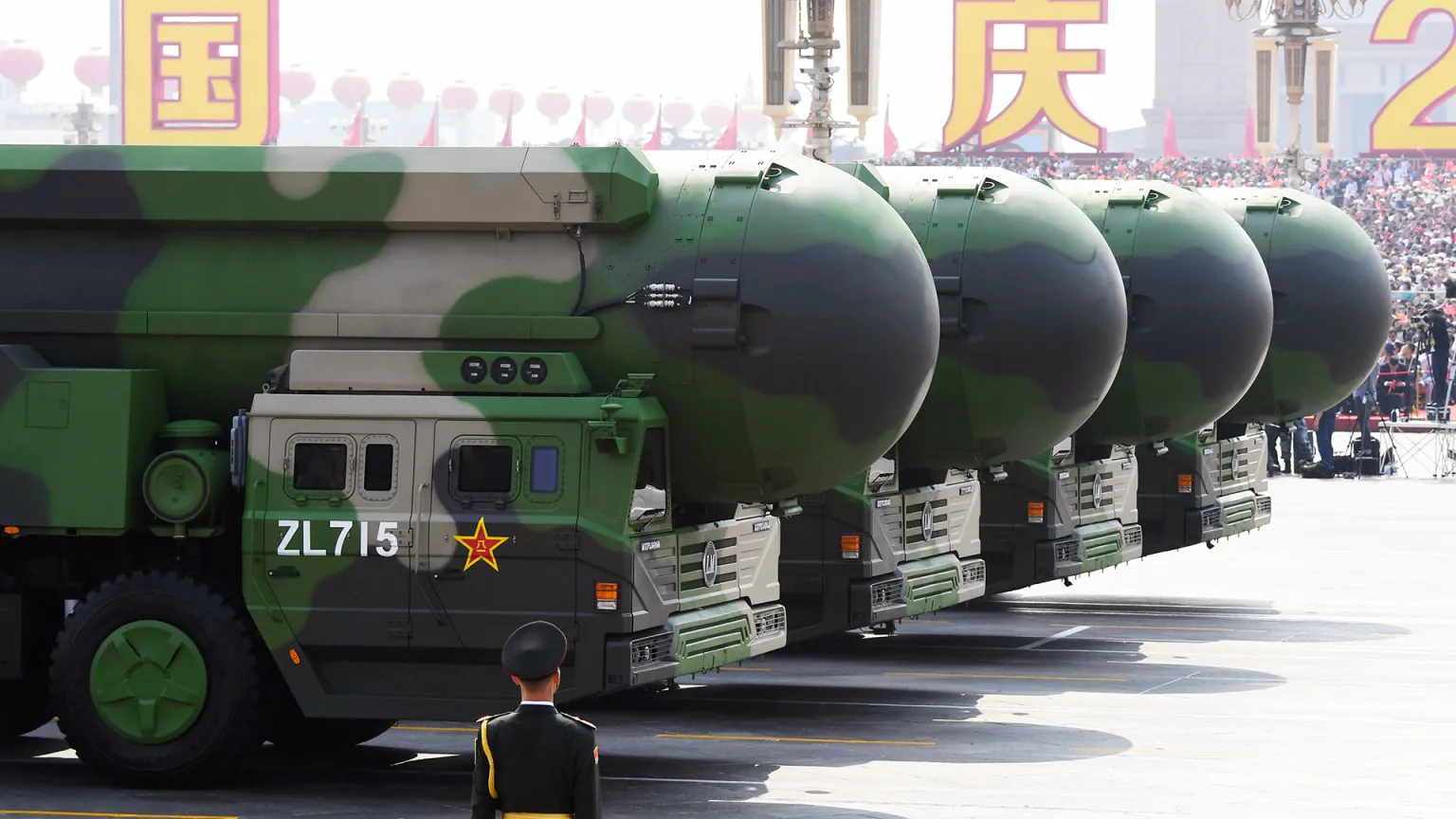
Just thirty years ago, China’s nuclear arsenal was widely viewed as a relatively modest deterrent. Beijing followed a strategy of “minimum credible deterrence,” maintaining only enough intercontinental ballistic missiles (ICBMs) to guarantee a retaliatory strike rather than compete directly with the United States or the Soviet Union in terms of warhead numbers.
Today, the picture has changed dramatically.
China is not merely expanding the number of its nuclear warheads. It is simultaneously modernizing silo-based and road-mobile intercontinental missiles, building new ballistic missile submarines, developing longer-range submarine-launched ballistic missiles, and transforming its strategic forces into a true world-class nuclear triad.
From Minimum Deterrence to Global Nuclear Power
For decades, China’s nuclear doctrine differed significantly from those of Washington and Moscow.
While the United States and Russia maintained enormous arsenals numbering in the thousands of warheads, China relied on a comparatively small strategic force. The primary objective was simply to ensure a survivable second-strike capability after any potential nuclear attack.
That strategy is now evolving.
According to Western defense assessments, China currently possesses approximately 620 nuclear warheads, with production continuing at a rapid pace. At the same time, Beijing is constructing new missile silo fields, expanding its fleet of road-mobile launchers, and strengthening the sea-based leg of its nuclear forces.
DF-5: The Veteran That Still Matters
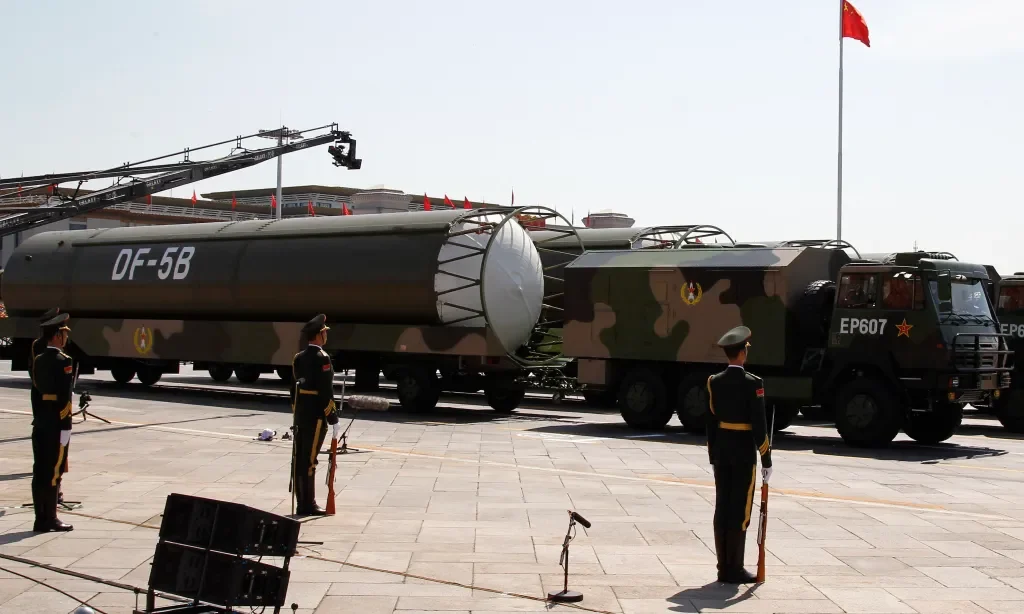
For many years, the backbone of China’s strategic missile force was the DF-5 (Dong Feng-5).
This heavy liquid-fueled intercontinental ballistic missile entered service in the early 1980s and remains one of the country’s most powerful strategic weapons.
Despite its age, the DF-5 has undergone extensive modernization. The latest variants feature improved guidance systems, greater range, and the ability to carry Multiple Independently Targetable Reentry Vehicles (MIRVs).
Current estimates place the missile’s maximum range at 13,000 to 15,000 kilometers, allowing it to reach virtually any target in the continental United States.
DF-31: China’s Mobile Insurance Policy
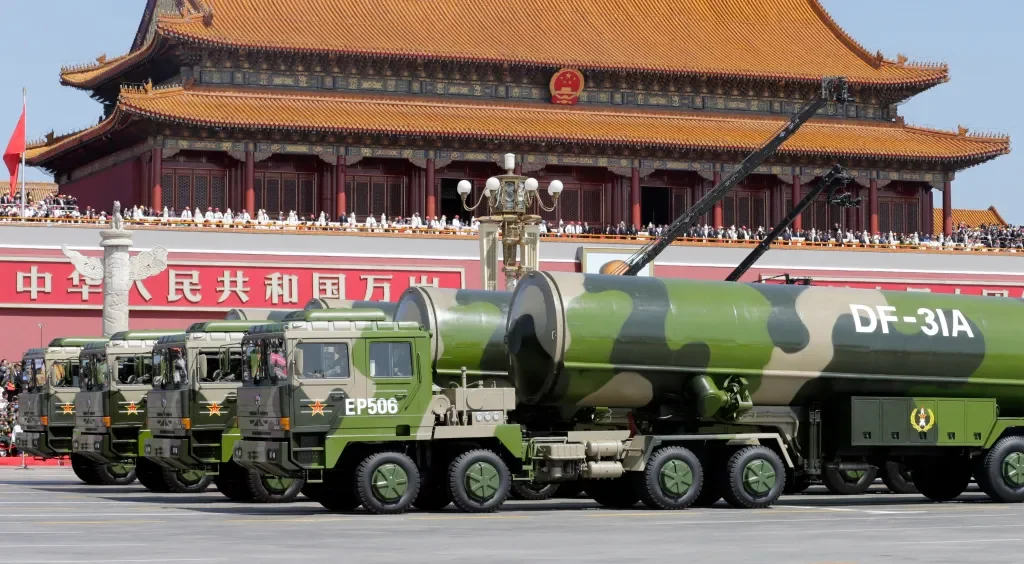
The next major step came with the development of the DF-31 family.
Unlike the silo-based DF-5, the DF-31 is carried on a large road-mobile transporter, making it significantly more difficult to locate and destroy before launch.
For any strategic nuclear force, this is a major advantage.
Fixed silos can be identified through satellite imagery, but mobile launchers can constantly relocate, hide inside mountain tunnels or forested regions, and deploy to launch positions only shortly before firing.
The most advanced version, the DF-31AG, features an improved off-road chassis with greater mobility and survivability. Today, it forms a substantial portion of China’s mobile strategic missile force.
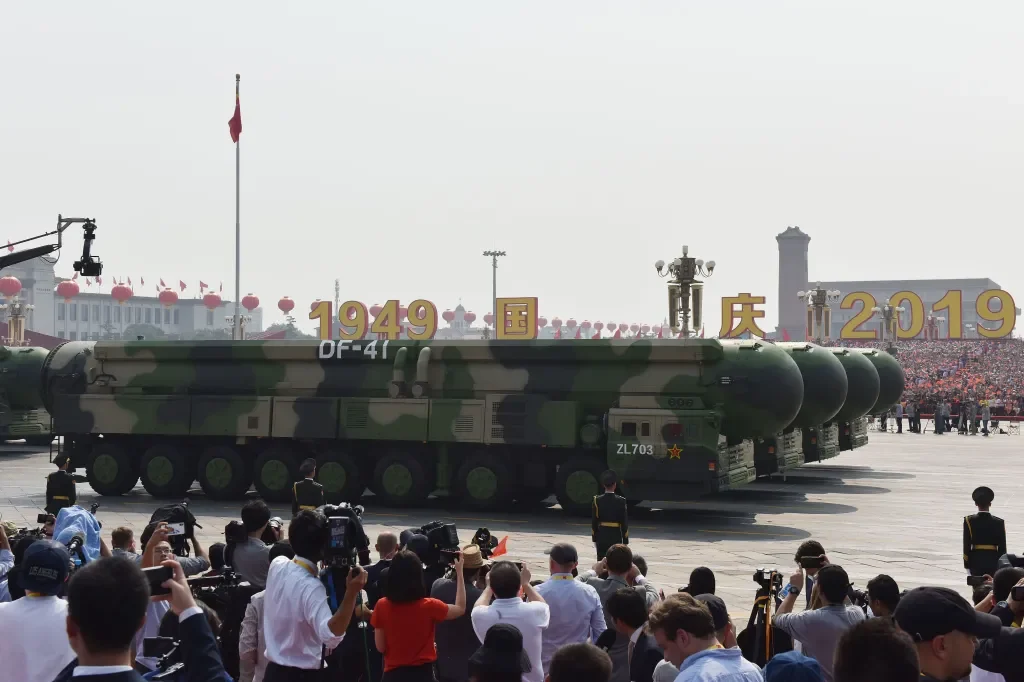
DF-41: China’s Most Powerful Mobile ICBM
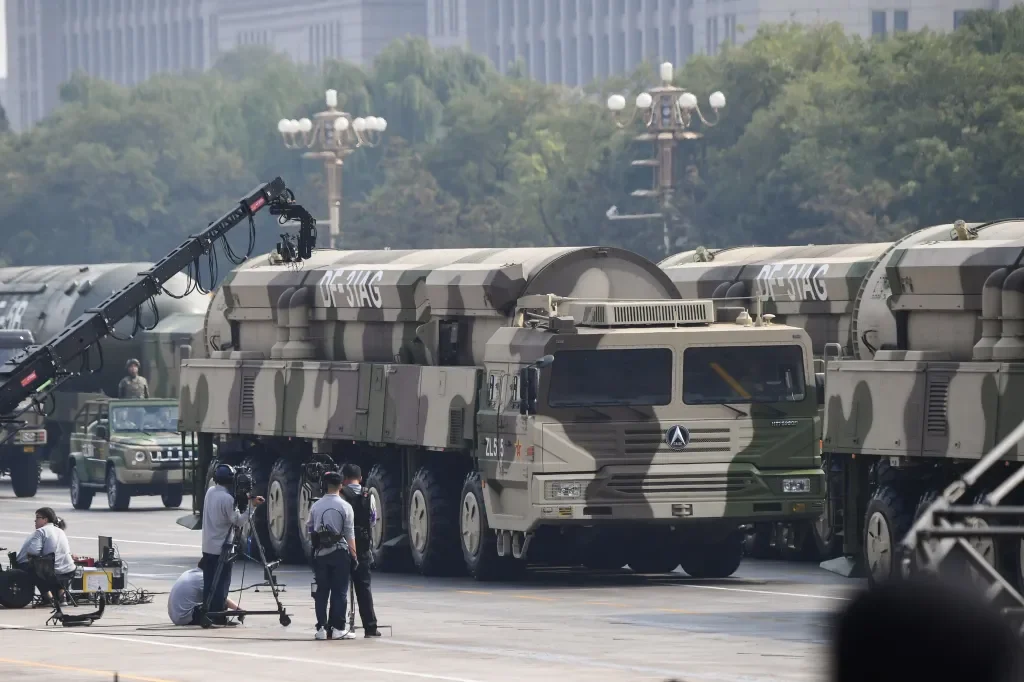
If the DF-31 represented a major leap forward, the DF-41 is widely regarded as China’s answer to the most advanced Russian and American intercontinental missile systems.
It is a three-stage solid-fueled ICBM with an estimated range of 12,000 to 15,000 kilometers.
Its defining characteristic is its ability to carry multiple independently targetable warheads.
Once outside the atmosphere, the missile releases several reentry vehicles, each capable of striking a different target.
This significantly complicates missile defense because interceptors must engage multiple incoming warheads instead of just one.
The New Missile Silo Fields
Until only a few years ago, many analysts believed China intended to rely primarily on mobile missile systems.
Satellite imagery has dramatically changed that assumption.
Construction has revealed several massive missile silo complexes across western China.
Current estimates suggest that roughly 300 new silos have been built.
Whether every silo will eventually contain an operational missile remains uncertain. Many experts believe China could employ the so-called “shell game” strategy, building significantly more silos than missiles in order to force an opponent to target every location during a potential first strike.
A Nuclear Shield Beneath the Sea
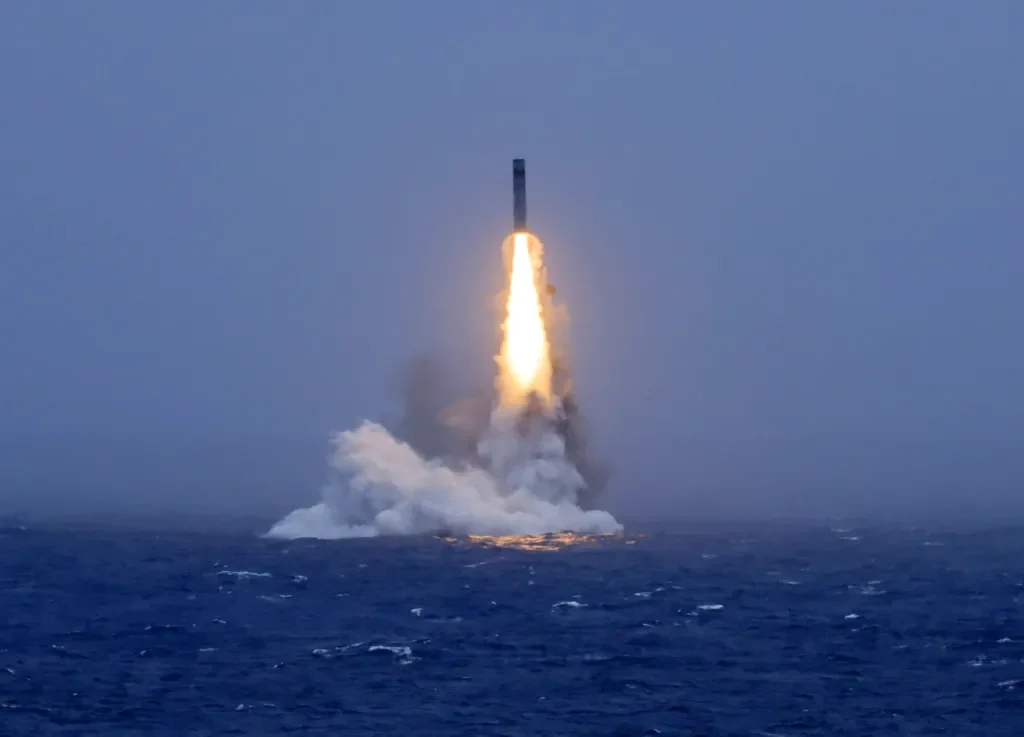
China’s sea-based nuclear deterrent has also expanded rapidly.
The backbone of this force is the Type 094 Jin-class ballistic missile submarine.
Each submarine carries JL (Ju Lang) submarine-launched ballistic missiles.
While the earlier JL-2 offered an estimated range of approximately 7,000–8,000 kilometers, the newer JL-3 is believed to reach 10,000 kilometers or more.
This allows Chinese ballistic missile submarines to remain within waters protected by the People’s Liberation Army Navy while still maintaining the ability to strike targets throughout much of the continental United States.
As a result, the naval component has become one of the most important pillars of China’s modern nuclear deterrent.
Why China Maintains Several Different Missile Families
At first glance, operating multiple families of intercontinental ballistic missiles might appear unnecessarily expensive.
In reality, each system fulfills a different strategic mission.
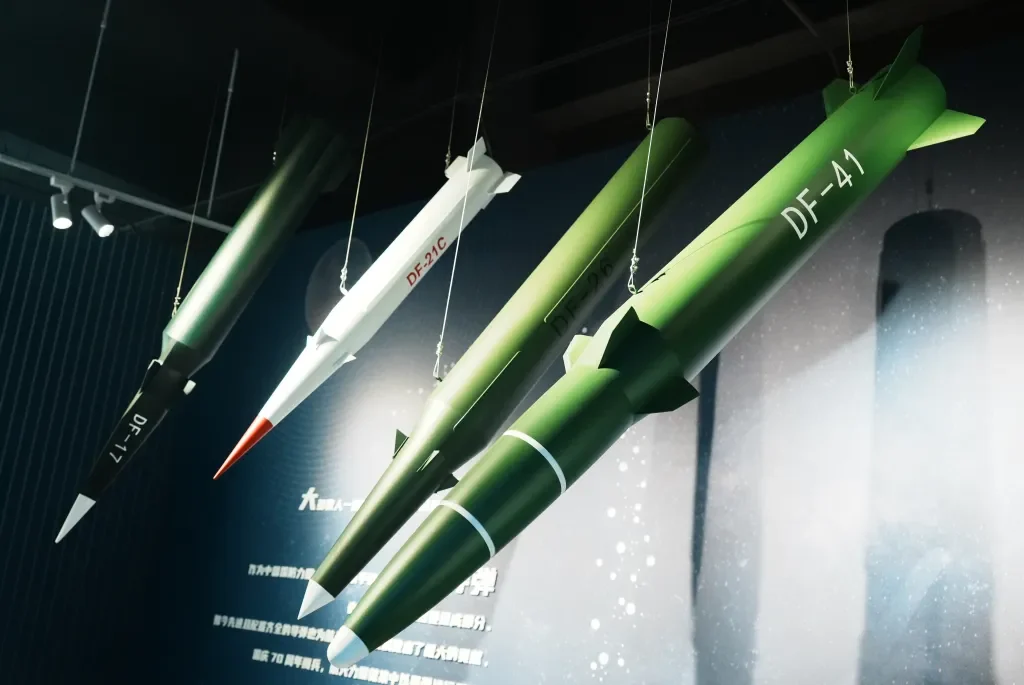
- DF-5 provides maximum payload capacity and the ability to carry multiple warheads.
- DF-31 greatly improves survivability through mobility.
- DF-41 combines long range, mobility, and MIRV capability.
- JL-2 and JL-3 ensure a survivable second-strike capability even if land-based launch facilities are destroyed.
Together, these systems form the foundation of China’s rapidly maturing nuclear triad.
What Does This Mean for Global Security?
For decades, the world’s strategic nuclear balance was largely defined by the rivalry between the United States and Russia.
Increasingly, defense analysts now describe the international system as moving toward a three-way nuclear balance.
China is rapidly narrowing the technological gap, expanding its intercontinental missile force, increasing its nuclear stockpile, and modernizing its delivery systems.
Although Beijing officially continues to maintain a No First Use nuclear policy, it is simultaneously building a far more resilient and flexible strategic deterrent.
A New Era of Nuclear Competition
China’s strategic nuclear forces can no longer be viewed as a relatively small supplement to the American and Russian arsenals.
Over the past decade, Beijing has launched one of the most ambitious nuclear modernization programs in its history.
New road-mobile missile systems, hundreds of newly constructed silos, an expanding ballistic missile submarine fleet, and modern MIRV-equipped intercontinental missiles all point toward a long-term strategy rather than a limited modernization effort.
Today, the Dong Feng and Ju Lang missile families are no longer simply instruments of China’s national defense—they have become one of the defining factors shaping the global nuclear balance of the twenty-first century.






