
Dark Eagle’s Tiny Warhead, Massive Reach: New Details About America’s Hypersonic Strike Weapon


For years, the U.S. Army’s Dark Eagle hypersonic missile has been surrounded by secrecy. Officials discussed its speed, range, and strategic importance, but almost nothing was publicly known about what actually happened after the missile reached its target.
Now, newly revealed information offers the clearest picture yet of how America’s most advanced ground-launched hypersonic weapon is designed to fight—and some of the details are surprisingly unconventional.
A Hypersonic Weapon Unlike Traditional Missiles
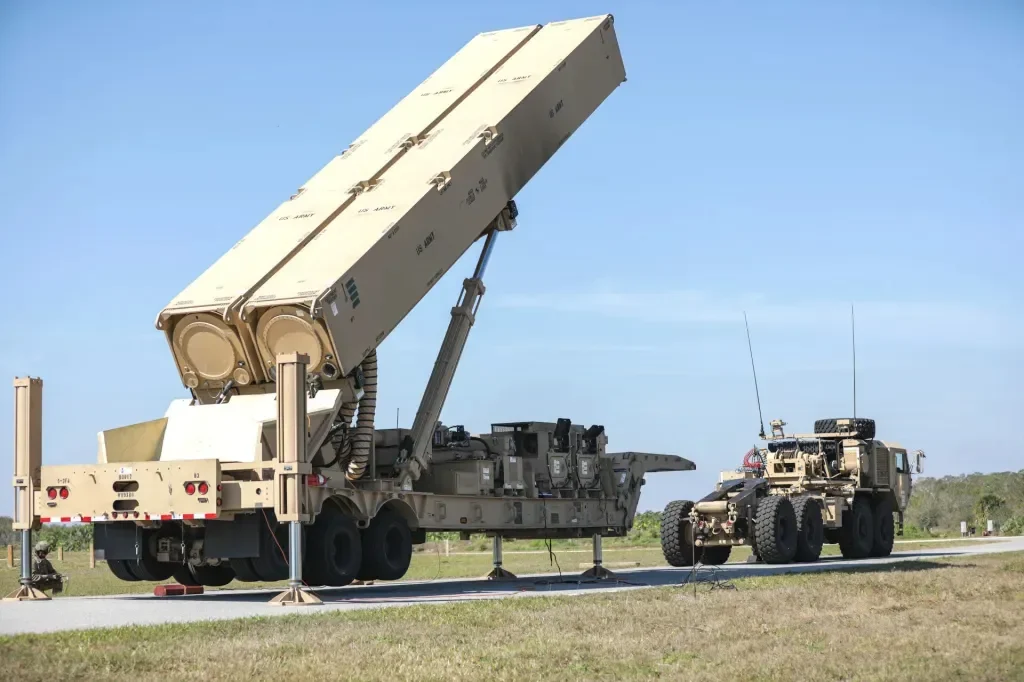
Dark Eagle—officially known as the Long-Range Hypersonic Weapon (LRHW)—is not a conventional cruise missile or ballistic missile.
Instead, it uses a two-stage solid-fuel booster that accelerates an unpowered Common Hypersonic Glide Body (C-HGB) to hypersonic speed. Once released, the glide vehicle skips through the upper atmosphere at speeds exceeding Mach 5, maneuvering toward its target while making interception extremely difficult.
With a reported range of approximately 3,500 kilometers (2,175 miles), Dark Eagle allows U.S. forces to strike heavily defended targets from well outside many enemy missile engagement zones.
The Most Surprising Detail: An Extremely Small Warhead
Perhaps the biggest revelation concerns the weapon’s payload.
According to information discussed during a visit to Redstone Arsenal, Dark Eagle carries a warhead weighing less than 30 pounds (approximately 14 kilograms).
That figure is remarkably small.
For comparison, many modern cruise missiles carry warheads weighing between 300 and 500 kilograms, while even the AIM-120 AMRAAM air-to-air missile has a larger explosive payload.
The obvious question is: how can such a small warhead destroy valuable targets?
Speed Becomes the Main Weapon

The answer lies in physics rather than explosives.
Unlike conventional missiles, Dark Eagle relies heavily on its enormous kinetic energy.
A hypersonic glide vehicle traveling at several kilometers per second possesses tremendous destructive power before its explosive payload even detonates.
Army officials have indicated that the small explosive charge primarily serves to disperse specialized projectiles over the target area.
According to the information released, the resulting lethal zone could cover an area roughly comparable to a parking lot, allowing the weapon to attack dispersed equipment, missile launchers, command facilities, or air-defense assets.
Designed for High-Value Targets
Dark Eagle was never intended to replace conventional cruise missiles.
Instead, it fills a different role.
Its combination of long range, extreme speed, and maneuverability makes it particularly suitable for striking:
- Integrated air-defense systems
- Mobile ballistic missile launchers
- Command-and-control centers
- Critical military infrastructure
- Time-sensitive strategic targets
Because the glide vehicle can maneuver throughout much of its flight, predicting its trajectory is significantly more difficult than tracking a traditional ballistic missile.
A Difficult Program That Is Finally Moving Forward
Dark Eagle’s development has not been smooth.
The program suffered years of delays caused by launcher problems, canceled tests, and technical challenges.
One of the biggest setbacks involved mechanical issues with the mobile launcher, forcing multiple planned launches to be postponed.
Only after a successful end-to-end flight test in late 2024 did the program begin regaining momentum.
Since then, the U.S. Army has continued expanding testing while preparing the system for operational deployment.
Part of a Broader Hypersonic Strategy
Dark Eagle is only one component of a much larger U.S. hypersonic weapons effort.
The Army and Navy are jointly developing the Common Hypersonic Glide Body, while the Navy plans to field related weapons aboard Zumwalt-class destroyers and future Virginia-class submarines.
At the same time, the Pentagon is investing in additional hypersonic systems, including lower-cost missiles intended for large-scale procurement over the coming years.
Rather than relying on a single “super weapon,” the United States appears to be building an entire family of hypersonic strike capabilities.
Why the Small Warhead Makes Sense
At first glance, equipping a strategic missile with such a modest explosive payload seems counterintuitive.
However, modern precision weapons increasingly rely on accuracy, speed, and kinetic impact instead of sheer explosive weight.
A maneuvering hypersonic glide vehicle arriving at extraordinary velocity can destroy hardened or high-value targets while reducing overall missile size and potentially increasing operational flexibility.
In that sense, Dark Eagle represents a different philosophy of long-range strike—one where precision and physics play a larger role than traditional blast effects.
Conclusion
The newly disclosed details reveal that Dark Eagle is unlike almost any previous long-range missile fielded by the U.S. military.
Its enormous range, hypersonic glide vehicle, and surprisingly small warhead suggest a weapon optimized for defeating the most heavily defended targets through speed, maneuverability, and precision rather than brute explosive force.
Although many aspects of the system remain classified, the emerging picture makes one thing increasingly clear: the next generation of strategic strike weapons may rely less on larger warheads and more on the devastating combination of hypersonic velocity and pinpoint accuracy.






