
Czech Engines for American Missiles: How PBS Group Is Becoming One of the West’s Most Important Jet Engine Suppliers

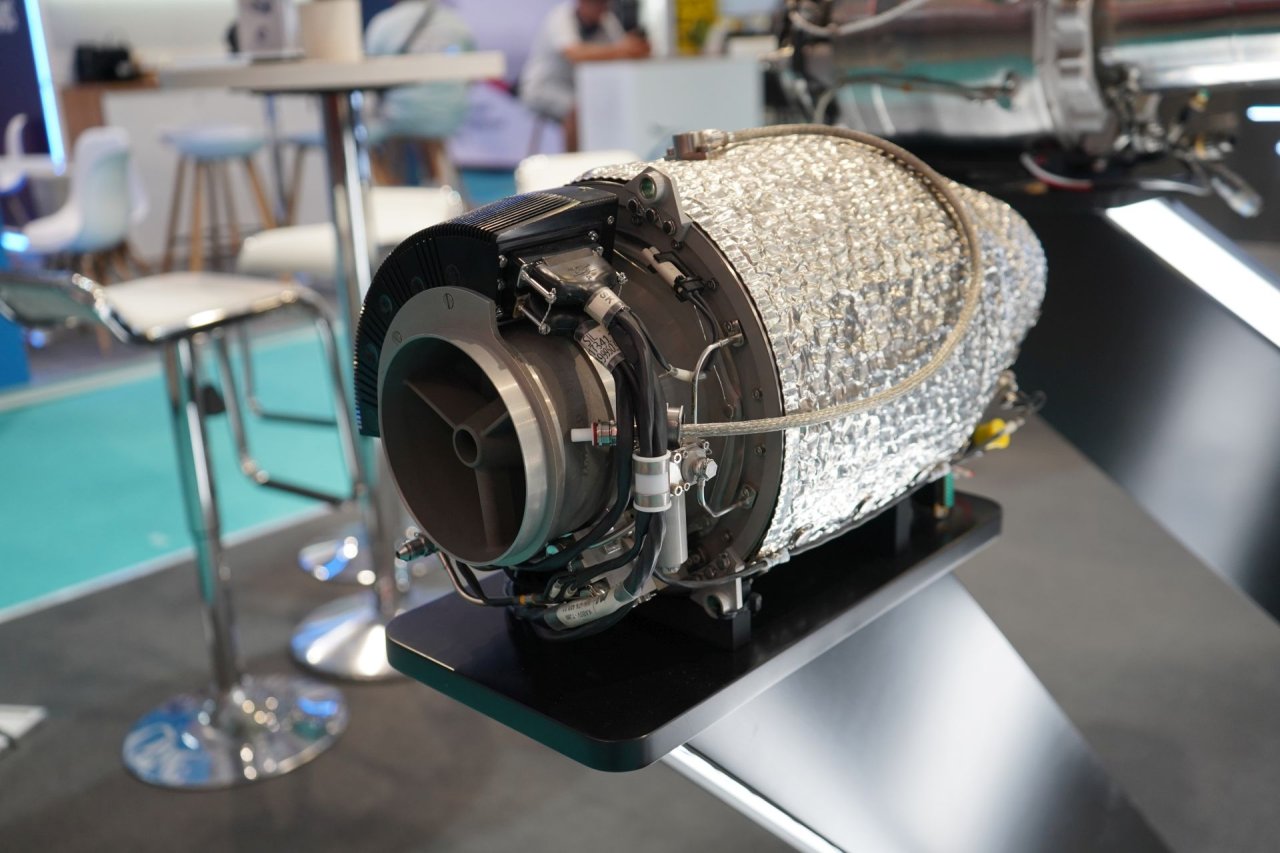
While headlines are dominated by the latest drones and missile systems, another story is unfolding behind the scenes. A relatively little-known European manufacturer is quietly becoming one of the key suppliers powering many of the West’s next-generation precision weapons.
That company is the Czech engineering firm PBS Group.
Over the past few years, PBS has evolved from a niche aerospace manufacturer into one of the leading producers of compact turbojet engines for cruise missiles, loitering munitions, and jet-powered unmanned aircraft.
Now, the company has secured another major defense contract.
During the Farnborough International Airshow 2026, PBS Group announced that it would supply engines for the new American White Spike interceptor developed by Zone 5 Technologies. Interestingly, the same Czech manufacturer is already linked to the propulsion system of the AGM-188A Rusty Dagger cruise missile, a weapon widely associated with future deliveries to Ukraine.
Meet White Spike
Modern battlefields have exposed a growing problem for air-defense forces around the world.
Cheap attack drones are now being produced in enormous numbers, while many existing air-defense missiles cost millions of dollars apiece. Using an expensive interceptor against a relatively inexpensive drone is becoming economically unsustainable.
To solve this challenge, the U.S. Department of Defense has embraced the concept of Affordable Mass—deploying large numbers of lower-cost precision weapons instead of relying solely on a limited inventory of expensive missile systems.
One of the most promising projects built around this idea is White Spike.
Developed by Zone 5 Technologies, the system consists of a mobile launcher, a fire-control system, and a compact jet-powered interceptor capable of engaging aerial targets at ranges exceeding 50 kilometers.
According to the developer, the system could cost roughly half as much as existing interceptor solutions, although official pricing has not yet been disclosed.
Why PBS?
At first glance, it may seem unusual that an American missile program relies on engines designed by a Czech company.
In reality, it makes perfect sense.
PBS Group has spent decades specializing in one of the most technically demanding fields of aerospace engineering—small turbojet engines.
Building a compact, reliable, and fuel-efficient jet engine is often significantly more difficult than designing the missile airframe itself. Because of this, many Western defense manufacturers choose to integrate proven propulsion systems instead of developing entirely new engines from scratch.
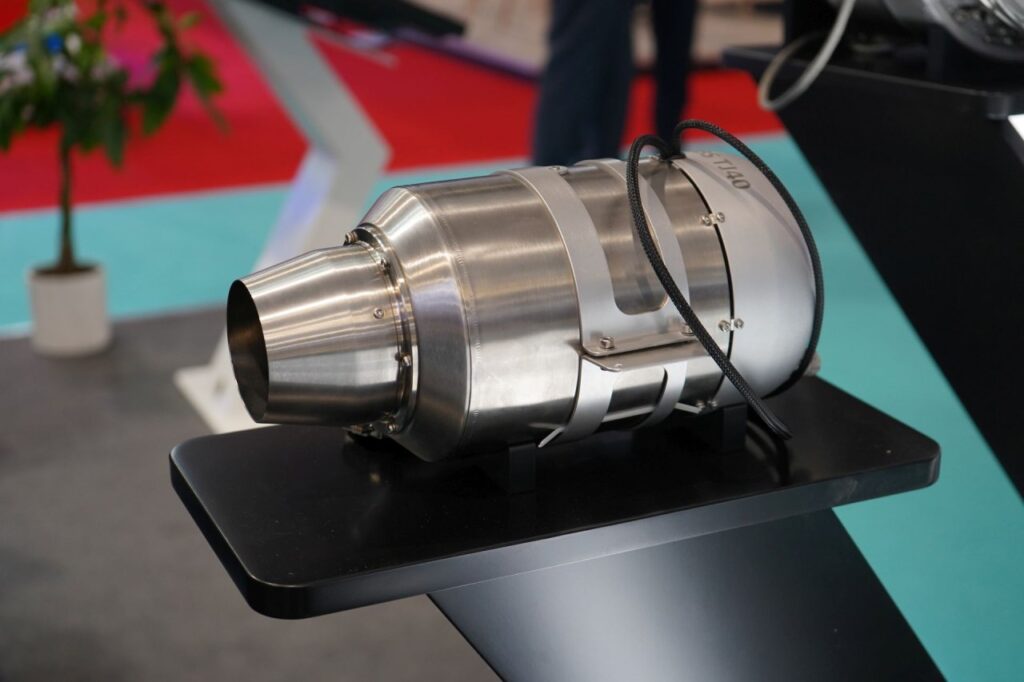
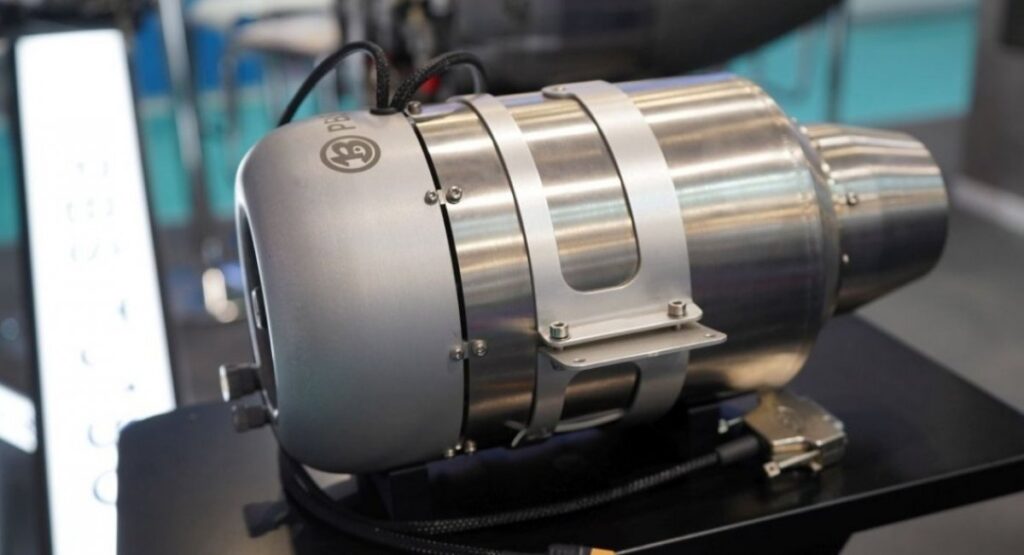
Under the new agreement, PBS Aerospace will manufacture TJ40 and TJ80 turbojet engines at its facility in Roswell, Georgia, combining European engineering expertise with American production capacity.
The Company That Suddenly Became Essential

Only a few years ago, PBS was primarily known inside the aerospace industry.
The company produced auxiliary power units, compact gas turbines, and specialized aviation equipment.
Modern warfare has dramatically changed that.
Today, compact turbojet engines are among the most sought-after technologies in the defense sector. They power:
- Cruise missiles
- Jet-powered drones
- Decoy systems
- Long-range loitering munitions
- Future interceptor missiles
To meet growing demand, PBS has invested hundreds of millions of Czech crowns in expanding production facilities while simultaneously increasing manufacturing capacity in the United States and India.
The company’s engine output has grown several times over in just a few years.
White Spike Isn’t the Only Program
The partnership between PBS and Zone 5 Technologies extends beyond a single interceptor.
The Czech company is also involved in the Extended Range Attack Munition (ERAM) program, which has produced the AGM-188A Rusty Dagger cruise missile.
Rusty Dagger is intended to become an affordable long-range precision weapon that perfectly fits the Pentagon’s “Affordable Mass” strategy—producing large quantities of relatively inexpensive guided weapons instead of relying exclusively on costly long-range missiles.
Industry reports indicate that PBS’s TJ80 engine family is among the most likely propulsion systems selected for Rusty Dagger, although the U.S. government has not officially confirmed the exact engine model.
Growing Cooperation with Ukraine
Ukraine has also become an increasingly important partner for PBS.
During the Farnborough Airshow, the Czech manufacturer signed a memorandum of understanding with the Ukrainian company Airlogix aimed at gradually localizing production of compact turbojet engines inside Ukraine.
The cooperation is expected to begin with engine assembly and maintenance before expanding toward partial manufacturing of key components at Ukrainian facilities.
Such a move would strengthen the supply chain for Ukrainian long-range drone programs while reducing dependence on foreign logistics.
Why Small Jet Engines Have Become Strategic Assets
A decade ago, most attention focused on missiles themselves.
Today, priorities are shifting.
Missile airframes can often be manufactured relatively quickly.
Modern electronics are increasingly available through large-scale production.
Compact turbojet engines, however, remain one of the most technologically demanding components in any modern precision weapon.
They determine:
- Maximum range
- Fuel efficiency
- Flight speed
- Operational reliability
- Overall production cost
As a result, manufacturers capable of producing these engines are becoming just as strategically important as aircraft engine manufacturers have traditionally been for military aviation.
Conclusion
The new agreement between PBS Group and Zone 5 Technologies highlights a broader trend shaping today’s defense industry.
Competition is no longer limited to companies building complete missiles or drones. Increasingly, the real technological race revolves around the critical components hidden inside those systems.
PBS Group is rapidly establishing itself as one of the world’s leading suppliers in one of the most strategically valuable niches—compact turbojet engines. Its propulsion systems are already powering or being considered for American interceptor missiles, next-generation cruise missiles, and Ukrainian long-range unmanned platforms.
In the coming decade, the true value of many advanced weapons may not lie in their warheads or guidance systems, but in the small jet engines that make them possible.






