
America’s Secret AIM-260 Missile Finally Appears: The U.S. Is Building a Weapon Designed to Beat China in the Next Air War

This material is based on reporting by The War Zone.
For years, the American AIM-260 JATM existed almost like a ghost. There were no official photos, almost no public specifications, and only vague comments from Pentagon officials. Over time, the missile gained an almost mythical reputation — the weapon that was supposed to restore America’s advantage in long-range air combat against China.
Now, the AIM-260 has finally started to emerge from the shadows.
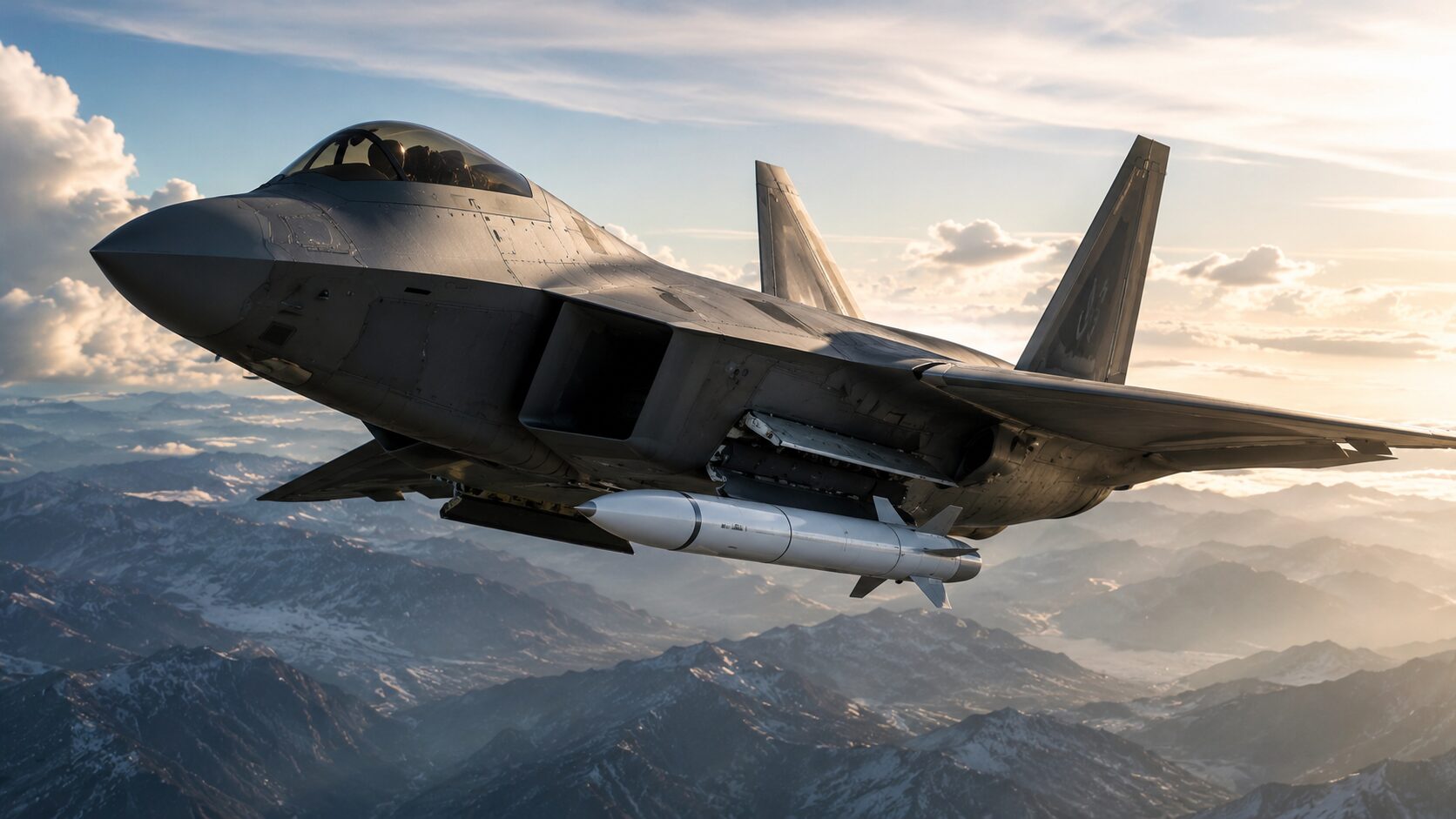
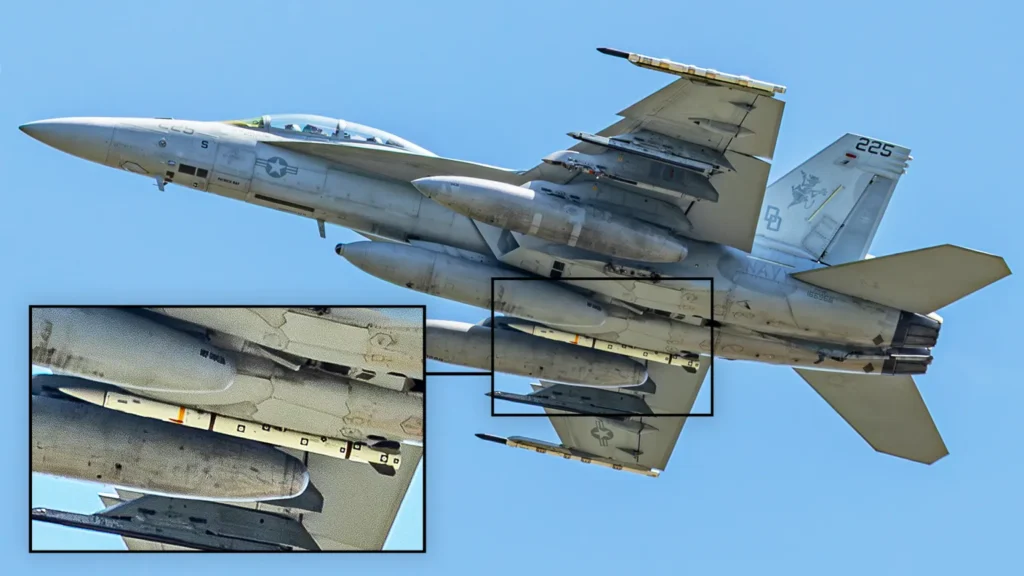
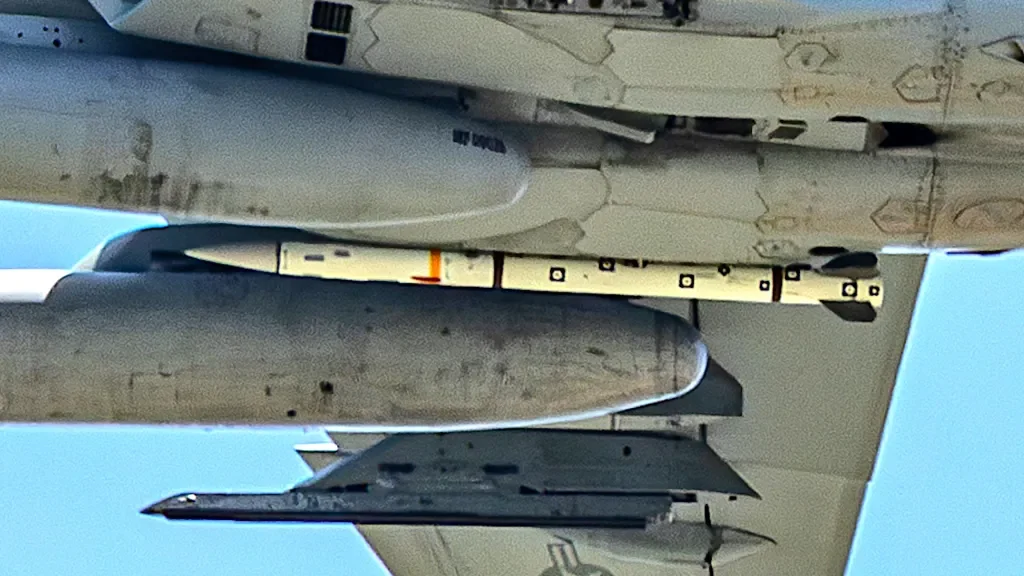
Sharp-eyed observers recently spotted what appears to be the missile mounted beneath an F-22 Raptor during official U.S. Air Force material releases. While the military still avoids direct confirmation, few analysts doubt that the weapon in question is the AIM-260 JATM — the most secretive American air-to-air missile program in years.
Why the U.S. Suddenly Needed a New Missile

The entire AIM-260 program exists because of China.
For decades, the United States assumed its AIM-120 AMRAAM remained the world’s premier beyond-visual-range air-to-air missile. Then China introduced the PL-15 — a long-range missile equipped with a modern active radar seeker and reportedly far greater engagement range than earlier Chinese designs.
For the Pentagon, the PL-15 was a deeply uncomfortable development.
American planners realized that Chinese fighters could potentially fire first in a future Pacific conflict. In modern air warfare, that matters enormously. The aircraft that detects first, launches first, and forces the enemy onto the defensive often controls the fight before pilots even see each other.
That realization led to the Joint Advanced Tactical Missile program, or JATM, launched in 2017. Its mission was straightforward: create a missile capable of outperforming the Chinese PL-15 in range, speed, and resistance to electronic warfare.
The AIM-260 Was Designed for War with China
What makes the AIM-260 particularly interesting is that it was built specifically for a future high-end conflict in the Pacific.
Unlike older American missiles shaped by decades of counterinsurgency warfare in the Middle East, the JATM is intended for combat against advanced Chinese fighters, airborne early-warning aircraft, and dense integrated air-defense systems.
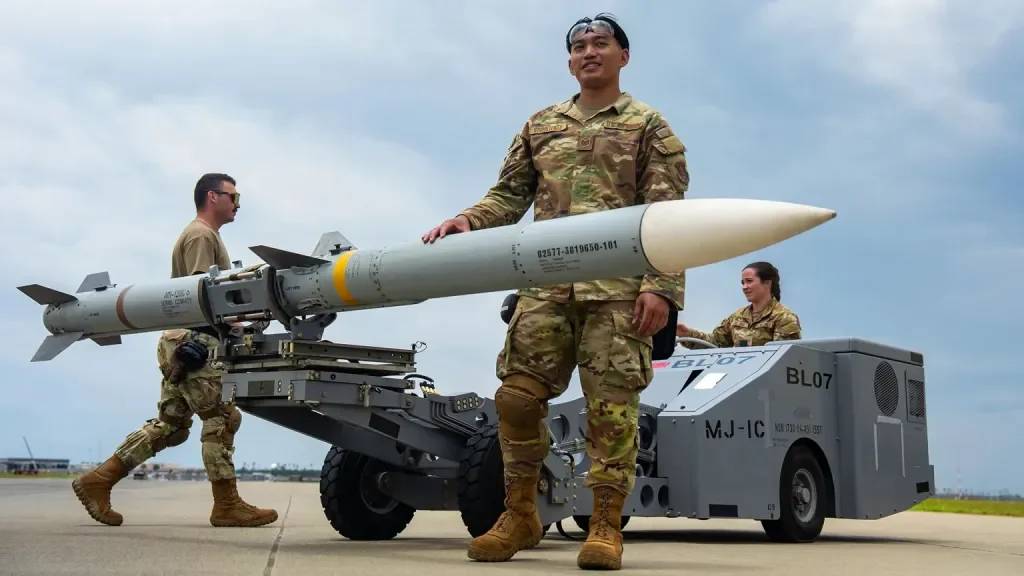
According to available information, the AIM-260 is designed to fit inside the internal weapon bays of aircraft like the F-22 and F-35, meaning its dimensions are believed to be similar to the AIM-120 AMRAAM. Yet despite maintaining roughly the same size, the missile is expected to deliver dramatically improved range and performance.
That engineering challenge appears to be one of the program’s defining achievements: packing next-generation capability into an existing form factor.
Unofficial estimates suggest the AIM-260 may exceed Mach 5 and significantly outrange the latest AIM-120D variants. The actual numbers remain classified, but the extraordinary secrecy surrounding the missile says a great deal about how important Washington considers the program.
The Missile Is So Secret That the U.S. Built Dedicated Storage Facilities
The level of secrecy surrounding the AIM-260 is unusual even by Pentagon standards.
Several years ago, reports emerged that specialized secure storage facilities were being constructed at Hill Air Force Base specifically for the new missile. At the time, The War Zone reported that the JATM program was associated with a Special Access Program — among the most tightly controlled categories in the American defense world.
That detail alone reveals how strategically important the missile is considered.
The United States clearly sees the AIM-260 as a cornerstone of future air dominance. And the missile may not be limited to piloted fighters. Reports have already suggested that the JATM could eventually arm Collaborative Combat Aircraft — the autonomous “loyal wingman” drones currently being developed alongside the NGAD and F-35 programs.
In other words, the AIM-260 is not just another missile. It is likely intended to become the primary long-range air combat weapon for the next generation of American airpower.
Air Warfare Is Becoming a New Missile Race
Perhaps the most interesting aspect of the AIM-260 story is what it says about the future of air combat itself.
For years, many believed traditional dogfighting was becoming obsolete. Modern aerial warfare increasingly revolves around sensors, radar networks, stealth, electronic warfare, and long-range missile engagements far beyond visual range.
The side that detects first and launches first gains an enormous advantage before the enemy even understands what is happening.
That is why China is developing the PL-15 and PL-21, Europe continues to invest in the Meteor missile, and the United States is pushing forward with the AIM-260.
In many ways, a new arms race has already begun — not a nuclear race, but a race for long-range aerial dominance.
And even if the true capabilities of the AIM-260 remain classified for years to come, the missile may already represent one of the most important American air weapons of the 21st century.






