
America Unveils the MV250 Hybrid Drone: A VTOL Aircraft That Can Carry a Ton of Cargo and Perform Combat Missions

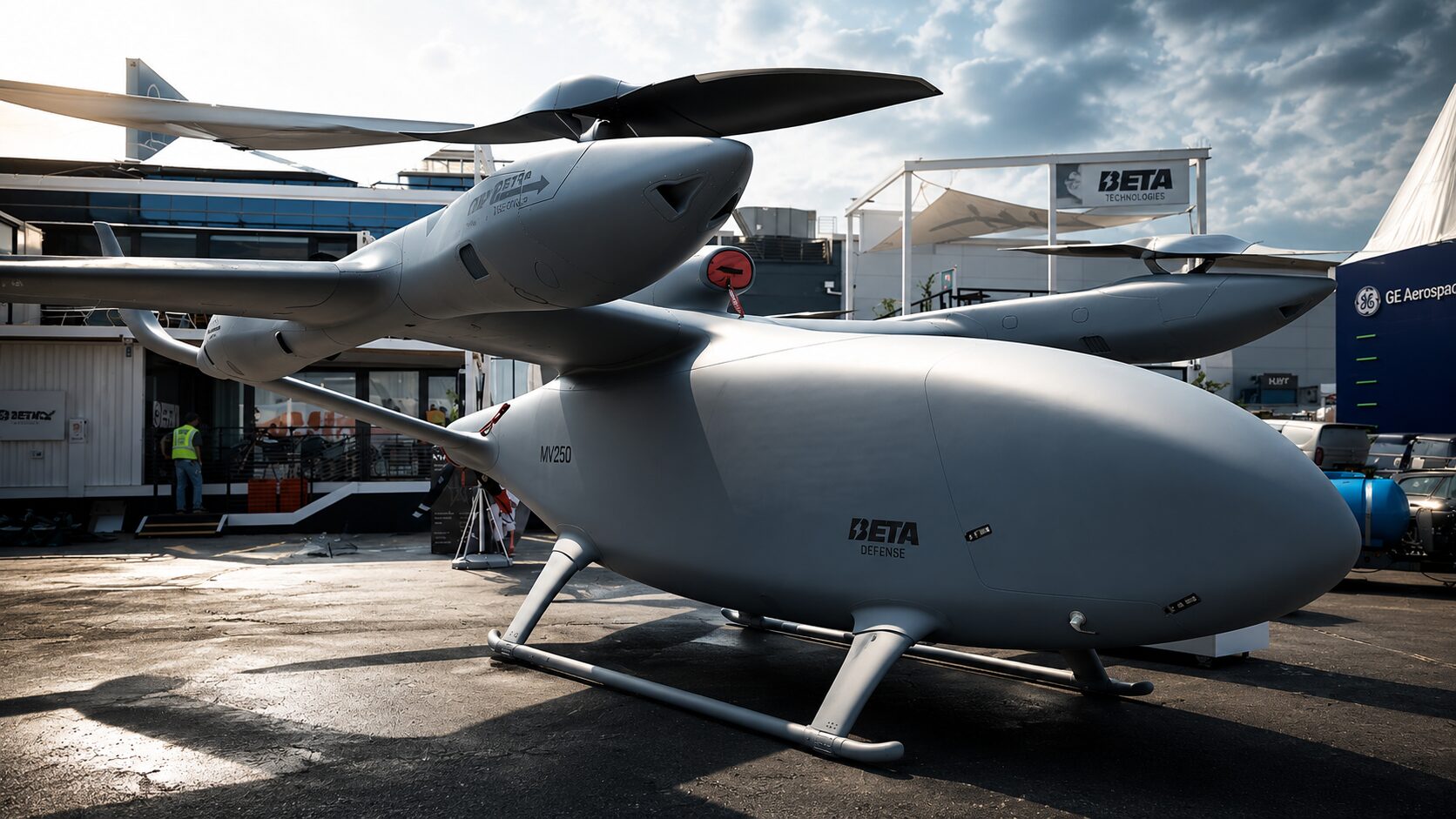
While most drone manufacturers are focused on increasing range or payload capacity, U.S.-based BETA Technologies has taken a different approach. At the Farnborough International Airshow 2026, the company unveiled the MV250, a heavy hybrid-electric vertical takeoff and landing (VTOL) unmanned aircraft designed not only for cargo transport but also for reconnaissance and combat support missions.
At first glance, the aircraft resembles the new generation of civilian eVTOLs that promise to revolutionize urban air mobility. However, beneath its familiar appearance lies a platform purpose-built for military operations, capable of flying dangerous missions without putting a pilot at risk.
A Hybrid Powertrain Instead of Pure Electric Flight
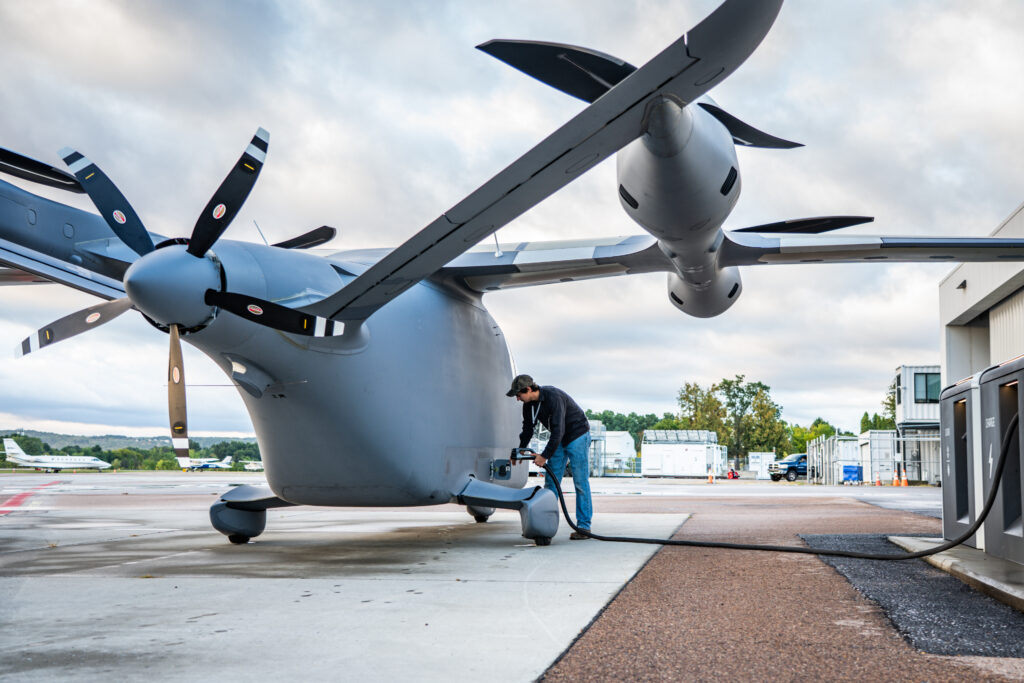
The biggest difference between the MV250 and BETA’s civilian ALIA aircraft is its propulsion system.
While the commercial version relies entirely on battery-electric power, the MV250 uses a hybrid-electric architecture in which a gas turbine drives a generator that supplies electricity to the aircraft’s electric motors. This configuration eliminates one of the biggest limitations of fully electric aircraft—restricted flight range.
According to BETA Technologies, the MV250 can carry up to 907 kg (2,000 lb) of payload over a tactical range of approximately 463 kilometers (288 miles). Its ferry range reaches 2,400 kilometers (about 1,300 nautical miles), while maximum speed is approximately 314 km/h (195 mph).
More Than Just a Cargo Drone
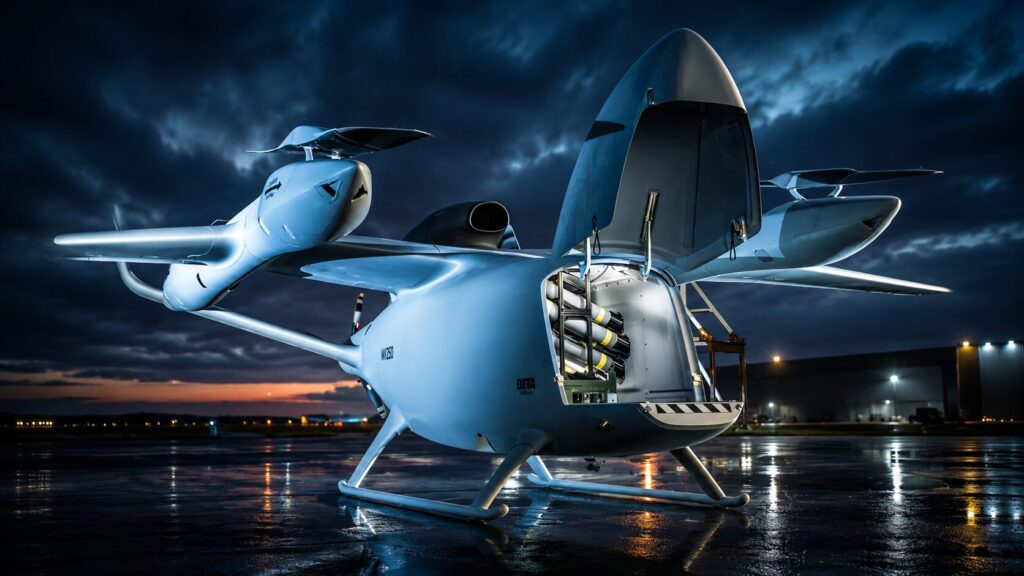
Although logistics is its primary mission, the MV250 has been designed from the outset as a versatile military platform.
The aircraft can deliver ammunition, fuel, food supplies, and equipment directly to frontline units, evacuate wounded personnel, and provide communications support between dispersed forces. Thanks to its hybrid propulsion system, it can also remain airborne for up to 12 hours during intelligence, surveillance, and reconnaissance (ISR) missions—significantly longer than most electric VTOL aircraft in its class.
The company also envisions the MV250 carrying precision-guided munitions, surveillance sensors, and electronic warfare equipment, allowing the same platform to transition from cargo transport to reconnaissance or strike missions with minimal modification.
Built on a Proven Platform
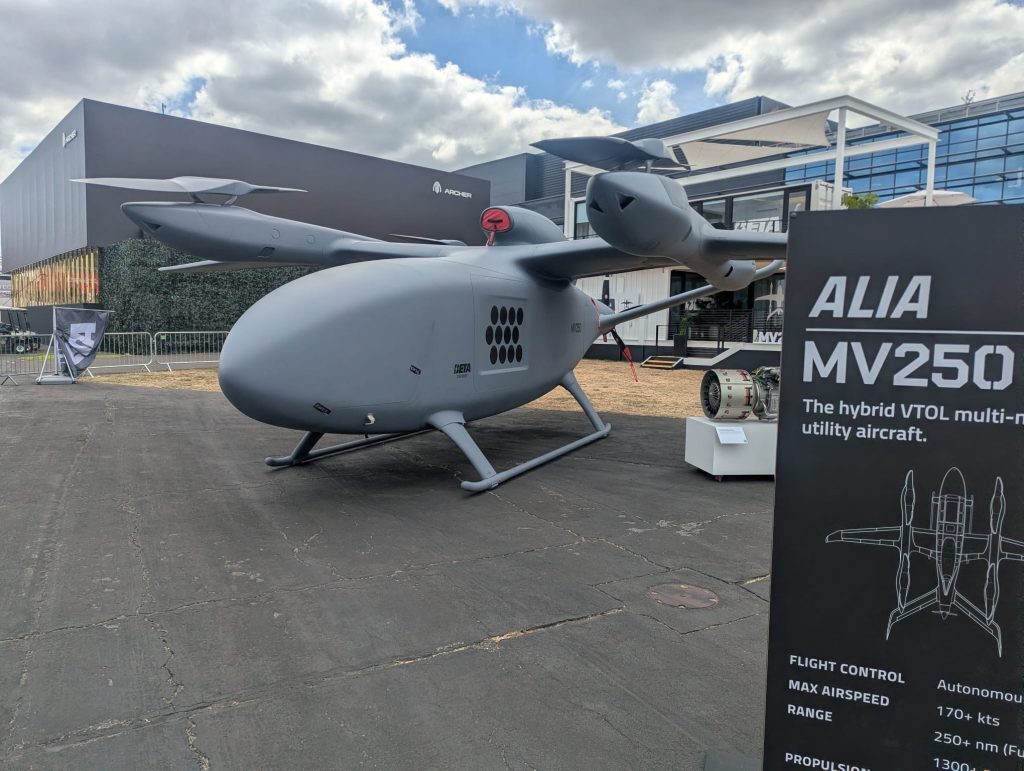
One of the project’s biggest advantages is that it was not developed entirely from scratch.
The MV250 leverages the aerodynamic design and technologies of BETA’s ALIA aircraft family, which is already progressing through civilian certification. By building on an existing platform, the company has been able to reduce development costs, shorten testing timelines, and capitalize on proven engineering solutions.
Although the aircraft displayed at Farnborough has not yet flown, BETA says it was built using flight-representative hardware and is intended to support the upcoming flight-test campaign.
MV250 Technical Specifications
Developer: BETA Technologies (United States)
Type: Hybrid-electric autonomous VTOL aircraft
Maximum Payload: 907 kg (2,000 lb)
Tactical Range: Approximately 463 km (288 miles)
Ferry Range: Up to 2,400 km (1,300 nautical miles)
Maximum Speed: Approximately 314 km/h (195 mph)
ISR Endurance: Up to 12 hours
Takeoff and Landing: Vertical (VTOL)
Crew: None
Why It Matters
The MV250 reflects one of the most important trends shaping the future of military aviation.
For decades, helicopters have been responsible for moving troops, supplies, and casualties across the battlefield. Increasingly, however, armed forces are looking toward autonomous aircraft capable of performing the same missions without exposing pilots to enemy fire.
Such platforms could become particularly valuable in heavily defended environments where advanced air defense systems make conventional helicopter operations increasingly dangerous.
By combining vertical takeoff capability with the endurance and range provided by hybrid-electric propulsion, the MV250 offers a practical alternative for modern military logistics, reconnaissance, casualty evacuation, and potentially even strike operations.
If the program meets expectations, the MV250 could become one of the first operational examples of a new generation of autonomous military aircraft capable of performing multiple battlefield roles without a crew onboard.






