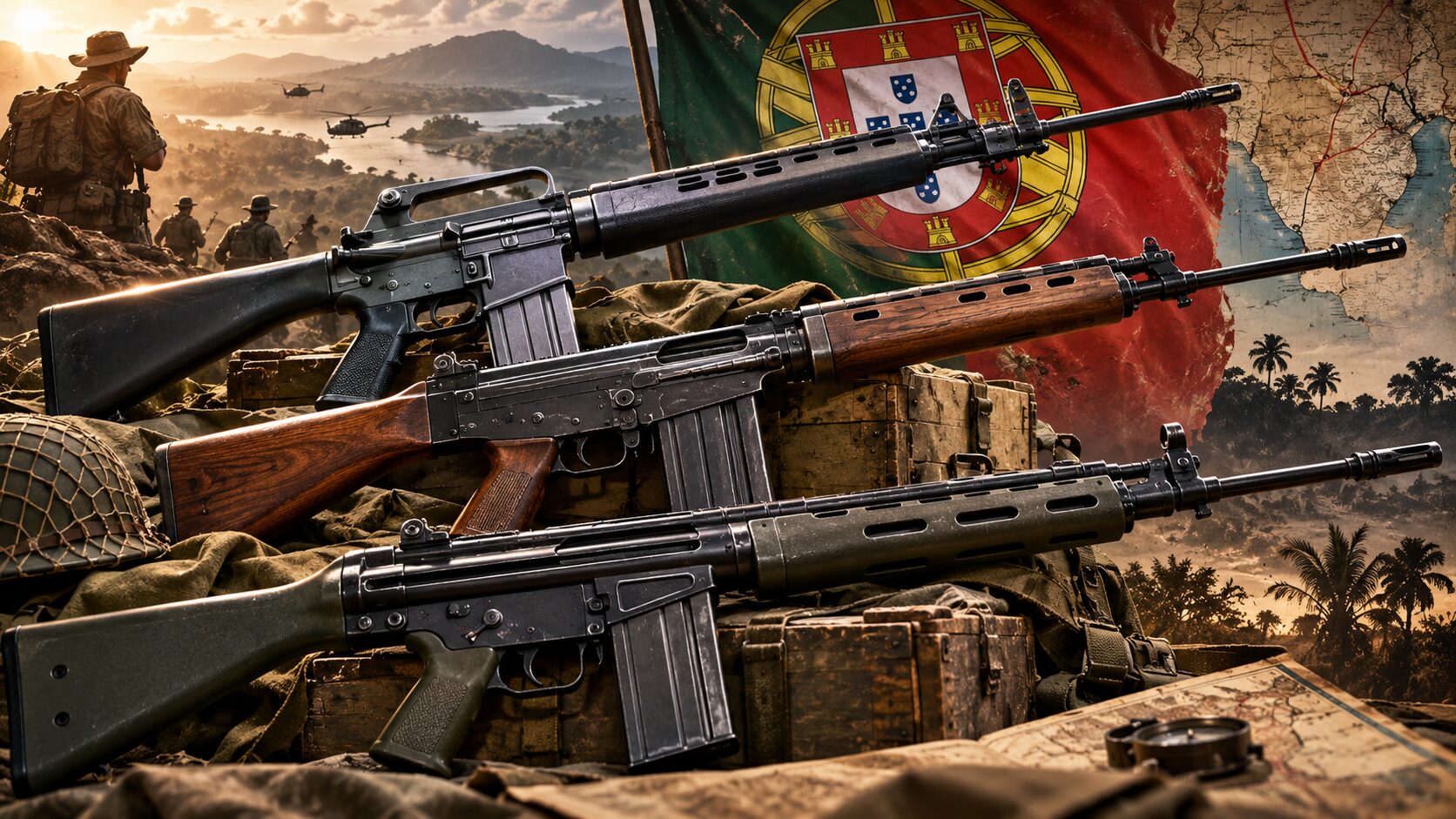
In the early 1960s, Portugal found itself in a rather unusual position. It had to choose a new service rifle at precisely the moment when three exceptionally strong weapons of the same generation were available. The Belgian FN FAL was already becoming one of the most widespread rifles in the Western world. The American AR-10 looked like a weapon from the future—lightweight, built around an aluminum receiver and straight-line stock, and particularly well liked by Portuguese paratroopers. Finally, there was the German G3, a relatively young design descended from the Spanish CETME and built around a completely different operating system.
All three fired the same 7.62×51mm NATO cartridge. All three found their way into Portuguese hands. More importantly, once actual combat began, the G3 did not demonstrate any overwhelming superiority over its competitors. Yet it was the G3 that became Portugal’s standard service rifle for decades to come.
To understand why, we need to look not so much at the rifle itself as at the situation in which the Portuguese Army found itself in 1961.
The War Began Before Rearmament Was Complete
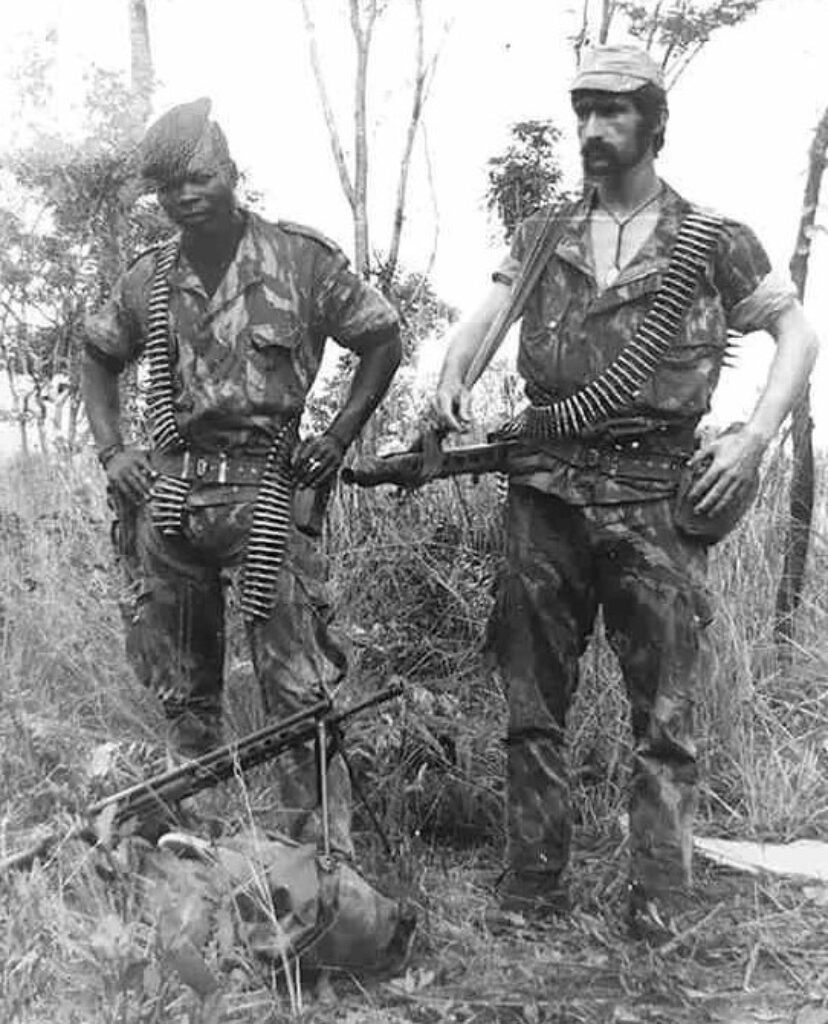
At the beginning of the fighting in Angola, a substantial part of the Portuguese infantry was still armed with 7.92mm Mauser bolt-action rifles. For an army entering a modern conflict in the middle of the 20th century, this was becoming a serious problem. Early operations demonstrated that Portuguese units urgently needed a modern self-loading and automatic rifle.
Portuguese accounts describe the problem quite clearly. In Angola, bolt-action rifles were poorly suited to repelling mass attacks, while in Guinea and Mozambique the insurgents were increasingly equipped with automatic weapons. By 1961, therefore, acquiring modern rifles had become one of the Army’s priorities.
But there was another requirement. Lisbon could not simply purchase several tens of thousands of rifles and consider the problem solved. Portugal needed a reliable long-term supply of weapons and spare parts. Ideally, that meant establishing domestic production.
For trials, Portugal acquired 2,825 German G3 rifles and approximately 4,795 Belgian FALs. At the same time, West Germany temporarily supplied another 14,867 FALs from its own stocks, while South Africa provided an additional 12,500. As a result, during the early phase of the war Portugal actually had around 30,000 FALs—far more than G3s.
The rifles were distributed among units in Angola and effectively subjected to the most demanding trial possible: a real war.
And this is where the story becomes interesting.
If the winner had been selected purely on the basis of which rifle performed best in Africa, the outcome would have been far from obvious.
The FAL Was Good. So Was the G3
Portuguese assessments of the two rifles differ considerably from the retrospective image of the G3 as an obvious winner.
The FAL was regarded as more robust and easier to carry. Its short-stroke gas-piston system was already well proven, although its adjustable gas regulator could create additional difficulties for inadequately trained soldiers. The G3, meanwhile, demonstrated better accuracy, although the Portuguese also noted issues associated with its roller-delayed mechanism.
The crucial point is that both rifles were considered capable of meeting operational requirements.
The trials did not conclude that the FAL was a bad rifle and the G3 an excellent one.
Technically, the two represented very different approaches to solving the same problem. The FAL used a gas-operated action with a tilting bolt. A standard FAL 50.00 weighed roughly 4.25 kg unloaded, had a 533mm barrel, and measured around 1,090mm overall. Its cyclic rate was approximately 650–700 rounds per minute.
The G3 dispensed with a conventional gas system altogether. Instead, it used a roller-delayed blowback action. A typical G3 had a 450mm barrel, an overall length of about 1,025mm, and weighed roughly 4.3–4.4 kg. Its cyclic rate was somewhat lower, at approximately 500–600 rounds per minute.
The comparison was therefore remarkably close. The FAL was somewhat longer, while the G3 was more compact. Depending on the specific variants compared, the German rifle had little or no meaningful advantage in weight. Both used 20-round magazines and fired the same cartridge.
It is difficult to find a single technical characteristic here that would, by itself, explain the G3’s victory.
And then there was the third contender.
AR-10: The Rifle That Could Have Changed Everything
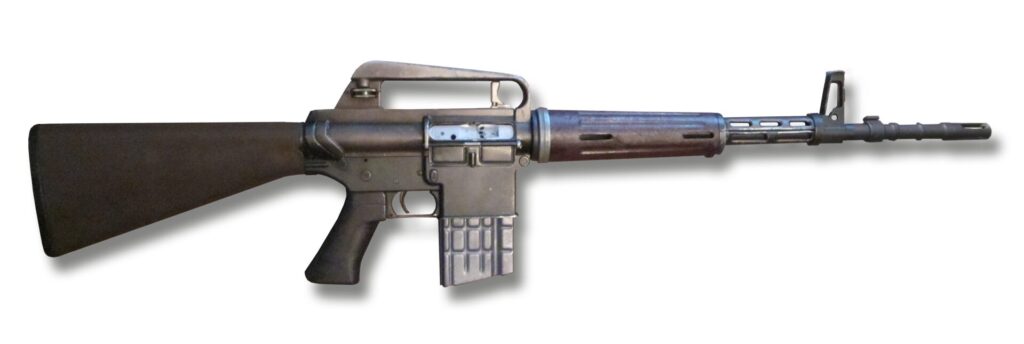
If these weapons were compared primarily from the infantryman’s point of view, the AR-10 might have been the most interesting of the three.
Portuguese paratroopers had adopted it as early as 1960. For its time, Eugene Stoner’s design was radical. Extensive use of aluminum alloys and plastics made it possible to produce a full-power 7.62×51mm automatic rifle weighing roughly 3.3 kg, depending on configuration. Even the reinforced Portuguese version remained remarkably light for a rifle of its class.
Moreover, the Portuguese AR-10 was no longer an early experimental weapon. Artillerie-Inrichtingen had refined the design on the basis of accumulated experience. It received a strengthened extractor, a revised gas regulator, a heavier barrel with a chrome-lined chamber, reinforced locking lugs, and a forward-assist device.
Portugal received roughly 4,000–5,000 of these rifles. They were issued primarily to paratroopers and saw extensive combat use in Angola and Mozambique.
On paper, it looked like an almost ideal contender: substantially lighter than the G3 and FAL, technologically advanced, and already proven with elite Portuguese troops.
But the history of the AR-10 demonstrates perfectly why a military rifle competition cannot be reduced to weapon specifications.
The Netherlands restricted further arms deliveries to Portugal. At the same time, Artillerie-Inrichtingen itself was winding down AR-10 production after facing export restrictions, insufficient orders, and the end of its licensing agreement. The production line was effectively disappearing, along with any realistic possibility of turning the AR-10 into the standard rifle of Portugal’s rapidly expanding army.
Portuguese paratroopers could continue to love their AR-10s.
For a government that needed hundreds of thousands of rifles, spare parts, and guaranteed supplies for years to come, that was no longer decisive.
The AR-10 did not lose in the jungle.
It lost at the factory and at the negotiating table.
The G3’s Real Advantage Was in Germany
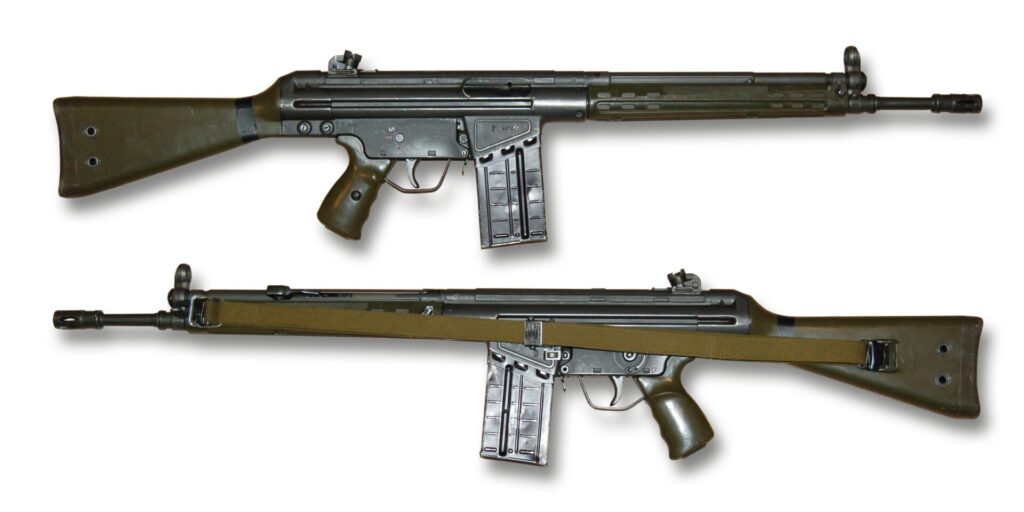
The G3 had something the AR-10 lacked and which ultimately outweighed many of the FAL’s advantages: West Germany was prepared to help Portugal establish its own production system.
Portugal’s Fábrica Militar de Braço de Prata already possessed a substantial industrial base. What it needed was to retool that infrastructure for mass production of a modern automatic rifle.
West Germany offered highly attractive terms.
Portugal would receive the technology and assistance required to manufacture the G3 domestically. More remarkably, the German side itself placed an order for 50,000 Portuguese-made rifles for its own armed forces.
It created an almost paradoxical arrangement: a country acquiring a license for a German rifle simultaneously received a major launch customer in Germany itself. Portuguese military sources specifically identify German production concessions and the 50,000-rifle order among the reasons for selecting the G3.
That completely changed the economics of the program.
The factory received guaranteed initial demand. Portugal received equipment, technical assistance, and the ability to manufacture as many rifles as its army required. Production was established remarkably quickly: the decision was made in 1961, and roughly fifteen months later, by the end of 1962, the first locally manufactured G3s were coming off the production line. Portugal also mastered the manufacture of barrels and magazines.
Fábrica Militar de Braço de Prata became much more than an assembly plant. It possessed barrel-making facilities, metalworking equipment, toolmaking capabilities, quality-control systems, and its own technical personnel. Portuguese military sources describe it as a major industrial complex employing approximately 2,500 people.
The question of “G3 or FAL?” now looked completely different.
It was no longer primarily about which rifle a soldier found slightly more comfortable.
It was about which rifle Portugal could manufacture itself during a long war.
Why the FAL’s Gas Regulator Mattered More Than It Seems
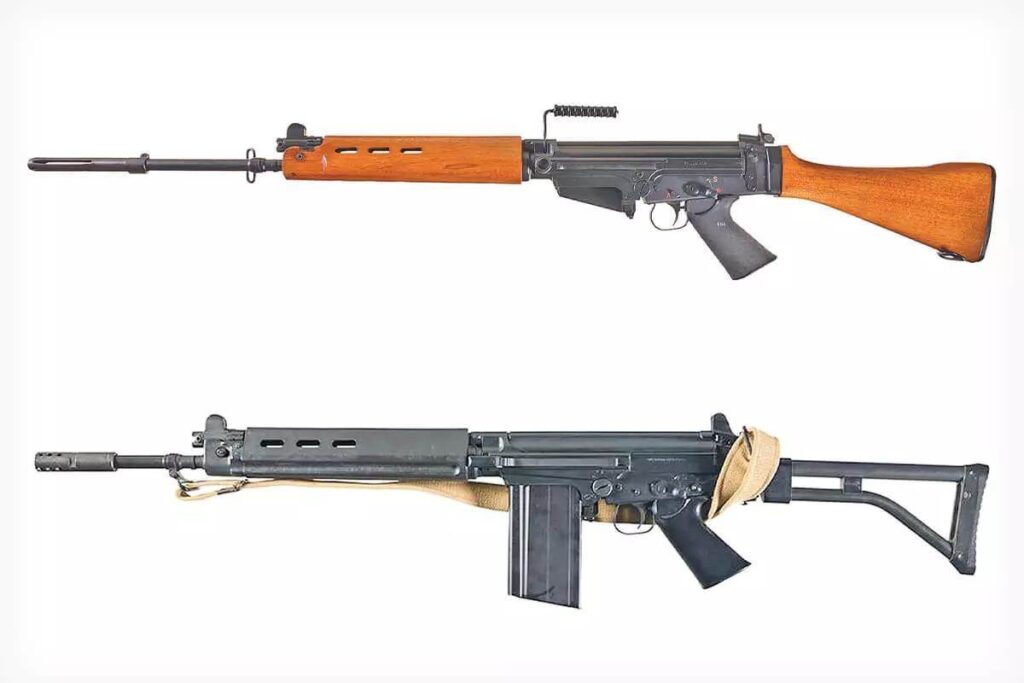
The G3 had another advantage that became particularly relevant as the Portuguese Army rapidly expanded.
The FAL used an adjustable gas system. This was not inherently a weakness—quite the opposite. The regulator allowed the rifle to be adapted to its condition, ammunition, and operating environment. But it also required the soldier to understand how the weapon worked.
Portugal was rapidly expanding its armed forces through conscription. What mattered was therefore not merely how effectively a trained soldier could use a rifle, but how quickly tens of thousands of new recruits could be taught to operate it correctly.
Portuguese historical accounts specifically note that the FAL’s gas adjustment created difficulties for insufficiently trained personnel. The G3 had no comparable user-operated gas regulator.
This created a characteristic engineering compromise. A more flexible system is not necessarily a better system for a mass army. An additional adjustment may be useful to an experienced soldier, but for a large conscript force it represents another procedure that must be explained, practiced, and supervised.
Once again, the G3 gained an advantage not through a spectacular performance figure, but through systemic simplicity.
A Rifle as an Industrial System
This is what makes the Portuguese decision particularly interesting.
If the three rifles are placed side by side and compared only in terms of weight, accuracy, barrel length, and operating mechanism, Lisbon’s decision does not appear obvious at all.
The AR-10 was considerably lighter.
The FAL had an excellent reputation, proved robust, and was already available to Portugal in substantial numbers.
The G3 was neither the lightest rifle nor unquestionably the most reliable, nor did it emerge as the overwhelming winner of troop trials.
But a government was not choosing a weapon for a single soldier.
It was choosing a weapon for an army.
And that changes the requirements completely. Who will grant a production license? Who will provide the machinery? Can barrels and magazines be manufactured domestically? Where will spare parts come from five years later? How quickly can conscripts be trained? Can tens of thousands of rifles continue to be produced regardless of a foreign government’s political decisions?
The AR-10 effectively gave Portugal a negative answer to the last question. The Dutch embargo demonstrated Lisbon’s dependence on a foreign supplier almost immediately. The FAL was an excellent weapon, but the German offer surrounding the G3 was part of a much more attractive industrial arrangement.
Portugal chose control over production.
And the consequences of that decision were enormous.
The G3 became one of the defining weapons of the Portuguese military during the Colonial Wars. Domestic manufacture allowed Portugal to produce rifles and sustain them without depending continuously on imports of complete weapons. Moreover, Portuguese manufacturing quality proved sufficient for some of the rifles to be exported back to the country from which the design had originated—West Germany.
It was a rare case in which a licensee manufactured a German rifle partly for the Germans themselves.
The FAL and AR-10 gradually moved into secondary roles. The FAL remained in service, including with units whose soldiers preferred it, while the AR-10 remained popular among paratroopers for years. But the G3 became the standard around which the wider system was built.
So Why Did the G3 Win?
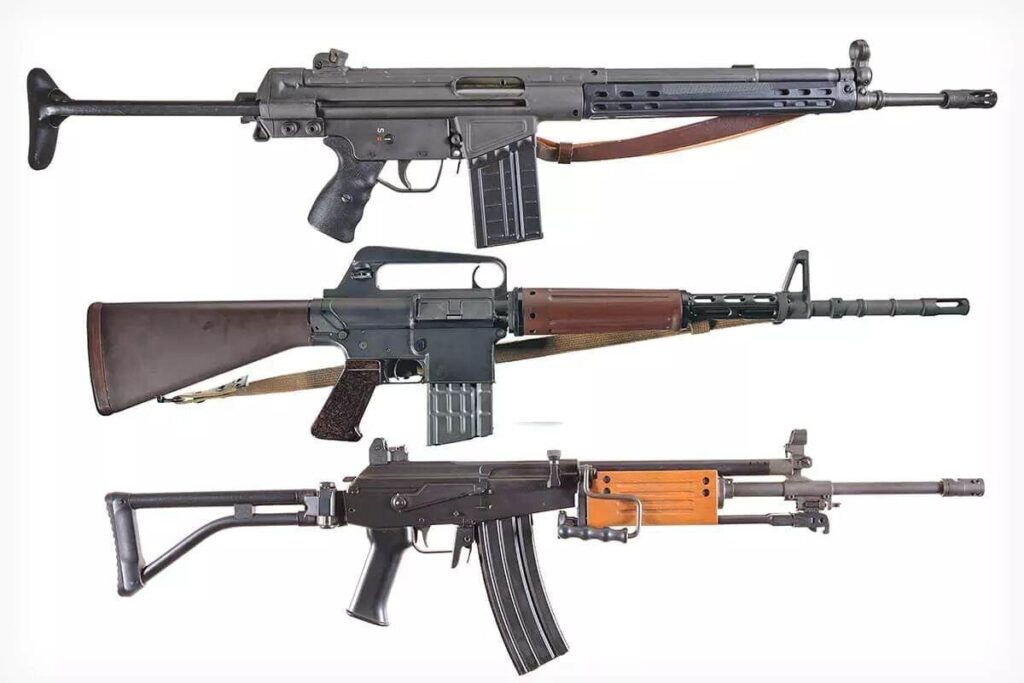
Not because it was the best rifle in every respect.
Portuguese trials did not demonstrate that.
It was the best industrial solution for a particular country at a particular moment.
Portugal in 1961 did not need a theoretically perfect rifle. It needed a weapon that could be obtained immediately, placed into domestic mass production, manufactured by the tens of thousands, maintained locally, and issued to a rapidly expanding conscript army. West Germany offered not only the G3, but also the technology to manufacture it, assistance in establishing the production line, and a huge initial order.
That is why the story of the Portuguese G3 is far more interesting than a conventional account of a successful battle rifle.
On the proving ground, it faced two exceptionally formidable competitors.
In the hands of a paratrooper, the AR-10 might have seemed superior.
In the hands of an experienced infantryman, the FAL might have been preferred.
But soldiers do not arm a war.
Industry does.
And that is where the G3 won the Portuguese competition.