They’re 70–80 Years Old, Yet Armies Still Won’t Retire Them: 10 of the Oldest Tanks Still in Service

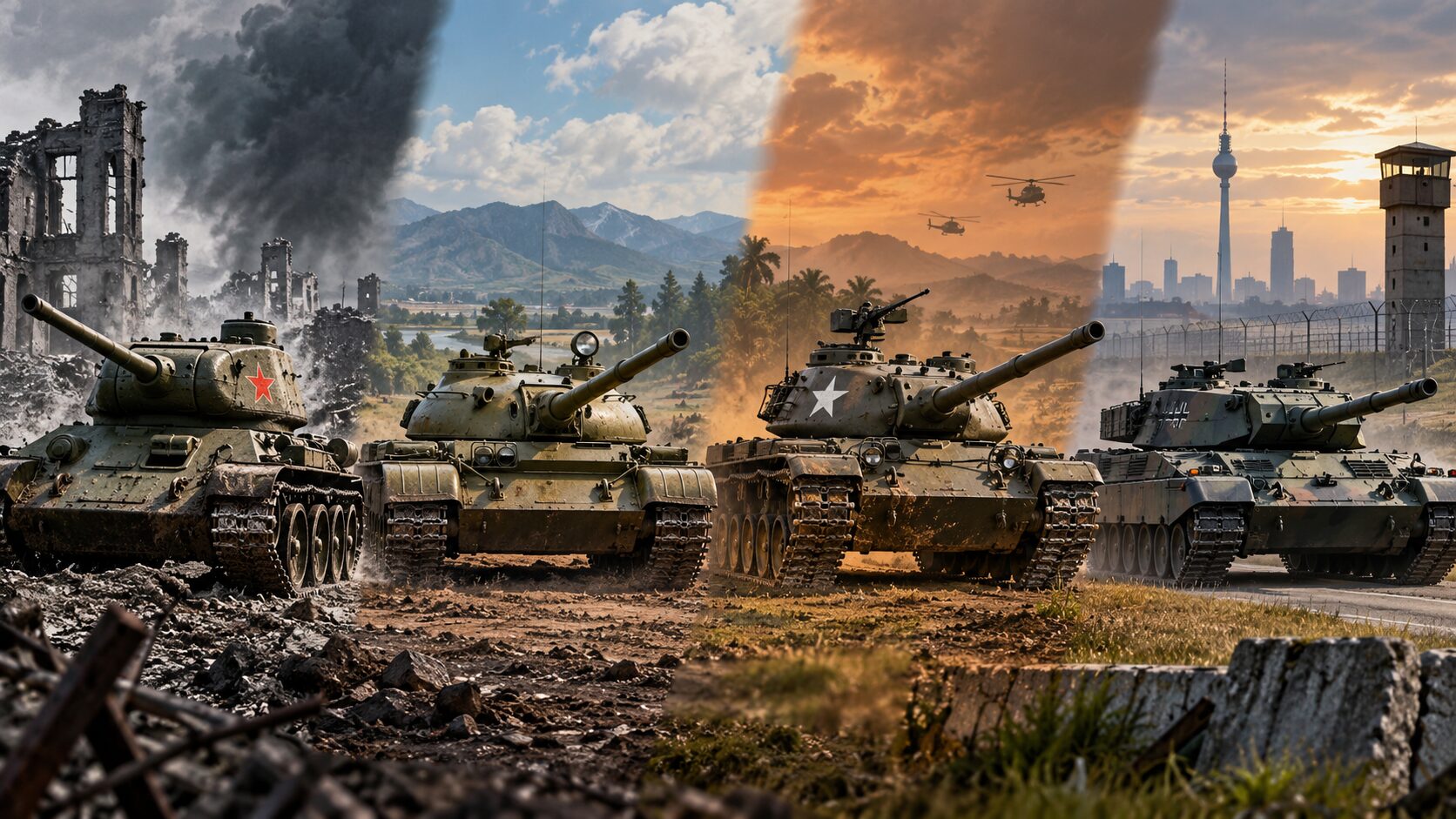
A modern tank is usually imagined as a huge computer on tracks: thermal sights, digital fire-control systems, satellite navigation, secure communications, active protection systems, and increasingly sophisticated ammunition. Against that background, it seems perfectly reasonable to assume that vehicles designed during World War II and the first decades of the Cold War should have disappeared from military service long ago, surviving only in museums. Reality, however, looks very different. T-34s and American M3 Stuarts can still be found in military inventories, South Africa operates distant descendants of the British Centurion, while families such as the T-54/55, M48 Patton, and Type 59 have shown a remarkable reluctance to become history.
And these are not always rusting machines forgotten in some remote storage yard. Some old tanks continue to be upgraded with new engines, thermal sights, laser rangefinders, modern communications, and fire-control systems. More remarkably, in 2026 Cambodia began receiving modernized Type 59D tanks from China — vehicles whose direct lineage goes back to the Soviet T-54 of the late 1940s. The first confirmed batch consisted of 39 tanks out of a planned total of 93.
This creates an interesting paradox. Military technology advances at an extraordinary pace, yet a successful tank chassis can sometimes outlive several generations of electronics, engines, weapons, and even military doctrines. So why does this happen?
1. T-34-85 — The World War II Tank That Never Completely Disappeared
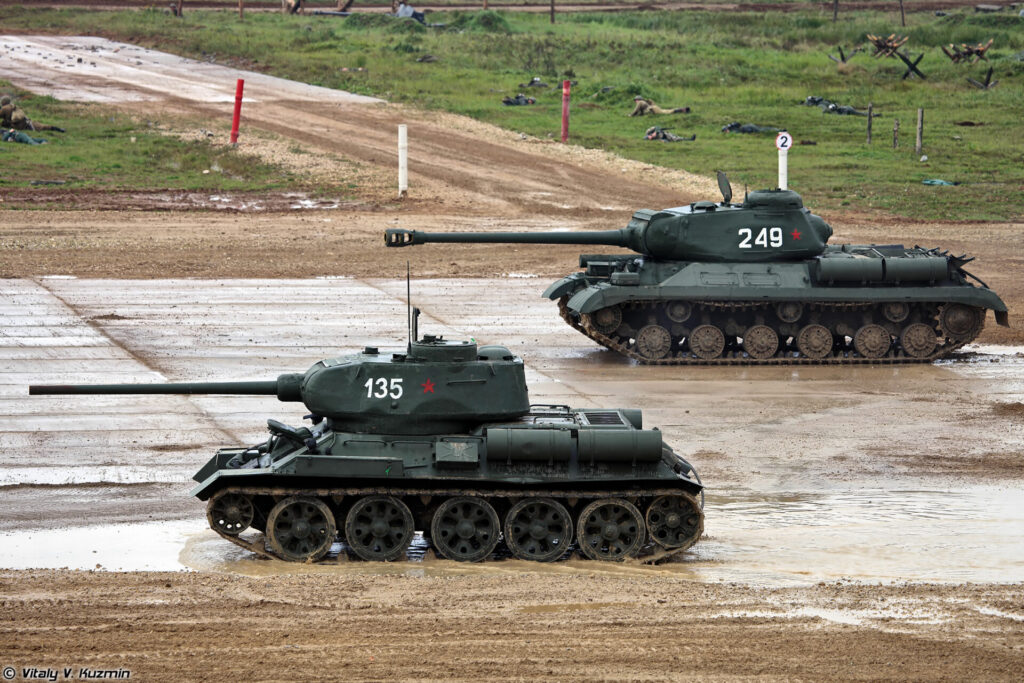
Family introduced: 1940
The T-34 is almost in a category of its own. The first production vehicles appeared before Germany invaded the Soviet Union, while the best-known late-war version, the T-34-85, entered mass production in 1944. For its time, the design offered an exceptionally effective combination of mobility, firepower, protection, and ease of mass production. During and after the war, the Soviet Union, Czechoslovakia, and Poland produced huge numbers of these tanks, which eventually spread across armies on several continents.
There is, however, an important caveat that applies to this entire list. “In service,” “held in reserve,” “stored by the military,” and “actually operated by combat units” are very different things. Determining the true condition of military equipment is particularly difficult in highly secretive states. North Korea is traditionally regarded as one of the last countries to retain T-34-85s, but establishing how many of those vehicles could actually leave their depots under their own power is virtually impossible.
Even so, the mere survival of the T-34 within military structures more than 80 years after its introduction is remarkable. The explanation is simple. As a modern main battle tank, the T-34 is hopelessly obsolete. But a tank does not necessarily have to fight another tank.
An old vehicle can be used for training, guarding facilities, supporting infantry, defending secondary sectors, or even as an improvised mobile artillery platform. As long as the engine starts, the gun fires, and ammunition and spare parts remain available, the vehicle does not become completely useless.
2. M3 Stuart — An American Veteran More Than 80 Years Old
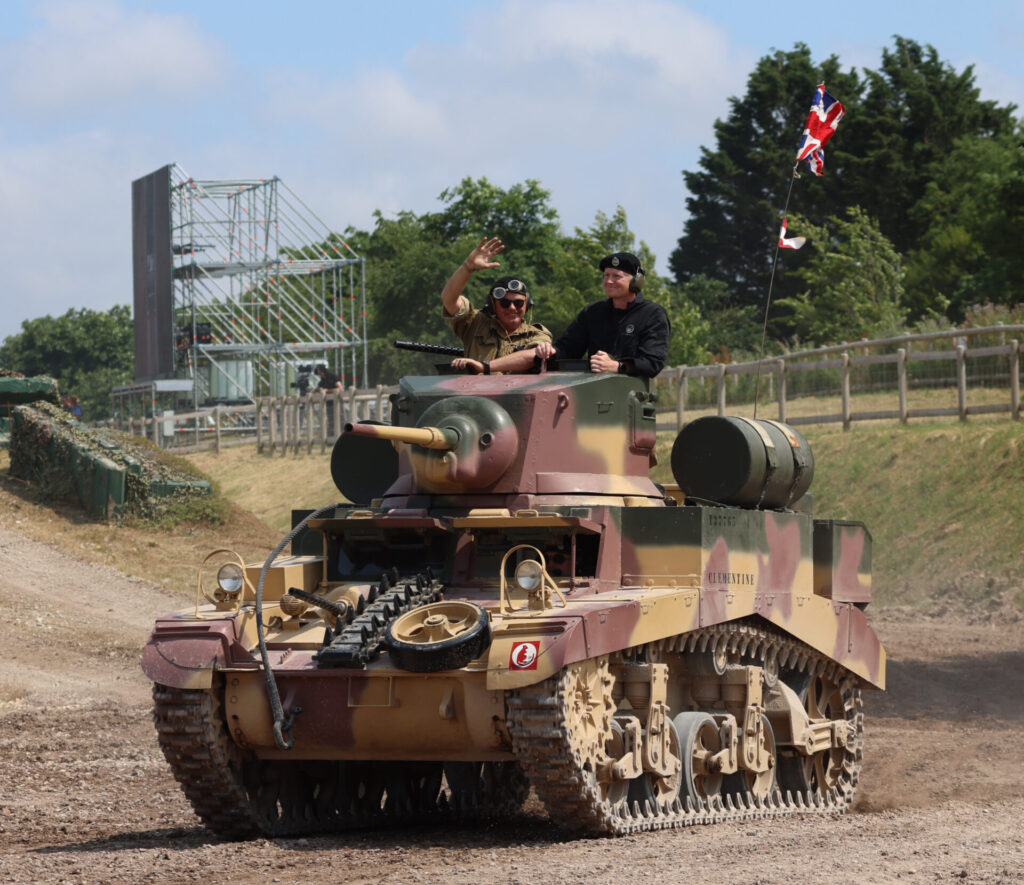
Entered service: 1941
The fate of the American M3 Stuart is even more surprising. It appeared early in World War II and began becoming obsolete remarkably quickly. The vehicle was fast, reliable, and maneuverable, but its 37 mm gun and relatively light armor were poorly suited to fighting newer medium tanks. As a result, Stuarts increasingly found themselves used for reconnaissance, communications, and infantry support. On paper, this was exactly the kind of tank that should have disappeared first.
Yet the M3 proved exceptionally durable. Paraguay became the best-known last military operator of the Stuart, having received American tanks after the war. Small numbers of M3 and M3A1 vehicles remained there decades after they had disappeared from almost every other army.
Their present status should be interpreted carefully. They are better understood as a small fleet used for training and ceremonial purposes than as a genuine armored force expected to fight modern main battle tanks.
But the M3 illustrates the first major reason why old armored vehicles can survive for so long. An army does not judge a vehicle purely by the year in which it was designed. It judges it by whether there is still a job it can perform. If a country does not expect to fight modern armored formations, a handful of long-paid-for, familiar, and mechanically serviceable vehicles can sometimes be more useful than an enormously expensive fleet of new MBTs.
3. Centurion — A 1945 Tank Hidden Inside the Olifant
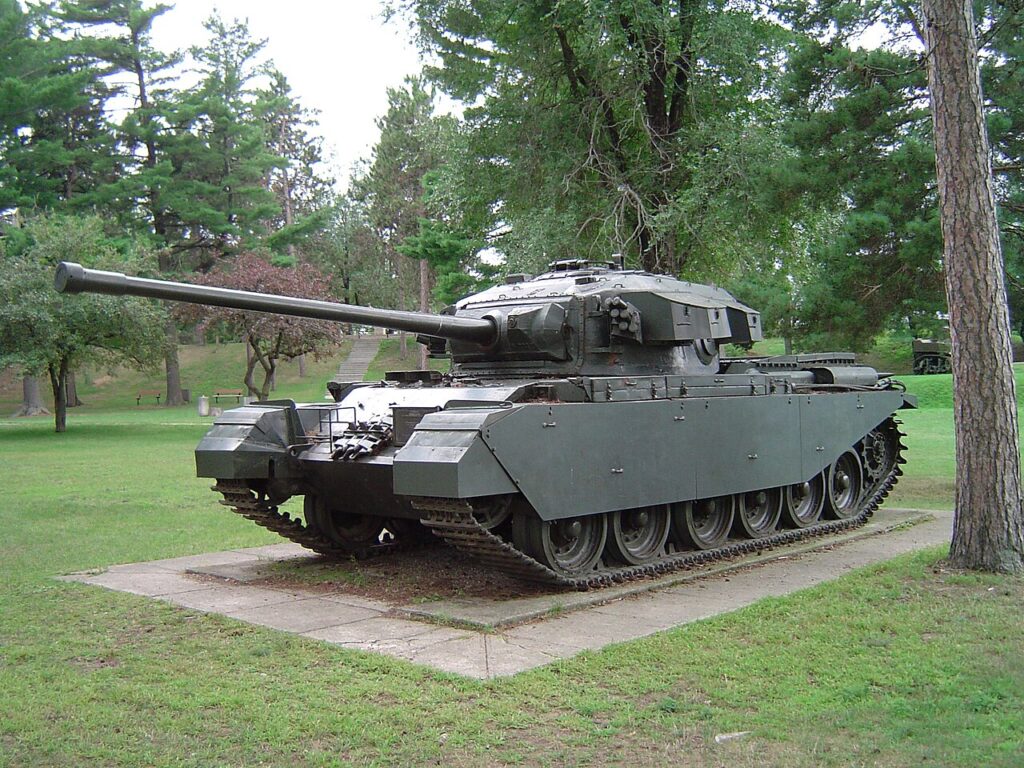
First vehicles completed: 1945
The British Centurion represents an entirely different route to immortality. It was developed during World War II, and the first vehicles reached continental Europe in the spring of 1945, but arrived too late to see combat against Germany. After the war, however, the Centurion became one of the most successful Western tanks of its generation, serving in Korea, the Middle East, India, Africa, and numerous regional conflicts.
Its story took a particularly interesting turn in South Africa. South African Centurions underwent such extensive modernization that they eventually evolved into a separate family known as the Olifant. Engines and transmissions were replaced, armament upgraded, observation equipment and fire-control systems modernized, and protection improved. Late-model Olifants are far removed in capability from the British tanks of the late 1940s, yet their design lineage still leads directly back to the Centurion.
And these vehicles remain part of the South African National Defence Force.
This raises an almost philosophical question: how old is such a tank? Eighty years, if we count from the appearance of the Centurion? Several decades, if we count from a particular modernization program? If the original hull remains but the engine, transmission, gun, electronics, sights, and much of the internal equipment have been replaced, are we still looking at an old tank — or effectively a new one?
The ability to undergo repeated modernization is one of the key reasons why successful armored platforms can remain relevant for an extraordinary length of time.
4. T-54/55 — Perhaps the Ultimate Tank Survivor
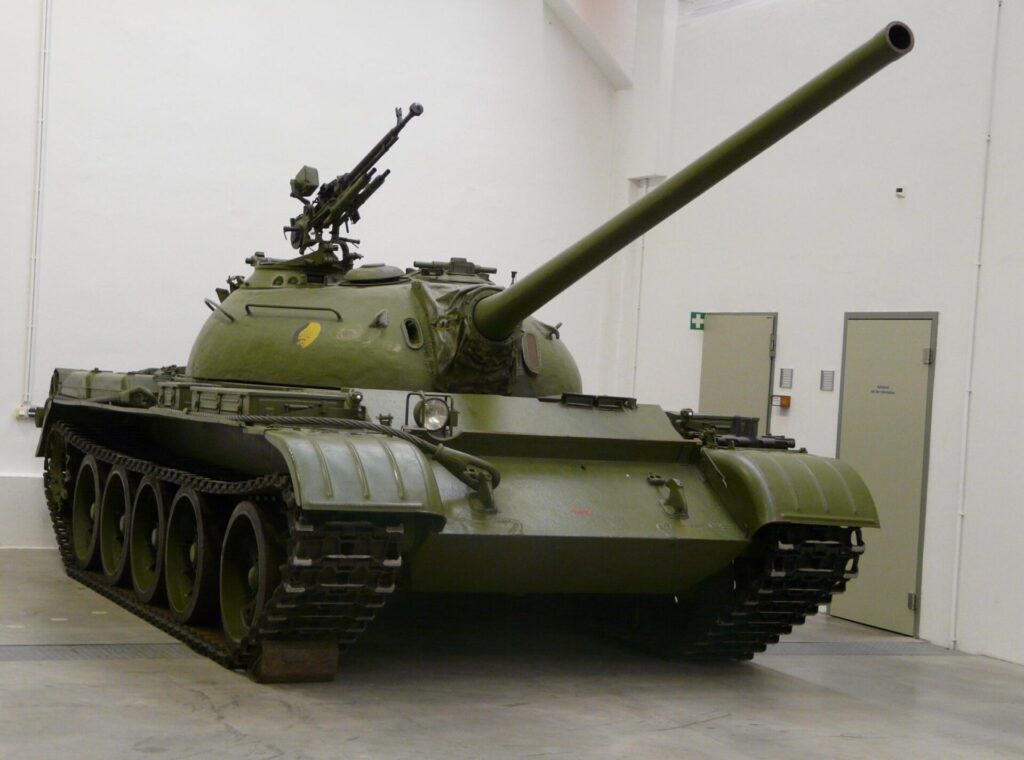
Family entered service: late 1940s
If the T-34 is the most spectacular vehicle on this list, the T-54/55 family is arguably the more important one. It became one of the most widely produced tank families in history and served for decades as standard armored equipment across a vast number of countries. That enormous production run is one of the main reasons for its extraordinary longevity.
Countries that acquired thousands of these tanks were not simply buying vehicles. They built repair workshops, accumulated spare parts and ammunition, trained crews and mechanics, constructed storage facilities, and translated and absorbed technical documentation. After twenty years, an entire military ecosystem existed around the T-55, and abandoning that ecosystem could cost far more than simply continuing to operate the tank.
Then came decades of modernization. T-55s received laser rangefinders, new fire-control systems, explosive reactive armor, additional armor packages, modern radios, thermal sights, improved engines, and more effective ammunition. In some countries the modifications became so extensive that little remained of the 1950s tank beyond the hull, basic layout, and some mechanical components.
Of course, even a heavily modernized T-55 should not automatically be placed in the same category as a modern Leopard 2, Abrams, or K2. But for countries that do not expect to fight tank battles against the world’s most technologically advanced militaries, it can still perform numerous missions at a fraction of the cost.
That is why the T-54/55 became something like the Kalashnikov of the armored world. Its greatest advantage was not absolute technological superiority, but the combination of enormous numbers, simplicity, repairability, and an immense support infrastructure.
5. M47 Patton — The “Interim” American Tank That Outlived Its Era
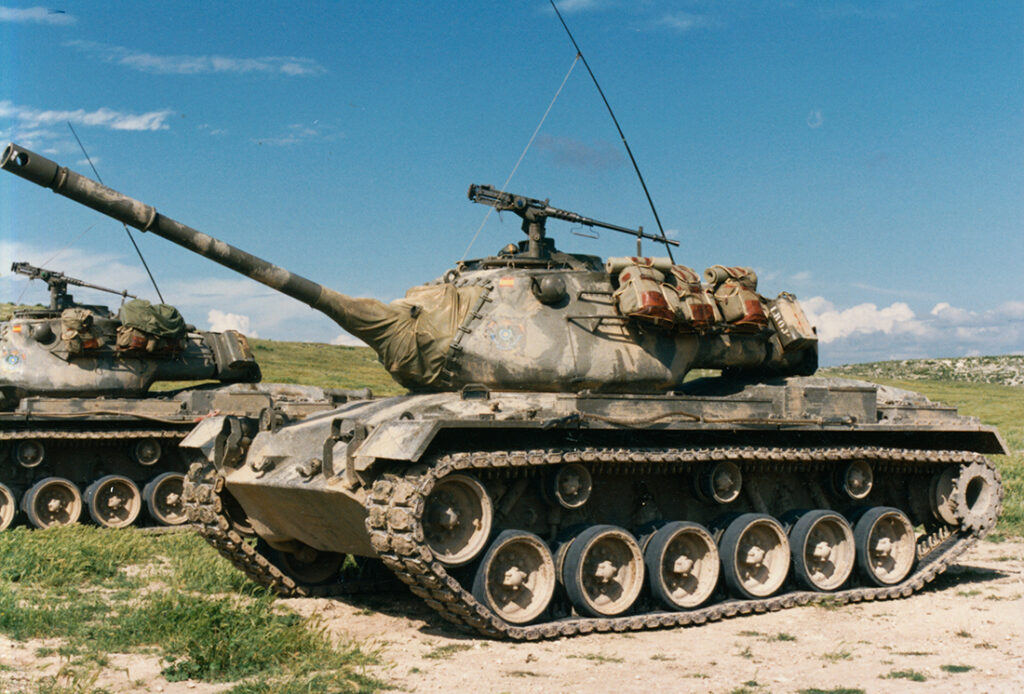
Entered service: 1951
The M47 Patton was essentially designed as an interim solution. After the outbreak of the Korean War, the United States needed a new tank faster than industry could develop an entirely new vehicle, resulting in a design that combined existing and emerging technologies. The M47’s career in American service was relatively brief, as it was soon superseded by the more capable M48.
The fate of an interim tank might have seemed obvious. Instead, thousands of M47s were supplied to American allies, and exports gave the vehicle an extraordinarily long second life. Pattons served in West Germany, Italy, Spain, Turkey, Iran, Pakistan, and numerous other countries. Some operators modernized them with new powerplants, equipment, and fire-control systems.
Iran remains one of the last countries associated with the continued survival of the M47M. Here, however, it is particularly important to distinguish inventory figures from actual combat readiness. Open-source estimates of the Iranian fleet vary considerably, and determining how many vehicles remain operational is difficult.
The M47 is therefore better understood as one of the last survivors of a nearly vanished generation rather than a meaningful foundation of a modern armored force.
The irony remains remarkable: a tank conceived as a temporary solution in the early 1950s managed to outlive many vehicles designed much later.
6. M48 Patton — The Vietnam Veteran That Refuses to Retire
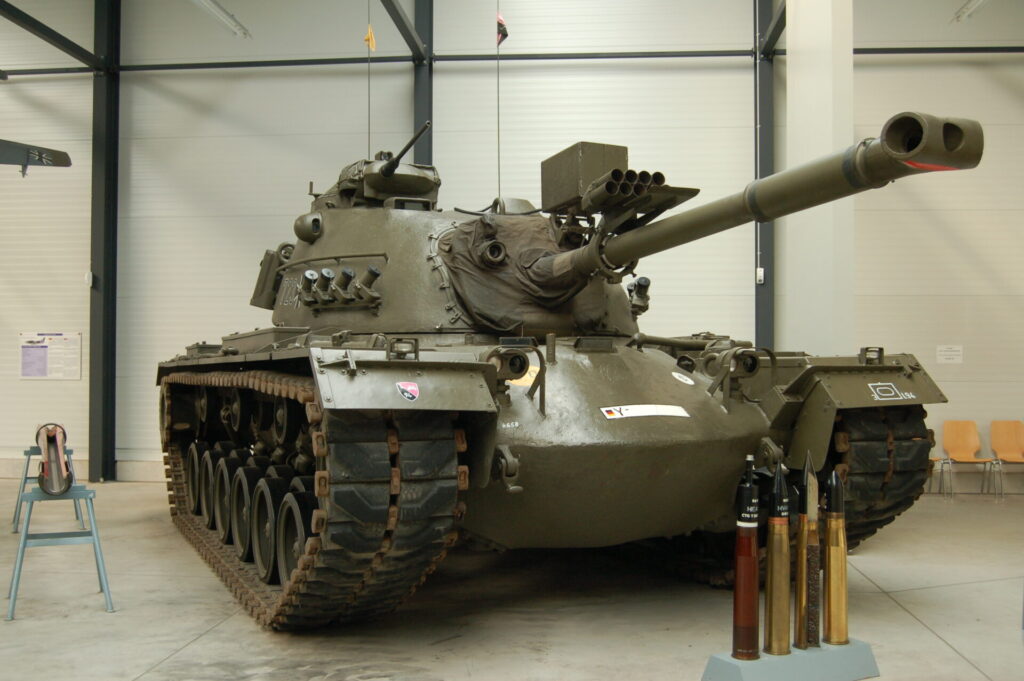
Entered service: 1952
The M48 had a very different career. This Patton became a genuinely long-lived platform. It fought in Vietnam and the Middle East, served in numerous NATO and allied armies, and became the subject of an extraordinary number of national modernization programs.
The original M48 with its gasoline engine and 90 mm gun is unquestionably obsolete. But later versions became very different vehicles. Diesel engines, 105 mm guns, improved fire-control systems, rangefinders, night-vision equipment, and other upgrades transformed the platform. Taiwan went even further with its CM-11/CM-12 family, combining elements of the old American chassis with much more modern electronics.
What makes the M48 particularly interesting is that members of the family have not simply remained in storage. Thai M48A5PIs were observed during armed clashes along the Cambodian border in 2025. A tank introduced during the early Eisenhower era found itself near genuine combat operations more than seven decades later.
Again, the reason is simple: an old tank does not have to defeat the newest MBT to remain useful. A 105 mm gun does not stop being a powerful weapon simply because the hull carrying it is 70 years old.
7. Type 59 — A Tank From the 1950s That Opened a New Chapter in 2026
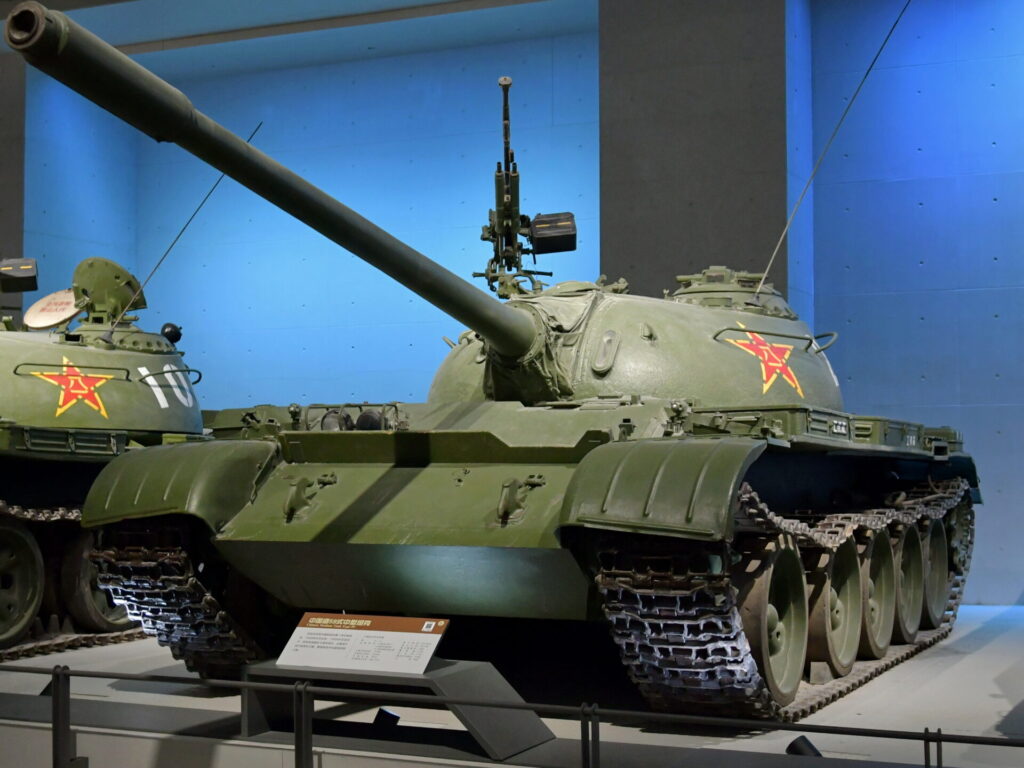
Entered service: 1959
If one tank can explain the entire point of this list, it is China’s Type 59. The vehicle evolved from the Soviet T-54A and became the foundation of China’s armored forces. China produced thousands of them, exported them around the world, and then spent decades upgrading the basic design.
As a result, there is an enormous difference between an early Type 59 of the late 1950s and its later modernized descendants. Guns, fire-control systems, observation equipment, engines, and protection were all upgraded. The Type 59D received a 105 mm rifled gun, explosive reactive armor, and much more sophisticated observation and fire-control equipment.
Then, in 2026, the story unexpectedly continued. Cambodia began receiving modernized Type 59Ds from China. The first confirmed batch consisted of 39 vehicles, while the planned total was reported at 93 tanks.
The image is almost surreal. In an age of drones, artificial intelligence, satellite reconnaissance, and precision-guided weapons, an army is receiving tanks whose design ancestry stretches directly back to the Soviet school of the late 1940s.
Economically, however, there is nothing particularly strange about it. A modernized Type 59 can cost far less than a new main battle tank, while its 105 mm gun remains an extremely dangerous weapon against light armored vehicles, fortifications, buildings, and numerous other battlefield targets.
The platform’s origins are old. The capabilities of the individual vehicle may be considerably younger.
8. T-62 — The Soviet Smoothbore Pioneer Becomes Another Survivor
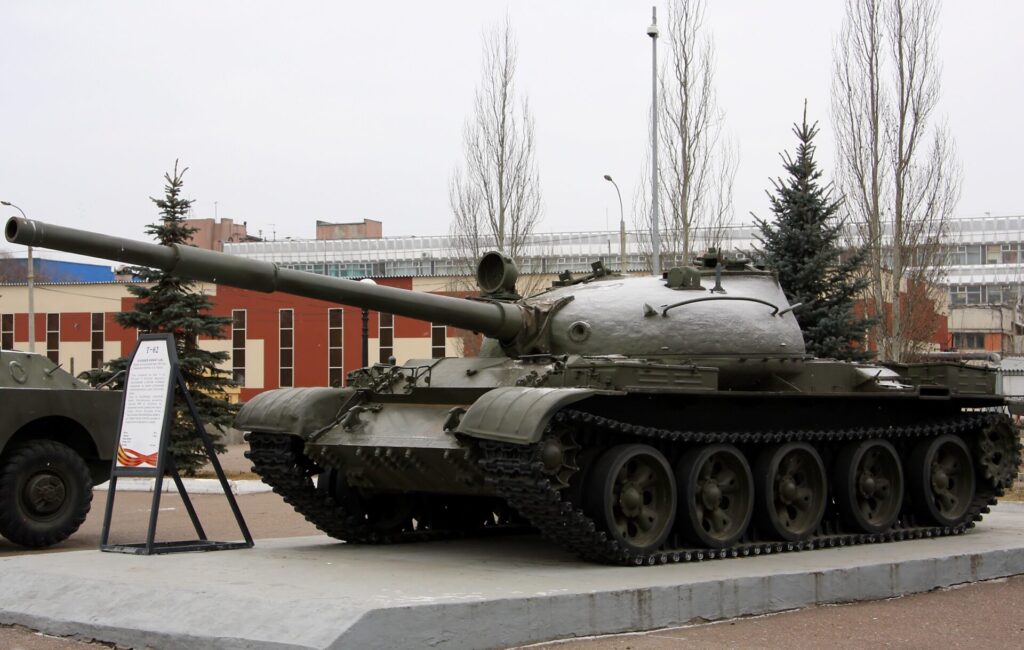
Entered service: 1961
The T-62 was conceived as the next step beyond the T-54/55 and introduced its most important technical innovation: the 115 mm U-5TS smoothbore gun. In the early 1960s, this was a formidable weapon against Western tanks. Yet the vehicle’s position quickly became complicated. The arrival of the T-64 and later the mass-produced T-72 pushed the T-62 into a secondary role.
But the Soviet Union had already produced large numbers of them, while many more were exported abroad. The T-62 therefore did not disappear. Vehicles remained in active service and reserve for decades, participated in numerous conflicts, and underwent repeated modernization programs. More than 60 years after its introduction, members of the family remain with several operators.
The T-62 demonstrates particularly well the difference between technological and physical obsolescence. Against a modern tank, an old T-62 is at an enormous disadvantage: poorer situational awareness, weaker protection, and a far more primitive fire-control system.
But its 115 mm gun has not somehow become harmless.
Against a fortification, building, armored personnel carrier, or other lightly protected vehicle, the year in which the tank was designed matters considerably less. The T-62 can be regarded as a poor modern main battle tank without necessarily being a poor mobile gun.
9. Leopard 1 — A Bet on Mobility That Paid Off for Decades
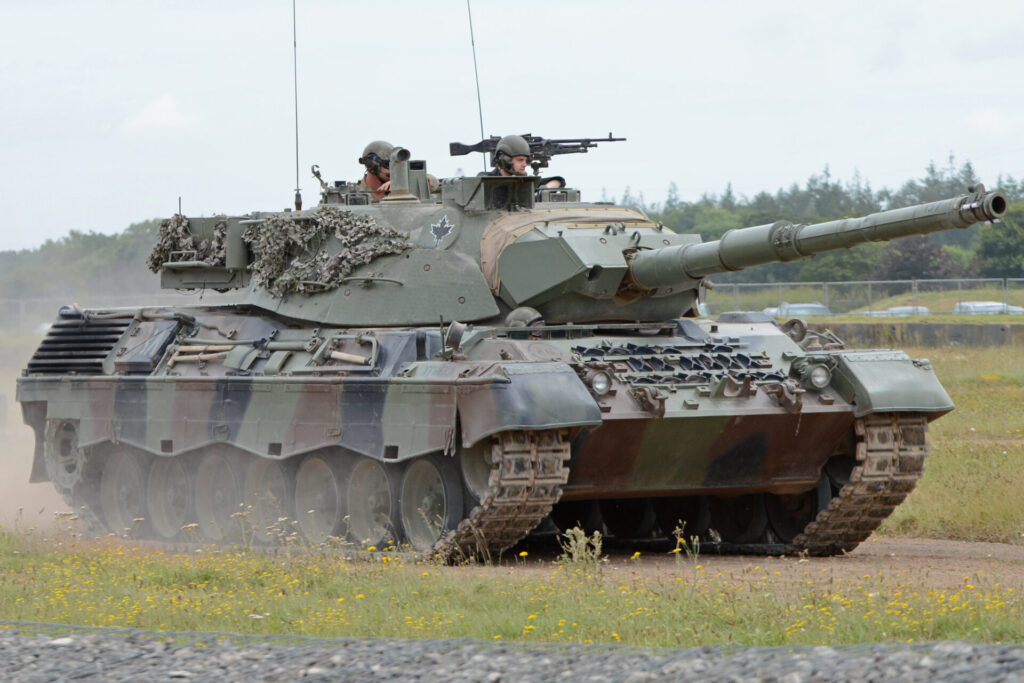
Entered service: 1965
The Leopard 1 was designed according to a very different philosophy. In the late 1950s, West German engineers concluded that providing complete protection against increasingly powerful shaped-charge weapons was becoming impractical. Instead of continually increasing armor thickness, they emphasized mobility, relatively low weight, good observation equipment, and the powerful British 105 mm L7 gun.
The result proved extraordinarily successful.
The Leopard 1 was exported to numerous countries and became the basis for an entire family of specialized vehicles. Particularly important was the ability to modernize its fire-control system. The Leopard 1A5 received much more advanced electronics and thermal imaging equipment, allowing the aging platform to remain useful far longer than its original designers could reasonably have expected.
Brazil, Greece, Turkey, and other operators have retained or continue to retain different Leopard 1 variants, while numerous programs have sought to extend the platform’s service life. The age of the hull therefore becomes only one part of the equation. If the vehicle has a serviceable powerplant, effective thermal sight, laser rangefinder, modern communications, and capable ammunition, its battlefield potential is no longer determined solely by the year in which the original design was drawn.
At the same time, the Leopard 1 demonstrates the limits of modernization. Electronics can be replaced, engines can be rebuilt, and guns can receive better ammunition, but the fundamental level of armor protection is much harder to change. Every old platform eventually encounters the physical limits imposed by its original design.
10. AMX-30 — France’s 1960s Tank School Has Not Entirely Become History
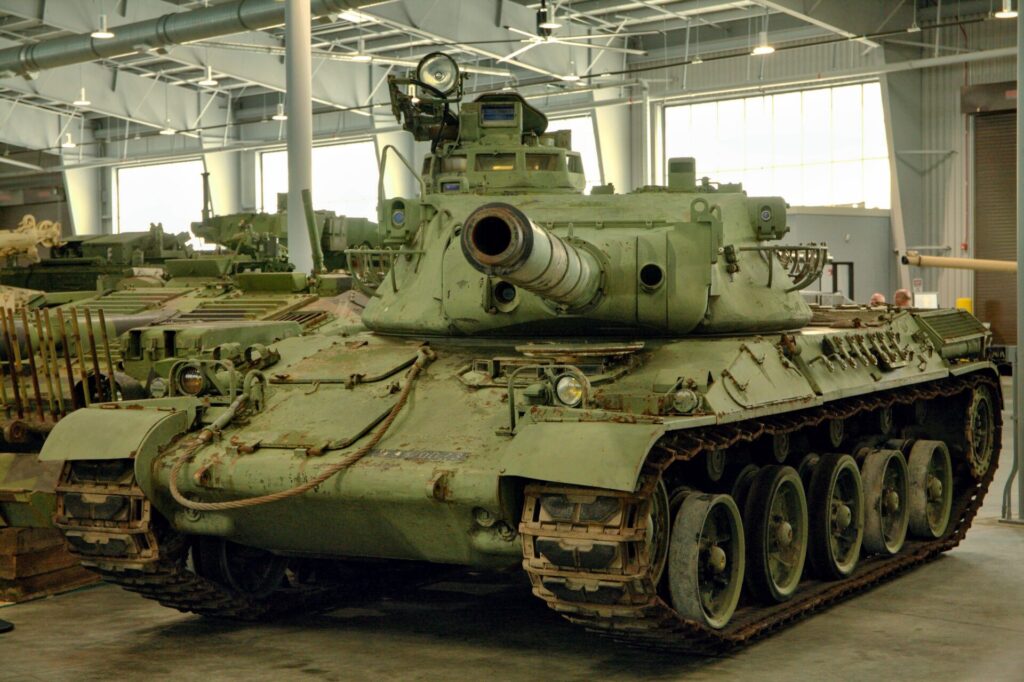
Entered service: 1966
The final vehicle on our list is the French AMX-30, another representative of the generation in which European engineers were rethinking the very concept of the main battle tank. Like the Germans with the Leopard 1, the French did not attempt to turn their vehicle into a moving fortress. The AMX-30 was relatively light and mobile, armed with a powerful 105 mm gun and offering good mobility for its era.
The French Army replaced the AMX-30 with the much more advanced Leclerc long ago, but the older vehicle did not simply disappear. Tanks of the family continued — or continue — to exist in the armed forces of several other countries, including Cyprus, Saudi Arabia, and Venezuela. And these are not merely specialized vehicles built on old chassis; actual tank variants have survived as well, although the real readiness of individual fleets may differ considerably from official inventory figures.
The AMX-30 is also interesting because, together with the Leopard 1, it represents the next generation of our long-lived machines. The first entries on this list were born during World War II and the immediate postwar period. By the time we reach the AMX-30, we have moved into the mid-1960s — and we are still discussing a tank that is around 60 years old.
Why Do Armies Keep Using Tanks This Old?
At first glance, the answer seems obvious: money. A modern main battle tank is enormously expensive. And buying the vehicles themselves is only part of the cost. An army also needs ammunition, transporters, maintenance equipment, spare parts, simulators, trained crews, and technical personnel. For a small country, replacing a hundred old tanks can easily become a program costing hundreds of millions or even billions of dollars.
But economics alone does not explain the phenomenon. An old tank has one enormous advantage: it already exists.
Hangars and repair workshops have already been built for it. Mechanics have been trained. Spare parts have been accumulated. Manuals have been written. Commanders know how to operate it. After decades of service, the army knows practically every weakness of the vehicle and understands how to keep it running. Continuing to operate such equipment can sometimes be far easier than rebuilding an armored force from scratch.
The second factor is that a tank does not age uniformly. Electronics from the 1960s may be almost useless today, but electronics can be replaced. An old night sight can be swapped for a thermal imager, an optical rangefinder for a laser system, and an analog radio for modern digital communications. Engines can be rebuilt or replaced. Protection can be strengthened with additional armor modules or explosive reactive armor. Even the combat potential of an old gun can improve substantially with newer ammunition.
The result is a kind of Tank of Theseus: almost everything gradually changes, yet the basic platform continues to live.
There is also a third and perhaps most important reason. Not every tank needs to destroy another tank.
A modern Leopard 2A8, M1A2 Abrams, or K2 vastly outperforms a T-55 in overall capability. But if the mission is to destroy a field fortification, support infantry, control a road, engage an armored personnel carrier, or suppress a firing position, comparing the old vehicle exclusively with the latest MBT misses the point. A shell fired from an old 100, 105, or 115 mm gun does not become less destructive because of the date stamped on the tank’s original design.
The real question, therefore, should not be: “Can a T-55 defeat a modern Leopard 2?” The answer is far too obvious.
A much more useful question is: Is there still a mission that an old tank can perform effectively enough and far more cheaply than a new vehicle?
As long as the answer is yes, the tank has a reason to survive.
A Weapon Becomes Obsolete When There Is No Longer a Job for It
The most remarkable vehicles on this list are not necessarily the T-34 or the M3 Stuart. The true champions of armored longevity are platforms such as the Centurion, T-54/55, M48, and Type 59 — designs successful, numerous, and maintainable enough to adapt repeatedly to entirely new eras of warfare.
During their service lives, several generations of anti-tank missiles have appeared. Laser rangefinders, thermal imagers, satellite navigation, drones, and digital battlefield-management systems have become commonplace. Some of the states for whose armies these tanks were originally designed have disappeared or changed beyond recognition.
Yet the machines remain.
Modernization, of course, cannot continue forever. No thermal sight can eliminate the physical limitations of an old hull. No modern radio can create additional internal volume. Additional armor cannot be piled onto a chassis indefinitely without overwhelming its suspension, transmission, and engine. Eventually, the cost of another modernization approaches the cost of replacement, and the old platform finally loses its economic logic.
Some tanks, however, take an astonishingly long time to reach that point. And when an army receives modernized Type 59Ds in 2026, it is less a historical curiosity than a demonstration of one of the most persistent rules of military economics:
A weapon does not become truly obsolete when something better appears. It becomes obsolete when there is no longer a job left for it to do.