One Aircraft Could Drop 28 Soldiers Behind Enemy Lines: How the C-47 Made Paratroopers One of the Symbols of World War II

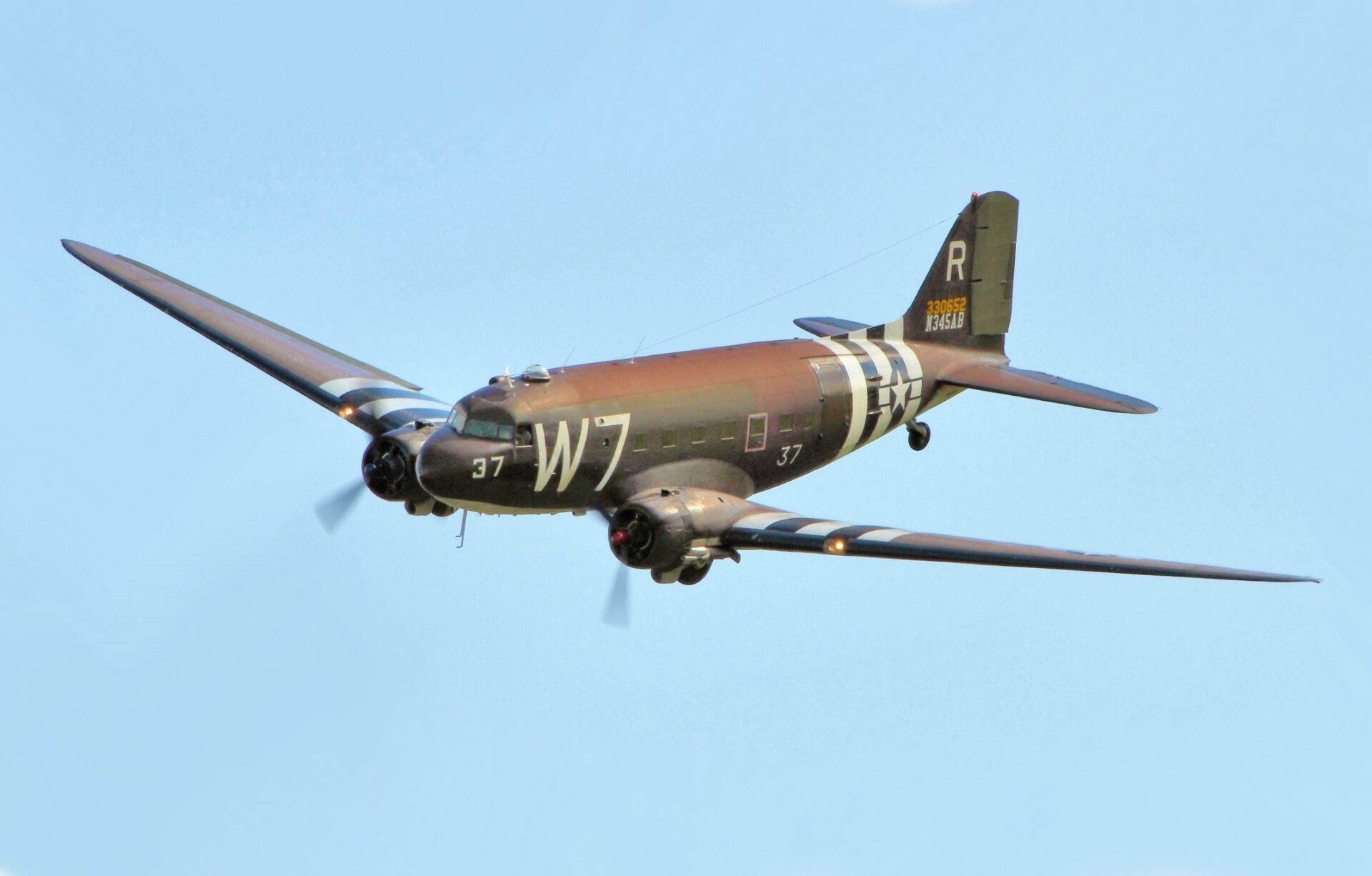
On the night of June 5–6, 1944, something was happening over the English Channel that would have seemed like military science fiction only twenty years earlier. Transport aircraft took off one after another from airfields across southern England, formed into long streams, and headed toward the French coast. Inside each aircraft sat roughly two dozen soldiers carrying parachutes, weapons, ammunition, and equipment. Their mission seemed almost absurd: fly over the Atlantic Wall, jump at night into enemy-held territory, assemble in the darkness, and seize roads, bridges, and crossroads before the main Allied forces even began landing on the beaches of Normandy.
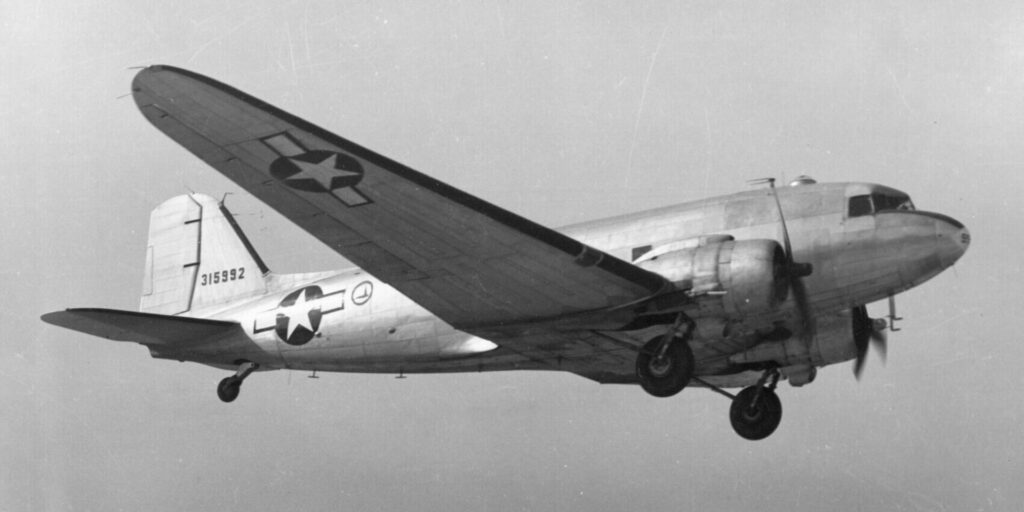
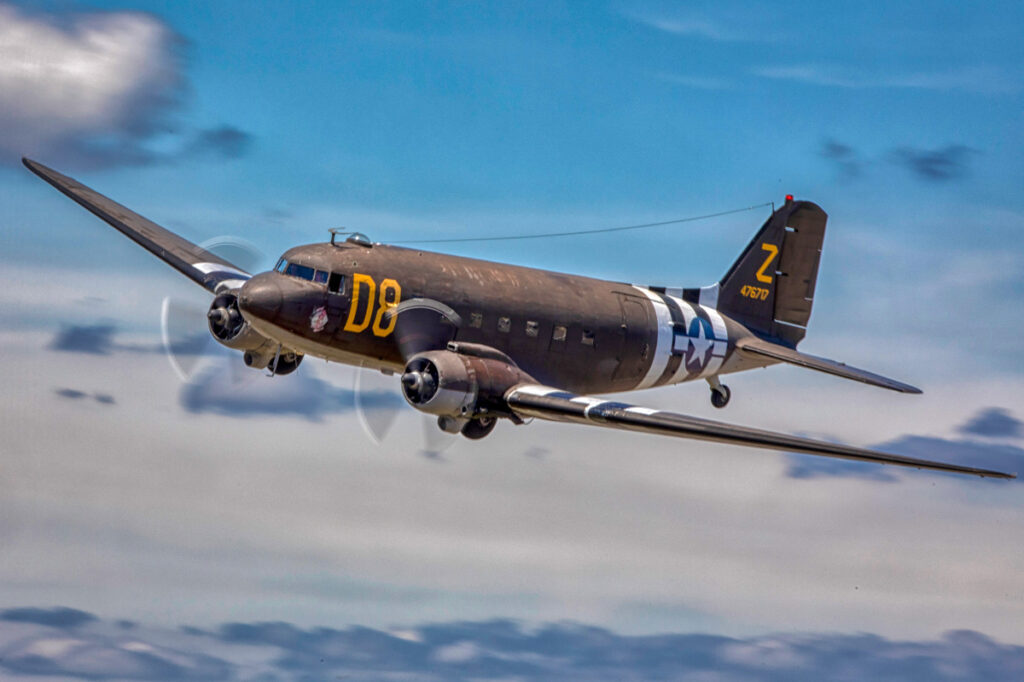
The main workhorse of this enormous aerial armada was the Douglas C-47 Skytrain, the military version of the civilian DC-3. No futuristic purpose-built airborne transport was required to make this revolution possible. The C-47 flew at speeds that would soon become entirely ordinary, had no pressurized cabin, could not defend itself against a modern fighter, and normally carried around 28 fully equipped paratroopers. What it did have was reliability, adequate range, the ability to operate from relatively basic airfields, the capacity to haul cargo and tow gliders — and, most importantly, it could be produced by the thousands. More than 10,000 C-47s of various versions were built, and the wider family of military DC-3 derivatives was larger still. The aircraft served in virtually every theater of World War II.
The C-47 became one of the principal instruments of perhaps the greatest experiment with infantry mobility in the first half of the 20th century. Before mass transport aviation, the location of an army was dictated by geography. Between a soldier and his objective lay roads, rivers, mountains, fortifications and, most importantly, other soldiers. To capture a bridge fifty kilometers behind the enemy front, an army first had to break through that front and then travel those fifty kilometers.
Aircraft offered a radically different answer:
What if the front did not have to be broken at all? What if you could simply fly over it?
World War II became the great age of this idea. The Soviet Union had experimented with mass airborne operations even before the war. Germany employed its Fallschirmjäger in Norway, the Netherlands, Belgium, and Crete. The Americans and British then created their own large airborne formations and began dropping entire divisions behind enemy lines. Sicily, Normandy, southern France, Market Garden, the crossing of the Rhine — the scale of airborne warfare continued to grow.
For a brief moment, it genuinely seemed that a new kind of infantry had appeared for which the front line no longer existed.
Then the same war demonstrated why the reality was much more complicated.
The Idea Was Almost Frighteningly Simple: Make Infantry Fly
Attempts to move soldiers by air appeared almost as soon as military aviation itself, but serious interest in mass airborne forces developed during the interwar period. The Soviet Union went particularly far. During major exercises in the 1930s, the Red Army demonstrated drops involving hundreds and eventually thousands of paratroopers, while Soviet operational theory envisaged large airborne forces operating deep behind enemy defenses as part of the concept of deep operations.
Aircraft were supposed to carry the ground battle directly into the enemy’s operational rear, disrupting command and communications, capturing important objectives, and supporting forces advancing from the front.
The military attraction was obvious. Conventional infantry moved at the speed of a man, truck, or armored vehicle and remained constrained by terrain. An airborne unit could cover hundreds of kilometers in a matter of hours. A bridge, airfield, headquarters, railway junction, or mountain pass deep in the rear suddenly became vulnerable to direct attack.
The enemy could no longer think only about defending the front line. In theory, a threat existed anywhere a transport aircraft could reach.
But turning the elegant theory into reality required solving an industrial problem.
One aircraft carried only a few dozen soldiers. A battalion required dozens of aircraft. A regiment required hundreds. A division transformed an airborne assault into a vast operation involving airfields, transport fleets, flight routes, fighter protection, navigation, logistics, and follow-up supply missions.
That is why the true airborne revolution was not so much a product of the parachute as it was a product of mass aviation industry.
What the airborne forces needed was an aerial truck.
And the Americans already had one.
The War’s Most Important Airborne Transport Had Originally Been Built for Passengers
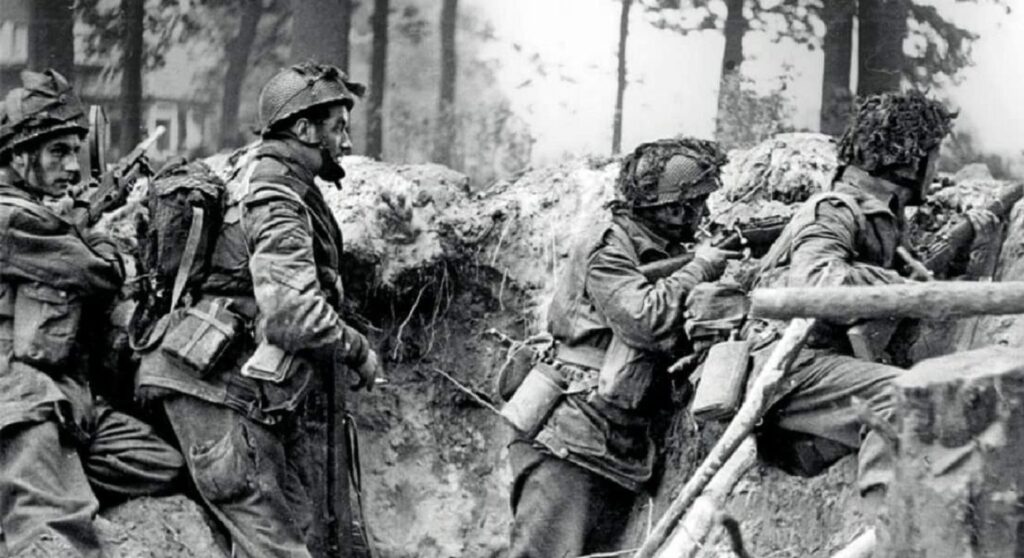
The Douglas DC-3 first flew in 1935 and became one of the aircraft that transformed passenger aviation from an expensive novelty into a commercially viable industry. The design proved so successful that the military did not need to develop an entirely new transport aircraft.
The C-47 Skytrain was created from the civilian airliner, receiving a reinforced floor, a large cargo door, and other modifications required for military service. The British and many other users knew the wider family as the Dakota.
Powered by two Pratt & Whitney R-1830 radial engines, the aircraft had a wingspan of about 29 meters and a maximum speed of roughly 360 km/h. Depending on the mission, its cabin could accommodate cargo, wounded personnel on stretchers, or around 28 paratroopers. Its large door allowed relatively bulky loads to be handled, while towing equipment transformed the C-47 into a tug for assault gliders.
Compared with a Mustang, B-17, or Me 262, it was hardly one of the most glamorous aircraft of the war. It did not win dogfights or carry tons of bombs against enemy industrial centers.
Instead, the C-47 could do almost everything else.
It transported troops. It delivered ammunition, food, and fuel. It evacuated wounded soldiers. It hauled supplies across the Himalayas into China. It towed gliders. It dropped paratroopers. After the war, aircraft from the same family would play a major role in the Berlin Airlift. The basic design proved so durable that individual DC-3s and their military descendants would continue flying for decades after World War II ended.
For airborne operations, however, one characteristic mattered above all others:
The C-47 existed not in hundreds, but in thousands.
One aircraft carrying 28 paratroopers changes very little.
A thousand aircraft turn that arithmetic into strategy.
The Germans Were the First to Show How Terrifying Infantry Appearing From Nowhere Could Be
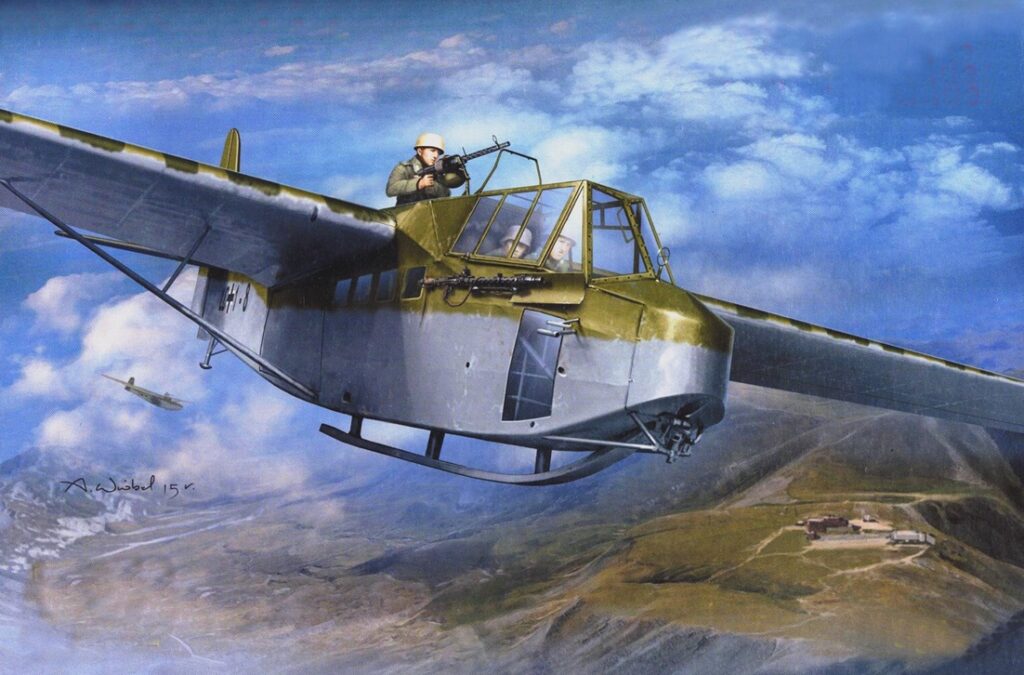
In May 1940, German airborne forces demonstrated the possibilities of the new concept in Western Europe. The most famous episode was the attack on the Belgian fortress of Eben-Emael.
Instead of mounting a prolonged ground assault against the fortress, German troops arrived almost directly on top of it in DFS 230 gliders. Small assault groups equipped with shaped charges began destroying armored cupolas and firing positions from inside the defensive perimeter. A huge fort designed to resist a conventional ground attack suddenly proved vulnerable to an enemy that simply refused to attack it in the conventional way.
At the same time, airborne troops were employed in the Netherlands to seize bridges and airfields. The psychological effect was almost as important as the military one. Headquarters, bridges, and airfields behind the lines could no longer be considered safe simply because dozens of kilometers of friendly territory separated them from the enemy.
In May 1941, Germany went further still.
During Operation Merkur, airborne forces were tasked with capturing Crete. Thousands of Fallschirmjäger jumped from Junkers Ju 52 transports, while other units arrived aboard gliders. The Germans ultimately captured the island, making the operation a formal victory.
But the price was extremely high.
Losses among the airborne troops and transport aircraft demonstrated that a large parachute assault against a prepared enemy could turn into a bloodbath. Germany would never again conduct an airborne operation on a comparable scale.
It was the first major warning about the fundamental paradox of airborne troops.
They possessed extraordinary mobility until the moment they landed.
Then the problems began.
The Moment the Men Jumped, the Division Literally Ceased to Exist
An airborne operation looks neat on a map.
Here is the flight route.
Here is the drop zone.
Here is the battalion.
Here is the bridge it must capture.
An actual parachute drop looked nothing like that.
Paratroopers sat inside their C-47s carrying heavy equipment, sometimes supplemented by additional bags and containers. As they approached the drop zone, they stood, checked their gear, and hooked their static lines to a cable running through the aircraft. When the order came, the men exited through the door one after another. The parachute deployed automatically, and within seconds the soldier was physically separated from his aircraft, his squad, his commander, and often his heavy weapons.
At that moment, something happened that rarely appears on the beautifully drawn operational maps.
An organized military unit became hundreds of individual falling human beings.
One man landed close to the designated point. Another drifted a kilometer away. A third ended up in a tree. A fourth injured his leg. A fifth landed next to an enemy position. A sixth had no idea where he was. The container carrying the machine gun might land in another field, the radio could end up with another unit, and the commanding officer might be several kilometers away.
At night, everything became much worse.
That is why one of the most important qualities of a paratrooper was not simply physical fitness or the ability to jump from an aircraft. He had to be capable of acting independently, joining unfamiliar soldiers, and continuing the mission even when the original unit organization temporarily ceased to exist.
For airborne forces, chaos was not an exception to the plan.
Chaos was part of the technology.
Normandy Showed That a Bad Drop Did Not Necessarily Mean a Failed Airborne Operation
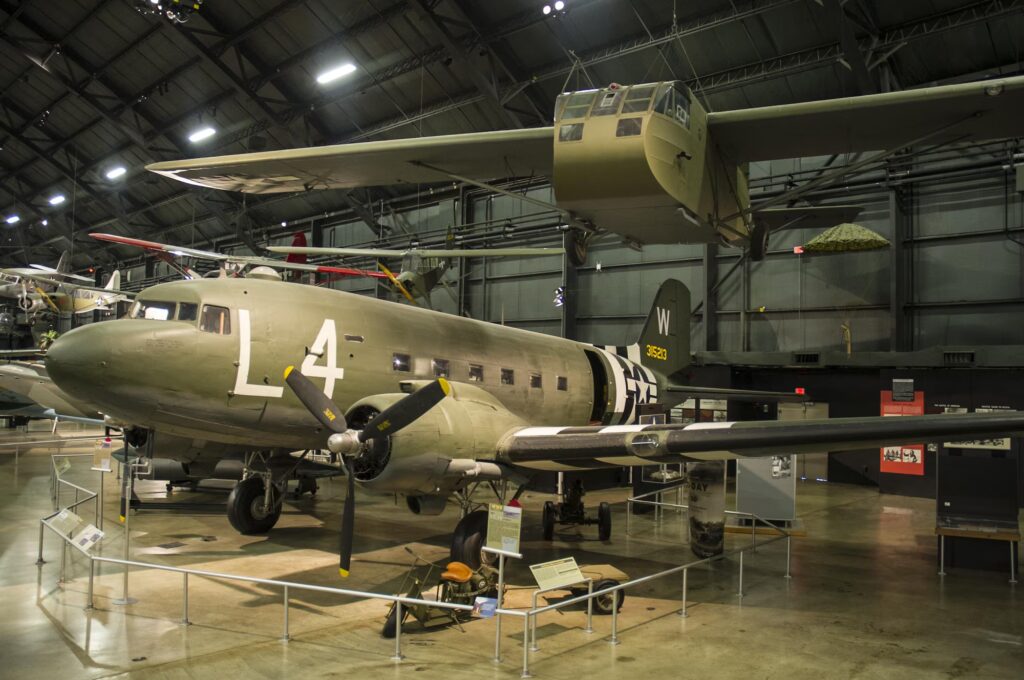
On the night before the Allied landings in Normandy, the U.S. 82nd and 101st Airborne Divisions were to land behind Utah Beach. Their objectives included securing exits from the coast, bridges and other important points, while disrupting Germany’s ability to counterattack the landing area. Farther east, the British 6th Airborne Division was tasked with protecting the invasion’s flank and capturing bridges across the Caen Canal and the River Orne.
On paper, the operation had been carefully planned.
Reality was different.
Transport formations encountered cloud cover, navigational errors, and German anti-aircraft fire. Many formations broke apart, and paratroopers were scattered across a huge area. Some American units landed kilometers from their intended drop zones. Areas deliberately flooded by the Germans further complicated matters, and some soldiers drowned beneath the weight of their equipment.
From the perspective of conventional military organization, the situation looked disastrous.
Then something unexpected happened.
Across the Norman countryside, small mixed groups began to form from soldiers belonging to different companies, battalions, and sometimes even regiments. If an officer was present, he took command. If there was no officer, a sergeant might do so. Men asked one another who knew the terrain and where the nearest objective was, then headed off to find a bridge, crossroads, German headquarters, or simply the sound of fighting.
For the Germans, understanding what was happening became extremely difficult. Paratroopers appeared in numerous places. Telephone lines were cut. Firefights erupted. Conflicting reports flooded headquarters.
What looked like dangerous dispersion to American commanders could look to the Germans as if enemy troops were everywhere.
That does not mean dispersion was beneficial or intentional. It seriously complicated many missions and cost lives. But the training of airborne troops allowed them to remain combat effective even after the original landing plan had partially disintegrated.
Normandy helped cement the image that would follow paratroopers for decades:
Light infantry trained to continue fighting after everything had gone wrong.
But a Man With a Rifle Is Not Yet a Division
This was the next major problem with airborne warfare.
A parachute was very good at delivering a person.
It was much worse at delivering an army.
An infantry division needs machine guns, mortars, anti-tank weapons, artillery, radios, vehicles, tractors, medical equipment, ammunition, and enormous quantities of other supplies. Some equipment could be dropped in containers, but heavier weapons and vehicles required another solution.
That solution was the glider.
The Americans extensively used the Waco CG-4A, while the British employed the much larger Airspeed Horsa. These aircraft were among the strangest products of World War II.
They had no engines.
A transport aircraft towed the glider toward the operational area, after which the tow rope was released and the pilot had to land on whatever suitable ground could be found.
In effect, it was a disposable transport aircraft that only needed an engine before the mission began — so the engine remained attached to another airplane.
A glider could bring a small unit down together, or deliver a jeep, anti-tank gun, ammunition, or other heavy equipment. It could also place a small assault force with extraordinary precision.
On the night of June 5–6, British Horsa gliders carrying Major John Howard’s men landed almost directly beside the bridges over the Caen Canal and River Orne. The first glider stopped only a few dozen meters from the bridge that would later become famous as Pegasus Bridge. The assault force captured it within minutes.
This was close to the ideal airborne mission: a small elite force, a precisely defined objective, complete surprise, and friendly ground forces approaching soon afterward.
But the Allies wanted something much bigger.
In the Netherlands, They Tried to Jump Over an Entire Front
By the autumn of 1944, Allied armies had reached the Netherlands, but major rivers and German defenses stood ahead. Field Marshal Bernard Montgomery proposed what became the most ambitious use of airborne forces on the Western Front.
Operation Market Garden was actually two operations.
The airborne component, Market, would land the U.S. 101st and 82nd Airborne Divisions and the British 1st Airborne Division along a chain of bridges through the Netherlands. The ground component, Garden, would send the British XXX Corps racing north through the corridor they created.
The ultimate objective was the bridge over the Lower Rhine at Arnhem.
If everything worked, the Allies would bypass a substantial portion of the German defensive system and establish a bridgehead beyond the Rhine.
In essence, this was an attempt to use aircraft to change the geography of ground warfare itself.
Instead of fighting their way across each river one after another, the paratroopers would seize the bridges in advance and the armored forces would simply drive along the road they had opened.
The scale was enormous. Huge numbers of transport aircraft and gliders were employed on the first day, with additional waves bringing more troops, equipment, and supplies. Once again, the C-47 was one of the principal workhorses of the operation.
But Market Garden also demonstrated the fundamental limitation of the entire concept more clearly than almost any previous operation.
A paratrooper could cover in a few hours a distance that a conventional army might require days to cross. His logistics could not.
The Most Dangerous Moment for a Paratrooper Was Not Necessarily When He Jumped From the Aircraft
Once on the ground, the paratrooper became a light infantryman.
An exceptionally well-trained one.
But still light infantry.
An airborne division possessed significantly less heavy artillery, transport, and armored support than a conventional ground formation. Ammunition was consumed. Casualties accumulated. Radios failed. Air-dropped supplies could land in enemy hands or simply disappear several kilometers away.
Time therefore became the airborne force’s most important resource.
Its mission was not necessarily to defeat the enemy alone. It had to capture an objective and hold it long enough for the main army to arrive.
In Normandy, this broadly worked. The airborne troops were relatively close to the beaches, and after the successful amphibious landings, ground forces began linking up with them.
At Arnhem, the distances and opposition were much more serious.
The British 1st Airborne Division encountered unexpectedly strong German forces, while XXX Corps was delayed along the narrow ground corridor. A small British force managed to hold the northern end of the Arnhem bridge for several days, but the main Allied forces could not reach it in time.
The operation failed to achieve its principal objective.
Arnhem demonstrated the logic of airborne warfare almost in laboratory conditions.
The farther the paratroopers landed from their own army, the more spectacular the operation looked on the first day.
And the more dangerous every following day became.
Because the C-47 Had Another Job: Coming Back
This part of the story is often lost behind dramatic photographs of parachute drops.
An airborne operation did not end after the first jump.
The troops needed ammunition, food, medical supplies, and weapons. Transport aircraft therefore had to return to the battle area, dropping supply containers or landing on captured airfields when possible.
But once surprise had disappeared, the transport aircraft faced a much more dangerous environment.
The C-47 was a large, relatively slow, and vulnerable aircraft. To make an accurate supply drop, it had to fly over a particular area at a suitable altitude and on a predictable course. By then, the enemy knew where the airborne troops were and could prepare anti-aircraft fire.
Gliders were even less forgiving.
Once released, there was no going around for another landing attempt. A mistake in selecting the landing area, ground fire, an obstacle, or damage on touchdown could turn the aircraft into a pile of wood and metal.
An airborne division therefore depended on its aerial corridor almost as much as a conventional division depended on a road.
Except a road could be repaired.
The air corridor had to be won again every time.
By 1945, the Allies Had a Much Better Idea of How to Use Paratroopers
The last huge Allied airborne operation in Western Europe was Operation Varsity on March 24, 1945. Conducted during the crossing of the Rhine, it incorporated many of the lessons learned from earlier operations.
The British 6th and U.S. 17th Airborne Divisions were landed relatively close to the advancing ground forces. The operation took place in daylight, and the intention was to link up with troops crossing the Rhine as quickly as possible.
Hundreds of C-47s, C-46s, and gliders took part. The scale remained enormous, but the operational logic was noticeably more cautious.
Airborne troops were no longer being treated as an independent army expected to conduct a prolonged campaign deep behind enemy lines.
They were becoming a tool intended to create a temporary local advantage in a place conventional ground forces had not yet reached.
It was in this role that the concept proved most sustainable.
That was a curious outcome for an idea that had seemed almost revolutionary during the 1930s. Theorists had dreamed of large airborne formations capable of leaping over fronts and conducting operations deep in the enemy rear. Combat experience gradually demonstrated that the more ambitious the airborne assault became — and the longer it had to survive independently — the faster the risks multiplied.
Aircraft could eliminate distance.
They could not eliminate logistics.
World War II Was Therefore Both the Triumph and the Crisis of the Parachute Army
None of this means airborne forces were a mistake.
Quite the opposite.
World War II produced numerous examples of their enormous value. Paratroopers could suddenly capture a bridge, airfield, or important high ground, disrupt rear areas, interfere with the movement of reserves, establish a bridgehead, and force the enemy to keep troops far behind the front simply because a potential landing zone existed there.
But the war also demonstrated the limits of the concept.
The parachute gave infantry unprecedented strategic mobility at the cost of much of what made a conventional ground division heavy and sustainable. Tanks, large quantities of artillery, trucks, ammunition reserves, and reliable logistics remained on the other side of the front.
This created a paradox.
Before the jump, an airborne division was one of the most mobile formations in the army. Minutes after landing, it became one of the formations most dependent on outside help.
Airborne forces did not disappear after World War II, but the concept of their employment evolved. The parachute remained a way of rapidly delivering light infantry to places where it was not expected, while the dream of huge parachute armies conducting prolonged independent operations deep in the enemy rear gradually gave way to more limited ideas.
The later development of helicopters offered another form of air mobility: soldiers could be delivered much more precisely and, importantly, potentially picked up again.
Yet World War II remained the age of the great airborne armadas.
And the Symbol of That Age Was a Passenger Aircraft
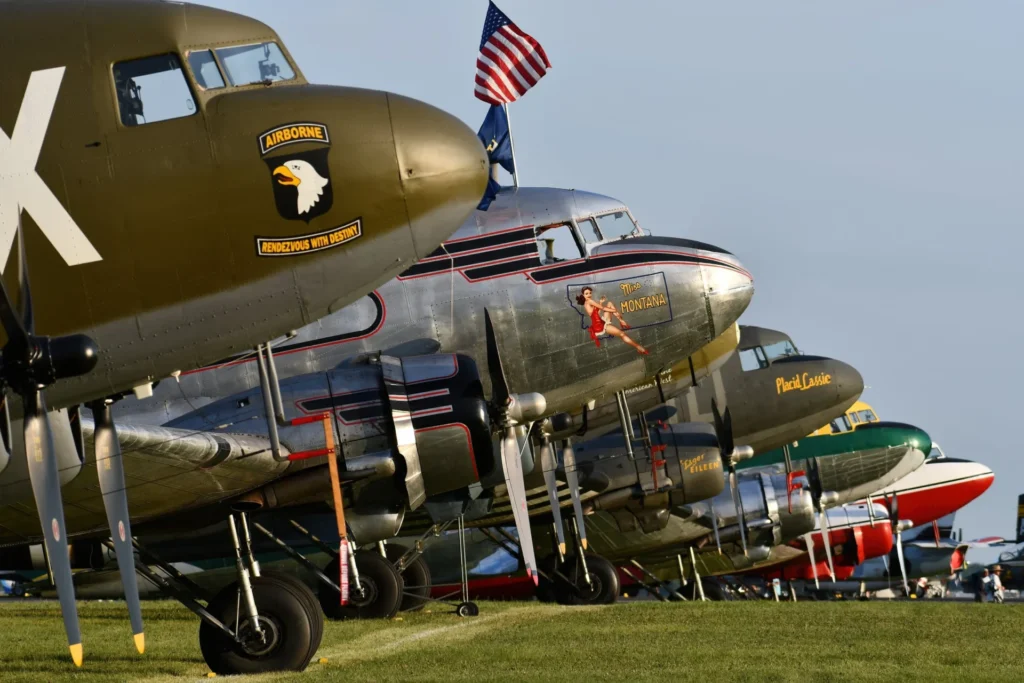
One might expect the airborne revolution to have been made possible by some extraordinary purpose-built machine.
Instead, its principal workhorse was the Douglas C-47.
A converted passenger airliner.
Two engines.
Around 28 paratroopers.
No armor capable of protecting it from serious anti-aircraft fire.
No enormous cargo compartment.
No extraordinary speed.
Just an exceptionally successful, reliable aircraft that could be produced in huge numbers.
And mass production was the decisive characteristic.
One C-47 could carry a platoon.
Hundreds of C-47s could move a division behind enemy lines in a matter of hours.
Thousands of transports, gliders, aircrews, mechanics, and airfield personnel finally transformed the interwar fantasy of soldiers falling from the sky into a practical instrument of industrial warfare.
Before this, a front was primarily a line on the ground.
For a few hours, the C-47 allowed an army to behave as if that line did not exist at all.
But Normandy, Arnhem, and the Rhine revealed the second half of the truth.
After landing, the paratrooper still needed ammunition. The mortar needed bombs. The gun needed shells. The wounded needed hospitals. Units needed reinforcements. And all of that ultimately had to arrive either aboard another aircraft or along the very road the paratroopers had been sent to capture.
World War II proved that a paratrooper could appear almost anywhere.
But it also established the price of that ability.
The farther an airborne soldier landed from his own army, the faster the clock began ticking toward the moment when that army had to reach him.
The C-47 really did accomplish what military theorists had dreamed about before the war.
It taught infantry how to fly.
But World War II proved that even flying infantry eventually needed a road.