
Zircon Was Reconstructed From Debris — and Something Odd Emerged: Its Main Secret May Have Nothing to Do With a Hypersonic Engine

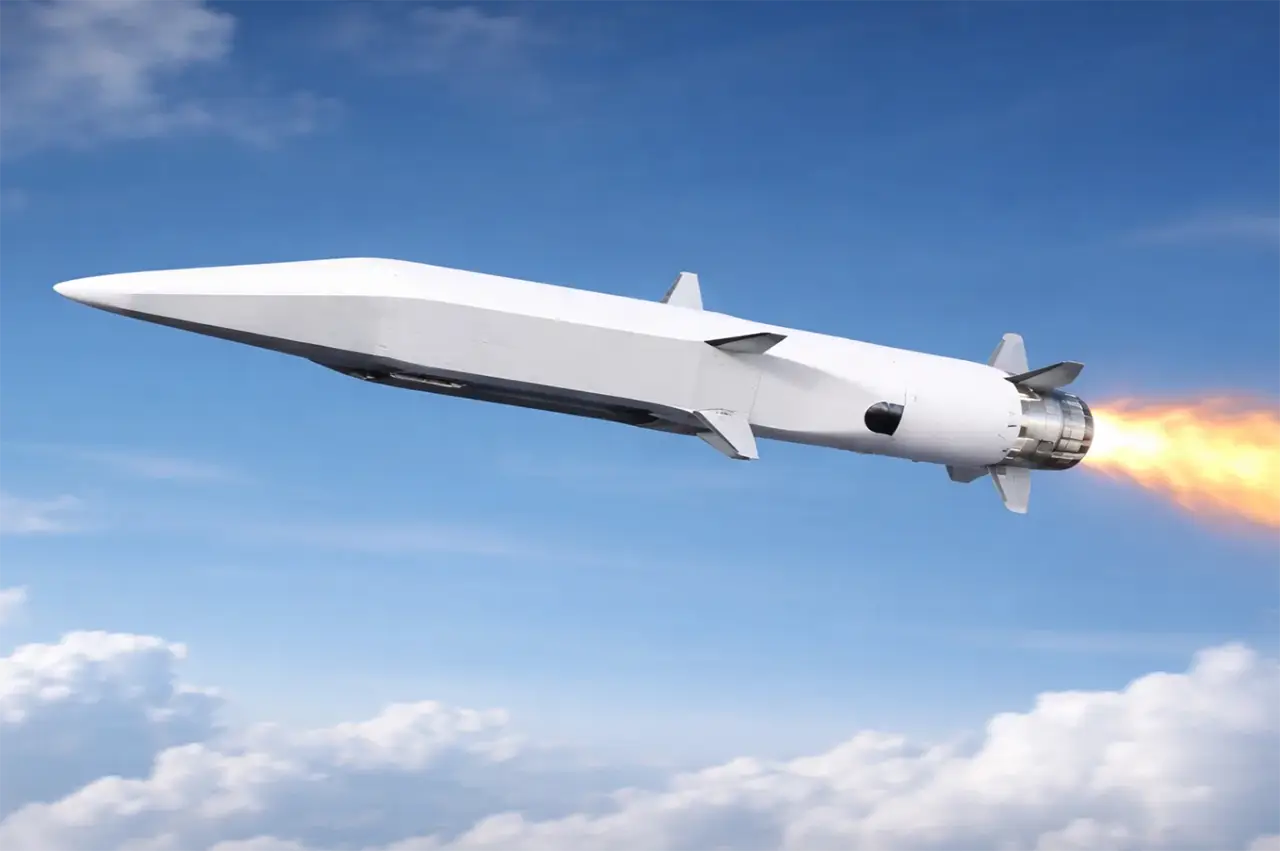
For more than a decade, Russia’s 3M22 Zircon has been described in essentially the same way: a sea-launched hypersonic cruise missile capable of reaching speeds of around Mach 8–9 and striking targets hundreds of kilometers away. The phrase “hypersonic cruise missile” itself almost automatically created a certain picture of how the weapon worked. A solid-fuel booster would eject the missile from its shipboard launcher and accelerate it to the required speed, after which a ramjet or scramjet would take over. The missile would draw oxygen directly from the atmosphere and use it to sustain extremely high speed over a prolonged flight. Developing a compact and reliable engine of this type was widely regarded as one of the program’s most important technological achievements.
But on August 31, 2026, The War Zone published a detailed analysis of new information about Zircon’s construction, and that familiar picture suddenly began to fall apart. The trigger was a publication by Ukrainian military intelligence that included an interactive model of the missile, a list of major components, and information about its industrial supply chain. Among the identified systems were the active radar seeker, onboard computer, control actuators, warhead, and a 3L2211 solid-fuel motor manufactured by NPO Iskra. More importantly, these details were compared with previously recovered debris, Russian patents, and open-source analysis of the missile’s architecture. An increasing number of clues suggest that what sits behind the launch booster may not be an air-breathing engine at all, but a second solid-fuel rocket motor.
If that interpretation proves correct, the conclusion would be striking. Zircon may indeed reach hypersonic speed while not being a hypersonic cruise missile in the conventional sense associated with systems such as the American X-51A or other scramjet-powered concepts. What we may actually be looking at is a maneuvering, two-stage quasi-ballistic missile using a much more traditional rocket propulsion system. That does not automatically mean the weapon is a “fake,” nor does it make it harmless. It may simply mean that for more than a decade we have been asking the wrong question. Instead of wondering how Russian engineers managed to make a compact scramjet operate reliably at Mach 6–8, perhaps the better question is this: what if they found a way to avoid needing one at all?
A Hypersonic Missile and a Hypersonic Cruise Missile Are Not the Same Thing
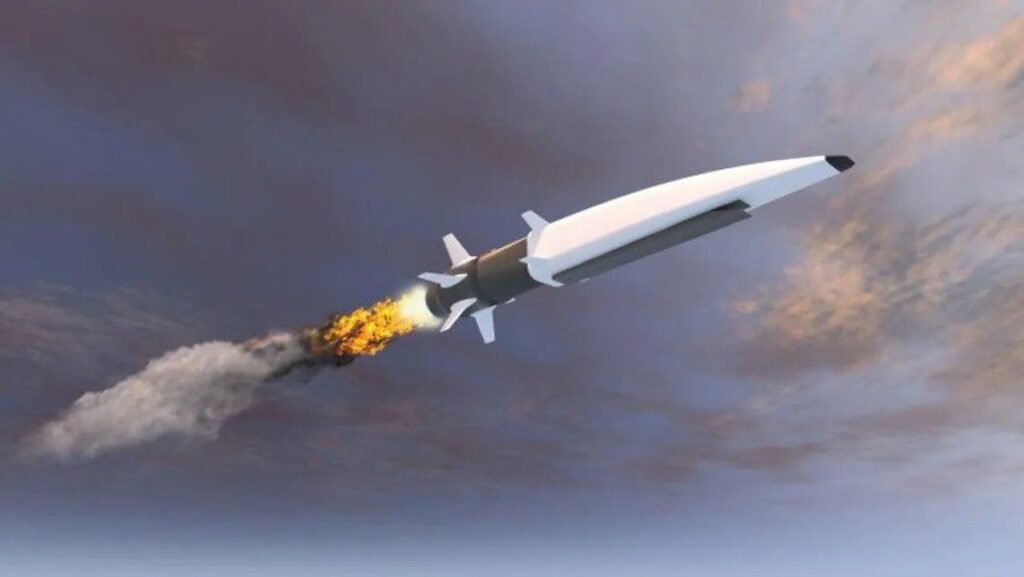
Much of the confusion surrounding Zircon begins with the word “hypersonic.” By itself, the term primarily describes speed — generally anything above Mach 5. It says nothing about how that speed was achieved. The reentry vehicles of intercontinental ballistic missiles have traveled far above Mach 5 for decades, yet nobody calls them hypersonic cruise missiles. An aeroballistic missile can also be hypersonic. A hypersonic glide vehicle is first accelerated by a separate booster and then continues to maneuver through the atmosphere without a sustaining cruise engine.
A hypersonic cruise missile presents an entirely different engineering problem. It is not enough merely to accelerate the vehicle past Mach 5 once. It must sustain controlled flight at those speeds. That is why scramjets receive so much attention. Conventional turbojets are unsuitable in this regime, while ordinary ramjets face their own limitations. A hypersonic air-breathing engine must ingest an incoming airflow, compress it, inject fuel, and maintain stable combustion while the gases are moving through the engine at extraordinary speed. At the same time, engineers must deal with aerodynamic heating, combustion stability, rapidly changing atmospheric conditions, and control across a wide operating envelope.
This is also why scramjets are so attractive. The missile does not need to carry its own oxidizer because it takes oxygen from the atmosphere. In theory, this allows a greater share of its mass to be devoted to fuel, payload, and other systems while sustaining high speed over long distances. The price is extreme engineering complexity.
A solid-fuel rocket does not need any of that. Both fuel and oxidizer are carried inside the missile. The engine does not care whether there is enough oxygen in the surrounding air. It can operate at altitudes where the atmosphere is already too thin for many air-breathing propulsion systems. The disadvantage is equally obvious: carrying oxidizer onboard makes the system less mass-efficient.
But for a weapon, there is one enormous advantage.
It is much simpler.
And if Zircon is indeed built this way, its designers may have deliberately traded the potential efficiency of a scramjet for the predictability of conventional rocket propulsion.
The Biggest Problem With the Scramjet Theory: Where Is the Air Intake?
This question is one of the main reasons serious doubts emerged about the conventional reconstruction of the 3M22. A ramjet or scramjet needs air, which means the missile requires an intake. At hypersonic speeds, that intake is not just a small opening in the fuselage. It is one of the most critical elements of the propulsion system, because its geometry determines how the incoming supersonic flow is slowed, compressed, and fed into the combustion chamber.
On Russia’s well-known P-800 Oniks, for example, the intake is clearly visible in the nose. On the American X-51A demonstrator, it is obvious along the underside of the body. Yet no equally convincing intake has been identified on the available images and reconstructions of Zircon. OSINT researcher Fabian Hinz has specifically pointed to the absence of an obvious intake, while a Russian patent related to the missile’s jettisonable launch cap also fails to reveal a clear path for air entering a cruise engine.
By itself, this proves nothing. A highly classified weapon could use a much less obvious arrangement, unconventional intake geometry is possible, and there are also rare solid-fuel ramjet concepts. Declaring that the absence of a visible intake automatically proves the absence of a ramjet would therefore go too far.
Then the debris appeared.
A round metallic structure recovered among missile fragments was examined by Ukrainian specialists and interpreted as part of a second-stage solid-fuel motor, rather than the launch booster. The latest intelligence publication now explicitly identifies the 3L2211 as a solid-fuel rocket motor produced by NPO Iskra. Russian patents associated with NPO Mashinostroyeniya and NPO Iskra provide additional circumstantial evidence, describing solid-fuel propulsion units with aerodynamic control surfaces arranged around the nozzle area. Researchers have also linked work on high-energy composite propellants to the Zircon program.
Taken together, the clues become much more interesting: no convincing intake has been seen, while physical evidence increasingly points toward a second rocket motor.
That changes the entire picture.
Perhaps We Are Looking at a Two-Stage Rocket After All
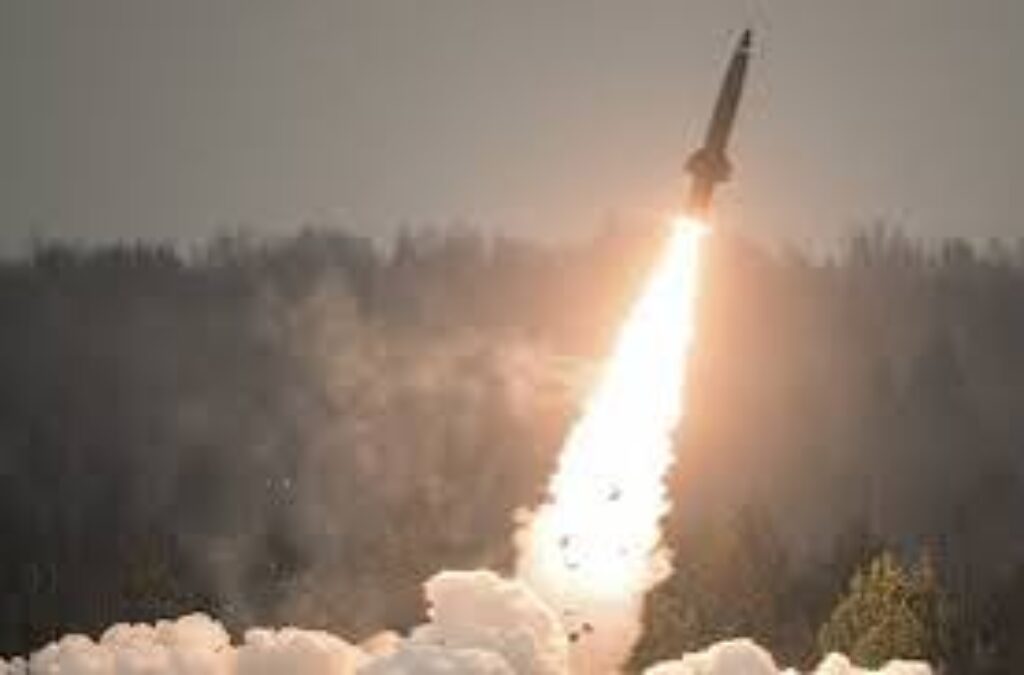
According to the published Ukrainian reconstruction, the missile first uses a solid-fuel launch motor after leaving its transport-launch container. This stage provides the initial acceleration and climb before separating. The main propulsion stage then takes over — and under the new interpretation, it too may be a solid-fuel rocket motor. Ukrainian intelligence classifies the 3M22 as a ballistic missile and gives approximate dimensions of around eight meters in length, a body diameter of roughly 0.666 meters, a flight altitude of about 30–40 kilometers, and a warhead mass of around 120 kilograms. It also cites a maximum observed speed of approximately Mach 6.8, while Russian statements have claimed Mach 8–9 on portions of the flight. These figures remain Ukrainian estimates and have not been independently verified.
If the missile is genuinely two-stage, its architecture begins to look much more like a quasi-ballistic missile than a conventional cruise missile. The first motor ejects it from the launcher and provides the initial energy, while the second continues the acceleration and sends the missile onto a high-altitude trajectory. From there, much of the remaining flight could rely on a combination of stored kinetic energy, aerodynamic lift, and maneuvering.
That does not necessarily mean a simple ballistic arc. This is why the term quasi-ballistic matters. Such a weapon may deviate from a predictable trajectory, maneuver in altitude and direction, alter its flight profile, and thereby complicate the defender’s attempt to calculate an intercept point. TWZ discusses one possible flight behavior resembling porpoising or skip-glide, in which the vehicle uses aerodynamics and stored energy to vary altitude and trajectory.
And this possibility also provides a surprisingly good explanation for another odd feature of Zircon: its speed may not remain remotely constant throughout the flight.
Mach 9 Does Not Mean the Missile Flies at Mach 9 the Entire Way
Public discussions often treat maximum weapon speed as if it were the speed of the entire mission. If a missile “reaches Mach 9,” it is easy to imagine it accelerating to that velocity after launch and then flying hundreds of kilometers at Mach 9 until impact. In reality, the profile may be far more complicated. Russian official statements during testing spoke of speeds above Mach 8 and later up to Mach 9. Ukrainian intelligence now cites a maximum observed speed of about Mach 6.8 and emphasizes that the missile does not maintain its maximum speed throughout the trajectory. Earlier Ukrainian assessments described an even more unusual profile: roughly Mach 5.5 over part of the route, acceleration to around Mach 7.5 closer to the target, followed by deceleration before impact. None of these figures has been independently confirmed, so they should be treated cautiously.
For a cruise missile powered continuously by an air-breathing engine, such a profile requires additional explanation. For a quasi-ballistic weapon, however, changing speed is far more natural. The missile receives enormous energy from its rocket motors, climbs tens of kilometers into the atmosphere, flies through much thinner air, maneuvers, gradually loses kinetic energy, and finally descends toward the target.
Slowing down before impact is not especially paradoxical either. As the vehicle penetrates denser layers of the atmosphere, drag and thermal loads increase sharply. At the same time, the weapon needs to use its own seeker effectively and perform terminal corrections. This is especially important for an anti-ship missile, because the target vessel will have moved significantly during the missile’s flight.
The published reconstruction points to a combined guidance arrangement. Inertial navigation is used during the main phase, while an active radar seeker, designated 3B222, is reportedly used during the terminal approach. That seeker has been linked to Radar MMS. Data processing is reportedly handled by a Baget-83 digital onboard computer produced by Korund-M, while electrohydraulic actuators and folding aerodynamic control surfaces are located toward the rear of the missile.
So even without a scramjet, we are still looking at a highly sophisticated guided weapon.
Its complexity is simply concentrated somewhere else.
Zircon Suddenly Begins to Look More Like Kinzhal
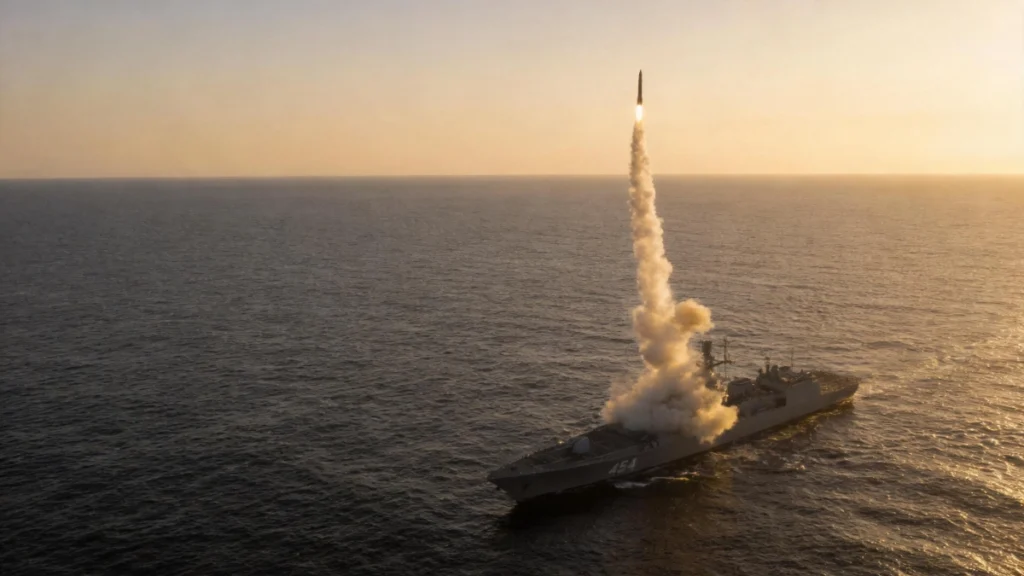
The Kh-47M2 Kinzhal is a useful example of how misleading the term “hypersonic weapon” can be. Kinzhal genuinely reaches hypersonic speeds, but it is not a hypersonic cruise missile powered by a scramjet. Architecturally, it is an aeroballistic weapon: the launch aircraft provides initial altitude and velocity, after which the missile’s rocket motor accelerates it further and the weapon follows a high-altitude maneuvering trajectory.
If the new reconstruction of the 3M22 proves accurate, the conceptual distance between the two systems becomes smaller than previously assumed. They are, of course, not identical missiles. They differ in size, launch method, development history, and mission. Zircon was developed from the outset as a naval weapon for ships and submarines using the 3S14 universal vertical launch system and has reportedly also been adapted for ground-based launch from modified Bastion-family systems. But the basic method of reaching hypersonic speed may be much closer to an aeroballistic weapon than to a classic scramjet cruise missile.
And this is important for more than terminology.
The flight profile determines how a missile is detected, tracked, and intercepted. A conventional cruise missile is usually associated with prolonged aerodynamic flight, often at relatively low altitude. A ballistic missile climbs much higher and follows a more predictable trajectory. A quasi-ballistic weapon attempts to combine the advantages of both approaches: the speed and altitude of rocket-powered flight with maneuverability that complicates missile-defense calculations.
So the absence of a scramjet would not automatically make the weapon an easier target.
In some respects, quite the opposite.
Does That Mean Zircon Is Technologically Simpler Than We Thought?
Yes — but only if we are very precise about what “simpler” means. A compact scramjet capable of sustaining prolonged hypersonic flight in an operational missile would be an extremely difficult technological achievement. If the 3M22 instead uses a high-energy solid-fuel motor, one of the most exotic elements of the conventional story disappears. Designers would not have needed to solve the entire range of problems associated with hypersonic air intakes and stable supersonic combustion across multiple flight regimes.
But that does not reduce the missile to a large firework with a seeker.
Engineers still need a compact, high-energy motor capable of surviving extreme pressure and temperature. The missile must remain controllable at very high speed and altitude. Its airframe has to withstand aerodynamic heating. Electronics have to survive vibration, acceleration, and thermal stress. The inertial navigation system must bring the weapon into the target area, after which the active radar seeker must acquire the target. If that target is a ship, it will already have moved considerably. The guidance system then has to calculate and execute corrections while the missile is still traveling at extreme speed.
And all of this has to fit inside a weapon less than a meter in diameter that can be fired from Russia’s standard naval universal vertical launch system.
The better description, therefore, is not that Zircon becomes “primitive,” but that its technological complexity shifts elsewhere.
Instead of an extraordinarily complex propulsion system, the challenge lies in rocket energetics, control, materials, and guidance.
And Perhaps That Was the Most Rational Choice From the Beginning
Military technology does not have to be elegant. The navy does not need a scramjet for its own sake. It does not care how impressive the propulsion system looks in an engineering presentation. It needs a missile that fits into an existing launcher, can be fired from a ship or submarine, reaches the target quickly, and makes interception as difficult as possible.
That leads to a question that changes the entire way Zircon is viewed.
Why build a scramjet at all if the military effect can be achieved without one?
Imagine the designers are tasked with creating a long-range anti-ship weapon. It must launch vertically, accelerate rapidly, climb to high altitude, reach hypersonic speed, retain maneuverability, and independently acquire the target during the terminal phase. One approach is to develop a compact hypersonic air-breathing engine and make it operate reliably over a large portion of the trajectory. The other is to use well-understood solid-fuel rocket physics, push the energy density as far as possible, and design an unusual high-altitude flight profile around it.
The first option is technologically more dramatic.
The second may be much easier to turn into a serial-production weapon.
If NPO Mashinostroyeniya chose the latter path, the possible absence of a scramjet begins to look less like the exposure of a failure and more like a pragmatic engineering decision.
So Why Did Everyone Spend Years Calling It a Hypersonic Cruise Missile?
Because before physical fragments became available, remarkably little was known about the 3M22. Russian official sources consistently described Zircon as a hypersonic cruise missile, but usable images of the weapon itself were almost nonexistent. Launch footage was filmed from long distances, while the launch configuration concealed key details. The real propulsion layout remained classified, the exact flight profile was unknown, and technical characteristics had to be reconstructed from statements, indirect evidence, and analogies with other programs.
From the phrase “hypersonic cruise missile,” the scramjet followed almost automatically. If the weapon was expected to fly for long periods through the atmosphere at hypersonic speed, an air-breathing engine appeared to be the most logical solution. From there came countless reconstructions, illustrations, and theories about the intake and the cruise engine.
But secrecy has one unpleasant weakness.
It works extremely well until the weapon begins to be used repeatedly in combat.
After that, the missile starts leaving parts behind.
Debris Can Sometimes Reveal More About a Missile Than a Decade of Presentations
This is where the current story becomes especially interesting from the perspective of technical intelligence. As long as Zircon existed mainly as a test program, obtaining physical access to its internal architecture was nearly impossible. Once the weapon began to be used operationally, that changed. Even a missile destroyed or fragmented on impact rarely disappears completely. Pieces of the motor, control systems, airframe, electronics, and seeker remain. Markings and serial numbers survive. Chemical analysis can reveal materials and propellant residues.
The first publicly confirmed appearance of characteristic Zircon debris dates to February 2024. Since then, the accumulation of physical material has made it possible to move gradually from speculation toward reconstruction of individual components. The latest Ukrainian publication lists dozens of parts and names 70 companies and 84 individuals allegedly connected to the missile’s development and production. NPO Mashinostroyeniya is identified as the prime developer and manufacturer, NPO Iskra is associated with the solid-fuel motor, Radar MMS with the active radar seeker, and Korund-M with the onboard computer.
This is why the current debate over the engine matters more than another comparison of claimed top speeds. For the first time, analysts can discuss not merely what the missile is supposed to do, but what it may actually be made of.
The Production Chain May Be Just as Interesting as the Engine
The Ukrainian side also claims to have identified foreign-origin electronic components among the recovered systems. These reportedly include a TGA2704 amplifier associated with TriQuint Semiconductor, now part of Qorvo, and an Altera Cyclone II EP2C5T144I8N programmable logic device. An important caveat is necessary here: the presence of an American-made component does not mean the original manufacturer knowingly supplied it to a Russian defense contractor. The War Zone specifically notes that the published information does not establish how these components entered the production chain.
More significant is the structure of the cooperation itself. Even with a comparatively conventional solid-fuel motor, a modern missile remains the product of a huge industrial network. One company makes the propellant, another the airframe, another the power supply, another the actuators, another the computer, and another the radar seeker. The prime contractor then integrates all of them into a weapon in which the failure of one relatively small subsystem can render a multimillion-dollar missile useless.
The published list of suppliers therefore reveals another dimension of Zircon. Its complexity lies not only in individual technologies, but also in the ability of an industrial base to integrate them consistently into a production weapon.
Which brings us back to the engine.
Perhaps We Have Been Asking the Wrong Question for Ten Years
Almost every technical discussion of Zircon has revolved around one mystery: how did Russia manage to create a compact, serial-production scramjet for a naval missile? From that question came all the others. Where is the intake? How is stable combustion achieved? How is the structure cooled? How do the electronics survive such extreme temperatures? How does the missile sustain Mach 8 over a significant portion of the flight?
But if the new reconstruction is correct, many of those questions simply disappear.
Instead of a revolutionary hypersonic air-breathing engine, there is a high-energy solid-fuel rocket stage. Instead of prolonged level cruise at constant hypersonic speed, there is a high-altitude quasi-ballistic trajectory. Instead of a requirement to maintain Mach 8 continuously, there is energy management, with speed changing over different phases of flight. Instead of one enormous technological breakthrough, there is a combination of established principles pushed to extremely high performance.
And perhaps that version fits the way successful weapons are actually developed much better.
Engineers are rarely rewarded for choosing the most exotic possible solution.
They are rewarded for delivering a missile that works.
Zircon May Therefore Be Less Revolutionary — and No Less Dangerous
That is the main thing the new analysis changes. If further examination confirms a two-stage solid-fuel architecture, the familiar description of the 3M22 will indeed need to be reconsidered. Rather than a classic scramjet-powered hypersonic cruise missile, it may be a high-speed maneuvering quasi-ballistic weapon capable of reaching hypersonic speeds during portions of its trajectory.
That would make Zircon less revolutionary from a propulsion standpoint.
It would not necessarily make it a less effective weapon.
For missile defense, the prestige of the propulsion technology is ultimately irrelevant. What matters is the target’s speed, altitude, direction of approach, ability to maneuver, and the amount of time between detection and impact. A missile that climbs rapidly, moves at hypersonic speed, and can deviate from a simple ballistic trajectory remains an extremely difficult target regardless of whether its thrust comes from a scramjet or from a solid propellant carried inside the airframe.
That is why the current story is more interesting than another attempt to “debunk” Russian weapon claims. For the first time, there is enough physical evidence to look at Zircon not through promotional specifications and not through early Western reconstructions, but through its possible real architecture.
And that architecture may turn out to be far more pragmatic than many assumed.
Perhaps Russian engineers were never really trying to answer the question: how do we make a compact naval missile fly hundreds of kilometers on a hypersonic air-breathing engine?
Perhaps the real question was: how do we make a missile launched from a standard naval cell gain enormous energy very quickly, climb tens of kilometers, travel toward the target along a complex trajectory, and leave the defender with as little reaction time as possible?
If so, then Zircon’s most important secret may not be the creation of an extraordinary hypersonic engine.
It may be that the real engineering trick was finding a way to build a hypersonic weapon without needing one at all.






