Subutai: How a Blacksmith’s Son Became the General Whose Armies Marched from China to Europe

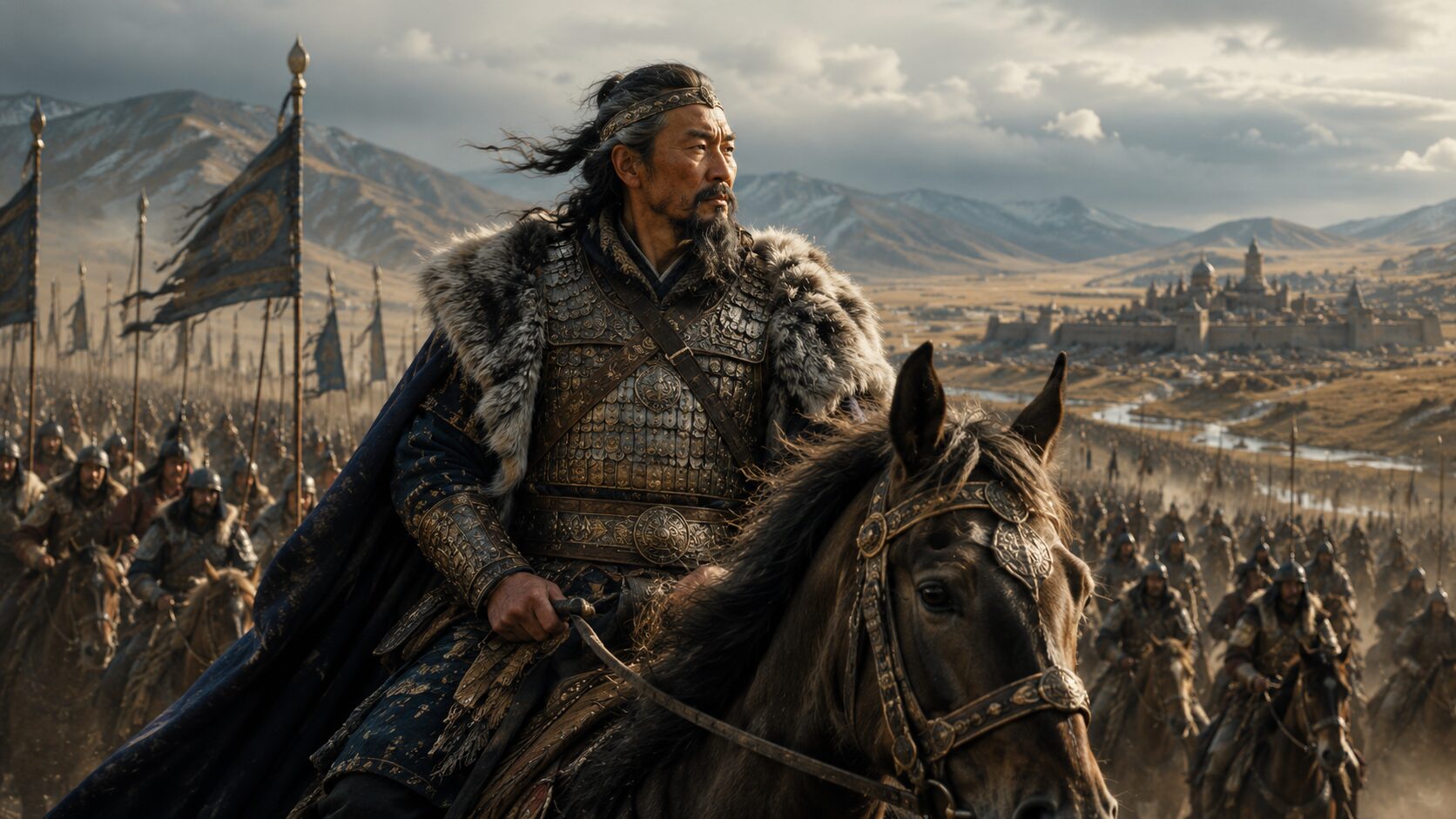
In the history of great conquests, commanders and rulers are often the same people. Alexander the Great conquered for Alexander, Caesar fought for himself and Rome, and Napoleon simultaneously commanded armies and ruled an empire. Subutai was different. He was not a khan, did not belong to Genghis Khan’s dynasty, founded no ruling house of his own, and never received a vast realm bearing his name. For most of his life, he remained a man carrying out the orders of others. Yet this same man took part in wars stretching from northern China to Iran, the Caucasus, the Rus’ principalities, Poland, and Hungary, commanded armies across distances that would remain enormous even by twentieth-century standards, and outlived several of his supreme rulers. This is why the popular description of Subutai as “the most successful general in history” cannot really be proved mathematically, but neither did it appear out of nowhere. If a military career is measured not by one spectacular victory but by the number of radically different enemies, theaters of war, and decades of successful service, Subutai has remarkably few rivals.
What makes his rise even more extraordinary is his background. Subutai was born around 1175 among the Uriankhai and did not belong to the steppe aristocracy surrounding the future Genghis Khan. Later tradition associates his family with blacksmithing and describes his father, Jarchigudai, as a blacksmith, although this detail should not be treated as completely beyond dispute: sources for the youth of thirteenth-century Mongol commanders fall far short of modern biographical standards. What matters more is that Subutai was certainly not a Chinggisid. In a world where ancestry determined a great deal, he built his career through service and military ability. His elder brother Jelme became one of Temüjin’s earliest and most loyal followers, and Subutai eventually followed him into service. Beginning as a young retainer, he gradually rose into the circle of commanders whom Genghis Khan trusted with increasingly difficult independent operations.
An Empire Where a Man of Humble Birth Could Command Princes
One reason for the success of the early Mongol Empire was Genghis Khan’s willingness to weaken the traditional principle that the right to command depended solely on noble birth. Kinship and steppe aristocracy did not disappear—the summit of the empire remained firmly dynastic—but the military system offered extraordinary opportunities to men who demonstrated loyalty and ability. From this environment emerged Genghis Khan’s famous “Four Dogs”: Jebe, Jelme, Qubilai, and Subutai, commanders whom Mongol tradition singled out among the Great Khan’s closest military followers. For Subutai, this created an almost unique possibility: a man without royal blood could receive enormous forces under his command and eventually exercise practical military leadership even in campaigns involving members of the ruling dynasty.
But Subutai did not suddenly emerge as a fully formed strategic genius who already knew how to conquer half of Eurasia. His military education lasted for decades and took place across radically different theaters of war. The Mongols began as an army of the steppe, superbly skilled in mounted maneuver, reconnaissance, feigned retreat, and horse archery, but the creation of an empire quickly confronted them with problems that steppe warfare alone could not solve. Enemies sheltered behind city walls, built fortresses, fielded large infantry forces, and employed crossbows, artillery, and sophisticated defensive works. The wars against the Jurchen Jin dynasty in northern China became an especially important school. There, Subutai and other Mongol commanders encountered one of the most developed military systems of their age and learned that cavalry alone could not build a continental empire.
The Mongols increasingly absorbed whatever proved useful among the peoples they conquered. Chinese and Muslim engineers, siege specialists, craftsmen, interpreters, guides, and administrators gradually became components of the imperial war machine. This was what later allowed Subutai’s armies to conduct campaigns that often looked almost unrelated to one another. On the steppe they could live off enormous herds and make astonishing marches; in China they could besiege fortified cities; in Central Asia they could operate in several columns across immense distances; and in Europe they could force rivers and maneuver against heavily armored cavalry. Subutai became one of the finest representatives of this new Mongol school of warfare. He did not search for one perfect method of defeating every opponent. He changed the way his forces fought according to the enemy in front of him.
Khwarazm Turned Subutai into a Commander on a Continental Scale
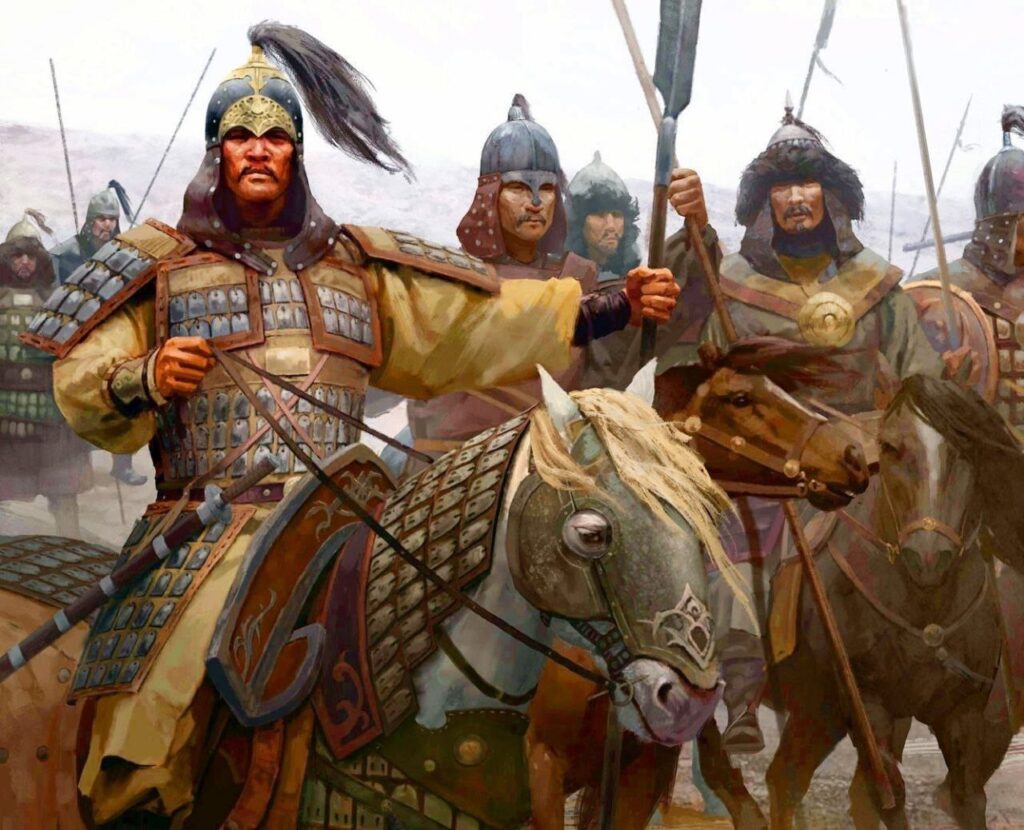
The real turning point in his career came during Genghis Khan’s war against the Khwarazmian Empire in 1219–1221. The Mongols faced a vast state extending across much of Central Asia and Iran, with wealthy cities and a large population. Genghis Khan used what would become a characteristic feature of Mongol operations: instead of moving as one gigantic army, his forces divided, advanced along different routes, and forced the enemy to guess where the main blow would fall. Bukhara, Samarkand, and other Khwarazmian centers were lost one after another, while Shah Muhammad II fled westward.
Genghis Khan then gave Jebe and Subutai a mission that alone might have been enough to make both men famous. They were to pursue the shah and prevent him from gathering fresh forces. Their detachment crossed Iran toward the Caspian Sea; Muhammad eventually died on an island in the Caspian, but the expedition did not end there. Instead of simply turning back, Jebe and Subutai continued west. They crossed territories in modern Iran and Azerbaijan, fought Georgian forces, approached the Caucasus, crossed the mountain passes, and emerged onto the steppes north of the range. In effect, the pursuit of a fugitive ruler had transformed into a gigantic military and reconnaissance expedition, giving the Mongols their first direct look at the enormous world west of the Caspian.
It was here that one of the methods associated with Subutai’s career became particularly visible. Knowing the enemy’s numbers was not enough. The Mongols gathered information about political relationships among neighboring peoples and used those relationships as weapons. When the Alans and Cumans united against them, the Mongols succeeded in breaking the alliance by persuading the Cumans to abandon their partners. After defeating the Alans, they turned against the Cumans themselves. The Cumans retreated into the Pontic steppe and appealed to the Rus’ princes for assistance. Thus, in 1223, an army that had begun its march far away in Central Asia unexpectedly appeared on the southern approaches to the Rus’ lands.
The Kalka Was Not the Conquest of Rus’ but Reconnaissance of a World the Mongols Would Visit Again
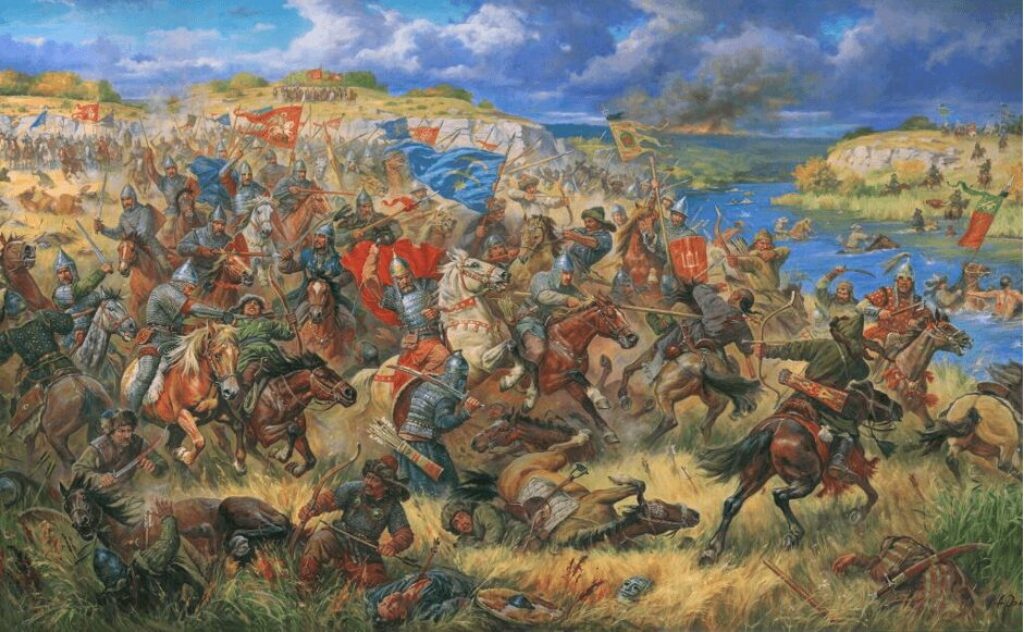
The Rus’ princes and their Cuman allies decided not to wait for the enemy and marched into the steppe. On May 31, 1223, their combined forces met the Mongols near the Kalka River. The exact course of the battle is less certain than its outcome, and later accounts frequently exaggerate the numbers on both sides. But the fundamental weakness of the Rus’-Cuman army is clear: it was a coalition of several princes and Cuman leaders without stable unified command. The Mongols, by contrast, operated as a single military force. They used retreat to stretch out their opponents, waited for the right moment, counterattacked, and defeated the coalition piecemeal.
The Battle of the Kalka later came to be remembered as a prelude to the Mongol invasion of Rus’, but in 1223 no immediate conquest followed. Jebe and Subutai continued their march and eventually turned east. Their enormous expedition effectively traced an arc around the Caspian Sea. Over the course of several years, the Mongol commanders traveled thousands of kilometers through territories with radically different climates, populations, and military traditions, fighting Khwarazmians, Georgians, peoples of the Caucasus, Cumans, and the Rus’. For Subutai, it provided experience that no conventional steppe campaign could possibly have offered.
The most important result of the expedition may not even have been the victory at the Kalka. The Mongols acquired knowledge of roads, rivers, steppe corridors, states, and peoples across western Eurasia. They learned who fought whom, where the grasslands ended, what kinds of forces the Rus’ principalities could field, and what lay farther west. Genghis Khan was not yet preparing to turn this reconnaissance into an immediate full-scale conquest of Europe. But the information did not disappear. A decade and a half later, when the Mongol Empire returned with a much larger force, one of its senior commanders would be a man who had already traveled those roads.
Subutai.
His Most Remarkable Ability Was That He Came Back
Genghis Khan died in 1227, but Subutai’s career did not end with his master. He continued serving the empire under Great Khan Ögedei and took part in further campaigns against the Jin dynasty. The Mongols now faced increasingly difficult operations involving major cities and fortified regions of northern China. In 1234, the Jin state finally ceased to exist. By this point Subutai was no longer the young steppe commander of Genghis Khan’s first campaigns. He was one of the empire’s most experienced military leaders, with China, Central Asia, Iran, the Caucasus, and the Pontic steppe already behind him.
Then the empire decided to return west. At the great kurultai of 1235, a major campaign against the peoples and states west of Mongol territory was approved. Formal leadership of the western expedition belonged to Batu, son of Jochi and grandson of Genghis Khan. Numerous other members of the Chinggisid dynasty accompanied him, including Güyük, Möngke, Büri, and other princes. But among these young aristocrats stood a commander roughly sixty years old who had already fought in these lands. Subutai could not claim political supremacy over the princes, yet his experience made him the natural senior military specialist of the campaign.
This is one of the most remarkable aspects of his entire biography. In the traditional steppe order, ancestry determined status with enormous force. Batu was a grandson of Genghis Khan. Güyük was the son of the Great Khan. Möngke was another grandson of the empire’s founder. Subutai belonged to none of their dynastic lines. Yet his expertise was essential to organizing one of the largest military operations of the thirteenth century. The son of a family remembered by tradition for blacksmithing had become a commander whose advice was sought by the descendants of Genghis Khan.
When the Mongols Returned, This Was No Longer a Raid
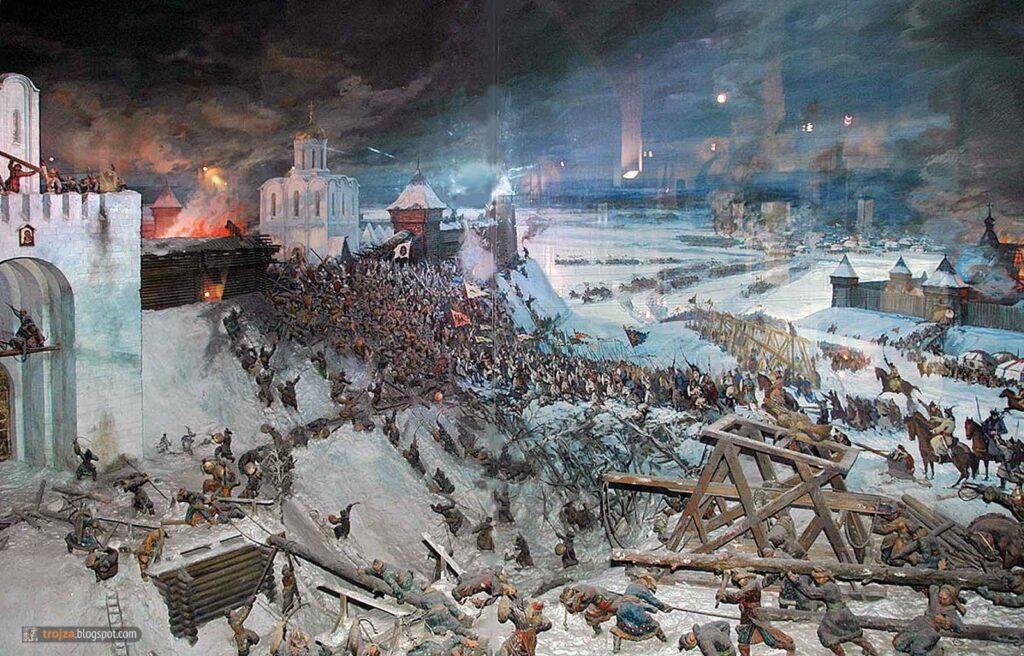
The western campaign began with the defeat of Volga Bulgaria and the subjugation of steppe peoples before the Mongol armies descended upon the Rus’ principalities. Ryazan was destroyed in the winter of 1237, followed by Kolomna, Moscow, and Vladimir. In 1238 the campaign swept through northeastern Rus’, after which the Mongols again shifted the direction of their advance. In 1239–1240 the southern principalities came under attack, and Kyiv fell in December 1240. This was no repetition of the expedition of the 1220s. The Mongols were now creating a new political reality behind their armies—the future dominion of the Jochids.
The campaign also demonstrates how different the Mongol army was from the popular image of an endless horde of horsemen advancing through sheer numerical superiority. Rus’ cities had to be besieged. This required engineers and siege techniques accumulated over decades of warfare in China and Central Asia. Armies divided into separate columns, advanced along different routes, and later reunited. Reconnaissance moved ahead of the main forces. Defeated field armies were pursued to prevent them from recovering. When a city resisted, the Mongols attempted to isolate it from its neighbors before beginning the assault.
Subutai was valuable not because he personally invented every maneuver of the western campaign. Command was collective, and political seniority belonged to the Chinggisids. His importance lay elsewhere: few men in the world possessed comparable experience in directing large mounted armies across immense distances. By then, he had been fighting for roughly four decades and had encountered almost every kind of opponent the Mongol Empire was likely to face.
Yet the climax of his career was still ahead.
In the Spring of 1241, Europe Saw Subutai Command Space Rather Than a Single Battlefield
After the fall of Kyiv, the Mongols advanced into Central Europe. Ahead lay the Kingdom of Hungary under Béla IV, where many Cumans had sought refuge. If the Mongols simply concentrated their entire army and marched directly into Hungary, neighboring European forces would have an opportunity to unite and threaten their flank. Instead, the Mongols divided their forces once again. A northern army advanced through Poland, where on April 9, 1241, it defeated the forces of the Silesian duke Henry II the Pious at Legnica. The principal forces under Batu, with Subutai playing a crucial strategic role, entered Hungary through the Carpathians along several routes.
Only two days after Legnica, on April 11, the Battle of the Sajó River—usually known as the Battle of Mohi—took place. The Hungarian army had established a camp near the river and expected to control the bridge. The Mongols attacked the crossing, but an important part of the operation was an outflanking movement: forces associated with Subutai crossed elsewhere and approached the Hungarian position from an unexpected direction. The army of Béla IV came under pressure from several sides and was eventually routed. The king escaped, but organized Hungarian resistance was temporarily shattered.
The most interesting feature is not simply that two victories occurred within two days of one another across a huge geographical distance. Legnica and Mohi cannot simply be entered into a ledger as two battles personally commanded by the same man—Subutai was not even present at Legnica. What matters is that both operations formed part of the same campaign. The Mongols forced European opponents to respond to several threats simultaneously, prevented them from calmly concentrating all available forces against the main advance, and moved separate armies across enormous distances in ways that supported the wider strategic design.
This is why Subutai is sometimes described as the inventor of a “medieval blitzkrieg” or even as a distant precursor to the theory of deep operations. Such comparisons are dramatic but too simplistic historically. Seven centuries separate the Mongol army of the thirteenth century from the mechanized forces of the twentieth, and the technological and organizational environments were entirely different. Yet one comparison remains useful: Subutai thought beyond the boundaries of a single battlefield. Routes, distances, timing, intelligence, coordination between widely separated formations, and the enemy’s likely position after the next march all mattered. His task was not merely to win the battle. It was to create circumstances in which the enemy would enter that battle already at a disadvantage.
He Did Not Win Every War in the Same Way
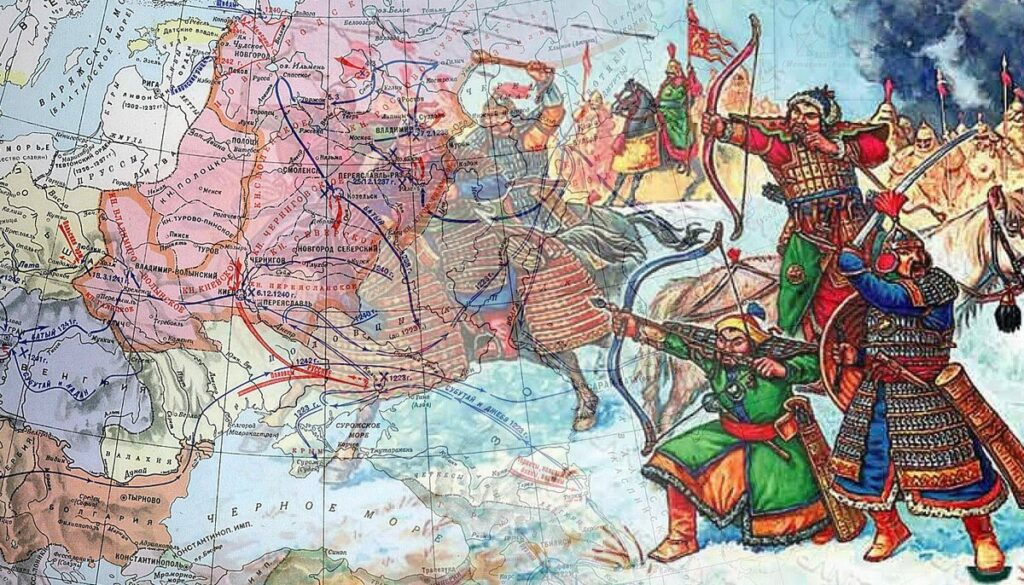
This ability separates Subutai from the caricature of the Mongol commander who supposedly possessed one unbeatable tactical trick. Against a steppe army, a feigned retreat and ambush might work. Against a state protected by major fortifications, engineers and siege equipment were necessary. Against a coalition, diplomacy could be used to break the alliance before the battle began. Against an enemy attempting to concentrate several armies, simultaneous threats could force those forces apart. If mountains blocked the route, columns could cross by different passes. If a bridge was defended, another crossing had to be found. Behind the extraordinary speed of Mongol armies stood not a contempt for planning but an enormous effort to gather and exploit information.
At the same time, Subutai should not be turned into a superhuman figure personally controlling every tumen from China to Hungary. The Mongol military system was a collective achievement. It possessed numerous talented commanders, sophisticated reconnaissance and communications, rigid decimal organization, highly mobile steppe logistics, and a political structure capable of mobilizing resources from conquered territories. Subutai was an exceptional product of that system, but the system itself made his plans possible. No commander, however brilliant, could have coordinated operations across hundreds of kilometers without it.
Even so, his personal military biography remains exceptional. Most great commanders in history are associated with one state, one principal enemy, or a relatively limited theater of war. Subutai began his career in the Mongolian steppe, learned warfare against northern China, pursued the Khwarazmian shah through Central Asia and Iran, crossed the Caucasus, fought Cumans and Rus’, returned to China, and years later reappeared in the western steppes before reaching Central Europe. Almost every new phase demanded adaptation to an entirely different military environment.
Why Did the Mongols Stop If the Road West Was Still Open?
After Mohi, Hungary was devastated, Mongol detachments reached the Adriatic, and Europeans understandably feared that the advance would continue farther west. From this emerged one of the most persistent legends surrounding the campaign: Europe was supposedly only one step away from complete Mongol conquest when Great Khan Ögedei died in December 1241, forcing the Mongols to hurry home to elect his successor.
Ögedei’s death was certainly a major event and coincided with the end of the western advance, but reducing the withdrawal to this single explanation is too convenient. Historians continue to debate the relative importance of the political crisis inside the empire, logistical difficulties, the geography and grazing conditions of Hungary, military losses, tensions between Batu and other Chinggisid princes, and the strategic priorities of the Mongol elite. We simply cannot state with confidence that Subutai was preparing to conquer Germany, Italy, or France and was stopped only by a chance message from Mongolia.
What we do know is that in the spring of 1242 the Mongol armies withdrew from Hungary. Subutai did not become the conqueror of Europe. Batu established himself in the steppes north of the Black and Caspian seas, where the Jochid realm gradually developed into the state later known as the Golden Horde. The enormous western expedition had ended. For most generals, such a campaign would have been the culmination of an entire lifetime. For Subutai, it was simply the final great chapter of a military career that had begun before the Mongol Empire itself really existed.
The General Who Never Received an Empire of His Own
The final years of Subutai’s life are far less clearly documented than his campaigns. After returning from the western expedition, the aging commander gradually withdrew from active service. He died around 1248, having lived for roughly seven decades—an extraordinary lifespan for a man who had spent so much of his life campaigning in the thirteenth century. He had witnessed an almost unimaginable transformation of the world around him. When Subutai was young, Temüjin was merely one of several steppe leaders struggling to survive amid the rivalries of the Mongol clans. By the time Subutai died, the empire created by Genghis Khan stretched from East Asia to the Black Sea steppes and the approaches to Central Europe.
Popular biographies credit Subutai with more than twenty major campaigns, dozens of victories, and the conquest of numerous peoples. The figure of 65 victories is repeated particularly often. Such arithmetic should be treated cautiously: medieval sources do not provide a convenient statistical table from which we can objectively calculate Subutai’s “win rate” and compare it with Alexander the Great, Khalid ibn al-Walid, or Napoleon. Even deciding which victories should count as personally his is difficult. Mongol commanders frequently operated collectively, while above Subutai stood Genghis Khan, Ögedei, Batu, and other members of the ruling dynasty.
The paradox is that Subutai does not need those spectacular statistics to make his career impressive. We only need to look at the geography of campaigns in which he is reliably known to have participated.
Northern China. Central Asia. Iran. The Caucasus. The Pontic steppe. The Rus’ principalities. The Volga region. Poland. Hungary.
For a thirteenth-century commander, that list alone is almost unbelievable.
Why Does Everyone Know Genghis Khan While Far Fewer Know Subutai?
The reason is straightforward: great commanders usually become the central characters of their own stories. Alexander was a king. Caesar converted military victory into political power. Napoleon became an emperor. Even Batu received a realm that his descendants transformed into one of the great powers of Eurasia. Their wars automatically became their personal wars.
Subutai always fought for someone else.
Under Genghis Khan he fought in Asia and embarked on the great western reconnaissance expedition. Under Ögedei he participated in the final destruction of the Jin and the preparation of another western campaign. Alongside Batu he passed through the Rus’ lands and Hungary. Victories became victories of the Mongol Empire, conquered territories went to the Chinggisids, and the name of the professional soldier remained in the background. Perhaps this is why Subutai is far less famous today than many commanders whose actual military careers were dramatically shorter.
And therein lies the central paradox of his life. A man without royal blood became one of the architects of the greatest overland expansion of the Middle Ages, yet almost none of what was conquered belonged to him personally. He did not become the founder of a state, create a royal dynasty, or turn the army into an instrument of personal rule. His legacy was instead found in other men’s empires and in the routes traced by his campaigns.
Whether Subutai truly was “the most successful general in history” can be debated forever. History has no objective scoreboard awarding a fixed number of points for Mohi and another number for the Kalka. Alexander never lost a major battle, Caesar fought entirely different armies, Genghis Khan was both conqueror and state-builder, and Napoleon commanded warfare in an age that cannot meaningfully be compared directly with the thirteenth century.
Something else about Subutai is more interesting. Almost six decades of military life separate the young retainer in Temüjin’s entourage from the elderly commander whose armies reached the heart of Europe. During those decades, khans changed, enemies changed, languages changed, climates changed, weapons changed, and even the methods of warfare changed. What remained constant was his ability to adapt to the next problem. He did not discover one secret maneuver with which he defeated everyone. He did the opposite: again and again, he made his armies fight in the way that was most inconvenient for the particular enemy they faced.
That is ultimately what makes the story of the man whose father tradition remembered as a blacksmith so remarkable. Subutai rose almost as high as it was possible to rise in the Mongol Empire without being born a Chinggisid. He never received a khan’s throne. Instead, he was entrusted with the armies through which Genghis Khan’s descendants redrew the map of Eurasia. And while the title of “the most successful general in history” will always remain open to debate, Subutai’s place among the greatest military commanders in world history is much harder to dispute.