

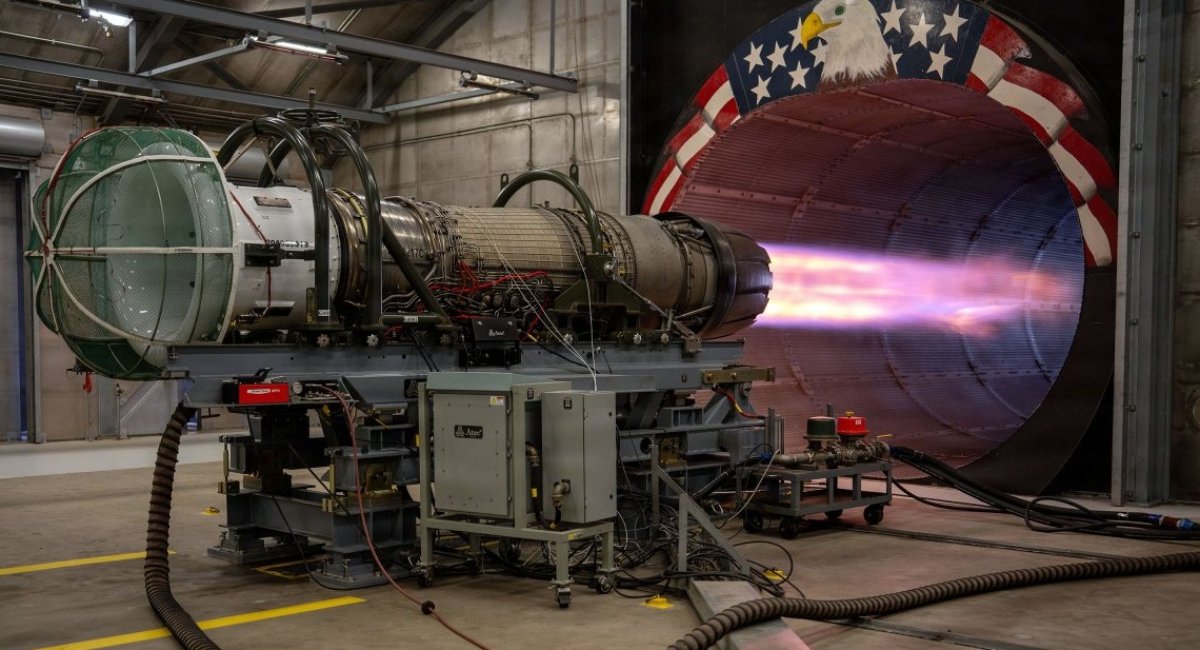
The Pentagon admits that the crisis in fighter engine production is beginning to threaten America’s largest combat aviation programs
Just a few years ago, few would have imagined that one of the biggest challenges facing U.S. military aviation would not be designing new aircraft, but building enough engines to power them. Yet that is precisely the conclusion emerging from the Pentagon itself.
In recently published procurement documents, the U.S. Department of Defense openly acknowledges systemic problems within the military jet engine industry: chronic production delays, declining product quality, aging manufacturing facilities, and an almost complete lack of competition. At the center of the issue are just two companies—Pratt & Whitney and GE Aerospace—which dominate the American market for combat aircraft engines.
The Problem Is Far More Serious Than It Appears
At first glance, this may look like another dispute between the Pentagon and its contractors. The numbers, however, tell a much more troubling story.
According to the U.S. Government Accountability Office (GAO), every one of the 123 Pratt & Whitney F135 engines delivered for the F-35 program in 2024 arrived behind schedule. Average delivery delays increased from 68 days in 2023 to 155 days in 2024, driven by supply chain disruptions, shortages of critical components, and manufacturing bottlenecks across the supplier network.
For the world’s largest fighter aircraft program, delays on this scale are no longer just statistics—they directly affect aircraft deliveries, pilot training, and military readiness.
One Engine Depends on an Entire Industrial Ecosystem
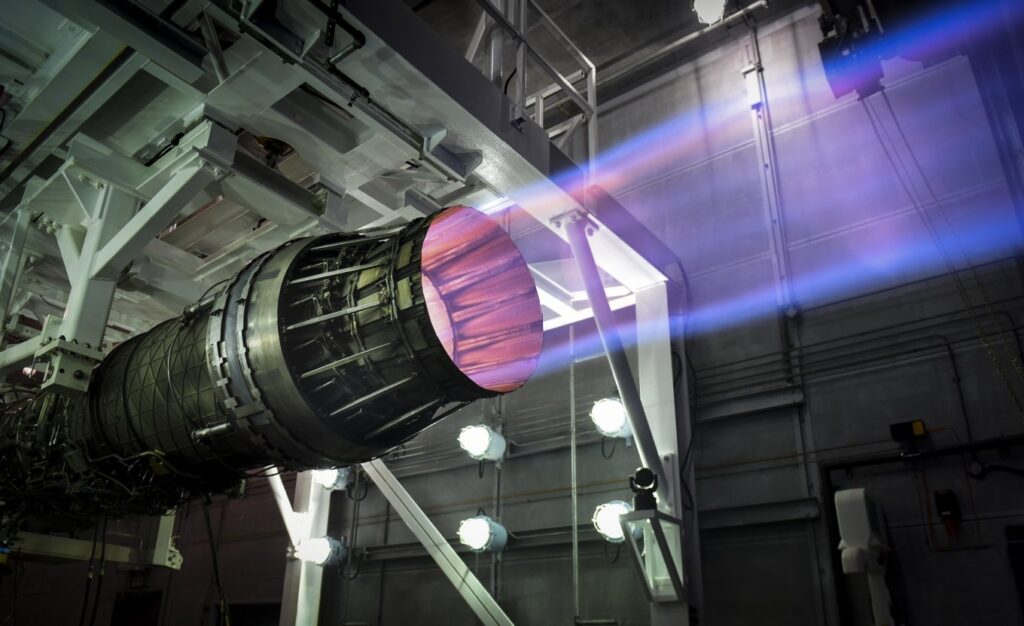
Many people imagine a jet engine as a product assembled inside a single factory. In reality, a modern military turbofan is one of the most complex industrial products ever built.
Each engine relies on hundreds of specialized suppliers producing everything from single-crystal turbine blades and ceramic thermal coatings to precision bearings, advanced electronics, titanium forgings, and composite components. Every stage of manufacturing demands extremely tight tolerances, and a disruption at just one supplier can delay the entire production line for weeks—or even months.
That is why the Pentagon increasingly sees the problem as something much larger than the performance of Pratt & Whitney or GE Aerospace. The real concern is the gradual erosion of America’s industrial base, where aging factories, shrinking supplier networks, and a shortage of skilled workers are becoming strategic vulnerabilities.
Why Two Manufacturers Are No Longer Enough
On paper, competition still exists. Pratt & Whitney and GE Aerospace continue developing advanced propulsion technologies, and both remain among the world’s leading aerospace companies.
In practice, however, many critical defense programs depend on a single supplier.
Every production F-35 Lightning II is powered by the Pratt & Whitney F135 engine. An alternative engine—the F136, jointly developed by GE and Rolls-Royce—was canceled in 2011 as part of defense spending cuts. Since then, Pratt & Whitney has remained the sole engine supplier for the largest fighter aircraft program in history.
When the only supplier experiences production problems, there is simply no backup.
Why This Matters Right Now
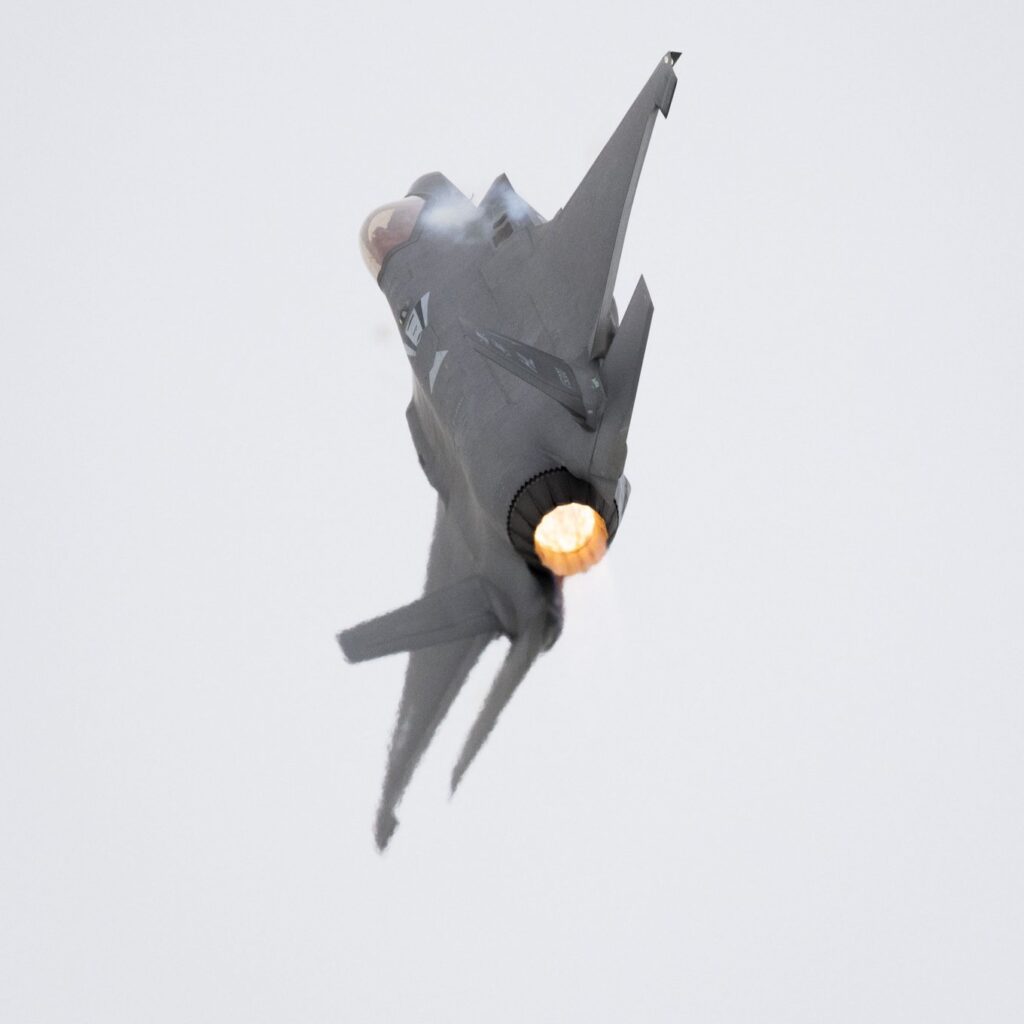
The implications extend well beyond the F-35.
Over the next decade, the U.S. Air Force must continue producing the F-15EX Eagle II, support exports of the F-16 Block 70/72, complete the F-35 Block 4 modernization program, and prepare for the arrival of the sixth-generation F-47 fighter. At the same time, the Air Force is investing billions of dollars in the Next Generation Adaptive Propulsion (NGAP) program, which is expected to power future combat aircraft.
Yet that effort has also experienced delays, with prototype development now expected to continue until at least 2031, several years later than originally planned.
In other words, demand for advanced military engines continues to grow while America’s ability to manufacture them is struggling to keep pace.
A Challenge Facing More Than Just the United States
Ironically, this is not a uniquely American problem.
Following the end of the Cold War, the United States—like many Western nations—consolidated much of its defense industry in the name of efficiency and lower costs. While that strategy reduced expenses during peacetime, recent geopolitical tensions have exposed its downside: rebuilding lost industrial capacity is far harder than dismantling it.
According to the GAO, the average timeline for major U.S. defense acquisition programs now exceeds 12 years, with manufacturing capacity increasingly becoming one of the primary factors slowing modernization efforts.
Conclusion
The Pentagon’s concerns about Pratt & Whitney and GE Aerospace may seem like another routine procurement issue, but they reveal something far more significant.
In the 21st century, military superiority is no longer determined solely by who can design the most advanced fighter aircraft. It also depends on who can manufacture those aircraft—and their engines—at the scale, speed, and reliability required during a prolonged strategic competition.
Judging by the Pentagon’s own assessment, that industrial challenge is becoming one of the defining issues facing American air power.






