The Armored Personnel Carrier That Outlived an Empire: The Story of the Alvis FV603 Saracen

Some armored vehicles become famous because of a single decisive battle. Others are forever associated with one particular war. Then there are machines of a completely different kind—not the most heavily armed or technologically advanced, but so well designed that they remain in service for decades, outliving the armies, governments, and even the nations that originally built them.
That was exactly the case with the Alvis FV603 Saracen.
Developed during the early years of the Cold War, the British armored personnel carrier served through the final decades of the British Empire, numerous colonial conflicts, NATO operations, and regional wars across the globe. It remained in military service for nearly half a century, and even today some examples continue to operate in museums, private collections, and the armed forces of several countries.
The Saracen was never considered revolutionary. Its success came from something much simpler—reliability, practicality, and versatility.
A New World Needed a New Armored Vehicle
Although the Second World War had ended in victory for the Allies, the British Army quickly realized that much of its armored fleet had become obsolete.
During the war, British forces had relied heavily on the American M3 Half-track, but by the late 1940s the concept was already considered outdated. Military planners wanted a fully wheeled armored vehicle capable of traveling long distances at high speed while still offering respectable off-road mobility.
Britain also remained a global empire. Its troops were stationed in Germany, the Middle East, Africa, and Southeast Asia. The Army needed a vehicle that could operate just as effectively on European highways as it could in African deserts or tropical jungles.
The answer was the FV600 series—a family of wheeled armored vehicles that included reconnaissance cars, command vehicles, and armored personnel carriers.
The best-known member of this family would become the FV603 Saracen.
A New Generation of Wheeled APC
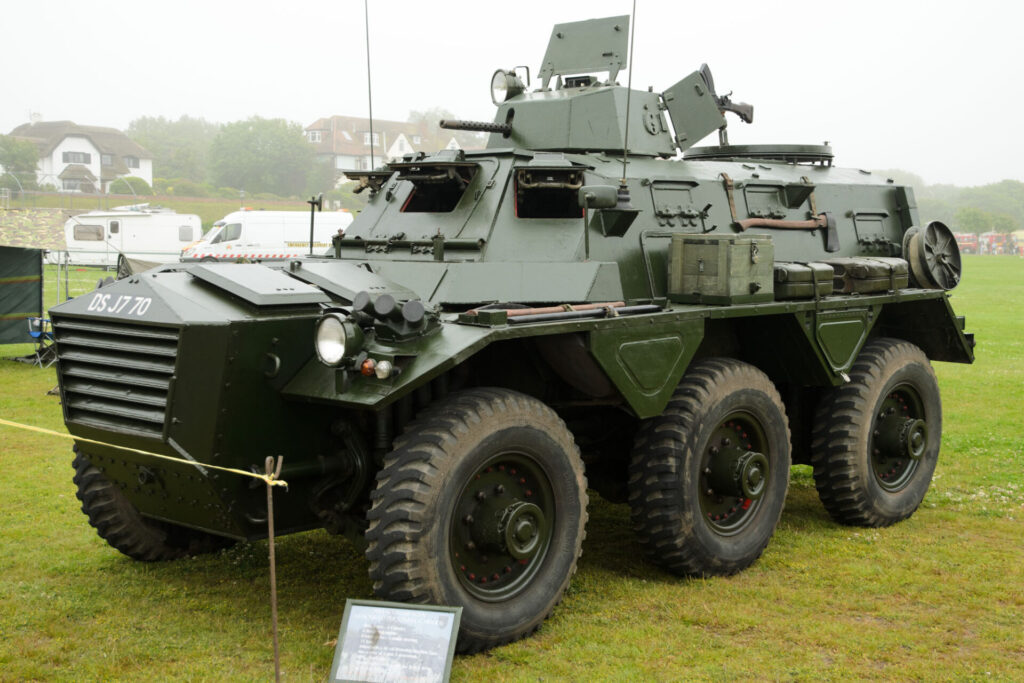
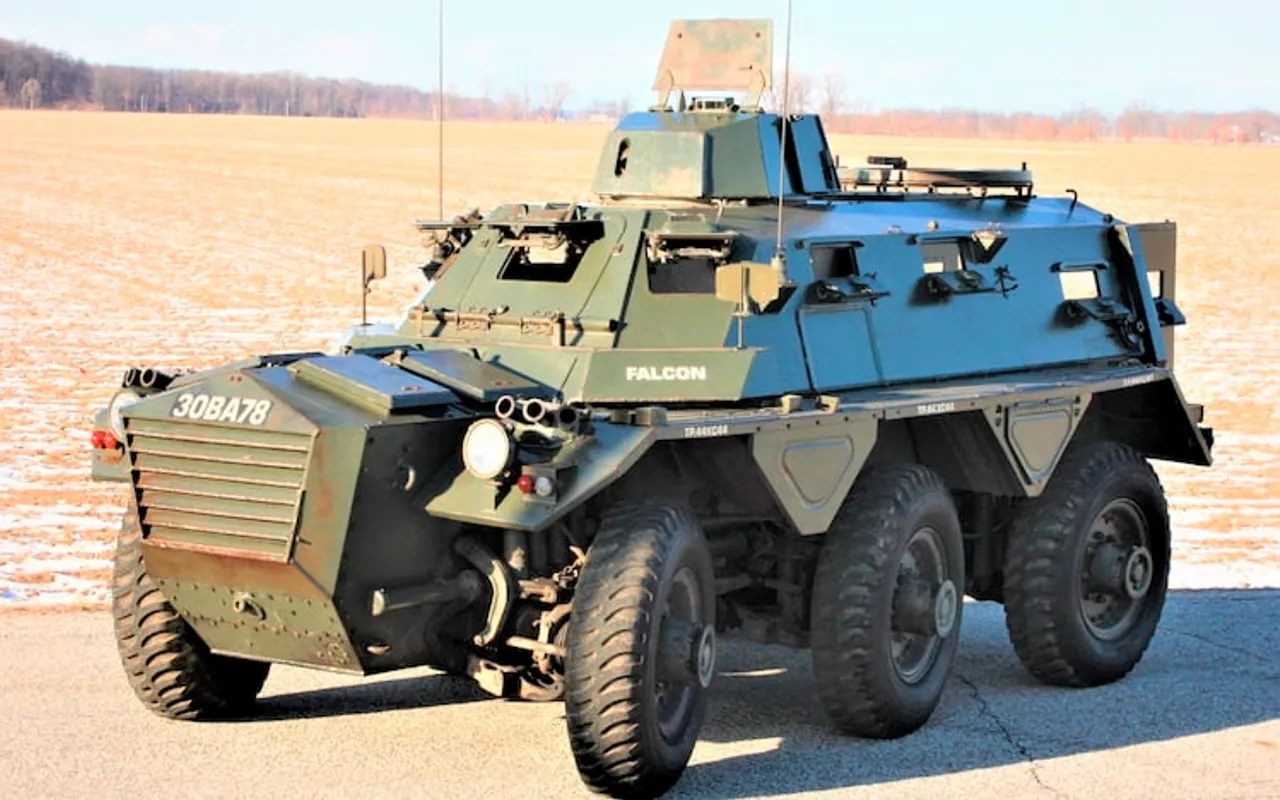
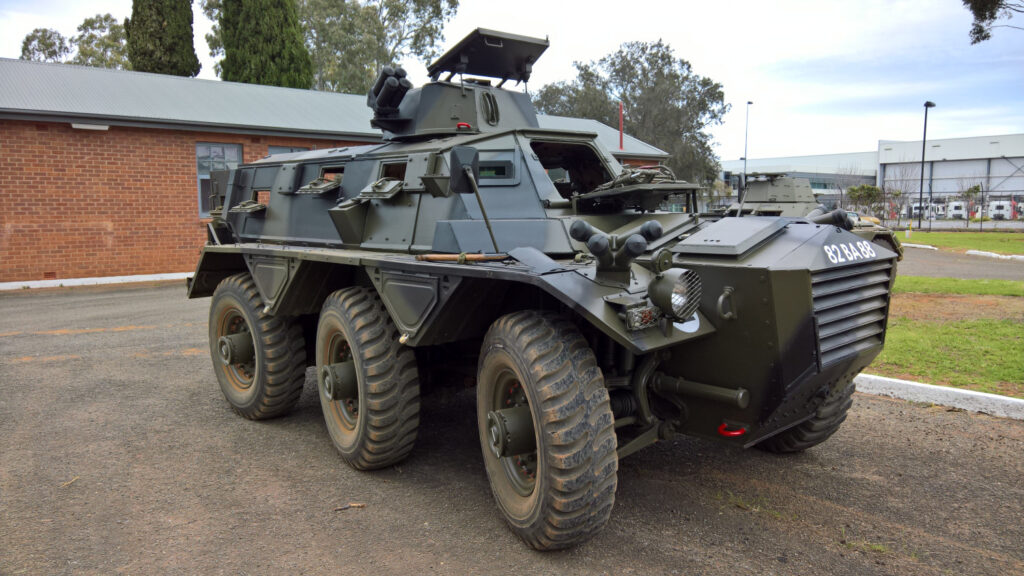
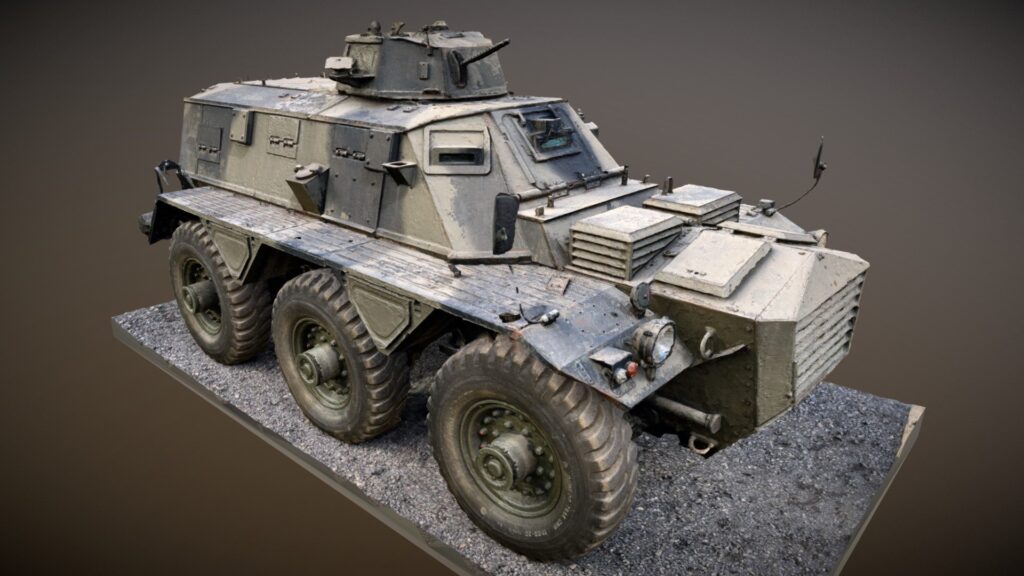
Alvis Saracen APC (1953)
Development was entrusted to Alvis Cars, a company already experienced in military vehicle design.
The engineers abandoned the half-track concept entirely, choosing instead a 6×6 all-wheel-drive configuration.
For the early 1950s, this was a remarkably forward-looking decision.
While tracked vehicles still offered superior performance on extremely rough terrain, wheeled vehicles were significantly cheaper to operate, easier to maintain, and capable of traveling hundreds of kilometers under their own power without requiring transporters.
The Saracen was therefore designed as a highly mobile armored personnel carrier intended to accompany mechanized formations over long distances.
The first production vehicles entered British Army service in 1952.
Instantly Recognizable
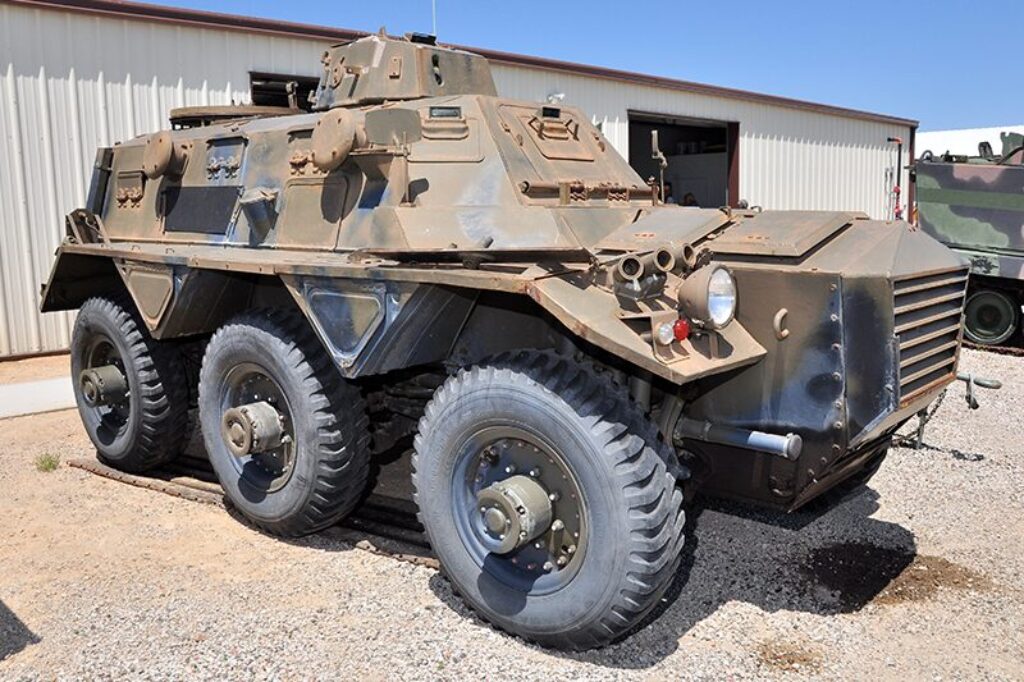
Even today, the Saracen is difficult to mistake for any other armored vehicle.
Its tall welded hull, sharply sloped armor plates, large wheel arches, prominent side doors, and compact rotating cupola created one of the most distinctive silhouettes of the Cold War.
Every aspect of its design reflected the military requirements of the era.
The welded hull was constructed from armor plates up to 16 millimeters thick.
This provided adequate protection against rifle-caliber ammunition, shell fragments, and light infantry weapons.
Naturally, it could not withstand anti-tank weapons or artillery fire, but for an armored personnel carrier of the early 1950s, this level of protection was considered entirely satisfactory.
The crew consisted of two men—the driver and the commander.
The troop compartment accommodated ten fully equipped infantrymen.
Large rear doors allowed soldiers to dismount under considerably better protection than many contemporary vehicles that relied on side exits.
More Like a Truck—Only Armored
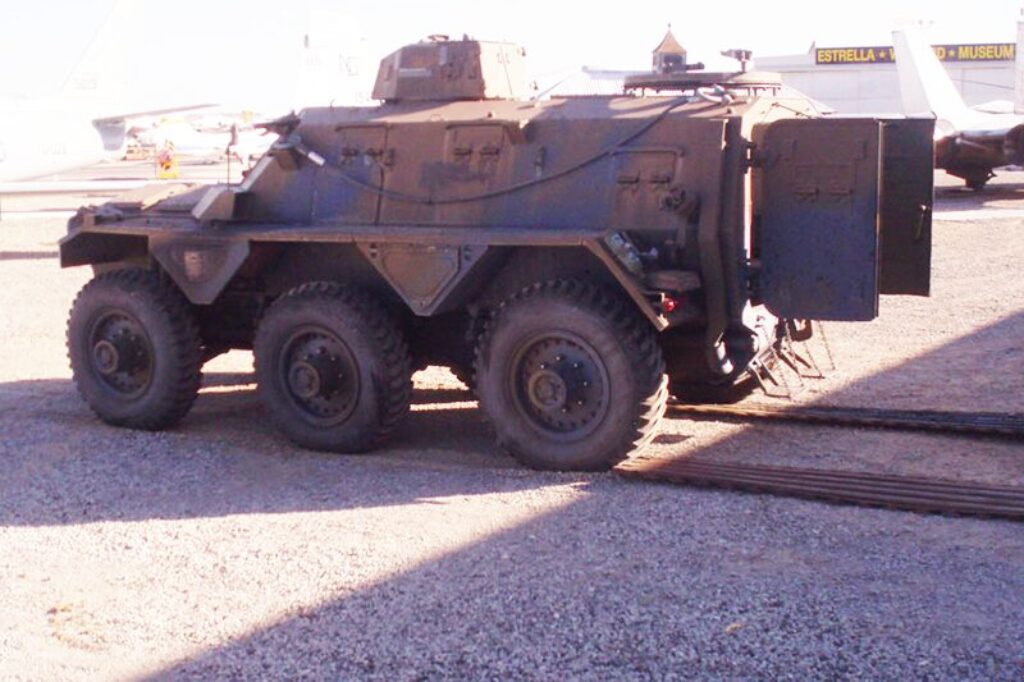
Power came from the well-known Rolls-Royce B80 gasoline engine.
This eight-cylinder powerplant produced approximately 160 horsepower.
Although that figure may appear modest today, the engine earned an excellent reputation for reliability.
With a combat weight of roughly 10 tonnes, the Saracen could reach speeds of 72 km/h, while its operational range approached 400 kilometers.
These were impressive figures for the early 1950s.
Its all-wheel-drive transmission and independent suspension provided respectable cross-country performance.
Although tracked vehicles retained an advantage in deep mud or swampy terrain, the Saracen proved more than capable on the roads and rough tracks that dominated much of Britain’s worldwide military commitments.
Many British soldiers later remarked that the vehicle felt more like driving a heavy military truck than a traditional armored personnel carrier.
Armament Kept to a Minimum
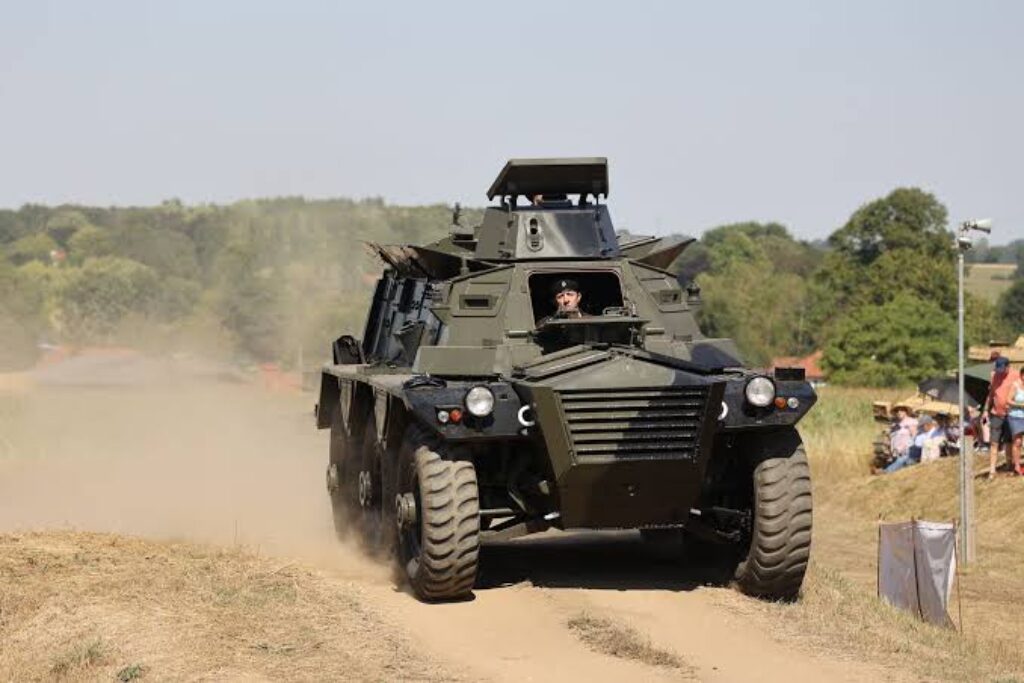
Modern readers may be surprised by how lightly armed the Saracen was.
Most production vehicles carried only a single 7.62 mm machine gun mounted in a small rotating turret.
Early vehicles were equipped with the Bren machine gun, while later examples received the more modern L7 General Purpose Machine Gun (GPMG).
The reason was straightforward.
The Saracen was never intended to fight tanks or serve as an infantry fighting vehicle.
Its primary mission was transporting infantry safely to the battlefield.
Its machine gun was therefore considered sufficient for self-defense, suppressing enemy firing positions, and covering troop deployment.
Built for the Twilight of the British Empire
The Saracen earned its reputation far from Europe.
Most of its operational career unfolded during the final decades of Britain’s colonial conflicts.
It saw service in:
- The Malayan Emergency
- Aden
- Kenya
- Cyprus
- Northern Ireland
- Various Middle Eastern operations
These campaigns highlighted the vehicle’s greatest strengths.
Long operational range.
Excellent reliability.
Straightforward maintenance.
The ability to conduct extended patrols with minimal servicing.
In counterinsurgency warfare, these qualities often proved far more valuable than heavy firepower.
A Remarkably Versatile Platform
The Saracen’s successful design quickly gave rise to numerous specialized variants.
These included:
- Command vehicles
- Ambulances
- Communications vehicles
- Mobile radio stations
- Engineering support vehicles
- Police armored vehicles
- Airfield security vehicles
The chassis ultimately proved so successful that many specialized versions remained in service even after the standard armored personnel carrier had begun disappearing from frontline units.
An Export Success
The Saracen was not only successful in British service.
More than 1,800 vehicles were built, with a significant proportion exported abroad.
It entered service with more than twenty countries, including:
- Australia
- India
- Indonesia
- Jordan
- Kuwait
- Libya
- Nigeria
- Sri Lanka
- United Arab Emirates
- South Africa
In several nations, the Saracen remained operational well into the twenty-first century.
Why Did It Last So Long?
The secret to the Saracen’s longevity was neither its armor nor its firepower.
Alvis created a vehicle that was exceptionally easy to maintain under virtually any conditions.
Most repairs could be completed by field maintenance crews.
The Rolls-Royce engine offered an outstanding service life.
The suspension proved capable of enduring years of operation on poor roads.
As a result, many surviving Saracens remain fully operational even seventy years after they first left the factory.
Specifications
Crew: 2
Troop Capacity: 10 soldiers
Combat Weight: Approximately 10 tonnes
Engine: Rolls-Royce B80, 8-cylinder gasoline engine
Power Output: 160 hp
Drive Configuration: 6×6
Maximum Speed: Up to 72 km/h
Operational Range: Approximately 400 km
Armament: 7.62 mm Bren or L7 GPMG machine gun
Armor: Up to 16 mm
Legacy
Today, the Alvis FV603 Saracen is rarely mentioned alongside legendary vehicles such as the American M113 or the Soviet BTR-60. Yet that does little to diminish its importance.
It became one of the first truly successful wheeled armored personnel carriers of the postwar era, proving that such vehicles could perform effectively not only in Europe but virtually anywhere in the world.
The Saracen never became famous because of one decisive battle or one iconic war. Instead, its reputation was built over decades—through thousands of patrols, numerous military campaigns, and millions of kilometers traveled across the roads of Europe, Africa, and Asia.
Perhaps that is the greatest measure of a successful military vehicle: not the headlines it generates, but the quiet reliability with which it performs its mission year after year.