BAR Never Died: How Browning’s Legendary Rifle Was Reborn as the Modern HCAR

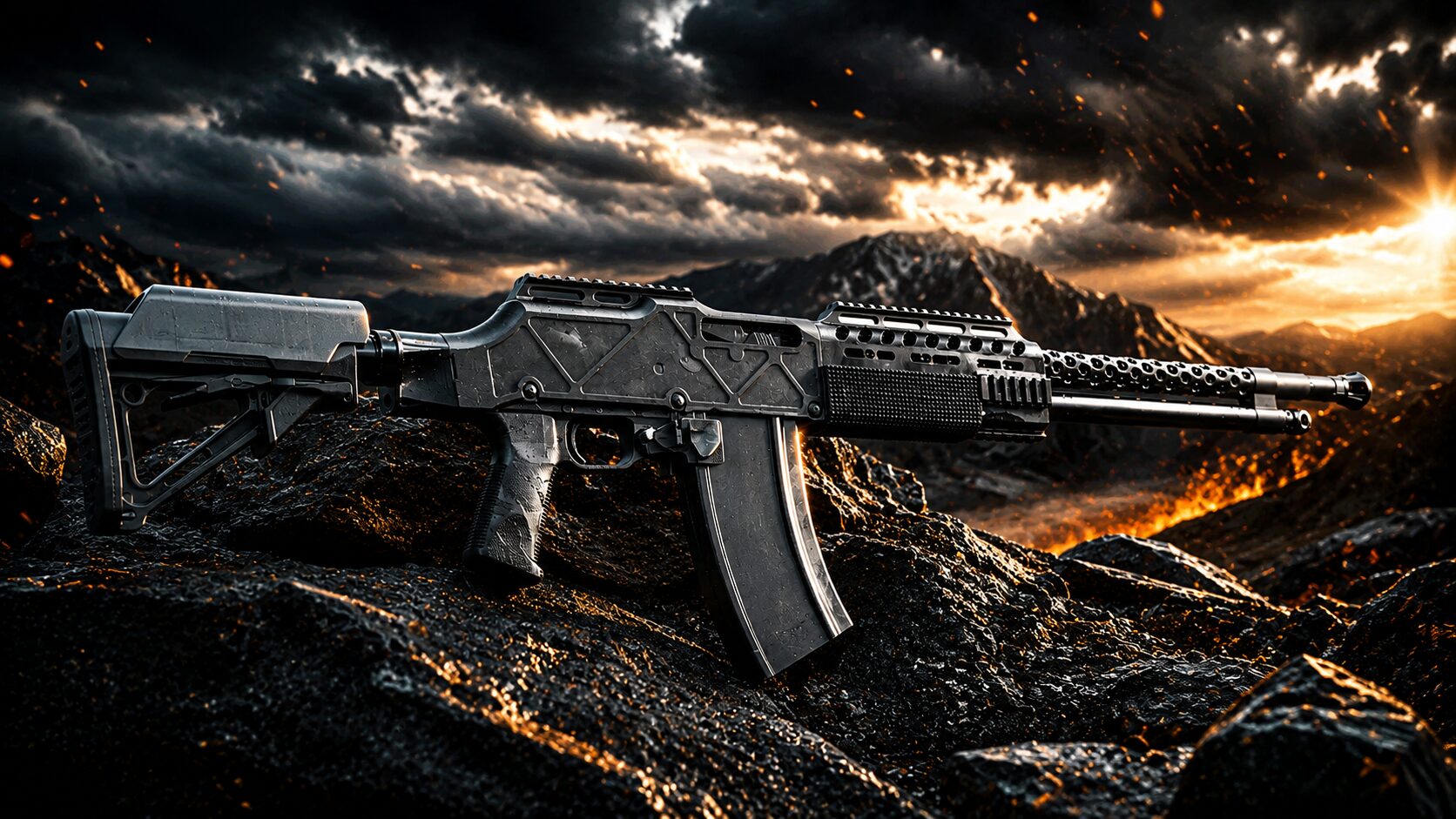
When a Weapon Outlives Its Era
Some firearms become symbols of their time. Others prove so well-designed that they continue evolving long after their creators are gone. The Browning Automatic Rifle—better known simply as the BAR—belongs firmly in the latter category.
Designed by John Moses Browning during the final stages of World War I, the BAR served through two world wars, Korea, and numerous smaller conflicts throughout the twentieth century. Even after leaving military service, it never disappeared from the shooting world. In the United States, it developed a loyal following among collectors and enthusiasts who still regard it as one of the finest automatic rifles ever built.
In the early twenty-first century, however, Ohio Ordnance Works decided to do far more than simply reproduce the historic firearm. The company’s engineers asked an ambitious question: could the legendary BAR be transformed into a modern precision rifle while preserving the spirit of Browning’s original design?
Their answer became the HCAR (Heavy Counter Assault Rifle)—arguably the most ambitious modernization of the classic BAR ever attempted.
From Historic Rifle to Modern Firearm

Ohio Ordnance Works has long been known for manufacturing machine guns, military firearms, and high-quality reproductions of historic weapons. One of its projects was the civilian BAR M1918A3, a faithful semi-automatic recreation of Browning’s famous rifle.
Mechanically, it remained remarkably close to the original:
- Chambered in .30-06 Springfield
- Weight of approximately 8.8 kg (19.4 lbs)
- 609 mm (24-inch) barrel
- 20-round detachable magazine
- Original BAR operating system
Because of U.S. firearms regulations, the rifle was produced only in a semi-automatic configuration.
But the company soon realized that, despite its historical appeal, the classic BAR was simply too heavy and outdated for many modern shooters. Rather than making minor improvements, the engineers chose a far more radical path—completely redesigning the rifle while retaining Browning’s proven operating system.
That project became the HCAR.
A Complete Redesign
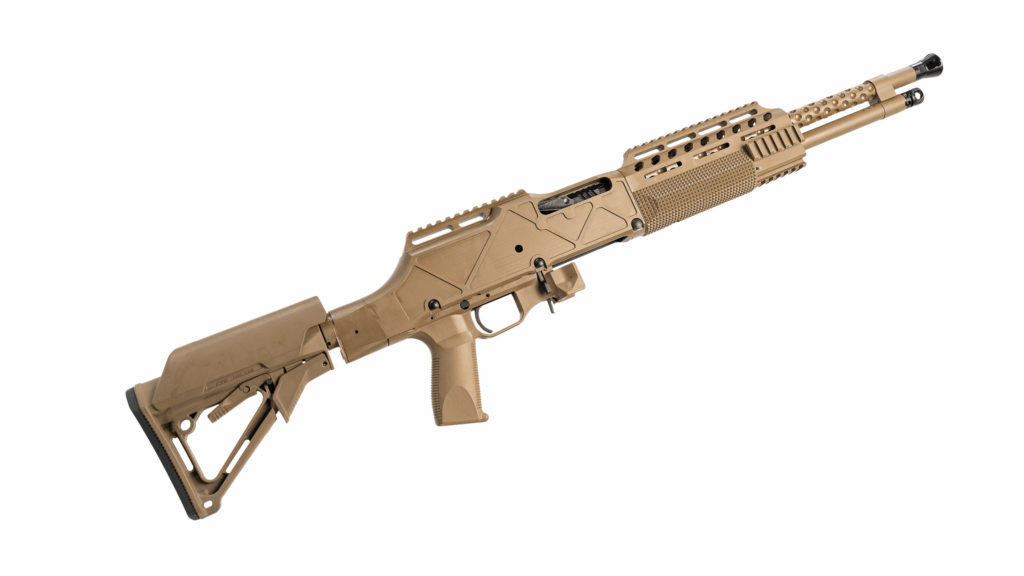
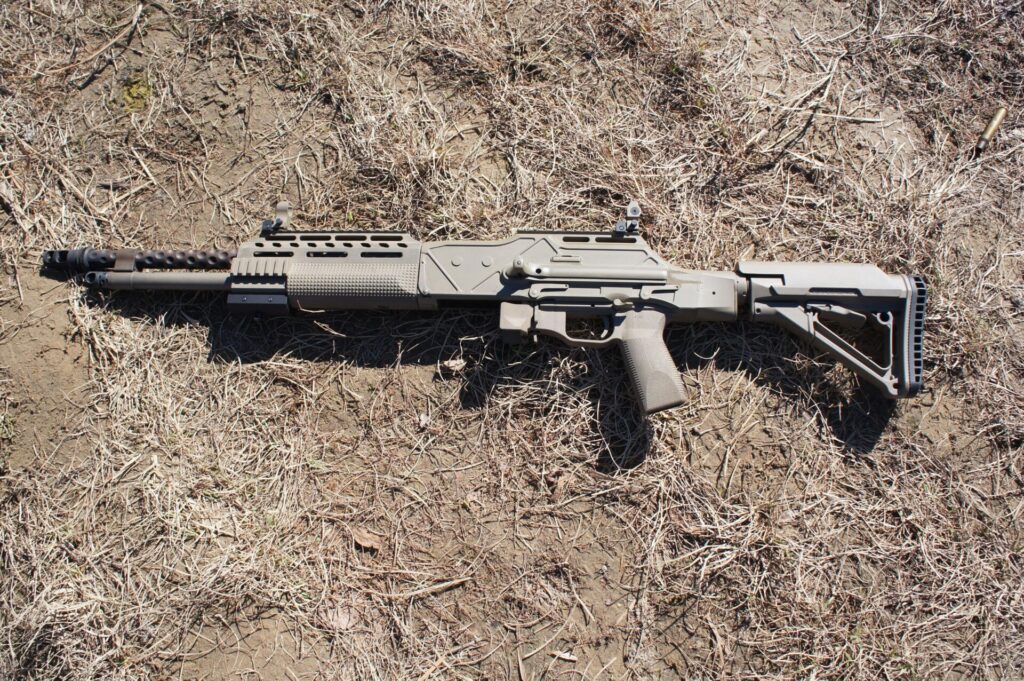
At first glance, the HCAR barely resembles its famous ancestor. Place the two rifles side by side, and they appear separated not by decades but by entirely different generations of firearms development.
Reducing weight became the primary engineering goal.
The receiver was extensively re-machined to remove unnecessary material without compromising structural strength.
The barrel received equally significant attention. It was shortened to either 406 mm (16 inches) or 508 mm (20 inches) depending on the configuration. Distinctive fluting along the barrel reduced weight while improving heat dissipation during sustained firing.
To tame the recoil generated by the powerful .30-06 cartridge, Ohio Ordnance Works developed a dedicated muzzle brake. The system proved highly effective, although it noticeably increased muzzle blast and report.
The controls were modernized as well.
The charging handle became foldable, a bolt-release lever was added, and the safety selector received a shorter, more ergonomic throw for faster operation.
A recoil buffer was also incorporated into the rear of the receiver, making the rifle significantly more comfortable to shoot.
Bringing the BAR into the 21st Century
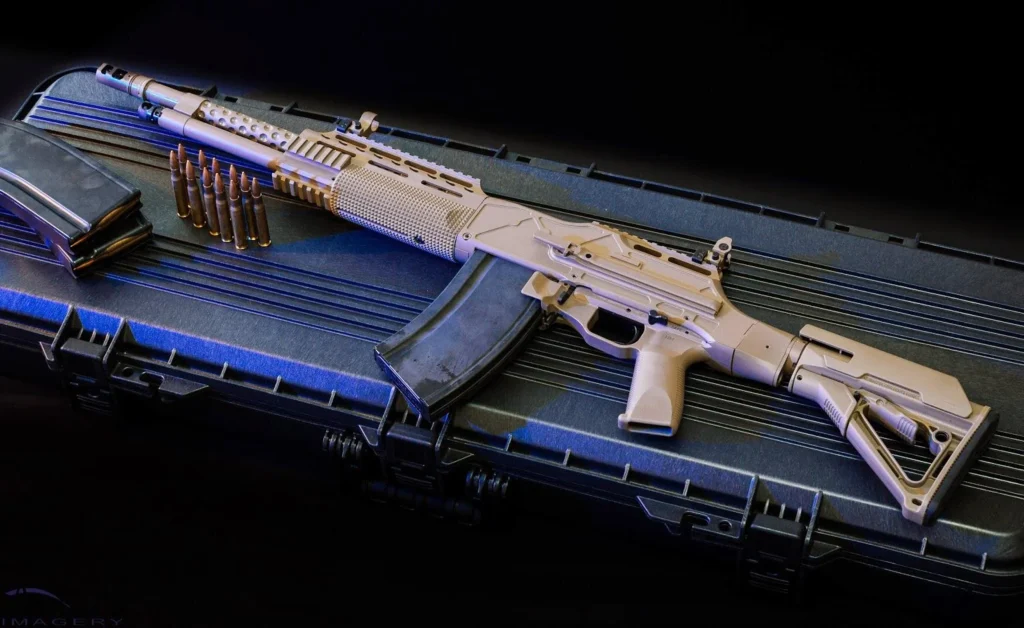
Perhaps the most dramatic changes involved ergonomics.
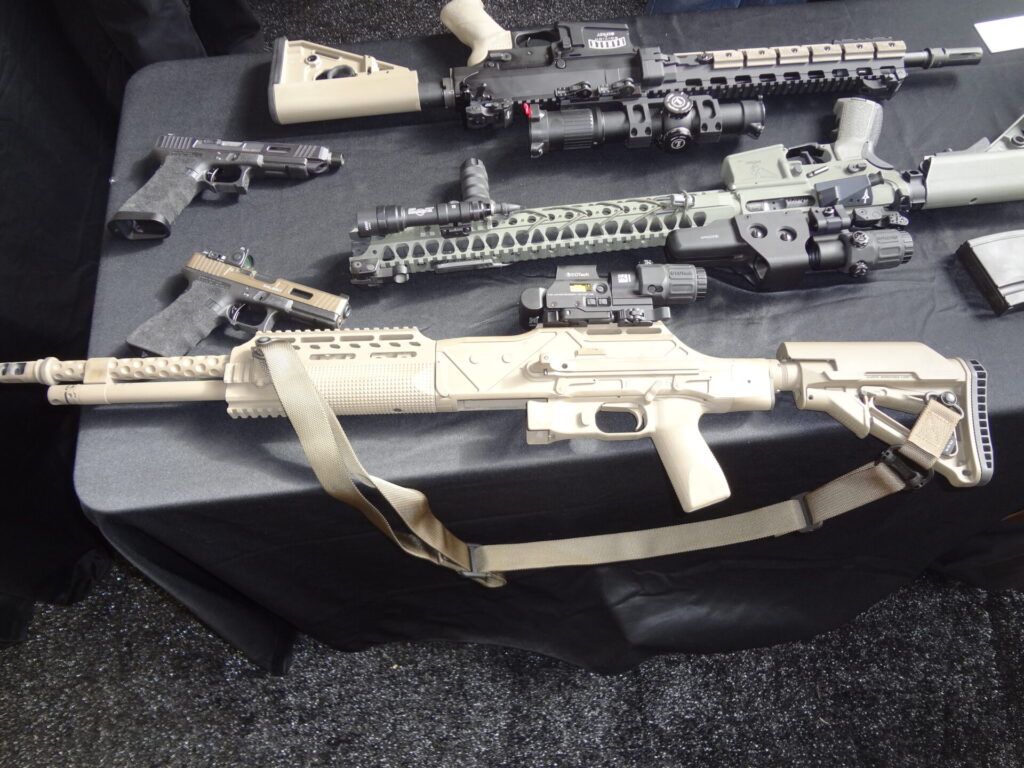
The traditional wooden stock was replaced by a modern adjustable telescoping stock.
A polymer pistol grip, lightweight polymer handguard, and an entirely redesigned lower assembly gave the rifle a contemporary appearance while reducing overall weight.
The receiver was fitted with a full-length Picatinny rail, while four additional rails were integrated into the handguard.
These additions allow the HCAR to accept virtually any modern optic, red-dot sight, thermal scope, night vision device, laser aiming module, or other tactical accessory.
The magazine system also received a major upgrade.
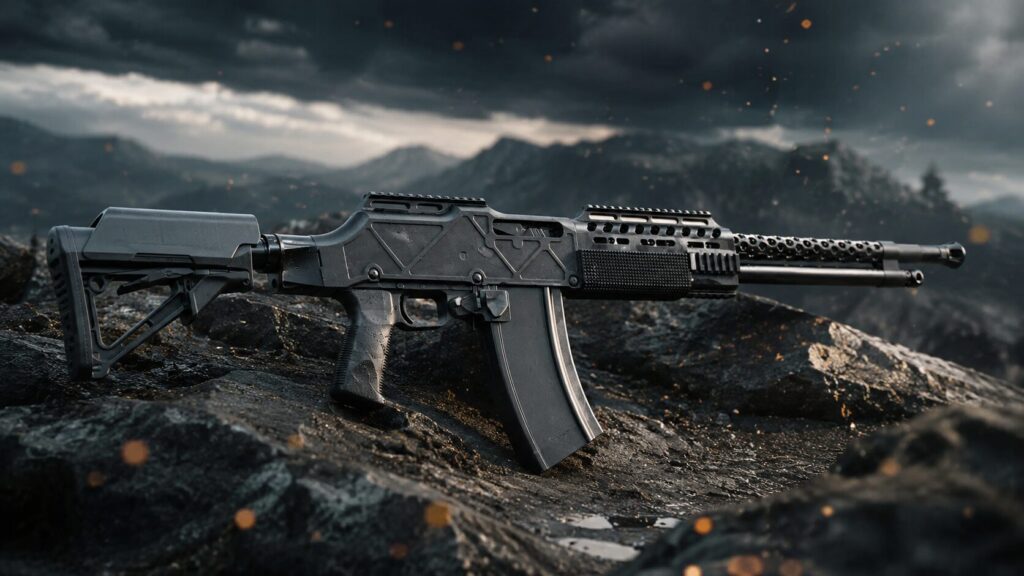
Instead of the original 20-round magazine, the HCAR uses a newly developed 30-round detachable magazine chambered for .30-06 Springfield. It also features a last-round bolt hold-open mechanism, while the traditional magazine release button was replaced with a larger paddle-style release similar to that found on AK-pattern rifles.
Together, these improvements make the rifle considerably easier to operate under dynamic shooting conditions.
Technical Specifications
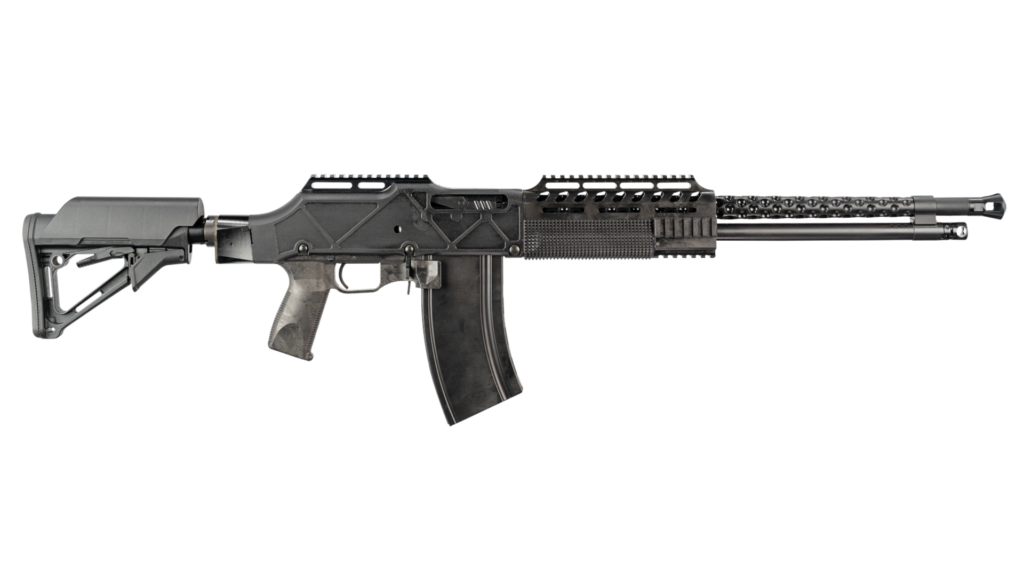
Caliber: .30-06 Springfield (7.62×63 mm)
Operating System: Gas-operated
Barrel Length:
- 406 mm (16 in)
- 508 mm (20 in)
Overall Length:
- 972 mm
- 1,078 mm
Weight:
- 5.33–5.67 kg
Magazine Capacity: 30 rounds
Effective Range: Approximately 1,200 meters
Maximum Bullet Range: Up to 4,000 meters
Compared to the original BAR, Ohio Ordnance Works managed to reduce the rifle’s weight by nearly three kilograms—a remarkable achievement considering the powerful cartridge it still fires.
Did the Modernization Work?
Ohio Ordnance Works markets the HCAR as a combination of Browning’s legendary reliability and twenty-first-century engineering.
Judging by owner feedback, that claim appears well supported.
Shooters consistently praise the rifle’s surprisingly mild recoil for a .30-06 platform, excellent accuracy, and outstanding handling. Many report reliable hits at distances approaching 1,000 yards, while others describe the HCAR as “an AR on steroids” thanks to its familiar controls paired with significantly greater power.
Another commonly praised feature is manufacturing quality. Every major component is CNC-machined from modern materials and assembled with the precision expected from a premium custom firearm.
Not everyone, however, embraces the redesign. Some BAR enthusiasts argue that replacing the traditional wood furniture with polymer sacrifices much of the rifle’s historic character.
Even so, few dispute that the HCAR successfully preserves the mechanical reliability that made Browning’s original design famous.
Why Is the HCAR So Rare?
The answer is straightforward: price.
The HCAR was never intended to become a mass-market sporting rifle. Instead, it occupies a niche aimed at collectors, firearms enthusiasts, and shooters who appreciate both history and craftsmanship.
Depending on configuration, retail prices generally range from $6,500 to more than $7,500, placing it well above most modern semi-automatic rifles.
At that price point, buyers could purchase several high-end rifles chambered in smaller calibers.
As a result, the HCAR remains an exclusive firearm for dedicated enthusiasts rather than a mainstream commercial success.
A Century-Old Design That Refuses to Die
The HCAR demonstrates that a firearm designed more than a century ago can still compete in the modern era when paired with contemporary materials, manufacturing techniques, and engineering solutions.
It was never intended to replace military service rifles or dominate the civilian market.
Instead, it serves as a tribute to the genius of John Moses Browning.
Very few firearm designs remain relevant after more than one hundred years. The BAR is one of those rare exceptions—and the HCAR stands as perhaps the most impressive modern interpretation of one of America’s greatest battle rifles.