Europe Will Produce Russian-Designed Nuclear Fuel. Why Replacing Rosatom’s Technology Has Proven So Difficult

When Europe talks about achieving energy independence, the conversation usually revolves around natural gas, oil, or liquefied natural gas (LNG). Yet there is another sector where dependence has proven far more deeply rooted—nuclear energy.
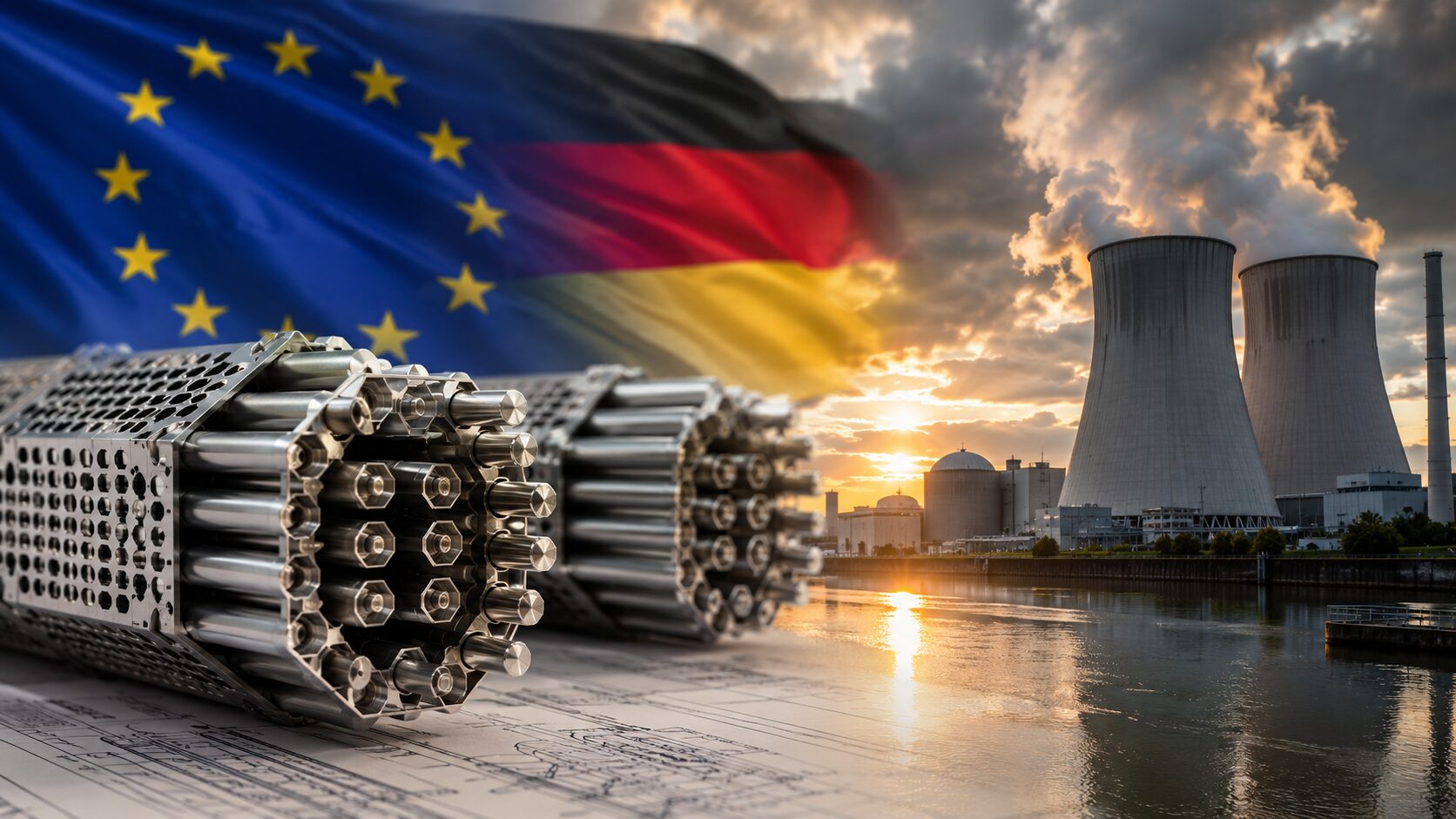
This week, authorities in the German state of Lower Saxony approved the expansion of Advanced Nuclear Fuels (ANF)‘s facility in Lingen. At first glance, it appears to be just another industrial project. In reality, however, the decision marks something far more significant: the plant has been authorized to manufacture Russian-designed nuclear fuel assemblies.
The irony is hard to miss. Europe hopes to reduce its dependence on Russian nuclear fuel by producing that very fuel—using Russian technology—inside the European Union.
Why Nuclear Fuel Isn’t Easily Replaced
It is tempting to think of a fuel assembly as little more than a container filled with enriched uranium.
In reality, it is one of the most sophisticated components of a nuclear power plant.
Every reactor is engineered around a specific fuel assembly design.
Most Western pressurized water reactors use square fuel assemblies.
Soviet- and Russian-designed VVER (Water-Water Energetic Reactor) units rely on hexagonal fuel assemblies.
While the difference may appear minor, the geometry directly affects coolant circulation, neutron distribution, heat transfer, and ultimately the reactor’s operational safety.
As a result, operators cannot simply purchase fuel from another supplier and load it into an existing reactor.
Every new fuel design must undergo years of engineering analysis, testing, licensing, and regulatory approval before entering commercial service.
Why Much of Europe Still Depends on Rosatom
When the Soviet Union collapsed, its nuclear reactors did not disappear with it.
Today, VVER reactors continue operating in countries including:
- Czech Republic
- Slovakia
- Hungary
- Bulgaria
- Finland (for existing reactors)
- Armenia
- Ukraine
- Several other nations
For decades, these reactors have relied on fuel produced by TVEL, Rosatom’s nuclear fuel division.
Replacing that supply chain has proven far more complicated than reducing imports of Russian natural gas.
Attempts to Replace TVEL
Efforts to diversify fuel supplies actually began years before 2022.
American company Westinghouse Electric spent years adapting its own fuel assemblies for VVER reactors.
The first generations encountered technical difficulties.
Several Ukrainian nuclear power plants experienced deformation of some fuel assemblies, forcing engineers to redesign parts of the system.
Only after years of testing and refinement did the company produce fuel suitable for long-term commercial operation.
Even today, every new fuel design requires an extensive licensing process before it can be introduced into service.
Why Germany Is Turning to Russian Technology
This is where the decision in Lingen becomes particularly significant.
Advanced Nuclear Fuels (ANF), a subsidiary of French nuclear giant Framatome, has received approval to manufacture hexagonal fuel assemblies specifically designed for Russian-built reactors.
The production process will utilize technology developed by TVEL.
That does not mean Russia will manufacture nuclear fuel inside Germany.
Quite the opposite.
Europe’s strategy is to localize production within the European Union while gradually eliminating dependence on imported finished fuel.
Why Berlin Imposed Strict Conditions
Given the political sensitivity of the project, German authorities attached a number of strict conditions to the approval.
According to German media reports, these include:
- No permanent access for Rosatom or TVEL personnel to the facility.
- Independent verification of any Russian-supplied equipment.
- Complete isolation of Russian software from the plant’s IT infrastructure.
- Separate cybersecurity controls.
- Comprehensive inspection of all fuel components supplied from Russia.
In other words, Europe wants access to proven technology while minimizing direct Russian involvement in the manufacturing process.
Why Rosatom Remains a Global Nuclear Powerhouse
Despite years of sanctions and political pressure, Rosatom continues to occupy a dominant position in the global nuclear industry.
The company is currently building dozens of nuclear reactors around the world.
It also controls a significant share of the global uranium enrichment market.
Meanwhile, TVEL remains one of the world’s largest suppliers of nuclear fuel for VVER reactors.
That is precisely why replacing Russian nuclear technology has proven far more challenging than many policymakers initially expected.
What This Means for Europe
The Lingen project illustrates an important reality about high-tech industries.
Politically, Europe seeks to reduce its dependence on Russian suppliers.
Technically, however, it must continue supporting reactors that are expected to remain in operation for several more decades.
Rather than abandoning proven engineering solutions altogether, European governments are increasingly choosing another path: relocating production to European factories while maintaining compatibility with existing reactor designs.
Conclusion
The expansion of a single fuel fabrication plant in Germany may seem like a relatively minor industrial story, but it reflects a much broader challenge facing the global nuclear industry.
Unlike oil or natural gas, nuclear technologies cannot be replaced overnight. Nuclear reactors are designed to operate for 40 to 60 years, and every modification to their fuel requires years of engineering validation, safety testing, and regulatory approval.
That is why Europe now finds itself in an unusual position. In its effort to reduce dependence on Russian nuclear fuel imports, it is simultaneously investing in the production of fuel based on Russian engineering. The story serves as a reminder that in high-technology industries, proven engineering solutions often outlast political circumstances by decades.