
Brontanax: The UK Unveils Its Own Loyal Wingman for Sixth-Generation Fighters

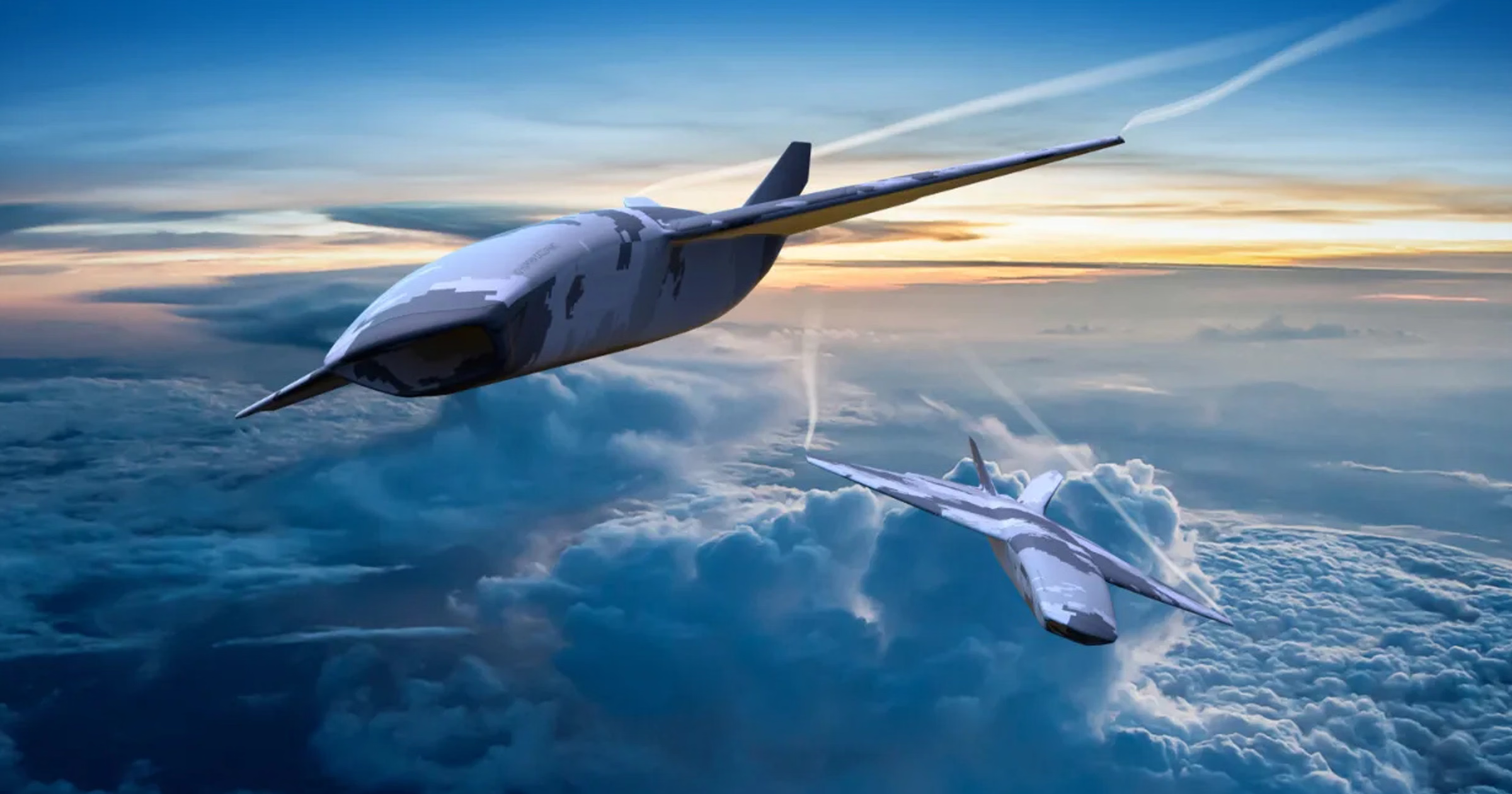
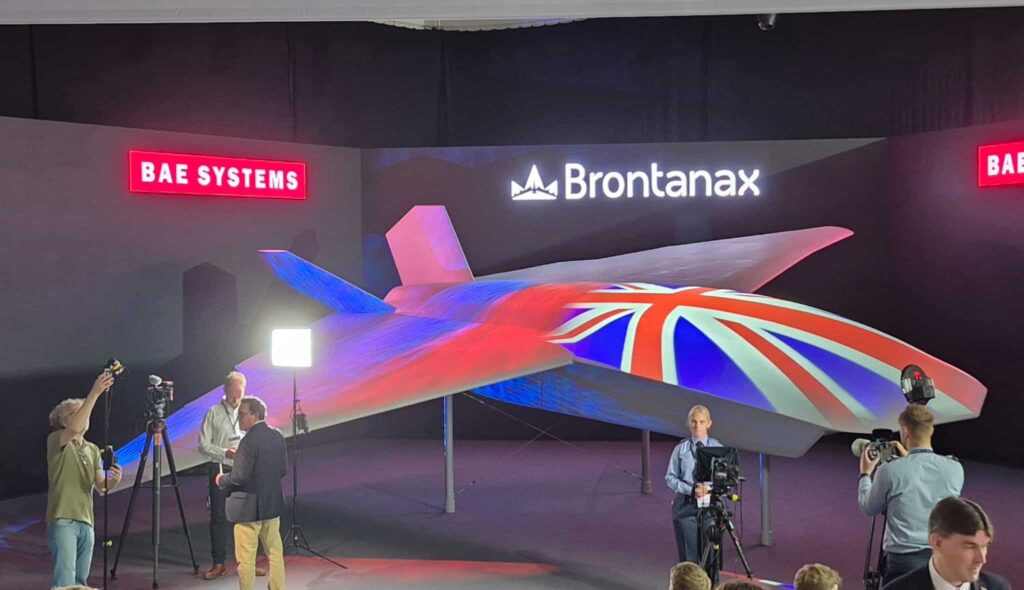
While the United States, Australia, and several European nations are racing to field autonomous “loyal wingman” aircraft, the United Kingdom has officially entered the competition with a design of its own. At the Farnborough International Airshow 2026, BAE Systems unveiled Brontanax, a next-generation Collaborative Combat Aircraft (CCA) developed to operate alongside manned fighter jets.
The aircraft’s name combines the ancient Greek words bronte (“thunder”) and anax (“king” or “ruler”). More importantly, however, Brontanax represents Britain’s ambition to build its first domestically developed autonomous combat aircraft capable of supporting future air operations.
The UK Joins the Collaborative Combat Aircraft Race
Only a few years ago, the Collaborative Combat Aircraft concept was considered experimental. Today, nearly every major air power is developing autonomous aircraft designed to accompany crewed fighters into combat.
The concept is straightforward: instead of sending a single expensive fighter into battle, military planners envision formations where one piloted aircraft is supported by multiple lower-cost autonomous platforms. These drones can conduct reconnaissance, perform electronic warfare, carry additional weapons, or deliberately expose themselves to enemy defenses instead of risking a human pilot.
That is precisely the role Brontanax has been designed to fill.
Development has been underway in cooperation with the Royal Air Force since 2022, and BAE Systems has already completed its first full-scale prototype at its Warton facility. Flight testing is expected to begin in 2027, with operational service targeted before the end of the decade.
Not a Fighter Replacement
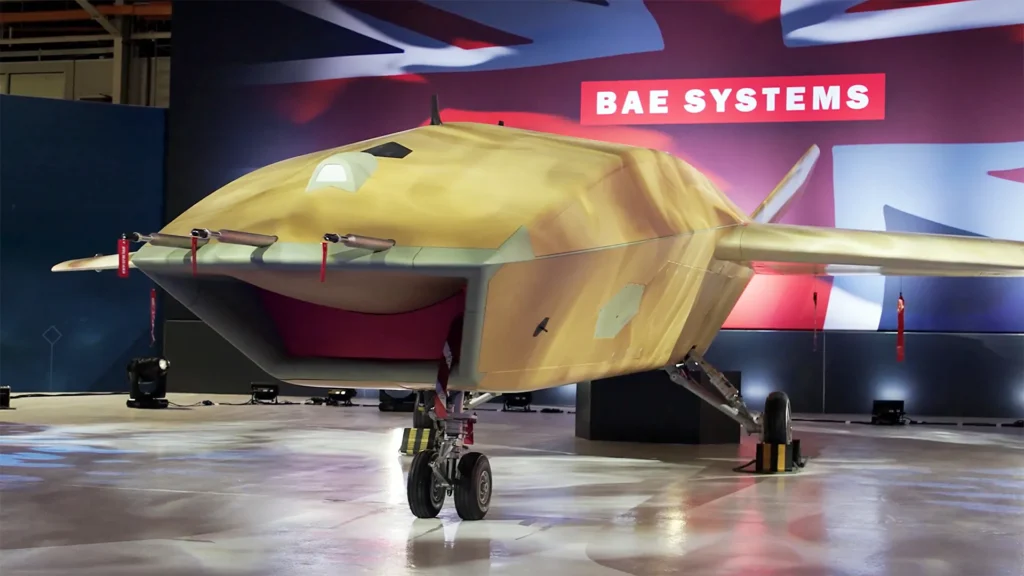
Despite its fighter-like appearance, Brontanax is not intended to replace traditional combat aircraft.
BAE Systems says the drone is designed to deliver approximately 70–80 percent of a conventional fighter’s combat capability while costing less than one-quarter as much.
Current estimates suggest a unit price of roughly $25 million, making it significantly less expensive than modern fifth-generation fighters.
This affordability allows military planners to employ the aircraft more aggressively. Losing an unmanned platform is far less damaging—both financially and operationally—than losing a piloted aircraft.
Designed to Fight as Part of a Team
Brontanax’s defining characteristic is its ability to work seamlessly with crewed aircraft.
The drone is expected to operate alongside:
- Eurofighter Typhoon
- F-35 Lightning II
- Future GCAP Tempest fighters
- Other NATO combat aircraft
During combat missions, Brontanax can assume the highest-risk tasks, allowing the pilot to concentrate on tactical decision-making.
In effect, it becomes an additional sensor platform, a weapons carrier, and an electronic warfare asset operating as part of a single integrated combat team.
Built Around Modularity
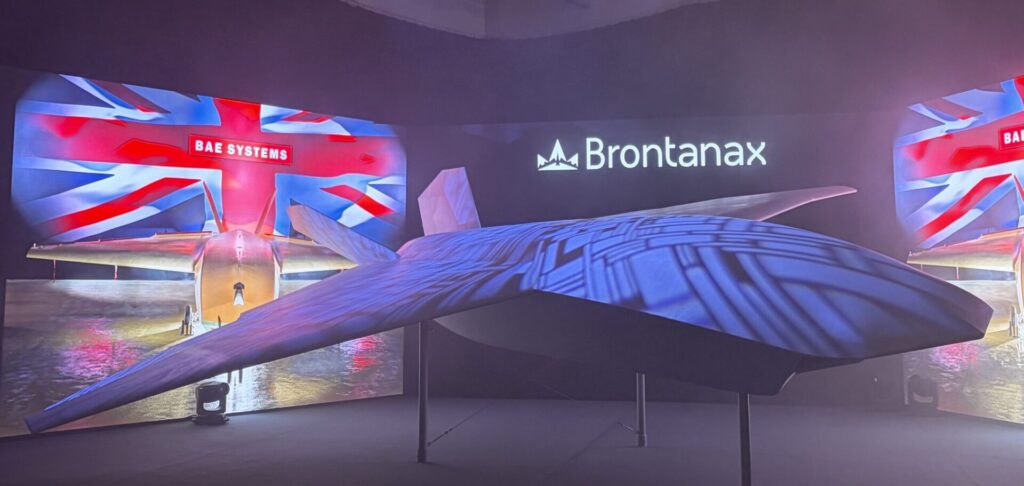
BAE Systems has emphasized an open-architecture approach for the new aircraft.
Its software, mission systems, and payloads are intended to be rapidly upgraded without major structural redesigns.
This modular philosophy allows Brontanax to be configured for a wide range of missions, including:
- Intelligence, surveillance, and reconnaissance (ISR)
- Electronic warfare
- Suppression of enemy air defenses (SEAD)
- Precision strike operations
- Escort missions
- Decoy operations
- Expanding the available weapons load of crewed fighters
This flexible architecture is becoming the standard approach for nearly every Collaborative Combat Aircraft currently under development.
A Key Element of the Storm Fighter Program
Brontanax is not simply a standalone technology demonstrator.
The aircraft forms the centerpiece of the UK’s Storm Fighter initiative, a program backed by approximately £300 million in government funding.
Its objective is to establish a sovereign British Collaborative Combat Aircraft capability without relying on foreign manufacturers.
This effort also complements the Global Combat Air Programme (GCAP), under which the United Kingdom, Italy, and Japan are jointly developing the sixth-generation Tempest fighter.
Brontanax is expected to become one of Tempest’s primary autonomous teammates.
Known Specifications
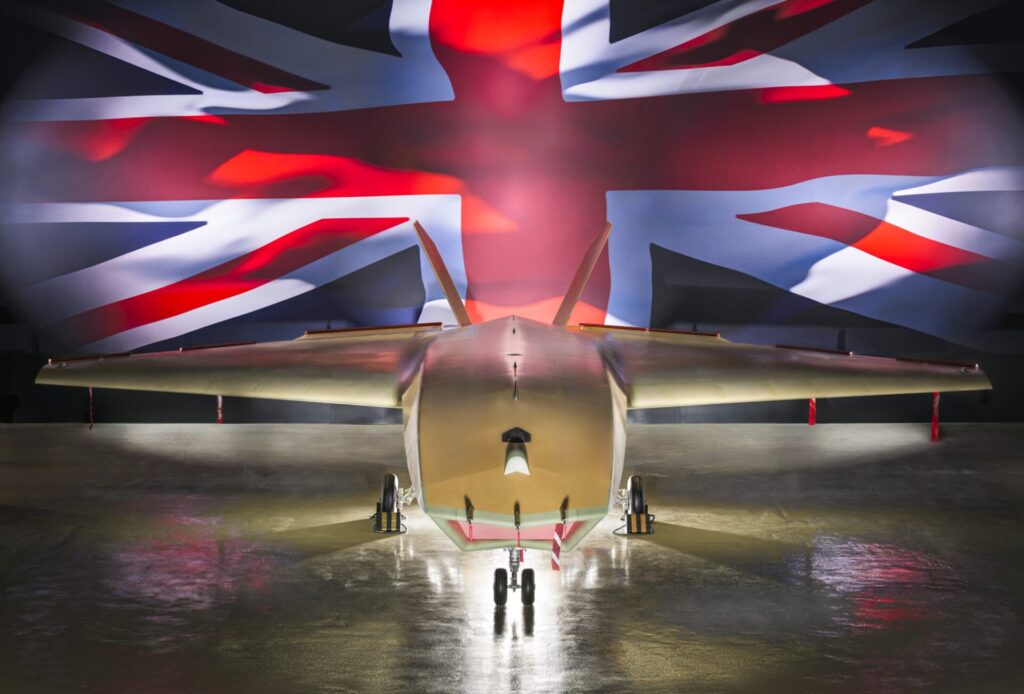
BAE Systems has released only limited technical information so far.
Developer: BAE Systems
Type: Collaborative Combat Aircraft (CCA)
Size: Comparable to the BAE Hawk trainer
Primary Missions:
- Manned fighter escort
- Intelligence and reconnaissance
- Electronic warfare
- Precision strike
- Expanding combat mass for air operations
First Flight: Expected in 2027
Target Entry into Service: Before 2030
Why It Matters
Collaborative Combat Aircraft are rapidly becoming one of the fastest-growing sectors of military aviation.
The United States is already testing aircraft such as the YFQ-42A and YFQ-44A, Australia continues developing the MQ-28 Ghost Bat, and several European manufacturers have introduced their own autonomous combat aircraft concepts. With Brontanax, the United Kingdom has officially joined that competition.
Brontanax may not become the largest or most heavily armed autonomous combat aircraft. Its real significance lies elsewhere: it is Britain’s first indigenous CCA designed specifically to support sixth-generation air combat.
If development remains on schedule, Royal Air Force Typhoons—and eventually the future Tempest fleet—could be flying combat missions before the end of the decade accompanied by multiple autonomous wingmen. That manned-unmanned partnership is increasingly viewed as the future of air warfare.






