

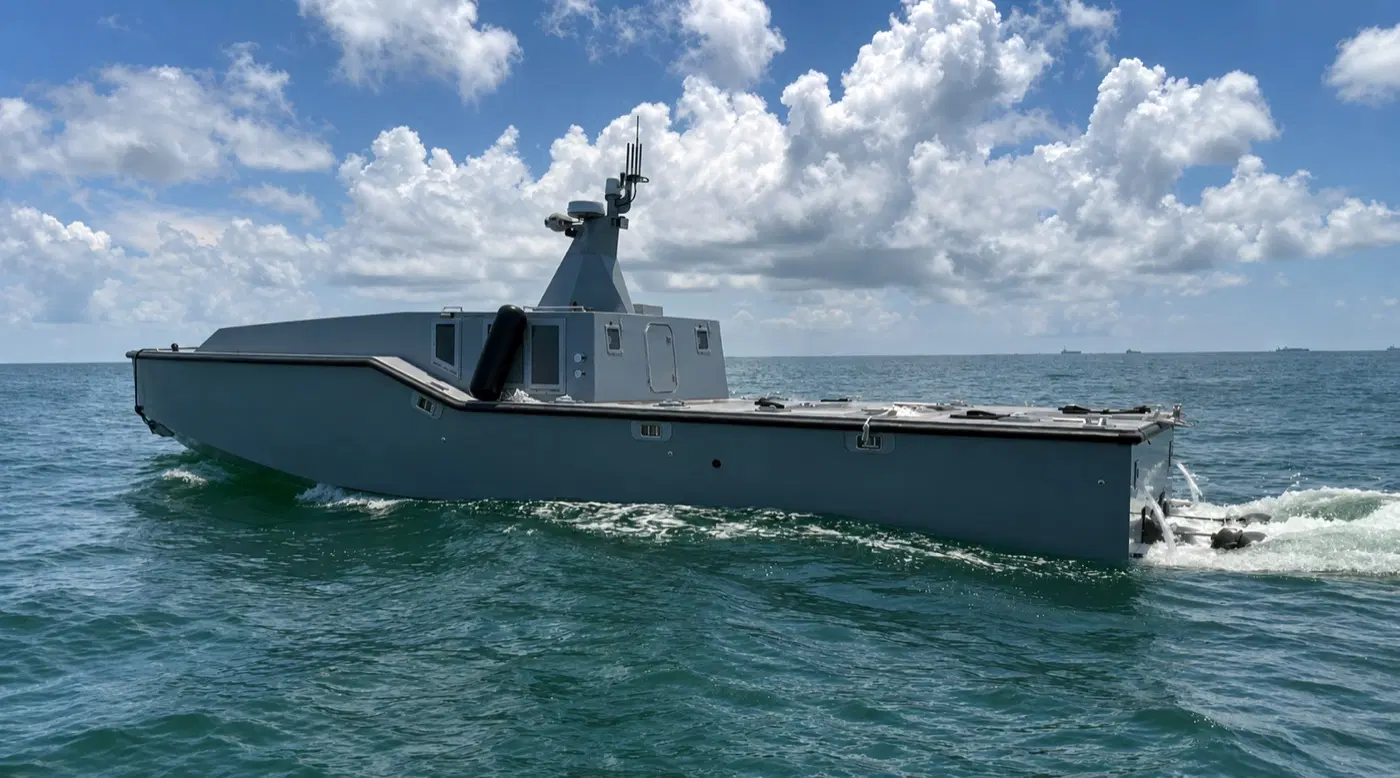
Why the U.S. Is Betting on Autonomous Ships Instead of Building More Warships
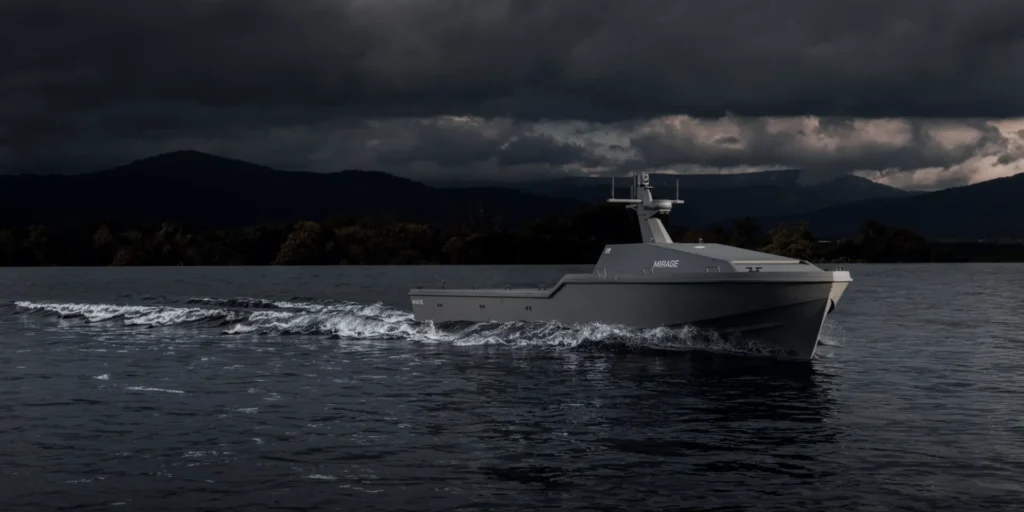
A decade ago, the idea of a fully autonomous combat vessel sounded like science fiction. Militaries experimented with remotely operated boats, but they were little more than expensive technology demonstrators. Today, the picture has changed dramatically. American defense company Saronic Technologies is developing an entire family of autonomous surface vessels capable of operating for days without a crew.
Positioned in the middle of that lineup is Mirage—an autonomous surface vessel that can no longer be described as just another drone. In terms of capability, it is much closer to a compact patrol craft, yet it eliminates the most expensive component of any warship: the crew.
A New Vision of Naval Warfare
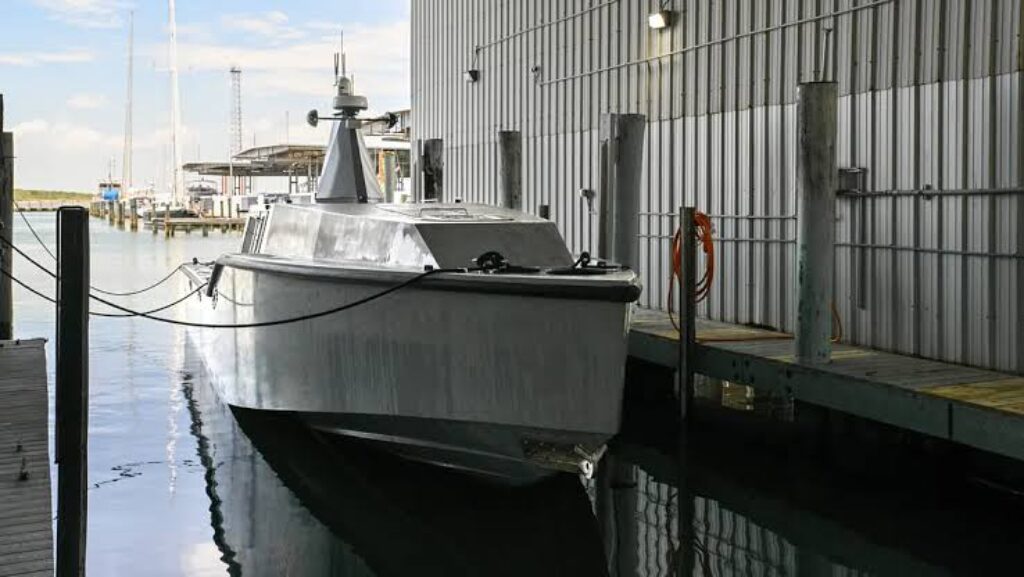
Recent conflicts have demonstrated one simple reality: the sea is becoming an increasingly dangerous place for expensive warships.
Where missiles and aircraft once represented the primary threat, they are now joined by inexpensive naval drones, loitering munitions, FPV attack boats, and autonomous underwater vehicles.
Losing a destroyer worth billions of dollars is no longer just a military setback—it is also a political disaster.
That is why the U.S. Navy has begun pursuing a different strategy: deploying large numbers of relatively inexpensive autonomous vessels capable of performing dangerous missions instead of sending sailors into harm’s way.
Mirage was designed around exactly this concept.
What Is Mirage?
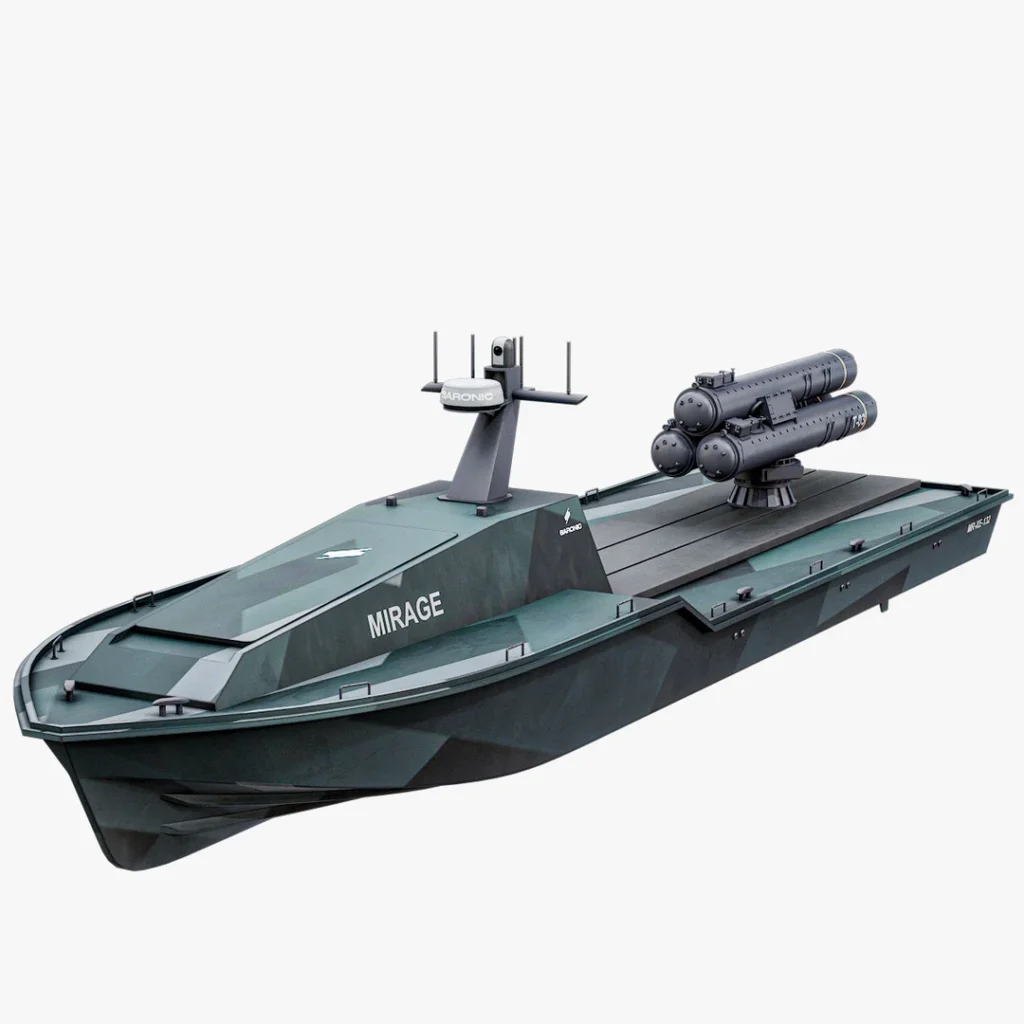
Mirage belongs to the class of Medium Autonomous Surface Vessels (MASVs).
Significantly larger than the compact Corsair, it offers greater endurance, carries heavier payloads, and is capable of conducting multi-day missions with minimal human involvement.
Its defining feature is autonomy.
The vessel can independently plan routes, avoid obstacles, monitor propulsion systems, maintain situational awareness, and coordinate with other autonomous platforms.
Instead of steering the ship directly, human operators simply assign the mission.
Technical Specifications
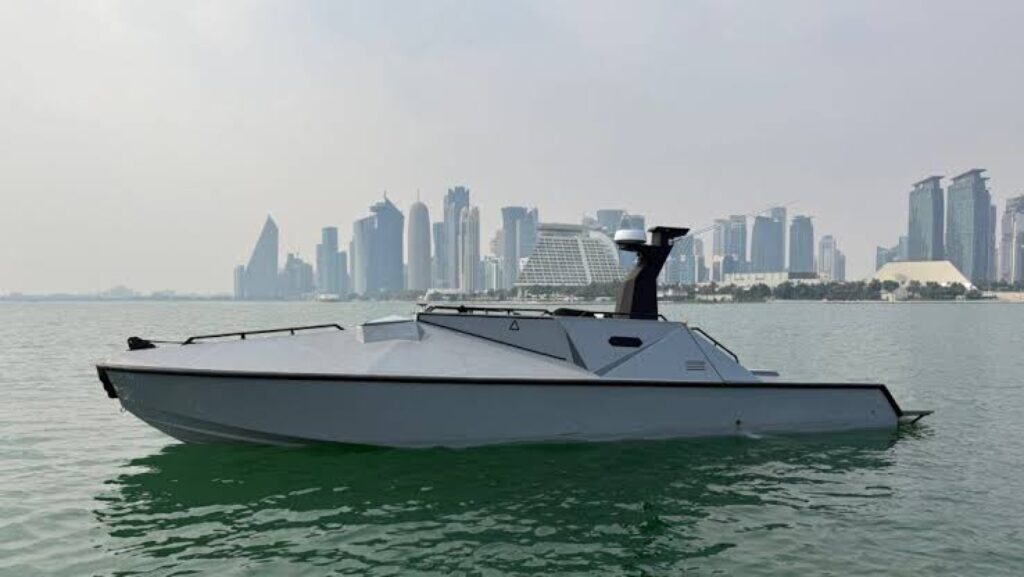
Type: Medium Autonomous Surface Vessel (ASV)
Developer: Saronic Technologies (United States)
Length: Approximately 18 meters
Endurance: Multi-day autonomous operations
Maximum Speed: More than 40 knots
Range: Hundreds of nautical miles
Crew: None
Operating Modes:
- Fully autonomous
- Remote control
- Hybrid operation
A Fully Modular Platform
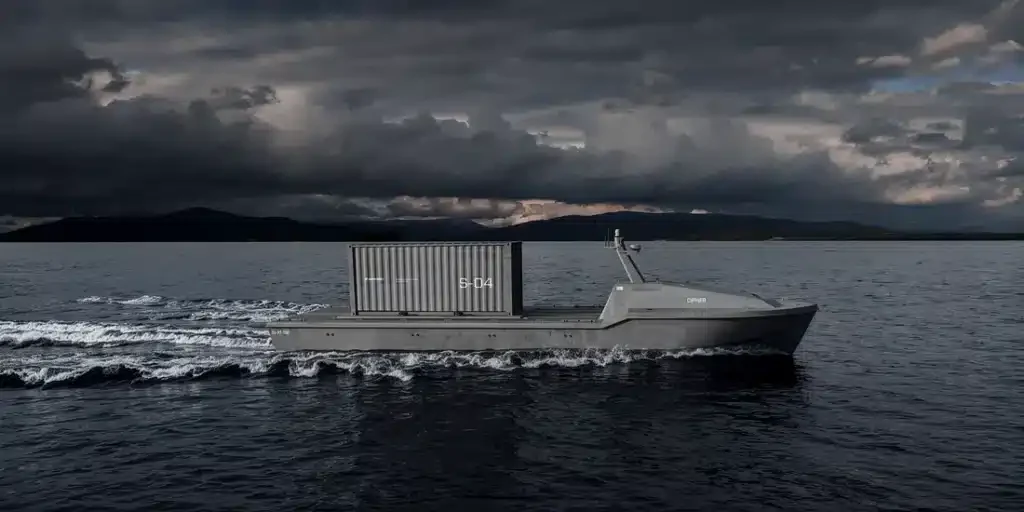
Mirage’s greatest advantage is not its size, but its flexibility.
In essence, it is a modular maritime platform capable of carrying mission-specific equipment depending on operational requirements.
Possible payloads include:
- Surveillance radar systems
- Sonar equipment
- Electronic warfare suites
- Communications relay systems
- Signals intelligence equipment
- Additional fuel modules
- Cargo containers
- Weapon systems
This modular architecture enables the vessel to switch roles quickly without major structural modifications.
Artificial Intelligence Instead of a Captain
Saronic’s primary focus is not just the hull, but the software that powers it.
Mirage is designed to:
- Avoid collisions autonomously
- Comply with international maritime navigation rules
- Select the safest route
- Continue operating even after losing communications
- Coordinate with other autonomous vessels
Rather than controlling the helm, operators supervise the mission itself.
This represents a fundamental shift from traditional remotely controlled boats to genuinely autonomous maritime systems.
A Swarm Instead of a Single Ship
Perhaps the most compelling aspect of Mirage is its ability to operate as part of a larger autonomous fleet.
Dozens of vessels could share information in real time while performing different missions simultaneously.
Some would conduct reconnaissance.
Others would perform electronic warfare.
Some would search for submarines.
Others would escort larger naval vessels.
Losing one platform would have little impact on the success of the overall mission.
This concept is often referred to as a Distributed Fleet.
Potential Military Missions
Although Saronic rarely discusses specific weapon configurations, Mirage’s modular design makes it suitable for a broad range of military operations.
Potential missions include:
- Maritime reconnaissance
- Coastal patrol
- Naval base security
- Convoy escort
- Counter-drone operations
- Anti-submarine surveillance
- Sensor deployment
- Communications relay
- Signals intelligence
- Amphibious operation support
In practice, Mirage is designed as a multi-role autonomous naval platform.
Why Now?
Advances in artificial intelligence have coincided with dramatic improvements in sensors, onboard computing, and satellite communications.
Where autonomous vessels once required constant operator supervision, modern systems can make many decisions independently.
For navies, this creates an opportunity to dramatically expand fleet size without increasing personnel requirements.
The shortage of qualified sailors has become one of the U.S. Navy’s most pressing long-term challenges, making autonomous systems increasingly attractive.
Hundreds of Autonomous Ships Instead of a Handful of Destroyers
Mirage illustrates a fundamental shift in naval thinking.
For more than a century, major naval powers focused on building larger, more sophisticated, and increasingly expensive warships. That trend is now beginning to reverse. Instead of relying solely on a handful of billion-dollar combatants, navies may soon deploy hundreds of autonomous platforms, each performing a specific role within a larger network.
These vessels are unlikely to replace aircraft carriers, destroyers, or frigates anytime soon. Instead, they are expected to assume the most dangerous missions—forward reconnaissance, persistent patrol, convoy escort, and electronic warfare.
If this concept proves successful, Mirage may well become one of the pioneers of a new era in naval warfare, where victory depends less on the size of individual warships and more on fleets of autonomous systems operating together as a single intelligent force.






