
Corsair: The Autonomous Surface Vessel That Could Transform Naval Warfare

Until recently, unmanned systems were primarily associated with aircraft. Drones revolutionized air and land warfare by proving that relatively inexpensive autonomous platforms could perform missions once reserved for costly equipment and human crews.
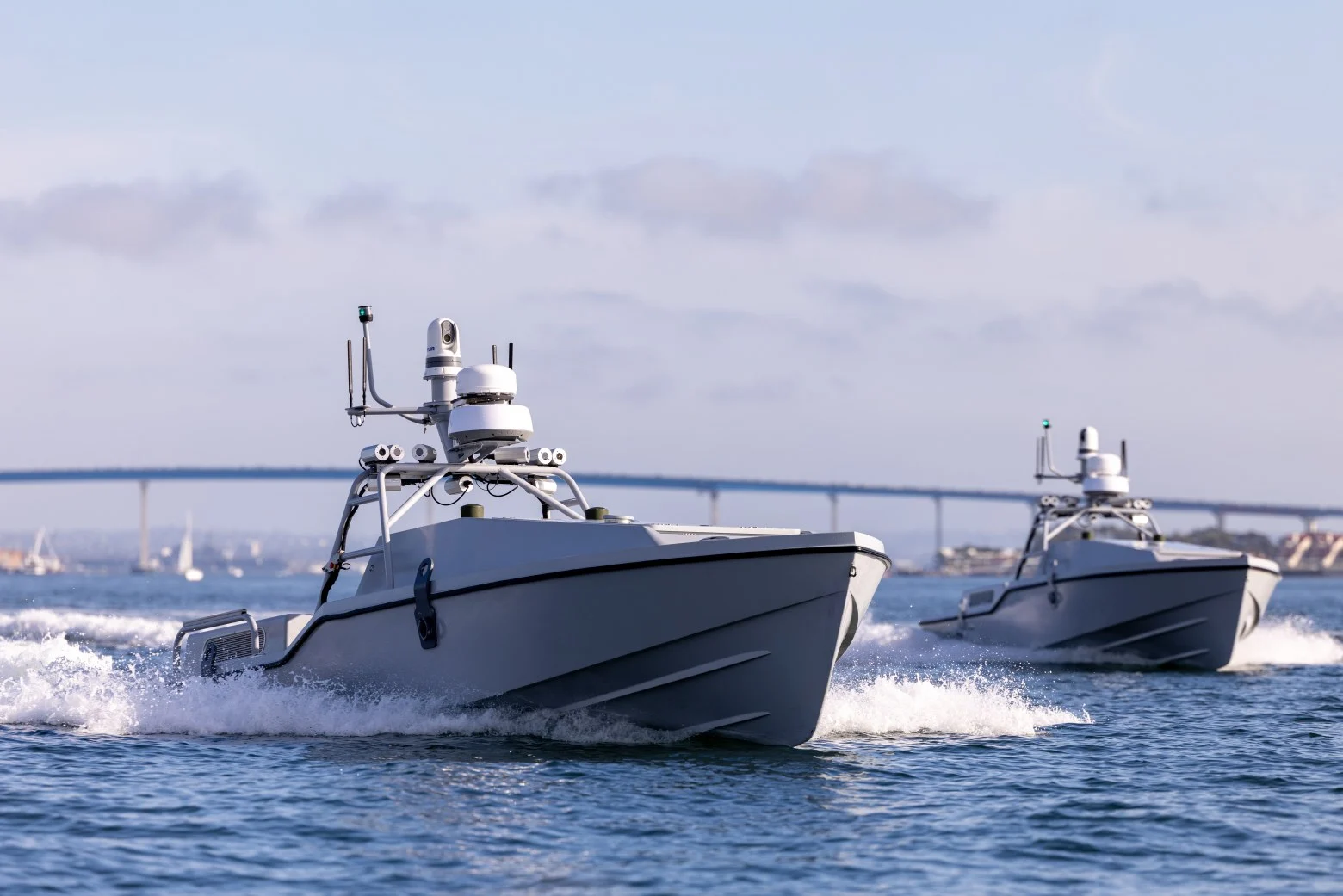
Today, a similar transformation is beginning at sea. One of the companies leading this shift is Saronic Technologies. Rather than focusing on building another large warship, the American defense startup is betting on the mass production of autonomous surface vessels capable of carrying out reconnaissance, patrol, logistics, and combat support missions without a crew on board.
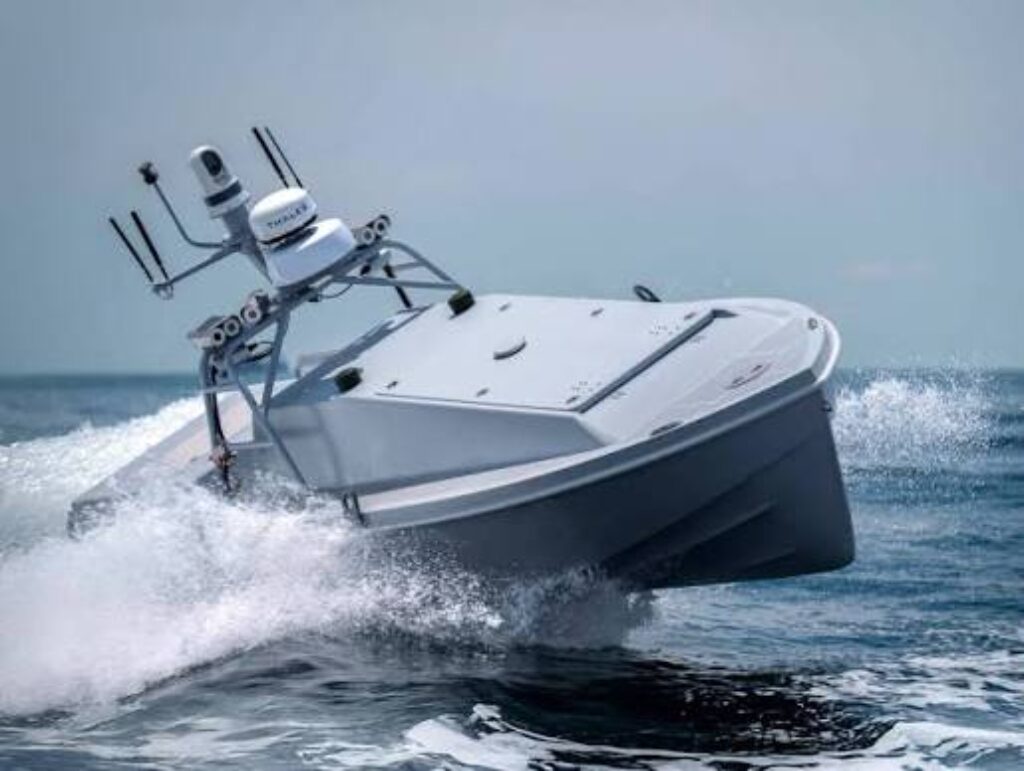
Among the company’s most notable developments is the Corsair—an Autonomous Surface Vessel (ASV) that represents Saronic’s first truly ocean-capable platform. Combining high speed, long endurance, and an open modular architecture, Corsair has been designed to adapt quickly to a wide variety of naval missions.
Why Small Autonomous Vessels Matter
Modern navies around the world face the same challenge: warships are becoming increasingly expensive.
A modern destroyer or frigate costs billions of dollars, requires years to build, and depends on crews of hundreds of sailors. Losing even one of these ships represents a major military and political setback.
Small autonomous vessels offer a fundamentally different philosophy.
Instead of protecting every ship at all costs, naval commanders can deploy dozens—or even hundreds—of relatively inexpensive unmanned vessels into contested waters. Losing a few platforms would have little impact on the overall mission.
This concept forms the foundation of Saronic’s strategy.
What Is the Corsair?
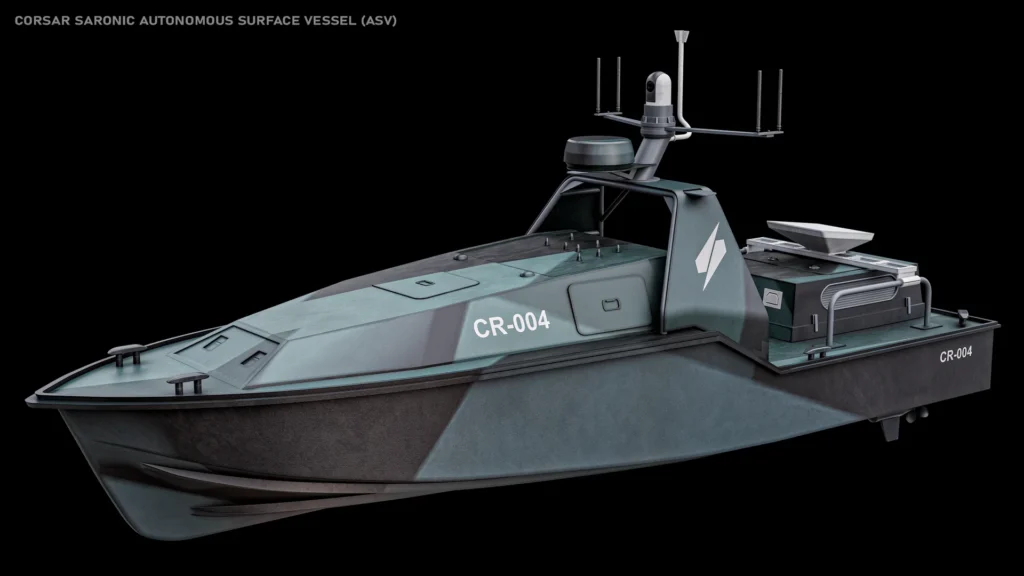
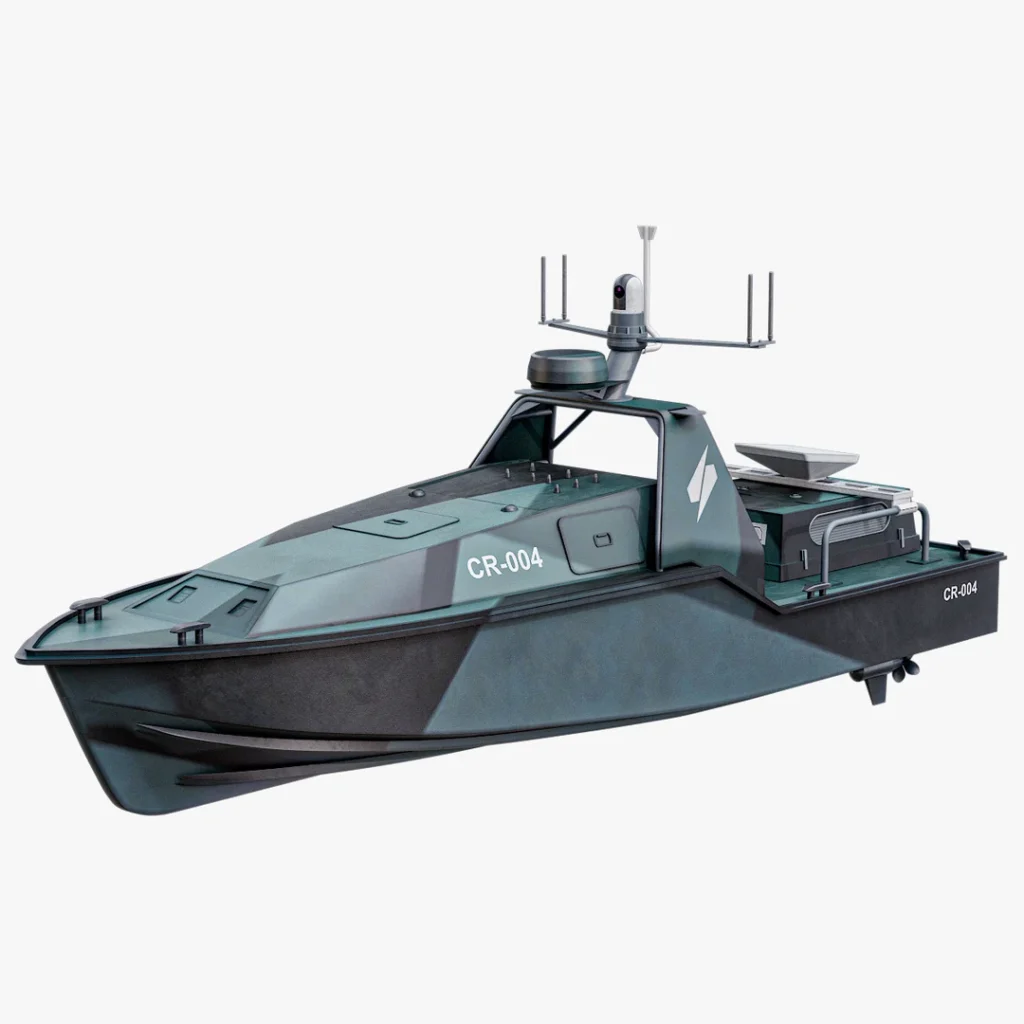
The Corsair is a 24-foot (7.3-meter) autonomous surface vessel.
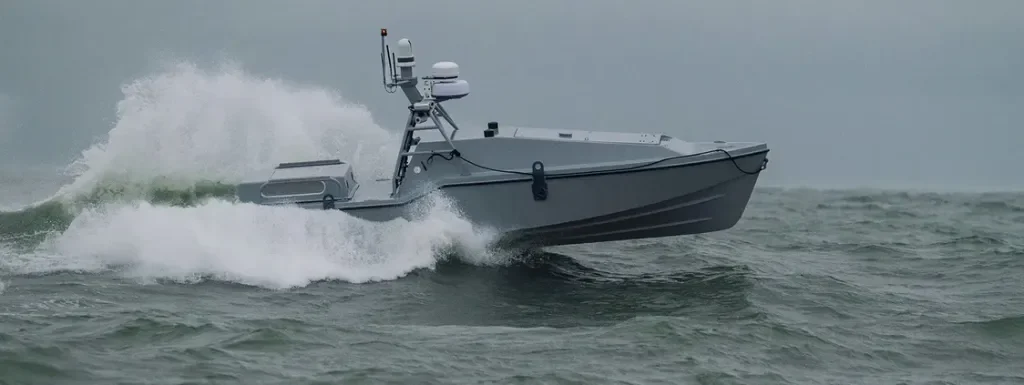
Despite its relatively compact size, it was designed not only for coastal operations but also for extended missions in open ocean environments.
According to Saronic, the vessel is capable of traveling more than 1,000 nautical miles, reaching speeds of over 35 knots, and carrying up to 1,000 pounds (454 kg) of payload. These capabilities make it considerably more versatile than many previous-generation unmanned surface craft.
Unlike many experimental USVs, the Corsair was designed from the outset as a modular platform. Its deck can accommodate a wide range of mission equipment, including surveillance sensors, radar systems, electronic warfare payloads, communications equipment, or specialized cargo modules.
Artificial Intelligence Replaces the Crew
The most important feature of the Corsair is not its size but its level of autonomy.
Saronic has built the vessel around artificial intelligence that performs most navigation and mission-management functions without continuous human intervention.
The onboard system can independently:
- Plan navigation routes
- Adjust to changing weather conditions
- Avoid obstacles
- Escort other vessels
- Exchange tactical data with manned and unmanned platforms
- Execute pre-programmed missions
Human operators remain able to assume direct control whenever necessary, but under normal circumstances the vessel is designed to operate with minimal supervision. The platform also supports multiple communication methods, including direct radio links and satellite communications, enabling operations far from shore.
Mission Flexibility
Saronic envisions the Corsair performing a broad range of missions.
Current applications include:
- Maritime intelligence, surveillance, and reconnaissance (ISR)
- Coastal and offshore patrol
- Escort missions
- Cargo transportation
- Search and rescue operations
- Electronic warfare
- Deployment of specialized mission payloads
One of the platform’s greatest strengths is its modularity. The same vessel can be rapidly reconfigured for completely different missions without requiring an entirely new ship design, significantly reducing operational costs.
No Longer Just an Experiment
Only a few years ago, platforms like the Corsair were viewed primarily as technology demonstrators.
That perception is changing rapidly.
The vessel has already attracted significant interest from the U.S. Navy and is participating in programs aimed at integrating autonomous surface systems into future fleet operations. Saronic has secured major production contracts, and its vessels are increasingly viewed as building blocks for a future hybrid fleet in which manned warships operate alongside large numbers of autonomous platforms.
In 2026, the Corsair also demonstrated its operational potential during a rescue mission involving the crew of a downed helicopter near the Strait of Hormuz. The operation became one of the first publicly known cases of an autonomous surface vessel supporting a real-world combat search-and-rescue mission.
Technical Specifications
Type: Autonomous Surface Vessel (ASV)
Developer: Saronic Technologies
Length: 24 ft (7.3 m)
Range: More than 1,000 nautical miles
Maximum Speed: Over 35 knots
Payload Capacity: Up to 1,000 lb (454 kg)
Crew: None
Control: Fully autonomous with optional remote supervision
Primary Missions:
- Intelligence, Surveillance, and Reconnaissance (ISR)
- Maritime patrol
- Fleet escort
- Logistics support
- Search and rescue
- Electronic warfare
- Modular payload integration
Conclusion
The Corsair is far more than just another unmanned boat.
It represents a new philosophy of naval warfare, one in which fleets rely less on a handful of expensive warships and increasingly on large numbers of autonomous vessels operating together as an integrated network.
This philosophy lies at the heart of Saronic Technologies’ long-term vision. The company is not simply building individual drones—it is creating an entire autonomous maritime ecosystem, ranging from compact high-speed vessels like the Corsair to larger unmanned transport ships and advanced shipyards designed for mass production.
If this vision becomes reality, future naval operations may be conducted by coordinated swarms of autonomous surface vessels, with humans commanding the fleet rather than serving aboard every individual ship.






