
From Rocket Artillery to Air-Launched Strike Weapon: Why Israel’s Rampage Missile Is One of the Most Unusual Precision Weapons in Service

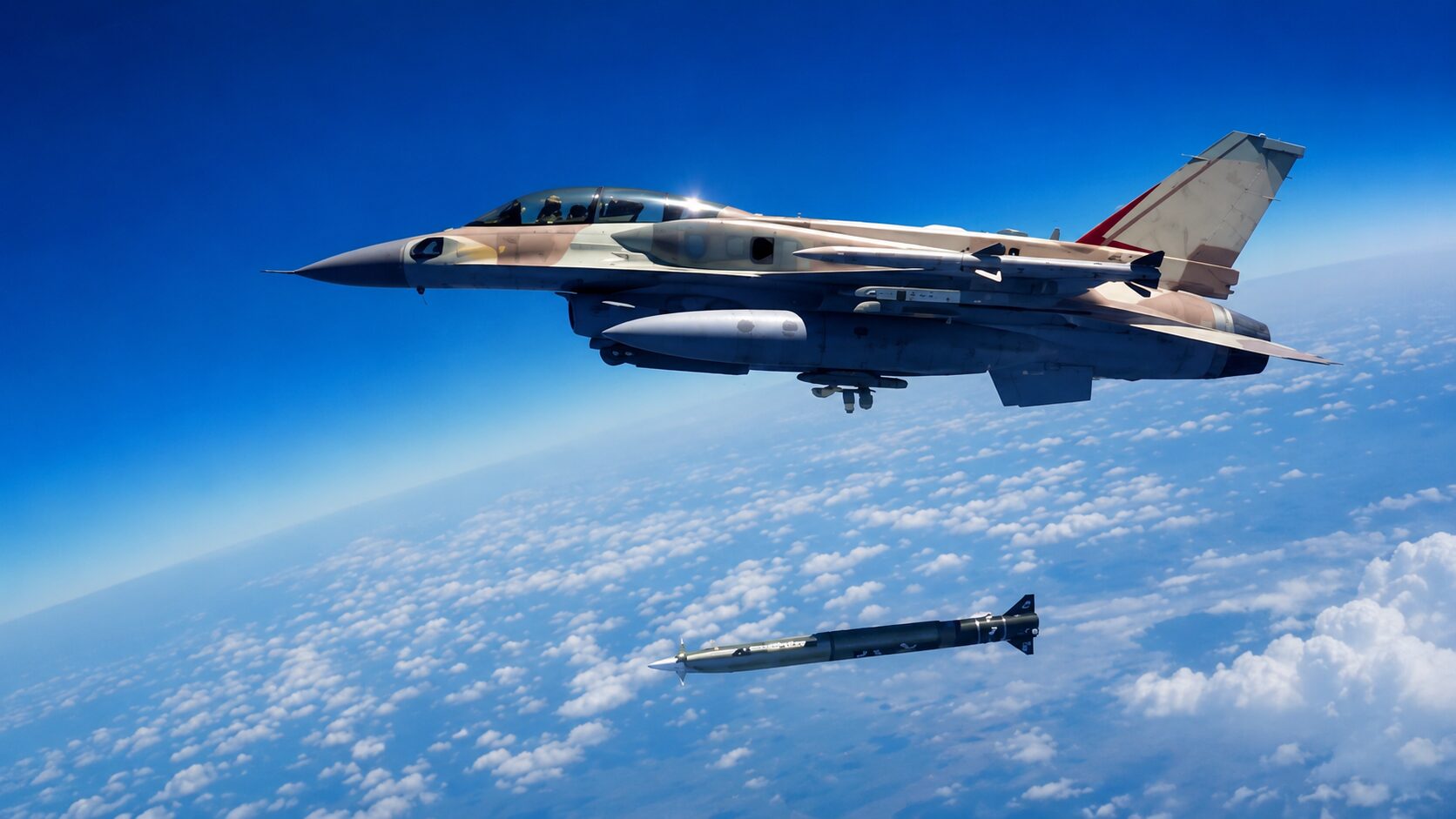
Most modern air-to-ground missiles are designed specifically for aircraft. Israel’s Rampage, however, followed a completely different path. Instead of being developed as an aviation weapon from the ground up, it evolved from the EXTRA guided artillery rocket used by Israel’s PULS multiple launch rocket system. Israeli engineers essentially transformed a ground-launched precision rocket into a long-range, supersonic air-launched missile.
The weapon has returned to the spotlight as Greece moves toward integrating Rampage with its F-16 fleet. According to Greek media reports, certification could be completed before the end of the year, allowing the Hellenic Air Force to field the missile alongside SPICE precision-guided bombs and significantly expand its stand-off strike capability.
How Rampage Was Created
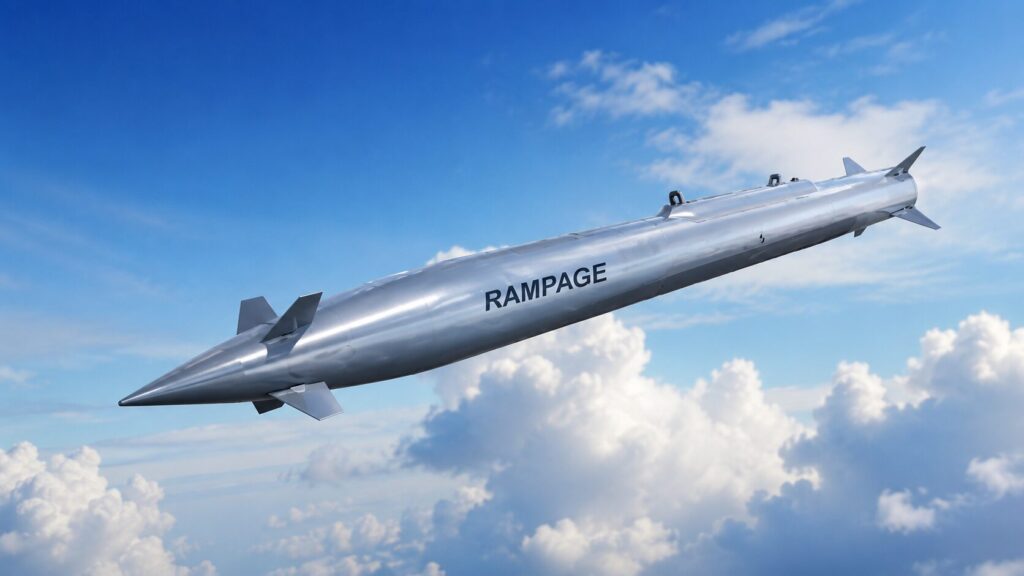
The concept behind Rampage was remarkably straightforward.
Israel already possessed the EXTRA precision-guided rocket, a weapon broadly comparable to the American GMLRS rocket fired by HIMARS. In its ground-launched configuration, EXTRA offers a range of roughly 150 kilometers while maintaining high accuracy.
Rather than investing in an entirely new air-launched missile, engineers from Elbit Systems and Israel Aerospace Industries (IAI) adapted the existing rocket for aircraft use. The conversion required modifications to the guidance system, software, aircraft interfaces, and launch procedures, but the missile’s overall design remained largely unchanged.
Launching from an aircraft also provided a significant performance advantage. Because the missile begins its flight at high altitude and high speed, the aircraft effectively supplies much of the launch energy that a ground-based rocket must generate on its own. As a result, Rampage achieves a strike range of approximately 250 kilometers without requiring a fundamentally new propulsion system.
Why Aeroballistic Missiles Are More Difficult to Defend Against
Rampage belongs to the class of aeroballistic missiles.
After being released from the aircraft, its solid-fuel rocket motor accelerates the missile before it transitions into a ballistic trajectory toward the target.
This flight profile presents a much greater challenge for air defense systems than conventional cruise missiles. Aeroballistic weapons travel at significantly higher speeds, remain within an interceptor’s engagement envelope for a much shorter period, and leave defenders with very limited reaction time.
Rampage is not designed to destroy moving armored vehicles. Instead, it is intended to eliminate high-value fixed targets, including:
- Air defense radar stations
- Surface-to-air missile positions
- Command and control centers
- Air bases
- Ammunition depots
- Military infrastructure
In essence, it serves as a stand-off strike weapon intended to weaken an opponent’s integrated air defense network before strike aircraft move closer to the battlefield.
Why Greece Wants Rampage
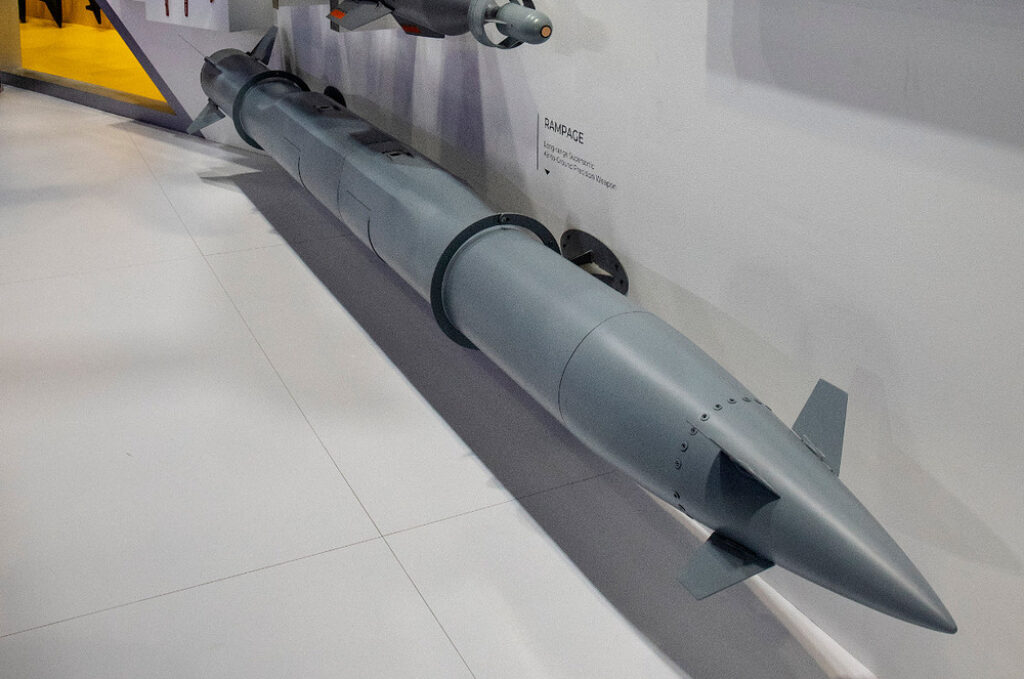
For Greece, integrating Rampage would significantly increase the capabilities of its existing F-16 fleet.
Modern long-range air defense systems are capable of engaging aircraft well before they can employ conventional unguided weapons. As a result, stand-off munitions that allow aircraft to strike from outside hostile air defense coverage have become increasingly valuable.
According to Kathimerini, certification trials are expected to begin after final approval by Greece’s National Military Aviation Safety Authority. Once qualified, Greek F-16s will be able to carry Rampage alongside SPICE precision-guided weapon kits, providing the Air Force with a broader range of precision strike options.
Could Other Countries Be Interested?
One of Rampage’s biggest strengths is its relatively straightforward integration.
According to the manufacturer, the missile can be adapted not only for Western fighters but also for several Soviet-designed aircraft, including the MiG-29. This dramatically expands its potential export market, allowing countries to acquire modern long-range precision strike capabilities without replacing their existing combat aircraft.
Besides Israel, the missile is already operated by India, while several other countries have reportedly shown interest as they seek affordable alternatives to more expensive cruise missiles.
Rampage Technical Specifications
Developers: Elbit Systems & Israel Aerospace Industries (IAI)
Type: Air-launched aeroballistic surface-attack missile
Origin: Derived from the EXTRA guided rocket used by the PULS MLRS
Maximum range: Up to 250 km
Launch weight: Approximately 570 kg
Warhead: Approximately 150 kg
Propulsion: Solid-fuel rocket motor
Guidance: Inertial navigation system (INS) with GPS/GNSS updates
Primary targets: Air defense systems, radar installations, command centers, airfields, ammunition depots, and military infrastructure
Compatible aircraft: F-16, F-15, F/A-18, Eurofighter Typhoon, Su-30MKI, MiG-29, and other integrated platforms
Conclusion
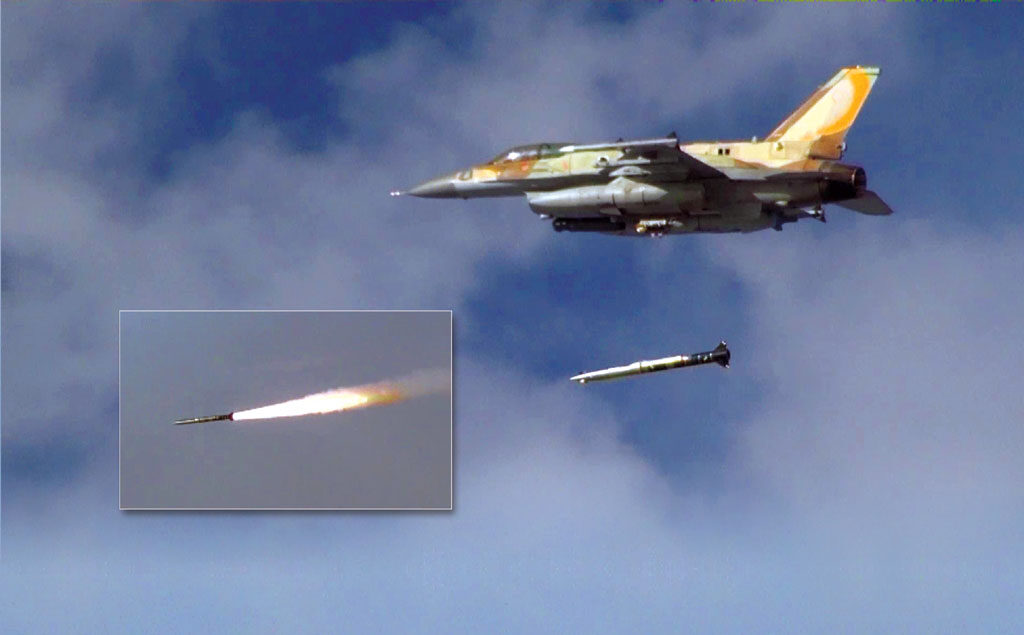
Rampage demonstrates that innovative weapons do not always require an entirely new design. Israeli engineers successfully repurposed an existing precision artillery rocket, adapting it for airborne launch and creating a relatively cost-effective stand-off weapon capable of striking targets at distances of around 250 kilometers.
If Greece completes the integration of Rampage on its F-16 fleet, it will further illustrate a broader trend in modern air warfare: today’s fighter aircraft are increasingly evolving into carriers of long-range precision-guided weapons capable of destroying strategic targets while remaining outside the engagement envelope of most enemy air defense systems.






