
America’s New Drone Fighter Fires AIM-120 for the First Time: Why the YFQ-44A Could Redefine Air Combat

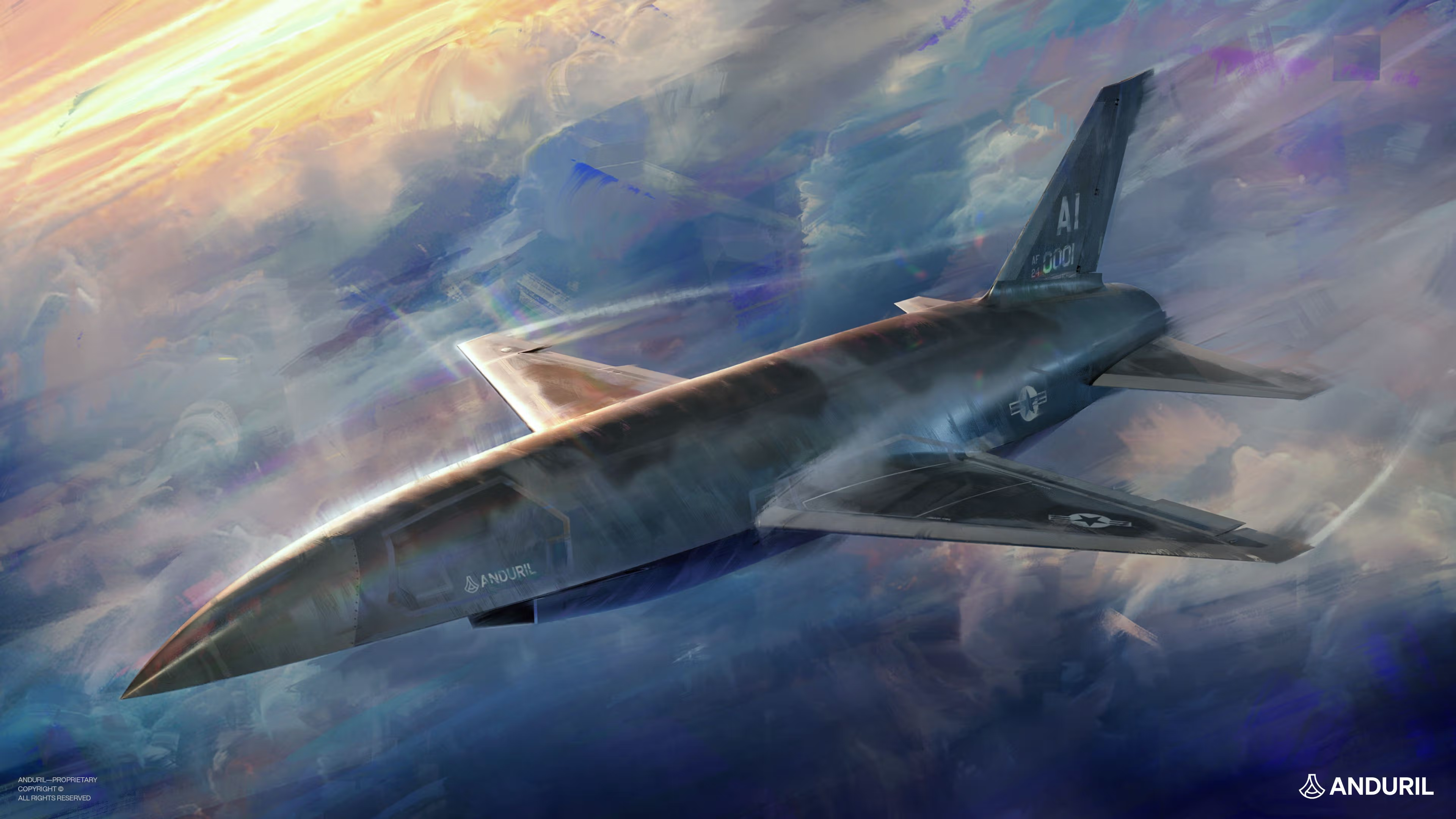
Air combat is entering a new era. The U.S. unmanned fighter Anduril YFQ-44A Fury has successfully launched an AIM-120 AMRAAM beyond-visual-range (BVR) air-to-air missile for the first time. The milestone marks a major step forward for the U.S. Air Force’s Collaborative Combat Aircraft (CCA) program, which aims to field a new generation of autonomous combat drones capable of fighting alongside manned fighters.
At first glance, the launch of a single missile may not seem particularly remarkable. In reality, however, it demonstrates an entirely new vision of aerial warfare—one in which human pilots are no longer required to perform every combat task themselves.
From Reconnaissance Platform to Air Superiority Asset

Until recently, unmanned aircraft were primarily associated with reconnaissance missions and precision strikes against ground targets. Even large systems such as the MQ-9 Reaper were rarely viewed as platforms capable of competing for air superiority.
The YFQ-44A belongs to an entirely different class of aircraft.
Its mission is to serve as a Loyal Wingman, flying alongside crewed fighters such as the F-35, F-22, F-15EX, and eventually the future sixth-generation F-47. Rather than replacing the pilot, the drone takes on the most dangerous missions—conducting reconnaissance, performing electronic warfare, intercepting enemy aircraft, or engaging targets with its own weapons.
Instead of flying a single aircraft, the pilot effectively commands an entire team of autonomous combat systems.
What Happened During the Test
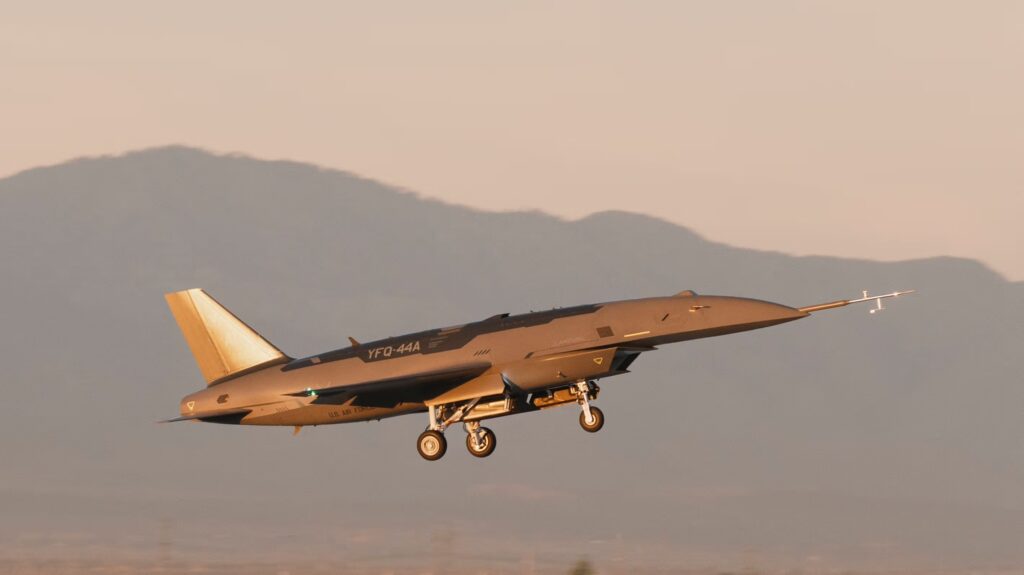
The demonstration took place at Edwards Air Force Base in California.
During the flight, the YFQ-44A received targeting information through Anduril’s Lattice software platform, which fused battlefield data from multiple sources. After processing the information, the drone launched an AIM-120 AMRAAM against a simulated beyond-visual-range aerial target. Although the aircraft operated with a high degree of autonomy, the decision to fire the missile remained under human control, in line with current U.S. Air Force doctrine.
While the target itself was virtual, the test successfully validated the entire engagement chain:
- Target detection;
- Receiving data from external sensors;
- AI-assisted battlefield analysis;
- Fire-control calculations;
- Launching a long-range air-to-air missile.
This network-centric process is expected to become the foundation of future air operations.
Why the AIM-120 Matters
The AIM-120 AMRAAM has long been considered one of the world’s most capable medium-range air-to-air missiles.
Its greatest advantage is its active radar seeker.
Once launched with initial targeting data, the missile can independently acquire and track its target, allowing the launching aircraft to maneuver away or engage additional threats.
For an unmanned fighter, this capability is especially valuable.
The drone does not necessarily require a powerful onboard radar. Targeting information can come from an F-35, an airborne early warning aircraft, another drone, or even satellite-based sensors.
In effect, every aircraft within the formation becomes part of a single integrated combat network.
Artificial Intelligence Is Becoming the Second Pilot
One of the YFQ-44A’s defining features is its software architecture.
Rather than functioning as a remotely piloted aircraft, it relies on Anduril’s Lattice AI platform, which enables it to analyze the battlefield, prioritize threats, coordinate with other assets, and determine optimal flight paths.
The U.S. military has emphasized that the final decision to employ weapons still belongs to a human operator.
Nevertheless, it is clear that the level of autonomy in future combat aircraft will continue to increase.
Anduril vs. General Atomics
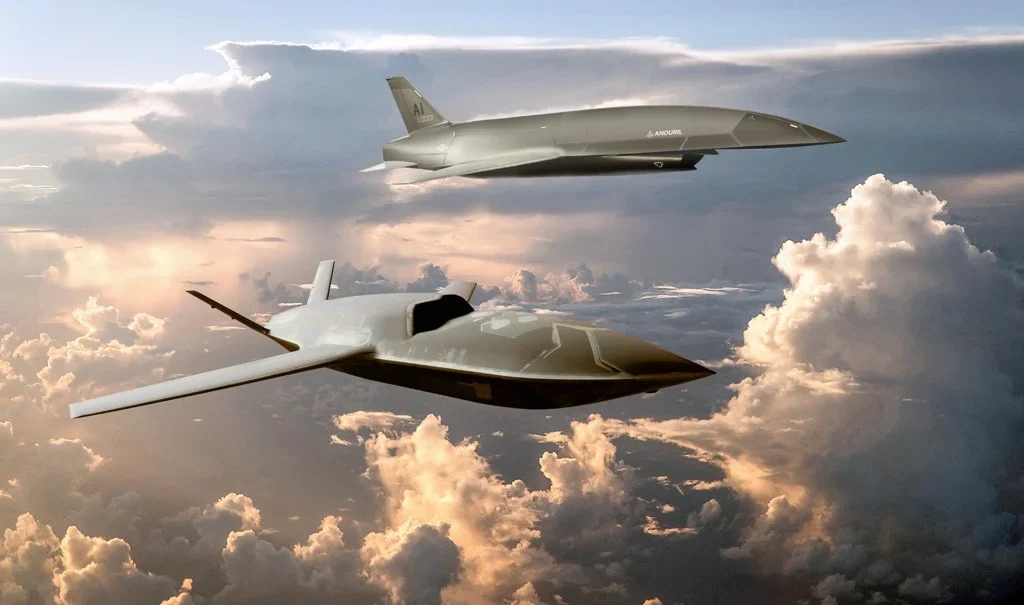
Two companies currently lead the U.S. Air Force’s CCA competition.
Anduril is developing the YFQ-44A Fury.
Its main competitor, General Atomics, is building the YFQ-42A.
The two companies are taking noticeably different approaches.
During this latest demonstration, the YFQ-44A carried its AIM-120 on an external underwing pylon.
General Atomics, meanwhile, plans to conduct its own missile launch later this year using an internal weapons bay, a configuration intended to reduce the aircraft’s radar signature and improve survivability.
In essence, the U.S. Air Force is evaluating two distinct philosophies for the next generation of autonomous fighter aircraft.
Why This Could Change Air Warfare
At first glance, the YFQ-44A may appear to be just another military drone.
Its strategic implications, however, are far greater.
A modern fifth-generation fighter costs well over one hundred million dollars once training, logistics, and infrastructure are included.
Losing such an aircraft is not merely an economic setback—it also carries significant political consequences.
The Loyal Wingman concept fundamentally changes that equation.
An autonomous aircraft can enter heavily defended airspace first, locate enemy forces, absorb risk, or even engage hostile aircraft without exposing a human pilot to danger.
If these drones are eventually produced in large numbers, a single manned fighter could direct multiple autonomous wingmen simultaneously.
Such an approach would dramatically expand combat capacity without requiring a proportional increase in pilot training or procurement costs.
Conclusion
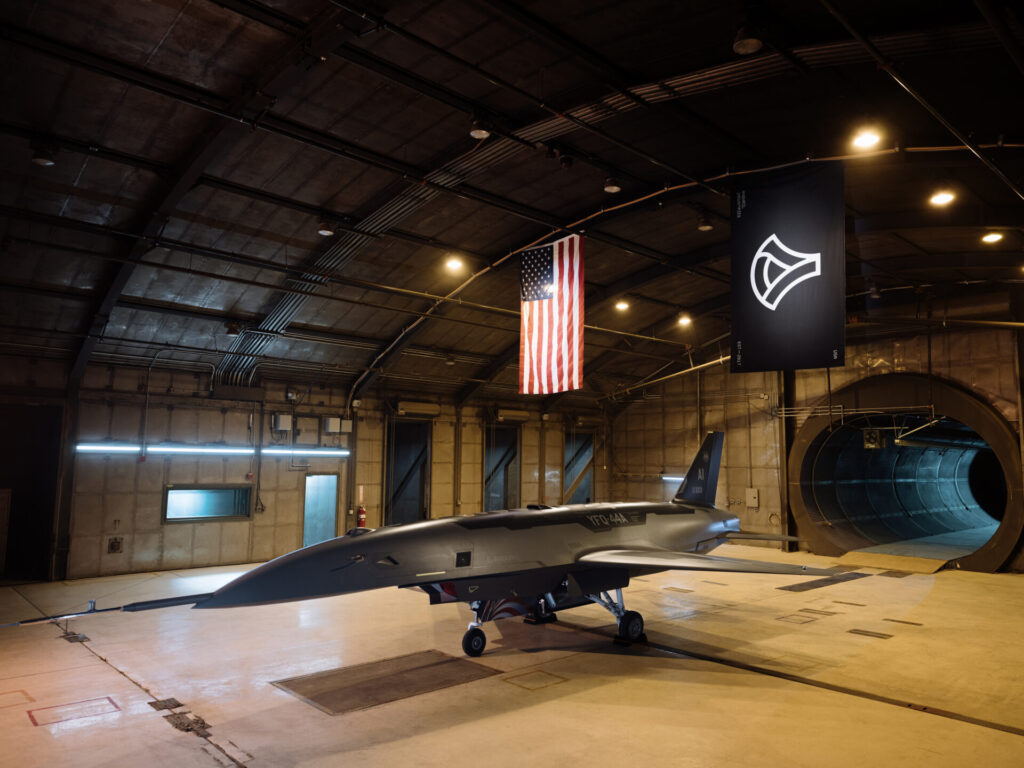
The first successful AIM-120 launch from the YFQ-44A is far more than another weapons test.
It demonstrates that the Collaborative Combat Aircraft concept is moving beyond experimentation and becoming an operational capability.
Within the next several years, autonomous wingmen are expected to become routine companions for F-35s, F-22s, and future sixth-generation fighters. Their responsibilities will likely expand steadily—from reconnaissance and missile carriage to increasingly independent participation in air combat.
If the program succeeds, aerial warfare in the next decade may look fundamentally different from today’s engagements. Instead of duels between individual fighter pilots, future battles are likely to become confrontations between highly connected combat networks, where humans make the critical decisions while autonomous aircraft perform much of the fighting.






