
Russia’s Supercam S350 Is Expanding Onto the Global Market. Why This Drone Has Become One of the Most In-Demand Reconnaissance UAVs of Modern Warfare

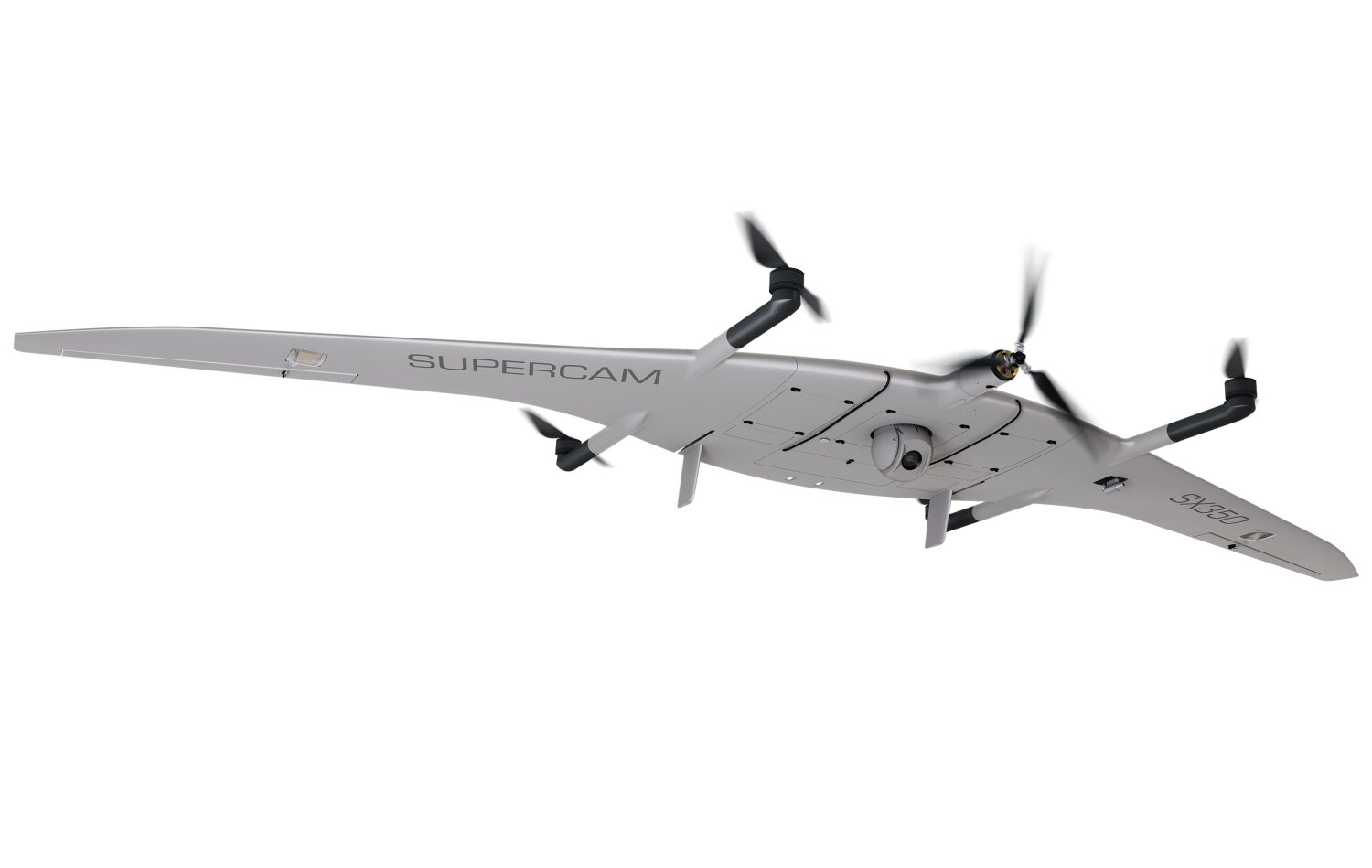
Over the past several years, unmanned aviation has evolved from a supporting reconnaissance tool into one of the central elements of modern warfare. While public attention often focuses on large strike drones, combat experience has shown that compact tactical reconnaissance UAVs perform some of the most important daily missions: locating targets, correcting artillery fire, monitoring troop movements, and transmitting battlefield intelligence in near real time.
Against this background, the manufacturer of the Russian Supercam S350 unmanned aircraft system has reported a sharp increase in interest from foreign customers. According to Unmanned Systems Group, new export contracts were signed in 2026, including agreements with customers that had not previously cooperated with the company.
The manufacturer attributes this demand primarily to the drone’s use in combat, which has allowed potential buyers to assess the system under real operational conditions rather than relying solely on exhibition demonstrations and promotional specifications.
The export announcement, however, is only a useful starting point. The more interesting question is what the Supercam S350 actually is, why it has become one of Russia’s more prominent tactical reconnaissance drones, and how it compares with Western systems such as the Insitu ScanEagle and RQ-21 Blackjack.
A Reconnaissance Platform, Not a Strike Drone
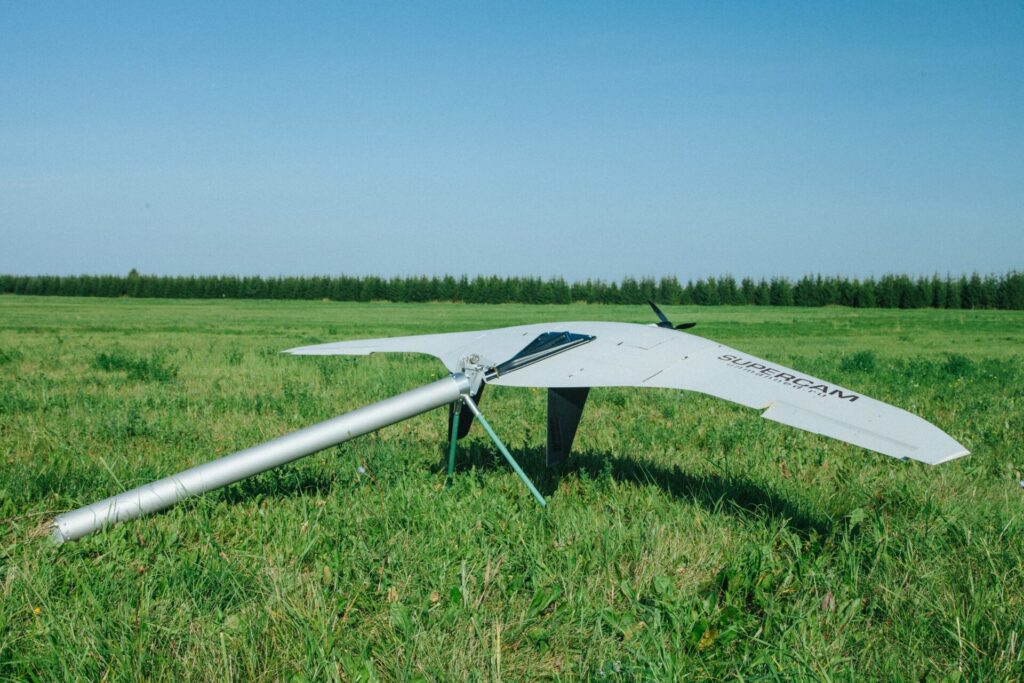
Unlike the many loitering munitions and armed UAVs that have become widely known in recent years, the Supercam S350 was not designed to attack targets directly.
Its primary mission is reconnaissance.
The aircraft is intended to detect and identify targets, transmit coordinates, maintain persistent surveillance over an area, and support artillery fire correction. These are now routine tasks on modern battlefields, where the speed of the sensor-to-shooter chain often determines whether a target is successfully engaged.
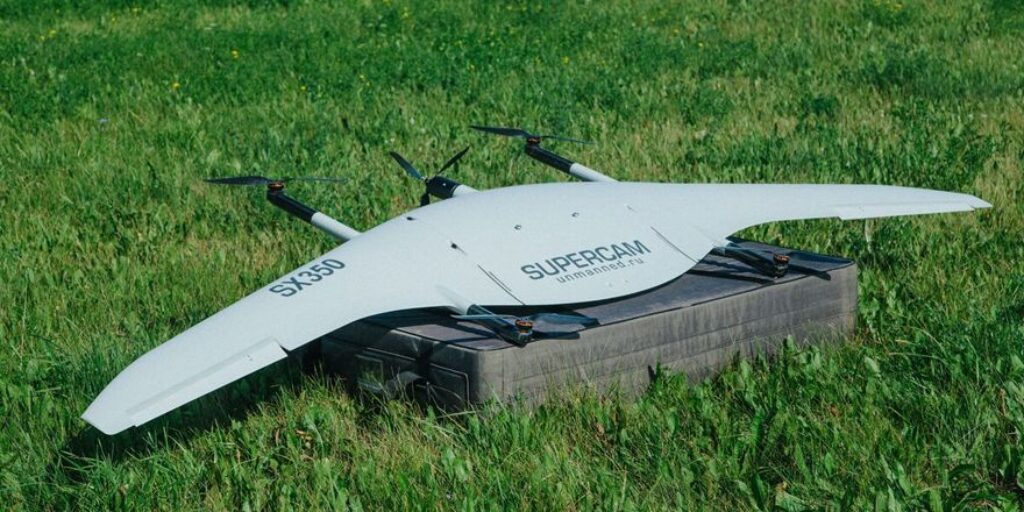
Conceptually, the S350 is closest to Western tactical reconnaissance systems such as the American Insitu ScanEagle and RQ-21 Blackjack. In terms of size and weight, however, it occupies a lighter category, positioned between small unit-level reconnaissance drones and larger operational-tactical unmanned aircraft.
How the Supercam S350 Is Designed
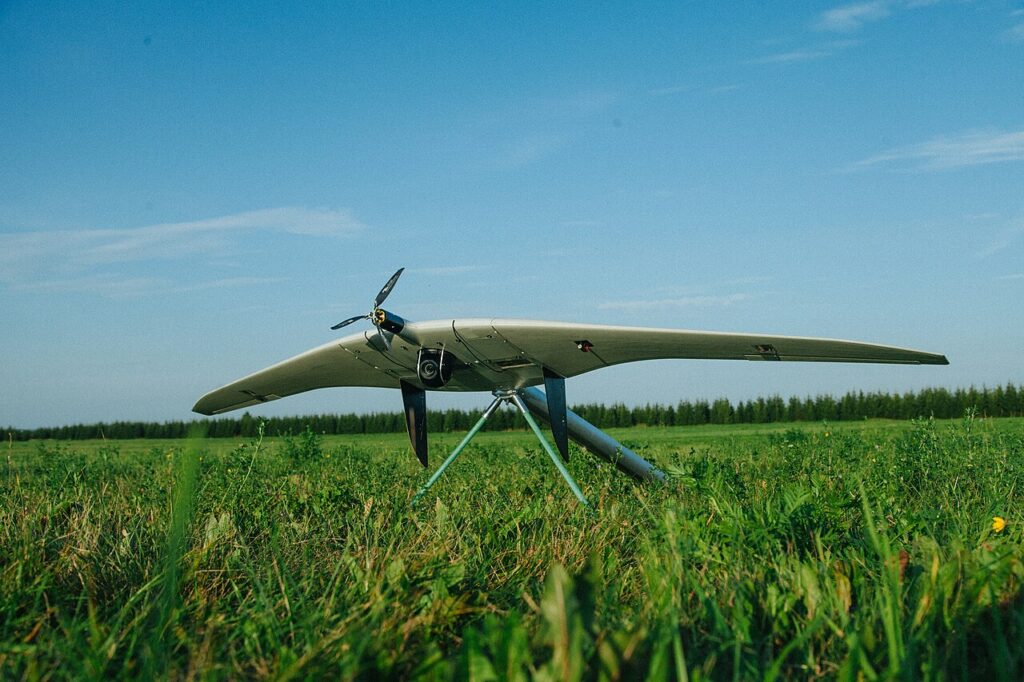
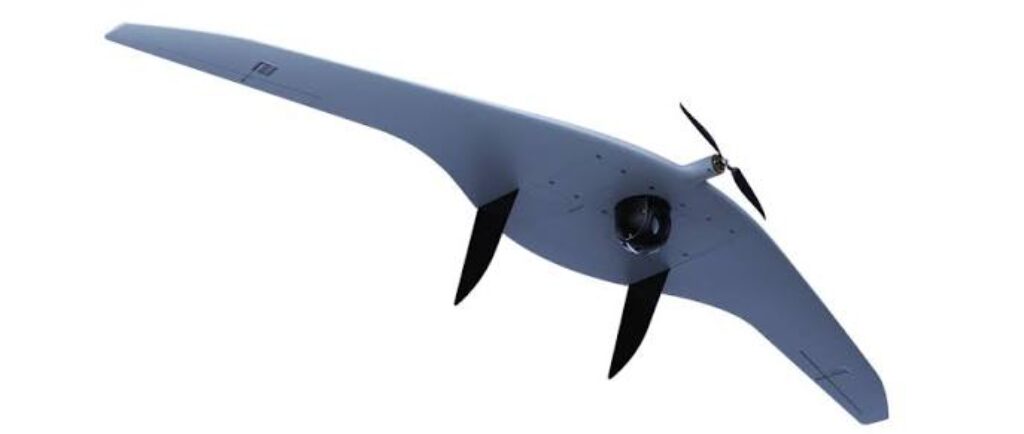
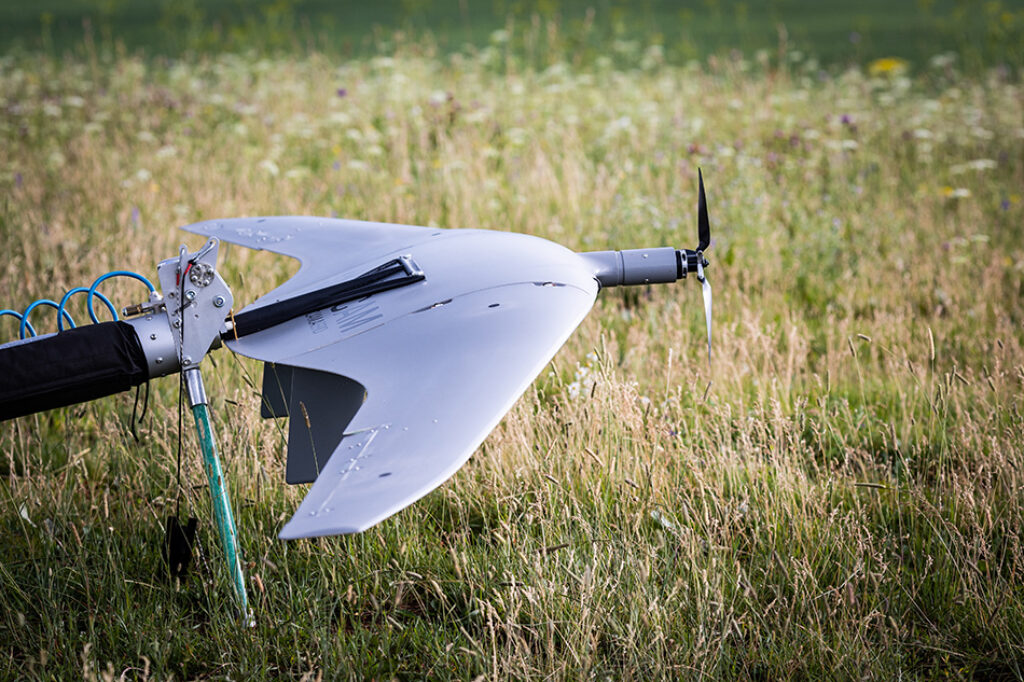
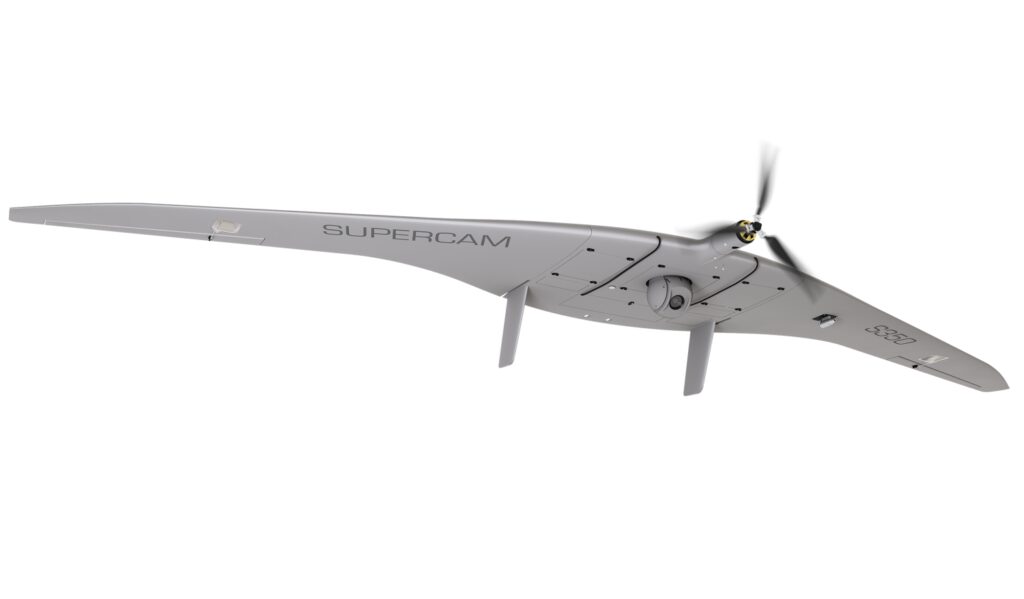
The aircraft uses a conventional fixed-wing layout with a pusher propeller mounted behind the fuselage.
This configuration leaves the nose unobstructed for an electro-optical payload, improves the camera’s field of view, and reduces the risk of propeller damage during recovery.
The airframe is manufactured primarily from composite materials, helping reduce both weight and radar signature.
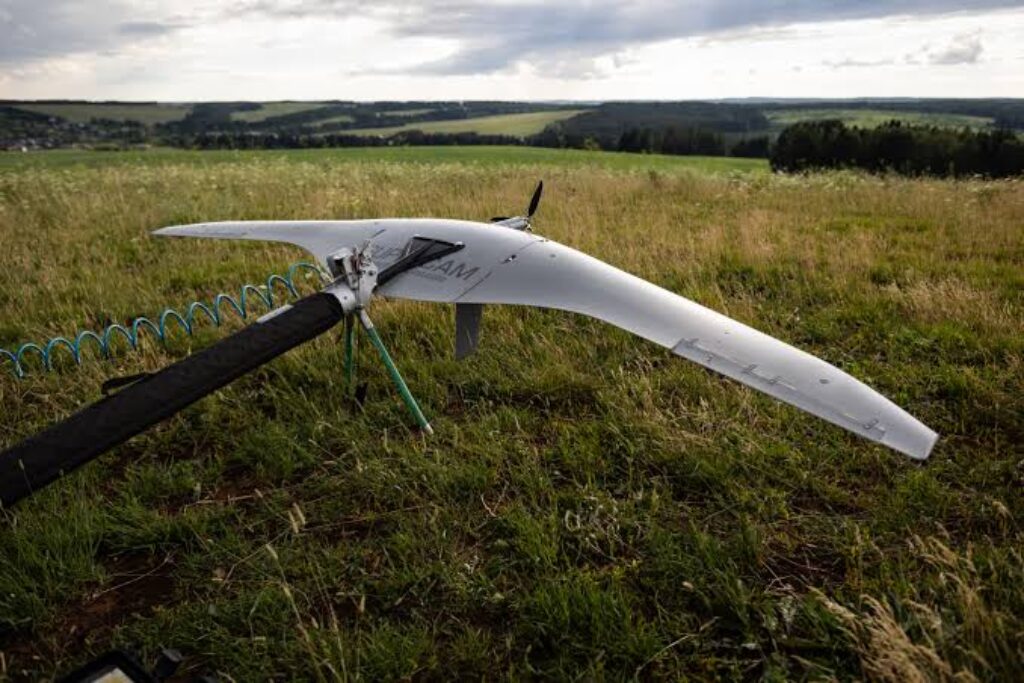
Launch is conducted using a mobile pneumatic catapult.
As a result, the system does not require a runway and can be deployed from a relatively small field position prepared by its operating team.
Recovery is performed by parachute, combined with an impact-absorbing system. This makes the aircraft less dependent on specialized ground equipment and allows it to operate from rough or confined terrain.
Supercam S350 Technical Specifications
According to publicly available information, the system has the following characteristics:
Type: Tactical reconnaissance unmanned aerial vehicle
Developer: Unmanned Systems Group
Wingspan: Approximately 3.2 meters
Length: Approximately 1.5 meters
Maximum Takeoff Weight: Around 15 kilograms
Payload Capacity: Up to 1.5 kilograms
Endurance: Up to 4.5 hours
Operational Range: Up to 240 kilometers, depending on communications architecture and relay support
Cruising Speed: Approximately 90–120 km/h
Operating Ceiling: Up to 5,000 meters
Launch Method: Pneumatic catapult
Recovery Method: Parachute
The UAV can carry a stabilized electro-optical payload incorporating daylight television cameras, thermal imagers, and, depending on the configuration, a laser rangefinder.
Its onboard systems are designed to transmit imagery and target information to ground operators in real time.
Persistent Surveillance Is Its Main Strength
One of the S350’s most important advantages is its ability to remain airborne for several hours.
That endurance allows the aircraft not only to detect a target but also to track it over time.
This is particularly valuable during counter-battery operations.
A reconnaissance drone can patrol above a sector for extended periods, observe artillery positions, identify vehicle movements, detect preparations for an attack, and provide immediate corrections for friendly fire.
In practical terms, the Supercam functions as an airborne observation post for artillery and reconnaissance units.
Its usefulness therefore depends less on carrying weapons and more on maintaining a reliable flow of information between the drone, its operators, and the units responsible for engaging detected targets.
How It Compares With Western Counterparts
The closest well-known Western comparison is the American Insitu ScanEagle, while the larger RQ-21 Blackjack occupies a heavier and more capable category.
| Maximum Takeoff Weight | ~15 kg | ~22 kg | ~61 kg |
| Endurance | Up to 4.5 hours | More than 18 hours | More than 16 hours |
| Launch Method | Catapult | Catapult | Catapult |
| Recovery Method | Parachute | SkyHook | SkyHook |
| Primary Mission | Reconnaissance | Reconnaissance | Reconnaissance |
The American systems retain a major advantage in endurance.
ScanEagle and RQ-21 can remain airborne for much longer periods, making them better suited for persistent surveillance over large areas.
The Russian system, however, is simpler to deploy and recover.
Its parachute landing system does not require the specialized SkyHook recovery equipment used by ScanEagle and Blackjack. This reduces the ground footprint of the complex and may simplify operations for units that need to relocate frequently.
The trade-off is clear.
Western systems offer greater endurance and more mature mission architectures, while the Supercam emphasizes portability, field simplicity, and lower logistical requirements.
Why Foreign Customers Are Interested
The Supercam’s most effective advertisement has not been an air show or an export brochure.
It has been operational use.
Military customers increasingly evaluate unmanned systems based on combat performance rather than manufacturer claims. A drone that can continue operating under electronic warfare pressure, provide artillery correction, survive intensive use, and remain practical to maintain in field conditions will naturally attract interest.
This is especially important in the tactical reconnaissance market, where reliability and simplicity often matter more than headline performance figures.
Foreign customers are not necessarily looking for the most advanced drone available. In many cases, they need a system that can be deployed quickly, operated by relatively small teams, maintained without complex infrastructure, and purchased in meaningful numbers.
That is the niche in which the Supercam S350 is most likely to compete.
What Export Success Could Mean
The market for tactical reconnaissance UAVs is expanding rapidly.
Almost every modern army is seeking relatively inexpensive, mobile, and easy-to-operate drones capable of supplying frontline units with timely intelligence.
If the reported interest develops into sustained serial orders, the Supercam S350 could become one of Russia’s more visible new-generation UAV exports.
Its strengths do not lie in record-breaking range or endurance.
Instead, the system offers a combination of mobility, relatively simple deployment, combat experience, and the ability to perform its central mission effectively: providing reconnaissance, surveillance, and target data directly to units operating on the battlefield.






