
NATO Is Replacing Its Legendary AWACS Fleet With Saab GlobalEye. Here’s Why It Matters

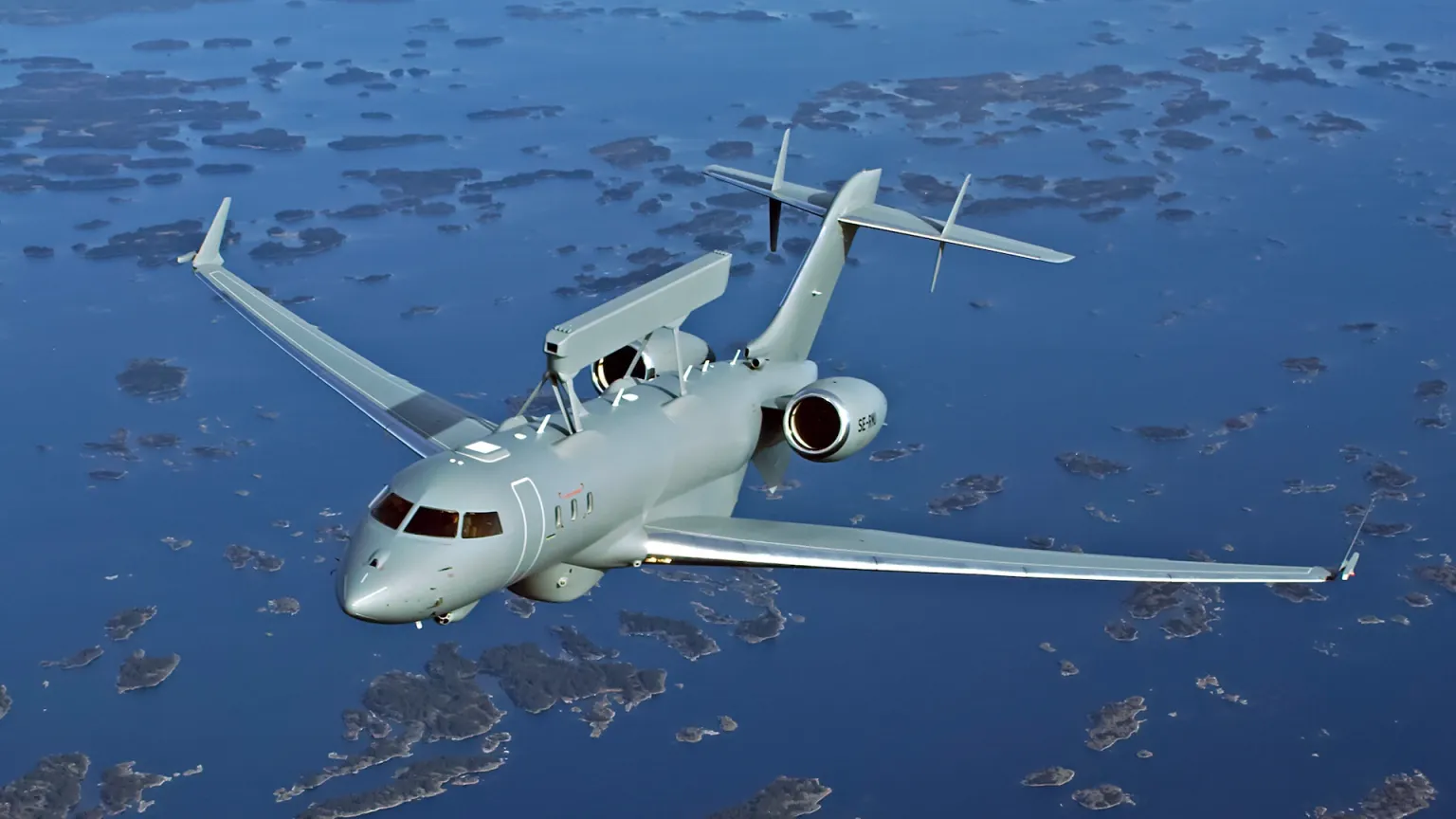
For more than four decades, the Boeing E-3 Sentry AWACS has been one of NATO’s most recognizable military aircraft. With its distinctive rotating radar dome, the E-3 coordinated allied air operations throughout the Cold War, the Gulf War, the Balkans, Afghanistan, Iraq, and, more recently, patrol missions along NATO’s eastern flank.
That era is now coming to an end.
NATO has selected Sweden’s Saab GlobalEye as its next-generation airborne early warning and control (AEW&C) platform. The Alliance plans to acquire up to ten aircraft to replace its aging fleet of E-3 Sentry aircraft, which have served since the early 1980s. The program is expected to be worth approximately $4.5 billion, with deliveries potentially beginning around 2030, provided the final contract is signed on schedule.
The decision represents far more than a routine fleet replacement. It reflects how airborne surveillance itself is evolving—and why modern battlefields require a new generation of airborne command-and-control aircraft.
Why NATO Had to Replace the E-3
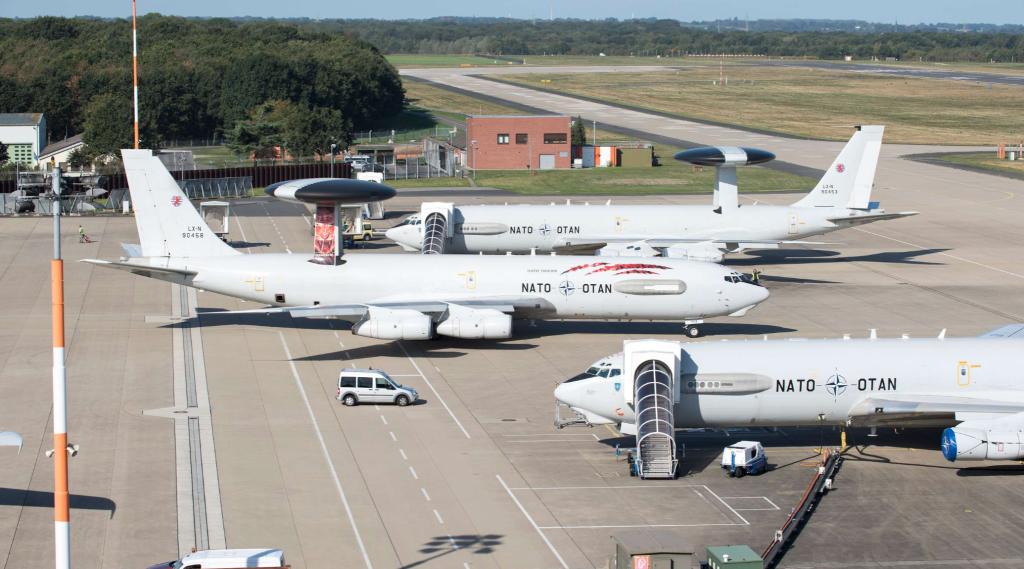
When the E-3 first entered service, it revolutionized airborne surveillance.
Built on the Boeing 707 airliner, the aircraft could detect targets hundreds of kilometers away, coordinate fighter operations, and provide commanders with a real-time picture of the battlefield.
More than forty years later, however, the platform itself has become the primary limitation.
Production of the Boeing 707 ended decades ago, spare parts have become increasingly difficult and expensive to obtain, and operating a four-engine aircraft carries significantly higher fuel and maintenance costs than modern business-jet-based platforms.
At the same time, the nature of aerial threats has changed dramatically.
During the Cold War, AWACS aircraft primarily tracked large bombers and fighter formations. Today they must simultaneously detect cruise missiles, low-flying drones, stealth aircraft, maritime targets, and even support operations against surface threats.
Meeting those challenges requires a fundamentally different aircraft.
Why Saab GlobalEye Was Chosen
Until recently, many analysts expected the Boeing E-7 Wedgetail to become NATO’s next AWACS platform.
The E-7 has already been selected by Australia, South Korea, Türkiye, the United Kingdom, and the United States to replace their own E-3 fleets.
However, the situation changed after Washington reduced its planned E-7 procurement and shifted greater emphasis toward space-based sensors, distributed surveillance networks, and next-generation command-and-control concepts.
That opened the door for Saab’s proposal.
Choosing GlobalEye should not be interpreted as a rejection of American technology.
Although Saab developed the mission system and radar, the aircraft itself is built on the Canadian Bombardier Global 6500 business jet, while numerous critical subsystems are supplied by U.S. manufacturers.
NATO Secretary General Mark Rutte even described the project as a truly multinational program that combines European, Canadian, and American industrial capabilities.
What Makes GlobalEye Different
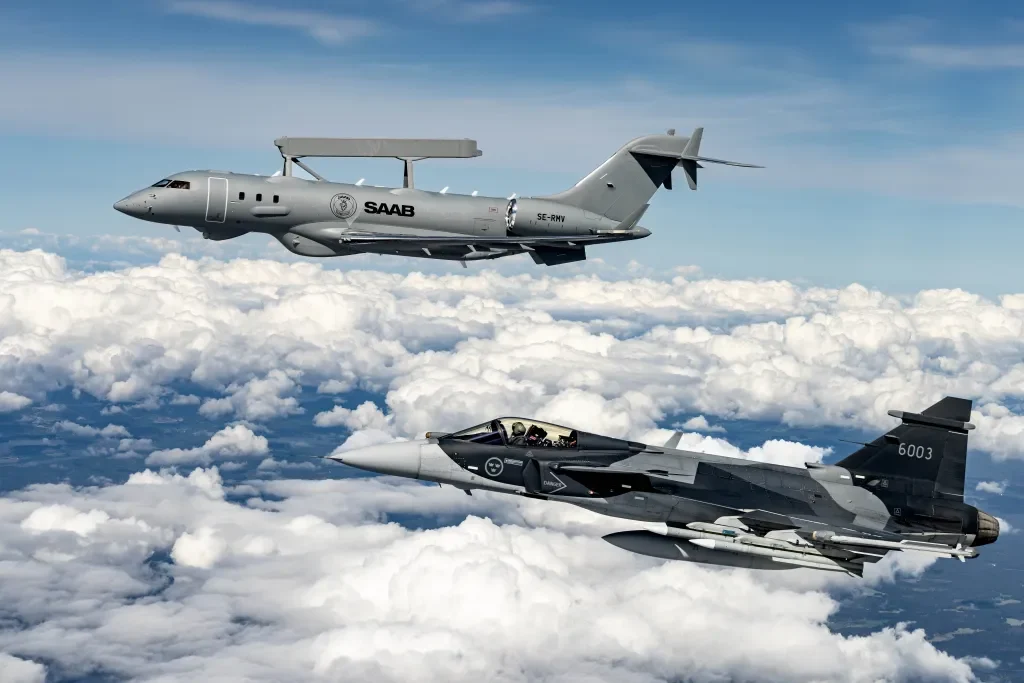
Compared with the large four-engine E-3, the GlobalEye is considerably smaller, lighter, and more efficient.
Its platform, the Bombardier Global 6500, offers exceptional endurance, long range, high operating altitude, and significantly lower operating costs.
The aircraft’s defining feature is the Erieye ER active electronically scanned array (AESA) radar.
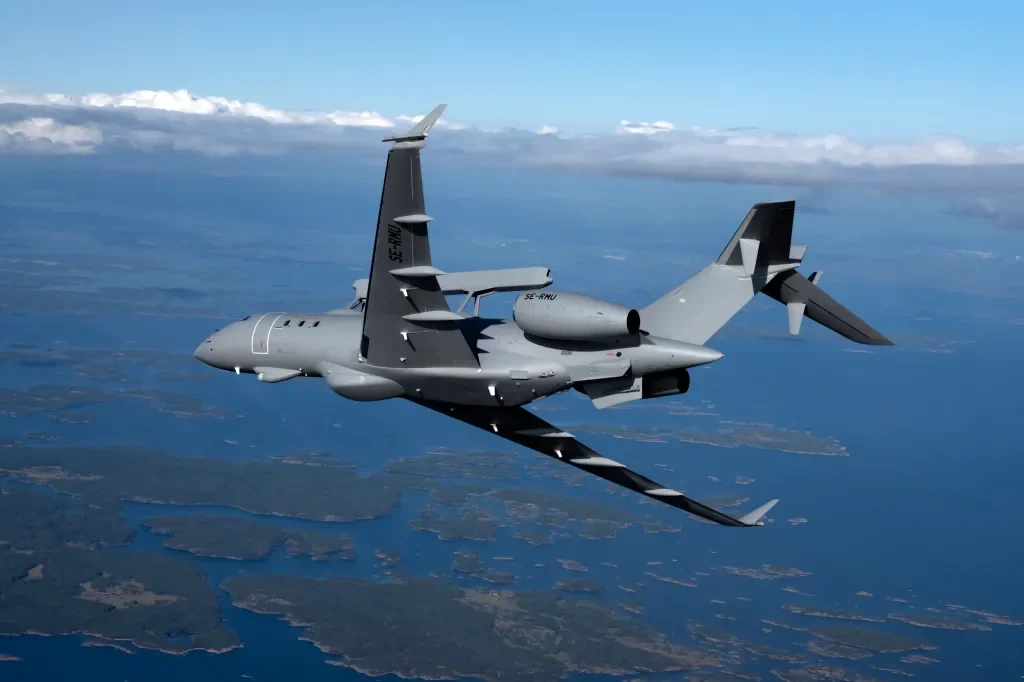
Instead of the iconic rotating radar dome mounted above the fuselage of the E-3, GlobalEye uses a fixed dorsal radar array.
This configuration reduces aerodynamic drag, lowers maintenance requirements, and improves overall reliability while providing outstanding detection performance.
More importantly, GlobalEye is designed as a true multi-domain surveillance platform.
Rather than focusing exclusively on airborne threats, it can simultaneously monitor air, sea, and ground targets.
In other words, it is not simply an airborne radar aircraft—it is an airborne intelligence, surveillance, and command center.
Technical Specifications
Although some operational details remain classified, Saab has released the core characteristics of the platform.
Platform: Bombardier Global 6500
Mission System Developer: Saab
Aircraft Type: Airborne Early Warning and Control (AEW&C)
Crew: Four flight crew plus mission operators
Maximum Endurance: More than 11 hours
Service Ceiling: Approximately 15,500 meters (51,000 feet)
Cruising Speed: Around 900 km/h (560 mph)
Primary Radar: Erieye ER AESA radar
Air Target Detection Range: More than 550 kilometers
Operational Domains: Air, land, and maritime surveillance
Additional Sensors: Leonardo Seaspray 7500E maritime surveillance radar, electronic intelligence systems, and electro-optical sensors.
Unlike the E-3, which primarily specialized in airborne surveillance, GlobalEye was designed from the outset as a multi-domain intelligence platform capable of detecting small surface vessels, ground targets, cruise missiles, and unmanned aerial vehicles alongside conventional aircraft.
Airborne Surveillance Is Changing
Replacing the E-3 is about much more than introducing a newer airplane.
It reflects a fundamental shift in the philosophy of airborne command and control.
During the Cold War, a single large AWACS aircraft was expected to oversee an enormous section of airspace almost independently.
Modern warfare operates very differently.
Today’s surveillance aircraft function as nodes within a much larger network connecting satellites, drones, naval vessels, ground-based radar systems, fighters, and command centers.
GlobalEye was designed specifically for that environment.
Its mission is not only to detect targets but also to distribute information instantly across a networked battlefield, creating a common operational picture for every participating platform.
Rather than acting alone, it becomes part of an integrated intelligence architecture.
Why This Decision Matters
NATO’s selection of GlobalEye is significant for several reasons.
First, for the first time in decades, the Alliance has chosen a European-developed airborne early warning platform instead of another American-designed AWACS aircraft.
Second, the decision illustrates how requirements for AEW&C aircraft have evolved. Modern operators expect them to track not only conventional aircraft but also drones, cruise missiles, ships, and ground targets while serving as command-and-control hubs for networked operations.
Finally, the program demonstrates that airborne surveillance is becoming increasingly distributed.
Future airborne command aircraft will work alongside satellites, unmanned systems, naval task groups, and ground-based sensor networks rather than operating as isolated assets.
In that sense, the Saab GlobalEye is far more than the successor to the legendary E-3 Sentry.
It represents a new generation of airborne command-and-control aircraft built for an era in which information superiority is every bit as decisive as firepower itself.






